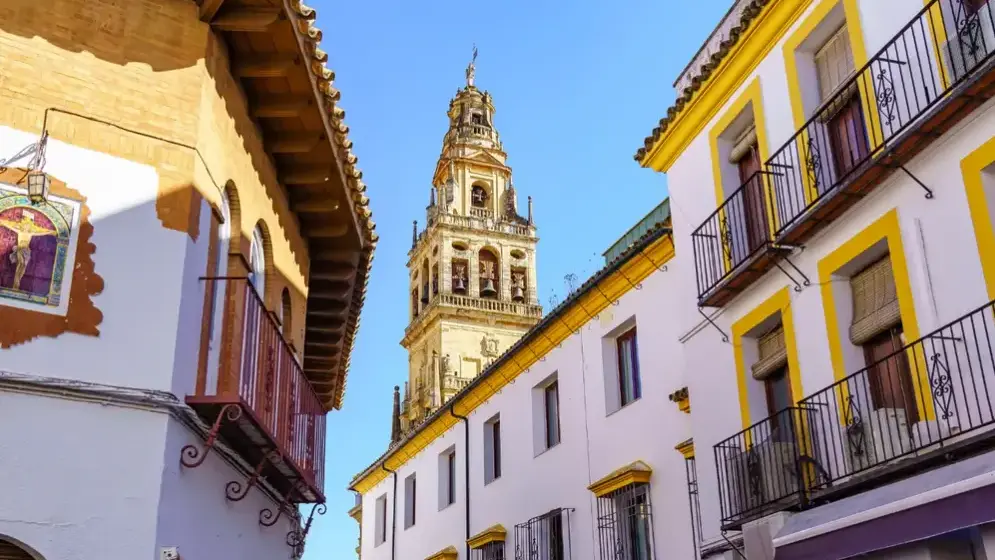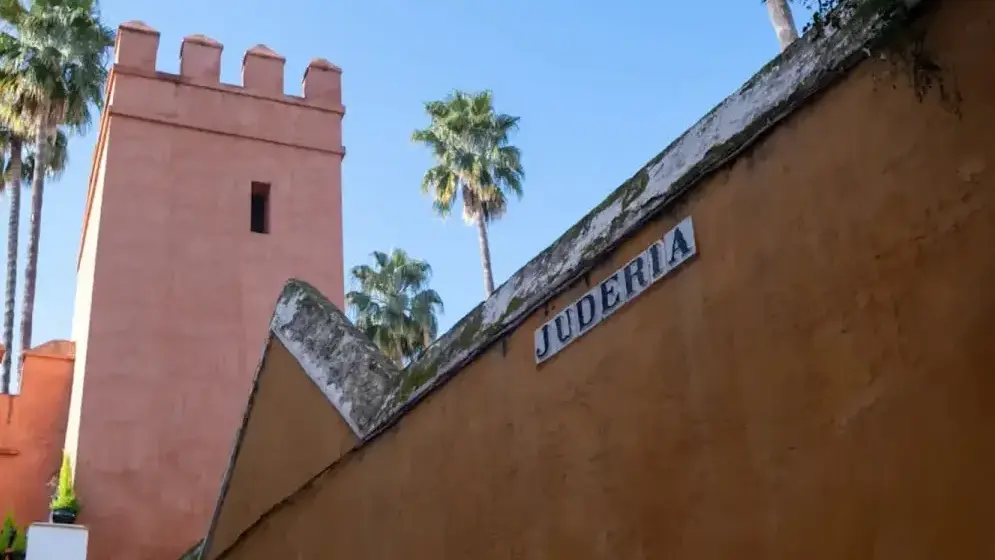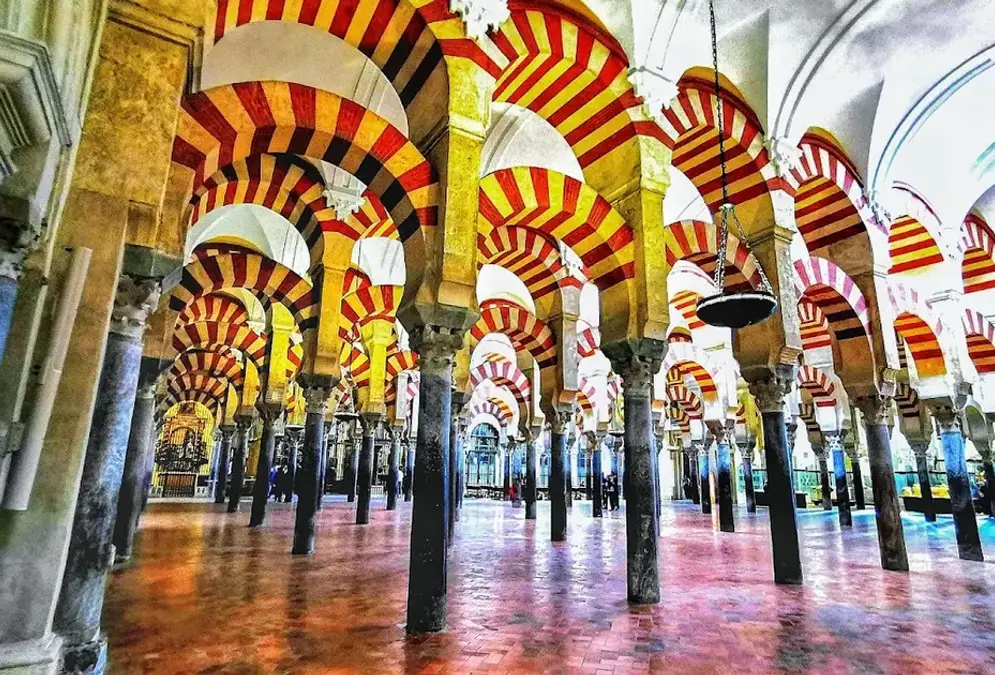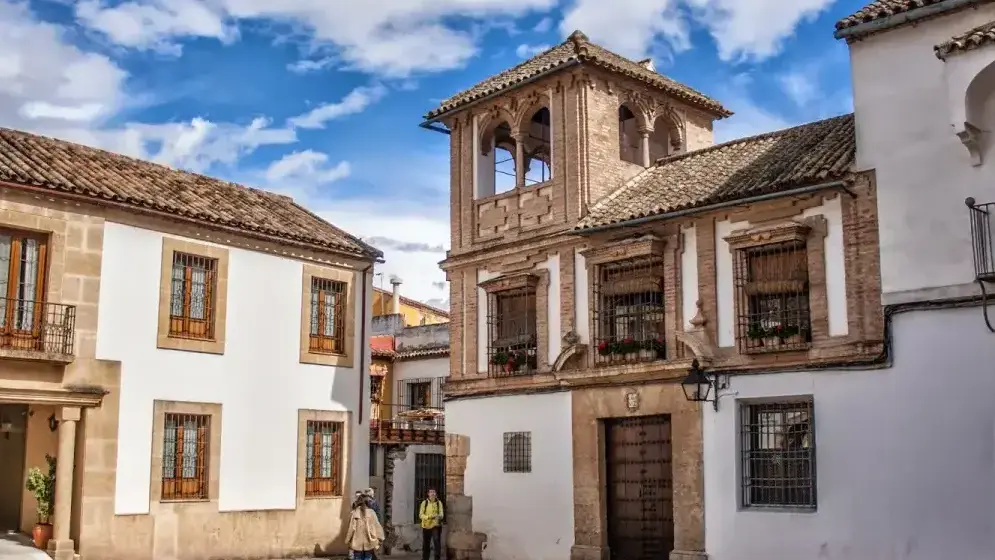

The historic centre of Córdoba spreads around Plaza de las Tendillas, the city's main commercial square. This is where Córdoba goes about its daily life — boutiques, cafés, restaurants, and bars operating around an urban fabric that includes Roman ruins and baroque palaces.
Getting oriented
Plaza de las Tendillas is the starting point for most free walking tours — 2-hour guided walks that cover the historic centre before moving to the Judería and the Mezquita. A useful first morning for anyone new to the city. This self-guided route picks up where the free tour leaves off, tracing the Umayyad legacy from the Roman Temple through to the Mezquita's prayer hall. For history that goes further back, this self-guided route through Roman remains ties together the Temple, the archaeological museum, and the remnants of the ancient forum — a route that makes sense of the city's pre-Islamic layers. Come evening, the Tapas Trail threads through the century-old tabernas of Centro and Judería, with built-in stops at the places that have been pouring fino since the 19th century.
Roman ruins and baroque palaces
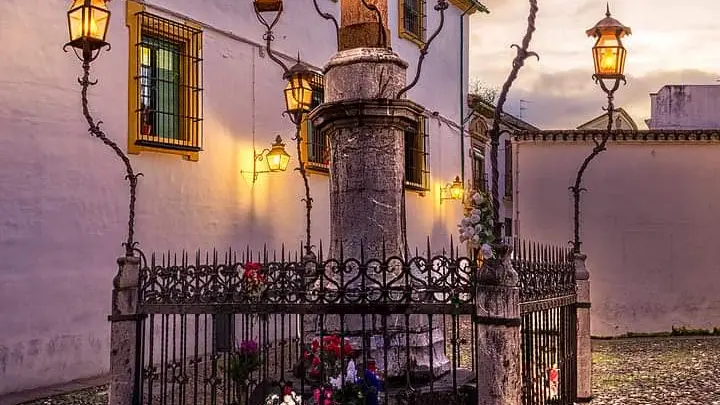
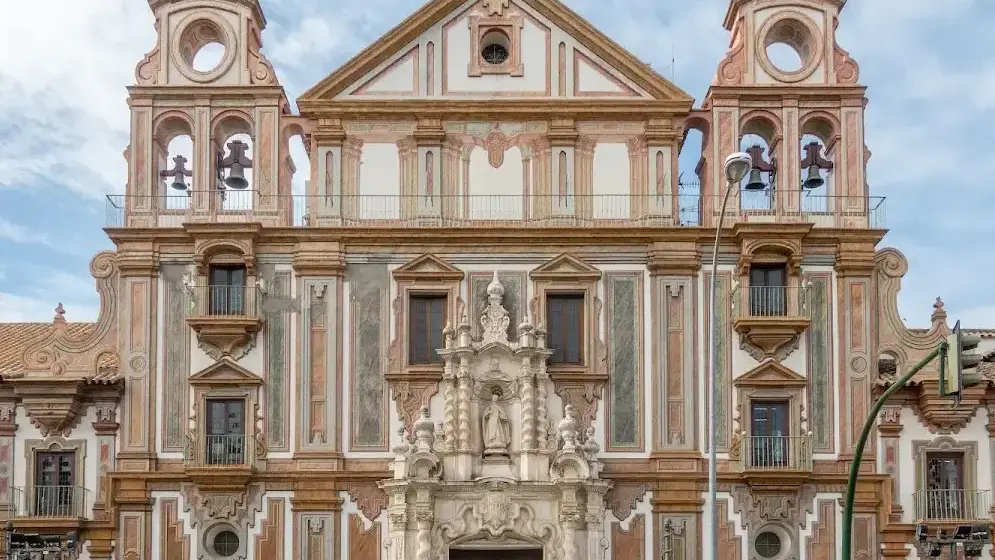
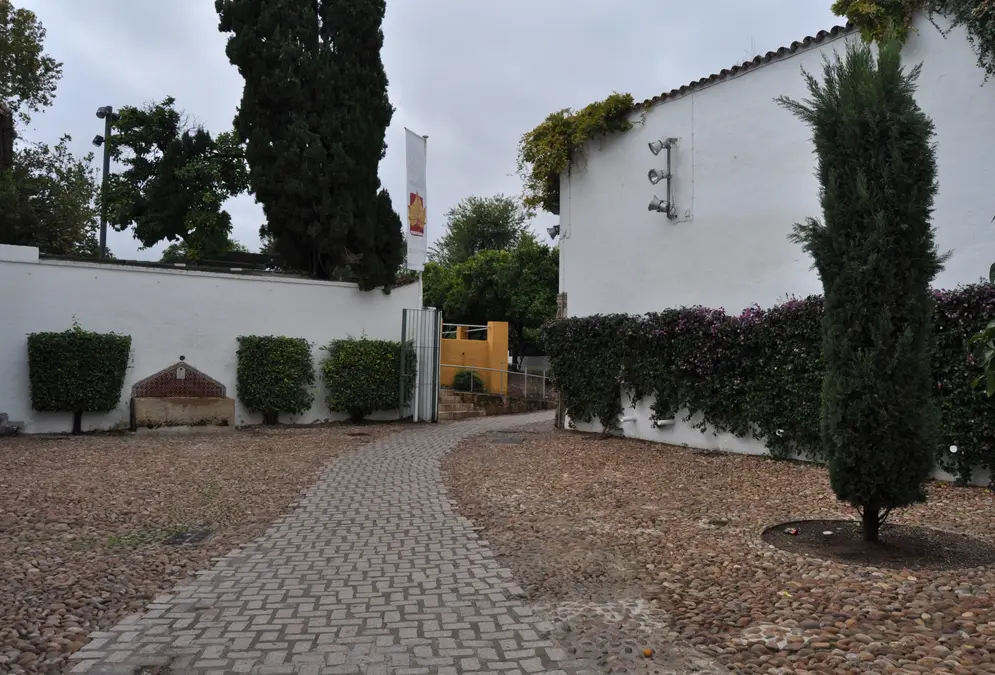
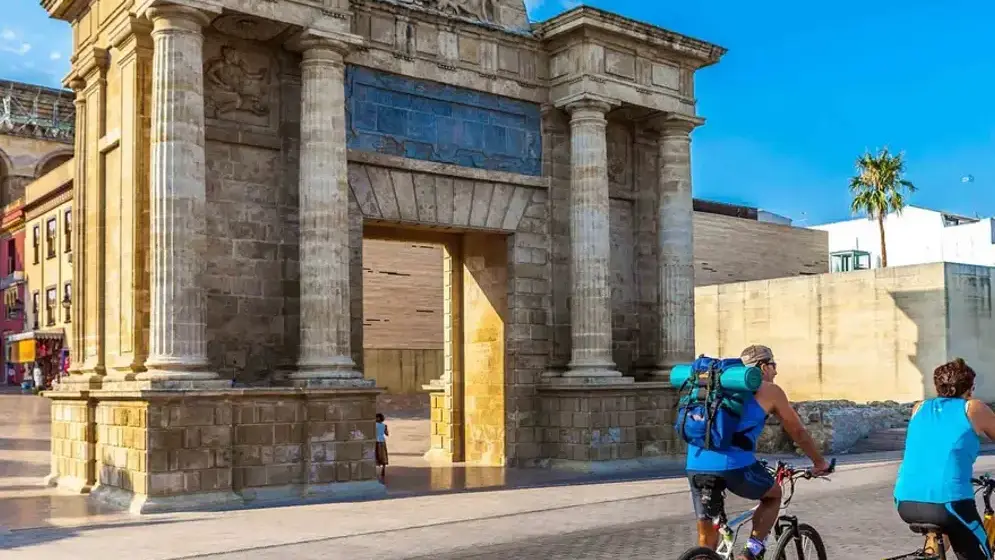
The Roman Temple rises from Calle Claudio Marcelo, its Corinthian columns lit at night. Around it: the Plaza de la Corredera, the only Castilian-style arcaded square in Andalusia; the the Cervantes-cited square, cited by Cervantes in Don Quixote; and the Palacio de la Merced, a baroque convent with free morning visits, and the Palacio de Orive, the city's finest Renaissance palace with public gardens and a Plateresque façade.
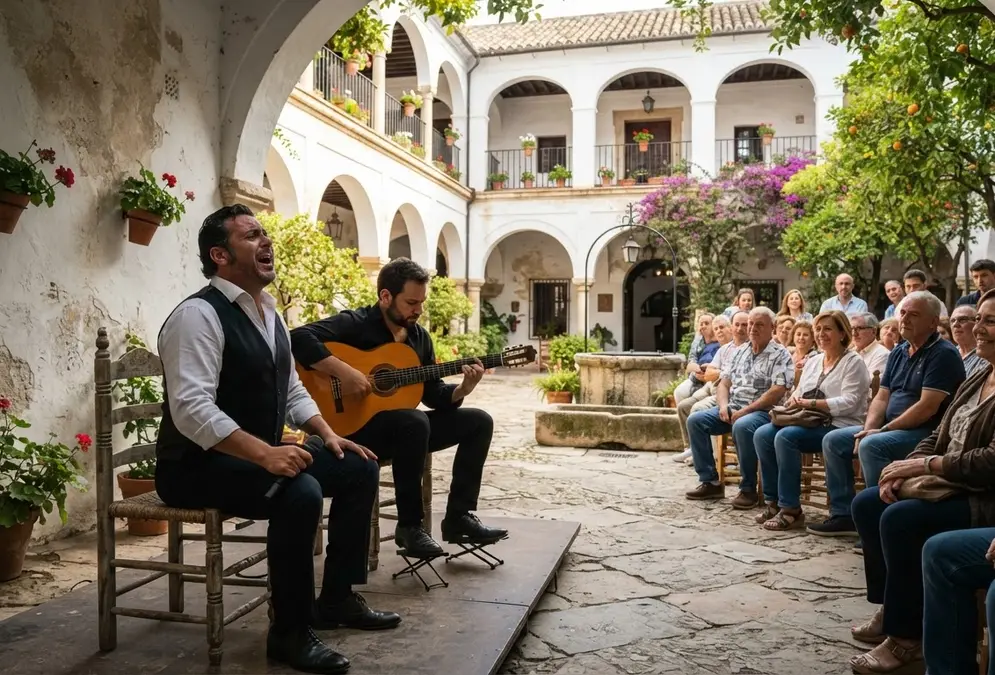
Plaza del Potro is one of the densest cultural stops in the centre. The Museo de Bellas Artes occupies the former Hospital de la Caridad there, with centuries of Spanish painting from Zurbarán to Tàpies — free for EU citizens. The Centro Flamenco Fosforito, named after the Córdoba-born flamenco master, is in the same square inside the 16th-century Posada del Potro, with interactive exhibits and free Sunday-noon recitals that run in seasonal editions, not year-round. Both share the square with the Julio Romero de Torres Museum.
From late March through early April, Semana Santa routes all 38 brotherhoods through the historic centre — the carrera oficial runs directly in front of the Mezquita, and the streets around Plaza del Potro and Calle Cardenal Herrero fill with processions every evening. In February, the city stages Córdoba Carnival — one of Andalusia's more musical carnival traditions, with competing choral groups (comparsas) performing original satirical songs across the central squares. In late February, Día de Andalucía brings free admission to all publicly-owned monuments and museums. In April, the Paseo de la Victoria hosts the Batalla de las Flores, a floral parade of 80,000 carnations. In June and July, the Festival Internacional de la Guitarra brings world-class guitarists to the Teatro de la Axerquía and the Patio de los Naranjos of the Mezquita — the most musically significant festival in the city's calendar. In late September, Cosmopoética brings 73 poets to the Teatro Góngora and Sala Orive for nine days of poetry recitals and literary talks, free until each venue reaches capacity. In October, historic palaces across the centre host festival FLORA, a contemporary floral art event with free monumental installations in inner courtyards. In November, the Noche Blanca del Flamenco fills the plazas and patios of the historic centre with free outdoor flamenco performances from dusk until dawn. In December, Christmas in Córdoba transforms the centre with illuminations, an artisan market on Plaza de las Tendillas, and the midnight grape-eating ritual on New Year's Eve where more than 20,000 people gather on this very square. The nearby town of Montilla hosts the annual Montilla-Moriles Wine Harvest Festival in September — a half-day excursion that provides the most direct introduction to the local wine appellation at its most celebratory.
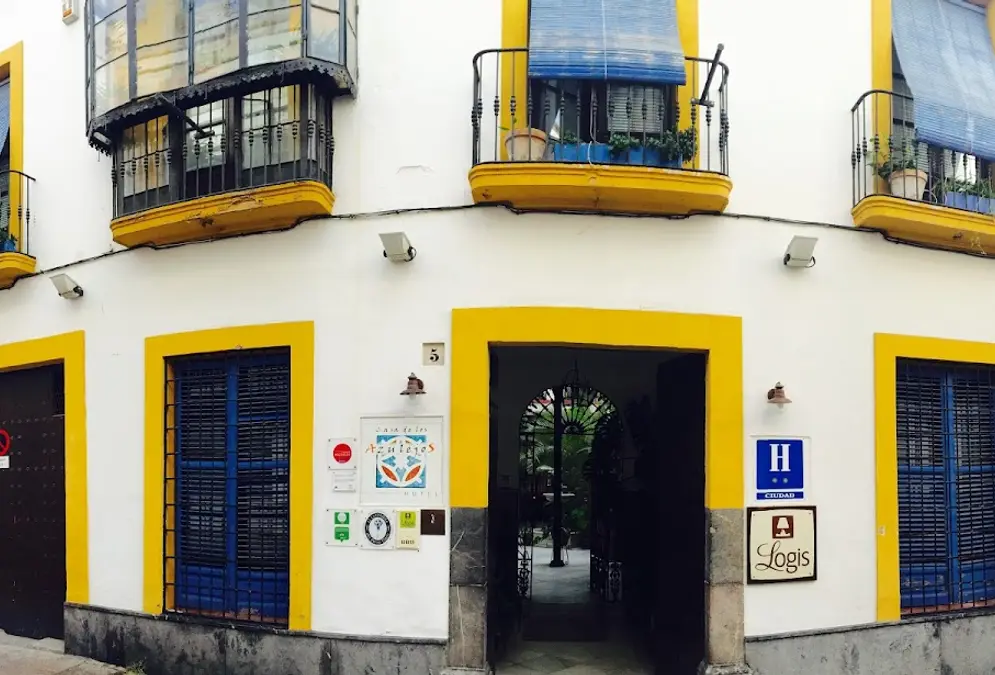
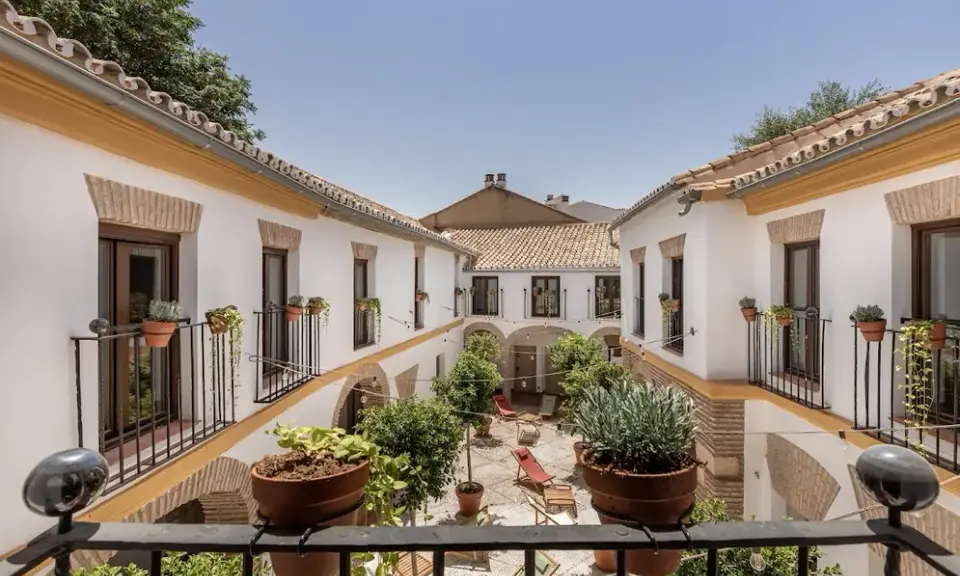
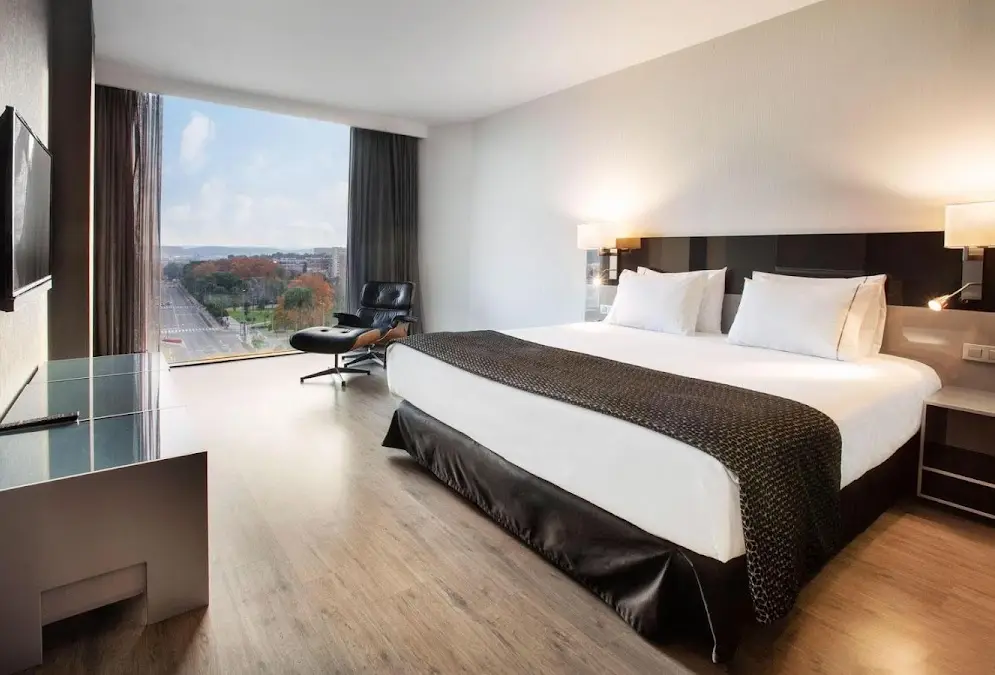
The Hospes Palacio del Bailio, a 5-star hotel in a 16th-century palace, has a Roman villa visible beneath its restaurant floor. The Eurostars Palace on the Paseo de la Victoria has a rooftop pool. For boutique character with Sevillian tiles and a pool, Casa de los Azulejos offers good value from €72. The Casa de las Comedias, on Calle Velázquez Bosco 140 metres from the Mezquita, occupies a 17th-century Corral de Comedias — Córdoba's original Golden Age theatre — converted into nine individually named boutique apartments. Budget travellers are well served by Cats Hostel, a social hostel in a converted historic building that provides good-value beds and a genuinely sociable common area within walking distance of all the main sights.
Gastronomy and local life
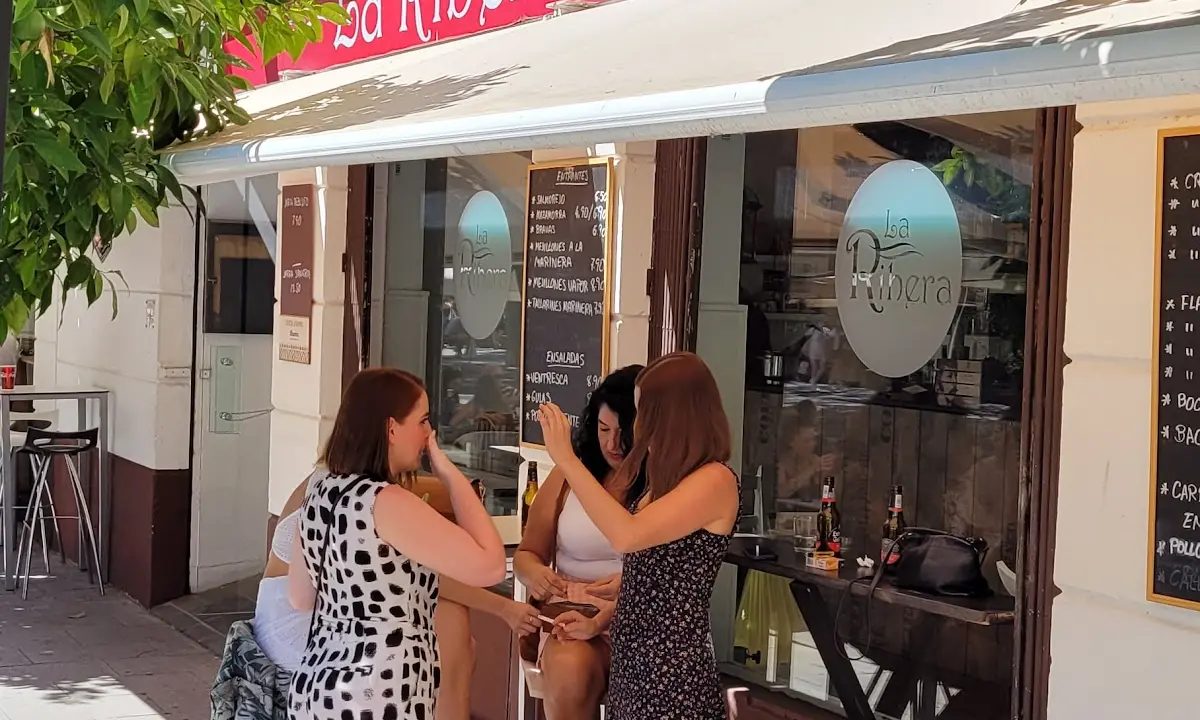
The Centro is the core of Córdoba's tapas culture. Bodegas Campos has been here since 1908, Taberna Salinas since 1879, and Mercado Victoria brings a modern food hall to a 19th-century pavilion. For artisan gelato, the natural-ingredient gelateria on Calle Historiador Díaz del Moral opened in 2025 with a 100% natural approach — no industrial bases, seasonal sorbets, and a chocolatería alongside the ice cream counter.
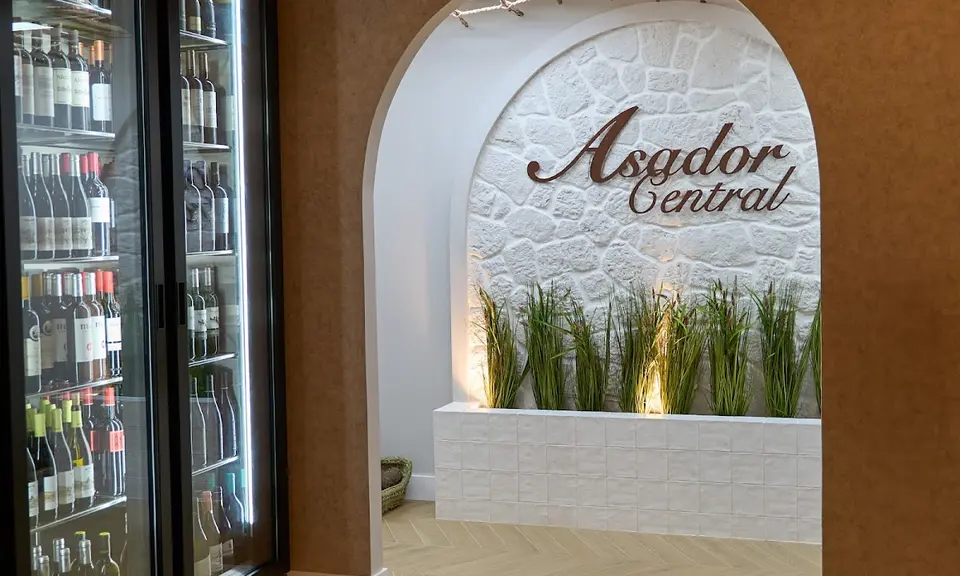
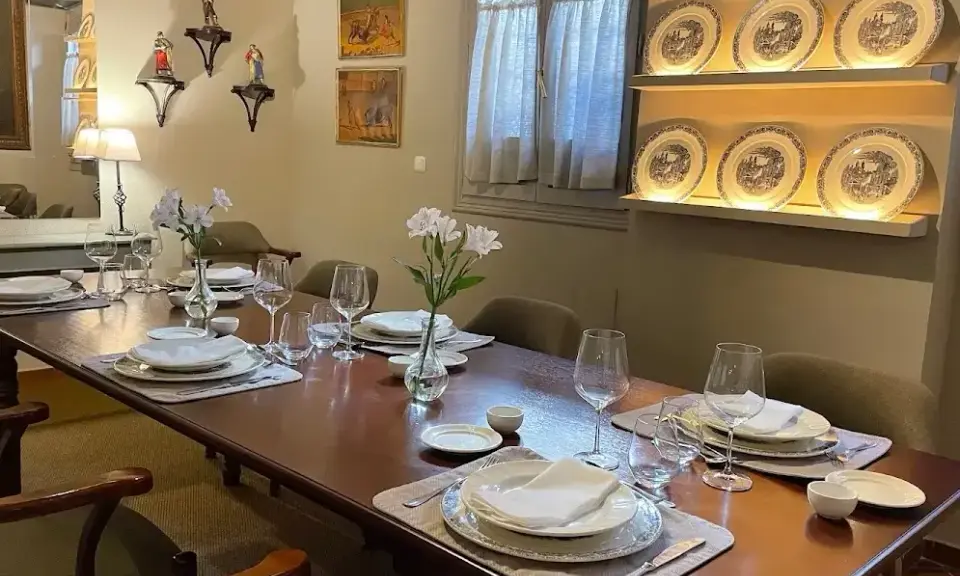
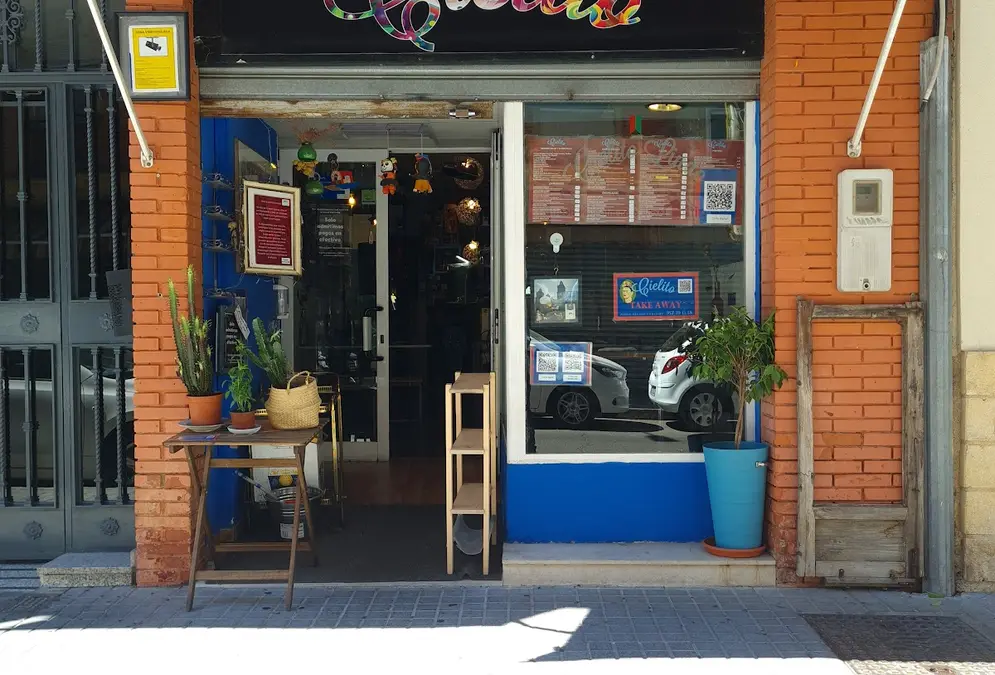
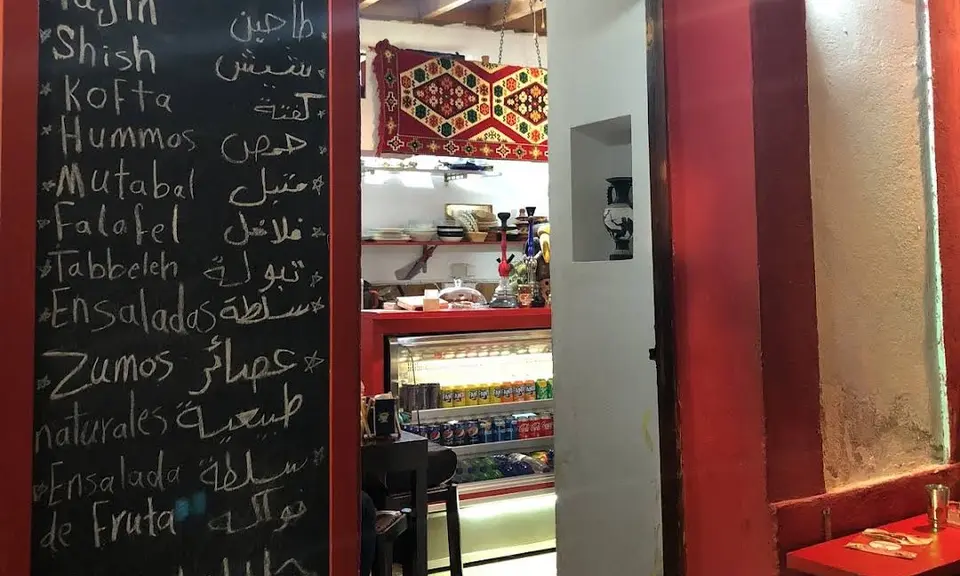
Taberna Los Berengueles occupies the former palace of the Marquesa de Valdeloro with a tree-filled patio. La Casa de Manolete Bistro serves creative food in the bullfighter's former home. For wood-fired grills and suckling lamb, Asador Central on Calle Doce de Octubre operates two authentic Zamora ovens — Repsol Guide-recognised, and a short walk from the Mezquita. El Astronauta provides a reliable mid-range option with a creative menu and good-value set lunch that draws a regular crowd of local office workers. Entre Lías is the neighbourhood's best wine-bar restaurant — a well-curated list of Andalusian wines paired with simple plates assembled around quality local ingredients. Cielito Lindo Café brings Mexican flavours to the historic centre — tacos, quesadillas, and aguas frescas in a colourful setting that stands out among the tapas-dominated dining landscape. Nearby, Restaurante Umaueyon serves halal-certified Moroccan tagine, couscous, and shawarma steps from the Mezquita, no alcohol on the menu.
All the wine-serving addresses above pour from the Montilla-Moriles appellation — the wine route guide explains the region in depth. For a structured introduction to the four styles — Fino, Amontillado, Oloroso and Pedro Ximénez — the local wine tasting evening runs at 20:00 in a wine shop on Calle Moriscos in this district, with tapas and sommelier guidance (from €24, 90 minutes). The food tour covers 3 hours of guided tastings in the century-old tabernas of the Centro and Judería.
Nightlife
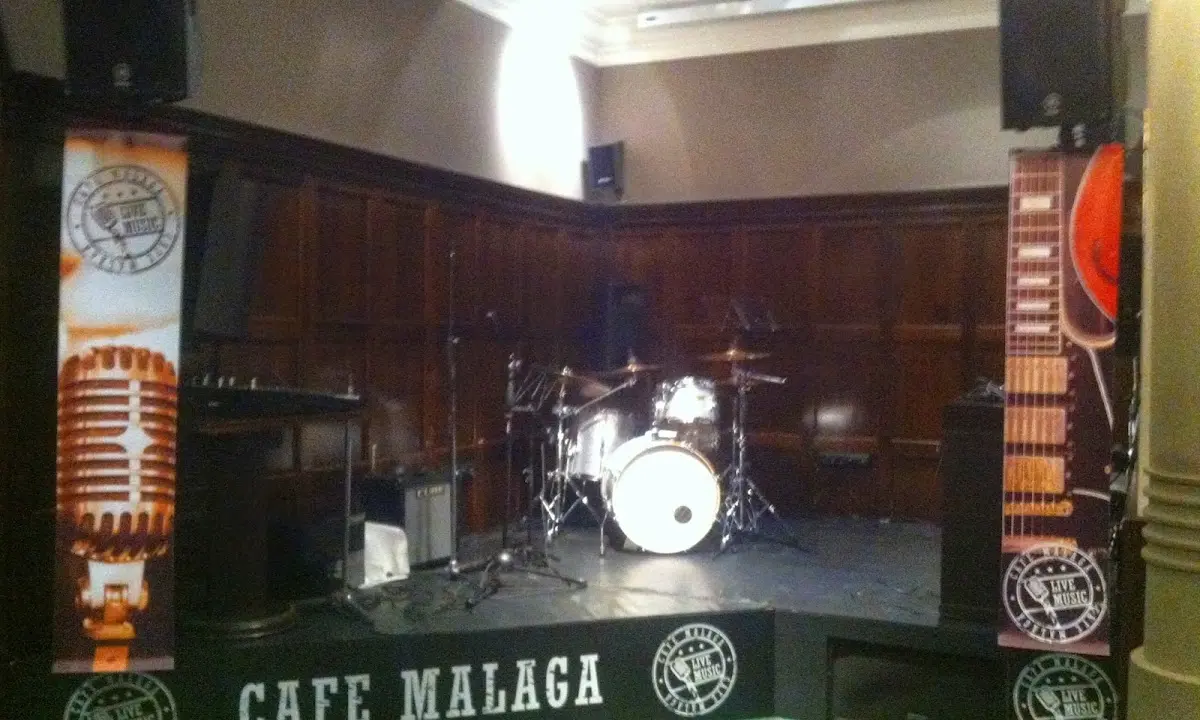
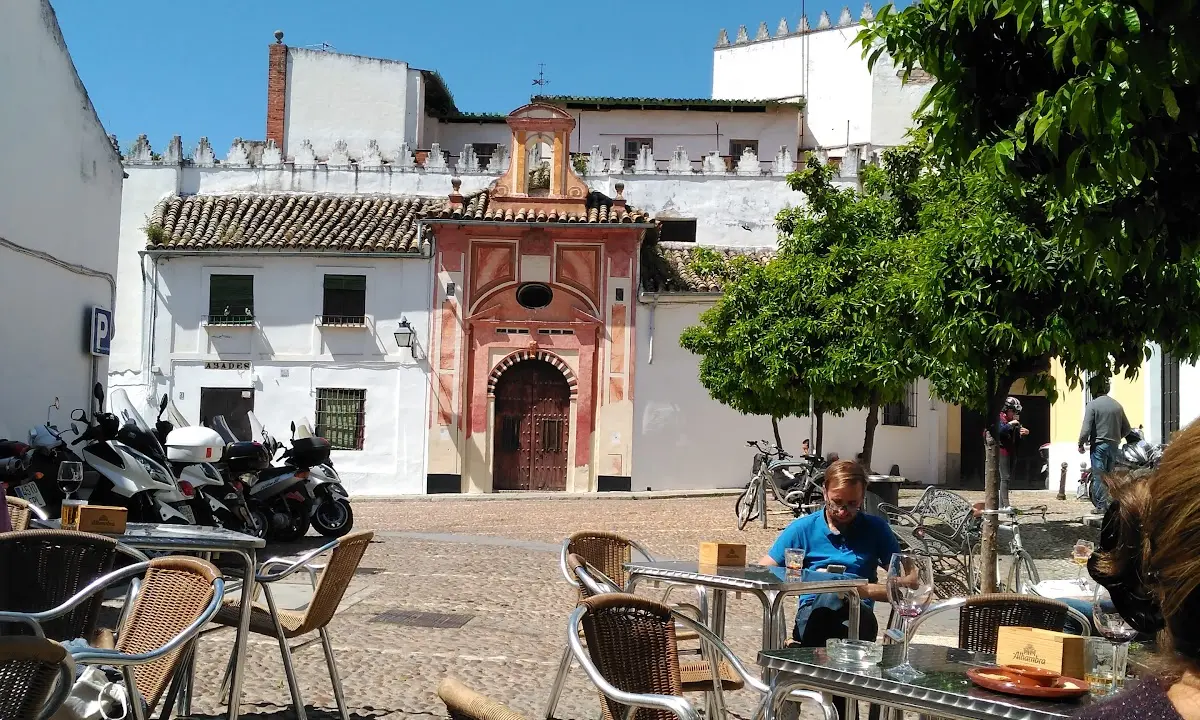
The historic centre has most of Córdoba's evening options. For wine: Taberna El Barón on Plaza de Abades has a Spanish wine list with homemade tapas; VinumPlay near the Roman Temple pours over 300 labels by the glass. Distrito Cocktail Bar does premium cocktails in a vintage setting. El Último Tango has live music and affordable cocktails. For craft beer: Cervecería Califa, the city's first local brewery, brewing its own IPA, lager, amber ale and stout on-site. Doble de Cepa hosts live flamenco in a traditional tavern near the Mezquita. Full listings in the bar guide and Córdoba by night guide.