
Jewish Quarter Heritage Walk
Walk Córdoba's medieval Jewish quarter in 1.8km: 14th-century synagogue, Casa de Sefarad, Calleja de las Flores, and Alcázar gardens. Free, two hours.
Seven tapas bars and bodegas across the Judería and Centro, from Bar Santos' legendary tortilla to Bodegas Campos' wine barrels. No reservations needed.
Six years specialising in heritage towns and cultural route planning across Córdoba province.
Click on any marker to see stop details. Numbered markers follow the suggested route order.
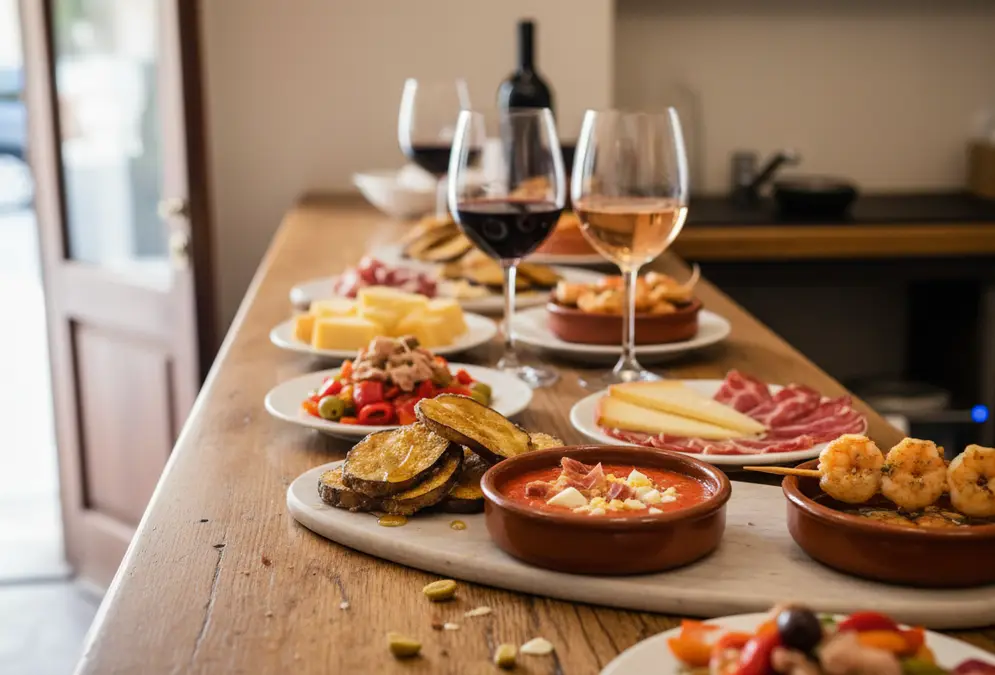
A good place to start: a traditional Córdoban restaurant that feeds tourists and locals alike, steps from the Mezquita. Order the salmorejo — thick, cold, garnished with diced jamón and hard-boiled egg.
Tip: Stand at the bar rather than taking a table — you pay the same, but service is faster and you get to watch the kitchen work.
A few streets into the Judería, Casa Mazal serves Sephardic-Jewish cuisine inside a medieval house: aubergine with honey and sesame, lamb with spices, almond-based desserts. Nothing else on this walk tastes like it.
Tip: The berenjena con miel (aubergine fritters with honey) is the dish to order. Small portion, so it works as a tapa mid-walk without filling you up.
Famous across Córdoba for one thing: the tortilla de patatas. Cut to order from a wheel so thick it barely fits on the plate. Counter seating only, cash preferred. No menu needed — just point at the tortilla.
Tip: Ask for tortilla al punto — slightly runny in the center. If they say it is all gone, wait five minutes; there is usually another one coming off the pan.
A terraced restaurant in the Jewish quarter with a shaded courtyard — good for a mid-walk pause. Order a glass of fino sherry and a plate of jamón ibérico. The food is traditional Córdoban: consistent, not flashy.
Tip: The upper terrace has rooftop views over the Judería's whitewashed roofscape. Worth the climb if there is a free table.
In business since 1879, Taberna Salinas has a framed photo of the current owner's grandfather on the wall. The rabo de toro (oxtail stew) is a Córdoba classic: dark, slow-cooked, served with bread to mop the sauce.
Tip: If you want to sit down for a half-ración rather than eat standing, arrive before 14:00 on weekdays — tables fill fast at lunch.
Known to every Cordoban as El Pisto, this is where the city's workers and retirees come for a glass of montilla and a tapa at noon. Tiled walls, loud conversation, a barman who knows every regular's order. Try the bacalao frito or the pisto manchego.
Tip: Order montilla wine rather than beer here — it is a local wine from the Córdoba province and pairs well with the fried fish tapas. A glass costs under €2.
The final stop: a bodega founded in 1908, walls covered in signed wine barrels from every visiting notable — bullfighters, politicians, chefs. Order a glass of house amontillado, pick a tapa from the bar, and read the names on the barrels while you eat.
Tip: The main dining room at the back is where tourists go. Stay in the front bar — it is cheaper, louder, and you can see the barrels better.
Córdoba's historic center packs more old-school tabernas per square kilometer than almost anywhere in Andalusia. This two-kilometer loop starts in the shadow of the Mezquita-Catedral and ends near Plaza de las Tendillas — seven stops, roughly 2.5 hours, eight small plates.
The Judería section opens at Bodegas Mezquita (salmorejo, order it at the bar), then moves to Casa Mazal for Sephardic cooking — aubergine with honey and sesame, lamb with spices — inside a 14th-century house. Bar Santos follows: one item, the tortilla de patatas, cut to order in wedges the size of a fist. Pause at Casa Pepe de la Judería for a glass of fino and jamón ibérico in the courtyard.
North of the old walls, Centro runs at a different pace. Taberna Salinas, open since 1879, serves rabo de toro in the same tiled room it always has. Taberna San Miguel — El Pisto to every local — draws workers and retirees at noon for montilla wine and bacalao frito. The walk ends at Bodegas Campos, a 1908 bodega whose walls are covered in signed wine barrels; a house amontillado costs under €2. Budget: €4–8 per stop, €30–45 total. No bookings needed anywhere on the route. For a sweet finish after the trail, Piacerino on Calle Historiador Díaz del Moral is a 100% artisan gelateria between the Judería and Centro, with natural-ingredient gelato and seasonal sorbets from €2.
Walk Córdoba's medieval Jewish quarter in 1.8km: 14th-century synagogue, Casa de Sefarad, Calleja de las Flores, and Alcázar gardens. Free, two hours.
Horseshoe arches, 10th-century caliphal baths, Moorish gardens, and Mudéjar tile work: a free 2.5km self-guided walk through Córdoba's Islamic heritage.
San Basilio, Judería, Palacio de Viana — three patio districts on one easy 2.5km circular loop. Free self-guided walk, best in May but good all year round.