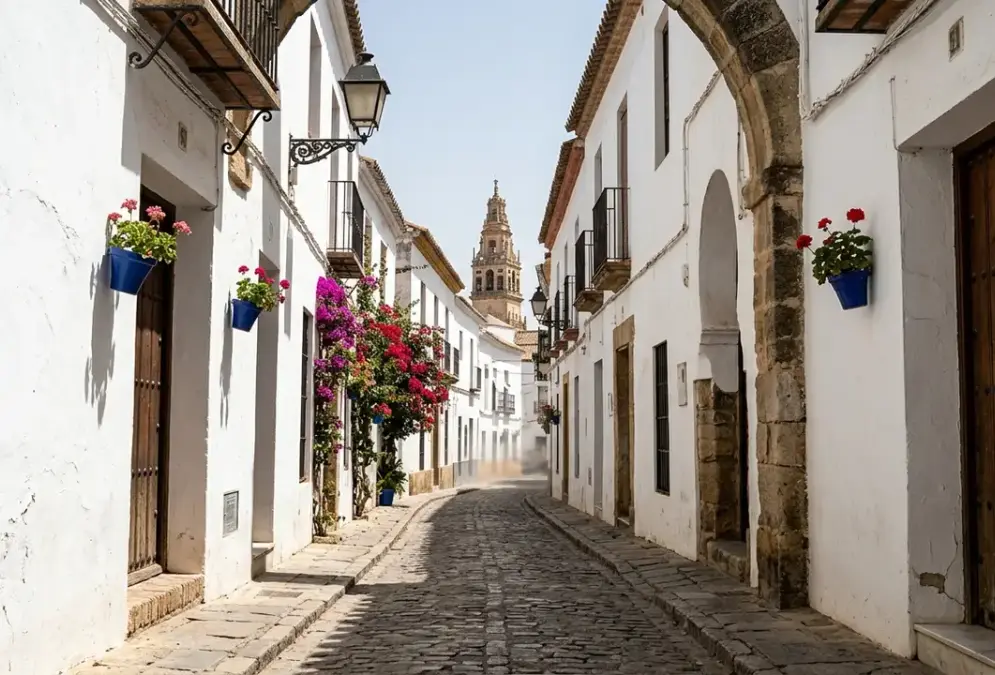
Peak summer heat
Córdoba in July
July is Córdoba at its hottest and, paradoxically, its most dramatic. Temperatures regularly touch 38°C. The Guitar Festival concludes in early July. After that, the city enters deep summer: a nocturnal rhythm, empty midday streets, and the kind of heat that makes the shade of the Mezquita feel like sanctuary.

Written by
María Fernanda González Ten years covering Córdoba's UNESCO heritage sites, sourcing from Junta de Andalucía documentation.
Updated Published
July tests your tolerance for heat, and rewards it generously. Daytime temperatures hit 38°C regularly, the streets empty between 2pm and 7pm, and the city shifts to a nocturnal schedule that most visitors from northern Europe find disorienting at first and addictive within 48 hours. The Guitar Festival wraps up in early July, leaving the second half of the month genuinely quiet.
The rewards for sticking it out: hotel prices drop 25–35% from spring peaks, queue times at the Mezquita virtually disappear, and Córdoba's night-time dining scene — terraces open until midnight, cold salmorejo served at 10pm, the sound of conversation echoing off stone walls — is some of the best in Andalusia. Hydrate aggressively, carry a refillable bottle, and treat the siesta as non-negotiable.
Monthly guide
In this guide
Everything you need to plan a July visit: weather, events, things to do and practical advice.
Jump to a section
July at a glance
- Temperatures
- 24–38°C
- Rainy days
- 0–1/month
- Daily sunshine
- 12 h/day
- Crowd level
- Moderate
- Key event
- Guitar Festival ends early Jul
- vs peak season
- 20–30% cheaper than spring
- Hotels from
- €60/night
- Best for
- Guitar Festival, nocturnal city
Extreme heat — morning and evening strategy is essential
July temperatures reach 38°C with no rain. Extended outdoor exposure in the middle of the day is dangerous.
- Visit all outdoor monuments before 10am or after 6:30pm
- Carry 2+ litres of water and drink before feeling thirsty
- Guitar Festival outdoor concerts are the exception — evening temperatures are more manageable
July weather in Córdoba
Early July (1–10) Guitar Festival ends
Temperatures 23–36°C
Sunshine 12 h/day
Rainy days 0 days
Guitar Festival conclusion. Outdoor evening concerts in the Alcázar gardens — still manageable at 26–28°C after sunset. Midday impossible for sightseeing.
Mid July (11–20) Peak heat
Temperatures 25–38°C
Sunshine 12 h/day
Rainy days 0 days
Peak heat of the year. Córdoba enters deep summer. Streets empty at noon. The city is genuinely nocturnal — alive from 9pm, sleeping from 2am to 9am.
Late July (21–31)
Temperatures 24–37°C
Sunshine 12 h/day
Rainy days 0 days
Consistent extreme heat. Locals who have not gone to the coast are living in a city adapted to survive it. August follows without relief.
Rain strategy
July has essentially no rain. The upside: you never need an umbrella. The downside: the heat builds unchecked. Córdoba's thick-walled buildings — the Mezquita's metre-deep stone walls, the cool indoor museums — are your best friends in this month.
How July compares to the rest of the year
| Month | Temperatures | Sunshine / day | Rainy days |
|---|---|---|---|
| January | 5–13°C | 5–6 h | 8–9 |
| February | 8–16°C | 7 h | 7–8 |
| March | 11–18°C | 7–8 h | 5–6 |
| April | 13–22°C | 9 h | 4–5 |
| May | 16–27°C | 10–11 h | 3–4 |
| June | 20–32°C | 11–12 h | 1–2 |
| July | 25–38°C | 12 h | 0–1 |
| August | 22–37°C | 11–12 h | 0–1 |
| September | 18–28°C | 8–9 h | 3–4 |
| October | 12–22°C | 7–8 h | 6–7 |
| November | 8–17°C | 5–6 h | 8–9 |
| December | 5–13°C | 5 h | 9–10 |
Plan your July trip to Córdoba
We've set the search to 14–17 July 2027 as a starting point.
Search on Booking.comFree to search · No sign-up needed · Change dates any time
Tours worth booking
Best Seller
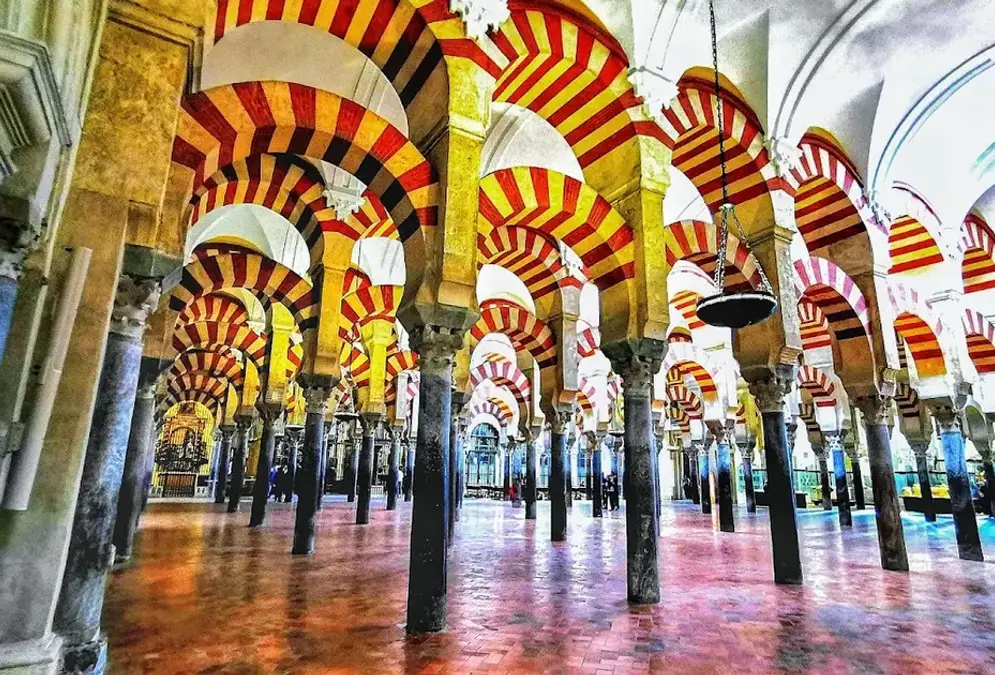
Mosque-Cathedral Skip-the-Line Guided Tour
Skip the queue and explore the Mezquita-Cathedral with a knowledgeable local guide. Discover 13 centuries of layered history in one of Spain's most iconic monuments.
Skip the line 1.5 hours
From €29
4.7 (7,293 reviews)
Reserve Your Spot
✓ Verified GetYourGuide reviews
Books up weeks ahead in peak season
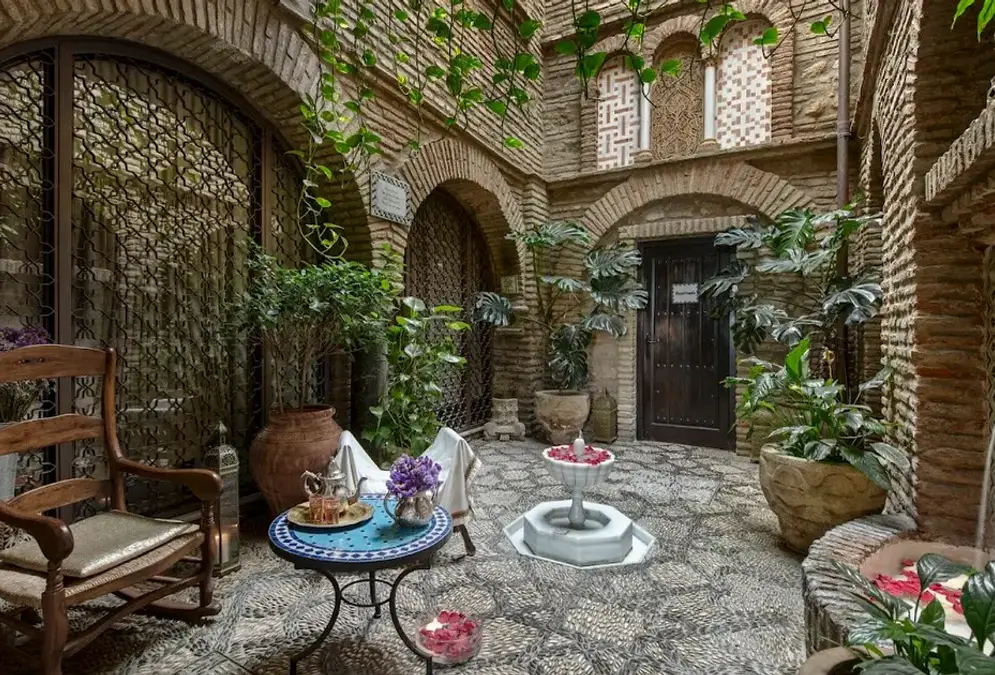
Hammam Al Ándalus Entry Ticket
Relax in the ancient Arab bath tradition at Hammam Al Ándalus. Immerse yourself in warm and cold thermal pools beneath stunning Moorish arches in the heart of Córdoba.
1.5 hours
From €35
4.7 (820 reviews)
Reserve Your Spot
✓ Verified GetYourGuide reviews
Rent a car for the trip
ExploreCordoba earns a small commission if you book a stay, a car or a tour through this section, at no extra cost to you.
July events
Typically July 1–11 International festivalWorld class
Festival Internacional de la Guitarra — finale
The final days of the Guitar Festival take place in early July. This is when the most prestigious headline concerts often occur — the culmination of 10–12 days of world-class guitar music. The outdoor Alcázar gardens setting is particularly dramatic on warm July evenings.
Key moments:
- · Final headline concerts typically on the penultimate and last evenings
- · Free fringe events continue until the festival closes
- · The Alcázar gardens at night during the festival is a once-in-a-trip experience
Tips:
Festival finale tickets often command the highest prices. If budget is a constraint, attend the free parallel events earlier in the festival week.
Early July (1–July): no major events
After the Guitar Festival concludes, July is event-free. Like August, this is part of its character: the city stripped of its festival performance. The Mezquita at 9am in July, with light slanting through the entrance arches and almost no one inside, is a specific experience available only in the deep summer months.
Next confirmed dates in July
International Guitar Festival
24 June – 10 July 2027
What to do in July
Guitar Festival finale (early July)
Catch the final days of the Guitar Festival in early July. Headline Alcázar concerts, free patio performances, and the concentrated energy of a festival nearing its close. July evening temperatures at the outdoor venue — warm and still — are perfectly suited to the outdoor concert format.
ExploreMezquita-Catedral (early morning)
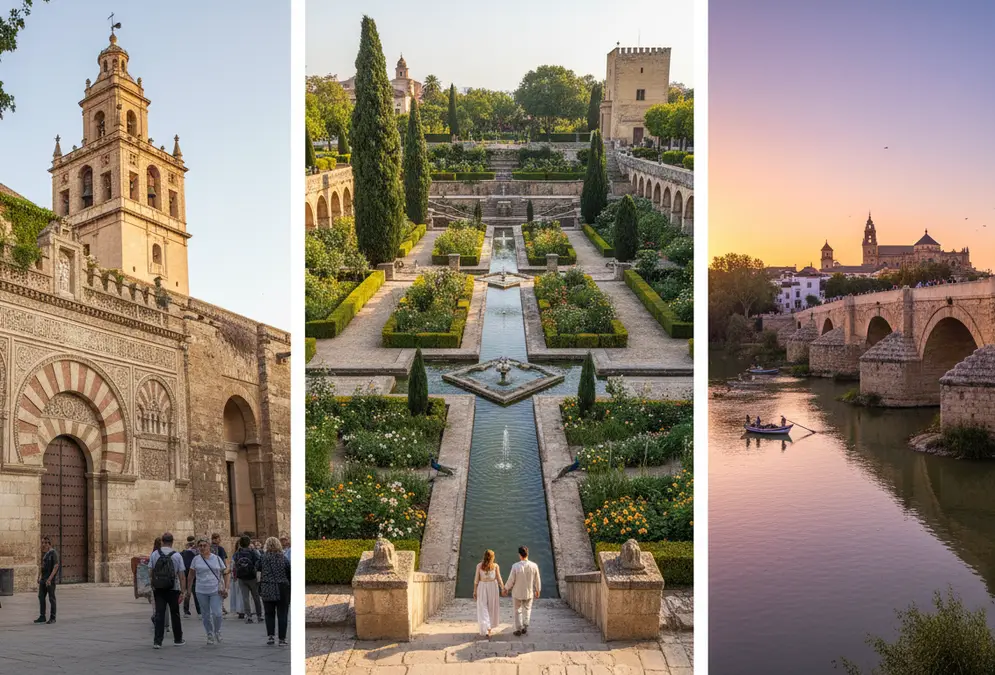
At 8:30am in July, the Mezquita is cool, nearly empty (free entry until 9:30am Mon–Sat), and lit by the specific quality of early summer light. After 11am, both the heat and the visitor numbers make the experience significantly harder. July is one of the clearest arguments for the free morning window.
ExploreHammam Arab Baths
The underground baths near the Mezquita are perfectly temperature-controlled year-round. In July, a midday 90-minute slot (€29–35) transforms the hottest hours into the most relaxing part of the day. Book 5–7 days ahead.
ExploreNighttime tapas trail (9pm–midnight)
July evenings from 9pm are the reward for surviving the day. The historic centre comes alive, temperatures drop to 27–28°C, and the outdoor terraces fill with locals and summer tourists. The evening walk from Plaza de la Corredera to the Mezquita district is the definitive summer Córdoba experience.
ExploreAlcázar gardens (evening)
The Alcázar opens for evening visits in summer. The terraced gardens with fountains and long reflecting pools, lit in the late golden light at 8–9pm, are genuinely beautiful. Check summer opening hours — they vary and the evening sessions are separate from daytime entry.
ExploreArchaeological Museum (afternoon refuge)
One of the best Roman collections in Andalusia, housed in a 16th-century palace built over actual excavated ruins visible through glass floors. July afternoons here — air-conditioned, unhurried, with excellent exhibits — are the right use of 1pm to 5pm.
ExploreWhere to eat in July
July dishes to try
- Salmorejo — The cold tomato soup is not optional in July. Thick, rich, served ice-cold — the definitive Córdoba heat-survival dish.
- Gazpacho — Drunk by the glass rather than eaten as a starter. Cold, sharp, and restorative at 37°C.
- Pescaíto frito — Mixed fried fish at an outdoor terrace table from 10pm. The combination of warm July air and cold local wine with fried fish is specific to this month.
Practical tips
- Evening dining only starts at 9:30–10pm in July. Arriving at 8pm is arriving alone.
- The menú del día (€11–14, 2–4pm) is the right lunch choice — air-conditioned dining during the worst heat hours.
- Cold dishes are everything in July: salmorejo, gazpacho, ensalada cordobesa, ajo blanco. Save the heavier meat dishes for October.
What to pack for July
July demands the lightest clothing available. The goal from morning until midnight is staying cool — everything else is secondary.
Packing checklist
- Lightest fabrics: linen, loose cotton, technical mesh
- Wide-brim sun hat — essential for any outdoor time before 7pm
- Factor 50 sunscreen — UV intensity in July is at its annual peak
- Large reusable water bottle (2L minimum, refill at city fountains)
- Sunglasses with UV protection
- One light layer for air-conditioned interiors (some museums are aggressively cold)
For a full breakdown by activity and luggage tips for Córdoba's cobblestones, see the complete Córdoba packing list.
Crowds and prices in July
July 12–31 (post-Guitar Festival) Low season
Deep summer quiet
Mezquita: significantly fewer visitors than peak spring season
Hotels: €60–100/night (budget), €100–170 (mid-range) — well below April–May
Walk into most restaurants without a reservation
No major events competing for accommodation or attention
July 1–11 (Guitar Festival) Festival finale
Festival final week
Guitar Festival finale week sees the highest demand of the festival run
Headline concert tickets at premium — book ahead
Central hotels at Guitar Festival prices (15–25% above base)
Practical tips for July
1
The Guitar Festival finale is worth planning around
The last two or three evenings of the Guitar Festival are often its most prestigious. Outdoor concerts in the Alcázar gardens at 28°C under a July sky are a specific experience that cannot be replicated.
2
Adopt the siesta seriously
The hours between 2pm and 6pm are genuinely dangerous in July. Rest, stay indoors, use air conditioning. Visitors who try to sightsee at 3pm in July do not enjoy it. Those who embrace the siesta and then explore from 7pm find the city entirely transformed.
3
Hydration is not optional
At 38°C, dehydration sets in faster than you expect. Carry 2 litres minimum, refill at fountains (Córdoba tap water is safe and cold), and drink before you feel thirsty. Symptoms of heat stress — headache, dizziness, nausea — can appear without warning.
4
The Mezquita free window is uniquely valuable in July
Monday–Saturday 8:30–9:30am. In July, this is the coolest the Mezquita will be all day — the stone hasn't absorbed the heat yet and visitor numbers are at their lowest. Come at 8:30am and you will often have large sections of the building entirely to yourself.
Is July right for you?
July is ideal if you...
- Are visiting for the Guitar Festival finale (early July)
- Enjoy the nocturnal rhythm of a properly hot southern city
- Want empty monuments and hotel prices well below spring levels
- Can adapt your schedule to mornings and evenings without frustration
Consider another month if you...
- Cannot handle 38°C heat or need to sightsee in the afternoon
- Are travelling with heat-sensitive children or elderly companions
- Want a full events calendar beyond the Guitar Festival finale
Frequently asked questions
Is July a good time to visit Córdoba?
July rewards visitors who embrace the heat schedule. 38°C afternoons make conventional daytime sightseeing impossible, but early mornings (before 10am) and evenings (from 7pm) are exceptional. The Guitar Festival concludes in early July, hotel prices are well below spring, and the Mezquita at 8:30am in July is one of the emptiest and most atmospheric versions of itself.
How hot does Córdoba get in July?
July is Córdoba's most extreme month. Average highs reach 38°C, with regular spikes above 40°C. The Guadalquivir Valley traps heat: mornings are manageable before 10am, but midday is brutal. Most visitors adopt the local rhythm: early monuments, long lunch break indoors, and evening activity from 8pm onwards.
What is there to do in Córdoba in July (beyond the Guitar Festival)?
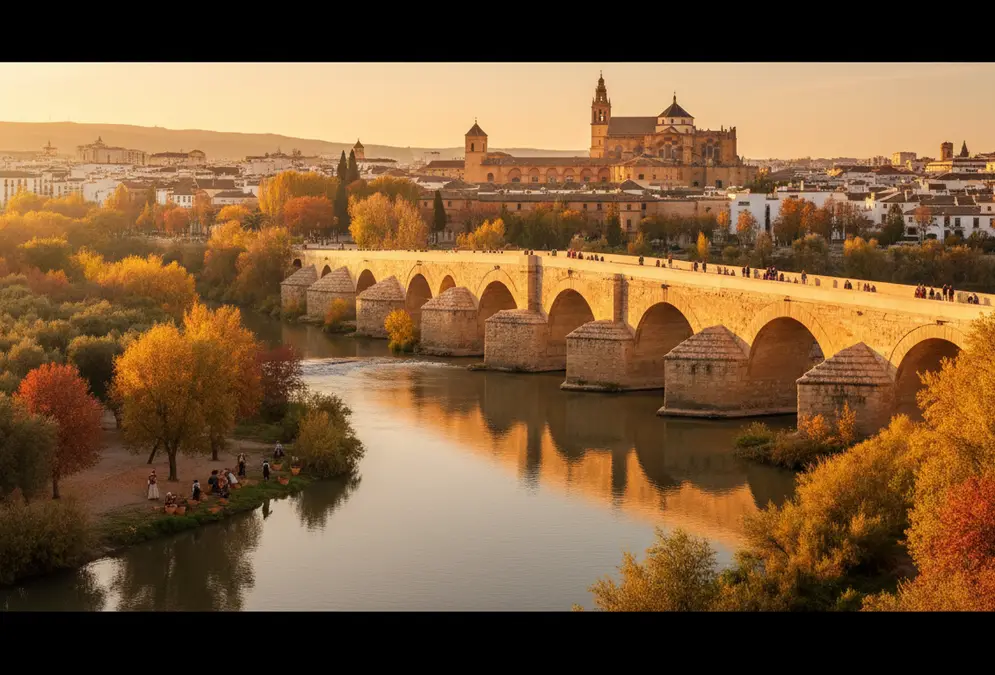
Early morning monument visits (Mezquita, Alcázar before 10am), the Hammam Arab Baths at midday, air-conditioned museum afternoons (Archaeological Museum), and evening tapas trails from 9pm. The Roman Bridge at sunset (around 9:15pm) is one of the most atmospheric July experiences.
How much do hotels cost in Córdoba in July?
July prices are moderate — below spring peak. Budget options start at €60–80/night, solid mid-range hotels run €100–170. Guitar Festival week (late June/early July) adds a small premium. For the rest of July, availability is generally good.
Is Córdoba worth visiting in July?
Yes, if you adapt. July offers the Guitar Festival finale (early July), significantly cheaper hotels (25–35% below May peak), and near-empty monuments in the early morning. The city is genuinely beautiful at night. Visitors who struggle with extreme heat are better off in October. Those who embrace the nocturnal pace often find July memorable.
What time do monuments open in July in Córdoba?
The Mezquita-Catedral opens at 8am in summer; arrive by 8:15am to beat the heat and queues. The Alcázar opens at 8:30am. Medina Azahara is best visited first thing when temperatures are still tolerable. Most major monuments close or limit access between 2pm and 5pm. Evening visits (8pm–10pm) are cooler but busier.
Further reading
Sources
3 references Show Hide
- Turismo de Córdoba (opens in a new tab)
Official tourism board for visitor information, practical planning, and destination overviews.
- Ayuntamiento de Córdoba (opens in a new tab)
Municipal source for civic services, official notices, and public event information.
- Patios de Córdoba (opens in a new tab)
Official patios portal with routes, access details, and festival information.