UNESCO Patio Festival, Semana Santa, perfect temperatures. Spring is when Córdoba comes alive. Flowers everywhere, terraces full, the city buzzing. It is also peak season.
ExploreCordoba earns a small commission if you book a stay, a car or a tour through this section, at no extra cost to you.
Why visit in spring
UNESCO Patio Festival
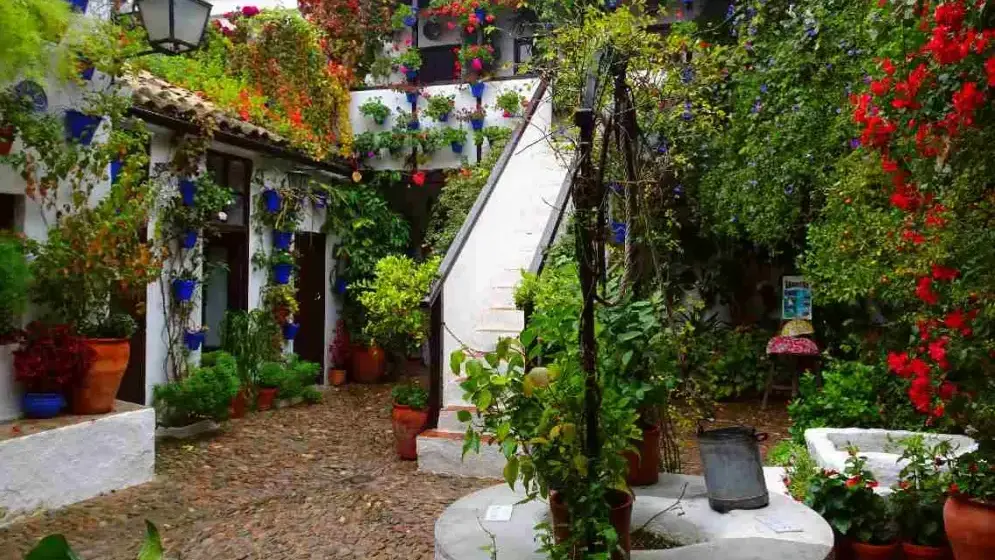
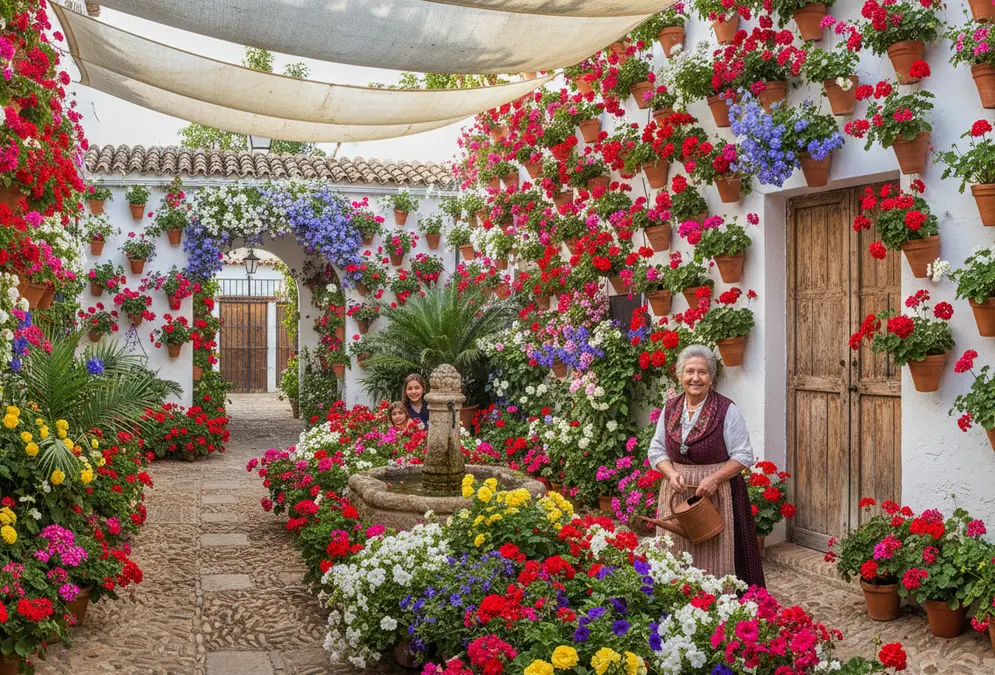
This is what people come to Córdoba for. In May, 50 private patios open their doors. Red geraniums spilling over white walls, singing fountains, a century-old competition. If you only visit Córdoba once in your life, make it May.
Perfect temperatures
Between 18 and 28°C, this is the ideal range. You can walk all day without melting (unlike summer). Evenings are mild, perfect for terrace dining. The heat has not yet become overwhelming.
Gardens in full bloom
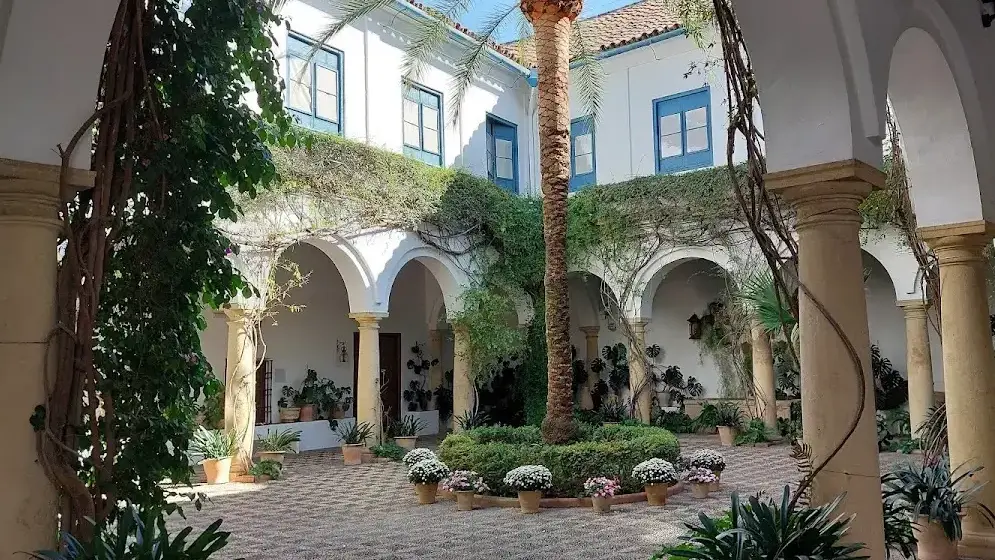
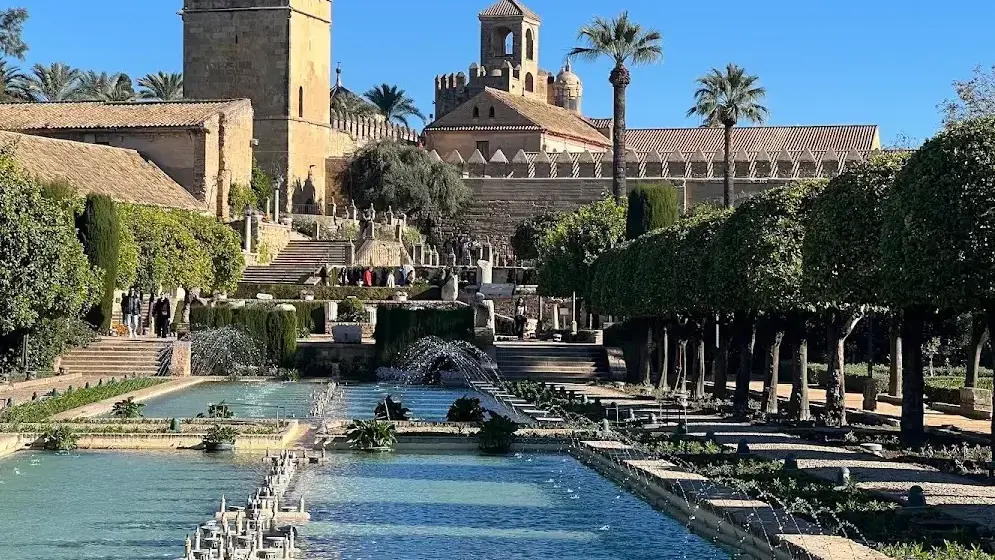
The gardens of the Alcázar are at their peak. Roses, jasmine, orange blossom. The Palacio de Viana with its 12 patios becomes an explosion of colour. Now or never.
Traditional festivals
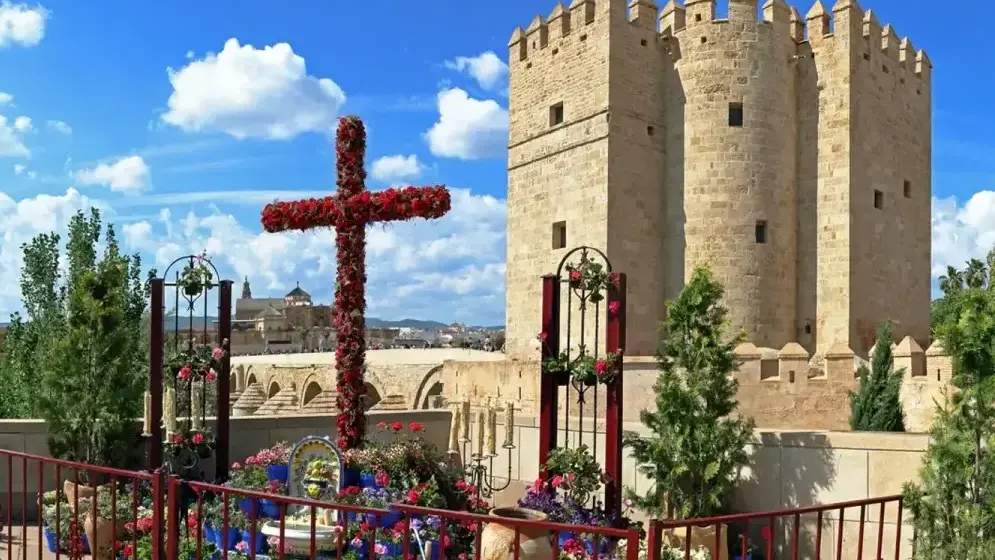
Semana Santa in April with its night-time processions, Batalla de las Flores (a flower parade with 80,000 carnations), Cruces de Mayo (giant floral crosses in every neighbourhood), then the Feria at the end of May. You experience authentic Andalusia, not a tourist re-enactment.
Extended opening hours
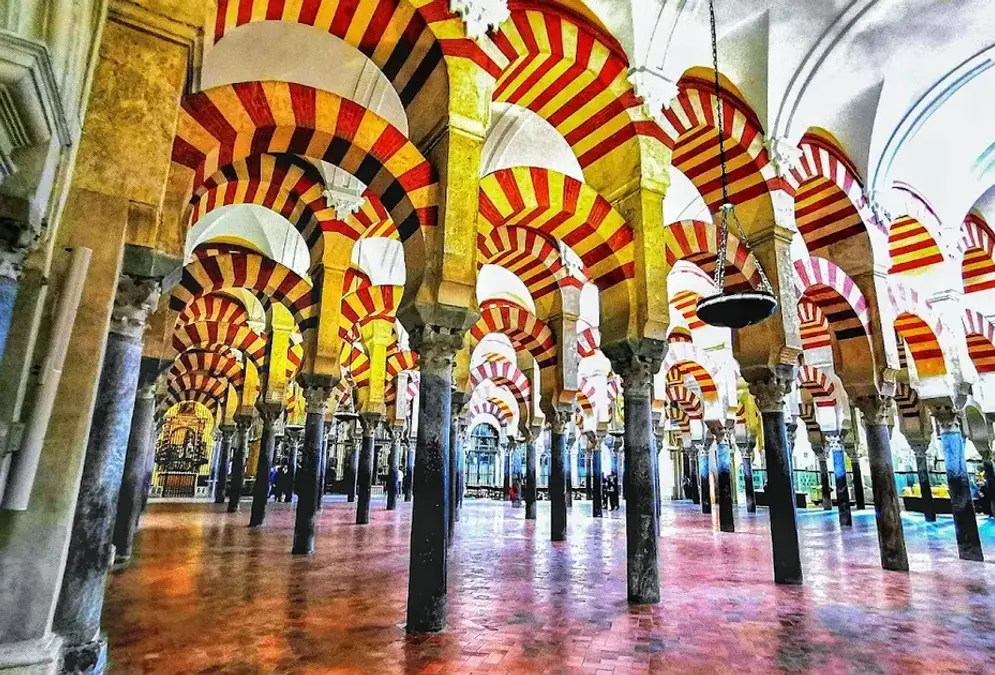
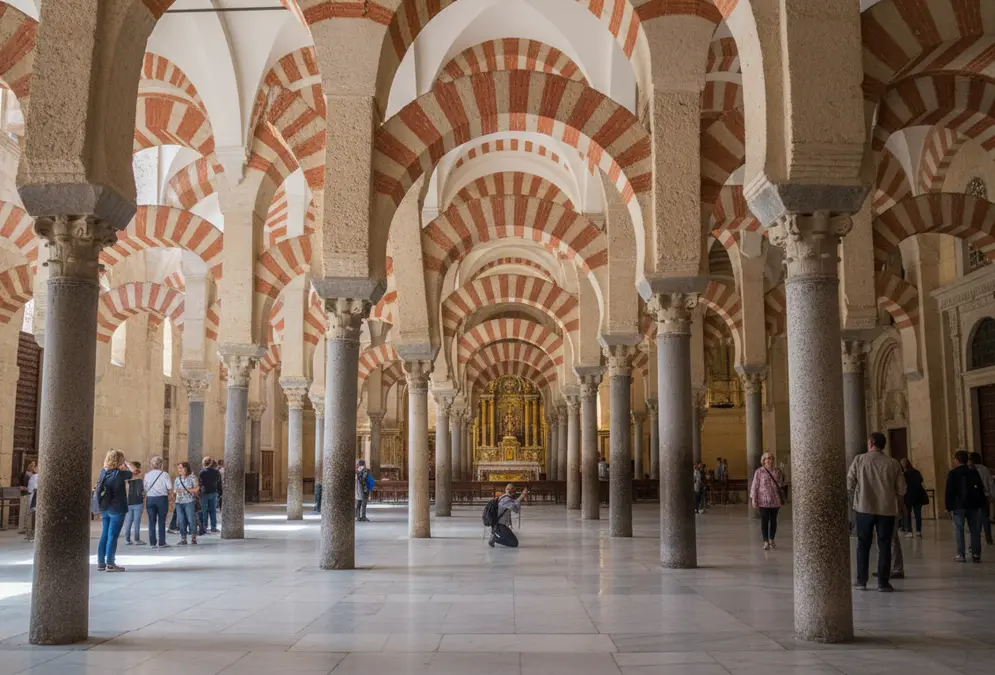
Monuments stay open longer than in winter. The Alcázar closes at 20:00 (versus 18:00 in winter), and the Mezquita offers evening visits. You have plenty of time.
Day trips into the countryside
The Andalusian countryside is green and flowering in spring (it scorches in summer). Red poppies in the fields, Medina Azahara surrounded by wildflowers. If temperatures are already climbing late in the season, the AguaSierra water park in Villafranca typically opens from June with its slides and pools.
“If you only visit Córdoba once in your life, make it May.”
Local saying
Palacio de Viana
12 flowering patios in the heart of Córdoba
Mayo Festivo: five weeks, four festivals
Córdobans call it the Mayo Festivo. From the first carnation thrown at the Batalla de las Flores in late April to the last sevillana danced at the Feria at the end of May, the city runs on festival time. Only about five days across the entire stretch have no active celebration. It is the densest concentration of traditional festivals anywhere in Andalusia.
The sequence works like a relay. The Batalla de las Flores opens the season in late April with a flower parade down the Paseo de la Victoria. Days later the Cruces de Mayo go up in squares across the city (29 April to 3 May in 2027). The crosses come down and the Patio Festival opens its doors for two weeks, provisionally 5 to 18 May. After the patios close the city catches its breath for a few quieter days before the Feria launches, 22 to 29 May. Eight days of horses, casetas and sevillanas carry the celebration to the end of the month. The Ayuntamiento confirms the exact Patios and Cruces dates from January.
Festival calendar
Late Apr
Batalla de las Flores
29 Apr – 3 May
Cruces de Mayo
5 – 18 May
Patios (UNESCO)
19 – 21 May
Quiet window
22 – 29 May
Feria de Córdoba
When crowds peak, and when they don't
A practical breakdown for 2027. Use this to pick your dates, not just your festival.
Event
Peak days
Less crowded alternative
Semana Santa21 – 28 Mar 2027
Wed 24 – Fri 26 Mar. Procession routes near the Mezquita and Judería lanes are the flashpoints. Good Friday midnight: absolute maximum.
Palm Sunday (21 Mar) and Holy Saturday (27 Mar). Side streets off the official route see fewer people. Reach the Judería by 20:00 to claim a spot before the procession arrives.
Patio FestivalEarly May 2027 (provisional)
The opening weekend. Flamenco evenings draw extra crowds, and Saturday afternoon is the single worst window.
The second week, on weekday mornings, 11:00–12:30. Santa Marina and San Lorenzo routes, not the Judería.
Feria de Córdoba22 – 29 May 2027
The final Thursday to Saturday, evenings after 20:00. The fairground at El Arenal is packed; the historic centre is quieter than usual.
Monday and Tuesday evenings. Daytime any day (morning horse parade, 11:00). The Mezquita and Alcázar are easier to visit during Feria week than during the Patio Festival.
Note: during Semana Santa and Feria, some roads in the historic centre close to traffic. Check local notices if you're driving or need wheelchair access.
How long should you stay?
One week (29 Apr – 5 May): Catches the Cruces de Mayo in full swing plus the opening days of the Patio Festival. The most festival per day.
Two weeks (late April – 10 May): Covers the Batalla, the Cruces and the best of the Patios. Enough time to explore without rushing.
The full month: Arrive late April, leave at the end of May. You see everything, including the Feria. The few days between Patios closing and Feria opening are ideal for visiting the Mezquita and Medina Azahara without festival crowds.
Use the calendar above to see exactly where your dates fall.
The festivals in detail
21 – 28 March 2027
Holy Week
Semana Santa
Córdoba's Holy Week is different from other Andalusian cities. More intimate processions, smaller crowds than Seville. The brotherhoods carry pasos (religious floats) through the narrow lanes of the Judería. The night-time atmosphere, with candles lighting the white walls, is unlike anything else in Spain.
Best moments:
Holy Monday: the Gypsy procession (deeply moving)
Holy Friday morning: the "Sentencia"
Friday night: the "Cristo de la Expiración" procession
Tip:
Arrive 30 minutes early to find a spot. The lanes of the Judería offer the best views. The mood is solemn — no flash photography.
The flower parade that kicks off the Mayo Festivo. 80,000 carnations fly between decorated floats and crowds lining the Paseo de la Victoria. Andalusian costumes, festive music, a joyfully participatory atmosphere. This is the signal: Córdoba's spring is officially here.
The spectacle:
13 flower-covered floats
80,000 carnations thrown
Traditional Andalusian costumes
Tip:
Arrive before noon on the Paseo de la Victoria. The parade lasts 2–3 hours. Wear colourful clothes to join the party spirit.
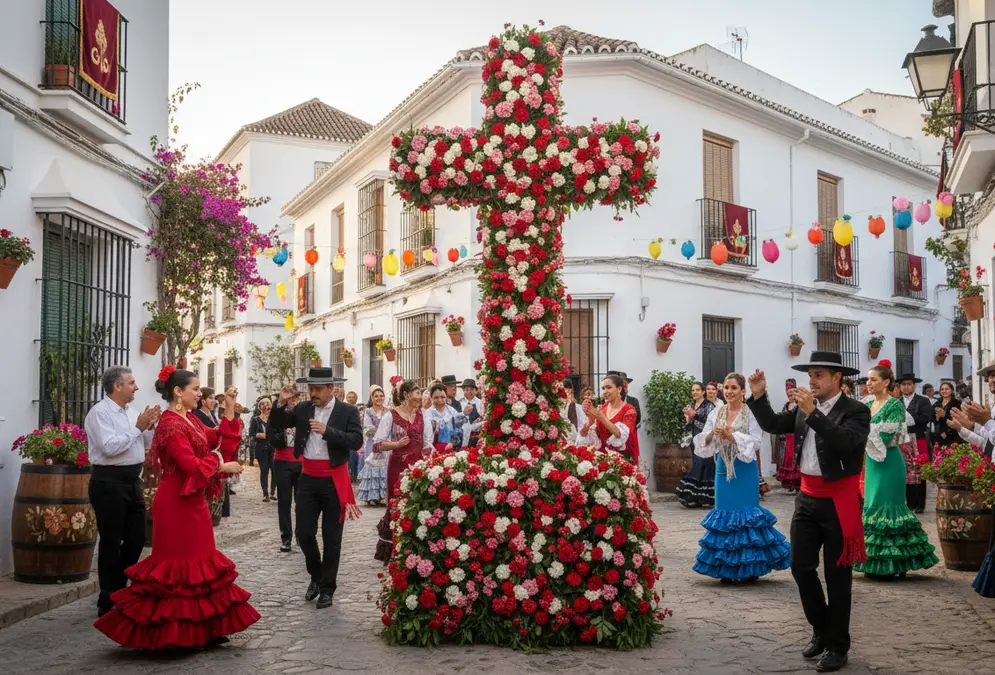
At the start of May, giant crosses (3–4 metres tall) smothered in flowers appear in squares and patios across the city. Each neighbourhood competes in creativity. Music, dancing, tapas and wine flow freely alongside the crosses — the Andalusian version of a neighbourhood street party, but taken seriously.
Where to go:
Plaza de San Agustín (the most spectacular)
San Cayetano (more local, fewer tourists)
Plaza de la Magdalena (central, easy to combine)
The vibe:
Festive and grassroots. Locals pull chairs into the street, bodegas improvise stalls. The evening (from 20:00) is when it clicks into place.
Around fifty private patios open their doors for twelve days. Whitewashed courtyards become hanging gardens of geraniums, jasmine and ceramics. The city's most distinctive experience, and the reason hotels fill by January.
Opening hours:
11:00–14:00 and 18:00–22:00 daily
Free entry (queues 30–60 min at popular patios)
Pick 8–10 patios for a half-day
Navigation tip:
The evening slot has the best light and shorter queues. San Basilio and Santa Marina are less crowded than the Judería. Get the official map at the tourist office.
A week of sevillanas, horses and casetas at a dedicated fairground 2km from the historic centre. The fairground is free to enter. Most casetas are private — belonging to associations, guilds and families — but the wide avenue between them is fully public: you walk it, watch sevillanas being danced through open tent flaps, hear competing sound systems. City council and political party casetas welcome all visitors.
Good to know:
Venue: El Arenal, 2km south of the historic centre
Hours: noon until 6 am (real atmosphere starts after 20:00)
Dress code: casual by day, dressed up in the evening
The experience:
Go on a weeknight if possible. Sip rebujito (fino + lemon Fanta), watch sevillanas through the open tent flaps, stay until midnight at least.
In May, Córdoba transforms into an open-air garden
UNESCO Patio Festival
Early May 2027 (provisional)
UNESCO
Free
The must-see event
For 12 days in May, around fifty private patios open their doors to the public. These inner courtyards of traditional houses transform into hanging gardens. Hundreds of pots of red and pink geraniums spill over whitewashed walls. Fountains, ceramic tiles, the scent of jasmine. It has been inscribed on UNESCO's Intangible Cultural Heritage list since 2012.
How it works
• 50 participating patios spread across several neighbourhoods
• Hours: 11:00–14:00 and 18:00–22:00 (avoid the midday heat)
• Free but expect queues (30–60 min at the most popular ones)
• Official map available at the tourist office with suggested routes
Tips to beat the crowds
• Visit early morning (11:00–12:00) or late evening (20:00–21:00)
• Weekdays over weekends (fewer local day-trippers)
• Pick 8–10 patios rather than trying to rush through all of them
• Explore San Basilio and Santa Marina (less crowded than the Judería). The long carriage tour passes through San Basilio during the festival.
• Join a free walking tour on arrival — especially popular during spring, it covers the Moorish heritage circuit (Mezquita exterior, Judería, Roman Bridge) and helps you get your bearings before tackling the patio queues.
Official competition
Participating patios compete across several categories. Look for the award-winning ones (marked with ribbons), but the smaller, unheralded patios are sometimes the most charming.
Talk to the owners
Residents love to explain their patio. Some tend 300 flower pots, watering twice a day. It is a passion passed down through generations.
Photography
The best light is in the late afternoon (18:00–20:00). Respect the owners who open their homes to you. Some patios ban selfie sticks due to congestion.
Ideal for a romantic stay: The Patio Festival is one of the most romantic experiences Córdoba offers. Strolling hand in hand between flowering patios at sunset, then a candlelit dinner in a restaurant with its own patio. See our romantic Córdoba guide for the best addresses.
In April and May the gardens are at their finest. Climbing roses, orange trees in bloom (the scent is intoxicating), fountains glittering in the sunlight. Arrive at opening time (8:30) to enjoy the morning light and avoid tour groups.
Twelve patios, each with its own character. The cats' patio (resident felines included), the orange-tree patio, the column patio. Spring is the moment to admire the flowering plant collections. Allow at least 2 hours.
The heritage rose collections bloom in April and May. Rose garden with 100+ varieties, tropical greenhouse, palm grove. Far less crowded than the Alcázar — perfect for a quiet break.
The caliphal site surrounded by red poppies in spring. The Andalusian countryside still green (it scorches in summer). Perfect temperature for exploring the open-air ruins. Allow half a day.
An evening stroll at sunset (around 20:30–21:00 in May). Views of the illuminated Mezquita, reflections shimmering in the Guadalquivir. Spring evenings are mild — perfect for lingering on the riverbanks.
Spring evenings are ideal for exploring the city after dark. Our Córdoba at Night guide covers the full range of evening activities, from flamenco shows to bar routes in the old city.
Calleja de las Flores
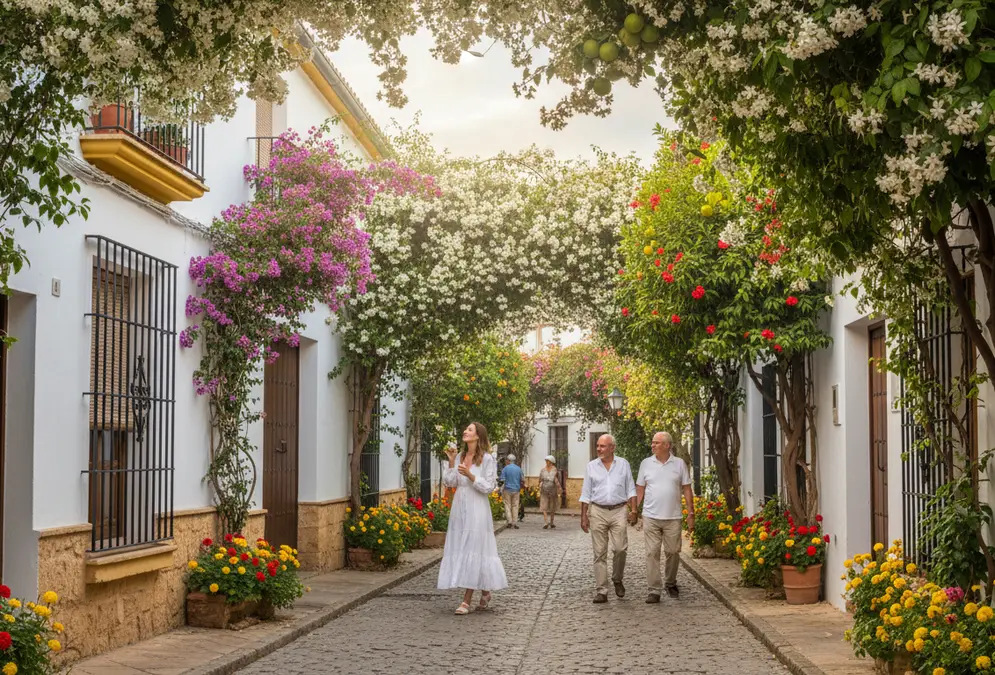
Córdoba's most photographed alley. In May, geranium pots overflow from every balcony. The classic view of the Mezquita tower framed by flowers. Come early in the morning (8:00) to avoid the crowds.
March and April are peak season for local asparagus. Grilled, in a tortilla, or à la plancha with garlic. Córdobans are passionate about this spring vegetable.
Artichokes
Alcachofas fried, à la montillana (with ham and almonds), or in a menestra stew. Harvested from February to May — this is when they are at their most tender.
Peas
Guisantes cooked the Spanish way, simmered with ham, egg and mint. A classic spring dish at traditional taverns.
Strawberries
Andalusian strawberries arrive in March. Eaten plain, with sherry, or in desserts. Markets overflow with trays of them. On the first Saturday of each month, the Ecomercado on Gran Capitán sells certified organic fruit directly from local growers — a good spring morning stop before the city's main events begin.
Dishes not to miss
Salmorejo
Córdoba's signature cold tomato soup. Thicker than gazpacho, topped with hard-boiled egg and crumbled jamón. Perfect as temperatures begin to climb in May.
Rabo de toro
Braised oxtail, a Córdoba speciality. Still enjoyable in spring before the weather becomes too hot for slow-cooked dishes.
Flor de sal con naranja
A spring dessert: fleur de sel with bitter orange. Córdoba's orange trees blossom in April, filling the city with their scent.
Montilla-Moriles wines
Chilled fino as an aperitif, Pedro Ximénez with dessert. In late April, the Cata del Vino Montilla-Moriles brings 10 bodegas beside the Alcázar — free entry, no car needed.
A hearty rice dish traditionally eaten outdoors along the river banks in spring — a quintessentially Córdoban picnic tradition, best on the banks of the Guadalquivir in April.
Spring terraces
Córdobans move outside the moment temperatures allow (March–April). Squares fill up in the evening for aperitivo hour. Look for terraces on the Plaza de las Tendillas, Plaza de la Corredera, or tucked away in the lanes of the Judería.
Where you stay depends on which festival you're coming for
Patio Festival (early May): Stay in the Judería or Centro. The participating patios are concentrated there — being within walking distance saves 30–60 minutes of transit per visit.
Feria de Córdoba (late May): Any central hotel works. The fairground is 2km south — reachable on foot via the Roman Bridge or by taxi in 10 minutes.
Book by February for May. The Patio Festival fills Córdoba's historic centre faster than any other event. Boutique hotels with their own patios go by January. Prices rise 40–60% above autumn rates.
AVE trains sell out fast during festival weekends
This is not a generic "book early" reminder. Travelers on forums regularly post the same story: they found a hotel, sorted the festival, then discovered every train back to Madrid or Seville for Sunday evening was sold out two weeks in advance. The return leg is where plans collapse.
Feria closing weekend (late May): The highest booking pressure of the spring. Saturday evening trains sell out first. Book at least 30 days in advance, ideally when you book accommodation.
Patio Festival opening weekend: Second highest pressure. Friday arrivals and Sunday departures go quickly.
Where to book: Renfe.com for the full AVE schedule. Ouigo runs budget high-speed trains on the Madrid corridor. Check both and book the cheaper ticket the moment you confirm your dates.
If trains are gone: Alsa coaches from Córdoba to Madrid take around 4.5 hours and seats rarely sell out. Slower, but reliable as a backup.
Former monastery with an Andalusian patio. International atmosphere, 5 minutes from the Mezquita. Dormitories and private rooms.
Practical tips
What to pack
• Light clothing (cotton, linen) for daytime
• A jacket or cardigan for evenings (especially March–April)
• Hat and sunglasses (May sun is already strong)
• Comfortable shoes (cobblestones are slippery after rain)
• Sunscreen (UV levels are already high in April–May)
Best timing
• First half of May: Patio Festival + temperatures still manageable
• Holy Week: If you enjoy religious processions
• Avoid: May weekends (maximum crowds)
• Peak crowds: 8–12 May (heart of the Patio Festival)
Budget
• Hotels: +40–60% vs. autumn (book early)
• Restaurants: Stable prices but book evening tables
• Patios: Free (but be prepared to queue)
• Monuments: Book the Mezquita online (1 h+ queue otherwise)
Essential bookings
✕ Hotel: 2–3 months ahead (May fills from January–February)
• Mezquita: Skip-the-line ticket recommended
• Upscale restaurants: Book 1–2 days in advance
• Patios: No reservation possible (queue on arrival)
Travelling with a dog?
Spring (March to May) is the best season for pet travel in Córdoba: mild temperatures, the parks are lush, and the riverside path below the Roman Bridge is at its best. Our pet-friendly guide covers hotels, parks, leash laws, and terrace dining.
Honestly: pros and cons
The positives
• UNESCO Patio Festival: The unique event that makes the trip worthwhile
• Ideal climate: 18–28°C, perfect for walking all day
• Spectacular gardens: Everything in bloom, the gardens at their finest
• Authentic festivals: Semana Santa, Cruces de Mayo, Feria — real Andalusia
• Seasonal gastronomy: Asparagus, strawberries, fresh local produce
• Beautiful light: Ideal for photography
The drawbacks
✕ High prices: Hotels 40–60% more expensive than in autumn
✕ Massive crowds: May = tourist peak, queues everywhere
✕ Packed patios: 30–60 min queue at the most popular ones
✕ May heat: Can reach 30°C, the start of hot-season conditions
✕ Tricky photography: Tourists everywhere, impossible to photograph empty spots (see our photography guide for the best times)
Our verdict: If this is your first (and perhaps only) visit to Córdoba, come in spring. The Patio Festival is worth the downsides. But if you are returning or prefer a quieter experience, autumn offers 80% of the beauty with 30% of the crowds.
Frequently asked questions
What is the best month to visit Córdoba in spring?
The first half of May is the sweet spot. You get the UNESCO Patio Festival, pleasant temperatures around 20–28°C, and the city at its most vibrant. In 2027 Semana Santa falls early, on 21–28 March, so late March carries the cultural weight and the crowds that come with it. That leaves April unusually calm for spring — slightly cooler, fewer visitors — and early March the quietest and cheapest window of all (11–20°C).
What should I pack for Córdoba in spring?
Light layers are key. Bring cotton or linen clothing for warm days, a jacket or cardigan for cooler March–April evenings, a hat and sunscreen (the May sun is already strong), and comfortable walking shoes — cobblestone streets can be slippery after rain. An umbrella is useful in March and April when occasional showers occur.
How can I avoid the crowds during the Patio Festival?
Visit patios at opening time (11:00) or in the late evening (20:00–21:00) when queues thin out. Prefer weekdays over weekends. Explore the San Basilio and Santa Marina neighbourhoods instead of the packed Judería. Pick 8–10 patios rather than rushing through all 50 — the smaller, lesser-known ones are often the most charming.
Is spring peak season in Córdoba?
Yes. May is the busiest month of the year, driven by the Patio Festival, Cruces de Mayo, and the Feria. Hotel prices rise 40–60% compared to autumn, and the best accommodation fills up 2–3 months in advance. If you want the spring experience with fewer crowds, aim for late March or early April.
When is the Patio Festival in 2027?
The 2027 Patio Festival is expected in early May — approximately 5 to 18 May, with the Ayuntamiento confirming exact dates from January. Patios are open daily from 11:00–14:00 and 18:00–22:00. Entry is free but expect queues of 30–60 minutes at the most popular courtyards. The official map with all participating patios is available at the tourist office and online.
What is the weather like in Córdoba in spring?
Spring temperatures range from 11–20°C in March to 16–28°C in May, with 8–10 hours of daily sunshine. Expect 4–6 rainy days per month in March and April. May is drier and warmer, occasionally reaching 30°C during the day, though evenings remain pleasant at 18–22°C.
Prefer to avoid the crowds?
Autumn (September–November) offers similar temperatures (18–27°C), gardens coming back into bloom, the Montilla-Moriles grape harvest, and prices 40% lower. Less spectacular than spring, but far more peaceful.