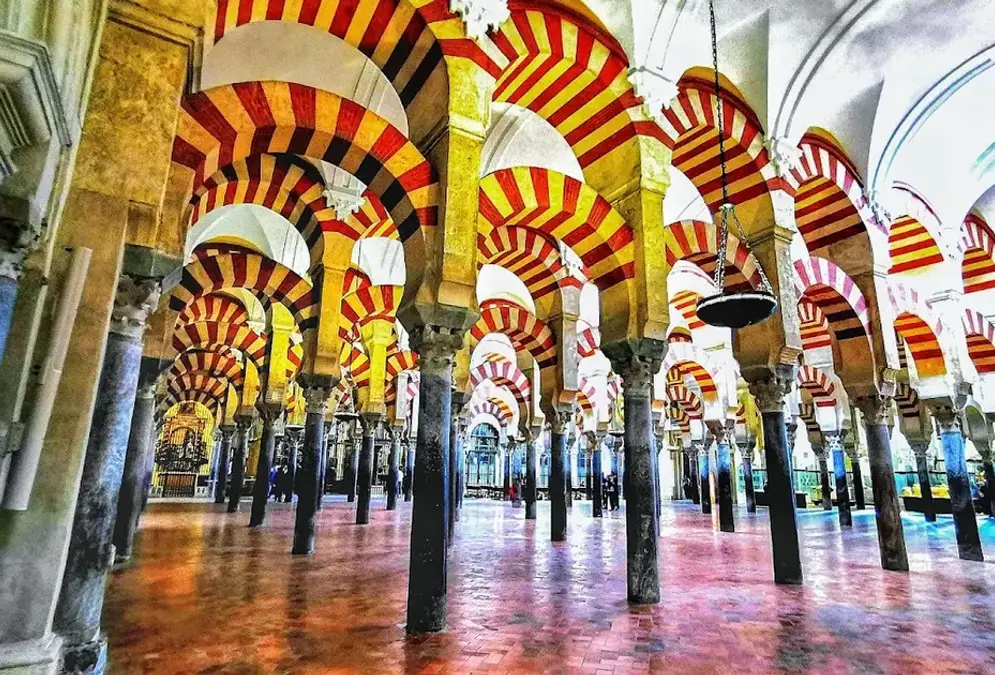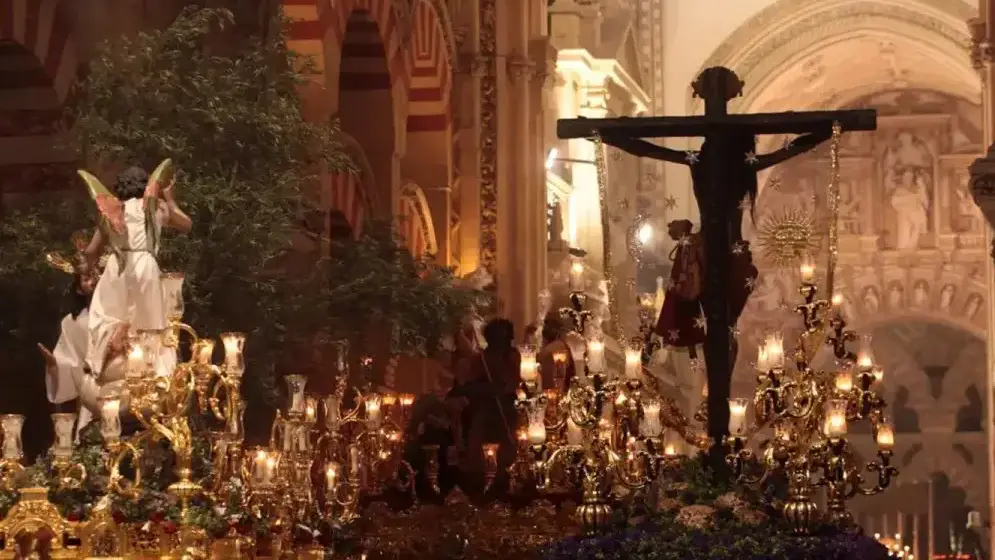

Holy Week 2027 runs from 21 to 28 March, when some thirty-eight brotherhoods process through the UNESCO historic centre in an annual rhythm that has endured since the 16th century. Each hermandad follows its own carefully mapped route from home church to the Mezquita-Cathedral, and Baroque pasos laden with gilded sculptures pass beneath the horseshoe arches of the most famous Islamic monument in the Western world. Hooded penitents (nazarenos) in their brotherhood's colours — black for mourning, white for purity, purple for penitence — carry floats weighing up to 2 tonnes through the Calleja de las Flores, across the Roman Bridge, and past the Cristo de los Faroles.
The contrast with Seville is unmistakable. Seville is grander, more international, more theatrical. Córdoba is quieter, reverent. Respectful silence replaces applause. What unfolds is not a performance but something the city does for itself, and visitors happen to be present.
The Madrugada
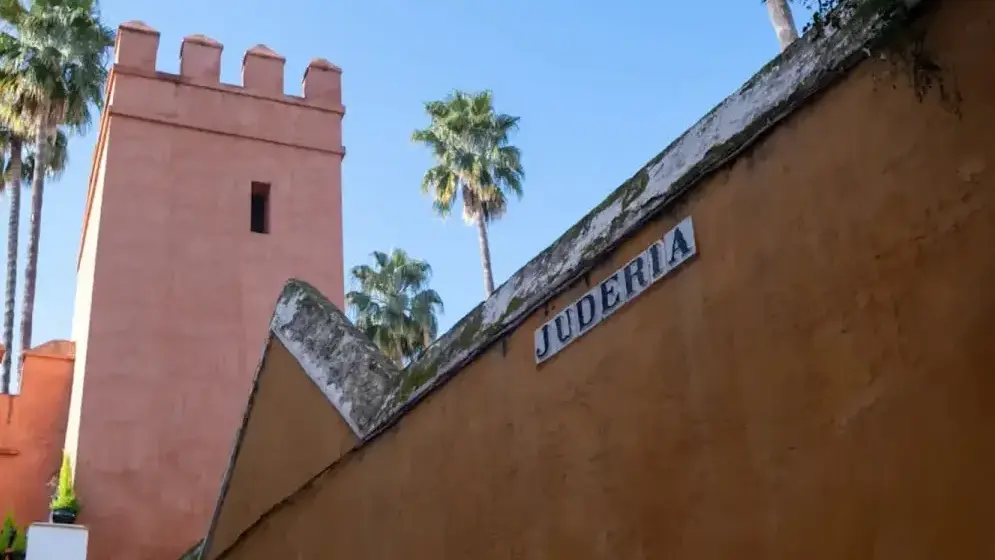
The most intense moment is the Madrugada of Good Friday. At midnight, in absolute silence broken only by muffled drums, the Hermandad de la Buena Muerte conducts its nocturnal procession through the medieval lanes of the Judería. The darkness, the incense, the scent of orange blossom still in the air at that hour, the saetas called out from balconies in raw, ragged voices: non-religious visitors consistently describe it as one of the more affecting things they've experienced anywhere. In the 2026 programme, the official route reached the Mezquita around 02:15 AM; the exact 2027 timing is confirmed once the Agrupación de Hermandades publishes the full schedule in February.
Easter falls unusually early in 2027, on 28 March, pulling the whole week back into late March rather than its more typical April slot. See why Easter 2027 falls so early and what it changes for visitors for the date shift, March weather odds, and booking patterns. Hotels in the historic centre fill up six to twelve months ahead, so reserve accommodation as early as you can.
Accessibility Features
Two adapted viewing platforms near the Puerta del Puente seat around 100 people combined, giving wheelchair users and visitors with mobility challenges a clear sightline to the processions. For a seated view along the Carrera Oficial, the Agrupación de Hermandades sells single-day sillas (chairs): €6 on Palm Sunday morning, €22 per chair per day from Palm Sunday afternoon through Good Friday. Full-week abonos (season passes) run from €100 for a silla up to €540 for an interior palco on the Patio de los Naranjos; palcos are sold only as full-week abonos, never by the night. These are 2026-season prices; the 2027 programme and prices are published in the new year. Blue zones for visitors on the autism spectrum, which previously applied only to outdoor areas, now extend into Cathedral interiors. Reserve the accessible platforms through turismodecordoba.org; book seating through hermandadesdecordoba.es.