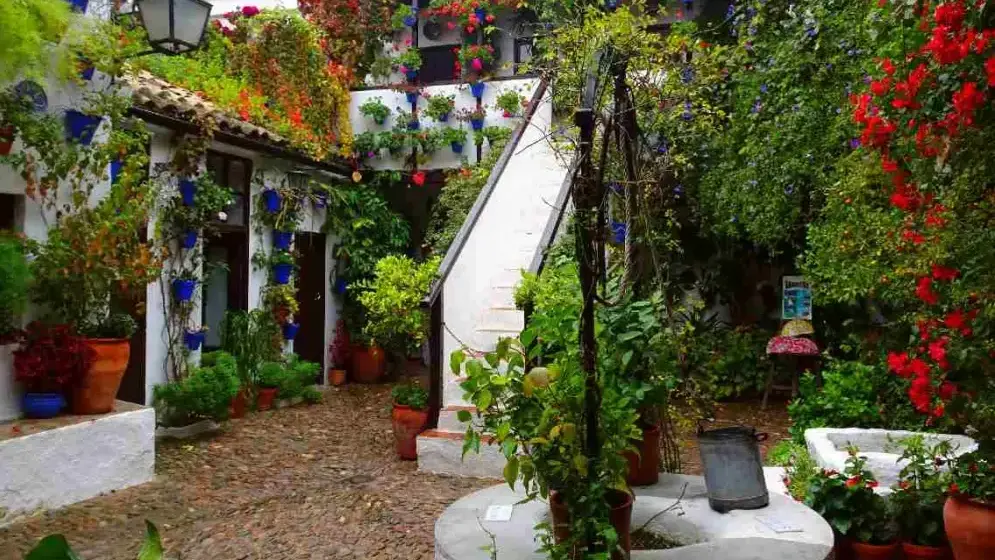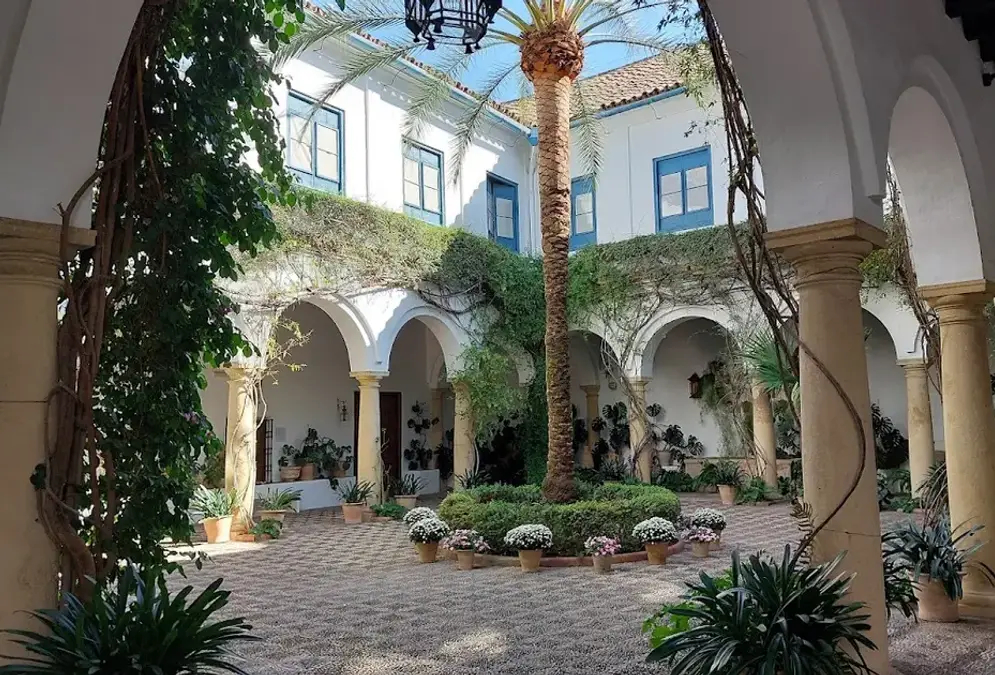

The Córdoba Patio Festival is the city's most iconic event, inscribed on the UNESCO Intangible Cultural Heritage list since 2012. Every year in May, residents open the doors to their private patios: inner courtyards turned into hanging gardens of cascading geraniums, fragrant jasmine and purple bougainvillea.
A centenary competition
Since 1921, the competition has recognised the most beautiful patios across four categories. In 2027, 64 patios open to the public: 53 competing in the official contest, plus 11 non-competition institutional patios open without reservation. The festival window runs for roughly two weeks each May (14 days in recent editions, e.g. 4–17 May 2026) — not a marketing choice but the maximum window residents can sustain the extraordinary upkeep 300–500 flowering pots demand. UNESCO's 2012 inscription described the fiesta as unfolding "for twelve days at the beginning of May", the classic figure behind the festival's nickname. Why the patios open for only 12 days a year explains the full logic, from UNESCO's reasoning to the six practical constraints. Six itineraries guide you through San Basilio, the Judería, Santa Marina and San Lorenzo. The route patio counts (54 across six routes) reflect the competition entries; the additional non-competition patios are scattered across the same neighborhoods. Owners pass their expertise down the generations, the geranium cultivars, the whitewash technique, the placement of pots on the wall, tending these urban spaces with remarkable dedication.
The Ayuntamiento runs a companion contest over the same dates: the Concurso de Rejas y Balcones de Córdoba, which judges the most beautifully flower-decorated iron window grilles and balconies across the city. The patio competition celebrates hidden interiors; the Rejas y Balcones contest rewards the public-facing facades, and the results are visible from the street as you walk the routes.
Six itineraries
The Alcázar Viejo / San Basilio itinerary has 11 patios, including the most award-winning. These courtyards, close to the Alcázar of the Christian Monarchs, are where the serious flower-wall competition happens. The Judería has 10 patios in the historic Jewish quarter near the Mezquita-Cathedral. Santa Marina - San Agustín is less crowded with 10 more authentic patios. Santiago - San Pedro covers popular tradition with 9 patios, while San Lorenzo adds 8 in a neighbourhood atmosphere. Regina - Realejo reveals 6 historic patios.
What the experience is actually like
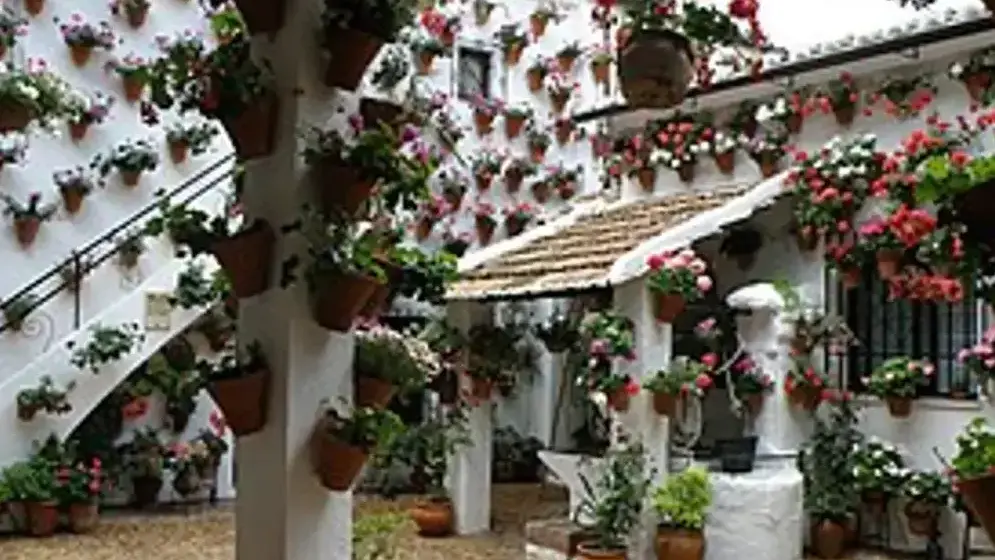
You ring a doorbell and a door in a whitewashed wall opens onto a different world. The sounds from the street cut off. In front of you: tiers of pots on iron brackets, red and pink geraniums so dense you can barely see the wall beneath, jasmine threading through the grille of a window, a fountain at the centre. The owner is usually there, happy to talk about which varieties they grow, how long the festival preparation takes (months), why the competition matters.
The best patios generate a feeling that's hard to explain to people who haven't been: you're standing in someone's home, looking at something they've spent the year building, and the care in it is unmistakable. The festival is a competition, but it's also a collective act of civic pride that's been running for a century.
Crowds and timing
The most popular patios in San Basilio get queues of 20-30 people at peak times. This isn't the end of the world (the line moves steadily), but if you want a more contemplative experience, the Santa Marina and San Lorenzo routes have excellent patios with far fewer visitors. Go on a weekday if you can.
The evening sessions (6:00–10:00 pm) have a different feel from the morning. The light is warmer, there are more locals out, and the jasmine smell is stronger in the cooler air. Some patios also have music in the evenings.
Practical tips
Patios open 11:00–14:00 and 18:00–22:00 daily. One exception: on the final day (exact date TBC), all patios close at 20:30 instead of 22:00. Go in the morning for the eastern quarters (Santa Marina, San Lorenzo), and in the evening for San Basilio and Judería. Starting with less-visited quarters avoids the longest queues. Free entry to all patios. 2-hour guided tours with reserved time slots bypass the queues at popular patios (€16).
For a complete guide to the festival — including 6 detailed itineraries, photography timing, accessibility information, and which patios to prioritise in each neighbourhood — see the complete Patios Festival guide.
For live route planning during the festival, download the free Mayo Cordobés app (iOS and Android), which has the interactive patio map and real-time route info. The official map is also at patios.cordoba.es.
Several patios host flamenco shows during the festival: Las Campanas, Los Naranjos, Orive, Rey Heredia, Alcázar Viejo, Corredera and La Calahorra. Check the programme at patios.cordoba.es for performance times.
Combine your visit with the Batalla de las Flores (late April floral parade) and the May Crosses that start in late April. If Córdoba's floral tradition interests you, FLORA in October takes the same tradition in a completely different direction: contemporary floral art in historic palaces.