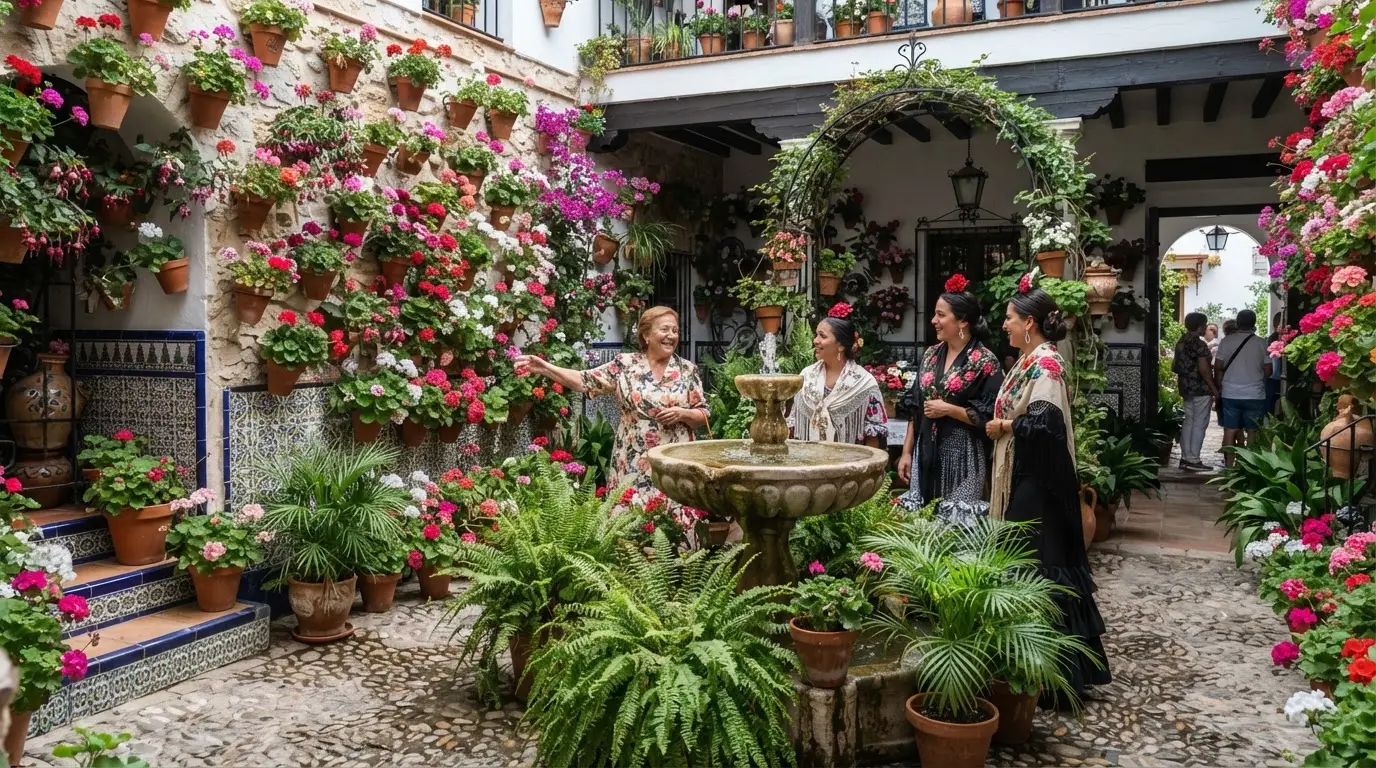

Twelve days in May: the planning constraint nobody explains
The Fiesta de los Patios is best known by the figure UNESCO used when it inscribed the fiesta in 2012: "for twelve days at the beginning of May".[1] In practice the calendar window has run a full fortnight — the 2026 dates were 4–17 May (14 days). Outside those dates the competing patios are private homes, and the festival is when they open to visitors as part of the contest.
12 days
The festival runs in May, when the competing patios are decorated and open to visitors. The Córdoba patio festival guide covers how to navigate the routes once you are there.
Festival entry is free. The competing patios cluster in districts including the Alcázar Viejo (San Basilio), Santa Marina, San Lorenzo and La Magdalena, with more near the Mosque-Cathedral in the old Jewish quarter. The 2025 edition recorded more than one million visits across the open patios over its fortnight (counted visits, not unique people),[2] a volume that itself explains part of why year-round access is impossible.
A competition born in 1921 with three participants
The Fiesta de los Patios de Córdoba started small. In 1921, Mayor Francisco Fernández de Mesa launched a Concurso de Patios, Balcones y Escaparates (Courtyards, Balconies and Window Displays Competition).[3] Prize money was modest: 100, 75, and 50 pesetas for the top three entries. Only three patios competed: 8 Calle Empedrada (Santa Marina neighbourhood), 7 Calle Buen Pastor, and 11 Calle Almanzor (both in the Jewish Quarter). By any measure, the inaugural edition was a disappointment.
The competition did not run again until 1933, when Mayor Francisco de la Cruz Ceballos brought it back. That year the contest 'began to become popular', with 16 patios entering. The Spanish Civil War (1936–1939) shut it down again. The competition returned in 1944 under the direction of Antonio Luna Fernández.

Explore nearby · Monument
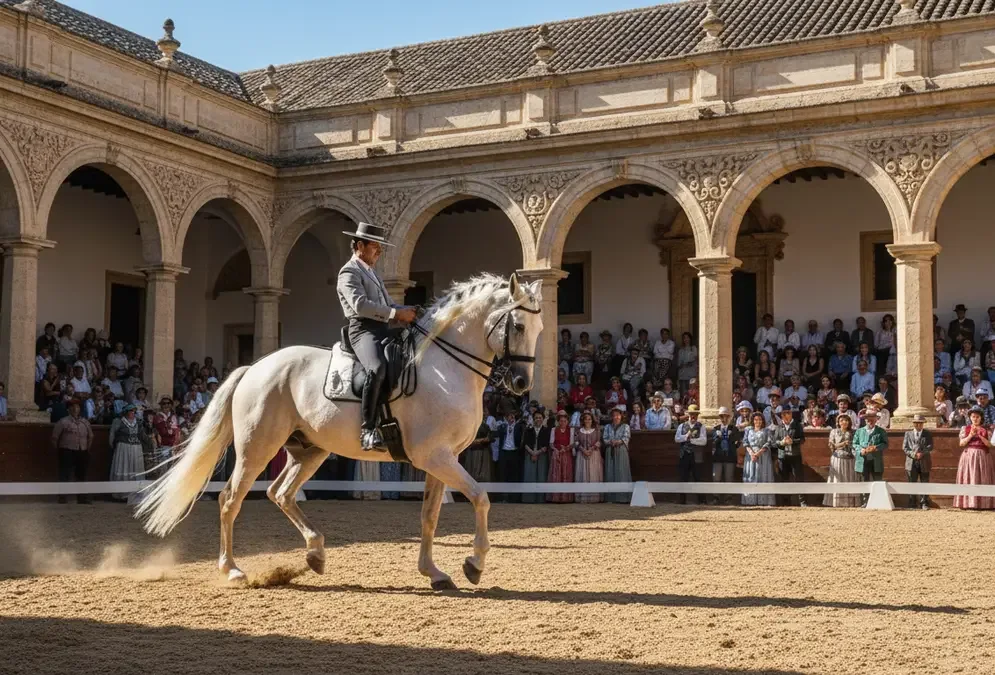
Caballerizas Reales de Córdoba
Philip II's 1568 Royal Stables, birthplace of the Andalusian horse. Evening show combining classical dressage, vaquera riding and flamenco. UNESCO heritage.
From 16 patios in 1933 to 53 in 2026,[4] the number of competing patios has more than tripled. Prize money goes to the top entries, and courtyards that win nothing receive aid to offset the effort and expense.[5] The competitive incentive — prize money, neighbourhood prestige, the collective effort of family and neighbours — is what turns a private garden into a public spectacle each May.
Why UNESCO inscribed a two-week event, not a building
In December 2012, the Fiesta of the Patios in Córdoba was inscribed on UNESCO's Representative List of the Intangible Cultural Heritage of Humanity.[6] The decision number is 7.COM 11.30.[7] What the listing recognises is the festival as a living practice, and UNESCO's element description calls the patio houses a "characteristic cultural space".[8]
UNESCO's element description says the fiesta "requires the selfless cooperation of many people from all age groups, social strata and backgrounds" and imbues it "with a strong sense of identity and continuity".[9] That language is precise. What UNESCO recognised is not a museum collection. It is a form of collective voluntary labour that can only exist because the festival is short, demanding and competitive.
If the patios were open year-round as tourist attractions, the community dynamic that produces them would not survive. The article on Córdoba's patio tradition covers what the physical courtyards are and how they work as passive cooling systems. The UNESCO logic here is different: it is the annual effort that matters, and that effort depends on the short festival window.
Recommended tours
Tours are selected for quality, not commission. We earn a small fee if you book — at no extra cost to you.
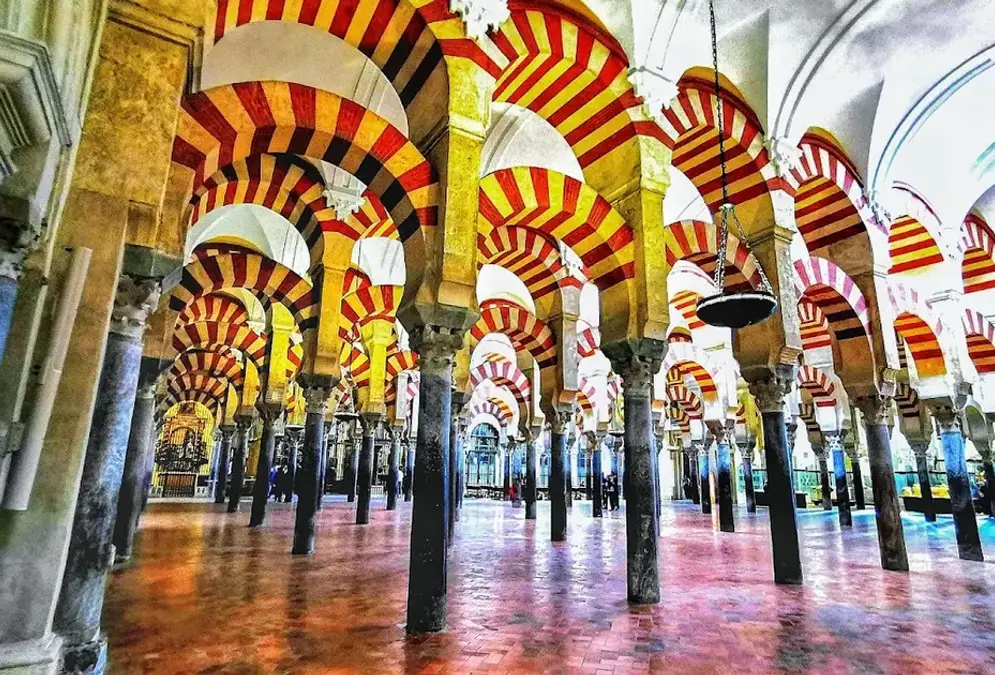
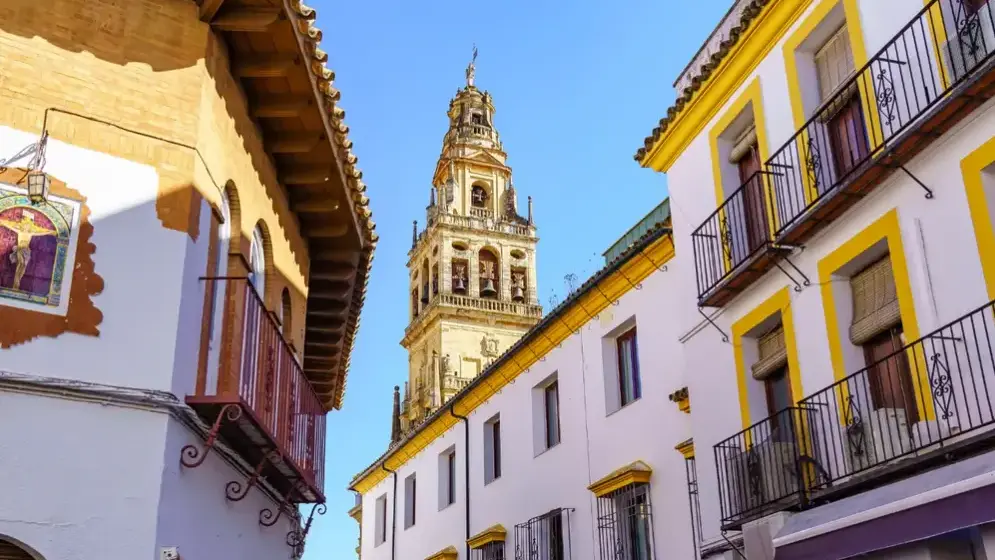
What judges look for in the two-week competition
Four competition categories cover different building types: Arquitectura Antigua and Arquitectura Moderna, split at 1960 (ancient architecture runs from the 16th century to 1960, modern from 1960 to the present),[10] plus Patios Singulares and Patios Conventuales.[4]
Owners decorate their houses with many flowers planted in beds and pots, which either hang from the walls or are placed on a paving specific to Córdoba.[11] The judging criteria have also changed over time: in 1988 more criteria such as floral variety, care of pots and flower beds and natural lighting were added.[12]
Six reasons the patios cannot stay open all year
The question most visitors ask is reasonable: why not keep the patios open longer? The six reasons are concrete, not sentimental.
1. Water and irrigation costs. Maintaining hundreds of flowering plants through Córdoba's hot, dry summer requires continuous irrigation. Average highs in July and August sit around 37°C.[13] Water bills during a sustained open-patio period, without the competitive motivation to justify the cost, are unsustainable for private households.
2. Labour. Tending the pots and beds, replacing flowers as they fade, cleaning stonework, maintaining fountain pumps and keeping lime-washed walls fresh demands daily skilled effort. Neighbours cooperate for a short, two-week competition. They cannot cooperate for 365 days.
3. Occupant privacy. These are homes. The patio is the central living space where laundry gets done, children play and daily life happens. Constant public access would make the house uninhabitable. Families who open their patios during the festival do so as a deliberate annual gesture, not a permanent arrangement.
4. Structural wear. Over a million recorded visits in a single festival already stress centuries-old stone paving, narrow doorways and hydraulic features. Year-round foot traffic at even a fraction of that rate would accelerate deterioration of fabric that cannot be cheaply replaced.
5. Seasonal heat. Average highs in July and August sit around 37°C.[13]
6. Competitive motivation. The festival prestige — prizes, neighbourhood recognition, the satisfaction of producing the best patio on the street — provides the primary reason owners make the transformation happen at all. Remove the competition, and the extraordinary preparation it triggers does not occur.
Where to see patios year-round
Two places are worth knowing for visitors arriving outside the May window.
Palacio de Viana is the most complete alternative. The palace contains 12 distinct courtyards, each with a different architectural and horticultural character. Admission: €8.50 for the patios and ground floor; €9 for the guided interior tour (40 minutes); €14 combined.[14] Hours: September–June, Tuesday–Saturday 10:00–19:00, Sunday 10:00–15:00; July–August, Tuesday–Sunday 9:00–15:00. The Palacio de Viana is a museum with posted visiting hours for most of the year. It is closed on Mondays except listed public holidays, and on 25 December.[15]
Calle San Basilio (in the Alcázar Viejo neighbourhood) is the street to know for the Asociación Amigos de los Patios Cordobeses, founded in 1974.[16] The official competition is organised by the Ayuntamiento de Córdoba (the city council). The San Basilio neighbourhood is particularly rich in traditional patio houses and worth an hour on any visit.
Deep dive · Article
Why Córdoba Deserves More Than a Day on an Andalusia Road Trip
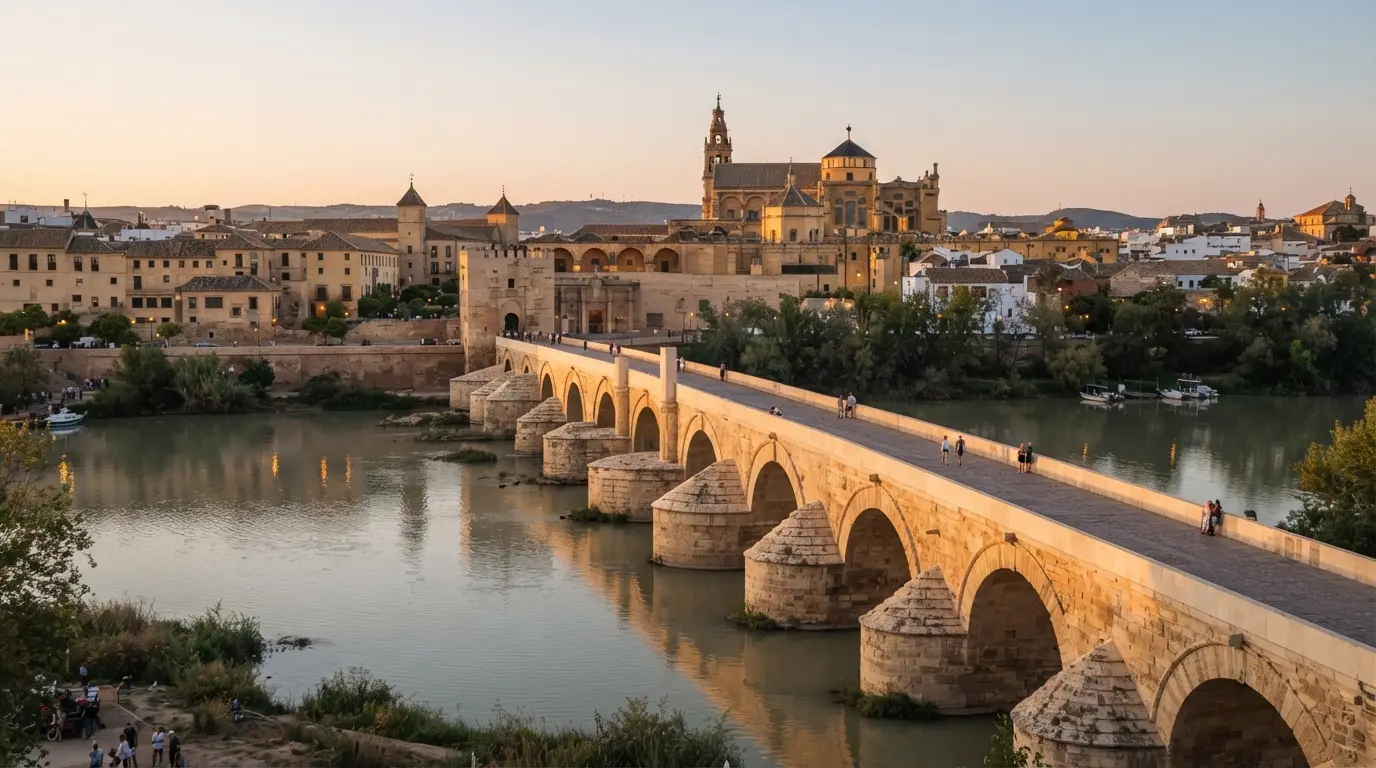
Córdoba sits where the Seville, Granada and Madrid routes cross by road and rail, making it Andalusia's hinge city and worth more than a one-day drive-by stop.
These alternatives are genuinely worth the detour, but they do not replicate the festival. The May competition patios are decorated to a density and standard that is impossible to maintain year-round. What you see at the Palacio de Viana or on Calle San Basilio is an everyday patio in good condition. What you see during the festival is a household that has spent weeks preparing for a fortnight of competition. The difference is visible.