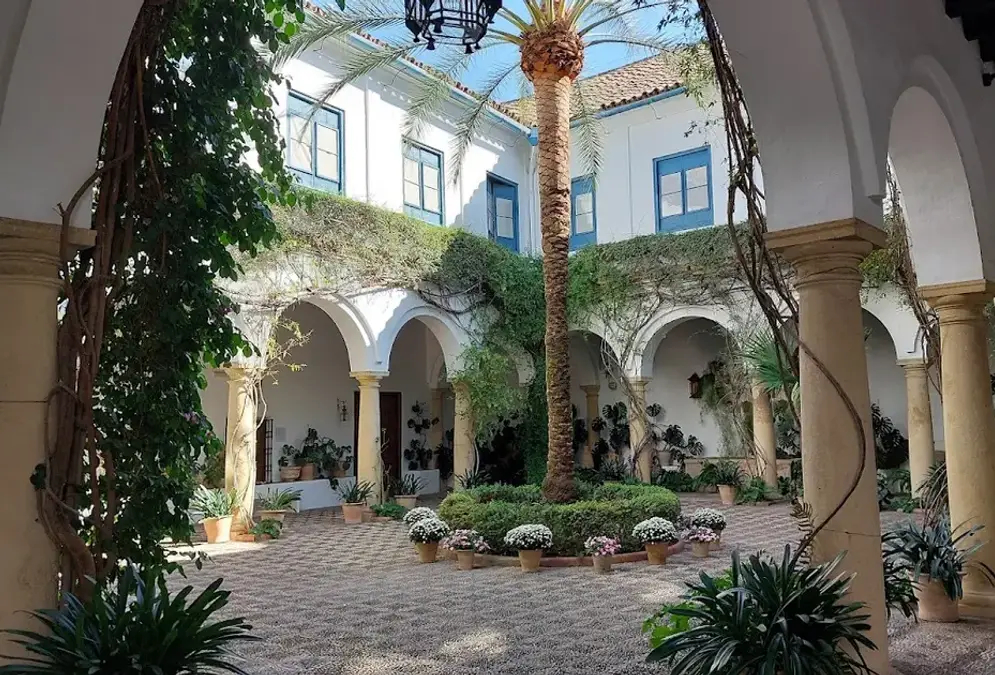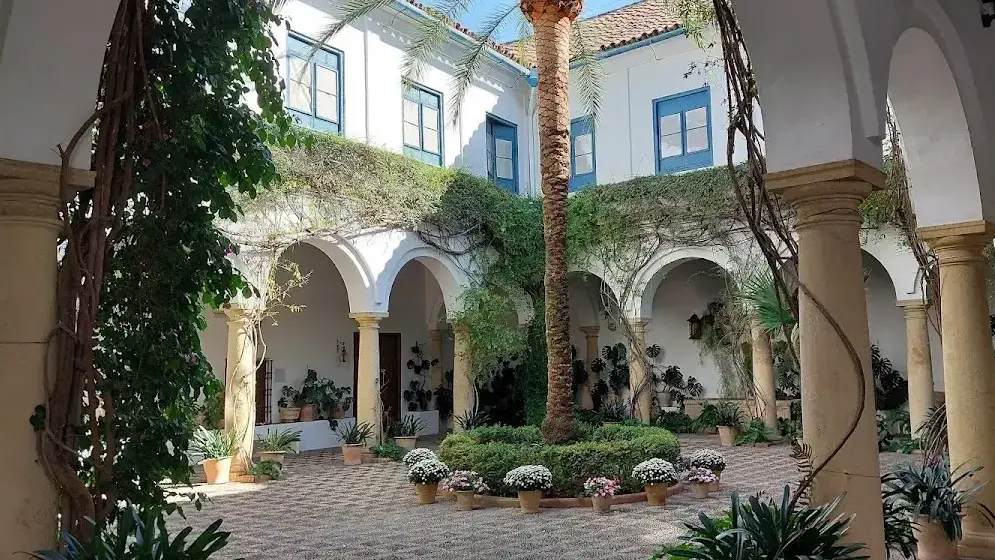

The Palacio de Viana earned the nickname 'Museum of Patios' for a reason: nowhere else in Córdoba can you walk through twelve distinct courtyards in a single morning. Each one was added by a different generation of the Viana family, and the accumulated result spans five centuries of how a wealthy Andalusian household thought about outdoor space.
When to Visit
Best season
April to May for peak blooms; October to November for autumn colour
Quietest hours
Weekday mornings 10:00–12:00
Visit duration
1 hour (patios only) to 1.5 – 2 hours (patios + palace interior)
Twelve courtyards, twelve moods
The sequence begins with tighter, more intimate spaces — stone floors, a central basin, walls trained with climbing roses — and opens gradually into larger, more formal compositions. The Patio de la Madama centres on a marble fountain that drips rather than splashes; the Patio de los Naranjos keeps its shade deep enough that the temperature drops noticeably as you step in. In April and May, the orange blossom smell hits before you see the trees.
The Patio del Estanque is the largest, reflecting clouds in a long rectangular pool. The Patio de la Reja is the most photogenic in spring — geraniums pack every iron grille and spill down the whitewashed walls. The Patio de las Columnas has the architecture: Renaissance columns paired in a portico, the stone worn smooth on the outer edges where hands have passed for two hundred years.
Free every Wednesday from 2 to 5 pm — twelve patios for nothing
The combined ticket normally runs €14 (€8.50 for patios only), but Wednesday afternoons from 2 to 5pm bring free entry to the twelve patios — the palace interior isn't included in the free slot. Locals know this and arrive at 1:45 pm to beat the queue.
Inside the palace
The interior salons are less visited than the courtyards, but worth the extra €5.50 the combined ticket adds over patios-only entry. A library of 7,000 volumes lines one room, its shelves running floor to ceiling in the same dark wood that frames the windows. Another room holds the Flemish tapestries — seventeenth-century wool work depicting hunting scenes with a level of detail that repays close attention. The Cordoban embossed leather collection here is the most complete in the city, showing the guadamecí technique that made Córdoba's workshops famous across medieval Europe.