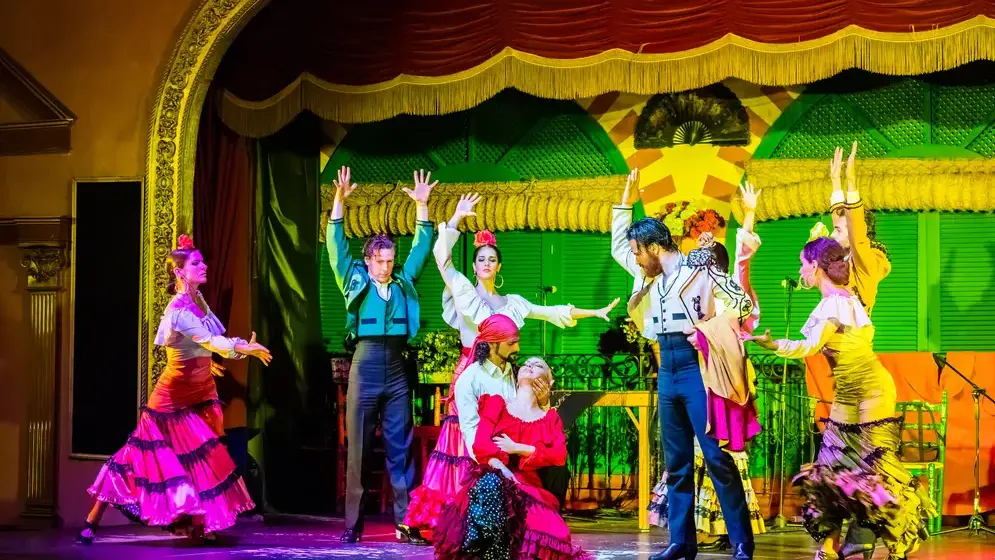

The Córdoba Flamenco Night (Noche Blanca del Flamenco) is the most important free flamenco festival in Spain. Every June since 2008, the city puts up stages at its most iconic locations: the Patio de los Naranjos of the Mezquita, the Alcázar, the Plaza de la Corredera, and the riverside tower with the Al-Andalus museum. For one night, the city belongs entirely to flamenco.
The 2026 edition was the 17th since the festival began, and it paid tribute to Fosforito — Antonio Fernández Díaz (1932–2025), the cantaor from nearby Puente Genil who spent a lifetime at the summit of deep song and died in November 2025. Born on 3 August 1932, he won every category at the 1956 Concurso de Cante Jondo de Córdoba, a feat no other singer has repeated. The Plaza de San Agustín hosted the explicit tribute: David Pino with veterans Bernardo Miranda, Yolanda Osuna and Niño de Peñaflor in Nazareno y Olivares, a direct homage to the master cantaor.
Eight hours, ten stages
From 10:30 pm until dawn, major flamenco artists move through the city's squares and patios in a marathon of back-to-back shows. The historic spaces fill with palmas and the crack of heels on wooden stages, something between a concert and a mass gathering. More than 100,000 spectators drift from stage to stage that night.
The Plaza de las Tendillas opens proceedings at 10:30 pm with the main-stage headline act. The Patio de los Naranjos at midnight fills up fast — beneath the orange trees of the Mezquita, with the minaret overhead, the cante rises into the night air in a way that's hard to replicate anywhere else. The programme runs through until the small hours, ending at dawn in the Jardines del Alcázar around 5:00 am.
What to expect on the night
The atmosphere builds slowly and then overwhelms you. In the hour before midnight, the streets between stages are thick with people — families, young couples, serious flamenco devotees who've come from across Spain specifically for this programme. The sound bleeds from one square to the next. Someone near you will be quietly marking the compás with their hands without realising they're doing it.
If you've never seen live flamenco, this is an extraordinary place to start. The scale means artists perform at full intensity: this is not a tourist show in a dimly lit tablao. The best guitarists and dancers in the country compete for these slots. For experienced flamenco followers, the programme rewards studying in advance — the lineup is published a few weeks before and the quality varies considerably between stages.
Getting the most out of the night
Choose two or three stages and commit to them rather than trying to cross the city constantly. The Patio de los Naranjos and Plaza del Potro reward patience — intimate settings make individual performances land harder. The main stage at Tendillas has better production but less atmosphere.
Wear comfortable shoes — the walking adds up over eight hours. Bring a light jacket; summer nights in Córdoba get cooler than people expect after the heat of the day. The bars and restaurants in the historic centre stay open all night and most streets are car-free for the event.
Practical notes
Shows run from 10:30 pm to 6:00 am. Free entry throughout. Get to the main stages (Tendillas, Corredera) early to secure a good position. Realistically, plan for 3–4 stages maximum — trying to see all ten is exhausting. Check the official programme at nocheblancadelflamenco.cordoba.es a few weeks before for the full lineup.
The 2027 edition date and programme will be published on nocheblancadelflamenco.cordoba.es from approximately April 2027.