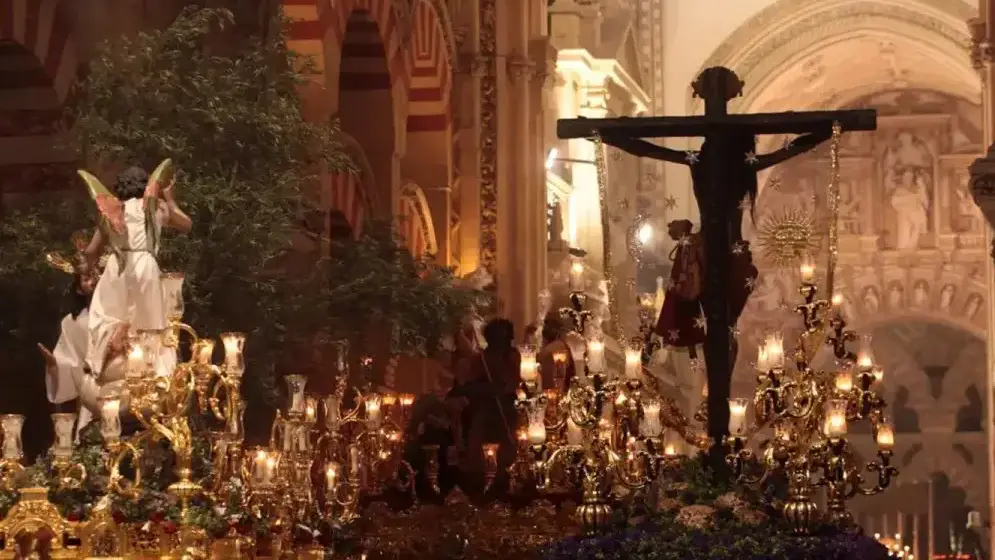
Low season → Semana Santa
Córdoba in March
The city wakes up slowly in March. Temperatures sit in the sweet spot for walking — warm enough for shirtsleeves by afternoon, cool enough that you never sweat through a monument. And at the end of the month, Semana Santa turns everything upside down.

Written by
María Fernanda González Ten years covering Córdoba's UNESCO heritage sites, sourcing from Junta de Andalucía documentation.
Updated Published
Budget season ends the moment the processions start. For the first three weeks of March, hotels run 30–40% cheaper than April rates, the Mezquita's forest of columns is never crowded, and you can walk the Judería without squeezing past tour groups. Temperatures sit around 11–20°C — warm enough for afternoon shirtsleeves, cold enough in the evenings that you'll want a jacket for dinner on a terrace.
Then Semana Santa starts in late March and the city flips completely. Procession routes packed from midnight to dawn, the smell of incense and orange blossom hanging in streets you couldn't move through if you tried. Accommodation for Holy Week fills months in advance. If you're reading this and don't have a room booked yet, that should be your next move — not tomorrow, today.
Monthly guide
In this guide
Everything you need to plan a March visit: weather, events, things to do and practical advice.
Jump to a section
March at a glance
- Temperatures
- 11–20°C
- Rainy days
- 5–6/month
- Daily sunshine
- 7–8 h/day
- Crowd level
- Low (peak: Semana Santa)
- Key event
- Semana Santa (late March)
- vs peak season
- 30–40% cheaper
- Hotels from
- €45/night (early Mar)
- Best for
- Budget travel, Holy Week
Semana Santa falls in late March — book well ahead
Holy Week runs in late March or early April (the exact dates shift each year). Hotels in the historic centre fill months in advance, and prices can double.
- Book accommodation at least 3–4 months ahead
- Expect 50–100% price increases vs early March rates
- Arrive early evening on Palm Sunday to see the first processions
March weather in Córdoba
Early March (1–10)
Temperatures 9–15°C
Sunshine 6–7 h/day
Rainy days 2–3 days
The quietest stretch. Cool mornings, pleasantly warm afternoons. Almond trees in bloom on the outskirts.
Mid March (11–20) Sweet spot
Temperatures 11–18°C
Sunshine 7–8 h/day
Rainy days 2–3 days
Best balance of good weather, low prices and empty monuments. Spring feels within reach.
Late March (21–31) Semana Santa
Temperatures 13–20°C
Sunshine 8 h/day
Rainy days 1–2 days
Warm spring days. Semana Santa begins in late March — the city transforms. Crowds arrive fast.
Rain strategy
Rain comes in short bursts rather than all-day drizzle. A compact umbrella in your bag covers you for most situations. The Mezquita, Alcázar indoor rooms and the city's cafés all offer natural shelter.
How March compares to the rest of the year
| Month | Temperatures | Sunshine / day | Rainy days |
|---|---|---|---|
| January | 5–13°C | 5–6 h | 8–9 |
| February | 8–16°C | 7 h | 7–8 |
| March | 11–18°C | 7–8 h | 5–6 |
| April | 13–22°C | 9 h | 4–5 |
| May | 16–27°C | 10–11 h | 3–4 |
| June | 20–32°C | 11–12 h | 1–2 |
| July | 25–38°C | 12 h | 0–1 |
| August | 22–37°C | 11–12 h | 0–1 |
| September | 18–28°C | 8–9 h | 3–4 |
| October | 12–22°C | 7–8 h | 6–7 |
| November | 8–17°C | 5–6 h | 8–9 |
| December | 5–13°C | 5 h | 9–10 |
Plan your March trip to Córdoba
We've set the search to 14–17 March 2027 as a starting point.
Search on Booking.comFree to search · No sign-up needed · Change dates any time
Tours worth booking
Best Seller
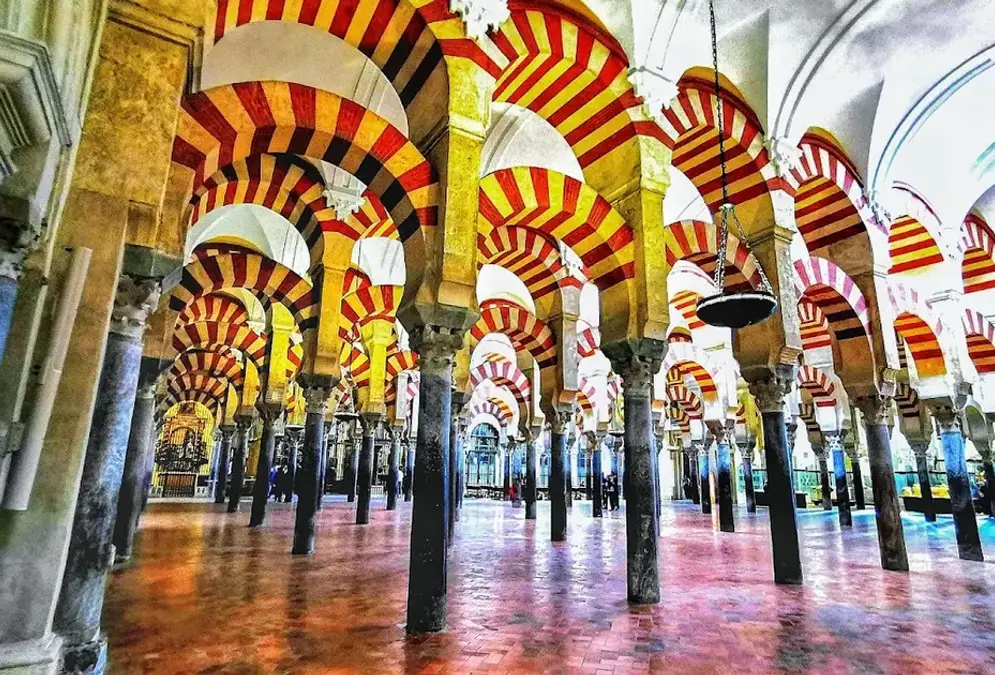
Mosque-Cathedral Skip-the-Line Guided Tour
Skip the queue and explore the Mezquita-Cathedral with a knowledgeable local guide. Discover 13 centuries of layered history in one of Spain's most iconic monuments.
Skip the line 1.5 hours
From €29
4.7 (7,293 reviews)
Reserve Your Spot
✓ Verified GetYourGuide reviews
Books up weeks ahead in peak season
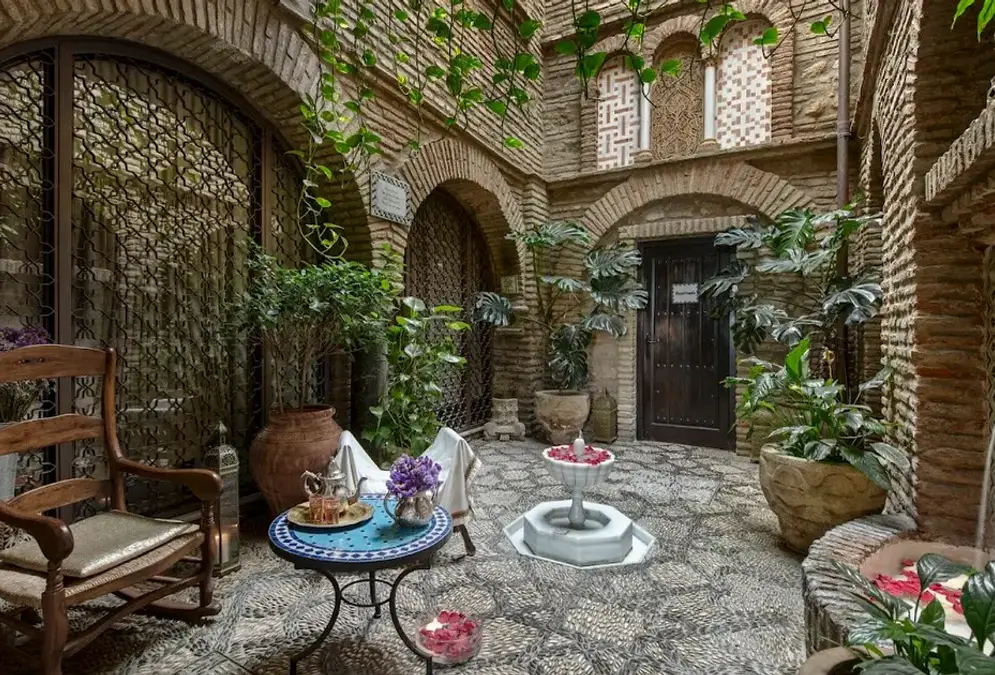
Hammam Al Ándalus Entry Ticket
Relax in the ancient Arab bath tradition at Hammam Al Ándalus. Immerse yourself in warm and cold thermal pools beneath stunning Moorish arches in the heart of Córdoba.
1.5 hours
From €35
4.7 (820 reviews)
Reserve Your Spot
✓ Verified GetYourGuide reviews
Rent a car for the trip
ExploreCordoba earns a small commission if you book a stay, a car or a tour through this section, at no extra cost to you.
March events
late March / early April (date varies each year) National Tourist Interest
Semana Santa (Holy Week)
Córdoba's Holy Week is more intimate than Seville's — smaller crowds, narrower streets, a more charged atmosphere. Over 30 brotherhoods carry elaborately carved pasos (religious floats) through the Judería and historic centre. The candlelit processions weaving through whitewashed lanes at night are unlike anything else in Andalusia.
Key moments:
- · Palm Sunday: opening processions, city fills
- · Holy Monday: the Gypsy brotherhood procession
- · Good Friday night: La Madrugada, midnight–5am
Tips:
Arrive 30 minutes before the scheduled route time. The narrow Judería lanes give the most intense atmosphere. Silence and respect are expected — no flash photography.
Early March (1–March): no major events
The first three weeks of March are event-free — which is precisely the point. The Mezquita has no queues. The Judería is quiet enough to hear your footsteps. Restaurants are easy to book, and the staff have time to talk. This is Córdoba as locals know it, rather than the city performing for crowds.
Next confirmed dates in March
Holy Week (Semana Santa)
21 – 28 March 2027
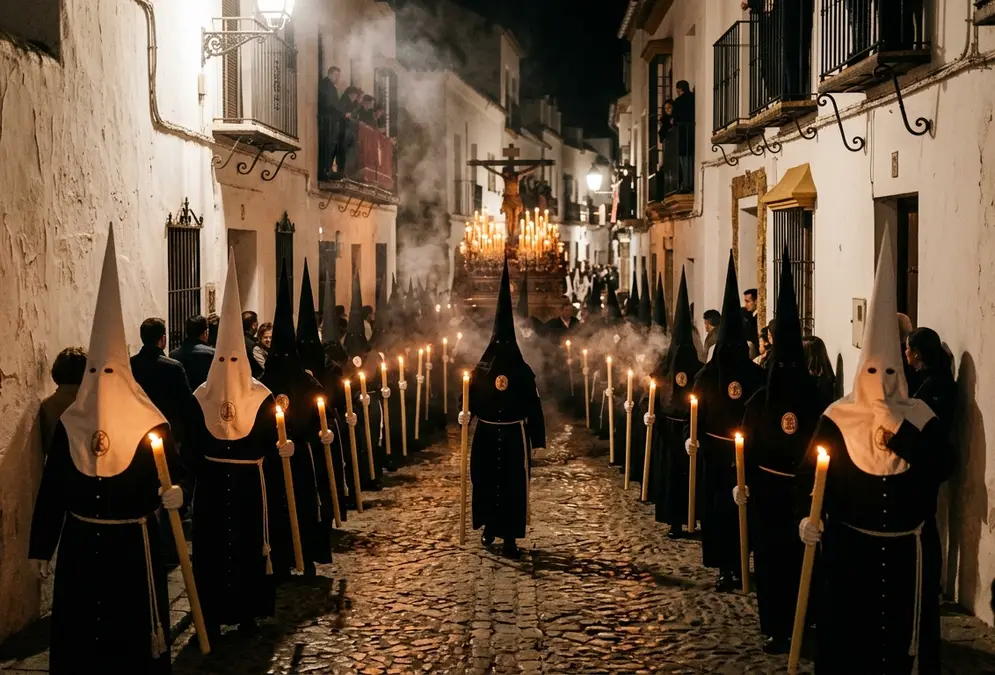
La Madrugada
The Good Friday procession runs midnight to 5am — the most atmospheric night of the year in Córdoba
What to do in March
Mezquita-Catedral
No queues. No tour groups clogging the forest of columns. March is the only time you can stand inside Spain's greatest monument and feel genuinely alone with it. Arrive at the free morning window (Mon–Sat 8:30–9:30am) and you'll have the early light to yourself.
ExploreSemana Santa processions
From late March, the city's normal life suspends. Streets fill with incense, brass bands and slow-moving pasos. The night processions — especially the emotional Madrugada on Good Friday — are among the most powerful cultural experiences in Spain.
ExploreAlcázar de los Reyes Cristianos
The fortress gardens in March carry the first spring flowers — roses starting, citrus trees in blossom — against the backdrop of the long reflecting pools and medieval towers. Before Semana Santa, you can walk the terraced gardens almost alone.
ExplorePalacio de Viana
Twelve connected patios in one of the finest aristocratic palaces in Andalusia. In early March, the courtyard flowers are waking up. By late March, you're sharing the patios with a handful of visitors rather than the crowds of May.
ExploreMedina Azahara
The 10th-century caliphal city 8km west of Córdoba is green in March from winter rains. Spring light on the carved stonework, no summer haze, no crowds. Take bus C1 from Paseo de la Victoria; pre-book at medinaazahara.org.
ExploreJudería walks
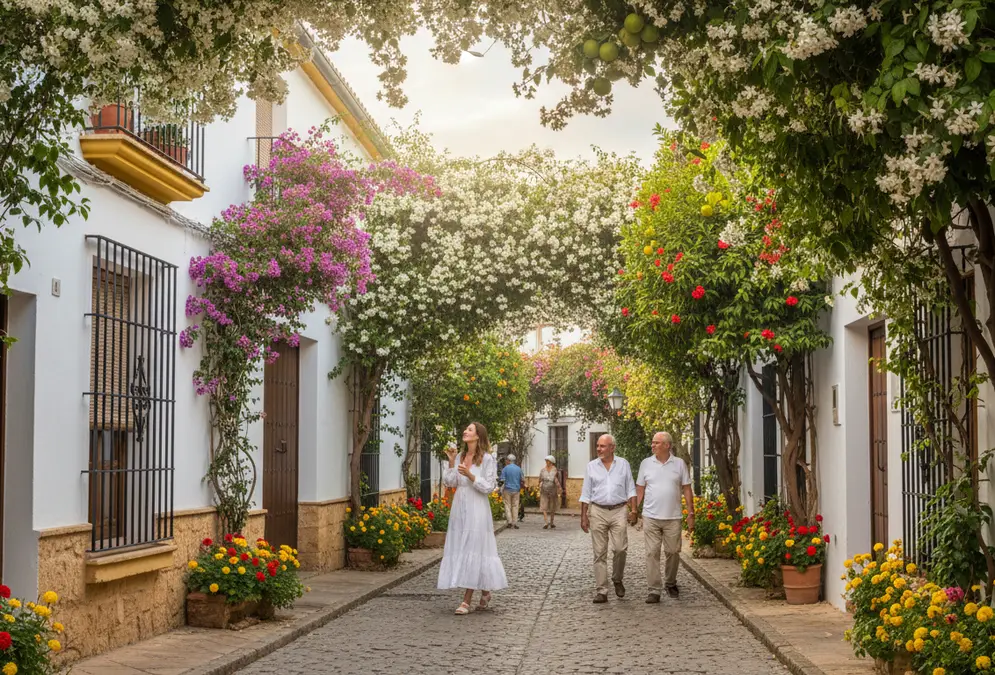
The narrow lanes of the Jewish Quarter in March — before the tour groups arrive and while the orange trees are still in flower — are what travel writers mean when they describe Córdoba's atmosphere. Walk from the Mezquita toward Calleja de las Flores in the early morning.
ExploreWhere to eat in March
March dishes to try
- Rabo de toro — Slow-braised oxtail — Córdoba's most iconic dish is at its peak in cooler months. Still on every good menu in March.
- Berza cordobesa — Hearty chickpea and pork stew. The winter standard, still firmly on menus through March.
- Salmorejo — Cold tomato soup. Available year-round in Córdoba, but March tomatoes are reliably good and the version here — thick, orange, topped with jamón — is the benchmark.
Practical tips
- Outside Semana Santa, March restaurants are easy and relaxed. The menú del día (€10–13) is at its best value.
- For Holy Week dates (late March): book all meals well in advance. Central restaurants fill from lunchtime.
- The Judería is excellent for March dining — atmosphere is high, prices fair, and tables available on weeknights without booking.
What to pack for March
March demands layers. The 11–20°C range means morning walks need a jacket; afternoon sightseeing may not. Semana Santa adds a dimension: processions run late at night, and standing in narrow lanes for hours calls for warm layers regardless of the daytime temperatures.
Packing checklist
- Light jacket for mornings and evenings (cool to 9°C)
- Layer-friendly outfit: t-shirt + mid-layer for flexible dressing
- Compact umbrella (5–6 rainy days)
- Comfortable walking shoes for cobblestones
- Modest dress: covered shoulders and knees for Mezquita visits
- Warm layers for late-night Semana Santa processions
For a full breakdown by activity and luggage tips for Córdoba's cobblestones, see the complete Córdoba packing list.
Crowds and prices in March
March 1–20 Low season
Very low — best value window
Mezquita: often fewer than 100 visitors at opening (8:30am)
Hotels: €45–75/night (budget), €75–120 (mid-range) — lowest of the spring
Restaurants easy to book any evening without advance notice
Alcázar, Palacio de Viana, Medina Azahara all accessible without pre-booking
Late March (Semana Santa) Holy Week
Semana Santa surge
Hotels: €90–150+ (budget), €150–250+ (mid-range) — book 3–4 months ahead
Procession routes closed to traffic — allow extra navigation time
Restaurant evening bookings essential from Palm Sunday onwards
Mezquita queues increase significantly from Holy Wednesday
Practical tips for March
1
Early March is the underrated window
The first two weeks of March combine winter prices with spring temperatures. The Mezquita at 8:30am has almost nobody in it. Hotels that cost €120 in April run €50. If your travel dates are flexible, March 5–15 is consistently one of the best-value periods in the city.
2
Semana Santa: position matters as much as timing
The Judería lanes produce the most intense atmosphere for processions. Arrive 30–45 minutes early and find a spot on the route before the crowds build. Standing at the front of a narrow lane as a candlelit paso rounds a corner at midnight is the experience — not watching from a wide boulevard.
3
Book Semana Santa accommodation immediately
If your trip falls during Holy Week and you have not booked accommodation, do it now. Not tomorrow. The best options within walking distance of the historic centre go first, and prices rise fast. If the centre is gone, check Córdoba's newer residential neighbourhoods or towns like Palma del Río.
Is March right for you?
March is ideal if you...
- Want spring beauty without peak-season prices (early March)
- Are visiting specifically for Semana Santa processions (late March)
- Want empty monuments and relaxed restaurant bookings
- Are flexible enough to catch the sweet spot of mid-March
Consider another month if you...
- Are visiting during Semana Santa without advance accommodation — extremely difficult
- Need consistently warm weather (April is more reliable)
- Want the famous private patios open (Patio Festival is in May only)
Frequently asked questions
Is March a good time to visit Córdoba?
Yes, especially early-to-mid March. Temperatures reach 15–20°C, prices are 30–40% below spring peak, and the monuments are genuinely quiet. From late March, Semana Santa transforms the city: extraordinary processions, but also full hotels and advance planning required.
When is Semana Santa in Córdoba?
Semana Santa falls in late March or early April depending on the year. It always runs from Palm Sunday to Easter Sunday. The major processions take place from Holy Wednesday through Good Friday. La Madrugada, the all-night Good Friday procession, runs midnight to 5am and is the most powerful of the week. Semana Santa 2027 falls unusually early, landing entirely within March itself.
How cold is Córdoba in March?
March mornings start at 9–11°C and afternoons warm to 15–20°C. Evenings drop back to 10–12°C. A light jacket handles most situations. Rain is possible (5–6 days/month) but usually brief. By late March, afternoons feel genuinely warm.
Is early March or late March better for visiting Córdoba?
Early March (days 1–20) offers the best value: budget prices, quiet monuments, and comfortable 11–18°C weather. Late March brings Semana Santa: extraordinary processions, but also full hotels and much higher rates. Choose early March for solitude and savings; late March for the most important religious event on Córdoba's calendar.
What is La Madrugada in Córdoba?
La Madrugada is the all-night Good Friday procession that runs from midnight to roughly 5am. Multiple brotherhoods process simultaneously through the Judería and historic centre. It is the most emotionally intense night of Semana Santa. Free to watch from the street, but expect large crowds by midnight.
Further reading
Sources
3 references Show Hide
- Semana Santa | Ayuntamiento de Córdoba (opens in a new tab)
Official municipal page covering Holy Week background and civic programming.
- Turismo de Córdoba (opens in a new tab)
Official tourism board for visitor information, practical planning, and destination overviews.
- Ayuntamiento de Córdoba (opens in a new tab)
Municipal source for civic services, official notices, and public event information.