First-time visitors
Córdoba: first-time visitor tips
You've booked the trip. Now the practical stuff: when to show up at the Mezquita, what to wear inside it, which ATMs to avoid, how to stay cool in 40°C heat, and what to order at lunch.

Written by
María Fernanda González Ten years covering Córdoba's UNESCO heritage sites, sourcing from Junta de Andalucía documentation.
Updated Published
Most first-time mistakes in Córdoba are avoidable with a few practical tips. Show up at the wrong time and you pay €15 for the Mezquita when it was free at 8:30 AM. Pick the wrong ATM and you lose €7 in fees on a €100 withdrawal. Visit in July without a plan and the 40°C heat turns a great trip into an endurance test. This guide covers what the guidebooks skip; for the costlier missteps beyond timing and ATMs, see our rundown of first-trip mistakes to avoid.
At a glance
- Ideal stay
- 2–3 days
- Best time
- March–May & September–October
- Daily budget
- €50–80 (mid-range traveller)
- Stay near
- Old Town / Judería for walkability
- Must book
- Mezquita + Alcázar in advance
- Summer warning
- July–Aug often 40°C+; plan early mornings
In this guide
Jump to a section
Before you arrive
Book the Mezquita in advance
Tickets sell out weeks ahead in April, May, and October. The Mezquita-Cathedral is the reason most people come to Córdoba, so don't leave it to chance. Book at tickets.mezquita-catedraldecordoba.es. If you're visiting Monday–Saturday and can arrive before 9 AM, skip the booking fee entirely: entry is free during the 8:30–9:30 AM religious visit window.
Check what's open on your dates
Córdoba's cultural calendar changes the city significantly. Semana Santa (Holy Week) fills every hotel by January; the Patio Festival (early May) turns private courtyards into public stages. Some monuments reduce hours during festivals. Check current hours at turismodecordoba.org the week before you travel.
Day trip or stay overnight?
A day trip from Seville or Madrid lets you see the Mezquita and the Judería, but you miss free early-morning entry, the evening atmosphere, Medina Azahara, and dinner at 9 PM with locals. One overnight roughly doubles what you experience. See the day trip vs overnight guide to decide.
Getting to Córdoba
Córdoba sits on the AVE high-speed rail line between Madrid (1h45, from €7) and Seville (45 min, from €7). There is no international airport; fly into Madrid, Seville, or Málaga and take the train. See the getting to Córdoba guide for train times, bus options, and parking. Flying in from outside the EU? Check our Spain's 2027 entry rules for the border checks you'll clear on arrival.
Choose your timing wisely
April–May and October–November are the best months: 20–27°C, low crowds outside festival weeks, and accommodation 20–30% cheaper than summer. July and August are viable but require planning around the heat. See our best time to visit guide for month-by-month detail.
Pack for the cobblestones
The Judería and historic centre have uneven cobblestones throughout. Comfortable walking shoes with grip matter more than stylish footwear. In summer, add sun cream and a hat for outdoor time. Bring a refillable water bottle; tap water is safe and you'll use it constantly from June through September. For a complete checklist by season, see the Córdoba packing list.
Travelling with a dog?
Córdoba is navigable with a pet if you plan ahead. Our pet-friendly guide covers verified hotels with published policies, the parks locals use for morning walks, terrace dining norms, Andalusia's 1-metre leash law, summer heat rules for dogs, and emergency vet contacts.
The Mezquita: timing, tickets, and what to wear
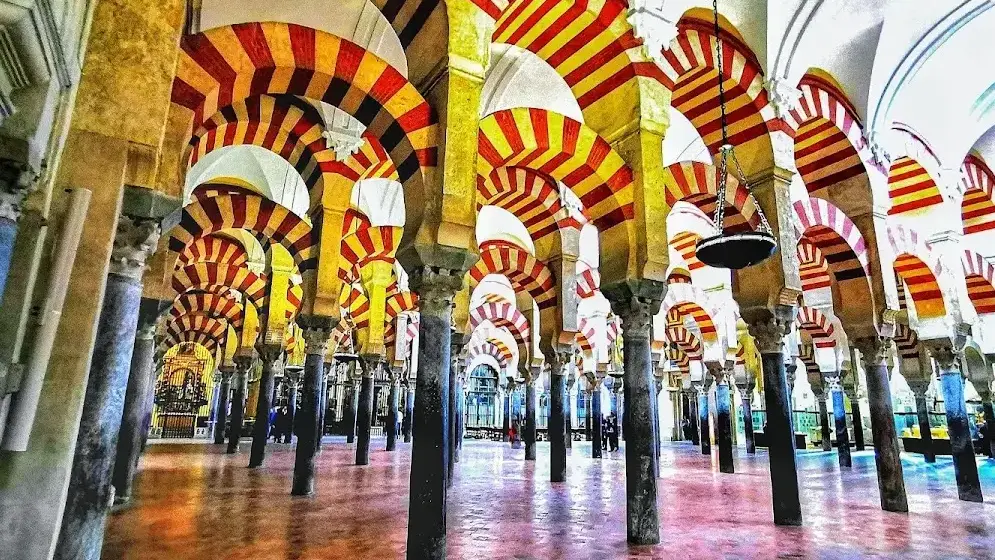
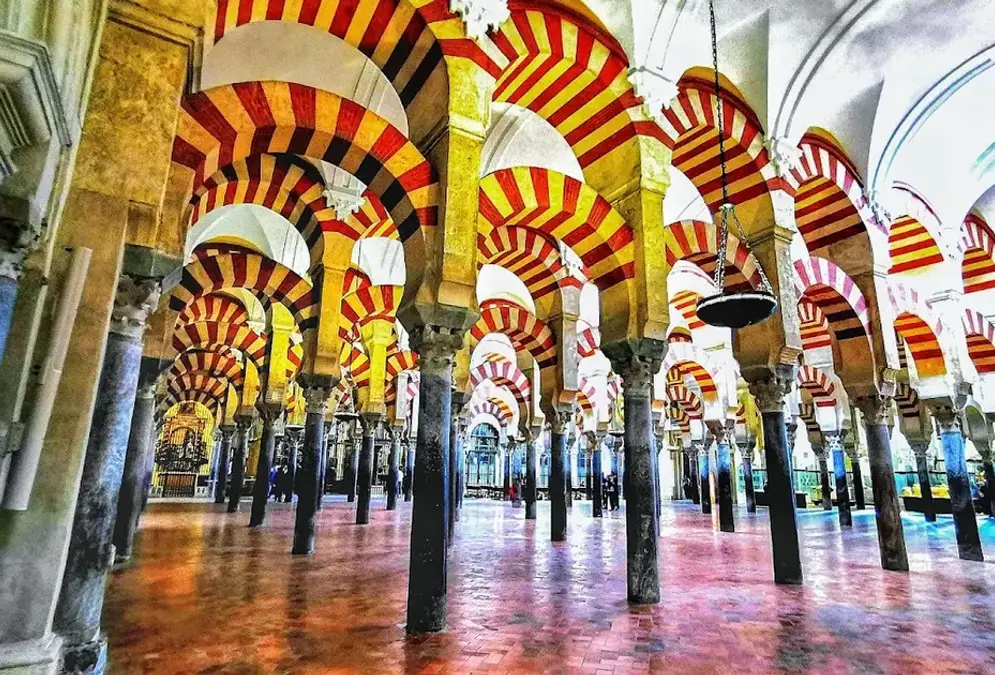
Step inside and the temperature drops immediately: cool stone, filtered light, and the low hum of half a million visitors' whispered reverence over twelve centuries. Built from 785 AD by Abd al-Rahman I, the 856 columns of jasper and marble arranged in their endless forest of double arches hold more UNESCO designations than any single site in Spain. Getting your visit right makes a real difference.
Free entry window
Free Mon–Sat · 8:30–9:30 AM · arrive by 9:00
Genuine free access to the full interior, not a limited area. Capacity fills quickly and they don't hold the door. The morning light through the arches at this hour is a different experience from the midday rush.
- Paid hours: Mon–Sat 10:00 AM–7:00 PM; Sun 8:30 AM–7:00 PM
- Last entry: 30 minutes before closing
Ticket prices
Outside the free window, tickets are €15 for adults. Reduced rates apply: €12 for seniors 65+ and students aged 15–26 (with valid ID), €8 for children 10–14, and free under 10. The Bell Tower costs €4 extra and runs half-hourly 9:30 AM–6:30 PM, and is worth it for the rooftop view over the old town.
- Adult: €15
- Senior 65+ / Student 15–26: €12
- Child 10–14: €8 | Under 10: Free
- Bell Tower: €4 extra
Full booking walkthrough: Mezquita tickets guide.
How long to spend
Budget at least 2 to 2.5 hours inside the Mezquita. The columns, the cathedral inserted at the centre, the Capilla de Villaviciosa, and the gold Mihrab all need time. Three hours for a thorough visit. Rushing it is the most common first-timer regret.
Dress code: what's required
Required:
- Shoulders covered (no tank tops or sleeveless tops)
- Knees covered (no shorts above the knee)
- Hats removed indoors (caps, wide-brimmed hats)
- No large bags (small day bags are fine)
Not required:
- Head covering for women (this is not a mosque)
- Specific shoe removal
- Formal clothing
Summer strategy: Loose linen trousers or a knee-length skirt plus a lightweight long-sleeved top covers the dress code while staying cool. A thin cotton scarf over bare shoulders works as a quick fix at the entrance.
Siesta hours: planning your day around them
Siesta is real in Córdoba, but it only affects specific businesses. Knowing which ones saves frustration.
Closes for siesta
- Independent clothing and souvenir shops: 2:00–5:00 PM (up to 6:00 PM in summer)
- Small local pharmacies (though chains stay open)
- Some family-run restaurants serving only lunch
- Local service businesses (tailors, cobblers, locksmiths)
Stays open all day
- Supermarkets and shopping malls
- Major department stores (El Corte Inglés)
- Mezquita, Alcázar, museums, and tourist sites
- Restaurants catering to tourists
- Cafés and bars
Use siesta time well
- 2:00–4:00 PM: Local lunch (the main meal of the day)
- 4:00–6:00 PM: Mezquita or museum visit (air-conditioned relief in summer)
- 6:00–8:00 PM: Tapas and aperitivo hour, before dinner crowds build
- 8:00–11:00 PM: Local dinner hour
Shift your meal times
The biggest practical adjustment for most visitors is eating later. Local lunch runs 2:00–4:00 PM; dinner rarely starts before 9:00 PM. Showing up at noon for lunch or 7:00 PM for dinner means eating alone among other tourists. Lean into the local schedule and the city feels completely different.
More detail: The practical info guide covers getting around, bus routes, opening hours, and accessibility in full.
Managing the heat
Summer heat in Córdoba
July is Córdoba's hottest month with average highs of 36.9°C. July and August regularly exceed 40°C. This is real heat, not Mediterranean warmth. Without a strategy, outdoor sightseeing between noon and 5 PM in peak summer becomes genuinely unpleasant. Build your days around it.
The morning/evening split
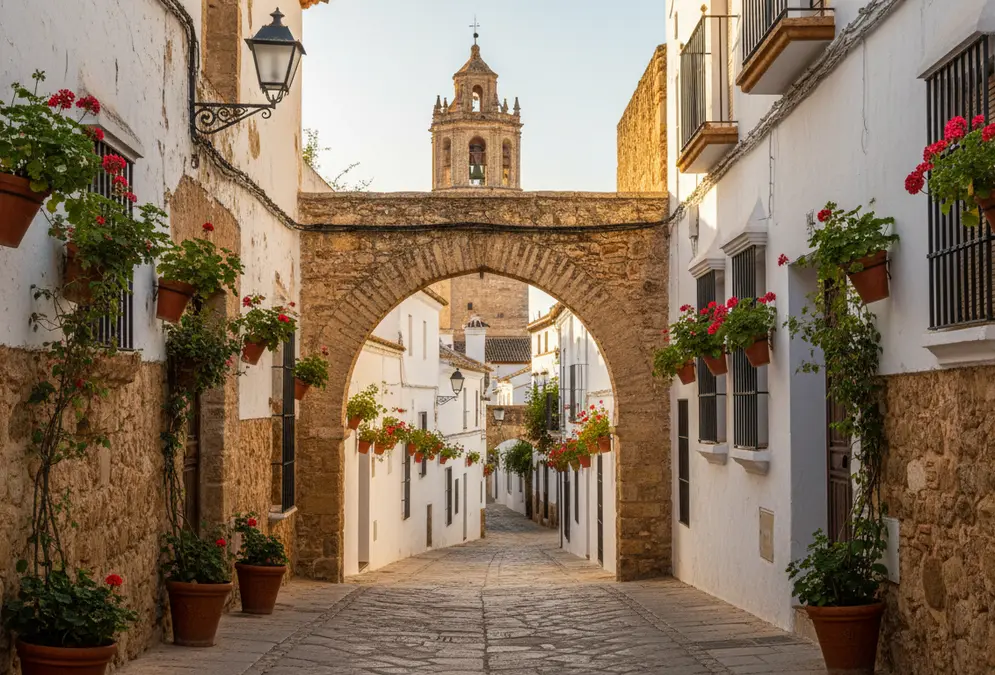
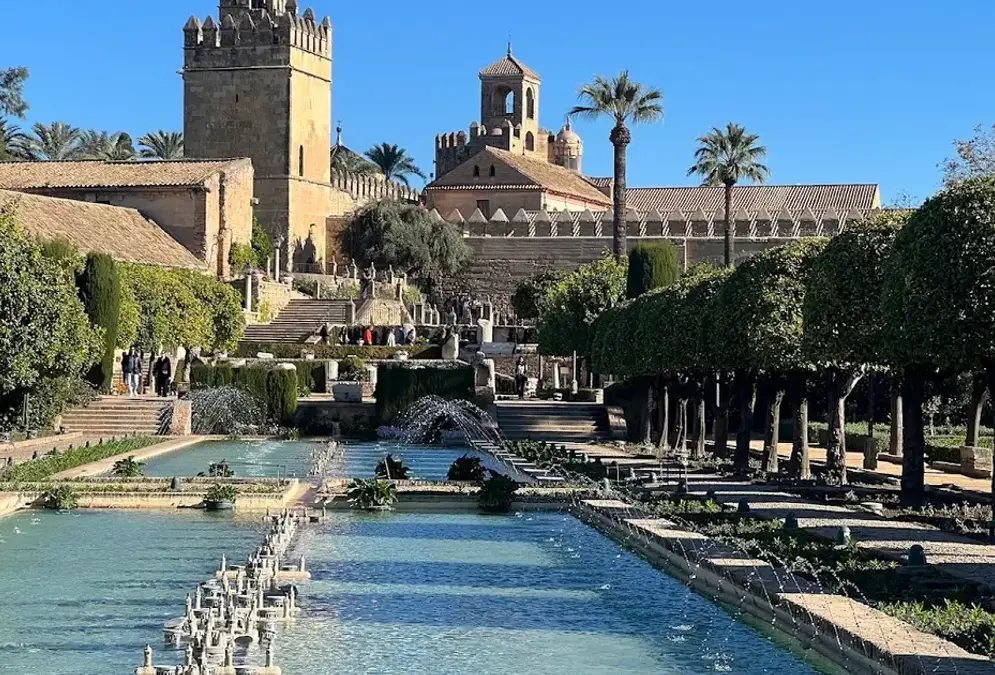
Structure outdoor sightseeing into two blocks: before 11:00 AM and after 5:00 PM. The Roman Bridge, the Judería streets, the Calleja de las Flores, and the city walls are all best experienced in early morning light anyway. The Guadalquivir riverbank catches a breeze; the Alcázar gardens have fountains and shade.
- Before 11 AM: Judería, Calleja de las Flores, Roman Bridge, exterior Mezquita
- 11 AM–5 PM: Mezquita interior (cool stone), Alcázar, museums, lunch
- After 5 PM: Alcázar gardens, riverside walk, shopping, tapas
Where to find shade and cool
The Judería's narrow lanes stay noticeably cooler than open plazas; the buildings block direct sun for most of the day. The Mezquita's stone interior is naturally air-conditioned by its mass. The Guadalquivir riverbank picks up breeze off the water.
- Judería narrow streets: shaded most of the day
- Mezquita interior: naturally cool stone, 2.5°C below outside
- Guadalquivir riverside: shade trees and breeze
- Alcázar gardens: fountains and tall hedges
- Any café with air conditioning (standard in Córdoba)
Best months to visit: April–May (20–27°C, ideal walking weather) and October–November (warm but tolerable all day). See our month-by-month guide for exact temperature ranges and festival dates.
Money, ATMs, and tap water
Which ATMs to use
Several tourist-area ATM operators in Córdoba charge €5–7+ per withdrawal and push a conversion trick. Stick to proper bank machines: BBVA, CaixaBank, Banco Santander, or ING. Their fees run €2–4 per withdrawal, roughly half the tourist machine rate. Withdraw €200 at once to limit the number of transactions.
- Use: BBVA, CaixaBank, Banco Santander, ING
- Avoid: Euronet, CashZone, Euro Automatic Cash
The DCC scam
Always: euros when the ATM asks your currency
When an ATM or card terminal asks whether to charge in your home currency (USD, GBP, AUD) or in euros, always select euros. Choosing your home currency hands the conversion to the merchant at an inflated rate, adding 2–5% to every transaction. The screen is designed to make "home currency" look safer. It isn't.
The same applies at hotels and shops: if a terminal shows "Charge in USD?" or similar, decline it.
Cash vs contactless
Contactless payment works at most restaurants, shops, and larger tapas bars. Small neighbourhood bars and market stalls often prefer cash. Carry €50–100 in notes for situations where cards aren't accepted: morning pastries, small markets, and tipping. The budget guide has a full breakdown of typical daily costs.
Tap water is free and safe
Córdoba's tap water meets EU drinking standards and scores 91/100 on Numbeo's quality index. It's slightly mineralized but not noticeably different from bottled water. In restaurants, ask for "agua del grifo" (tap water); it's served free. "Agua mineral" is bottled and costs €2–4 per bottle.
In summer, filling a 1L bottle before heading out saves €8–12 per day.
Local customs
Tipping
Tipping is optional in Spain and genuinely not expected in the way it is in the US. Rounding up the bill or leaving €1–2 for good service is appreciated. At tapas bars, nothing extra is needed. Leave cash on the table rather than adding it to a card payment; the staff receives it directly.
English proficiency
Córdoba is not Barcelona or Madrid. English is not widely spoken outside hotels and major tourist sites. A few phrases in Spanish go a long way: "¿Habla inglés?" (do you speak English?), "La cuenta, por favor" (the bill, please), "Agua del grifo, por favor" (tap water, please). Most locals are patient and helpful with visitors who make the effort.
Meal timing
Locals eat lunch between 2:00–4:00 PM and dinner from 9:00–11:00 PM. The 6:00–8:00 PM aperitivo window is when tapas bars fill with locals for drinks and small plates before dinner. Walking into a restaurant at 7:00 PM for dinner is fine, but expect to be among early-bird tourists rather than locals.
What to order at lunch
The menú del día (lunch menu) is Córdoba's best deal: €10–13 for starter, main, dessert, bread, and a drink. Offered weekdays at most restaurants. For Córdoba-specific dishes: salmorejo (thick cold tomato soup, richer than gazpacho), rabo de toro (braised oxtail, a local obsession), and berenjenas con miel (fried aubergine with cane honey). See the local dishes guide.
Greetings and courtesy
Cordovans greet people when entering small shops and cafés. A simple "Buenos días" (good morning) or "Buenas tardes" (good afternoon) when you walk in makes a tangible difference in how you're treated. It signals you're not just passing through.
Patio culture
If you visit during the Patio Festival in early May, remember you are entering private homes. Keep voices low, don't touch the flowers, and follow signs about photography. The homeowners volunteer their space; basic courtesy is the only entry requirement.
Staying safe
Córdoba is considerably safer than Barcelona or Madrid for petty theft. Standard precautions are enough; you don't need to be paranoid, just sensible.
Pickpocket hotspots
The few areas where pickpockets operate are predictable: the Mezquita entrance and surroundings, the Judería, Calleja de las Flores (gets very crowded), and the train station. In these spots, use a crossbody bag worn in front, keep your phone in a front pocket, and don't leave bags on chairs at outdoor cafés.
The rest of the city (residential neighbourhoods, markets, parks) has essentially no tourist-targeted theft.
Financial safety
The main financial risk isn't theft; it's the DCC scam at ATMs and card terminals (covered above in the Money section). Avoid Euronet/CashZone machines, always select "charge in euros", and use bank ATMs. These three habits save more money than any other precaution.
112 Emergency (police, fire, ambulance)
092 Local police
Tourist Police: Calle Capitulares s/n
Córdoba's must-see monuments
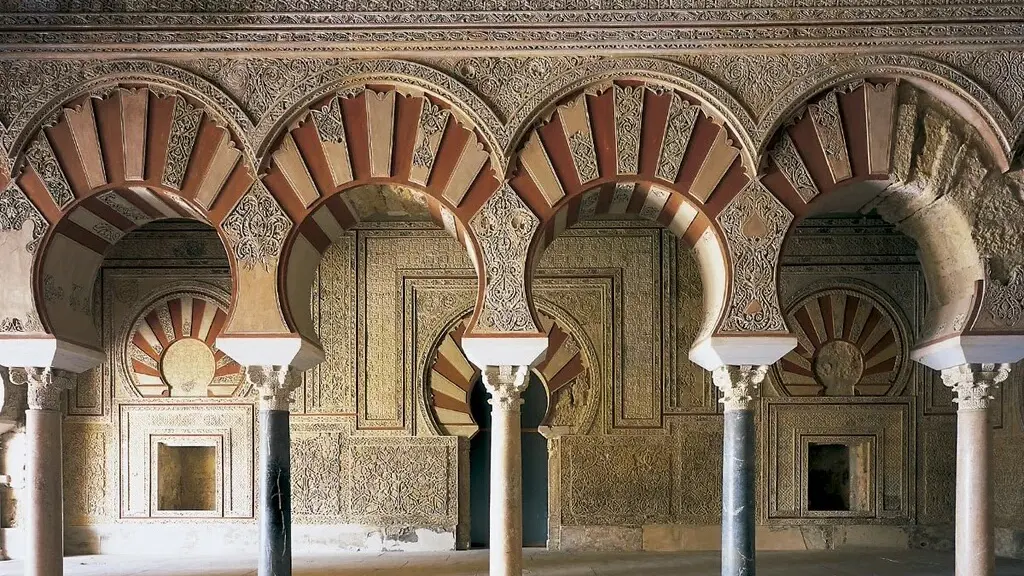
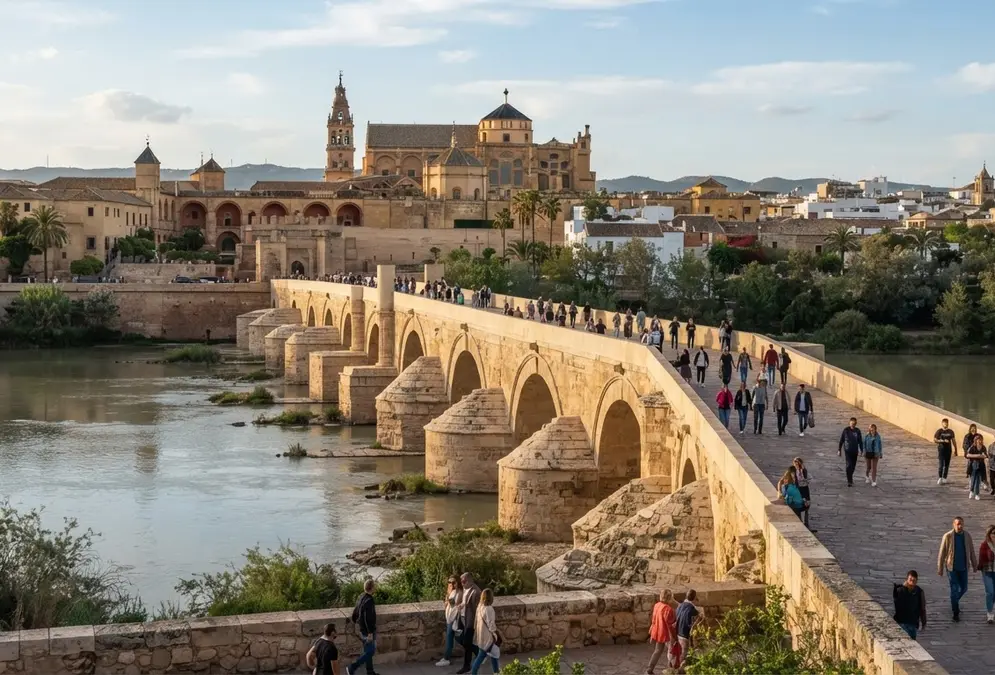
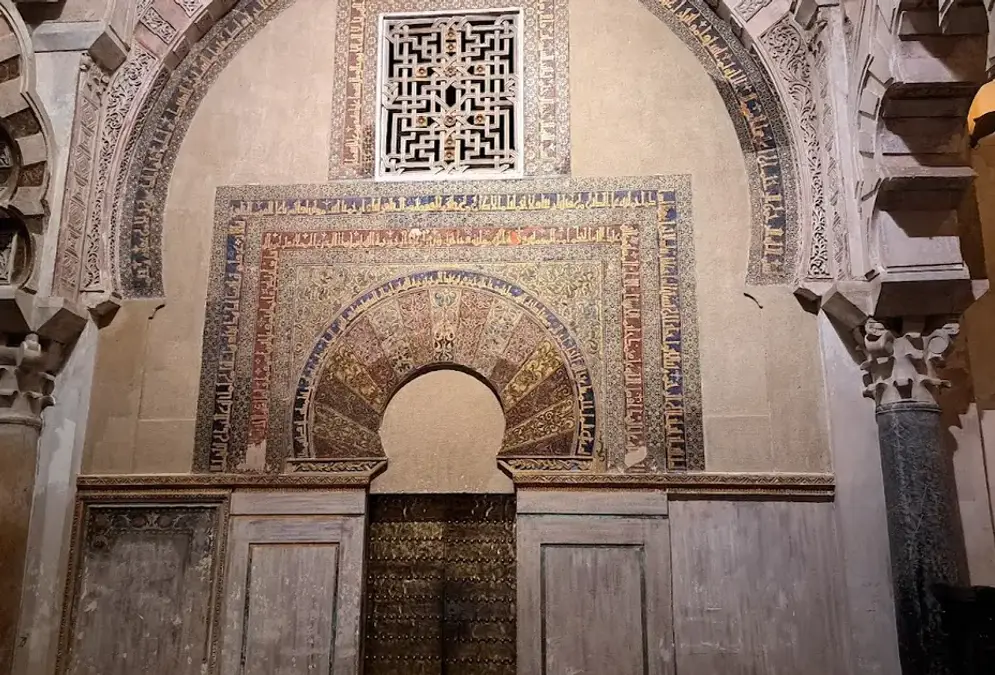
Top experiences for first-time visitors
Frequently asked questions
Is the Mezquita free to enter?
Yes. Monday through Saturday, 8:30–9:30 AM is a free religious visit open to everyone. Arrive by 9:00 AM to be safe; the queue builds fast and they close the door at capacity. Outside that window, paid entry runs €15 (reduced €12 for seniors 65+ and students 15–26, €8 for ages 10–14, free under 10). Book tickets online at tickets.mezquita-catedraldecordoba.es, especially in April–May and October. See the full Mezquita visitor guide for what to see inside and skip-the-line tips.
What should I wear to the Mezquita?
Shoulders and knees must be covered: no tank tops, no shorts above the knee. Remove hats indoors (caps, wide-brimmed hats). Women do not need to cover their heads. No large bags inside. In summer, loose linen trousers or a knee-length skirt with a lightweight long-sleeved top covers both the dress code and the heat. Scarves work well to cover bare shoulders temporarily.
Do shops close for siesta in Córdoba?
Small independent shops typically close 2:00–5:00 PM (sometimes until 6:00 PM in summer). Supermarkets, shopping malls, and department stores stay open all day. Tourist attractions including the Mezquita, Alcázar, and most museums continue operating through the afternoon; siesta doesn't affect them. Use the quiet 2–5 PM window for lunch (the main meal), a coffee, or a nap.
Is tap water safe to drink in Córdoba?
Yes. Córdoba tap water meets EU drinking standards and scores 91/100 on Numbeo's water quality index. It's slightly mineralized, typical of Andalusia, but perfectly fine to drink. In restaurants, ask for "agua del grifo" (tap water); it's free. "Agua mineral" is bottled and costs €2–4. Bring a refillable bottle; you'll save money and plastic, especially useful in summer heat.
What months should I avoid visiting Córdoba because of the heat?
July and August are brutal: average highs reach 36.9°C and temperatures regularly hit 40°C or above. If you visit in summer, plan all outdoor sightseeing before 11 AM and after 5 PM, and use museums, the Mezquita interior (naturally cool stone), and cafés during the 1–4 PM peak. The best months are April–May (20–27°C) and October–November. See our best time to visit guide for the full breakdown.
How do I avoid ATM fees in Córdoba?
Avoid Euronet, CashZone, and Euro Automatic Cash machines: they charge €5–7+ per withdrawal and push a scam called DCC (Dynamic Currency Conversion). When any ATM asks whether to charge in your home currency or euros, always select euros. Use proper bank ATMs: BBVA, CaixaBank, Banco Santander, or ING. Withdraw €200 at once to minimize per-transaction fees. Contactless is widely accepted at restaurants and shops; small tapas bars sometimes prefer cash.
Ready to plan your trip?
Now that you have the practical side covered, explore the full picture: the best months to visit, how to do it on a budget, and what makes Córdoba worth the trip in the first place.
Further reading
Sources
4 references Show Hide
- Mezquita-Cathedral de Córdoba: Official Tickets (opens in a new tab)
Official booking site with current prices and availability
- Córdoba Tourism Office (opens in a new tab)
Official visitor information including opening hours and events
- Numbeo — Córdoba Water Quality (opens in a new tab)
Crowd-sourced water quality and safety data for Córdoba
- Spain.info — Money and Payments (opens in a new tab)
Official Spain tourism guidance on currency and payments
Recommended Tours & Activities
Tours are selected for quality, not commission. We earn a small fee if you book — at no extra cost to you.
Best Seller
Best Seller
Best Seller
Best Seller
Mosque-Cathedral Skip-the-Line Guided Tour
Skip the queue and explore the Mezquita-Cathedral with a knowledgeable local guide. Discover 13 centuries of layered history in one of Spain's most iconic monuments.
Skip the line 1.5 hours
From €29
4.7 (7,293 reviews)
Reserve Your Spot
✓ Verified GetYourGuide reviews
Books up weeks ahead in peak season
Mosque-Cathedral Skip-the-Line Guided Tour
Beat the crowds with skip-the-line access and enjoy an expert-led tour through the breathtaking arches, mihrab, and cathedral choir of Córdoba's most visited monument.
Skip the line 1.5 hours
From €28
4.6 (5,758 reviews)
Reserve Your Spot
✓ Verified GetYourGuide reviews
Books up weeks ahead in peak season
Alcazar Guided Tour and Skip-the-Line
Bypass the queue and explore the Alcázar de los Reyes Cristianos with a guide. Admire the royal halls, ancient mosaics, and the beautiful terraced gardens.
Skip the line 1.5 hours
From €19
Less than a restaurant lunch
4.2 (1,863 reviews)
Reserve Your Spot
✓ Verified GetYourGuide reviews
Books up weeks ahead in peak season
Flamenco Show Ticket with Drinks
Experience the passion and drama of authentic Andalusian flamenco at one of Córdoba's premier tablaos. Ticket includes a drink at the bar.
1 hour
From €25
4.8 (1,158 reviews)
Reserve Your Spot
✓ Verified GetYourGuide reviews
Books up weeks ahead in peak season