Travel planning
Córdoba: Day Trip or Overnight?
Day trip satisfies the checklist. Overnight reveals the soul. Here's everything you need to decide.

Written by
María Fernanda González Ten years covering Córdoba's UNESCO heritage sites, sourcing from Junta de Andalucía documentation.
Updated Published
At a glance
- Day trip
- 6–8 hours from Seville or Madrid
- Overnight stay
- 1–2 nights recommended
- Train time
- 45 min from Seville, 1h 45min from Madrid
- Overnight bonus
- Mezquita interior at night, evening tapas
- Hotel range
- €60–150/night in Old Town
- Core sights
- Mezquita, Alcázar, Judería, Medina Azahara
In this guide
Jump to a section

Stay overnight. Here's why.
Córdoba on a day trip from Seville is a box-ticking exercise. You arrive at 9:45am, queue for the Mezquita, walk the Judería, eat a rushed lunch, photograph the Roman Bridge, and catch a 3pm train back. You've checked the boxes, but you haven't met the city.
You missed the city after the tour buses leave. The stone streets going quiet around 5pm, locals reappearing at their usual bars. Sunset from the Roman Bridge when the Mezquita tower turns amber. The free Mezquita entry at 8:30am, 856 columns to yourself. Medina Azahara, an entire ruined caliphal city 8km outside town that takes half a day and which no day-tripper has time for.
The math is simple. A mid-range hotel room costs €60–90. For that, you double your sightseeing time, eat where locals eat at 9pm, and walk into a near-empty Mezquita at 8:30am. That €80 buys you more than any other single spend on this trip.
What a day trip actually looks like
From Seville — the most common base — 40+ daily trains make the 43-minute journey for €8–20 each way. See the Seville to Córdoba day trip guide for train times, what to book ahead, and the optimal route. On paper, a day trip looks easy. In practice, here's how your day actually plays out.
| Time | What you're doing |
|---|---|
| 9:45am | Arrive Córdoba station, 15-min walk or taxi to Mezquita |
| 10:00–11:30am | Mezquita-Cathedral — but the tourist rush peaks here too |
| 11:30am–1pm | Judería walk, Calleja de las Flores, Roman Bridge photo |
| 1–2:30pm | Lunch near the Mezquita — overpriced tourist menus |
| 2:30–3:30pm | Alcázar gardens (if you're fast) or back to station |
| 3:00–4:00pm | Train back to Seville — sunset, dinner, and Medina Azahara left unseen |
That's 4–6 hours of actual sightseeing, all at peak crowd hours, all within the tourist triangle between the Mezquita, the Judería, and the bridge. You never reach the neighborhoods, the 10th-century palace city, the evening dining culture, or the completely different character Córdoba takes on after 5pm.
What day-trippers never see
Medina Azahara — a ruined caliphal city you won't have time for
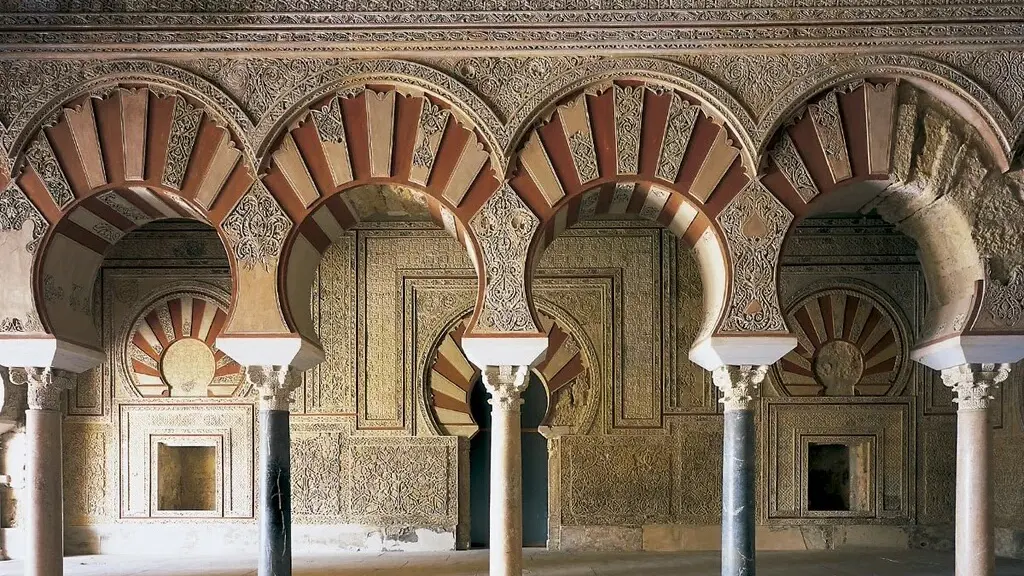
In 936 AD, Caliph Abd al-Rahman III built a palace city from scratch 8km west of Córdoba — 4,000 workers, 10,000 laborers, white marble from Carthage. It was the most sophisticated city in Western Europe. Medina Azahara requires a shuttle from the city, a 1.5–2 hour visit, and a half-day minimum. No day-tripper has that time. The entrance fee is just €3.
The 5pm transformation — when the real city appears
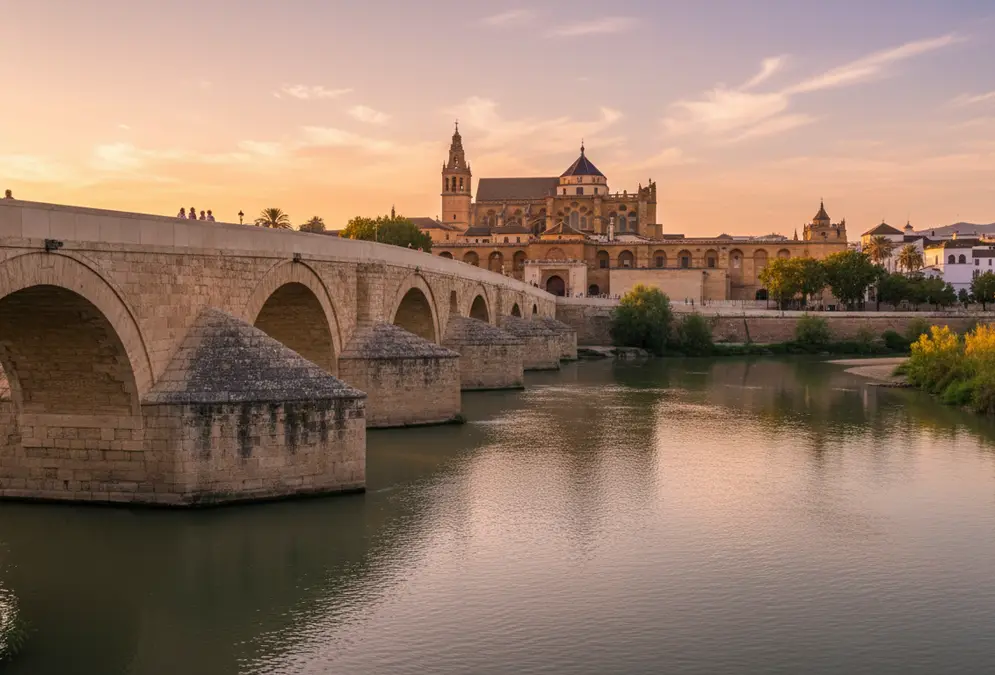
Around 4–5pm, the tour buses leave. The narrow streets of the old city empty out. Cats reappear on warm stone ledges. Local families come out for their evening walk. The Mezquita, seen from the Roman Bridge as the light drops, looks nothing like the 11am version surrounded by selfie sticks. This hour — quiet, warm, the smell of orange blossom or jasmine depending on the season — is why people say Córdoba got to them in a way they didn't expect.
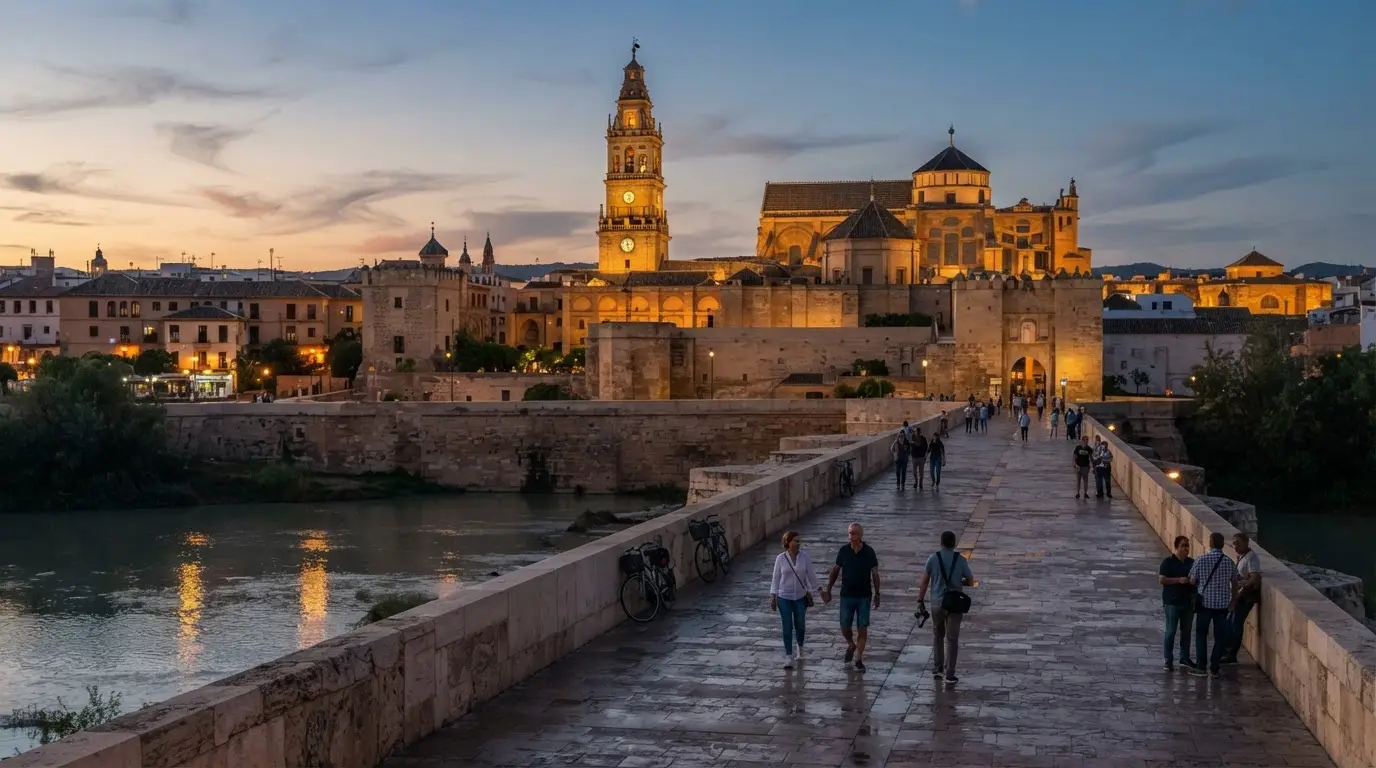
What happens after that? Flamenco at a tablao in the Judería, late dinner at a neighbourhood restaurant, a night walk across the illuminated bridge, a glass of fino at Bodega Guzmán. Our Córdoba at Night guide maps out the full evening — the main reason to stay overnight rather than catching the 3pm train home.
Sunset from the Roman Bridge
The Roman Bridge — 16 arches, the Mezquita-Cathedral tower framed against the sky, the Guadalquivir below — produces one of Spain's great travel photographs. At 3pm it looks decent. At sunset it looks like a painting. Day-trippers are already on a train home.
The free Mezquita hour — 856 columns, almost no one there
Monday to Saturday, 8:30–9:30am, the Mezquita opens for free morning prayer — and you can walk right in. The forest of jasper and marble columns, normally packed with a thousand tourists, stands almost silent. You hear your own footsteps on the stone floor. By 10am, the queues form. By 11am, it becomes the experience everyone complains about. This single hour justifies staying overnight.
San Basilio, San Lorenzo, La Axerquía — the neighborhoods tourists skip
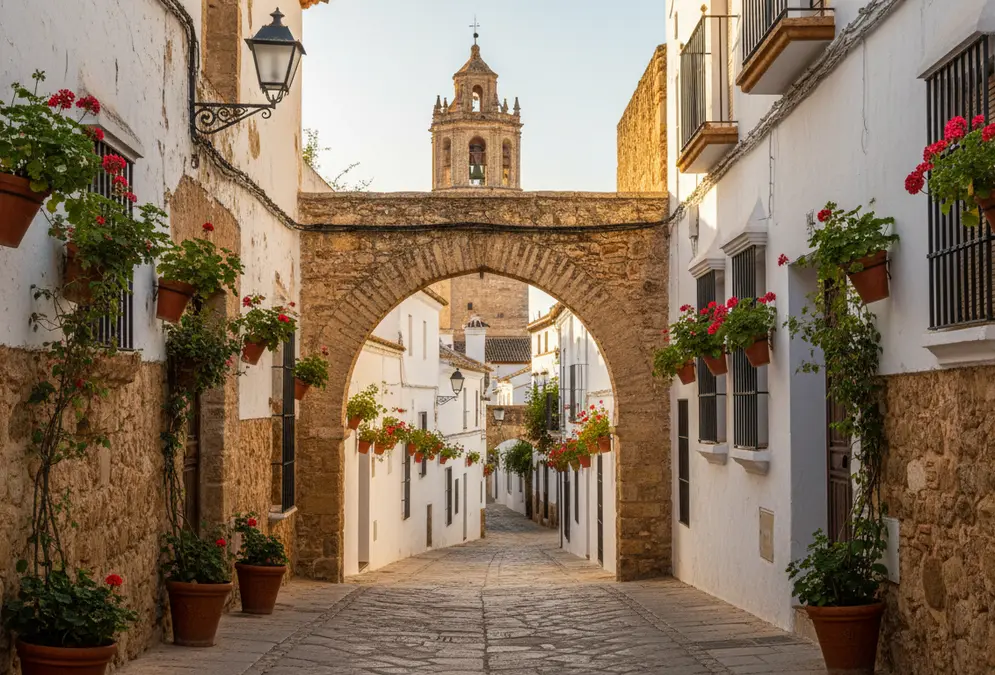
The Judería is where day-trippers go. San Basilio, just south of the Alcázar, has the best private patios — the ones entered through a street-level arch into a courtyard of geraniums. San Lorenzo, in the north of the old city, has Córdoba's most beautiful church: a Gothic-Mudéjar facade with a rose window that most visitors never see. La Axerquía is where people actually live — cheap lunch menus, zero tourists, real city. You need time to find these places, and a day trip gives you none.
Dinner at 9pm — when locals actually eat
Spanish dinner starts at 8pm at the earliest. Most locals eat at 9–10pm. The neighborhood restaurants that serve rabo de toro (braised oxtail) and salmorejo to local families don't fill up until half past eight. Day-trippers eat lunch at 1:30pm in a tourist restaurant near the Mezquita and call it Córdoba cuisine. It isn't.
Patio Festival after 7pm — the evening session most visitors miss
The Córdoba Patio Festival is UNESCO-listed and happens in May. Here's what most visitors don't know: patios close 2–6pm, then reopen for the evening. The best visits happen after 7pm — flamenco music drifting from nearby bars, fino wine, the courtyards lit differently. A day-tripper arriving at 10am catches the morning session and misses everything that makes the festival worth attending.
1 day: make every hour count
You can still have a great day. The key: take the earliest train you can find. The 6:00am from Seville arrives 6:45am, putting you at the Mezquita doors for the free 8:30am entry. Miss that window, and you pay €15 to share the space with hundreds of others.
8:30–9:30
Mezquita-Cathedral — free entry, nearly empty
Walk the full length of the prayer hall. You need an hour here when it's quiet; at 11am you'll want to leave after 20 minutes.
9:30–11:00
Judería walk
Calleja de las Flores, the Synagogue (€0.30 entry), Plaza de Maimónides. These streets are pleasant before the crowd arrives.
11:00–12:30
Alcázar gardens
€7 entry, Roman mosaics and terraced gardens. Don't skip the tower view. See our 1-day itinerary for the full route.
12:30–2:00
Lunch
Skip the tourist menus on Calle Magistral González Francés. Walk five minutes north to find the neighborhood lunch spots at €10–12 for a set menu with wine.
2:00–3:30
Roman Bridge + afternoon walk
Cross the bridge, look back at the Mezquita. This is your photo. Then make your way back to the station.
Total cost: €15 Mezquita + €7 Alcázar + €10–15 lunch + €16–40 train return = €48–77, and you leave without seeing Medina Azahara, sunset, or a single real dinner.
2 days: see the city, not just the monuments
With two days, Córdoba stops being a monument checklist and becomes an actual city. Arrive the evening before, eat dinner at a proper hour, and wake up in the old city. See our complete 2-day itinerary for the detailed version.
Day 1
- • 8:30–9:30am: Free Mezquita entry, almost no one there
- • 9:30–11:30am: Judería, Synagogue, Calleja de las Flores
- • 11:30am–1:30pm: Alcázar de los Reyes Cristianos (€7)
- • 1:30–3pm: Lunch — proper neighborhood restaurant
- • 3–5pm: San Basilio neighborhood, private patios
- • 5–7pm: Rest, shower, prepare for the evening
- • 7–9pm: Evening walk — streets empty, golden light
- • 9pm: Dinner at a neighborhood restaurant
- • Late: A glass of fino at a bar in the old city
Day 2
- • 9–11am: Medina Azahara — take the shuttle bus from Paseo de la Victoria
- • 11am–1pm: Medina Azahara visit (€3, allow 1.5–2h)
- • 1–2pm: Return to city
- • 2–3:30pm: Lunch, then San Lorenzo church
- • 3:30–5pm: La Axerquía — the real Córdoba, no tourists
- • 5pm: Depart, or stay a third night
Added cost vs. day trip: €60–90 hotel room + €20–30 dinner. You gain Medina Azahara, the quiet Mezquita at dawn, sunset from the Roman Bridge, evening dining, and a second full morning. You see twice as much for about €80 more.
3 days: stop rushing, start living here
With three days, you stop rushing and start living in the city. The third day opens up options that feel like a different kind of trip entirely. See the full 3-day Córdoba itinerary.
Day 3
Morning at Palacio de Viana — 12 interconnected patios and a Renaissance palace, one of the best-kept secrets in the city (€8, closed Monday). Afternoon free for museum-hopping — the Archaeological Museum or the Fine Arts Museum, both in the same square. Evening: another neighborhood, another restaurant, a proper walk along the river.
Day trip option: Priego de Córdoba
60km south, this Baroque hill town has the finest church architecture in the province. 1.5 hours by bus. Combine with the olive oil route — Córdoba province produces some of Spain's best. The guided day trip includes transport and covers the main sites.
May option: Patio Festival
If you're here May 4–17, spend an evening at the patios after 7pm. Flamenco, fino, geranium-lined courtyards. The festival guide has the best routes.
Where to stay in Córdoba
Stay inside the old city. You walk to the Mezquita in five minutes and catch the streets at their quietest, morning and evening. Our where to stay guide compares neighborhoods in detail.
Budget
€40–50/night
Hostels and basic 2-star hotels. Most are outside the old city walls but within walking distance. You won't have a patio, but you'll have a bed and a good location.
Look near Plaza de las Tendillas or Avenida del Gran Capitán.
Best value
Mid-range
€60–90/night
3-star and boutique hotels, often converted palaces with their own patios. This is the Córdoba experience — breakfast in a courtyard, stone floors underfoot.
The Judería and San Basilio have the best options at this price.
Luxury
€150–250/night
Heritage properties like the Hospes Palacio del Bailío, a 16th-century palace with Roman ruins visible through glass floors in the spa. These places exist nowhere else — worth every euro if your budget allows.
Book 4–6 weeks ahead in spring, especially during May festivals.
Decided to stay? Here's your next step.
Whether you have one day or three, our itineraries walk you through every hour. Start with getting to Córdoba or jump straight to the day-by-day plans. Staying overnight also means you can exploit the timing windows and neighbourhood rhythms covered in the Córdoba slow travel guide. Driving between Seville and Granada? See why Córdoba earns a proper stop on the wider Andalusia circuit, not just a drive-by.
Decided to stay? Check hotel rates
We earn a small commission if you book a hotel through this search — at no extra cost to you.
Overnight is the call most visitors make once they know what day-trippers miss.
Frequently asked questions
Is one day enough in Córdoba?
You can see the Mezquita and Judería in one day, but you'll miss Córdoba's soul. The city transforms in the evening when day-trippers leave. One full day plus an overnight is the minimum for a real experience.
How many days do you need in Córdoba?
Two days is ideal: day one for the Mezquita, Judería, and evening exploration; day two for Medina Azahara and the secondary neighborhoods. Three days lets you add Palacio de Viana and day trips to Priego de Córdoba or olive oil country.
Is Córdoba worth visiting or just a day trip?
Absolutely worth a full visit. The average visitor stays 3.4 days. Day-trippers see roughly 30% of what Córdoba offers — they miss the evening atmosphere, Medina Azahara, authentic local dining, and the neighborhoods where people actually live.
What time should I arrive for a Córdoba day trip?
Take the earliest train you can. From Seville, the 6:00am train arrives by 6:45am. This gives you the free Mezquita entry window (8:30–9:30am Mon–Sat) with almost no crowds — something most day-trippers miss entirely.
Where should I stay in Córdoba overnight?
The Judería (Jewish Quarter) puts you steps from the Mezquita. San Basilio is quieter with beautiful patios. Mid-range hotels run €60–90/night — less than you'd spend on a mediocre dinner in many European capitals.
Further reading
Official sources
3 references Show Hide
- Córdoba Tourism Office (opens in a new tab)
Official information on Córdoba's monuments, opening hours, and events
- Medina Azahara — Conjunto Arqueológico (opens in a new tab)
Official site for Medina Azahara — hours, shuttle schedule, and ticket prices
- Renfe — High-speed trains (opens in a new tab)
Timetables and fares for AVE trains between Seville, Madrid, and Córdoba
Still deciding whether Córdoba belongs on your itinerary at all? Read our honest assessment of whether Córdoba is worth visiting — including who finds it too quiet and how it stacks up against Seville and Granada.