Travel planning
Is Córdoba Worth Visiting?
Four UNESCO designations, Europe's only mosque-cathedral, and a daily budget that barely dents your wallet. Here's the honest answer.
At a glance
- UNESCO sites
- 4 (Historic Centre, Patios, Medina Azahara)
- Ideal duration
- 2–3 days
- vs. Seville/Granada
- 20–30% cheaper on average
- Peak season
- May (festivals) & Easter
- Crowds
- Far less than Seville or Barcelona
- Distance
- 45 min from Seville, 2.5h from Madrid
In this guide
Jump to a section

Written by
Carmen Ruiz Montoya Eight years of field research on hiking routes and natural parks in Córdoba province.
Updated Published
Yes. And it's not even close.
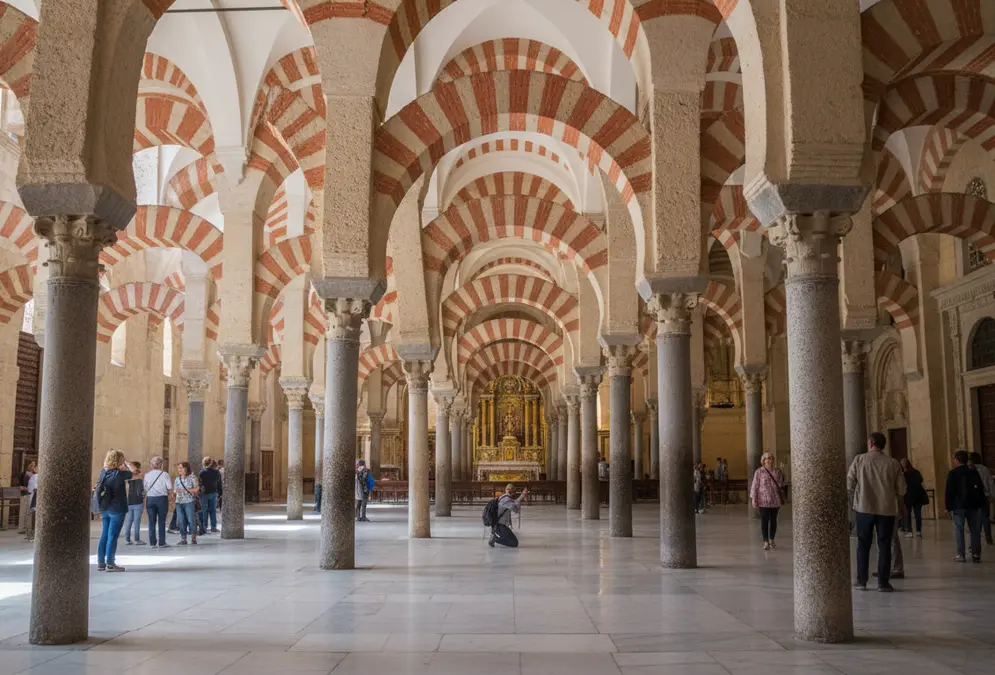
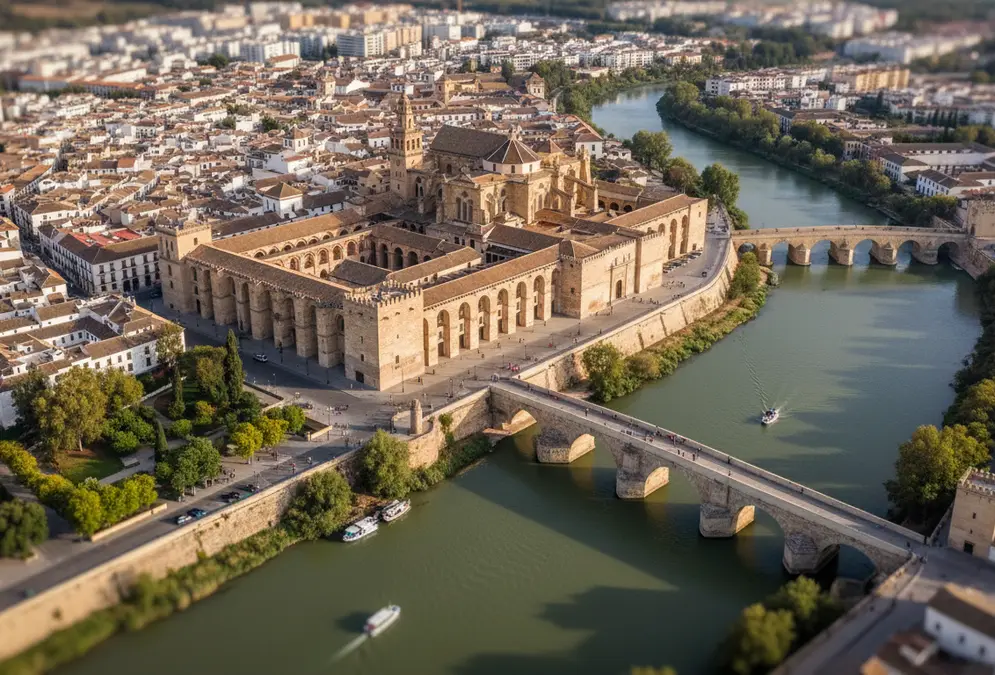
The Mezquita-Cathedral alone would justify the trip. Walk through 856 columns of red-and-white double arches, built when Córdoba was the largest city in Western Europe, and you understand why visitors describe it as the single most striking religious building they've seen on the continent. It is genuinely unlike anything else.
But the Mezquita is only the headline. Córdoba holds four separate UNESCO designations — more than Rome, which has three — covering its historic centre, the Mezquita, the Patios Festival, and Medina Azahara. Within a one-kilometre radius, you walk through Roman ruins, a medieval synagogue, Islamic palaces, and Renaissance churches. No other city in Spain packs this density of living history into such a compact area.
Add a food scene where a three-course lunch costs €10–13, hotels at half the price of Barcelona, and streets quiet enough to hear church bells at noon, and the question becomes less "is it worth visiting" and more "why haven't you gone already."
What makes Córdoba unique
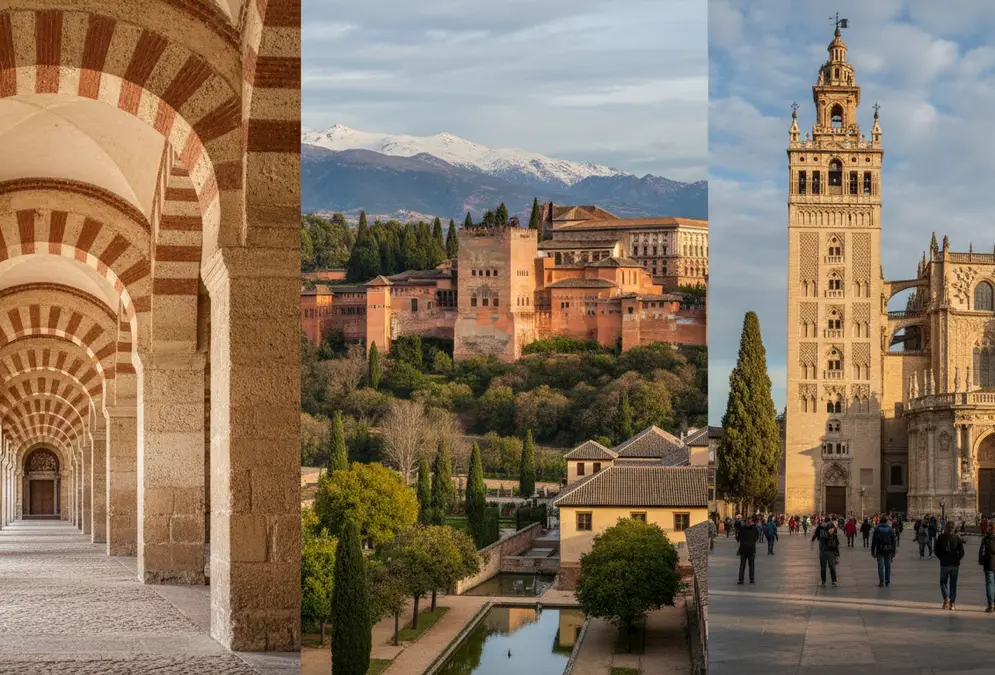
Most Andalusian cities have one defining attraction. Seville has the Alcázar, Granada has the Alhambra. Córdoba has something rarer: four civilizations layered into one walkable centre.
Roman Córdoba
Capital of Hispania Ulterior, birthplace of Seneca. The Roman Temple and bridge still stand. Roman mosaics surface regularly during construction work; some are visible through glass floors in hotel lobbies.
Islamic Golden Age
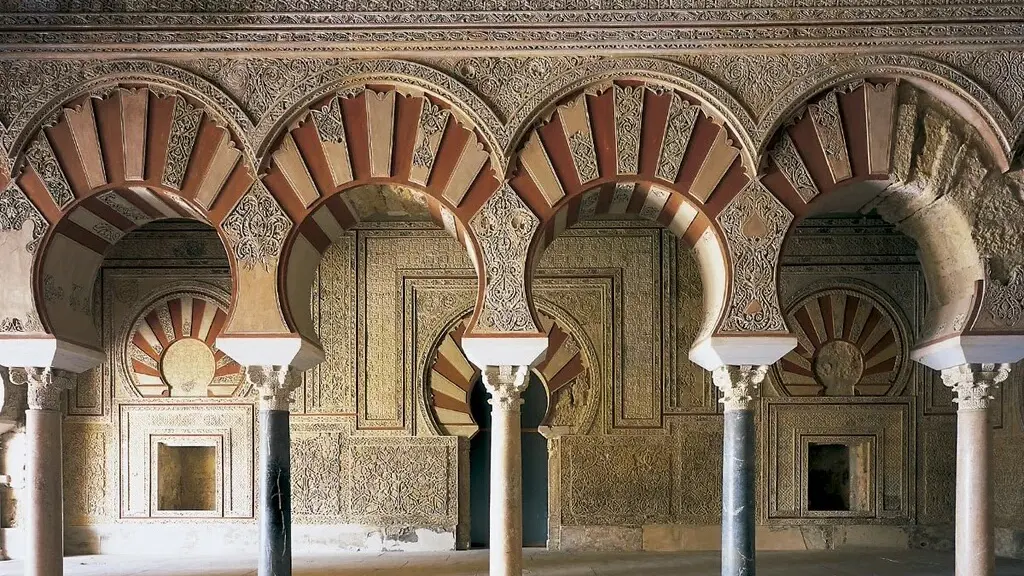
In the 10th century, Córdoba was the most advanced city in Europe: population 500,000, hundreds of public baths, street lighting, a library of 400,000 volumes. The Mezquita and Medina Azahara remain.
Jewish heritage
One of only three medieval synagogues surviving in Spain. The Judería is the best-preserved Jewish quarter on the Iberian Peninsula, with Maimonides' statue marking where he lived.
Christian legacy
Fourteen Fernandine churches, the Alcázar de los Reyes Cristianos, and a Baroque cathedral inserted inside the Mezquita itself, a choice that even Charles V reportedly regretted.
Four UNESCO designations: the Historic Centre (1984), the Mezquita (part of that listing), the Patios Festival (Intangible Heritage, 2012), and Medina Azahara (2018). That puts Córdoba ahead of Rome, which holds three. Very few cities anywhere in the world have accumulated this many separate recognitions.
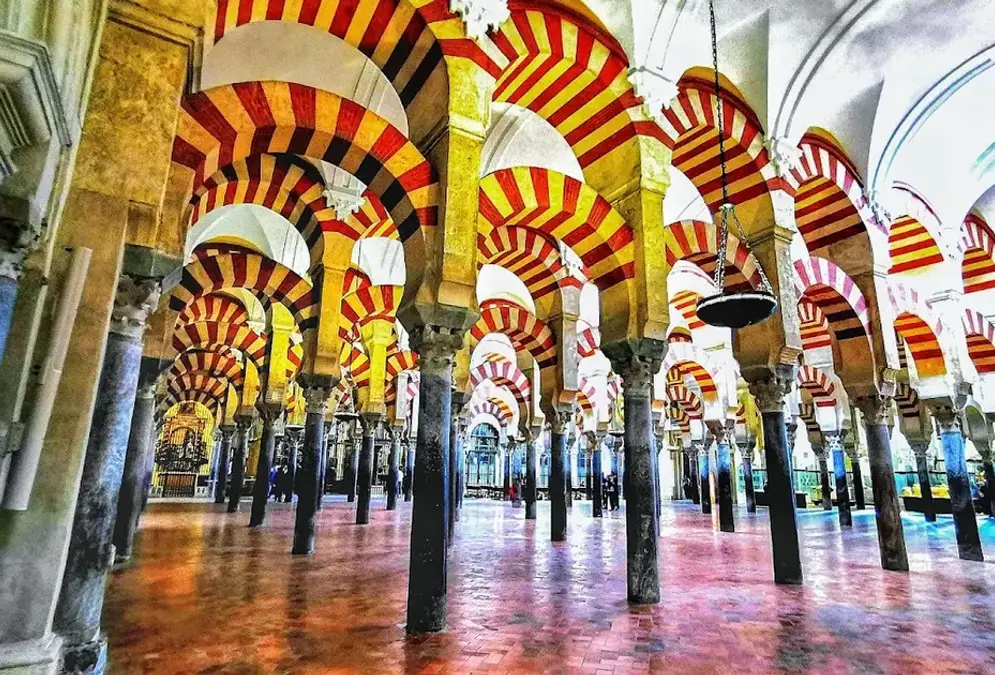
The Mezquita-Cathedral's double arches — built in the 10th century, unlike anything else in Europe
Córdoba vs Seville vs Granada
An honest side-by-side. Córdoba wins on some counts, loses on others. The right choice depends on what you value most.
| Category | Córdoba | Seville | Granada |
|---|---|---|---|
| Flagship monument | Mezquita-Cathedral | Royal Alcázar + Cathedral | Alhambra |
| UNESCO designations | 4 | 3 | 2 |
| Hotel (double, mid-range) | €60–90 | €80–120 | €70–110 |
| Daily budget | €70 | €95 | €85 |
| Crowd level | Low–moderate | High | Moderate–high |
| Walkability | Excellent (all on foot) | Good (tram/bus helpful) | Good (steep hills) |
| Ideal stay | 2–3 days | 3–4 days | 2–3 days |
| Nightlife | Modest | Excellent | Good (student scene) |
| Islamic heritage depth | Deepest in Spain | Moderate | Strong (Nasrid) |
| Train from Madrid | 1h 45min | 2h 30min | 4h 10min |
Day trip or overnight?
The most common question from travelers based in Seville or Madrid. Here's what each option actually gives you.
Option A
Day trip (6–7 hours)
Arrive by 9:30am, leave by 4pm. You see the Mezquita, walk the Judería, cross the Roman Bridge, eat lunch. That covers the top three highlights and is genuinely worthwhile. The Mezquita is that good.
Mezquita-Cathedral
Jewish Quarter + Synagogue
Roman Bridge + Calahorra Tower
Evening atmosphere
Free early Mezquita entry (8:30am)
Medina Azahara
Local dining after 9pm
Recommended
Overnight (24–48 hours)
The overnight visit unlocks things you cannot engineer on a day trip. The Mezquita is free before 9:30am on weekdays — that's €15 saved and, more importantly, you see it without the tour groups that fill it by 10am. If you're visiting May through September, staying over also changes how you use the heat: sightsee at dawn when the stone is still cool, rest indoors during the 2–5pm peak, then head back out after 7pm when the city re-emerges. Day-trippers arrive mid-morning and leave mid-afternoon — the worst window. Add Medina Azahara, evening tapas in San Lorenzo, and time to wander without a train to catch, and you see roughly double for an extra €80–110.
All day-trip highlights
Free Mezquita at 8:30am (near-empty)
Medina Azahara — ruined caliphal city
Sunset from the Roman Bridge
Palacio de Viana — 12 patios
Evening tapas in local neighborhoods
Alcázar gardens at your own pace
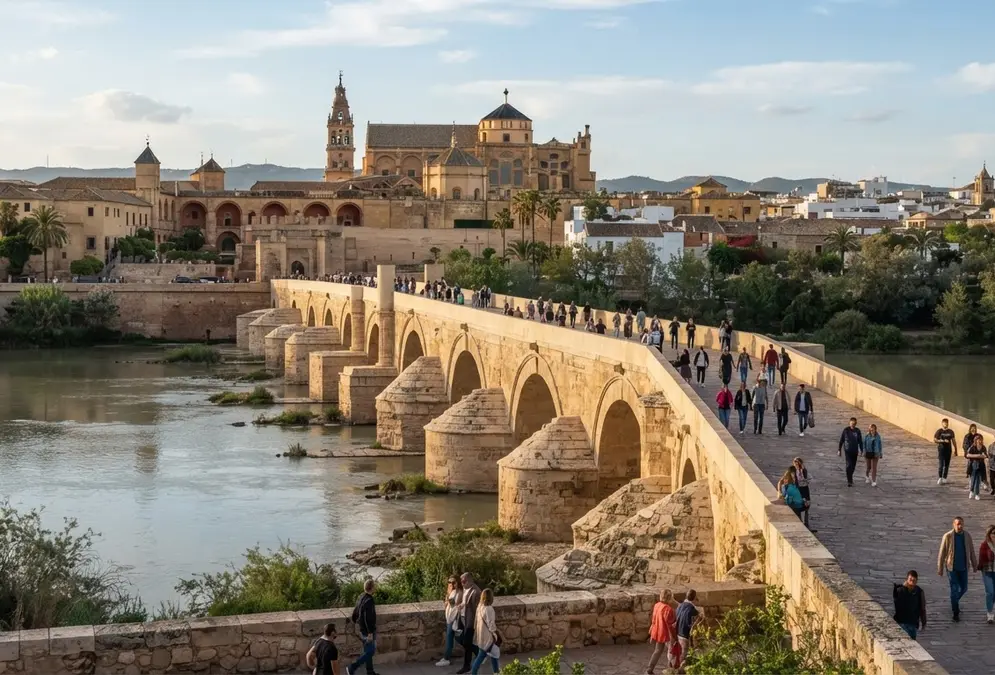
Sunset from the Roman Bridge — the evening atmosphere day-trippers never see
The full breakdown — hour by hour, with cost comparisons and logistics — is in our day trip vs overnight guide.
8 specific reasons Córdoba is worth your time
Not vague superlatives: concrete things you cannot get anywhere else.
1
The Mezquita-Cathedral
856 columns, double arches in red and white, a 10th-century prayer hall that became a Renaissance cathedral. Visitors who have seen Notre-Dame, St. Peter's, and the Hagia Sophia still call this the most striking religious building in Europe. Entry is €15, or free before 9:30am on weekdays. Full guide.
2
The patio tradition
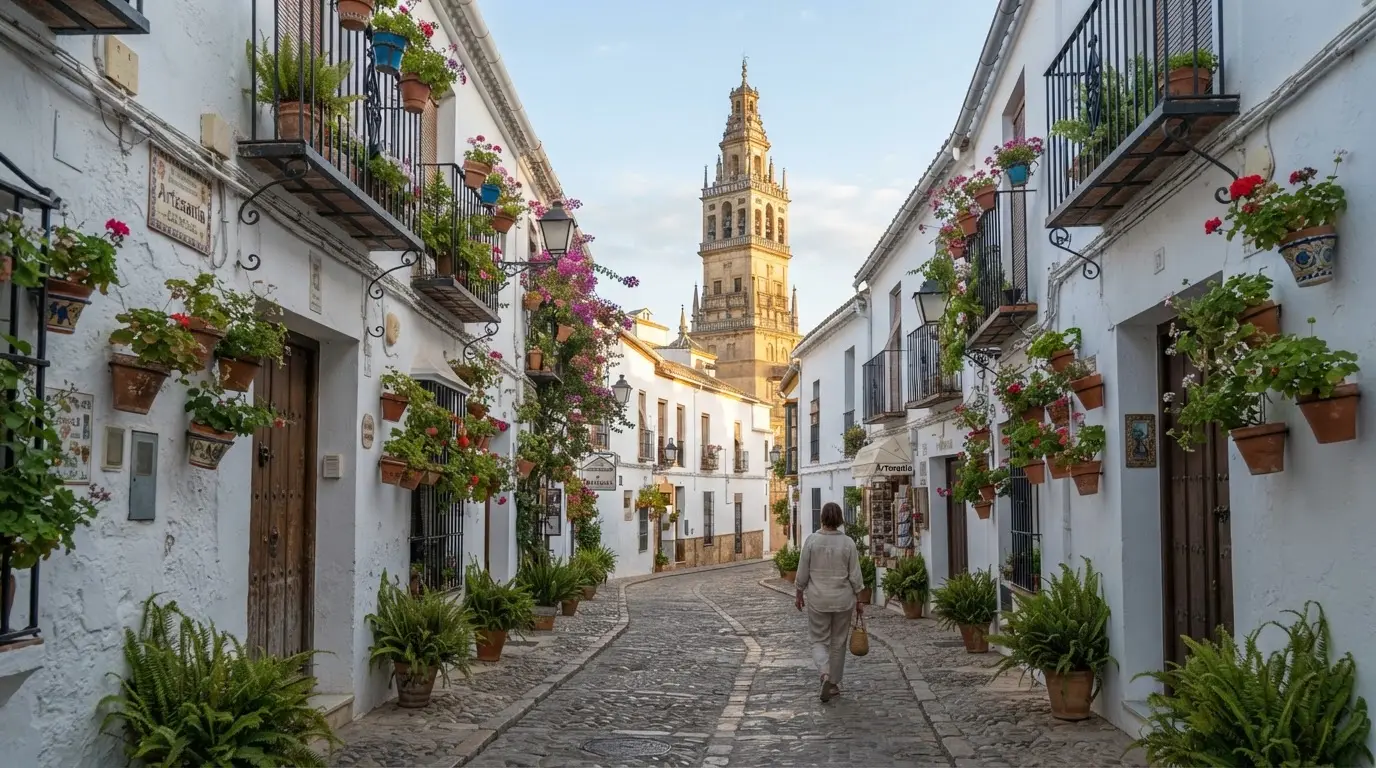
Córdoba's flower-filled courtyards are a UNESCO Intangible Heritage tradition. During the first two weeks of May, residents open their private patios to the public: 50+ courtyards overflowing with geraniums, jasmine, and bougainvillea. Even outside festival season, many patios remain visitable year-round.
3
Genuinely affordable
A three-course lunch menu (menú del día) runs €10–13 at a proper sit-down restaurant. A mid-range hotel in the old city costs €60–90 per night. A full day including entrance fees, meals, and a glass of Montilla-Moriles wine at sunset: roughly €70. See the budget breakdown.
4
Completely walkable
The entire historic centre fits in a 1.5 km radius. The Mezquita, Alcázar, Synagogue, Roman Temple, and Palacio de Viana are all reachable on foot without ever needing a bus, taxi, or metro. No steep hills (unlike Granada), no sprawl (unlike Seville). Just flat, quiet streets.
5
Medina Azahara
Eight kilometres outside the city, the ruins of a 10th-century caliphal palace complex cover 112 hectares, larger than many medieval cities. UNESCO-listed in 2018, still only partially excavated. A shuttle bus runs from the city centre. Most day-trippers never make it here; you need at least half a day.
6
The food scene
Salmorejo originated here (not gazpacho; that's Seville's claim). The local Montilla-Moriles wines rival sherry but cost half as much. Tapas bars in San Lorenzo and Santa Marina serve dishes you won't find on tourist menus. Read the gastronomy guide.
7
Fewer crowds
Córdoba receives about 1 million visitors per year, compared to Seville's 3 million and Granada's 2.7 million. After 4pm, when day-trippers leave, the historic centre belongs to residents. You eat where locals eat, drink where locals drink. See our honest tourist-trap verdict for exactly when and where the crowding happens.
8
Strategic location
The AVE reaches Madrid in 1h 45min, Seville in 45min, and Málaga in 1 hour. Córdoba sits at the junction of Spain's north-south and east-west rail corridors — first stop, side trip, or Andalusia hub. That rail-hub position is a big part of why Córdoba is being read as inland Spain's travel blueprint, not just a stop on someone else's itinerary.
Visiting in summer? Beat the heat
July and August in Córdoba regularly hit 42°C — the hottest city in continental Europe. The geography behind that extreme is worth understanding: a valley that traps descending air between two mountain ranges. But locals navigate it without cancelling their lives. The key is planning around the heat, not against it.
Summer heat playbook
- Visit the Mezquita before 9:30am — free on weekdays, near-empty, and genuinely cool inside: walls a metre thick hold the night air for hours
- Own the 2–5pm window — long lunch at a local restaurant, then the Museo Arqueológico, Casa de Sefarad, or Hammam Al Ándalus: cool interiors, no queue
- After 7pm the city re-emerges — families on the streets, tapas bars in San Lorenzo and Santa Marina getting going, Roman Bridge walkable in pleasant air
- Wear loose linen in pale colors and carry a folding fan; stick to the shaded side of streets (you'll see where the Cordobeses walk); 1.5 litres of water per person from 10am
- Book the Hammam Al Ándalus for your hottest afternoon (from €32) — the hot-warm-cold pool sequence leaves you cooler than you went in; book a day ahead in summer
For month-by-month temperature data, festival timing, and advice on avoiding the hottest weeks, see our best time to visit guide.
When Córdoba might not be right for you
Honest travel advice means saying when a destination doesn't fit. Here are the cases where you might want to prioritize elsewhere.
You can only visit in August
Córdoba is the hottest city in continental Europe. July and August regularly hit 42–45°C. It is manageable if you plan around siesta (indoor sights in the afternoon, outdoor walks early morning and after 8pm), but if heat genuinely bothers you, pick the coast or come in spring instead. See our best time to visit guide.
You want a beach holiday
Córdoba is landlocked. The nearest coast (Málaga) is 1.5 hours away by train. If beach time is non-negotiable, base yourself on the Costa del Sol and visit Córdoba as a day trip instead.
Nightlife is your priority
Córdoba has pleasant bars and evening tapas scenes, but it is not a nightlife city. If late-night clubs and bar-hopping until 4am matter, Seville or Granada will serve you better. Córdoba's evenings are more about lingering over wine and food than dancing.
You only have 3 hours
A rushed train stop between Madrid and Seville barely gives you time for the Mezquita. You will see it, but you won't experience the city. If the only option is a 3-hour layover, it is still worth stepping out for the Mezquita, but know that you are seeing a fraction of what Córdoba offers.
How many days do you need?
It depends on your pace and what you want to see. Here are three realistic scenarios.
Fast visit
1 day
Highlights only
Mezquita-Cathedral
Jewish Quarter + Synagogue
Roman Bridge
Quick tapas lunch
You see the top 3 sights. You miss the soul. Works as a day trip from Seville or Madrid.
Ideal
2 days
The full experience
Everything from day 1
Medina Azahara (half day)
Alcázar + gardens
Palacio de Viana's 12 patios
Evening tapas in local bars
Free early Mezquita entry
The sweet spot. You cover every major site plus the evening atmosphere that day-trippers miss entirely.
Deep dive
3+ days
Live like a local
Everything from days 1–2
Day trip to Priego de Córdoba
Olive oil country excursion
Cooking class or hammam
Museum deep-dive day
For slow travelers or repeat visitors. The province has surprises most tourists never hear about.
See it for yourself
Short clips of Córdoba's most iconic sights — before you book.
Spain's best-kept travel secret: Córdoba
Inside the Mezquita-Cathedral — a walking tour
The Roman Bridge at golden hour
Festival de los Patios — Córdoba in May
Ready to plan your visit?
Start with when to go and where to stay — the two decisions that shape everything else. Our planning guides have specific recommendations, not generic advice.
Frequently asked questions
Is Córdoba Spain worth visiting?
Yes. The Mezquita-Cathedral alone justifies the trip. There is nothing like it anywhere in Europe. But Córdoba also holds four UNESCO designations — more than Rome's three — the best-preserved Jewish quarter in Spain, a food scene built on €10 lunch menus, and streets quiet enough to hear your own footsteps. It consistently ranks as one of Andalusia's best-value destinations.
How many days do you need in Córdoba?
Two days is the sweet spot. Day one covers the Mezquita, the Judería, and the Roman Bridge. Day two opens up Medina Azahara, Palacio de Viana, and the neighborhoods where locals actually live. One day works if you are on a tight schedule, but you will miss more than half the city.
Is Córdoba worth a day trip from Seville?
A day trip lets you see the Mezquita and the Jewish Quarter, which is worthwhile. But you arrive after 9am, leave by 4pm, and miss the evening atmosphere, free early-morning Mezquita entry, Medina Azahara, and local dining at 9pm. If you can spare one overnight, you double what you experience for about €80 extra. See our day trip vs overnight guide.
Is Córdoba better than Seville or Granada?
Different, not better. Córdoba is more compact, more affordable, and less crowded. Seville has more nightlife and a bigger cultural scene. Granada has the Alhambra and the Sierra Nevada. Most Andalusia itineraries include all three — they are connected by 45-minute to 2.5-hour trains. See our three cities comparison.
What is the best time to visit Córdoba?
March to May and September to November. Spring brings the Patio Festival (early May) and perfect walking weather at 20–28°C. Autumn is warm, uncrowded, and cheaper. July and August regularly exceed 40°C — manageable if you plan around siesta hours, but not ideal. See our best time to visit guide. For practical arrival tips (Mezquita entry, ATMs, heat), see our first-time visitor guide.
Is Córdoba expensive to visit?
No — it is one of Spain's most affordable cities for tourists. A double room costs €60–90 per night, a three-course lunch menu runs €10–13, and the Mezquita entry is €15. The average daily budget is €70–80 per person, roughly 25% less than Seville and 30% less than Barcelona. See our budget guide.
Further reading
Official sources
4 references Show Hide
- Córdoba Tourism Office (opens in a new tab)
Official visitor information on Córdoba's monuments, events, and practical planning
- UNESCO — Historic Centre of Córdoba (opens in a new tab)
UNESCO World Heritage listing for Córdoba's historic centre
- Mezquita-Catedral de Córdoba (opens in a new tab)
Official site for tickets, opening hours, and visitor information
- Renfe — High-speed trains (opens in a new tab)
AVE train schedules and fares for Seville–Córdoba–Madrid routes
Recommended Tours & Activities
Tours are selected for quality, not commission. We earn a small fee if you book — at no extra cost to you.
Best Seller
Best Seller
Best Seller
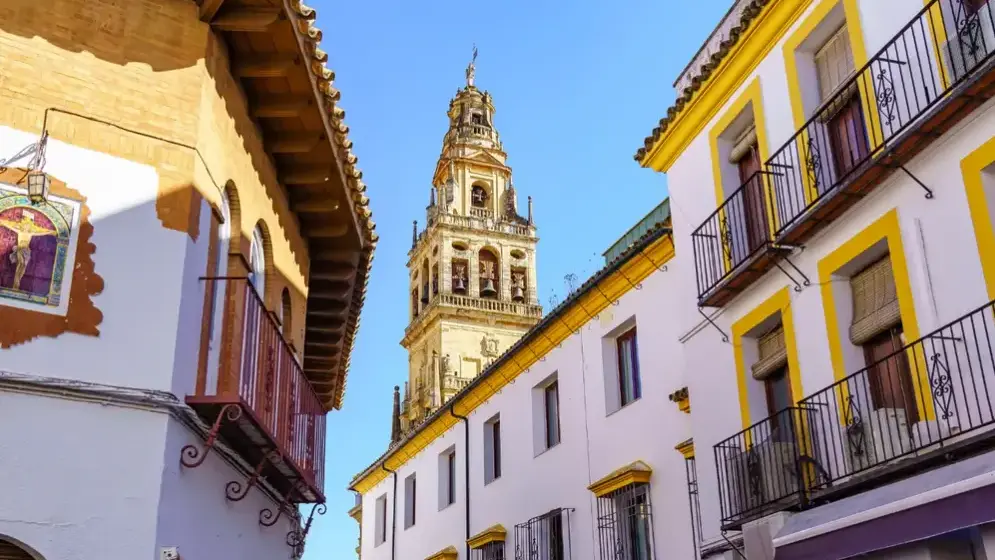
Mosque-Cathedral Skip-the-Line Guided Tour
Skip the queue and explore the Mezquita-Cathedral with a knowledgeable local guide. Discover 13 centuries of layered history in one of Spain's most iconic monuments.
Skip the line 1.5 hours
From €29
4.7 (7,293 reviews)
Reserve Your Spot
✓ Verified GetYourGuide reviews
Books up weeks ahead in peak season
Jewish Quarter, Mosque & Alcázar Tour
A comprehensive guided tour covering Córdoba's three UNESCO-listed highlights: the Mezquita, the medieval Jewish Quarter, and the Alcázar de los Reyes Cristianos.
3 hours
From €49
4.6 (5,547 reviews)
Reserve Your Spot
✓ Verified GetYourGuide reviews
Books up weeks ahead in peak season
Flamenco Show Ticket with Drinks
Experience the passion and drama of authentic Andalusian flamenco at one of Córdoba's premier tablaos. Ticket includes a drink at the bar.
1 hour
From €25
4.8 (1,158 reviews)
Reserve Your Spot
✓ Verified GetYourGuide reviews
Books up weeks ahead in peak season