Insider Córdoba
Beyond the obvious
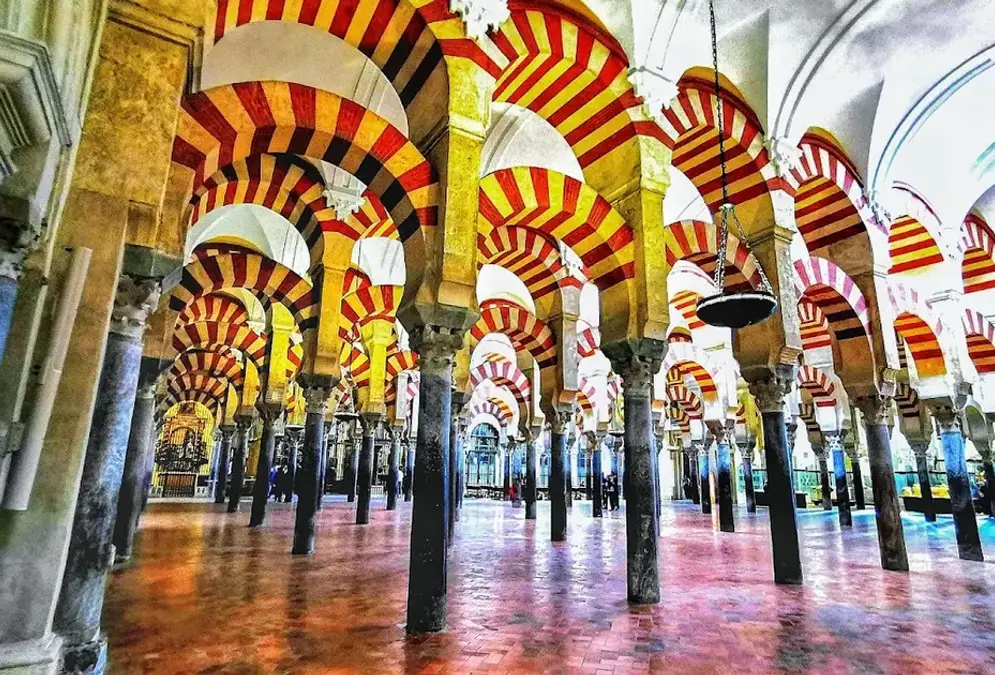
Córdoba's most-visited monuments are famous for good reason. But beyond the Mezquita and the main tourist circuit, the city holds things most visitors never find: a medieval synagogue that survived by hiding in plain sight, a palace-city buried for a thousand years, alleys too narrow for tour groups, and a free morning window inside the Mosque-Cathedral that almost nobody knows about.

Written by
María Fernanda González Ten years covering Córdoba's UNESCO heritage sites, sourcing from Junta de Andalucía documentation.
Updated Published
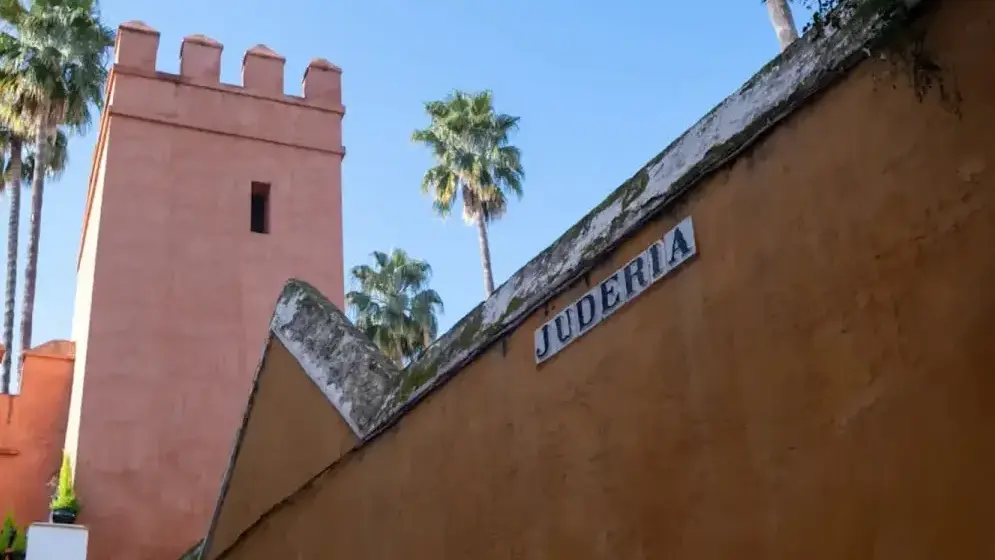
Most first-time visitors to Córdoba follow the same route: Mezquita, Judería, maybe the Alcázar gardens. Which is a perfectly good use of a day. But Córdoba has been a major city for over two thousand years — Roman capital, Islamic caliphate, medieval meeting point of three faiths — and that history doesn't compress neatly into an afternoon circuit.
There's a medieval synagogue a five-minute walk from the Mosque-Cathedral that most visitors walk past without going in. There are two quiet neighborhoods north of the Judería where locals actually live, with private courtyards that open once a year in May. There's a free entry window into the Mezquita every weekday morning that almost nobody talks about. And 8km west of the city, a 10th-century palace-city is still being excavated from the hillside.
None of these require specialist knowledge or significant detours. They just require knowing where to look — and, in some cases, what time to arrive.
At a glance
- Area to explore
- Axerquía & San Lorenzo neighbourhoods
- Entry
- Most hidden gems are free
- Best time
- Early morning or evening to avoid crowds
- Photo gem
- Calleja del Pañuelo — tiniest square in Spain
- Tip
- Book local walking tours for insider access
- Walkable
- Old Town is entirely walkable (under 2 km²)
In this guide
Jump to a section
Hidden monuments
These are monuments that exist openly — no special access required — but sit just far enough outside the main tourist circuit that most visitors skip them. Each one takes less than an hour and costs little or nothing.
Founded 1315 €0.30 (EU citizens free)
Córdoba Synagogue
One of only three medieval synagogues in Spain to survive the 1492 Jewish expulsion. For centuries it was hidden from view, disguised at various points as a church, a hospital, and a guild, before being rediscovered in 1884. More than anywhere else in the city, this small room tells the story of convivencia: the period when Christians, Muslims, and Jews shared the same streets.
Jewish Quarter (Judería). Tue–Sat 9am–8pm, Sun 9am–3pm. Closed Monday.
Get here before 9am. Tour groups start arriving shortly after — the synagogue is small, and those first quiet minutes are worth setting an alarm for.
16th century Free (Centro Flamenco Fosforito)
Posada del Potro
Cervantes name-dropped this inn in Don Quixote, which should be enough of a recommendation. The 1577 fountain in the adjacent Plaza del Potro is one of Córdoba's oldest surviving water features. The building now houses the Centro Flamenco Fosforito, a museum dedicated to flamenco heritage, but the medieval courtyard is reason enough to walk through.
Plaza del Potro, southern old town. Tue–Fri 8:30am–8:30pm, Sat 8:30am–4:30pm, Sun 8:30am–2:30pm. Closed Monday.
Have a coffee in the courtyard. You're sitting where 16th-century travellers once rested after days on the road.
Islamic period Free (small fee to climb walls)
Puerta de Almodóvar
One of the best-preserved medieval city gates from Córdoba's Islamic period, standing on the western edge of the Historic Centre. The philosopher Seneca — born in Córdoba in 4 BC — has a statue nearby, which adds another layer of history to this already-dense corner of the city. Almost always crowd-free, even in high season.
Calle San Fernando, western old town. Free to view from outside at all times.
Stand at the gate and look back towards the Judería. You get an immediate sense of how the medieval city used its walls.
1st century AD Free
Roman Temple of Córdoba
Standing columns from a first-century Roman temple, surrounded by modern administrative buildings — easy to walk past without registering what you're looking at. The columns were only excavated in the 1950s. It's one of the better-preserved Roman temple sites in Andalusia, and it costs nothing. Most visitors pass within 200 metres of it while doing their shopping and never stop.
Calle Claudio Marcelo, city centre. Free to view at all times.
Read the information panel properly. It puts 2,000 years of history into a few paragraphs and completely reframes what you're looking at.
Hidden streets and alleys
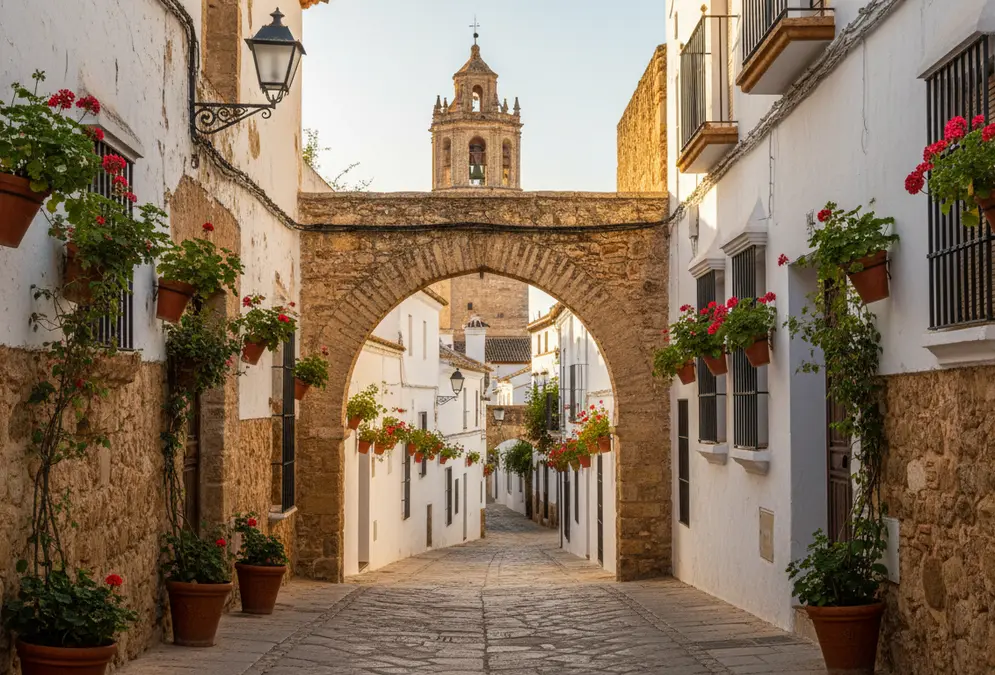
Medieval Córdoba was built as a maze — narrow streets, blind corners, and passages barely wide enough for a person. A few of these survive. Most tourists see one; almost none find the second.
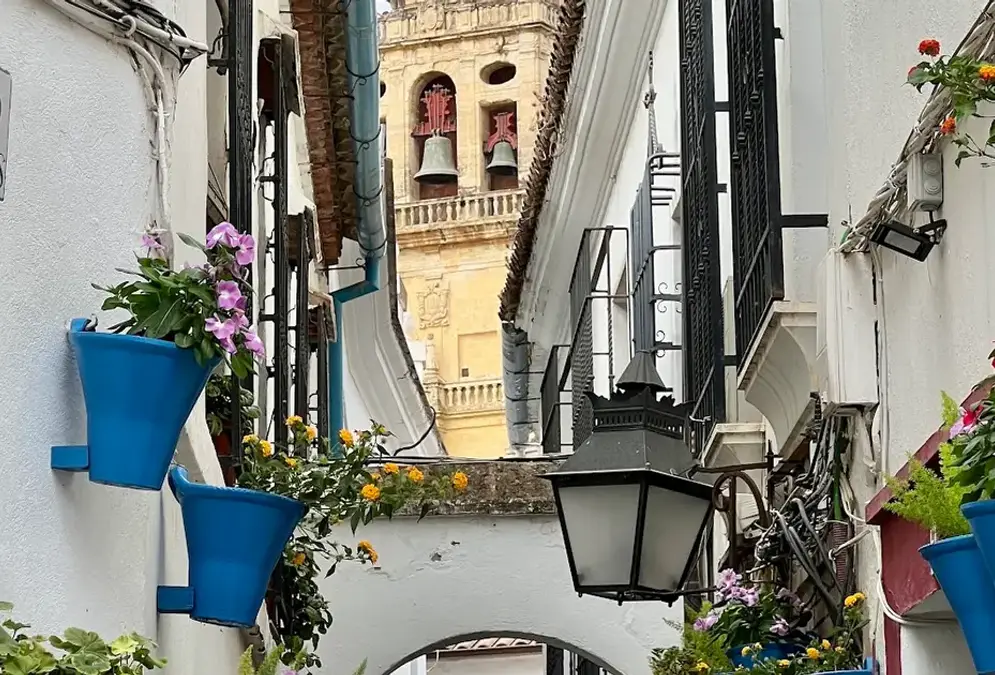
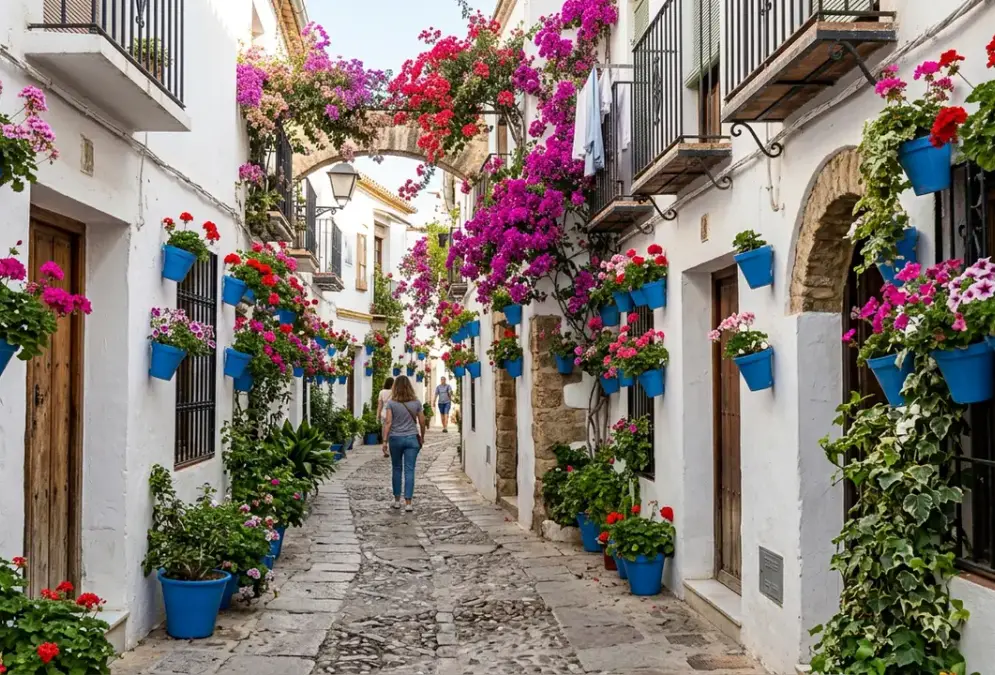
Calleja de las Flores
A narrow alleyway framed with cascading flower pots that frames a view of the Mosque-Cathedral's bell tower above. One of Córdoba's most photogenic passages — free, accessible around the clock, and best shot in late afternoon golden light.
Judería, 2 minutes from the Mosque-Cathedral. Free access 24/7.
Before 8am, this alleyway is quiet enough to photograph properly. From 9am onwards, tour groups arrive and the space fills quickly.
Calleja del Pañuelo
Named for being so narrow you can barely walk through with arms at your sides. This tiny alley is a product of medieval defensive city planning — a maze by design, to slow down attackers and disorient strangers. Locals know it well; it appears on no tourist map.
Old town near the Judería. Free access 24/7.
Squeeze through it and you've done something most visitors to Córdoba never do.
Neighborhoods off the tourist circuit
The Judería gets most of the attention. But two neighborhoods north of the historic centre have their own character — and in May, their courtyards open to the public for the Patio Festival, which is when this part of Córdoba is at its best.
Santa Marina Quarter
A traditional neighborhood where locals actually live — away from the tourist circuit that concentrates around the Mezquita and Judería. Home to the Palacio de Viana with its twelve courtyards, a monument to Manolete (the bullfighting legend born here), and a community spirit that survives despite the city's growth.
North of the Judería. Free to walk. Palacio de Viana: €9 (patios only €6), Tue–Sun 10am–7pm. May Patio Festival opens private courtyards.
Come in May for the Patio Festival. Outside that window, locals are generally welcoming to curious visitors who peek through open doorways — just be respectful.
Santa Marina neighborhood guide →San Lorenzo Quarter
A working-class neighborhood with a history of community resistance, northeast of the main historic centre. The 13th-century Fernandine church of San Lorenzo anchors the area. In May, this is one of the most authentic neighborhoods for private patio visits — the courtyards here feel genuinely lived-in, not dressed up for tourism.
Northeast of historic centre. Free to explore. San Lorenzo Church: free entry. May Festival opens private courtyards.
The May Patio Festival is the one time tourists are actively welcomed into private homes. Outside May, walk through anyway — the streets are worth seeing.
San Lorenzo neighborhood guide →May Patio Festival: Every year in early May, private courtyards across Córdoba open to the public — many for free, some with a small entry fee. Santa Marina and San Lorenzo are two of the best neighborhoods for authentic patio visits, away from the busier Judería route. Full Patio Festival guide →
Cultural experiences beyond the monuments
Two places give a different kind of access to Córdoba's history: one underground, one 8km out of town. And if your visit falls on a first Saturday of the month, there's a third option: the Ecomercado on the Bulevar de Gran Capitán, Córdoba's first certified organic market, running since 2015 and still drawing more regulars than tourists.
Cultural Experience
Hammam Al Ándalus
An atmospheric bathhouse a few metres from the Mosque-Cathedral, where you follow the traditional Andalusian Islamic bathing sequence: hot rooms, warm rooms, cold plunge. Far less visited than the main monuments, it gives a more immediate sense of what Moorish daily life might have felt like than any museum.
Calle Corregidor Luis de la Cerda, 51. Daily 10am–midnight (slots every 2 hours). Entry from €24; massage €15–43 extra. Reservations strongly recommended.
Book the 8pm or 10pm slot. Evening sessions attract fewer daytime tour groups and the atmosphere is genuinely different.
Day Trip
Medina Azahara
A UNESCO World Heritage Site 8km west of Córdoba — a complete palace-city built by Caliph Abd ar-Rahman III in the 10th century as the capital of his caliphate. Lavishly decorated with marble, water features, and gold, it was destroyed within 80 years of completion. Excavations are still ongoing; what's been uncovered so far is remarkable.
8km west of Córdoba. Bus C3 from city centre (€1.30, 20 min). Entry: €3 (EU citizens free). Tue–Sat 9am–6:30pm, Sun 9am–3:30pm. Allow 2–3 hours.
Late afternoon visits avoid the morning coach parties and catch better light on the ruins.
Best time to visit
Seasonal guide
May (peak)
The Patio Festival opens private courtyards across Santa Marina and San Lorenzo. This is the one window when you can access parts of Córdoba that are closed the rest of the year.
Mar–Apr / Sep–Oct
Pleasant temperatures and fewer crowds than summer. Good for walking the historic centre thoroughly — the hidden streets and monuments reward slow exploration.
Jun–Aug
Heat above 38°C makes extended walking uncomfortable. If you're here in summer, the free morning Mezquita slot (8:30–9:30am) becomes even more valuable — visit before the day heats up.
Nov–Feb
Quiet season. Fewer tourists means near-empty alleys and no queues at the synagogue or the Roman Temple. Some sites reduce hours; check ahead.
Daily timing
Before 9am
The historic centre before the tour buses arrive. The Calleja de las Flores, the Roman Bridge, the streets around the synagogue — all of them look different without crowds. The free Mezquita slot runs until 9:30am.
10am–3pm (peak)
This is when tour groups are at their densest. If you're visiting the Mezquita or Judería during this window, expect queues and noise. Good time to head to Santa Marina or San Lorenzo instead.
After 5pm
Crowds thin as coach tours depart. Late afternoon light is also better for photography — particularly in the Calleja de las Flores. The Hammam has evening slots from 8pm onwards.
Ready to explore beyond the obvious?
Plan your Córdoba itinerary with our neighbourhood guides and seasonal recommendations.
Further reading
Sources and further reading
3 references Show Hide
- Turismo de Córdoba — Official Tourism Site (opens in a new tab)
Official Córdoba tourism information including opening hours, entry prices, and seasonal events for all the monuments and neighborhoods in this guide
- UNESCO — Historic Centre of Córdoba (opens in a new tab)
UNESCO World Heritage listing for Córdoba's historic centre, including the Mosque-Cathedral and the broader context of its multi-cultural layers
- Hammam Al Ándalus Córdoba — Official Site
Official booking site for the Hammam Al Ándalus, with pricing, session times, and information on the traditional Andalusian bathing experience
Off-the-Beaten-Path Experiences
Tours are selected for quality, not commission. We earn a small fee if you book — at no extra cost to you.
Top Rated

Guided City Tour by Tuk-Tuk
Zip through Córdoba's historic streets aboard a fun electric tuk-tuk. A comfortable, entertaining way to cover the main sights with a live guide narrating along the way.
1 hour
From €25
4.9 (347 reviews)
Reserve Your Spot
✓ Verified GetYourGuide reviews
Extra Virgin Olive Oil Tasting
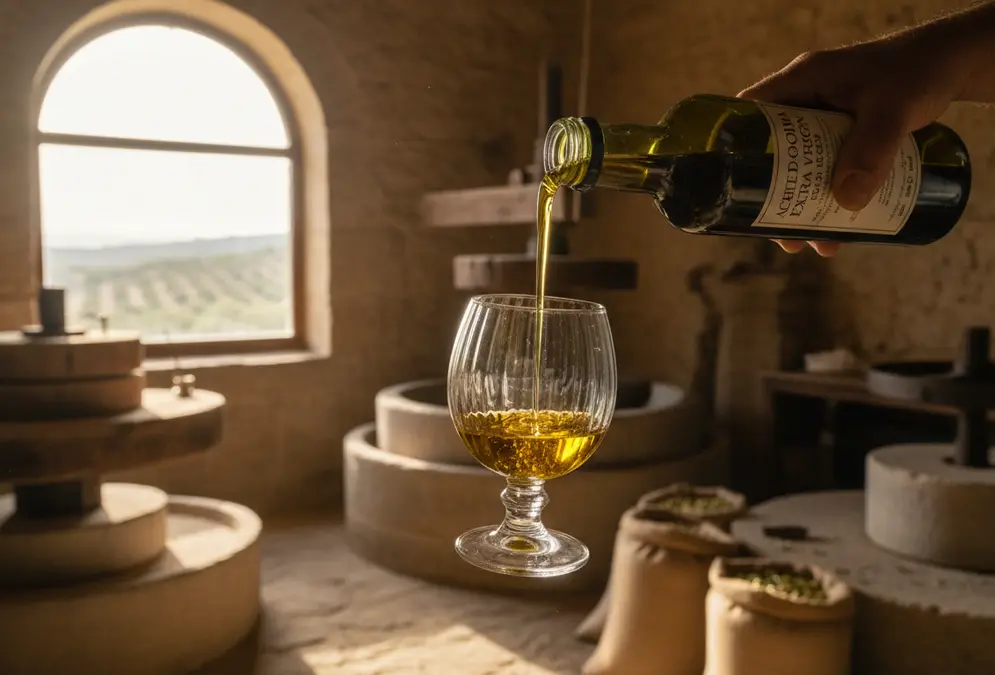
Sample premium extra virgin olive oils from Andalusia and learn to distinguish quality grades, aromas, and flavour profiles in a guided tasting led by an oil expert.
1 hour
From €25
4.9 (85 reviews)
Reserve Your Spot
✓ Verified GetYourGuide reviews