
food-loverscouplesfamiliessolophotographers
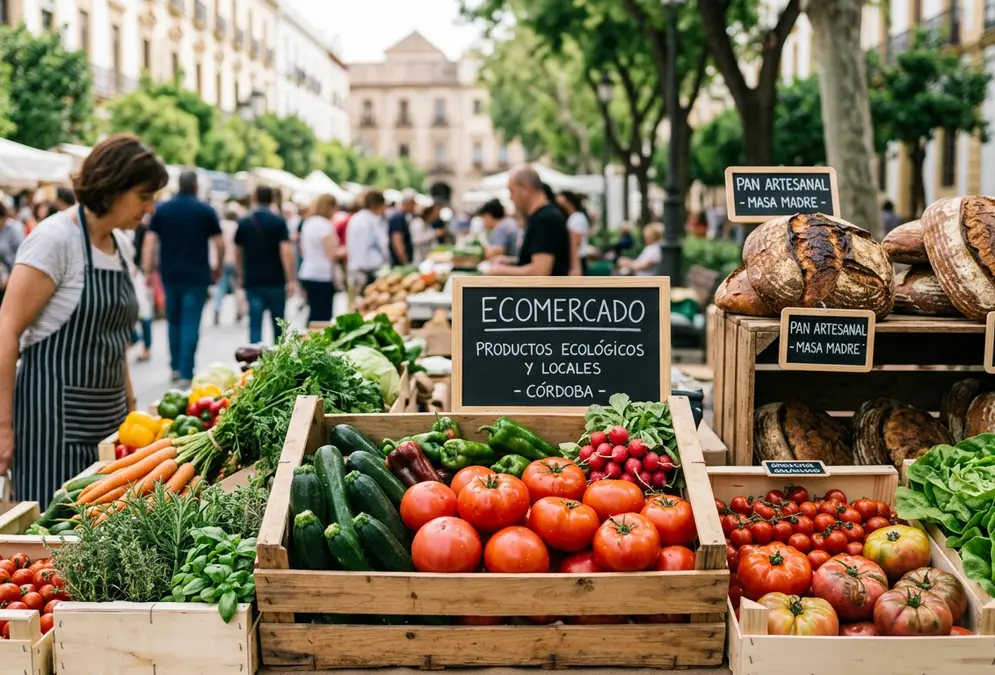
Stalls of organic produce and artisan goods at Ecomercado on Bulevar de Gran Capitán in Córdoba
Experience

Ecomercado

Ecomercado de Córdoba

1 to 2 hours
First Saturday of each month, 10:00–15:00
Bulevar de Gran Capitán, Córdoba (city tram and bus stop: Gran Capitán)
Food Lovers Couples Families Solo Photographers Gastronomy Shopping Cultural Wellness

At a glance

Duration
1 to 2 hours
Price
Free entry
Schedule
First Saturday of each month, 10:00–15:00
Meeting point
Bulevar de Gran Capitán, Córdoba (city tram and bus stop: Gran Capitán)
Languages
Spanish (primary), Basic English (varies by vendor)
Group size
No limit (open public market)
Availability
Monthly, first Saturday only. Runs year-round.
Accessibility
Open boulevard with flat ground; wheelchair accessible. No steps or barriers at stalls.

Córdoba's first certified organic market

On the first Saturday of every month, the Bulevar de Gran Capitán fills with stalls of soil-smelling vegetables, honeycomb jars catching the morning light, and the warm, yeasty pull of freshly baked sourdough. Ecomercado has been running here since 2015, making it Córdoba's first and longest-established certified organic market, a genuine community institution rather than a tourist attraction.

The distinction matters. Where most city markets draw visitors as much as residents, Ecomercado pulls a crowd of regulars: families with canvas bags, retired couples working through the stalls methodically, twenty-somethings comparing olive oil labels with the farmer who pressed them. The conversation is mostly in Spanish. The pace is unhurried. By 11 am on a sunny Saturday in April, the boulevard smells of citrus, beeswax, and ground cumin from a spice vendor near the northern end.

What you'll find at the stalls

Fewer than half of Córdoba's 40+ stalls sell fresh produce. The rest carry the kinds of things you don't often see in standard markets: cold-pressed olive oils in unlabelled bottles, raw honeys separated by botanical source (orange blossom, rosemary, wildflower), natural soaps made with local calendula, fermented vegetables, handmade ceramics, and fair-trade goods from producers in the wider cooperative economy.

All vendors carry official organic certification, which the market coordinators verify before a stall can participate. This isn't a greenwash. The paperwork is displayed at most stalls. If you ask the person selling you a crate of tomatoes about their soil inputs, you'll get a detailed answer.

Seasonal rhythms define what's available. Spring means asparagus, broad beans, and the first strawberries from the Guadalquivir valley. Summer shifts to tomatoes, aubergines, and courgettes. Autumn brings pumpkins, quince, and late figs. Winter is citrus season: Valencia oranges, Córdoba lemons, blood oranges from Montilla-Moriles growers. The olive oil tasting activity available in the province puts context around many of the cold-pressed oils sold here, particularly the DOP Baena and Priego varieties.

Producers and the conversations worth having

Several stalls are run by the farmers themselves, not intermediaries. The small-scale producers tend to come from within a 50-kilometre radius of the city: the Campiña plains to the south, the Sierra Morena foothills to the north, and the Guadajoz river valley to the east.

If your Spanish is functional, the conversations are worth pursuing. Ask the honey producer how this year's orange blossom harvest compared to the last. Ask the bread baker about the flour varieties. You'll leave knowing more about Córdoba's agricultural geography than any guidebook covers. Even basic Spanish goes a long way; most vendors are patient and animated about what they grow.

The market also runs occasional environmental education workshops and producer talks alongside the shopping. If your visit falls on a month with a scheduled talk, it's worth staying for: the format is informal, the producers speak candidly about sustainable agriculture, and you get a clearer picture of the cooperative food economy that keeps this kind of market viable in a medium-sized city.

Practical visit information

Ecomercado runs on the first Saturday of each month, from 10:00 to 15:00. (Some sources list 09:00 as the opening time; 10:00 is more reliable, with most stalls set up and selling by 10:30.) Entry is free. The market runs rain or shine, though vendor turnout is higher on fine days.

The Bulevar de Gran Capitán sits in the Expansion district, about 15 to 20 minutes' walk from the historic centre. The city tram stops on Gran Capitán, and several bus lines serve the boulevard. By foot from the Mezquita, walk north through the Centro along Avenida del Gran Capitán.

Budget €15 to €40 for a typical visit with purchases, though it's easy to spend more on a good day. Cash is safest, though several vendors now accept card. Bring a reusable bag; plastic is unwelcome and most stalls don't provide it.

The best selection is available between 10:30 and 12:30. By 13:30, the most popular items (sourdough loaves, raw comb honey, limited-batch olive oils) are often sold out. The market winds down noticeably after 14:00.

Pairing with nearby attractions

Gran Capitán is walkable from several worthwhile stops. The shopping streets between the boulevard and the historic centre are covered in the Córdoba shopping and crafts guide. The food markets guide covers Mercado Victoria and other indoor markets that operate on different schedules, useful if you arrive on a non-market Saturday.

For a morning itinerary: arrive at Ecomercado at 10:30, work through the stalls for 90 minutes, then walk south into the historic centre for lunch. The Barrio de la Judería and the area around Plaza del Potro are about a 20-minute walk. Spring visits pair naturally with the Córdoba in spring guide, which covers the Patio Festival and the Cruces de Mayo, both of which overlap with prime Ecomercado months.

For anyone serious about sustainable and organic food culture in Córdoba, this market is the clearest entry point. It's low-key, local, and has been running quietly for a decade without advertising itself to tourists. Most visitors to Córdoba never hear about it, which tells you something about the kind of Saturday morning it offers.

Highlights

  • 40+ stalls of certified organic and ecological products
  • Seasonal produce from small-scale local farmers within 50 km of Córdoba
  • Cold-pressed olive oils, raw honeys, and artisan sourdough breads
  • Natural cosmetics, handcrafted soaps, and fair-trade goods
  • Direct conversations with producers; many sell their own harvest
  • Environmental education workshops and producer talks alongside the market
  • Free entry, no booking needed

Included

  • Open-air market access (no ticket required)
  • Direct access to 40+ certified organic producers and vendors

Not included

  • Purchases (budget €15–€40 for a typical shopping session)
  • Transport to Gran Capitán
  • Guided tour (self-guided visit)

When to Visit

Best season

Spring (March to May) and early autumn (September to October) offer the widest variety of fresh seasonal produce. Spring visits can be combined with the Patio Festival and Cruces de Mayo. The market runs year-round and is worth visiting in any season, though summer Saturday mornings can be warm by 11 am.

Quietest hours

Opening time (10:00 to 10:30) sees the fewest visitors, as most regulars arrive from 11:00 onwards. After 14:00, many stalls begin packing down and selection thins considerably.

Visit duration

45 to 90 minutes is enough for a thorough walk through all stalls with time to speak to a few producers. Allow extra time if you plan to arrive early and linger over coffee at a nearby bar before or after. The market is self-contained on a single boulevard stretch.

Reporter notebook

Insider tips

Best time

Arrive before noon: popular items sell out by 13:30

The sourdough loaves from the bread stall near the southern end and the single-origin raw honeys are typically gone by 13:30. If the market runs on a Patio Festival weekend in May, expect higher crowds and faster turnover. Aim for 10:30 to 11:30 for the widest selection and the most animated atmosphere, when producers are still fully set up and keen to talk.

What to bring

Pack a bag and a mix of cash and card

Plastic bags are not offered at Ecomercado. A reusable bag or small backpack is essential, especially if you plan to buy fragile items like honey jars or bottled oil. Cash is the default at most stalls, though a growing number now accept card payments. Having both covers every vendor.

Local custom

Ask producers about their farm directly

Several stalls at Ecomercado are run by the farmers themselves, not resellers. A simple question in Spanish, 'De donde es usted?' (Where are you from?) or 'Que variedad es?' (Which variety is this?), opens up conversations that most market visitors never have. Producers here are accustomed to curious customers and genuinely enjoy explaining their methods. It's one of the clearest ways this market differs from a conventional supermarket run.

Good to know before booking

  • Bring a reusable bag (stalls do not provide plastic bags)
  • Cash recommended (most stalls accept it; card acceptance varies by vendor)
  • Arrive before 12:30 for best selection on popular items

Prices & Booking

Free entry

Frequently asked questions

When does Ecomercado take place in Córdoba?

Ecomercado runs on the first Saturday of each month, from 10:00 to 15:00, on the Bulevar de Gran Capitán. It operates year-round. Check the official site at elecomercado.com for any schedule changes around public holidays.

Is Ecomercado free to enter?

Yes. Entry is completely free. You pay only for what you buy from vendors. Budget around €15 to €40 for a typical shopping session, though it's easy to spend more if you pick up olive oil, honey, and artisan bread.

How do I get to Ecomercado from the historic centre?

The Bulevar de Gran Capitán is roughly 15 to 20 minutes' walk north of the Mezquita. The city tram stops directly on Gran Capitán, and several bus lines serve the boulevard. On foot, head north through the Centro district via Avenida del Gran Capitán.

Are all products at Ecomercado certified organic?

Yes. All vendors are required to hold official organic certification, verified by the market organisers before a stall can participate. Most vendors display their certification paperwork at the stall. The market has maintained this standard since its founding in 2015 as Córdoba's first certified organic market.

What should I bring to Ecomercado?

Bring a reusable bag (stalls do not provide plastic bags), cash (most vendors accept it, with card availability varying), and comfortable shoes for walking the boulevard. Arriving by 10:30 gives you the best selection before popular items like sourdough bread and raw honey sell out.

Does Ecomercado run workshops or talks alongside the market?

Yes. The market periodically hosts environmental education workshops and informal producer talks covering topics like sustainable agriculture and organic certification. Schedules vary by month; check elecomercado.com or the market's Facebook page before your visit to see if a session falls on the same day.

Can I find olive oil at Ecomercado?

Yes. Several stalls sell cold-pressed extra virgin olive oils, including varieties from the DOP Baena and Priego de Córdoba designations. If you want a deeper introduction to the oils of the region, the olive oil tasting activity at working mills outside the city is a natural follow-up: see the guide at explorecordoba.com/activity/olive-oil-tasting.