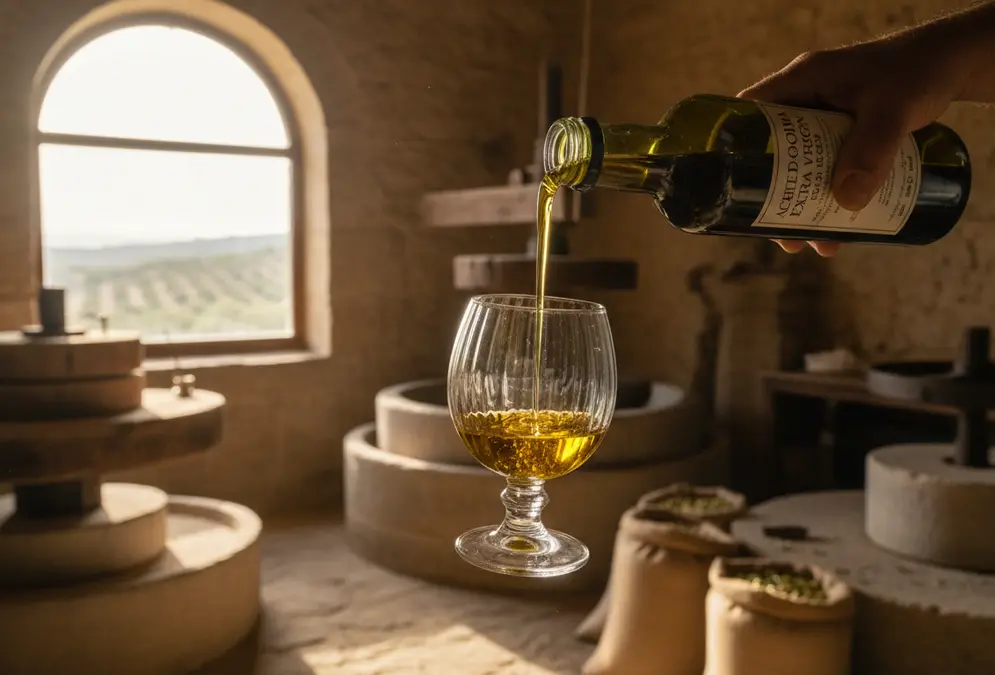

Spain's olive oil heartland, in your glass
Córdoba province produces more extra virgin olive oil than many entire countries. The figures alone are impressive — but what makes this activity worthwhile is getting to taste the difference. Not all olive oil is the same, and a guided tasting here makes that obvious within the first sip.
The province has four protected Designations of Origin: Baena, Priego de Córdoba, Lucena, and Montoro-Adamuz. Each covers distinct terrain, distinct varieties, and produces oils that taste nothing alike. Baena's 60,000 hectares rely mainly on the Picuda olive, giving oils with floral aromas and a subtle peppery finish. Priego de Córdoba sits above 700 metres in the Subbética Natural Park, where the altitude and cooler temperatures push the Picudo, Hojiblanca, and Picual varieties towards intense, complex flavours — green tomato, artichoke, freshly cut grass.
Learning to taste properly
A professional tasting follows a precise method. Experts warm the oil to around 28°C in small dark glasses — opaque so colour doesn't bias your perception — and you draw a small sip of roughly 3 millilitres into your mouth with a sharp intake of air. This coats the palate and helps volatile compounds reach the nose from inside.
You'll identify three attributes: fruitiness (grassy, herbaceous, ripe, buttery), bitterness (felt at the sides of the tongue), and pungency (the peppery catch at the back of the throat). These aren't defects — they're exactly what distinguishes a high-quality EVOO. Most people find the bitterness and pungency surprising at first. By the end of the session, they're hunting for it.
The mills worth visiting
Núñez de Prado in Baena is one of Spain's most celebrated organic producers. The family has been making oil here since 1795, and the mill welcomes visitors to walk the groves, watch the production process, and eat a traditional breakfast in the farmhouse. It's genuinely good food, not an afterthought.
Nuve Olivo (La Almazara) in Priego de Córdoba runs 90-minute tasting sessions from €15 per person (€55 minimum booking). Priego de Córdoba is itself worth a full day — see the day trip guide for the Fuente del Rey fountain, the Barrio de la Villa quarter and practical transport information. Smaller and more focused on the tasting itself rather than the full mill tour. Cooperativa Olivarera Nuestra Señora de Guadalupe in Baena handles groups of five or more, offering personalised visits that go deeper into the production process.
Harvest season: the best time to go
November to January is harvest season. Mills run at full capacity, and some farms let you join the picking before the tasting — a physical reminder of what goes into every bottle. Watching raw olives enter the machinery and pure oil emerge on the other side is one of those things that genuinely changes how you think about what you're eating.
That said, tastings run year-round. Outside harvest season, the atmosphere is quieter and booking is easier, though you won't see the mills in full operation.
Getting there and pairing the day
Baena lies about 60 km southeast of Córdoba city — roughly 50 minutes by car on the A-305. Priego de Córdoba is around 100 km south, about 90 minutes' drive. Both towns are worth lingering in: Baroque architecture, narrow streets, and views over olive groves that stretch to the horizon.
Organised day tours from Córdoba include transport, mill visits, and tasting in one package — the simplest option if you'd rather not drive. Back in the city, the food tour Córdoba pairs olive oil with other local specialities across the old town, and the Montilla-Moriles wine tasting makes a natural companion for anyone interested in Córdoba's wider food and drink culture. For a more hands-on approach, the hands-on session in a city-centre winery puts you in front of the same olive oil you've just learned to evaluate — this time using it to prepare salmorejo and other Cordoban dishes. For the full picture of regional cuisine, the restaurant Terra Olea in Córdoba city focuses specifically on olive oil-centred cooking.
The DOP oils from Baena, Priego de Córdoba, Lucena, and Montoro-Adamuz also make some of the most practical souvenirs you can take home — available at Mercado Victoria and specialist delis across the city. On the first Saturday of each month, the Ecomercado on the Bulevar de Gran Capitán is another strong option: several stalls sell cold-pressed oils directly from the producer, including Baena and Priego varieties, at prices below retail. For broader guidance on where to buy alongside local crafts, see the shopping and crafts guide.
If your visit lands in winter, the city itself hosts a public counterpart to this private tasting: the Córdoba Olive Oil Festival fills Plaza de las Tendillas with more than 40 producers from all four provincial DOPs, guided tastings and live cooking demonstrations, no drive to a mill required, though it trades the working-almazara atmosphere for breadth.
Olive oil tastings appear in our Top 10 Activities & Experiences in Córdoba. For the dishes that put this extraordinary ingredient to best use, see the Must-Try Dishes in Córdoba guide.