
A food tour in Córdoba is the fastest way to understand that this city doesn't live by its monuments alone. The food here tells the story of the three civilisations that shaped Andalusia. Romans planted the olive groves. Arabs brought spices, aubergines and almonds. Jews passed down their preservation techniques. The result is a cuisine that mixes rustic country cooking with oriental sophistication, and has been doing so for over a thousand years.
How it works
You meet your guide — often a Cordovan with a genuine passion for food — at a central meeting point, typically Plaza de las Tendillas or near the Mezquita. For 3 hours, you walk between 4 to 6 different establishments: century-old tabernas, a family-run bodega, sometimes a covered market.
At each stop, you get a local speciality with real commentary. Not just "here's some ham" — more like "this Iberian ham comes from pigs raised semi-free-range in the Sierra, fed on acorns, aged 36 months, and the family producing it has worked with the same farmer for four generations". The details that turn a bite into a story.
What you actually taste
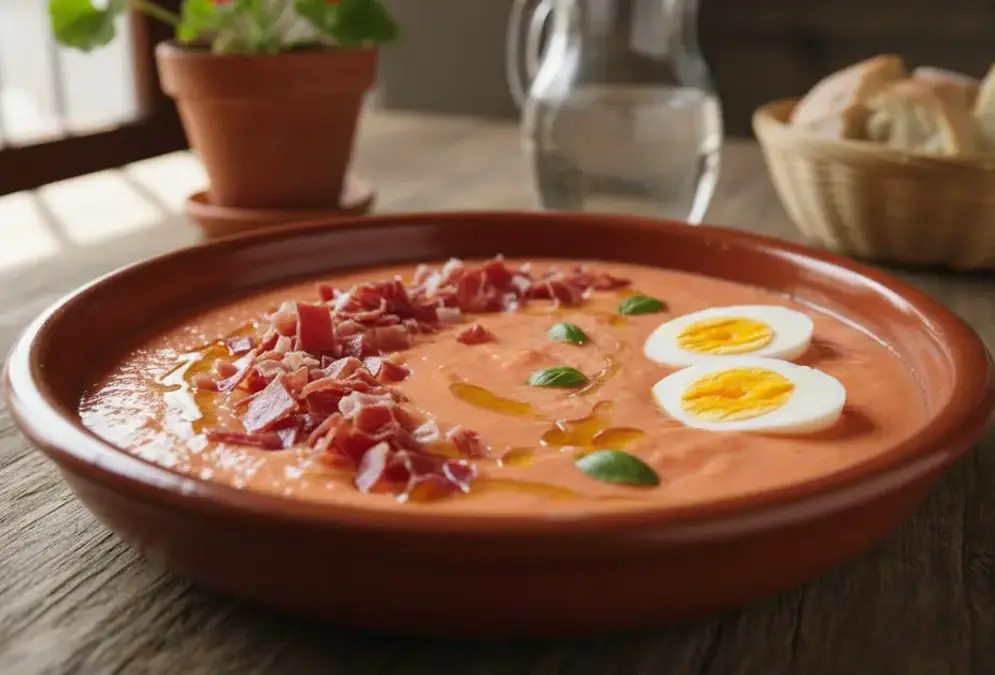
Serious food tours start with Córdoba's signature dishes. Salmorejo usually comes first — this cold tomato-and-bread soup, creamier and more intense than gazpacho, served with shavings of serrano ham and crumbled hard-boiled egg. Simple-looking but technically impeccable.
Then flamenquín: pork rolled around serrano ham, breaded and fried. A Cordovan invention of the 20th century that has become a local emblem. Some guides take you to bars where the same grandmother's recipe has been used for 60 years.
If the tour includes a more traditional restaurant, you get rabo de toro — oxtail braised for hours until the meat falls apart on the fork, in a wine sauce that concentrates the bullfighting history of Andalusia. A celebration dish inherited from post-corrida banquets.
Berenjenas con miel — fried aubergines with cane honey — is pure Andalusian heritage. The sweet-savoury combination comes straight from the medieval Arabic culinary repertoire. Today it's on every Cordovan bar menu.
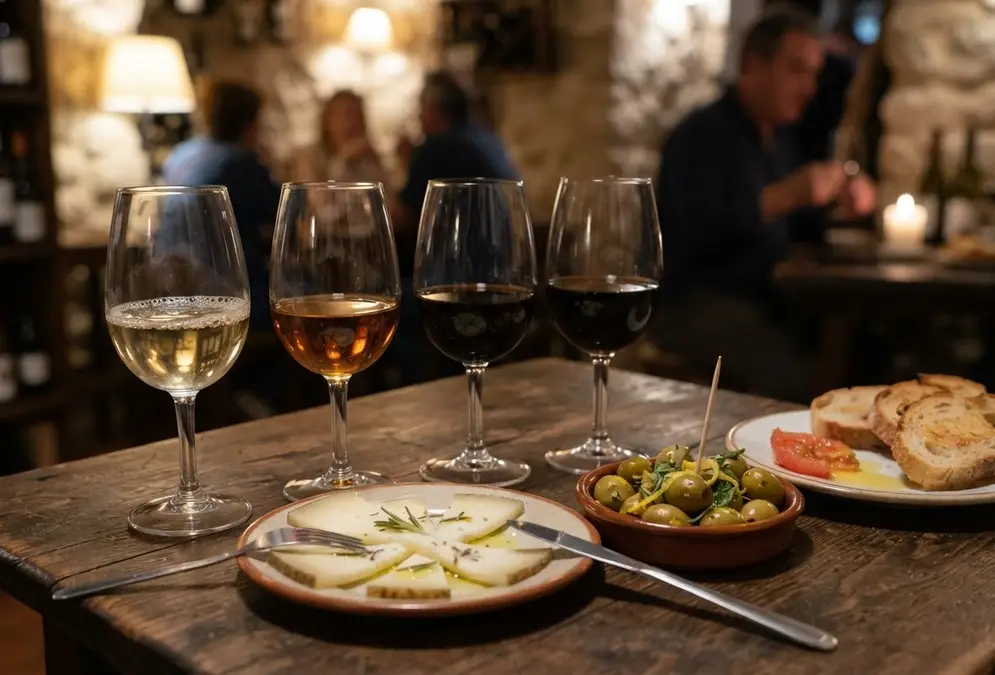
Then the Montilla-Moriles wines: dry fino with seafood, amber amontillado with meats, thick sweet Pedro Ximénez poured over vanilla ice cream. These wines explain the region's chalk terroir better than any guide could.
The venues
Good tours stop at real places, not tourist traps. You might end up at Bodegas Campos, a Cordovan institution since 1908 with interior patios and wine barrels stacked like sculptures. Or Taberna Salinas, the oxtail temple where bullfighters came to celebrate. Some tours include Casa Pepe de la Judería for the Jewish Quarter atmosphere, or Bodegas Mezquita for its creative tapas.
A few circuits pass through Mercado Victoria, the covered gastronomic market with around 30 stalls. Less traditional, but it shows that Cordovan gastronomy evolves without abandoning its roots.
Choosing your tour
Main operators — Civitatis, GetYourGuide, Devour Tours — all run similar versions at around €60–75 per person. Groups of 8 to 12 people maximum. Some run in Spanish or English only; French-language tours exist but are rare and usually private.
Check what's included: some tours have 4 tastings plus drinks, others hit 6 or 7 stops with wine pairings. More expensive tours (€80–100) sometimes include a gastronomic restaurant such as the Michelin-starred Noor, Córdoba's only Michelin-starred establishment, which reinterprets medieval Andalusian cuisine.
Tours typically depart in the late afternoon (6–7 pm) or evening (8–9 pm) to match Spanish dining hours. In summer, evening departures are better — the heat drops and the terraces come alive.
Alternatives and combinations
Over budget? You can put together your own tapas crawl using the addresses above. The tradition of ir de tapas is embedded in local culture: a drink and a tapa here, another establishment 20 minutes later. Budget: €15–25 if you stick to local bars like the tortilla counter Bar Santos.
If your visit falls on a first Saturday of the month, start the morning at the Ecomercado on the Bulevar de Gran Capitán — Córdoba's certified organic market with 40+ stalls of local produce, olive oils, and artisan food — before the evening food tour. The two experiences show very different sides of how Córdobans source and eat their food.
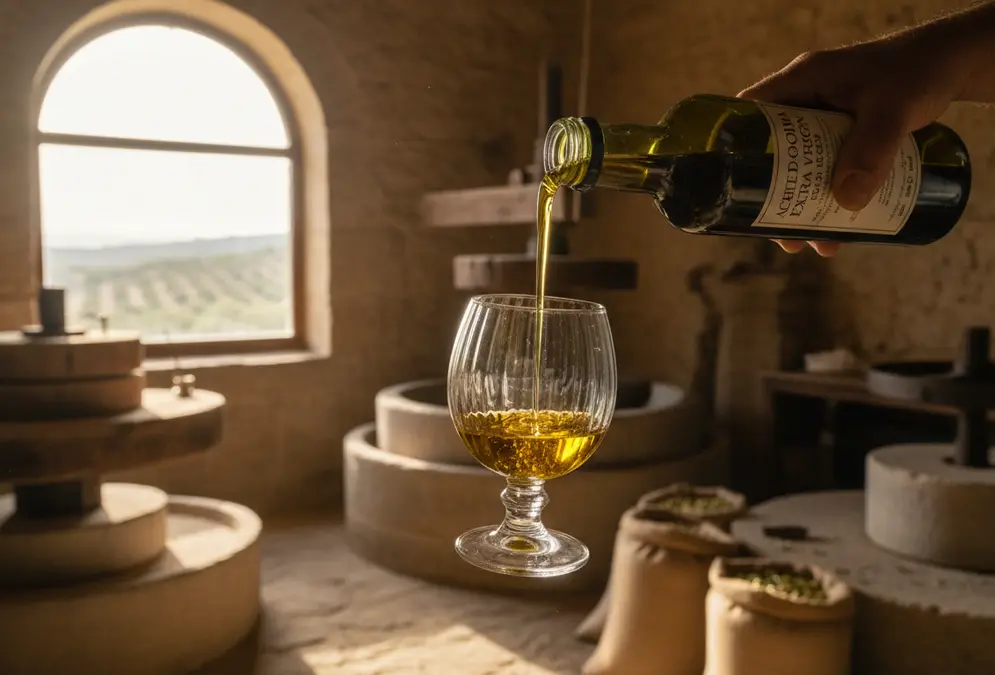
To go deeper into wine, combine this tour with the Montilla-Moriles wine tasting at the bodegas 40 km from the city. They're complementary: the food tour introduces the wines in an urban setting; the bodega visit puts you in the terroir. For the other half of Córdoba's agricultural identity, the olive oil tasting visits DOP mills in Baena and Priego de Córdoba — the same oils that go into every dish on this tour. If the food tour leaves you wanting to make these dishes yourself, a cooking class in one of the city's traditional wineries will take you from tasting to preparation — covering salmorejo and paella with a hands-on approach that a guided walk cannot replicate.
And if you want to get your geographical bearings before eating your way around, start with the Free Walking Tour through the Judería and Centro — the two neighbourhoods where the best restaurants are concentrated.
Córdoba food tours feature in our Top 10 Activities & Experiences in Córdoba and in our citywide highlights guide — the highlights guide that serves as the starting point for any first visit.