
The free walking tour is the insider tip travellers pass among themselves: a real guided tour at no upfront cost. You pay what you like at the end, based on your experience, and the guide earns 100% of whatever you give — no agency cut. This page covers everything you need to book the route below; if you'd rather weigh up Córdoba's three main operators against each other first, our operator comparison covers that instead (linked below).
How booking works
Reserve your spot for free through the booking options on this page — no credit card required. On the day, arrive at the meeting point 10–15 minutes early and look for the guide's umbrella: orange, blue or white depending on who's running your slot (your booking confirmation names the exact colour and meeting point). For two hours, they walk you through the historic quarters telling you what actually happened here, not a script read off a laminated card. At the end, you decide what to give — €10–15 is the local norm, more if the guide earned it.
What the route covers
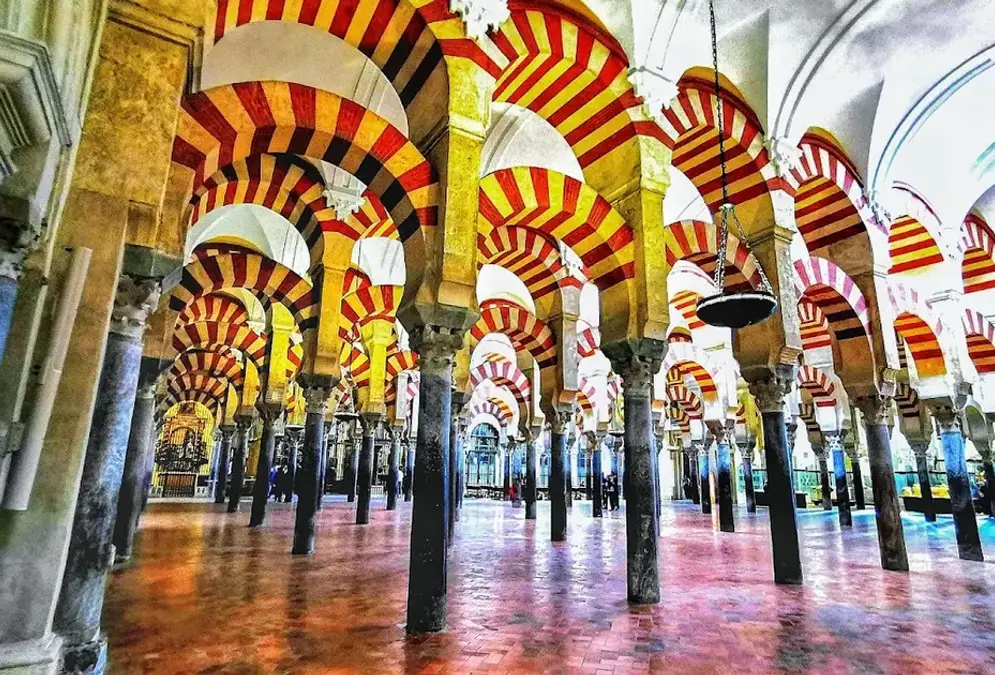
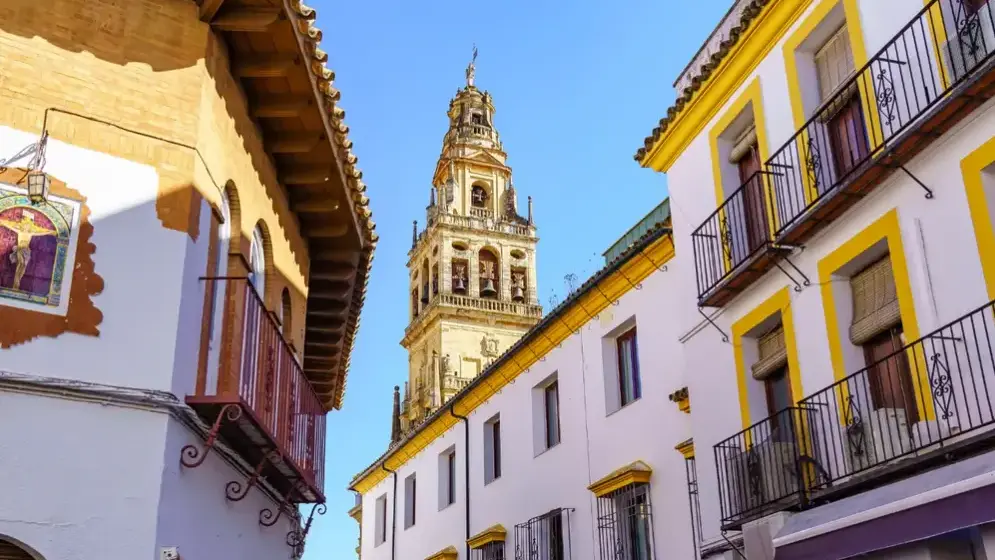
You pass in front of the Mezquita; entry is ticketed separately and isn't included on this tour. The guide explains the history from outside: this 8th-century mosque turned cathedral, the red and white arches that made it famous, the Christian additions that still bother architectural purists.
Then into the Judería, the medieval Jewish quarter listed as a UNESCO World Heritage Site. Narrow lanes, whitewashed houses, patios hidden behind wooden doors. The guide covers the golden age of Córdoba's Jewish community before the 1492 expulsion, points out the Synagogue and evokes Maimonides, who grew up in these streets.
You cross the Roman Bridge, which has spanned the Guadalquivir since the 1st century BC. Classic city view, obvious photo stop, then past the Alcázar — viewed from outside only.
Booking this tour
This page books the classic two-hour route through the booking platform, with groups capped at 6–8 people — small enough to stay conversational. Córdoba runs a handful of these tours in parallel, each with its own guide, schedule and umbrella colour. If you want to see how they differ before you commit, our operator comparison breaks down group size, certification and timing across all three.
Before you book
Groups are capped at 6–8 people with most operators, keeping it genuinely conversational. In high season (April–October), book the day before — spots fill. Wear comfortable shoes and expect to walk 3 to 5 km on cobblestones. Bring water and sunscreen between May and September, and cash for the tip.
Alternatives when you want something different
The free walking tour gives a solid overview but stays at surface level. For a deep dive into the Mezquita with entry included and an accredited English-speaking guide, expect to pay €22. The excursion to Medina Azahara is complementary rather than alternative — it covers the caliphal city 10 km away, a completely different chapter of the story.
If walking 3 to 5 km in 40°C heat doesn't work for you, or you're travelling with people with reduced mobility, tuk-tuk tours cover the same sights without the physical effort (€45 for 1 hour). For a more romantic pace, horse-drawn carriage tours take the same historic quarters at walking pace (€50–110).
For more ground covered without the fatigue, the guided cycling tour adds the Fernandine churches on the outskirts — three times the distance on foot without the tiredness (€29, 2 hours). And if it's May or you want to see Córdoba's flowering patios, the patios tour is the ideal follow-up — UNESCO tradition, free courtyards in San Basilio, and guided tours through the historic quarters.
For discovering Córdoba through food rather than monuments, the food tour takes you into the best tabernas in the centre with tastings of salmorejo, flamenquín and Montilla-Moriles wines (€60–75, 3 hours).
Free walking tours appear in our Best Free Things to Do in Córdoba and the Top 10 Activities & Experiences in Córdoba guides — both worth reading if you want to get the most from a visit to the city without overspending.