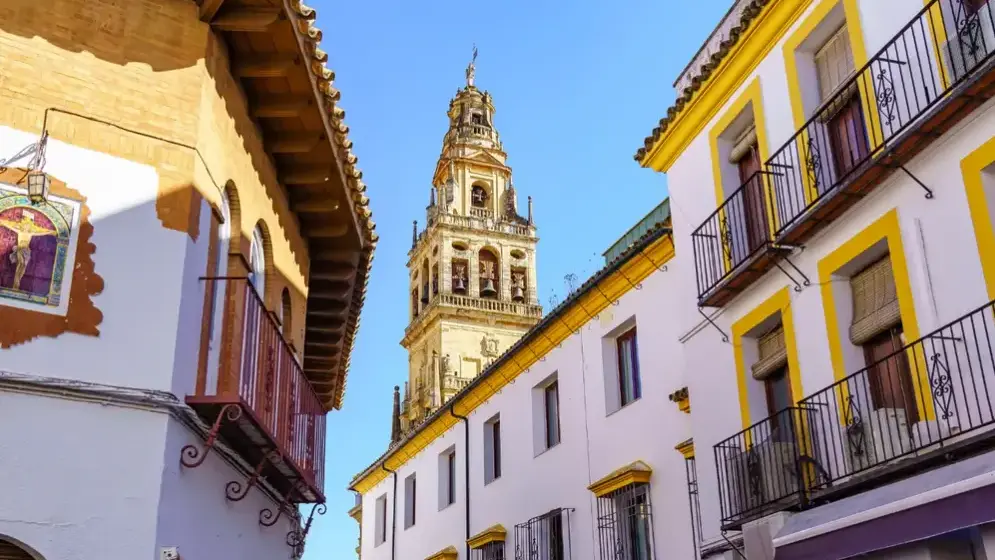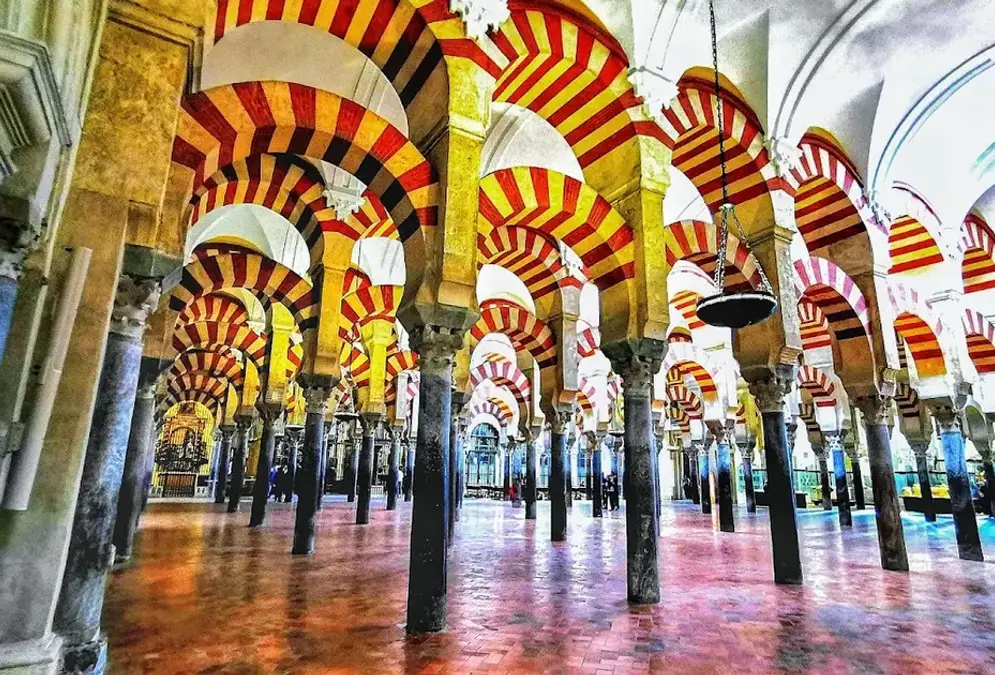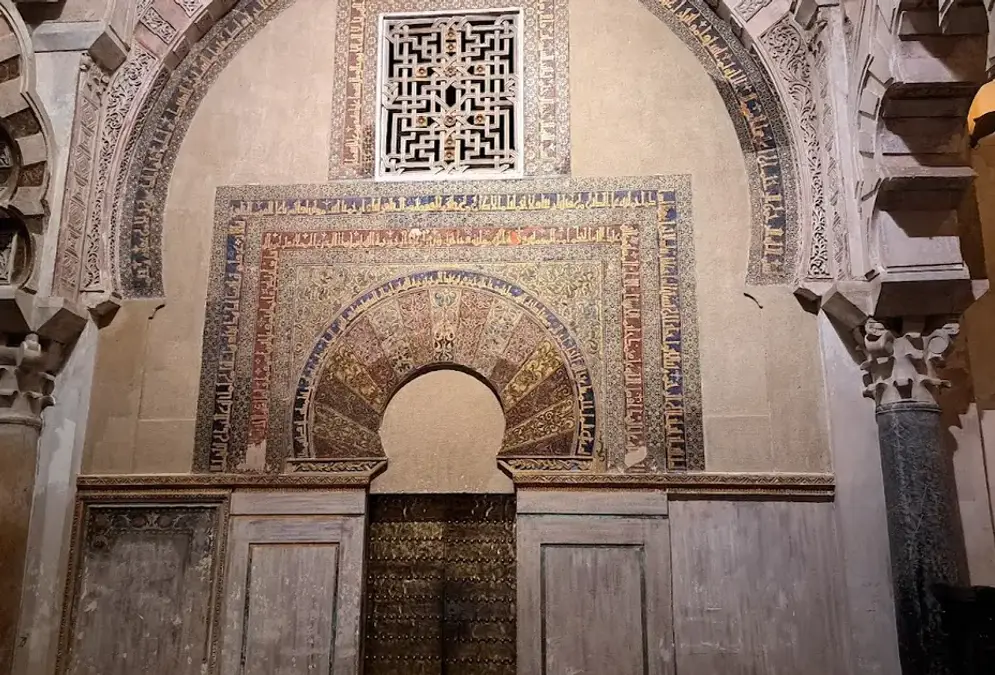

The Sinagoga de Córdoba, built in 1315, is one of the few surviving medieval synagogues in Spain, alongside Utrera's synagogue in Andalusia and Toledo's El Tránsito and Santa María la Blanca synagogues. Its walls carry Mudéjar stucco with Hebrew inscriptions from the Psalms — work that shows how Muslim craftsmen of the period built for Jewish and Christian patrons alike, using the same geometric vocabulary regardless of the building's faith.
When to Visit
Best season
October to May
Quietest hours
Between 9:00 and 11:00
Visit duration
20 – 30 minutes
A Witness to Hispano-Moorish Art
The synagogue dates from the early 14th century, when Córdoba's Jewish community still worked within the broader Hispano-Moorish artistic tradition. After the expulsion of the Jews in 1492, the building served successively as a hospital for rabies patients, a Catholic hermitage, and a guild headquarters. Rediscovered and restored in the 19th century, it was declared a national monument in 1885.
Visit between 9 and 11 am for the best light on the stucco
Morning light enters through the east-facing openings and picks out the relief of the Mudéjar stucco and Hebrew inscriptions. By midday the light flattens and the detail work is harder to read. Early morning also avoids the tour groups that arrive from 11 am.
The Stucco Work and Hebrew Inscriptions
The stucco covering the prayer hall walls incorporates Hebrew inscriptions from Psalms 92 and 93 alongside geometric patterns familiar from contemporary mosques and churches. The Córdoba architecture guide covers how this shared geometric vocabulary moved between Jewish, Christian, and Muslim patrons — and why a single workshop could credibly build for all three. The upper gallery, used by women according to synagogue tradition, survives intact. The eastern wall marks the location of the Holy Ark that once housed the Torah scrolls. The building measures 6.37 by 6.95 metres — small enough to take in fully from the entrance, but worth slowing down for the detail work.