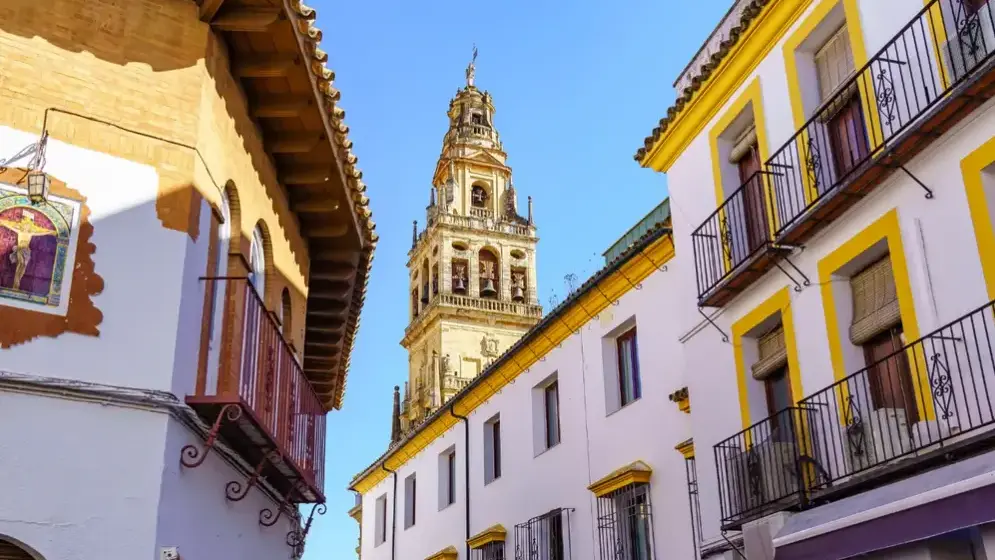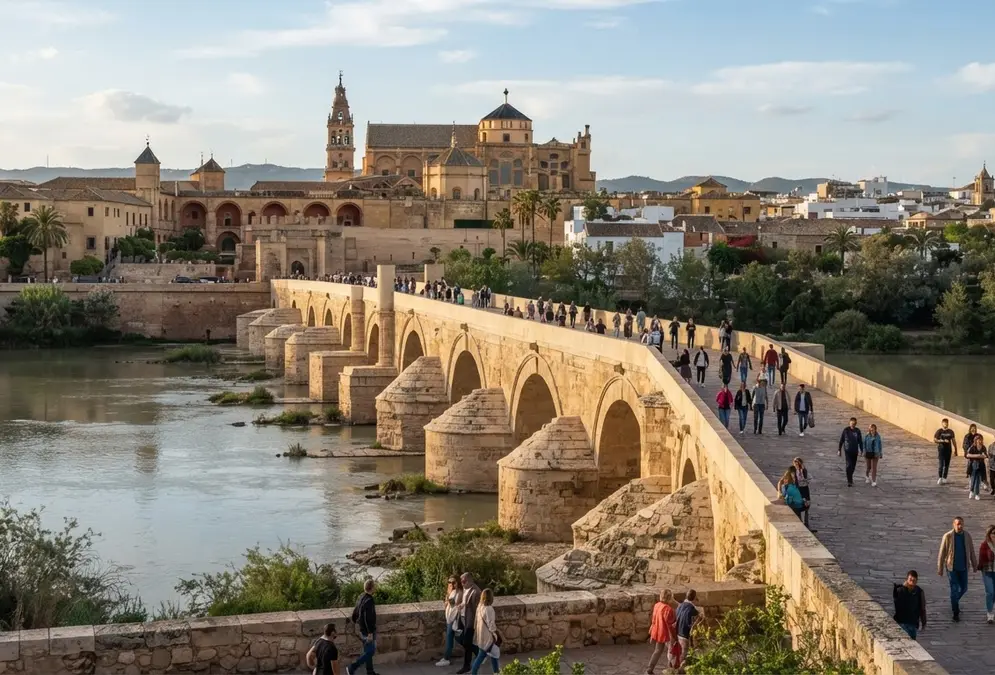
The Puente Romano de Córdoba, built in the 1st century BC under Augustus, spans the Guadalquivir on 16 arches over a length of 331 metres. For twenty centuries it was the only bridge in the city and formed part of the Via Augusta connecting Rome to Cádiz. Rebuilt several times after floods, it still follows its original Roman alignment. Fully pedestrianised today, it is Córdoba's main waterfront promenade and the standard viewpoint for photographing the Mezquita.
When to Visit
Best season
Year-round; May to September for sunset golden light on the Mezquita
Quietest hours
Before 9:00 or after 20:00
Visit duration
15 – 20 minutes (walking across)
The Long Bridge of Game of Thrones
The bridge appeared on screen as the Long Bridge of Volantis in Season 5 of Game of Thrones, bringing a new wave of visitors retracing the route of Tyrion Lannister. During filming, the production added oriental decorative elements that were removed afterwards. To complete a tour of filming locations, Almodóvar Castle 22 km from Córdoba doubled as Highgarden and Casterly Rock in Season 7. All the locations are mapped in our Game of Thrones guide to Córdoba. Read the full filming history of the Roman Bridge in our deep dive on the Puente Romano, or for the architectural story behind why HBO kept returning to Córdoba's building tradition, see the real architecture behind Game of Thrones' Dorne.
Shoot from the south bank for the classic composition
Most people photograph the Mezquita from the bridge's midpoint statue. Cross to the south bank instead — from the Torre de la Calahorra side you get the full 16-arch span with the Mezquita rising behind it. That's the postcard shot.
Holy Week Processions
The Puente Romano is one of the most atmospheric spots for Holy Week processions. Its position on the Carrera Oficial means the pasos cross the bridge with the illuminated Mezquita behind them — a combination that draws photographers from across Spain. The Madrugada (the night from Holy Thursday to Good Friday) is the most intense session. For viewing spots and timing, see our Holy Week guide.
Visiting Tips and Viewpoints
Allow 15 to 20 minutes to walk the bridge. The best moment is sunset, when the walls of the Mezquita turn orange — most consistent from May to September. From the midpoint you can see the old Arab mills on the riverbank and the Torre de la Calahorra at the southern end, which houses the Museum of Al-Andalus inside its medieval walls. On the city side, the Puerta del Puente is the Renaissance gate that links Córdoba with the bridge. The statue of Saint Raphael at the centre is the standard spot for photographing the Mezquita facade. The bridge already crossed the Guadalquivir in 818, when the emir Al-Hakam I crushed an uprising in the Shaqunda suburb on the river's south bank and had it razed, expelling an estimated 10,000 to 20,000 residents.
A Sunset Walk
The Puente Romano at dusk is one of Córdoba's quieter pleasures — the Mezquita lit up, the Guadalquivir catching the last light. For more ideas on the city's evening atmosphere, see our romantic Córdoba guide. The bridge is a stop on the Moorish Architecture Tour, the Riverside Walk, and the Roman Córdoba Walk — a good trio to check before planning your waterfront afternoon. It features on every free walking tour of Córdoba, departing from Plaza del Triunfo.
The Roman Bridge appears in our Top 10 Monuments & Sights in Córdoba and is one of the highlights covered in the Best Free Things to Do in Córdoba guide — a full list of the city's finest no-cost experiences. The 1651 Roman Bridge statue of the city's guardian archangel is part of the Triunfos de San Rafael.