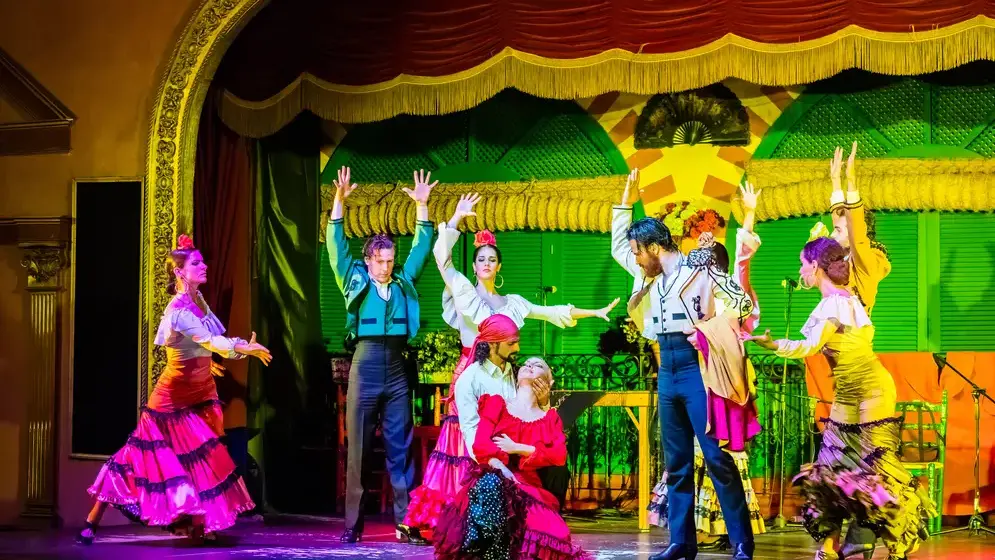

Córdoba's tablaos host flamenco most evenings of the week, in intimate rooms just steps from the Mezquita. Professional dancers, singers and guitarists perform soleás, bulerías and fandangos with no microphone — the stone walls carry the sound.
How a tablao evening works
Shows typically run 60 to 90 minutes, with tickets starting from €18 for a show-only seat with one drink; dinner-and-show packages cost more. Most venues open around 8:30 pm (later in summer), and a few also offer daytime sittings. Book a few days ahead — the smaller tablaos have limited seating and fill up on weekends. Dress is smart casual; no language skills are needed, since flamenco is entirely musical and physical. Prefer to book instantly? Tickets with drinks are available from €25 — book ahead on Fridays and Saturdays, since the best tablaos fill up.
For what makes Córdoba's flamenco distinct and which show suits which evening, see the Best Flamenco Shows in Córdoba guide.
Browse flamenco shows by venue
- Tablao El Jaleo — national-award-winning artists, nightly at 21:00, the tablao closest to the Mezquita.
- Tablao El Cardenal — an established tablao with shows Monday to Saturday.
- Doble de Cepa — a 60-minute tavern show with three ticket tiers from €18, plus a lunchtime sitting.
- Patio de la Judería — dinner and show combined in an 18th-century courtyard, nightly at 20:45.
- Centro Flamenco Fosforito — the city's municipal flamenco centre and its own recital programme.
- La Fuenseca — unticketed, spontaneous flamenco in a working taberna, for a rawer night after you've seen a tablao show.