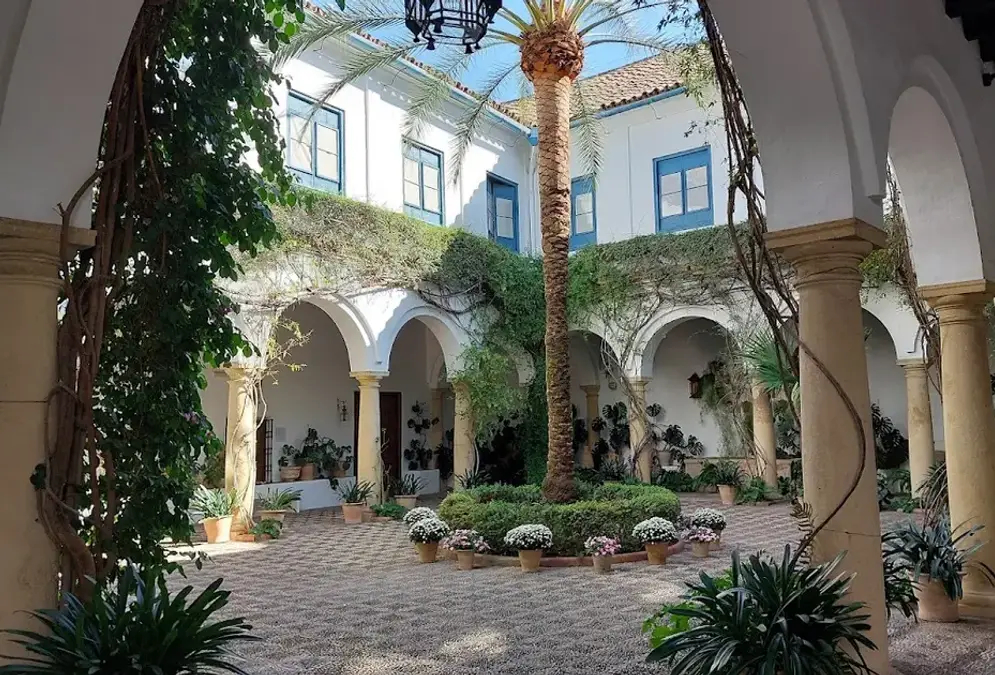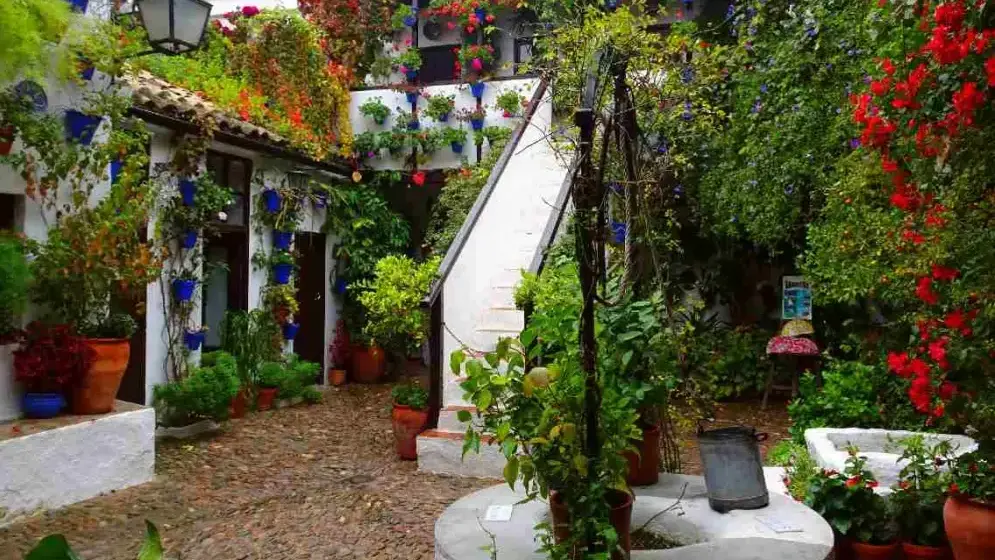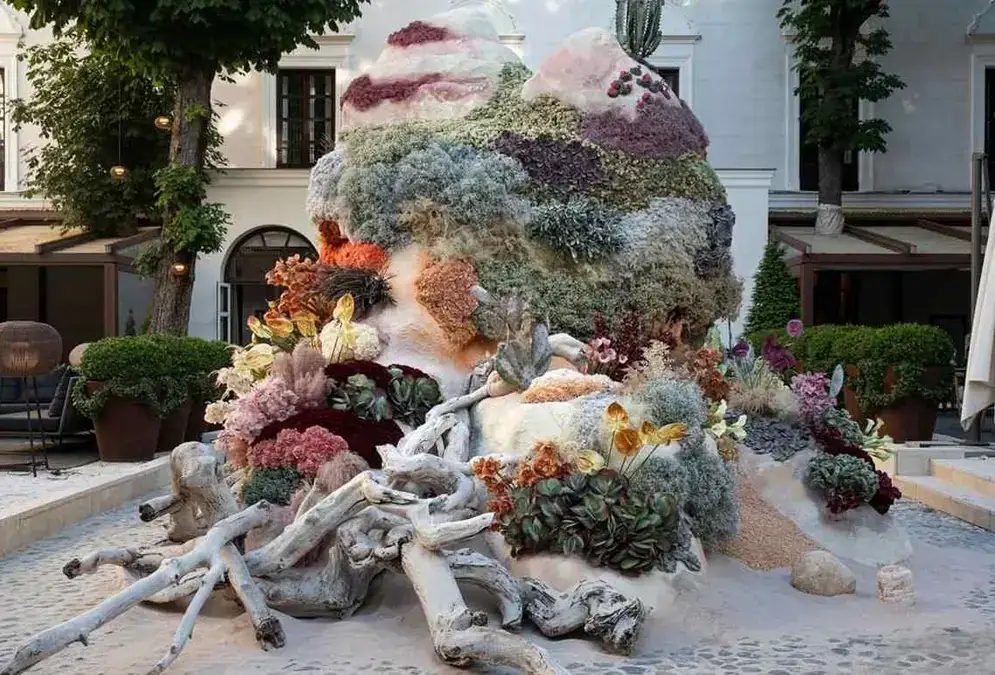

FLORA is Córdoba's autumn showcase for contemporary floral art. Organised by Zizai Cultura, the festival hands the city's historic patios and palaces to international floral artists, who build monumental ephemeral installations in dialogue with centuries-old Andalusian architecture.
2026 theme: Ephemeral
The 9th edition takes "Ephemeral" as its central axis: flowers wilt, installations are dismantled, and the whole festival is about a thing that will not last. For the first time the programme also turns to Semana Santa, with a talk on the flowers of Holy Week (see the programme below). A separate, unrelated project shares part of the name: Festival Córdoba Efímera is a temporary-architecture project running from 1 September, with its own venues, curators and organisers.
What makes this festival different
The artists are in competition. Five artists from South Korea, France, Spain, the United States and the United Kingdom each transform one courtyard and compete for the I and II Premio FLORA 2026, reported as €25,000 for first prize and €10,000 for second. For the economics behind the festival, see the full economic breakdown.
Five heritage venues transformed (2026 edition)
The installations sit where contemporary art meets old stone:
- Patio de los Naranjos at the Mezquita-Cathedral: Sohee Park (South Korea), Halcyon
- Palacio de Viana: Hamish Powell (United Kingdom), El murmullo. The press names the palace but not the courtyard
- Patio Barroco, Palacio de la Merced (seat of the Diputación de Córdoba): FLOVER NYC (United States), No puedo esperar más al futuro
- Museo Arqueológico, Patio II: Taller Banegas (Spain), Interludio
- Palacio de Orive: Mas Rasa (France), Cataclismo
What the festival schedule looks like
The festival runs in three phases. 12–15 October is set-up week: the installations are being built, and visits to that preparation work require prior registration at festivalflora.com. 16–21 October is the exhibition proper, with free, uninterrupted access from 11:00 to 20:00. 22 October closes the official programme with Guerrilla FLORA, 16:00–19:00 in the Jardines del Huerto de Orive.
Beyond the artist installations
An extensive programme runs alongside the five installations, and a label called flora off groups parallel installations and workshops. Dates worth planning around:
- 12–20 October: Planteamiento, a group show by Miguel Ángel Moreno Carretero, María Moreno and Carmen Vila at Galería Objeto Dardo
- 14 October: Patios, an action by Maider López with ESAD students at the C3A
- 17 October, 19:00: Flores de la pasión, the first Holy Week talk in the programme, at the Casa Hermandad de la Pasión on Avenida de Vallellano
- 17 October, 20:30: Martirio performs La flor cantada with pianist Jesús Lavilla: songs she had not sung before, all inspired by flowers. Check festivalflora.com for the venue and booking details
Many activities ask for a reservation on the festival website, while others are free until capacity is reached.
Practical information
The installations can be visited from 11:00 to 20:00, Friday to Wednesday, so the exhibition window runs 16 to 21 October. Access to the exhibition is free; the festival says access to all activities is free except where otherwise indicated, and some need prior registration. The five venues are in the historic centre. The official site notes ramp access for wheelchair users. Whether an entrance fee applies at the Mezquita-Catedral or Palacio de Viana outside the festival is a separate question: check their own pages before you go.