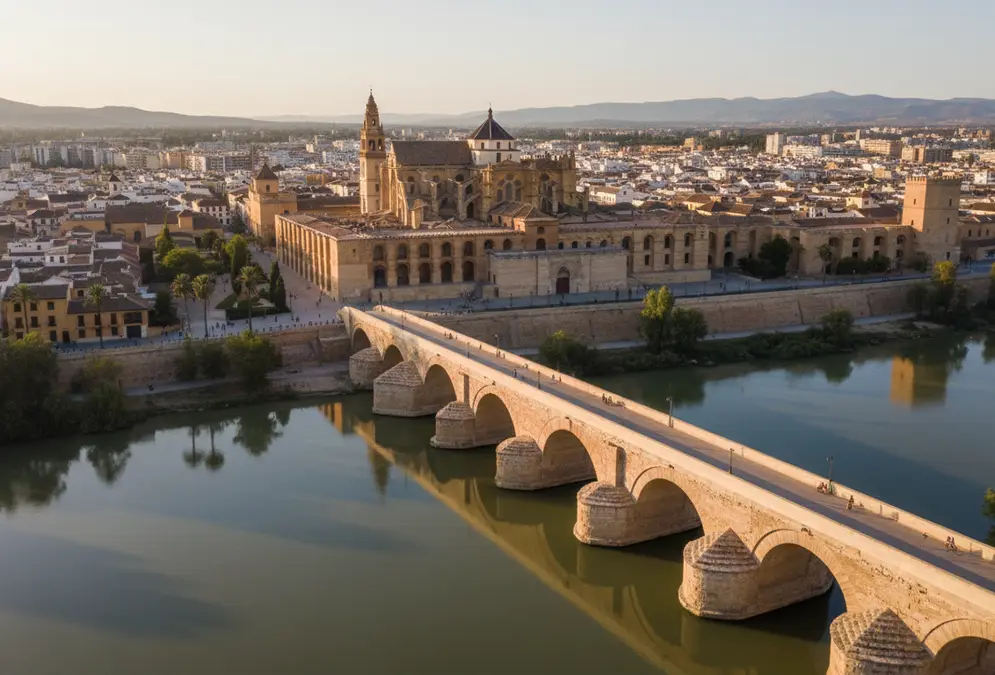
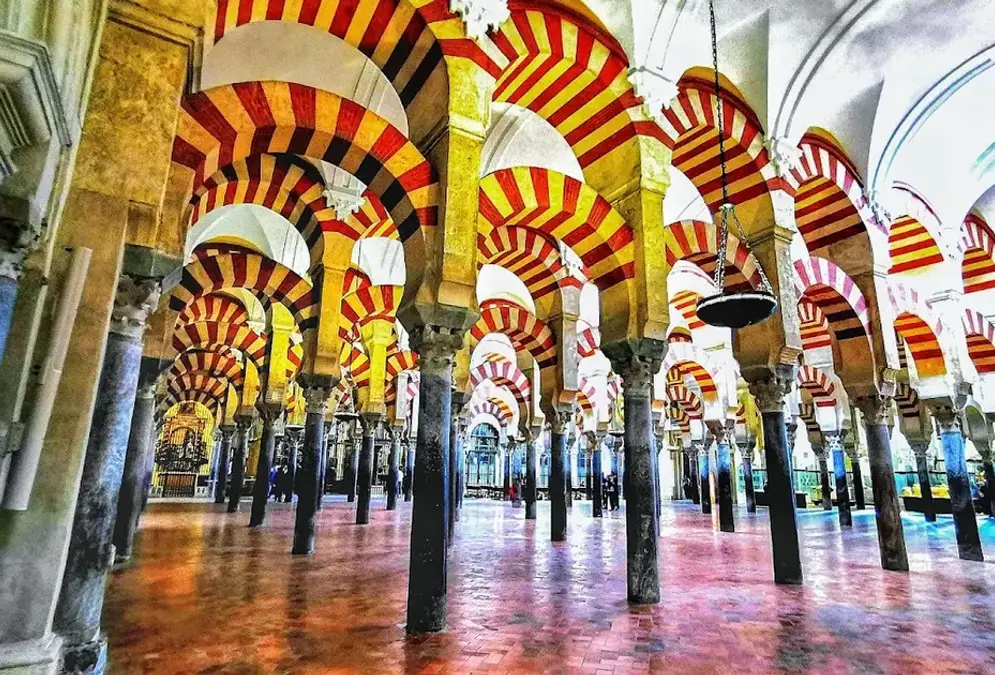
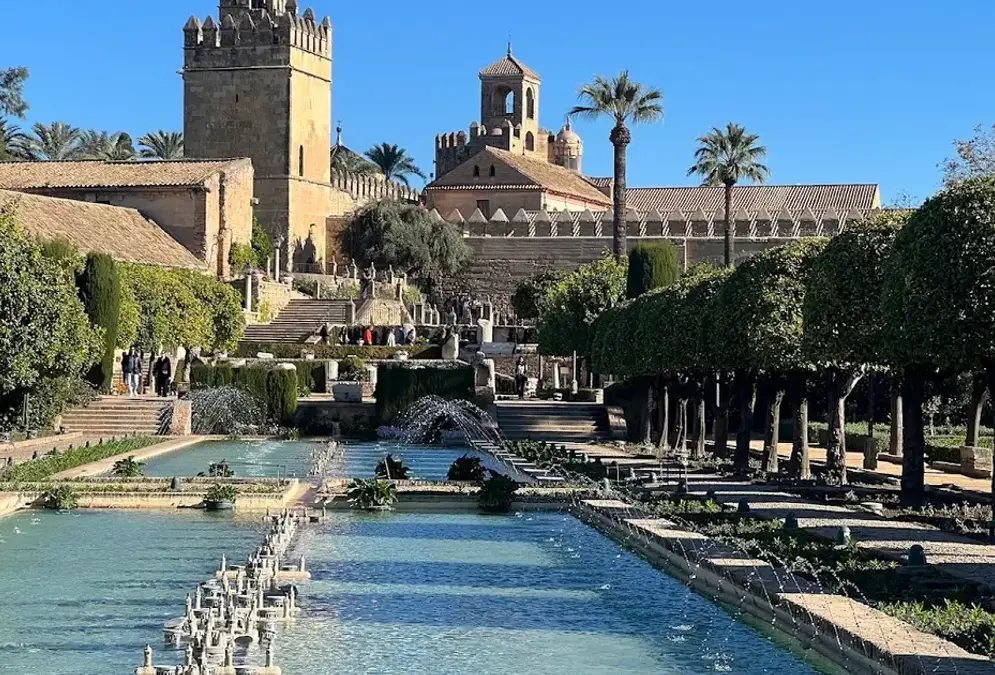
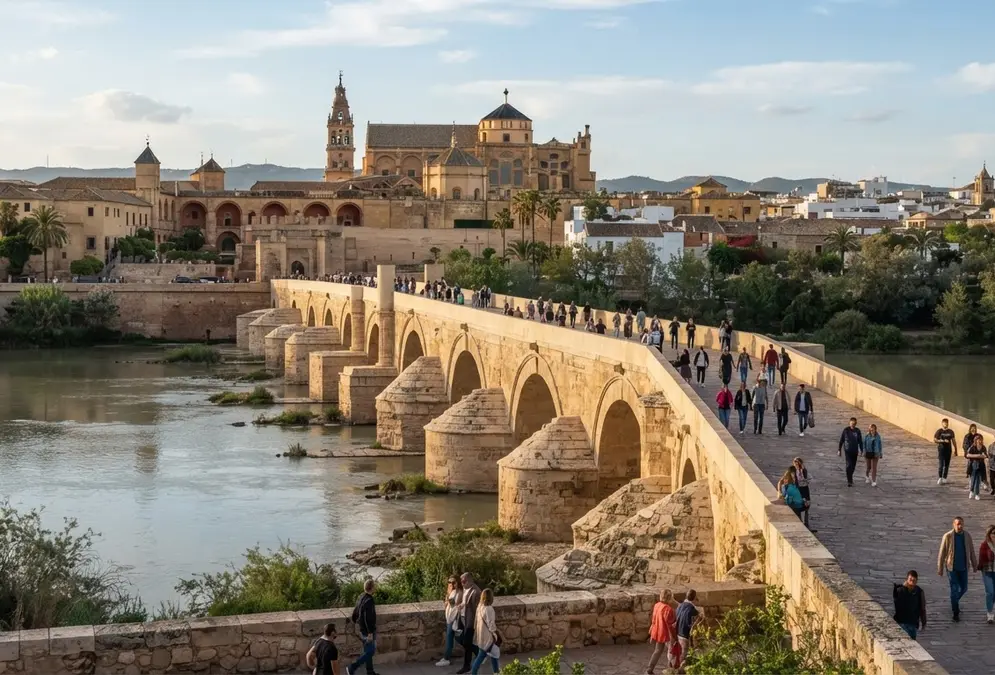
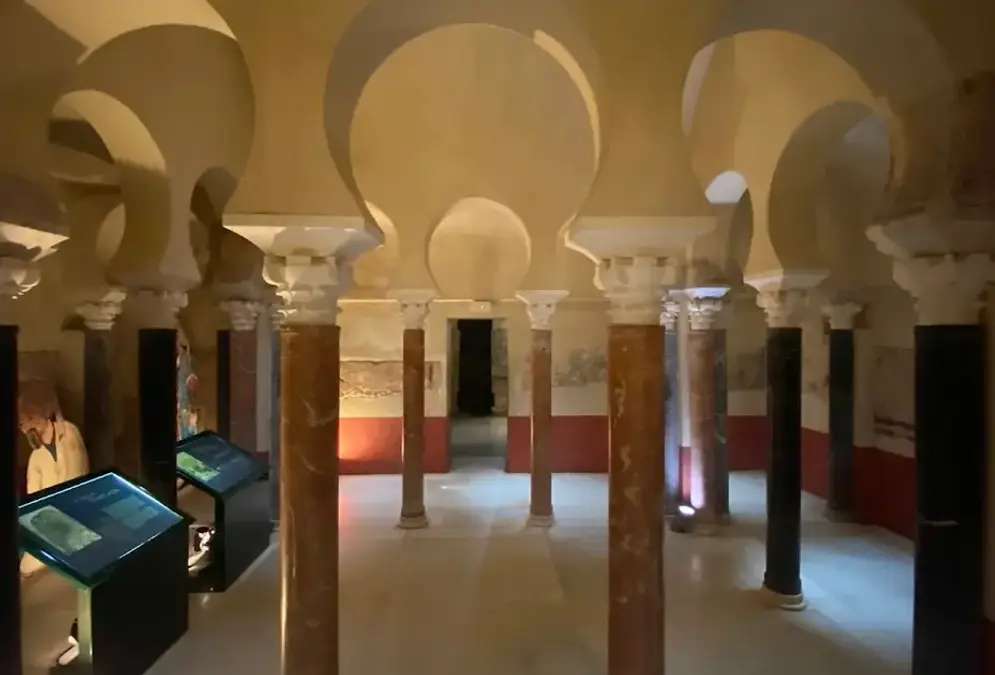
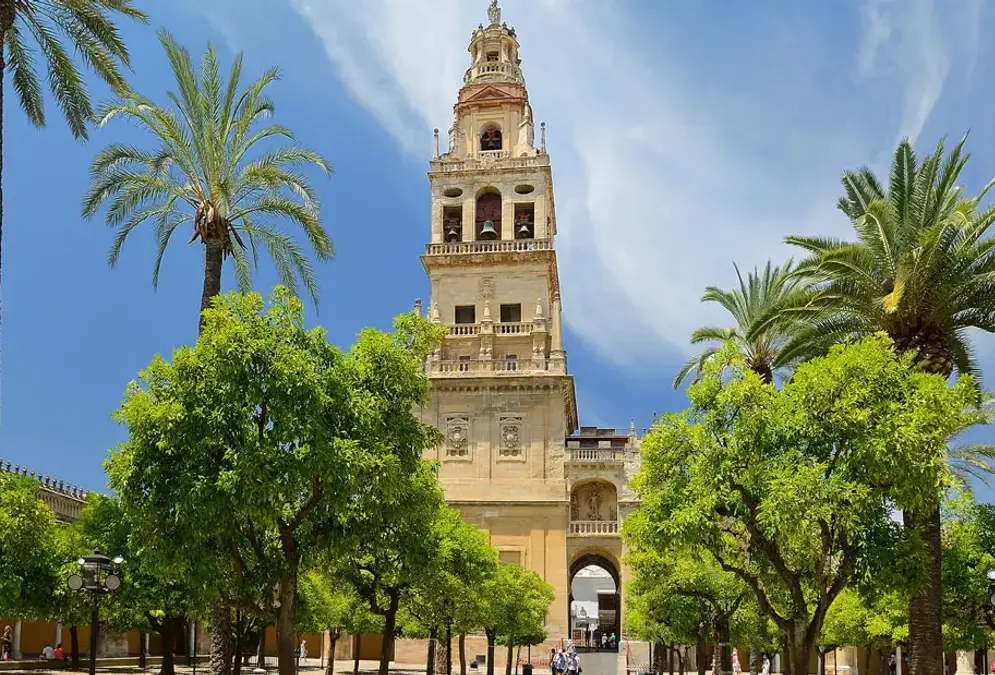
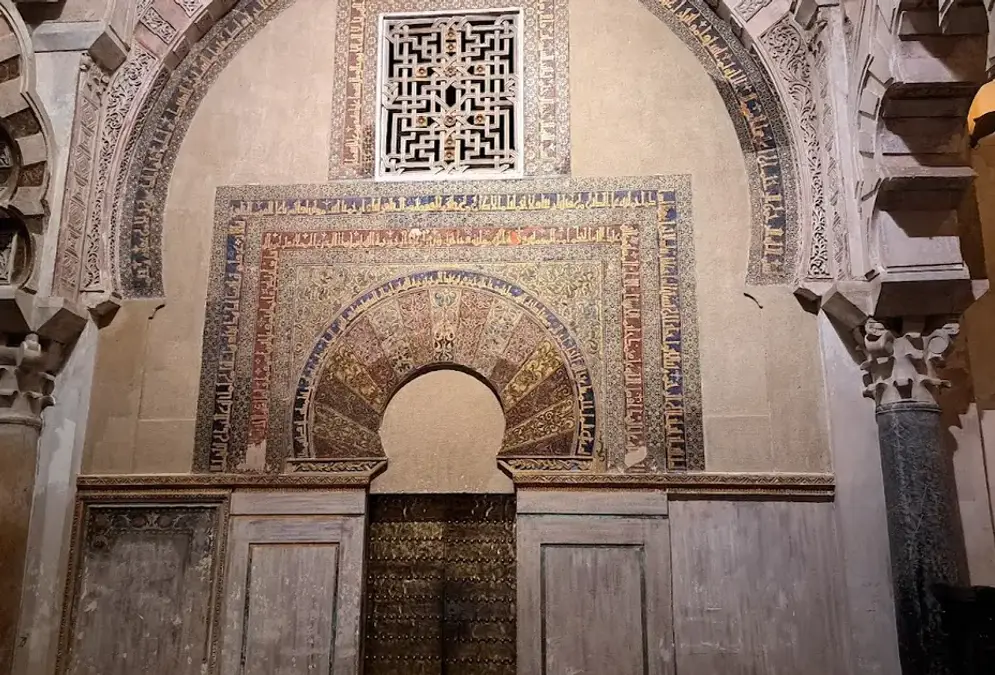
At its 10th-century peak, Córdoba was the largest city in western Europe — half a million people, 700 mosques, 300 public baths, a library of 400,000 manuscripts. Then it fell. The Caliphate fractured, the palaces were quarried for stone, and Christian conquerors built churches inside mosques. What remains is something you can't quite find anywhere else: a city where you walk on Roman paving, past Visigothic columns reused in Islamic arches, to look at a Renaissance nave built inside a medieval mosque.
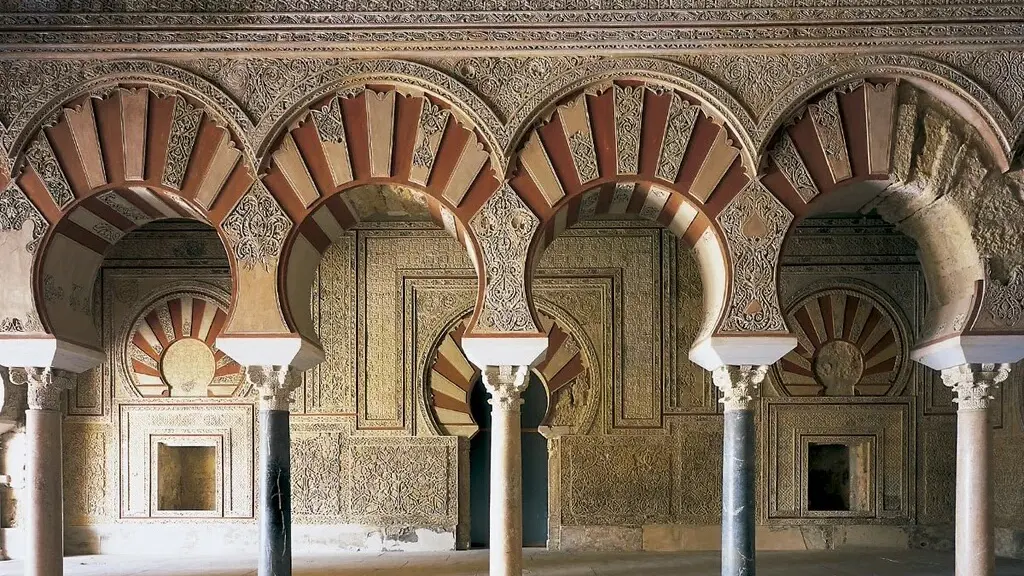
The Islamic layer is the one that shocks visitors most. The Mezquita's 856 columns are just the part you can see from the nave — the full building once covered an area larger than St Peter's Basilica in Rome. Outside the walls, the caliphal city of Medina Azahara was built in less than a generation and destroyed in less than one, its marble slabs stripped and scattered before the 11th century ended. The ambition of what Abd al-Rahman III attempted there — a new capital to rival Baghdad and Constantinople — only becomes clear when you stand in the Salon Rico and count the fragments they've managed to reassemble.
This list runs in order of significance for a first visit, then shades toward the less obvious. The top five are genuinely unmissable. From the sixth entry onward, you're in the territory that most visitors skip — and where, honestly, some of the best hours in Córdoba are spent. Three days is the comfortable minimum. Plan the Mezquita for early morning before the groups arrive, Medina Azahara for a weekday, and leave at least one afternoon for the quieter sights in the Judería.