
Search the site

history-buffsarchitecturesolobudget
Caliphal Baths (Baños del Alcázar Califal)
Monument €3.00 adults; €1.50 students; free for children under 13

Caliphal Baths (Baños del Alcázar Califal)

Tue–Sat: 08:30–19:30 (16 Sept–15 June), 08:30–15:00 (16 June–15 Sept). Sun & holidays: 09:30–14:30. Closed Mon.
Historic Centre
Back to Historic Centre

On this page

Beneath a quiet plaza in Córdoba's old city lie the best-preserved Caliphal-era baths in Spain. The Baños del Alcázar Califal — built around 961–976 CE under Caliph Al-Hakam II — served the inhabitants of the adjoining Umayyad palace complex for ritual ablutions and social gatherings. Today they function as a small, unhurried museum that most visitors to the Alcázar de los Reyes Cristianos next door completely miss.

What you are walking through

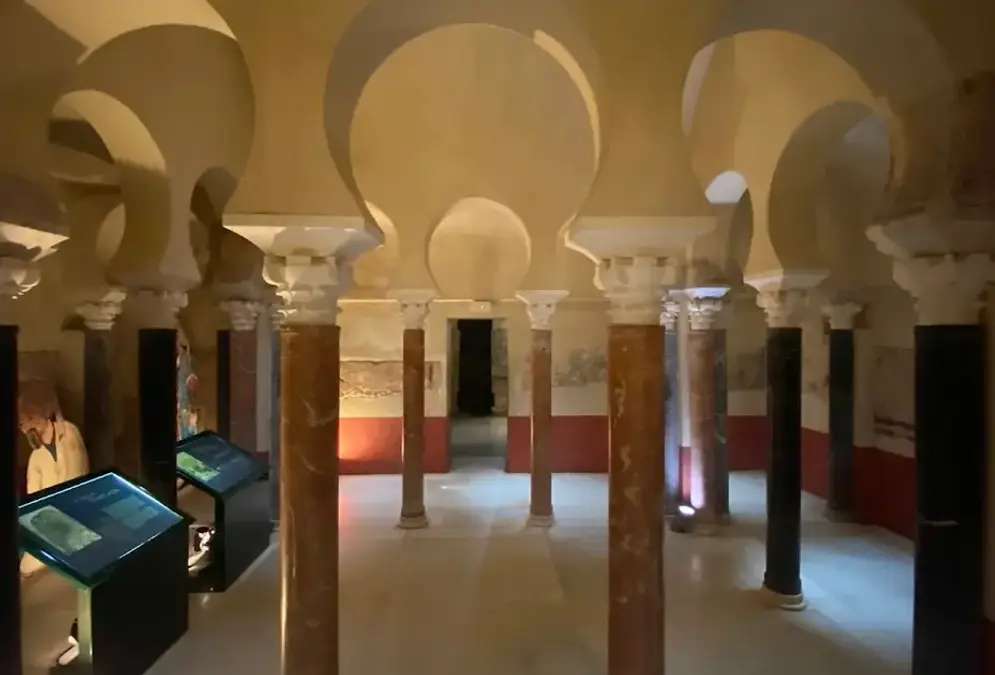
The baths follow the standard Islamic hammam layout: a sequence of cold (bayt al-barid), warm (bayt al-wastani), and hot (bayt al-sajun) chambers, each serving a distinct purpose in the ritual cleansing process. The hot room was heated via a hypocaust system beneath the floor — warm air circulated through clay pipes embedded in the walls. The effect would have been not unlike a modern sauna, though the social dimension was equally important.

The most immediately striking feature is the star-shaped skylights punched through the vaulted brick ceilings. These were covered with coloured glass rather than left open, diffusing light into the steam-filled interior in shifting patterns. Looking up at them now, with daylight coming through, gives a reasonable approximation of the original effect. The marble pillars and carved capitals were likely salvaged from earlier Roman or Visigothic structures — a common practice in 10th-century Córdoba, where the sheer volume of caliphal construction outpaced the supply of freshly quarried stone.

Plasterwork survives on several walls: geometric interlacing, vegetal motifs, and fragments of Kufic Arabic script. It is not in pristine condition, but the archaeological excavation report (1961–1964) provides detailed drawings of what was originally there, and the museum uses these to contextualise what you see.

From palace baths to buried ruin to museum

When Córdoba fell to Ferdinand III in 1236, the Umayyad palace complex was converted into the Christian royal residence now known as the Alcázar de los Reyes Cristianos. The baths fell out of use, were partially demolished, and over the following centuries became buried beneath the Campo Santo de los Mártires square. They were accidentally rediscovered in 1903 during gardening work and remained largely unstudied until systematic excavation in 1961–1964. The museum opened in 2006.

The result of that long burial is that the archaeological remains are genuinely intact. Unlike many Roman or medieval sites that have been heavily reconstructed, the Caliphal Baths still have their original brick vaults, original floor levels, and original column placements. What you see is what was actually there.
Visiting in practice

The entrance is on Plaza Campo Santo de los Mártires, a two-minute walk from the Alcázar and about five minutes from the Mezquita-Catedral. Admission is €3 for adults, €1.50 for students, and free for children under 13.

The site is small — a thorough visit takes 30 to 45 minutes. Groups are rarely large, so you can usually study the chambers at your own pace without queuing or crowding. The museum includes informative panels in English and Spanish explaining the excavation history and hammam function. Audio guides are available at the entrance.

The baths are a stop on the Jewish Quarter Walk, the Moorish Architecture Tour, and the Three Cultures Route — all three put the hammam in the wider story of Córdoba's Caliphal period. Combine this visit with the Alcázar gardens next door and the nearby Synagogue — all three are within five minutes' walk and together give a compact picture of Córdoba's Islamic, Christian, and Jewish past in the same afternoon.

Opening hours: Tuesday–Saturday 08:30–19:30 (16 Sept–15 June); 08:30–15:00 (16 June–15 Sept). Sundays and public holidays 09:30–14:30. Closed Mondays.

Address: Plaza Campo Santo de los Mártires, 14004 Córdoba.

The Caliphal Baths rank seventh in our Top 10 Monuments & Sights in Córdoba and feature in the Top 15 Highlights of Córdoba guide, which maps out the city's essential experiences across two to three days.

Reporter notebook

Insider tips

Practical observations gathered the way a local journalist would keep them: short, specific, and more useful than brochure copy.

Best time

Visit right after the Alcázar, not before

Most visitors do the Alcázar and leave without knowing the baths exist two minutes away. Go straight from the Alcázar gardens to the baths entrance on Plaza Campo Santo — you'll have the chambers almost to yourself.

Photo spot

Look up at the star skylights from the hot room

The star-shaped ceiling openings are the defining visual of this site. Stand in the hot room (bayt al-sajun) and photograph straight up — the light filtering through the star cuts makes the best shot, especially mid-morning when the sun angle is right.

Local custom

Pair it with Hammam Al Ándalus for the full arc

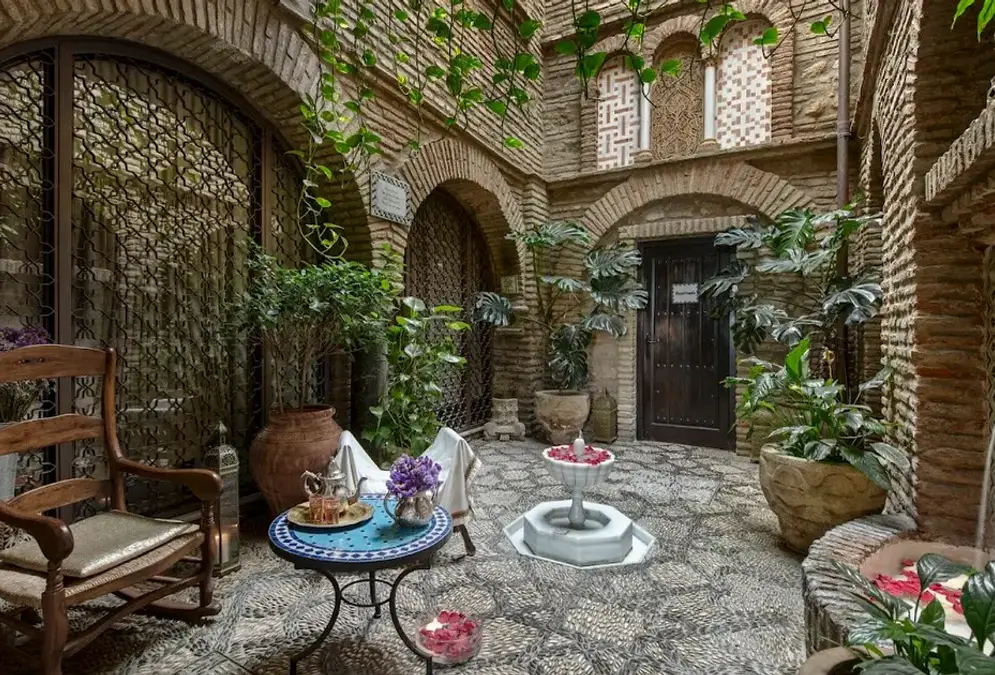
See the 10th-century original here, then book an afternoon session at Hammam Al Ándalus a few streets away. The archaeological context makes the modern bath experience land differently — you understand what the rooms were actually for.

Practical information

Opening hours
Tue–Sat: 08:30–19:30 (16 Sept–15 June), 08:30–15:00 (16 June–15 Sept). Sun & holidays: 09:30–14:30. Closed Mon.
Admission
€3.00 adults; €1.50 students; free for children under 13
Address
Plaza Campo Santo de los Mártires, 14004 Córdoba, SpainView on Google Maps

Good for

History Buffs Architecture Solo Budget History Architecture Cultural

Frequently asked questions

How much does it cost to visit the Caliphal Baths in Córdoba?

Entry costs €3.00 for adults and €1.50 for students. Children under 13 enter free. There is no online booking — tickets are purchased at the entrance.

What are the opening hours of the Caliphal Baths?

Tuesday to Saturday: 08:30–19:30 from 16 September to 15 June, and 08:30–15:00 from 16 June to 15 September. Sundays and public holidays: 09:30–14:30. The baths are closed on Mondays.

How long does a visit to the Caliphal Baths take?

The site is compact. A thorough visit, including reading the display panels and audio guide, takes around 30 to 45 minutes. It is easy to combine with the nearby Alcázar de los Reyes Cristianos and Synagogue in a single afternoon.

What are the star-shaped skylights in the Caliphal Baths?

The star-shaped openings in the vaulted brick ceilings were used to admit light and ventilation into the steam-filled bath chambers. Originally they were fitted with coloured glass rather than left open. The pattern is a distinctive feature of Islamic hammam architecture.

Are the Caliphal Baths different from Hammam Al Ándalus in Córdoba?

Yes, they are completely different. The Caliphal Baths are an archaeological museum — the excavated remains of a 10th-century palace hammam. Hammam Al Ándalus is a modern working spa inspired by Arab bath tradition. The Caliphal Baths are for looking; Hammam Al Ándalus is for bathing.