
- 1932
Born in Puente Genil
Antonio Fernández Díaz, later known as Fosforito, is born on 3 August
- 1956
Career breakthrough
Sweeps every prize in the non-professional section of Córdoba's inaugural Concurso Nacional de Arte Flamenco
- 2005
Golden Key awarded
Receives the Llave de Oro del Cante, flamenco's rarest honor, as only the fifth singer to hold it
- 2025
Fosforito dies
Passes away on 13 November, having already donated his personal legacy to the museum's Sala del Maestro
A 15th-century inn on Córdoba's oldest square
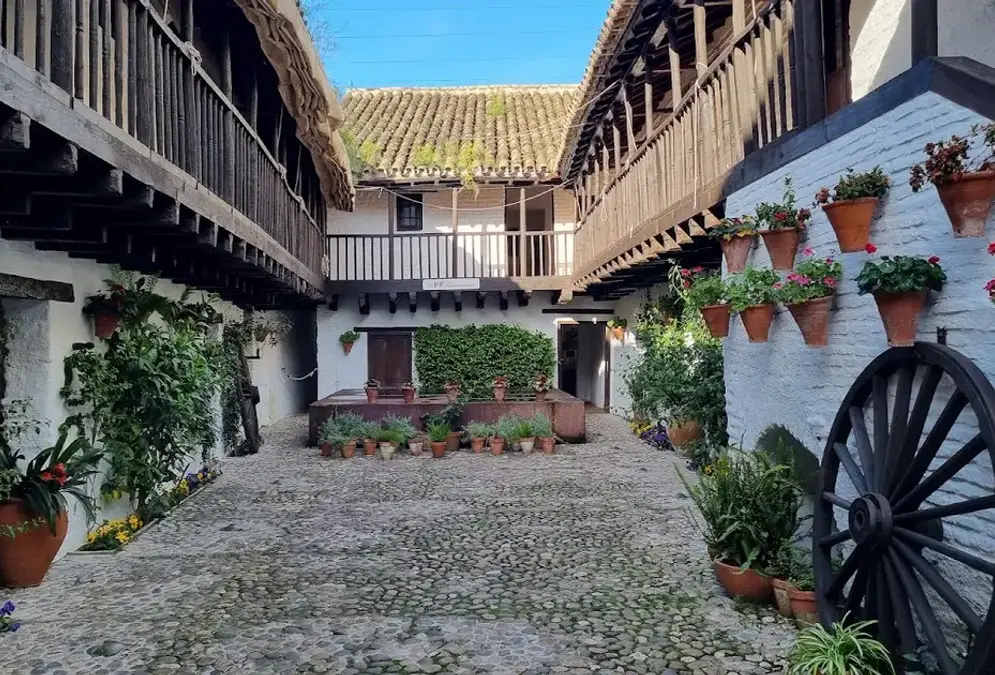
In Plaza del Potro — behind the Museo de Bellas Artes, one of Córdoba's oldest squares — a surviving 15th-century inn houses the city's fullest tribute to flamenco. The Posada del Potro has kept its stables, timber gallery, and cobbled courtyard intact for almost six hundred years, and Cervantes used it as a setting in Don Quixote, describing it as a haunt of 'rogues and thieves.' Standing in the courtyard today, past the stone troughs where mule trains once watered, that description still tracks.
The Centro Flamenco Fosforito occupies this courtyard building, turning an inn that once sheltered travelers and their animals into a museum built around sound — rhythm, voice, and guitar.
Fosforito: the fifth Golden Key
The museum is named for Antonio Fernández Díaz, known as Fosforito (1932–2025), a singer from Puente Genil regarded as one of the twentieth century's great interpreters of cante — an encyclopedic repertoire that revived near-forgotten styles like his hometown's zángano. His career took off in 1956, when he swept every prize in the non-professional section of Córdoba's newly founded Concurso Nacional de Arte Flamenco, a triennial competition established that year to rescue the 'old cante jondo' from the variety-show circuit it had drifted into. In 2005 he received the Llave de Oro del Cante — flamenco's rarest honor, and he was only the fifth singer in history to hold it.
The Sala del Maestro gathers the legacy he donated to the city: the Golden Key itself, photographs, awards, and personal papers from a career that, by his own account, started at local fairs, cattle markets, and brothels before it reached concert stages.
Inside the Centro Flamenco Fosforito
Beyond the biography rooms, the Sala del Compás breaks flamenco down through touch-screen exhibits and audiovisual projections organized around four angles: genealogy and geography, rhythm, and the relationship between cante and guitar. A dedicated station lets you tap out compás patterns yourself, which is harder than it looks and more memorable than any description. Four guitars from contemporary masters are on display, including one donated by Cordoban guitarist Vicente Amigo. Exhibit panels run in English and Spanish throughout.
The museum's own Matinales Flamencas series adds free live flamenco to the courtyard on Sunday mornings at noon, with admission free until capacity is reached — but it runs in seasonal editions rather than every Sunday of the year. The 2026 season ran from 15 February to 8 March; check the current programme before planning a visit around it. When a season is running, it's arguably the best way to experience everything the exhibits describe secondhand.
Practical notes
Admission is free. Opening hours run Tuesday to Saturday 8:30–19:30 and Sunday and holidays 9:30–14:30; the museum is closed on Mondays. The historic square outside is shared with the fine arts museum and the Julio Romero de Torres Museum, making this corner of the old city worth an unhurried afternoon. The Mezquita-Catedral is a ten-minute walk west. For what attending a performance inside the museum's own courtyard actually involves, see our Fosforito flamenco recital page.
For the fuller story of Córdoba's flamenco tradition, from its Santa Marina roots to the summer Noche Blanca festival, see the Flamenco in Córdoba guide. To hear it live in an intimate tablao setting, flamenco shows run nightly in the Judería.