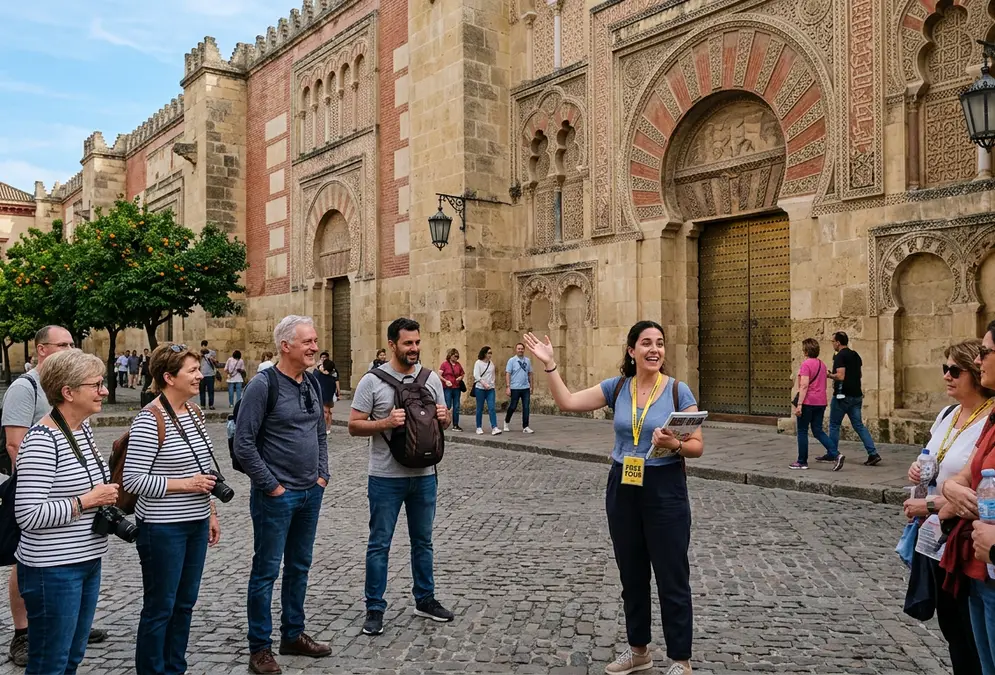
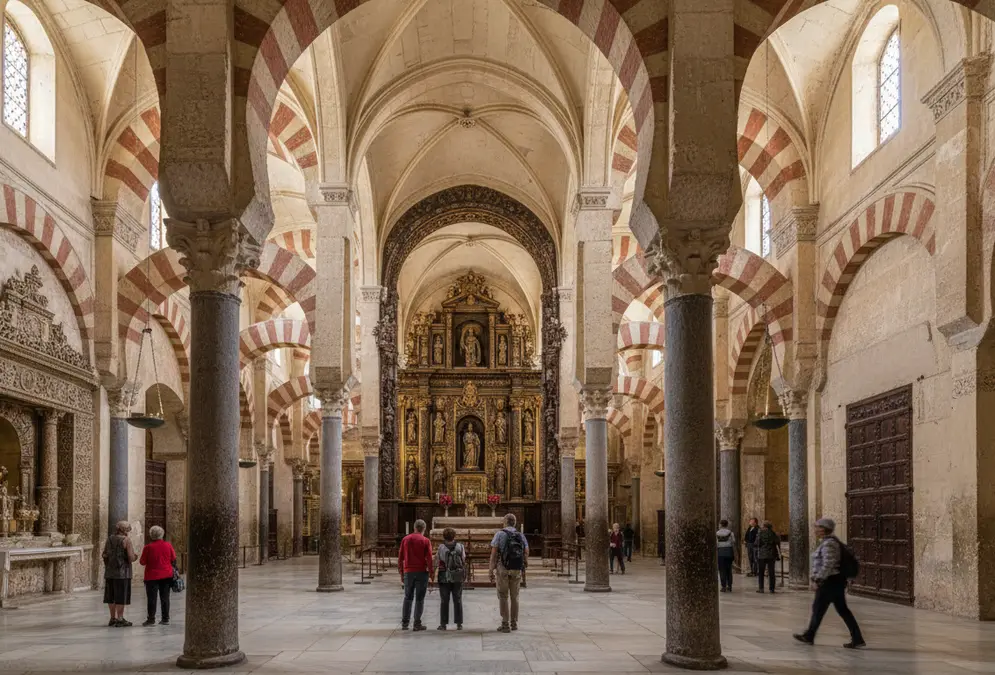
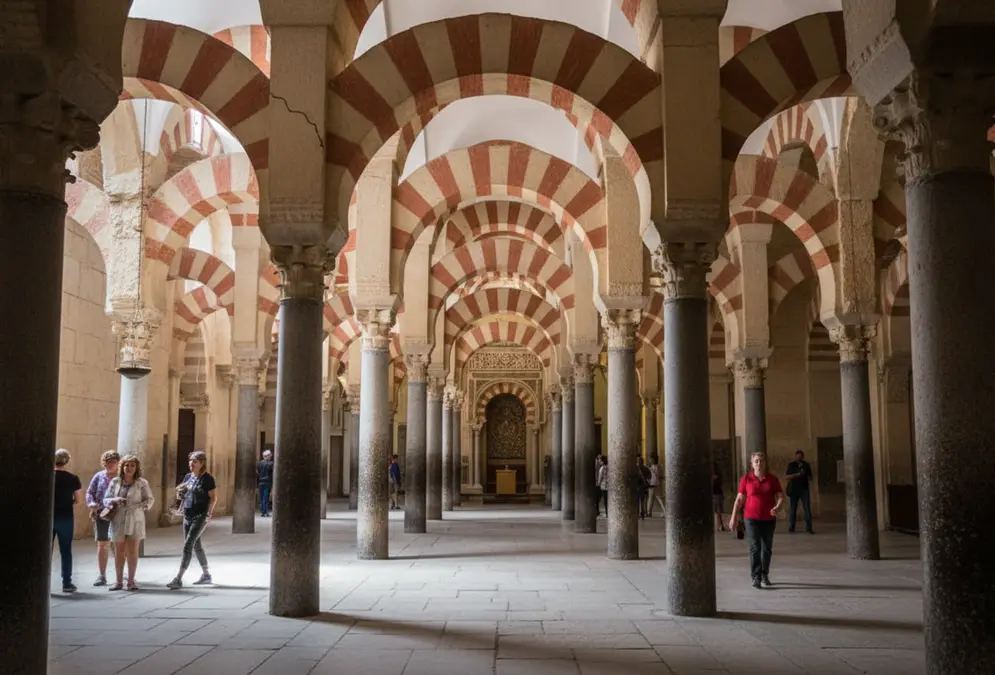
A free walking tour in Córdoba is not actually free. The better framing: you pay nothing to book, you walk for a couple of hours with a local guide, and at the end you give what you think the experience was worth. Most people hand over €10–15 in cash. The guide earns all of it. That is the model.
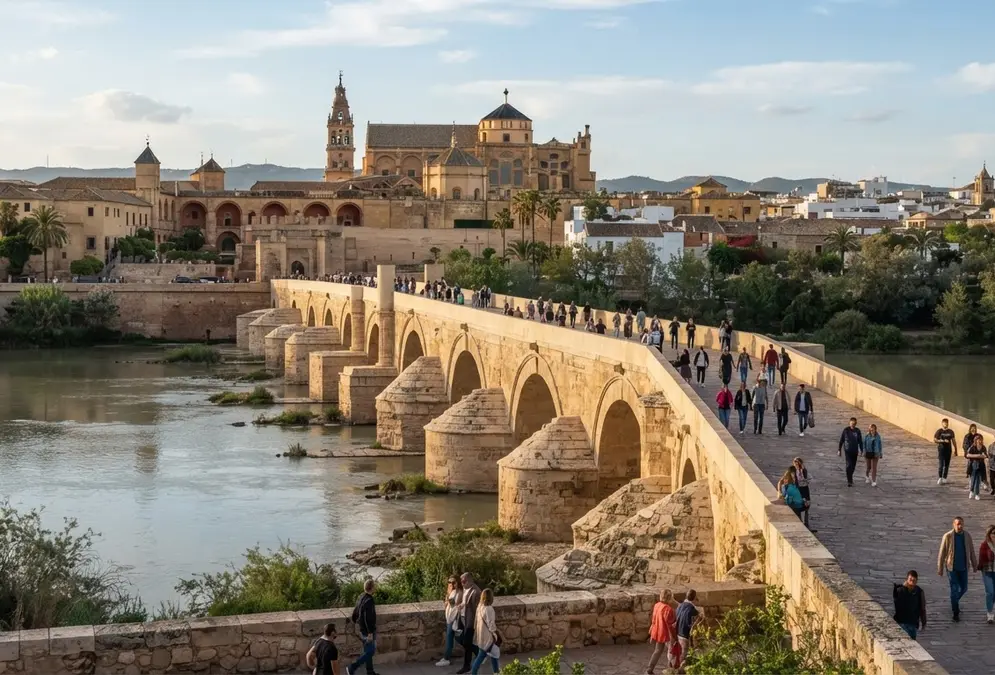
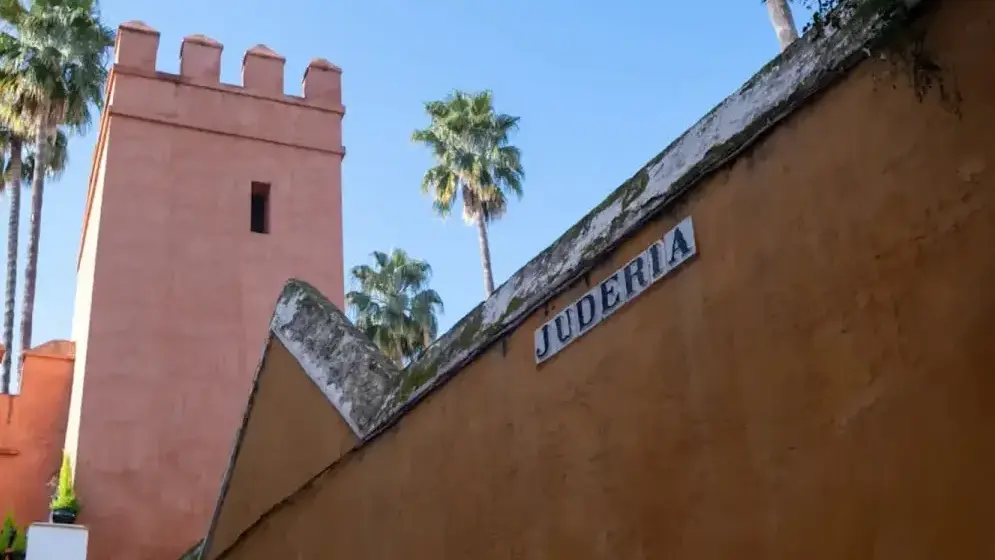
Organised tours run daily from two main meeting points: Plaza de las Tendillas in the city centre, and Plaza del Triunfo near the Roman Bridge. Most operators run a morning departure and add an afternoon slot in high season; exact times and group sizes vary by operator, so confirm both when you book. The standard route takes in the exterior of the Mezquita-Catedral, the lanes of the Judería, the Synagogue, and a crossing of the Roman Bridge. Entry tickets are not included; the guide explains the history from outside.
Booking platforms worth using: GuruWalk lists several independent guides with verified reviews, letting you compare before committing. Civitatis carries a curated selection if you prefer a single booking interface.
Tipping etiquette. The suggested range is €5–15 cash. €10 is normal for a solid tour; €15 for one that genuinely taught you something. Bring small notes, because nobody appreciates a guide making change at the end. If the group is large and noisy and the guide struggled to hold it together, €5 is fine. There is no social pressure to overtip, and no agency taking a cut.
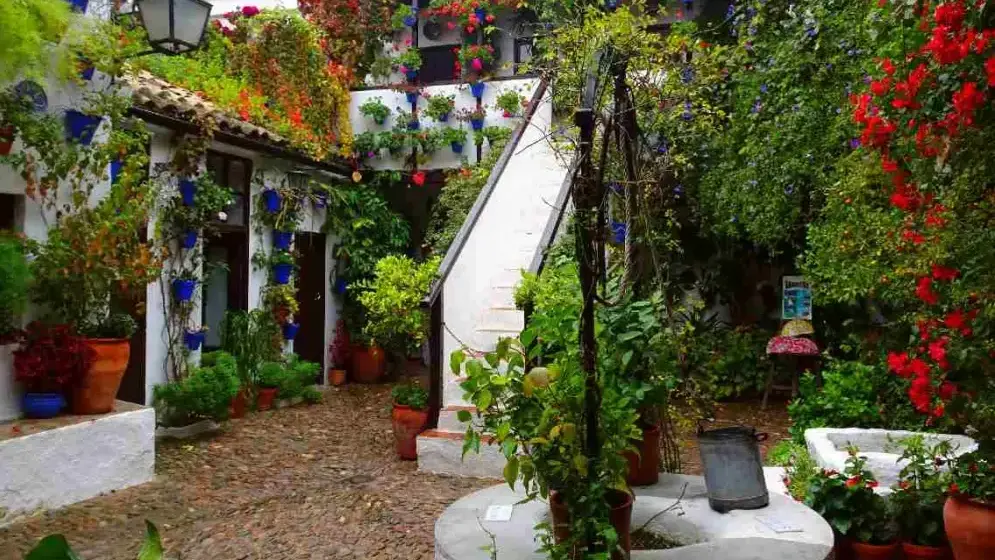
When to book. Shoulder season (March–April and October) is forgiving; book the day before. The peak weeks around the Patio Festival in May, and again during Easter week, fill 2–3 days ahead. High summer is harder: the morning tour is manageable, but an afternoon departure means walking in temperatures that often reach 38°C. Booking is free on most platforms with no credit card required.
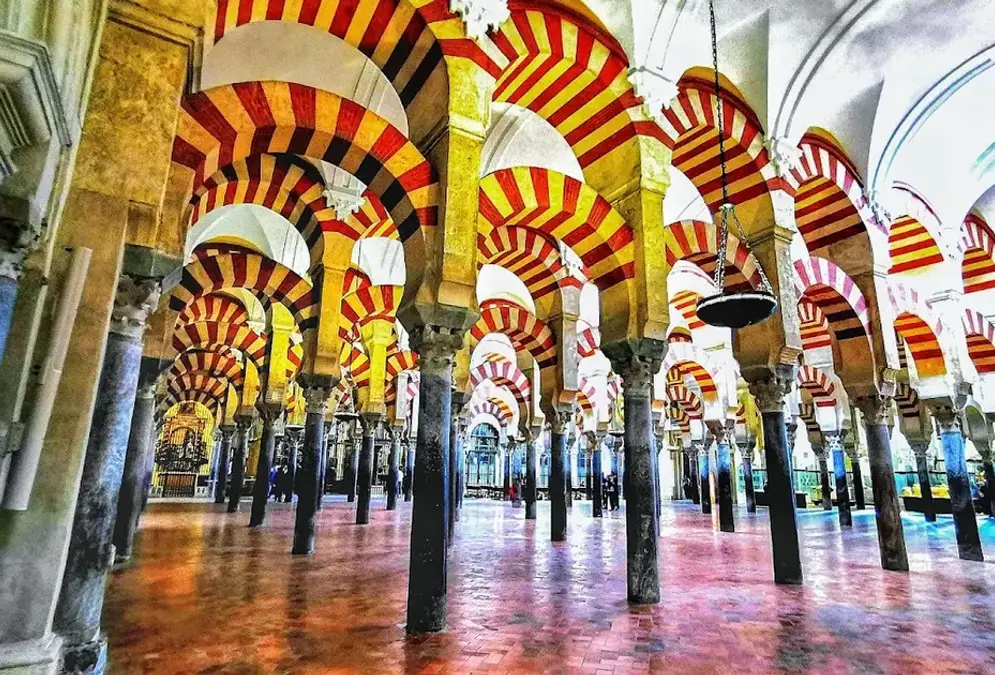
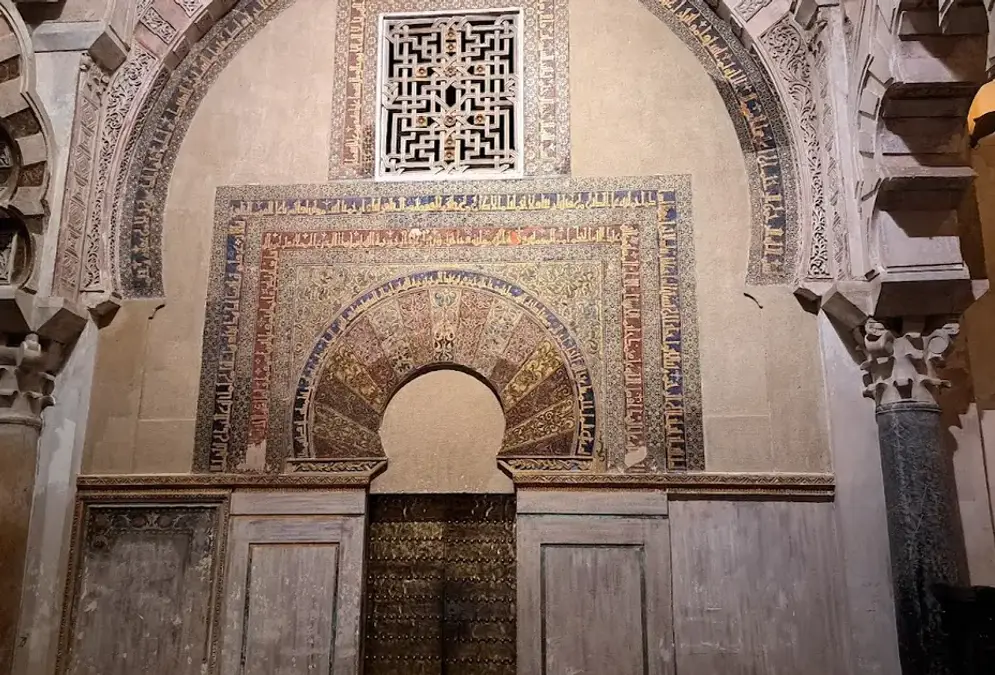
Self-guided routes cost nothing beyond a comfortable pair of shoes. The Jewish Quarter walk covers the same ground as most organised tours in about 90 minutes at your own pace. The Three Cultures Route extends the circuit to include the Roman Temple and the Torre de la Calahorra, useful if you want a longer morning without a set schedule. This themed walking route is the themed option for visitors who want to focus specifically on Islamic heritage — horseshoe arches, the Caliphal Baths, and the Mudéjar craftwork that the Judería routes only graze. Both routes have detailed maps and stop descriptions on the walks page.
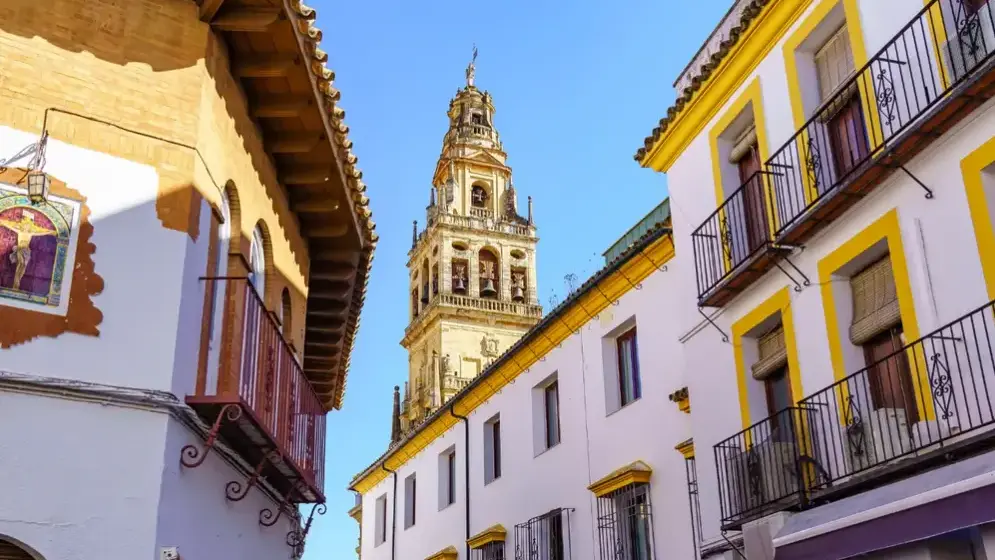
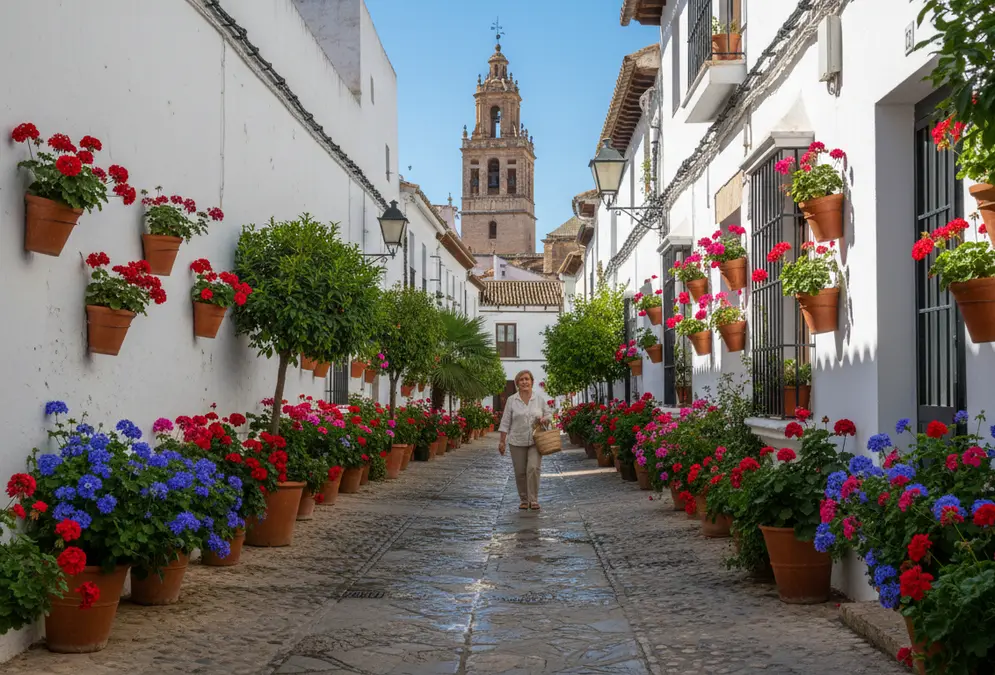
The main difference between the two options: a guide fills in the history as you stand in front of it. Arriving at the Calleja de las Flores without knowing what you are looking at is still pleasant. Arriving knowing that the Mezquita tower visible at the end of the alley was built over a minaret constructed in the 8th century is better. Whether that difference is worth €10–15 depends on how much context matters to you.