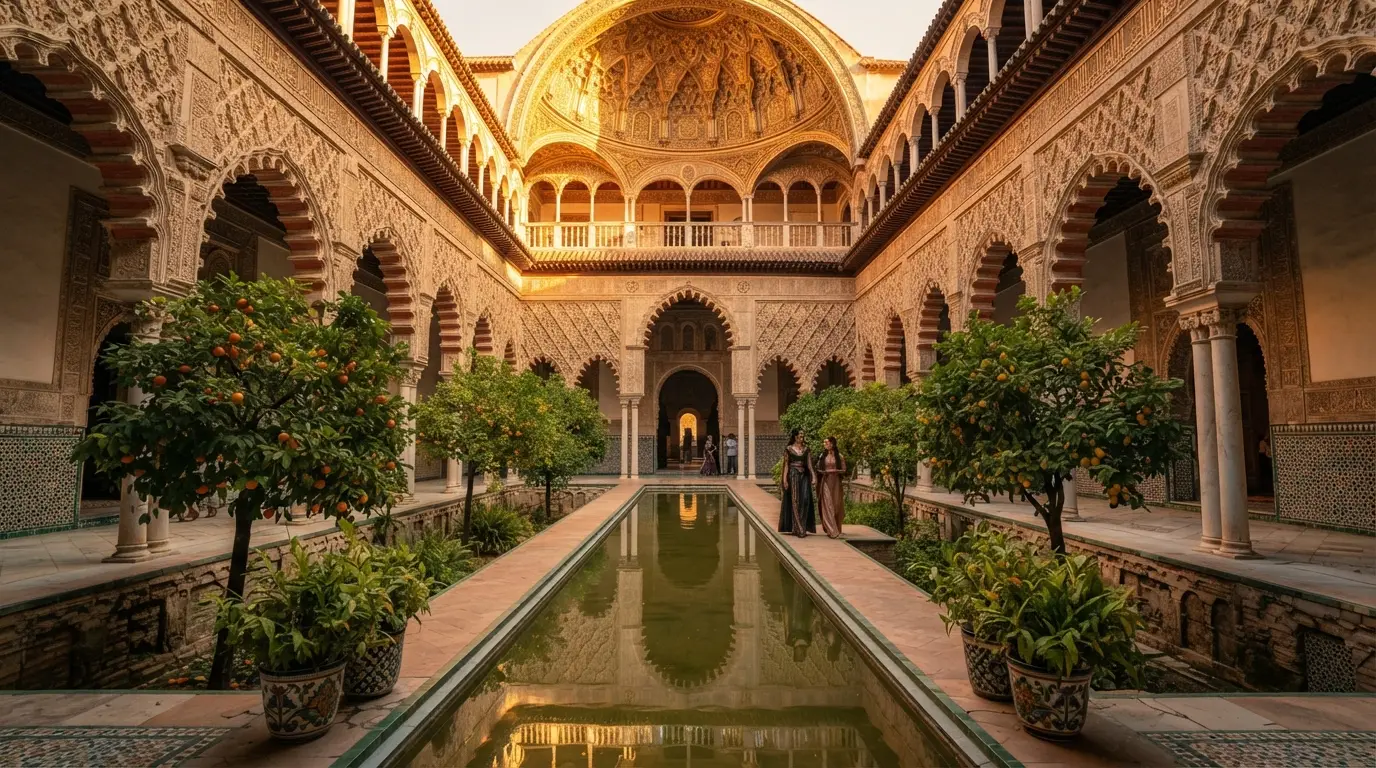

Why Dorne looks like Al-Andalus, not fantasy Spain
HBO's production designers did not invent Dorne's look from a blank page. When Deborah Riley took over as production designer, she brought a background most film art departments don't have: formal training in architecture at the University of Queensland, before she turned toward production design.[4] Her working method, by her own account, starts with real buildings rather than concept art: she looks to "architects and architecture," to places she has traveled, and to how those spaces made her feel — what she calls "the psychology of space."[5]
For Dorne, the psychology of space meant looking south to Moorish architecture, the built vocabulary of medieval Islamic Iberia known in Spanish as al-Andalus. Reviewers who have studied the show's production design point out that Sunspear's towers, its crowning domes and its pierced archways are lifted directly from this tradition[6], and the reason it reads as authentic rather than generic "desert kingdom" fantasy is that it is a real, load-bearing architectural language, developed over three centuries by Umayyad builders working from a single capital.
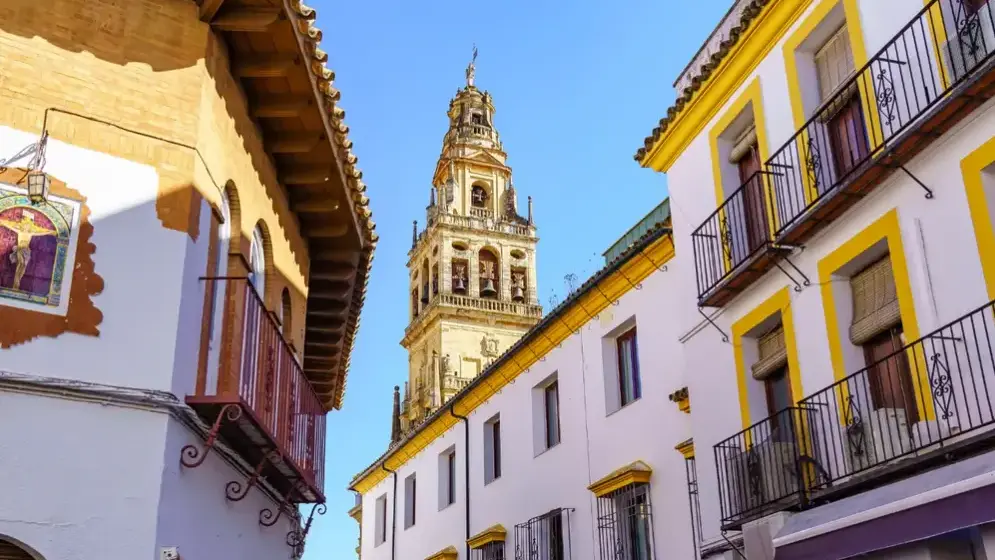
That capital was Córdoba. None of Dorne's own scenes were filmed inside the city — the Water Gardens sequences were shot ninety minutes down the Guadalquivir, at Seville's Alcázar. But Córdoba is where the vocabulary Riley's team borrowed was written and refined first, in a building three centuries in the making: the Mezquita. Two other Córdoba landmarks do turn up elsewhere in Westeros, doubling as Highgarden and the Long Bridge of Volantis, and each one demonstrates a different structural piece of the same design system HBO reused for an entire fictional kingdom. For the practical version of this story, with filming dates and directions, Córdoba's own Game of Thrones locations are mapped out separately — this is the architecture behind them.
The Mezquita's vocabulary: horseshoe arches and muqarnas
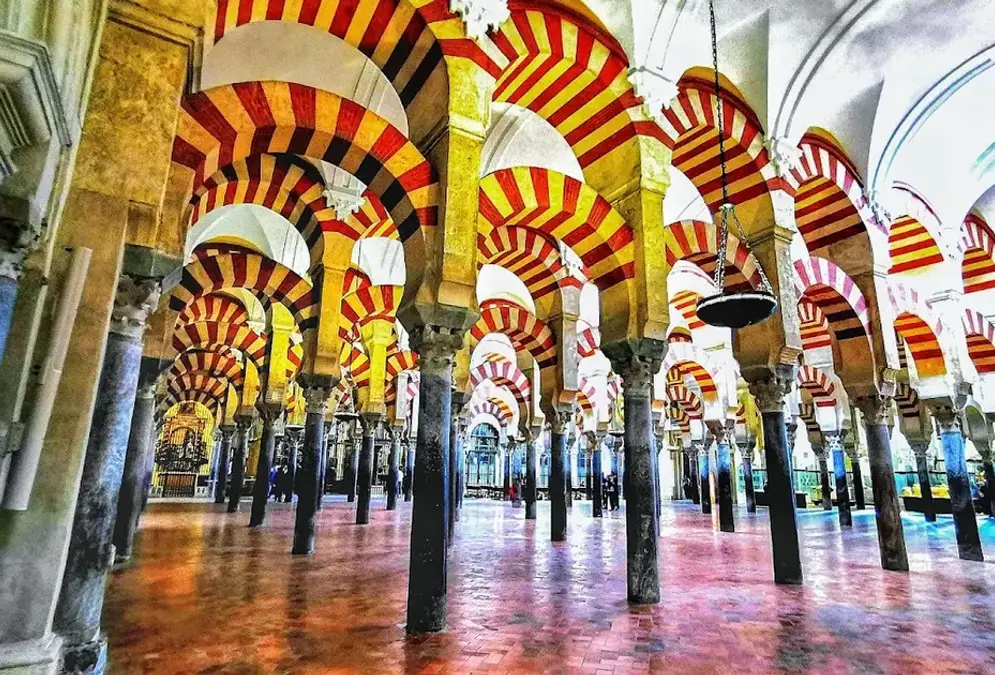
Three features carry more weight than any other in explaining Dorne's look, and all three originate in the same building: Córdoba's Mezquita, whose 850-plus columns[1] of jasper, onyx, marble, granite and porphyry still support the largest surviving example of early Islamic religious architecture anywhere.
850+
- The horseshoe arch, doubled and banded in alternating colour
- Muqarnas and ribbed domes, added in the building's second major expansion
- The patio andaluz, a planted, irrigated courtyard rather than an open plaza
The horseshoe arch
Where a Romanesque arch is a plain semicircle, a horseshoe arch curves inward past vertical before opening into its span, closing more than half a circle rather than exactly half. The Mezquita's original 8th-century hall doubles the effect: a lower tier of horseshoe arches supports an upper tier of plain semicircular ones, with the voussoirs (the wedge-shaped stones forming the arch) alternating red brick and white stone in bands.[7] It is a structural answer to a practical problem as much as a decorative one; stacking two shorter arches let Abd al-Rahman I's masons raise the ceiling using recycled Roman and Visigothic columns that were, on their own, too short for the hall he wanted. The banded double arch is now the single most recognisable Andalusian architectural signature there is, and it is the first thing a production designer reaches for whenever a script calls for a fictional desert or Mediterranean kingdom.
Muqarnas, mosaic and the courtyard
Muqarnas, honeycombed, stalactite-like vaulting that resolves a square room into a dome without a single flat transition, arrived under Al-Hakam II's 10th-century expansion. His masons raised an elaborate ribbed dome over the mosque's central nave and framed the new mihrab with interlacing polylobed arches[8], then covered the mihrab's surfaces in gold mosaic worked by Byzantine craftsmen the caliph had specifically requested from Constantinople.[9] This is the layer HBO's set builders leaned on hardest: domes that look carved from the inside out, dense with pattern rather than empty space, are the visual idea Sunspear shares with almost no other kingdom in the show. Winterfell is stone and function; Sunspear is geometry and light.
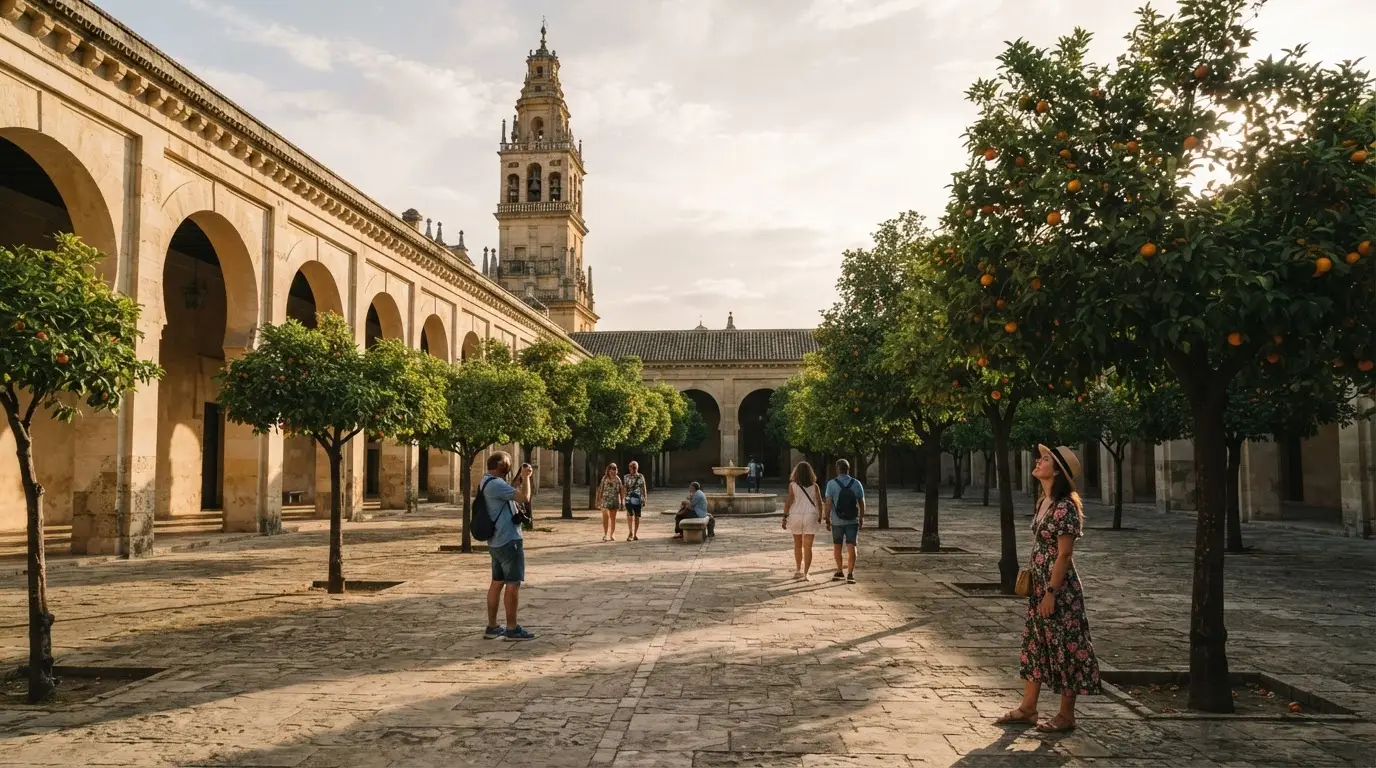
The patio completes the system. For its first three centuries, the Mezquita's courtyard was not paved at all; it was unpaved earth planted with rows of citrus and palm trees, fed by rainwater cisterns and later an aqueduct.[10] That idea, architecture organised around a shaded, irrigated, planted interior rather than an exterior facade, is the one that travels furthest into Dorne's own design, and it resurfaces at full scale two sections from here, in Seville.
Castillo de Almodóvar del Río: an Umayyad fortress becomes Highgarden
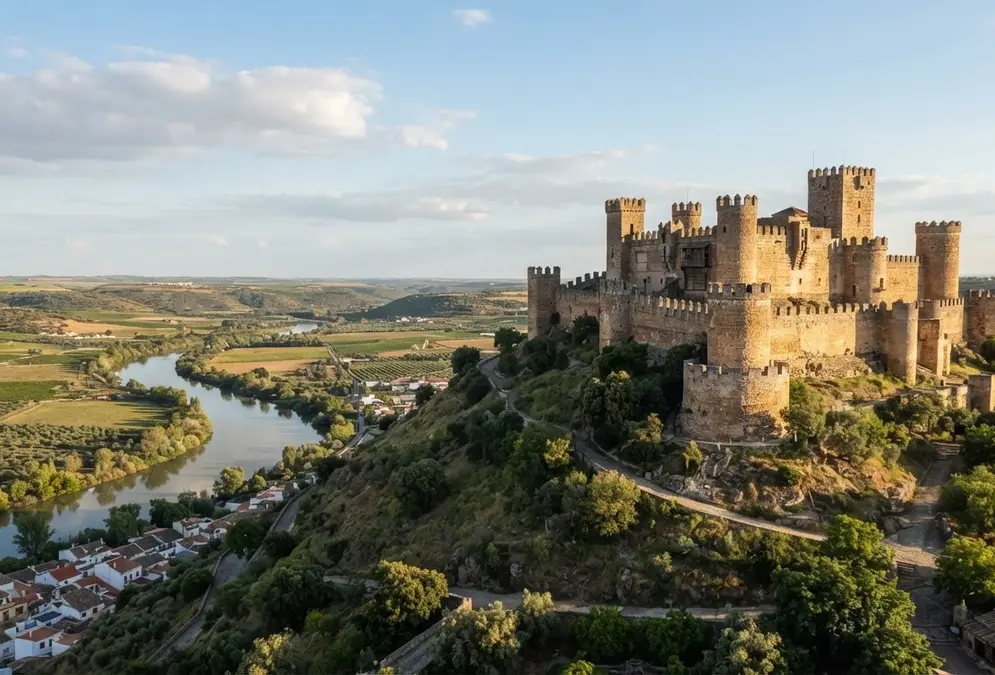
Castillo de Almodóvar del Río sits twenty kilometres downriver from Córdoba, and unlike the Mezquita it was never adapted for a different faith or a different century's taste; it has stayed a fortress. Arab engineers built it around 740 CE[2], early in the Umayyad presence in Iberia, and named it al-Mudawar, meaning "the round one" or "the secure one."[11] The name describes the design: a compact, defensible silhouette built to control the river below rather than to impress a court.
Things to do · Activity
Almodóvar Castle
Game of Thrones fortress 30 min from Córdoba. Medieval dungeons, Umayyad towers and panoramic Guadalquivir views await inside the ramparts. Book from €11.
That defensive logic is legible in the site itself. The castle occupies a hill 252 metres above the Guadalquivir, which was navigable by small boats in the medieval period, giving whoever held the castle control over river traffic and the approach to Córdoba from the west.[12] Centuries of Christian and Almohad rebuilding layered onto the original Umayyad core, which is part of why the silhouette reads, on camera, as more castle than mosque — crenellated towers rather than horseshoe arches — even though the site's origin is exactly the same Umayyad moment that produced the Mezquita.
HBO used that silhouette for Highgarden, the ancestral seat of House Tyrell, filming Season 7 scenes there in November 2016.[3] It is worth being precise about what this location is and is not: Highgarden is the Reach, not Dorne, and the two kingdoms are meant to look different in-world. What the castle demonstrates instead is the range of the same regional building tradition — an Umayyad fortress can double as a Reach castle because Andalusian, Umayyad-inherited masonry reads, to a modern camera, as generically "medieval Mediterranean" rather than specifically Dornish. The Almodóvar Castle tour covers the site's full building history, including the sections that predate the Umayyad rebuild. HBO's 2016 shoot[3] was also far from the fortress's screen debut — the castle's film history before Game of Thrones traces a longer chronology of earlier shoots.
Water gardens: the patio tradition and Seville's Alcázar
The Water Gardens of Dorne, the palace interiors most associated with House Martell, were filmed not in Córdoba but at the Real Alcázar of Seville, beginning in October 2014.[13] The Alcázar is a 14th-century Mudéjar palace: built for a Christian king, Pedro I, but built by Muslim craftsmen using the same structural and decorative vocabulary as the Mezquita, two centuries after Córdoba's caliphate had already fallen. Production chose it for the Water Gardens because, by the time HBO went looking, no other standing building in Spain combined interior courtyards, reflecting pools and carved plasterwork at the same scale.
Recommended tours
Tours are selected for quality, not commission. We earn a small fee if you book — at no extra cost to you.
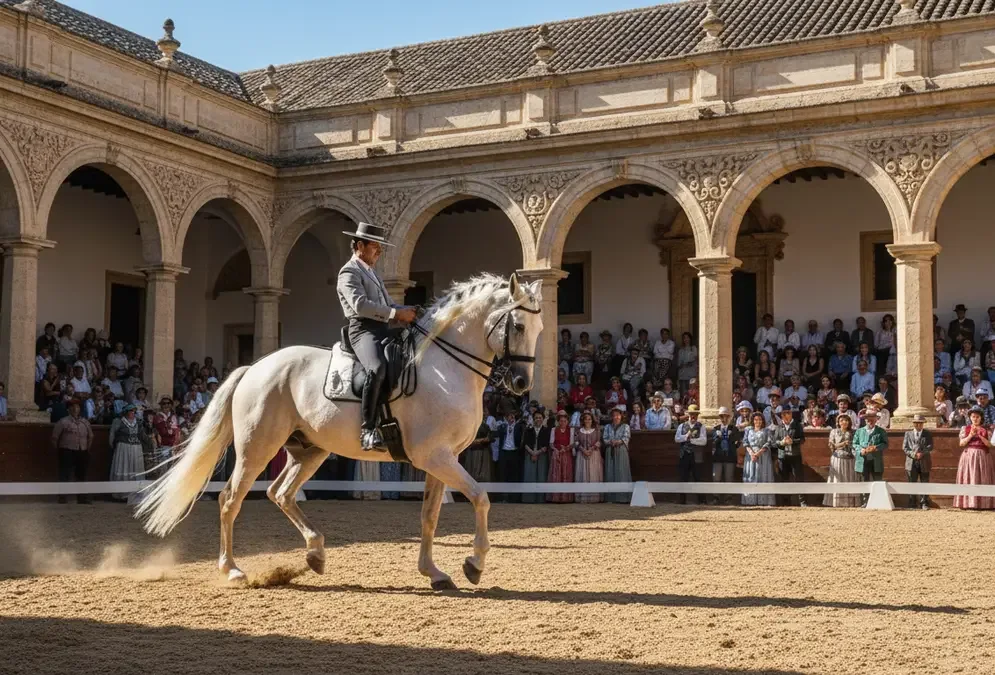
The design logic underneath the Alcázar's courtyards is the same one the Mezquita established first: a patio andaluz built around water and shade rather than a facade meant to be seen from outside. Carved wooden artesonado ceilings, tiled dados, and courtyards planted for the sound of running water as much as for the view all descend from the same 9th- and 10th-century Umayyad workshops that built Córdoba's mosque courtyard. Riley's team did not need to invent a "Dornish" decorative language from scratch; they needed to recognise that one specific regional tradition already supplied exactly the mood the scripts asked for, heat, water, enclosed privacy, and film the buildings that still demonstrate it.
Deep dive · Article
The Mezquita Handed Its Orange Courtyard to Flower Artists
How the Patio de los Naranjos went from a caliphal court of ablutions to a garden of orange trees, and how the Cabildo lends it to FLORA's living-flower art.
That is the throughline across every Córdoba-adjacent Game of Thrones location: not that the show is set in Spain, but that Dorne's fictional architecture and Andalusia's real architecture solve the same problem, because they were built for the same climate using inherited pieces of the same structural toolkit.
The Long Bridge of Volantis, and what the pattern actually shows
Córdoba's clearest on-screen cameo has nothing to do with Dorne at all. The Roman Bridge, a functioning 1st-century structure still crossing the Guadalquivir on its original Roman piers, was digitally extended and multiplied by CGI to become the Long Bridge of Volantis in Season 5, in the aerial shot of Tyrion Lannister and Varys traveling from Pentos to Meereen.[14] It is Essos, not Westeros, and it is not Moorish architecture at all; the effects team simply needed a very long, very old bridge, and Córdoba already had one standing.
Put the three locations side by side and the pattern is not that Game of Thrones filmed Dorne in Córdoba. It did not. It is that a production designer trained as an architect, working from a stated method of looking at "the places I have traveled, the buildings I have seen," kept returning to the same stretch of the Guadalquivir valley, because it is where the Umayyad Caliphate concentrated nine centuries of experimentation with arches, domes and water. Riley's Dorne borrows the vocabulary; Córdoba's own buildings, filmed for entirely different kingdoms, borrow the same source twice more.
| Westeros location | Real filming site | Architectural feature borrowed |
|---|---|---|
| Water Gardens of Dorne | Real Alcázar, Seville | Patio andaluz, artesonado ceilings |
| Highgarden (the Reach) | Castillo de Almodóvar del Río | Umayyad-founded fortress silhouette |
| Long Bridge of Volantis | Roman Bridge, Córdoba | 1st-century Roman piers, CGI-extended |
| Sunspear's towers and domes | Mezquita-Catedral, Córdoba | Muqarnas domes, horseshoe arches |
None of that makes Córdoba the city where Dorne was filmed. It makes Córdoba the place where the architecture Dorne is built from was invented, three centuries before anyone thought to put dragons over it.