
The jewel story, and where it is told
The legend travels on signs and records. The association says the bridge's own signage carries the Donadas name,[5] and the institute's online entry gives the women's donation as the reason for the names.[4]
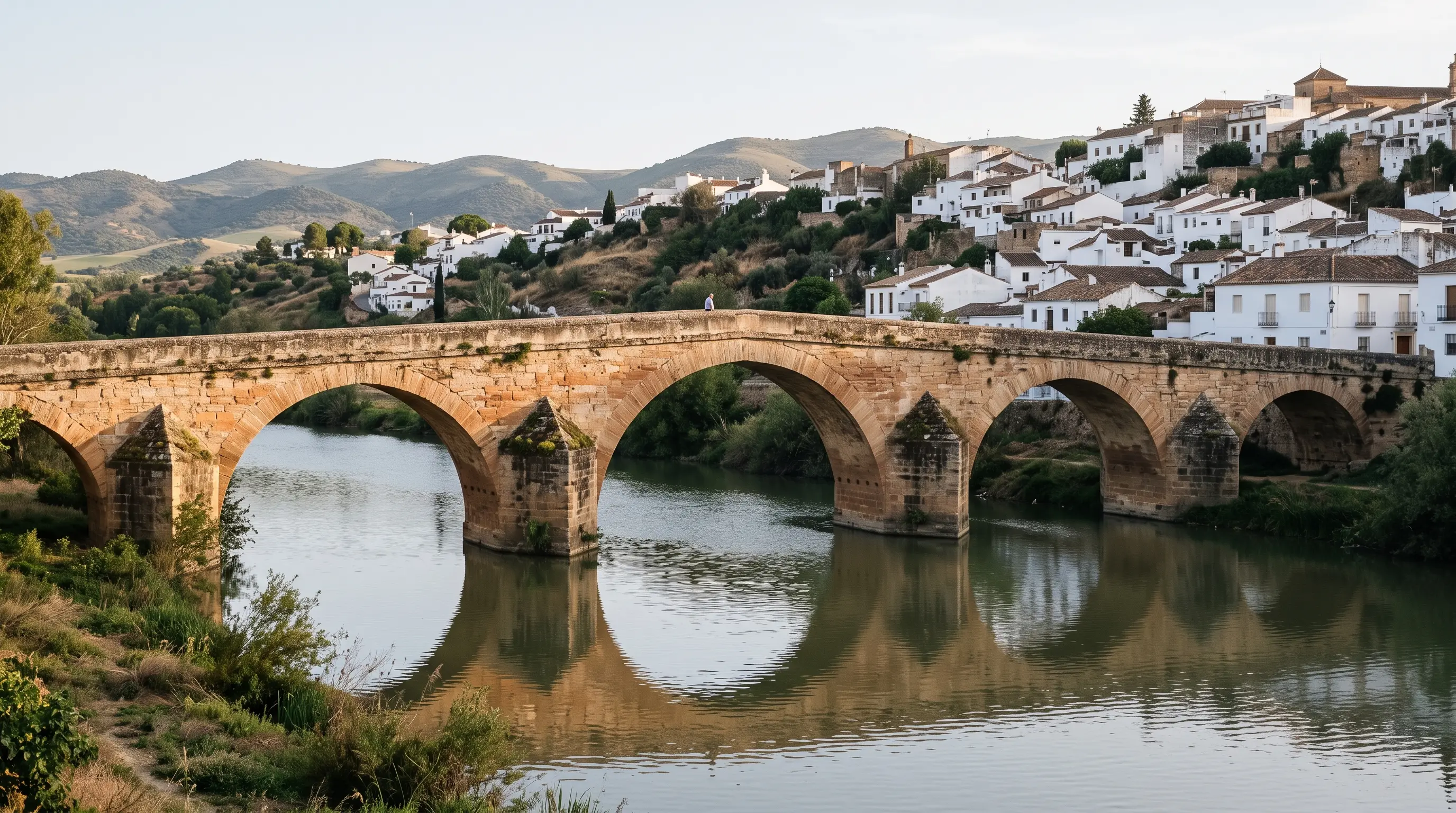
Puente de las Donadas and Puente de las Doncellas both point to donors and maidens: the women of Montoro, so the tale runs, gave up jewellery and belongings to pay for the crossing. The bridge spans the Guadalquivir at Montoro, 41 km from Córdoba city,[6] beside the river loop described in Meandro de Montoro, and links the town with the district of El Retamar.[7]
A tourism page on Montoro's Roman-era route is more careful. It calls the jewel sale popular legend and names the town council as a payer.[8]
The institute's entry also carries the sentence that undercuts its own legend. Costs, it says, were met by the town council and by the neighbours, who were excused some taxes.[1]
A 1980s name, as ABC reported it
The origin claim comes from a 2017 report in ABC Sevilla. It says the name Puente de las Donadas, or Doncellas, was first used in the 1980s, during the term of the socialist mayor Antonio Cañas Pavón.[3]
Francisco Aguilar of the local heritage association gave the reasoning. Whoever began using the name did so because it "sounded good and had a certain basis in history".[9]
Explore nearby · Monument
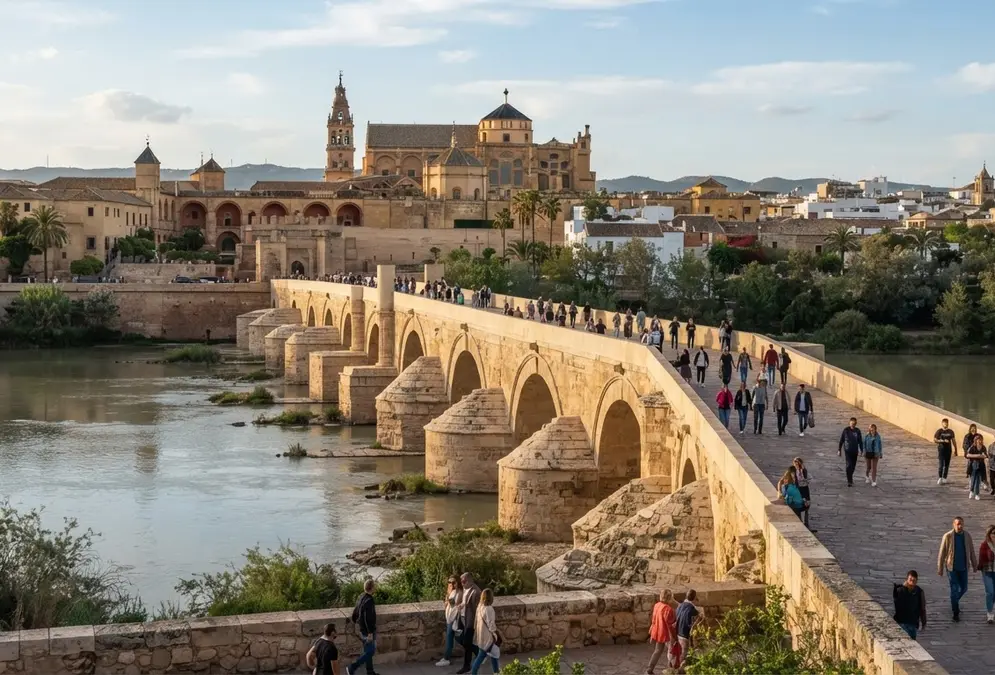
Puente Romano de Córdoba
Puente Romano de Córdoba: 16 arches over the Guadalquivir since the 1st century BC. Best viewpoint for the Mezquita at sunset. Game of Thrones location. Free.
The report adds that municipal archive documents from the 19th century call the structure Puente Mayor, the name with a real historical basis.[10]
In 2017 the association petitioned the town council to drop both "Donadas" and "Doncellas".[2] Undoing the habit would be hard, it conceded. The error is widespread, even on the bridge's own signs.[5]
Two cautions apply. The claim rests on one newspaper report quoting one association, so it stands as a documented local assertion, not a settled finding. And the 1980s date marks when the name is said to have appeared; it cannot show that no one told the jewel story by word of mouth earlier. No earlier printed mention turned up in the sources checked, which is absence, not proof.
One early printed description is silent on jewels. Méndez de Silva's 1645 account of Montoro, quoted in a regional heritage dossier, praises a village with a strong castle and a "buena puente".[11] A passing compliment would hardly carry every local tale, so the silence settles nothing.
What the record says paid for it
Work began in 1498 on four semicircular arches of red molinaza stone, to plans attributed to the Brussels-born architect Enrique Egas.[12] A local master builder, Pedro Fernández, is the one credited with directing the works.[13]
On the money, the sources point in several directions:
- The town council and the neighbours, who were relieved of some taxes.[1]
- The Crown, which in a 1501 privilege exempted the town from lodging and supplying troops, in gratitude for the bridge.[14]
- Other towns and institutions that collaborated, according to a 2006 University of Córdoba study of the Crown's authorising letters and the contracts with carters and masons.[15]
The heritage entry's funding sentences name the council and the neighbours and say nothing of a jewel subscription, though the same entry repeats the legend elsewhere.[4] The 2006 study is visible here only through its summary, so its silence on jewels means little.
The tax relief and the billeting exemption read like a bargain between town and Crown, not a collection among the women. A span of 180 metres, nine wide, with the keystone of the main arch 18 metres above the water,[16] was a regional undertaking, which suits a cost shared across towns and institutions.
The bridge's effect on the river is better documented than its donors. The heritage institute's landscape dossier says it spurred mills, aceñas, fulling mills and norias nearby.[17] The wider story of those machines is in Guadalquivir Mills: Three Civilisations, One Riverbank.
What stays open, and how to read the name
Three questions are still unsettled:
- Whether anyone told the jewel story before the 1980s. A gap in print is not a gap in conversation.
- How the 1498 works were funded in detail, which the archives and the 2006 study cover better than any summary.
- Egas's own role, which remains an attribution, not a signature.
The practical consequence is small but real. On a sign, a tour page or a heritage database, treat "Donadas" as the name the association disputes and Puente Mayor as the one with 19th-century archive backing.[10]
Deep dive · Article
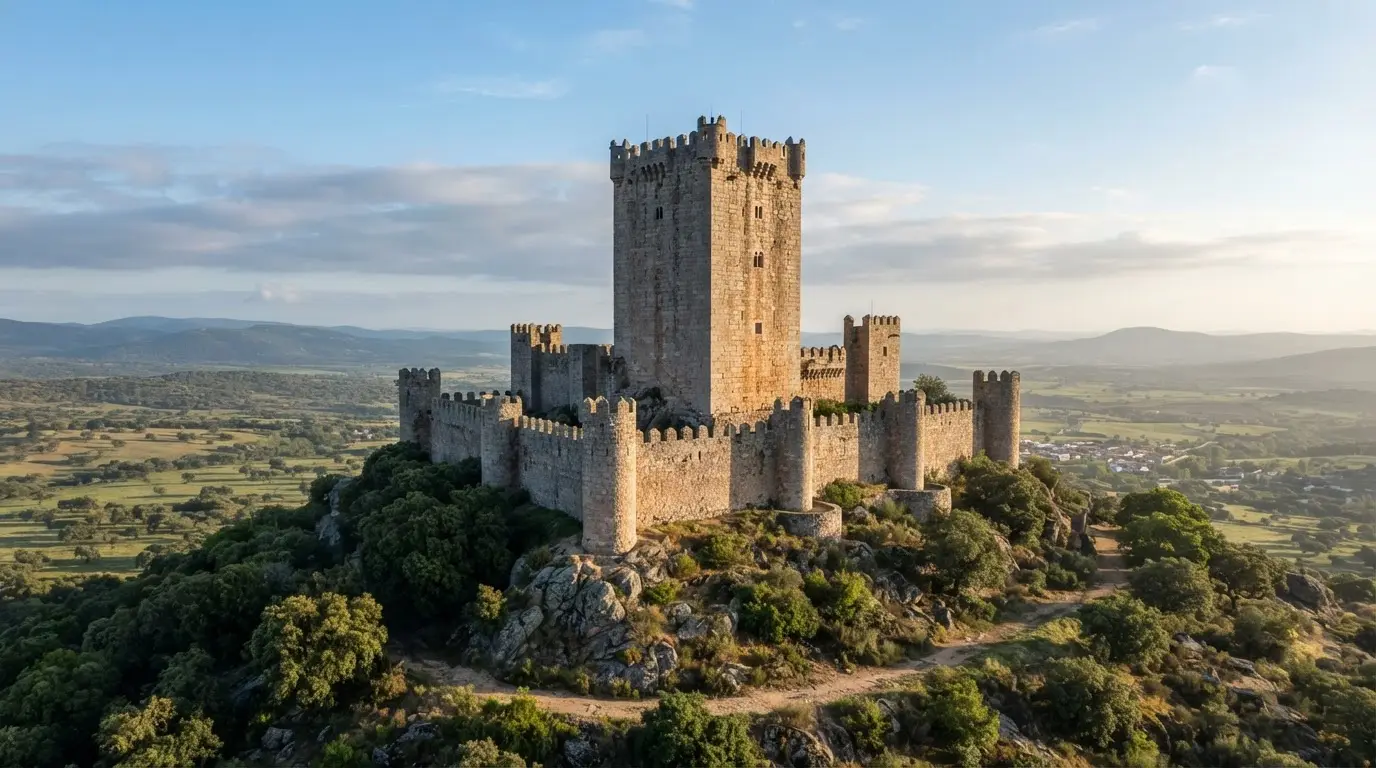
47 Metres Tall and Almost Unknown: Spain's Tallest Keep
Belalcázar Castle's 47 m keep is listed by the Junta de Andalucía as Spain's tallest. How it grew, what to see inside and how to book the free guided visit.
Recommended tours
Tours are selected for quality, not commission. We earn a small fee if you book — at no extra cost to you.
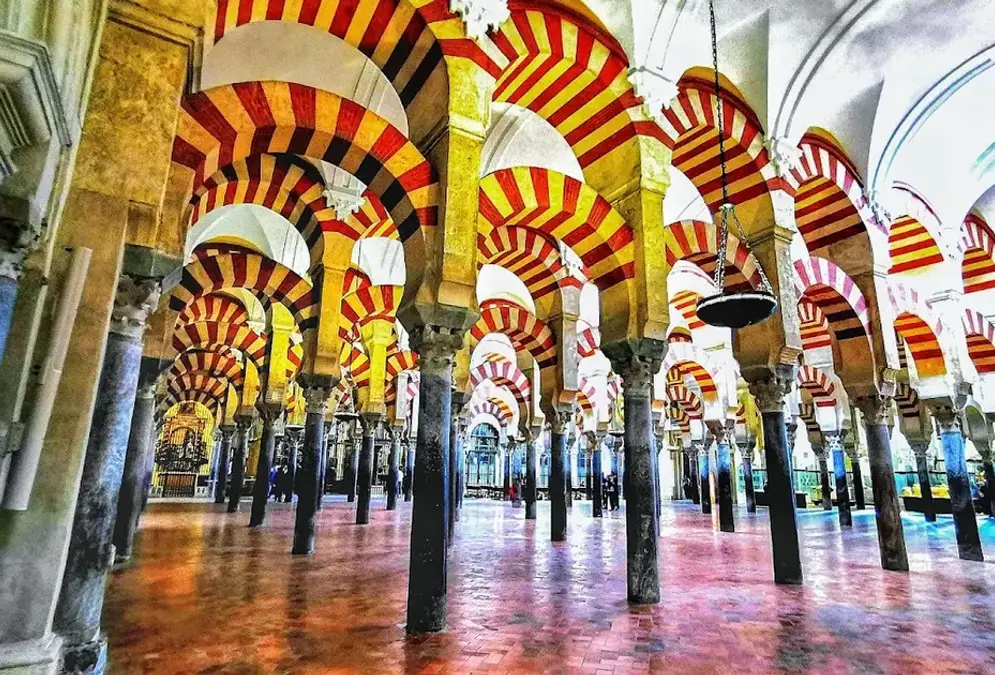
Montoro rewards a visit whatever the label says. For a bridge in Córdoba city whose name also outruns its stones, see Roman Bridge Córdoba: Why It's Mostly Not Roman.
The sources describe a town, its neighbours, other towns and a Crown that granted relief from some taxes and from billeting in return for a crossing. Whether the jewels ever happened is the one question they leave open.