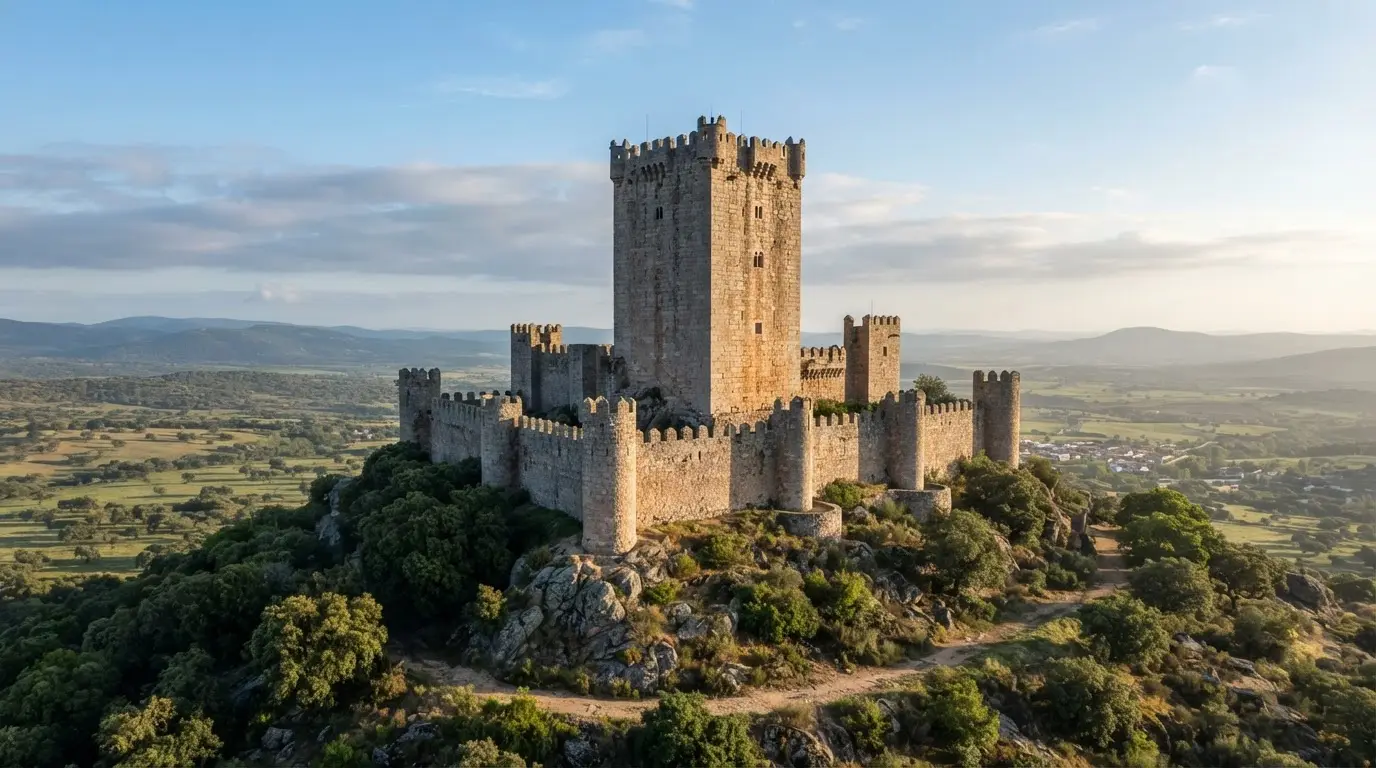

What the 47 metres actually rest on
The figure comes from the Junta de Andalucía's own listing of the castle. It places the torre del homenaje at the centre of the south-east wall, 47 metres high and "the tallest in Spain"[1]. That is the entire claim. No source we found says what the 47 metres was measured against, or that every Spanish keep was ever compared.
The only rival with a published height in our research is the keep of Castillo de la Mota in Medina del Campo, at 38 metres[2]. Belalcázar's tower would stand nine metres above it, roughly three storeys of a modern block. Other famous keeps have no figure we could verify, so this article keeps the wording as an official listing, not a league table.
Most visitors to the province go to the Mezquita or, if they are film fans, to Almodóvar del Río Castle's screen history. Belalcázar has no such billing. That is the best reason to go.
A keep that was raised after it was built
The hill was fortified long before the present tower. The Andalusian heritage institute IAPH describes an emirate-era medina called Gafiq founded on the spot[3], and the Junta's own history of the enclosure says the first documents of a fortress date to the ninth century[4].
Explore nearby · Monument
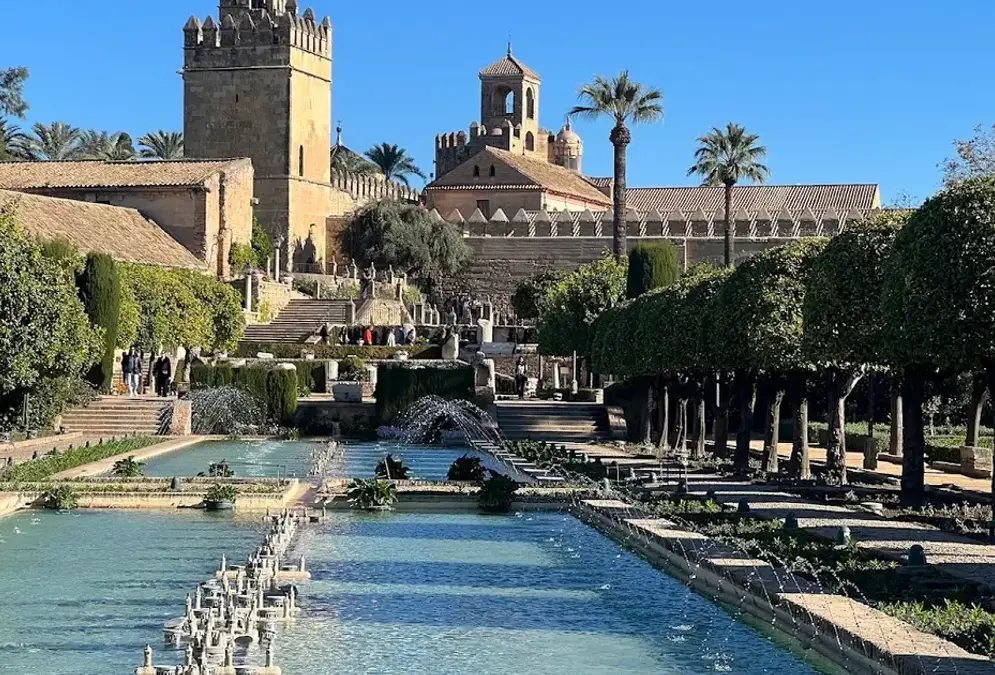
Alcázar de los Reyes Cristianos
Alcázar de los Reyes Cristianos, Córdoba: free entry on Tuesdays. A 14th-century fortress-palace with terraced Moorish-inspired gardens and Roman mosaics.
The castle you can climb is a different matter. In 1444 Juan II ceded the lordship of Gahete to the Master of Alcántara[5], and popular accounts hand the building to Gutierre de Sotomayor. IAPH says the traditional attribution rests on no written document[6]. Its reading is that construction is likelier after Gutierre's death in 1453, under Alfonso de Sotomayor and Elvira de Zúñiga[7].
Elvira's contribution is the one that matters for the record. The upper two floors of the keep were added in her time, lifting it to 47 metres[8]. The footprint was set earlier, a square about 17 metres a side on the eastern flank[9]. So the claim to be tallest belongs to a tower finished as an extension, not drawn that way from the start.
What you see once you are up close
The Junta singles out the keep's decoration, an unusually showy set of windows, scaraguaitas (the corner sentry boxes) and a machicolation[10]. Eight shields bearing the Sotomayor emblem are carved on those scaraguaitas[11]. The tower is visible from several kilometres away[12], which is half the fun of approaching it.
The rest of the enclosure is easy to underrate:
- Eight towers in the main castle, four solid ones at the corners and four hollow ones at the centre of the walls[13]
- A wider outer wall with 21 towers in varying states of repair, linked by curtain walls[14]
- A keep with six floors, the fourth and fifth still roofed with vaults and showing traces of coats of arms[15]
Compare it with Medina Azahara, the caliphal city that Córdoba visitors do know. That is a ruin read from its foundations. Belalcázar is a standing fortress of a later age, built after the mid-fifteenth century, with its stairs and thick granite walls still there to climb.
Sieges, a dedication and a public purchase
The castle's name travelled far. Cervantes dedicated Don Quixote to the Count of Belalcázar and Duke of Béjar, though he spelled the title "Benalcázar"[16]. It is an odd literary footnote for a fortress that most guidebooks leave out.
The building also took punishment. In 1811 an English division besieged it and damaged it with artillery[17]. Ask your guide where the damage shows.
Deep dive · Article
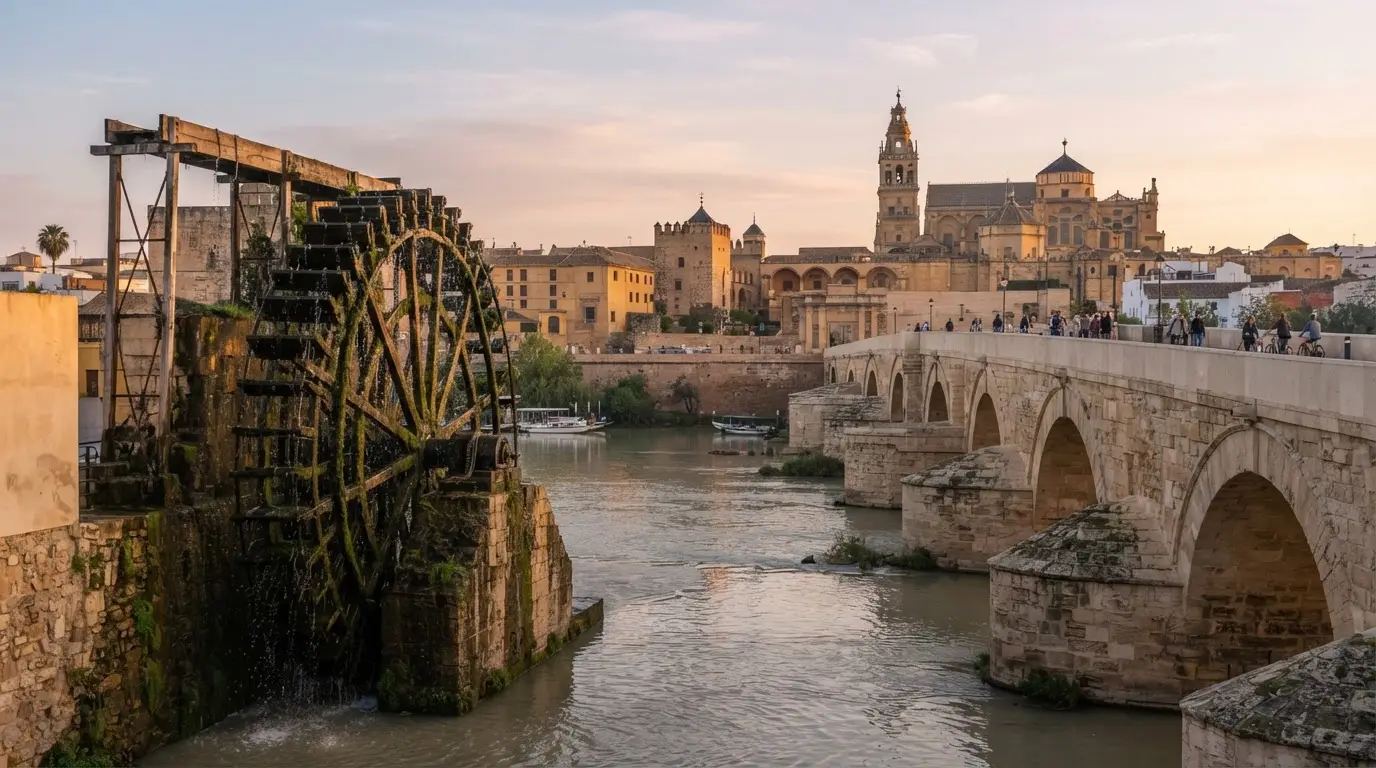
Albolafia waterwheel history: Abd al-Rahman II's Córdoba
The Albolafia waterwheel first appeared on Córdoba's coat of arms in the 1300s, vanished for centuries, and returned in 1983 — not Abd al-Rahman II's work.
The modern chapter is administrative. The Junta de Andalucía bought the castle in 2008 and delimited it as a Bien de Interés Cultural in 2009[18]. That is why it now has a managed, free visit, not a locked gate.
Visiting: free, guided and booked ahead
Visits are free of charge[19]. Each runs about an hour and a half and needs prior booking[20], and a slot holds at most 30 people[21]. Dates change by season, so check the current calendar on the Junta's Belalcázar page before planning anything around it.
The route covers the castle's surroundings, the parade ground, the climb up the keep and a viewpoint[22]. The booking window has opened each Monday at 9:00 for that week[23], though you should confirm that is still the rule when you plan.
Recommended tours
Tours are selected for quality, not commission. We earn a small fee if you book — at no extra cost to you.
The access is the part to plan for. The Junta rates it medium to high difficulty, with the approach crossing a private estate on historic cobbles and steep slopes[24]. Wear shoes with grip, not city sandals.
Do not turn up without a booking
The visit is guided and booking is required, so a drive out without a reservation can end at a closed gate. Confirm dates and slots on the Junta de Andalucía page first.
Photographers should ask first. The Junta says photographing or filming at the sites it manages needs authorisation[25]. If the keep is your reason for coming, raise it when you book. After that, stargazing near Córdoba shows what the province looks like once the sun is down, and Torreparedones is another reason to leave the city.