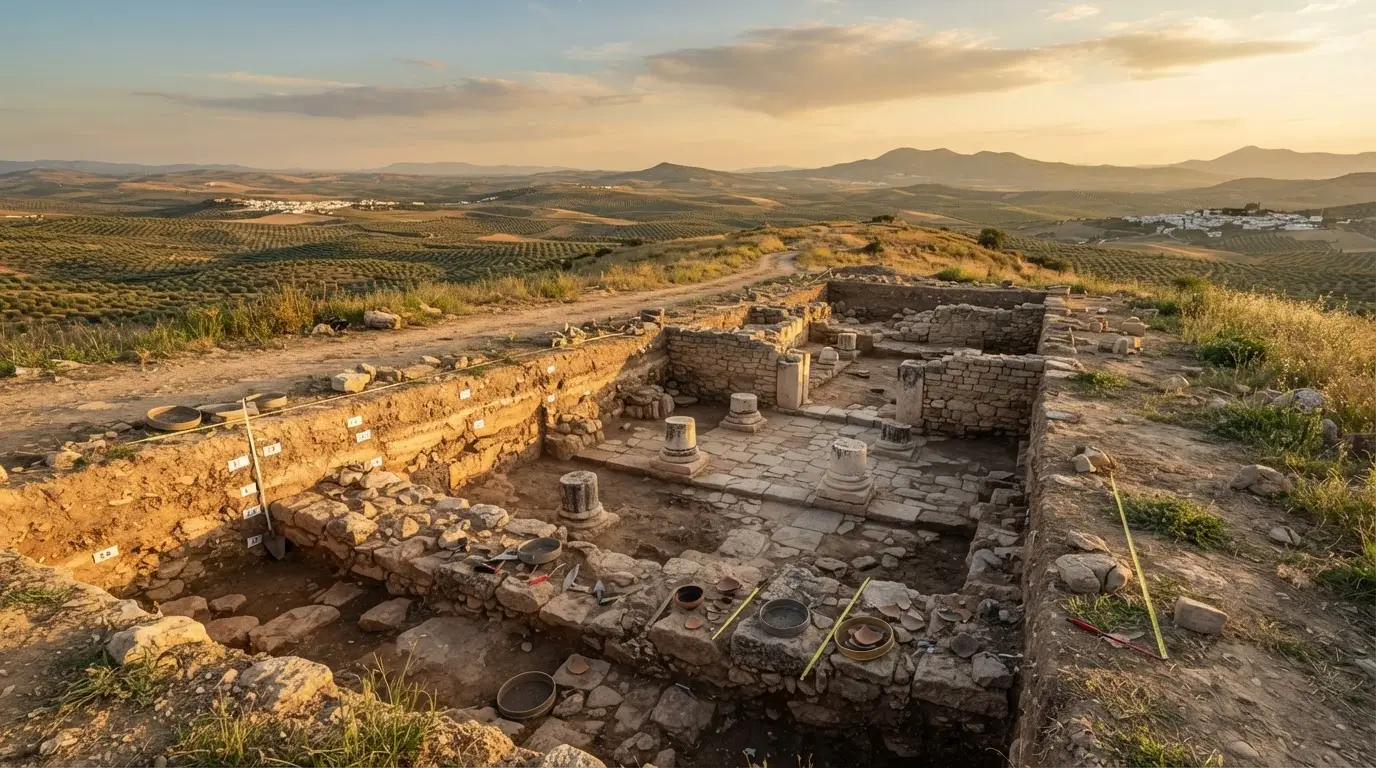

A hilltop that never emptied out
Cross the A-3125 between Baena and Cañete de las Torres and, near kilometre seventeen, a dirt track turns north off the tarmac and climbs to a plateau at 579.60 metres[5], the highest point in the whole Campiña cordobesa. Whoever settled here first chose the view on purpose.
Iberians raised a walled town on that plateau around 600 BC, a fortification whose perimeter ran close to a kilometre and enclosed more than ten hectares[6]. Rome later absorbed the town, and, if the traditional identification holds, expanded it into a colony. Muslim and Christian rulers held the same hill in turn after that, right up to a Reconquista-era castle on the frontier with Nasrid Granada. Nobody demolished what came before them; they dug their foundations into it, and that habit is the reason this hilltop still has something new to find.
The goddess with no face, and the sanctuary looters found first
Outside the walls, Iberians built a sanctuary to Caelestis, a goddess whose cult image had no human features at all. Worshippers venerated a betyl, a stone column topped with a leaf-carved capital, rather than a statue[7]. The sanctuary operated from the 3rd century BC into the 2nd century AD, and archaeologists have recovered more than 350 stone ex-votos there, mostly figures of pregnant women or simply legs, left by people seeking safe childbirth[8].
A second sanctuary, roughly 500 metres from the first, only came to light because someone tried to loot it. In September 2020, an emergency dig prompted by illegal digging on the hillside turned up a shrine with seven zoomorphic ex-votos shaped like horses, along with several nearby burials[9]. Archaeologists had walked this ground for years without finding it. It is not an isolated pattern: a 2025 survey turned up what may be pre-Roman wall foundations on the Guadalquivir near Córdoba[19], and a radiocarbon-dated bone found in the same province is being studied as possible evidence of a Carthaginian war elephant. This corner of Andalusia keeps giving up pre-Roman evidence long after anyone assumed the record was closed.
A colony grand enough to argue over its own name
By the early empire, if the traditional Ituci Virtus Iulia identification is right, Rome had turned the hilltop into a colonia substantial enough to support a forum, three separate bath complexes, and a macellum, a covered market that survives in only a handful of examples anywhere on the Iberian Peninsula[10].
Which Roman city this actually was is still argued over. In 2010, archaeologist José Antonio Morena López, who directs Baena's own historical museum, considered it very likely that Augustus himself promoted the town to colony status under the name Ituci Virtus Iulia, a colony Pliny the Elder placed within the judicial district governed from Écija[11] — though the same scholar has since leaned toward a different identification, discussed below.
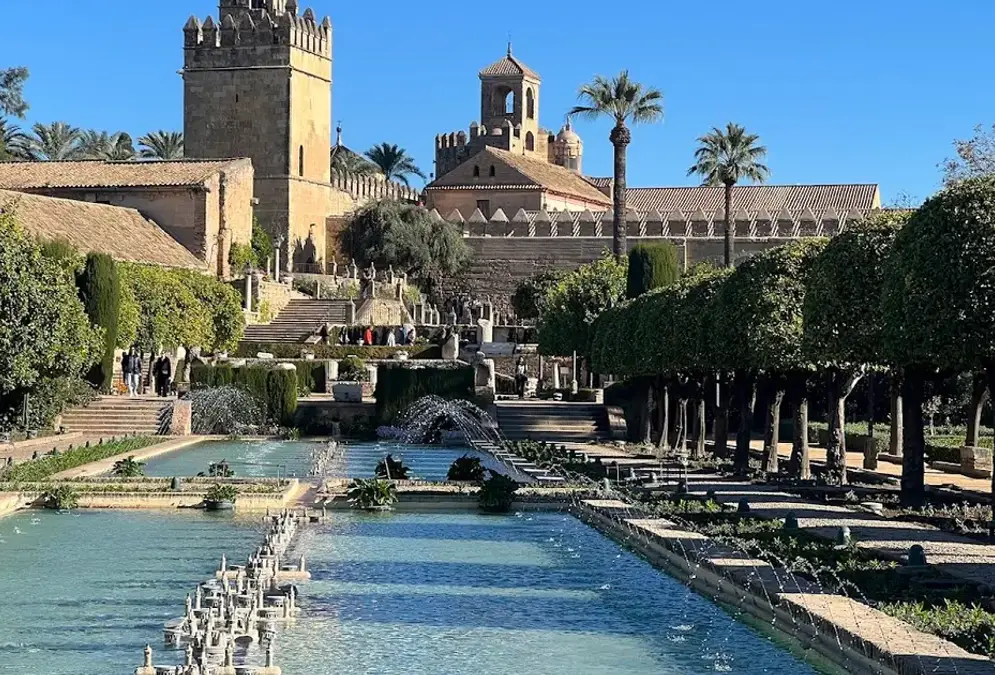
Explore nearby · Monument
Alcázar de los Reyes Cristianos
Alcázar de los Reyes Cristianos, Córdoba: free entry on Tuesdays. A 14th-century fortress-palace with terraced Moorish-inspired gardens and Roman mosaics.
Outside the walls sits the clearest evidence of how far Rome invested here: a pseudo-circular Roman amphitheatre, 64 to 67 metres across and in use from the early 1st to the late 2nd century AD[4]. Tourism materials describe its purpose plainly: gladiator combat, animal hunts, executions, the standard fare for a provincial arena of its size[12]. It was far smaller than Córdoba's own amphitheatre in the city centre, discovered decades later beneath the Rectorado building, but part of the same imperial habit of building arenas as a mark of civic weight.
A frontier again: martyrs, a castle, and an earthquake
Muslim rule held the hill from the Caliphate of Córdoba in the tenth century until at least the twelfth, known mostly through pottery and coin finds rather than standing structures. When Christian forces took it in the mid-13th century, the place was renamed Castro el Viejo, standing near the frontier between Castile and the Nasrid Kingdom of Granada[13].
A trapezoidal castle went up on the same ground by the late 13th century. It belonged for a time to King Alfonso X, who granted it to Fernán Alonso de Lastres, a commander of the Order of Santiago, for his service in the Reconquista[16].
Recommended tours
Tours are selected for quality, not commission. We earn a small fee if you book — at no extra cost to you.
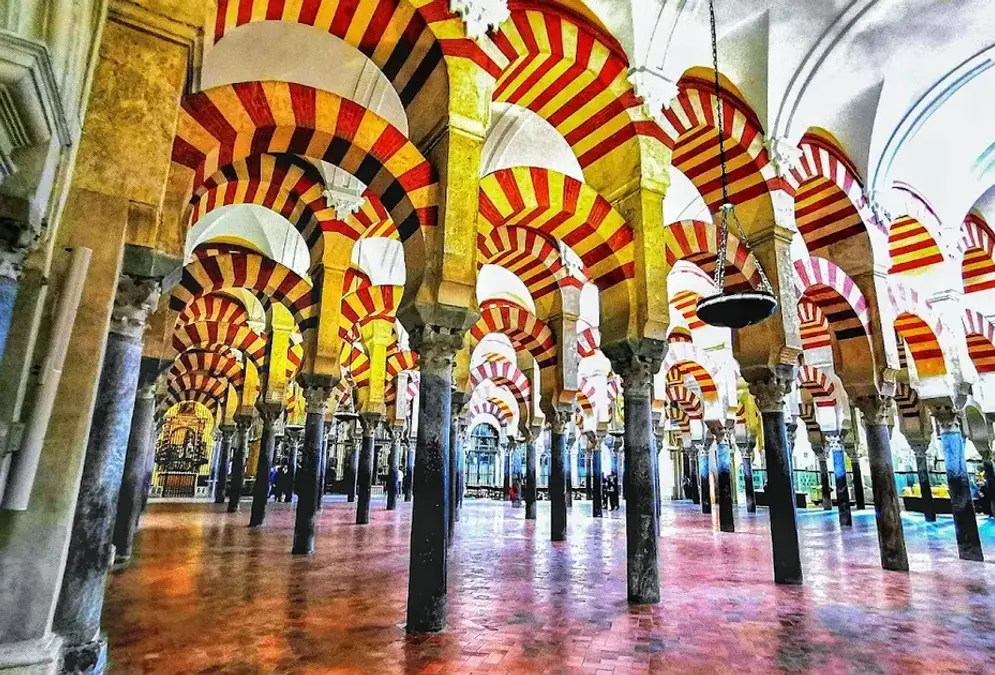
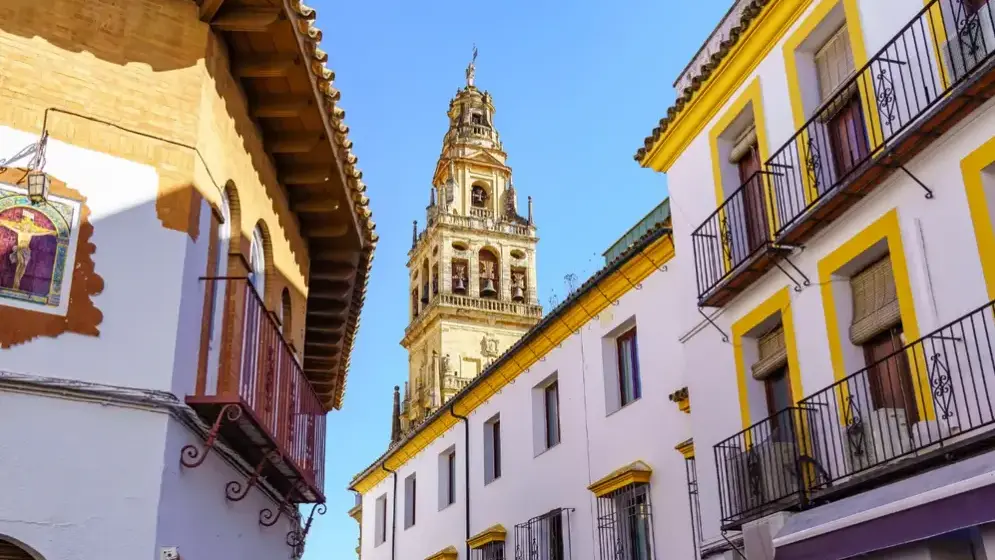
By the early 16th century the village below the castle had emptied out, and a hermitage dedicated to two Mozarabic martyrs went up in its place, built directly over the ruins of a Roman bath complex, the balneum calpurnianum: the fourth culture to build on this exact footprint, on top of the third. The 1755 Lisbon earthquake left it barely recognisable[14].
Ninety percent of the story is still in the ground
The park has welcomed visitors since 2011[2], but the archaeology itself moves far slower than the gate schedule. The last published estimate, from January 2021, put excavated ground at roughly 10% of the walled 10.5-hectare interior[3]. Do the arithmetic and that leaves something like nine hectares, most of five different cultures' worth of building, still under the topsoil today.
Most of what has already come out of the ground does not stay on the hill, either. Statues, inscriptions and other finds are catalogued and displayed mostly at the Museo Histórico y Arqueológico de Baena[15], though at least one piece, a marble togate statue, sits in Córdoba's own Archaeological Museum instead[20]. Readers curious how a nearby dig handles the same question can compare notes with Mellaria, another Roman-era excavation in Córdoba province.
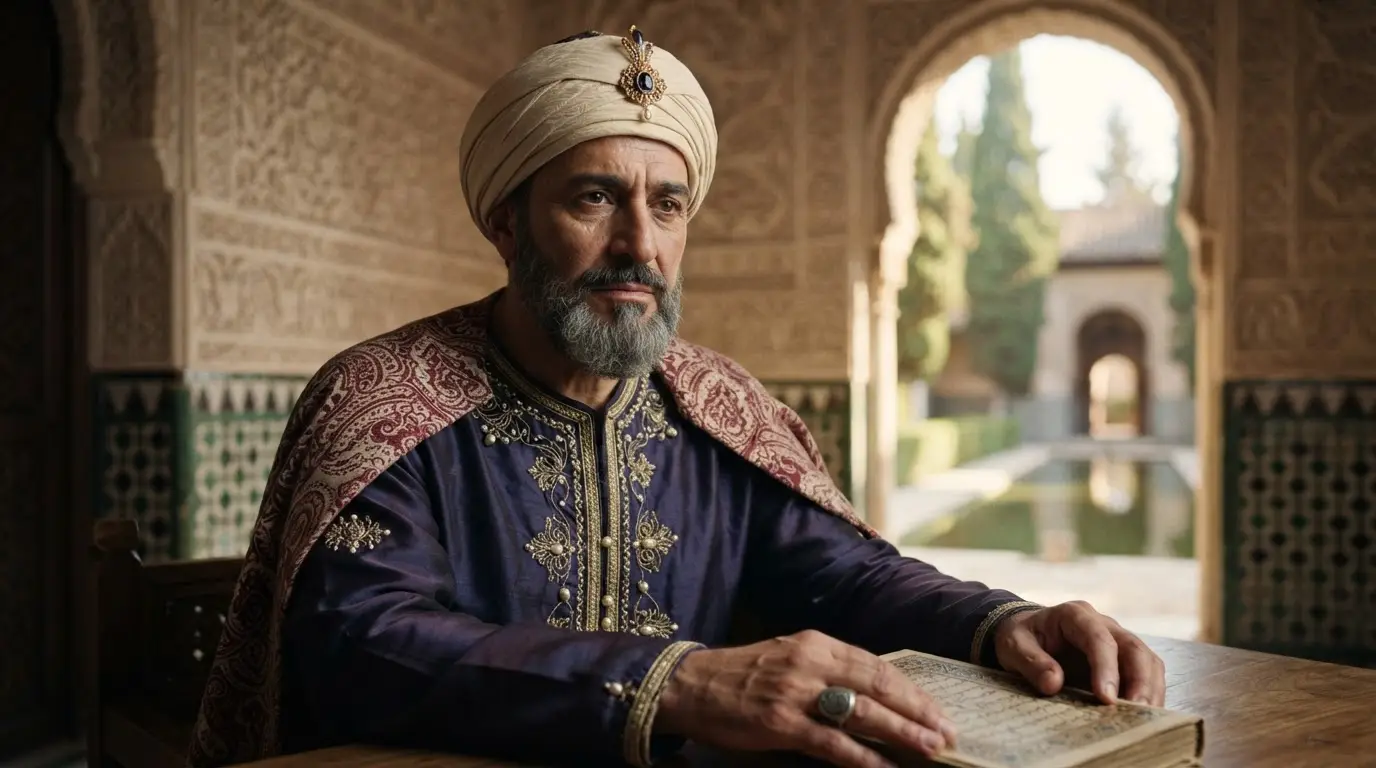
Deep dive · Article
Almanzor — The Man Who Dismantled the Caliphate From Inside
Almanzor ran Córdoba for 25 years without claiming the caliphate. Fifty-seven undefeated campaigns, the bells of Santiago, a purged library — and civil war.
Readers chasing the fuller sweep of Córdoba's layered past, Roman, Caliphal and medieval alike, can find it in Córdoba's best sites for history lovers. Even which Roman city stood on this exact hill is still argued about: most sources call it Ituci Virtus Iulia, but a 2022 find of lead pipework and coins pushed some researchers toward a different name, Bora, another town Pliny once mentioned[17][18]. Nobody has settled it, and with nine-tenths of the hill still unexcavated, that is only one of the questions still waiting under the ground.