food-lovers
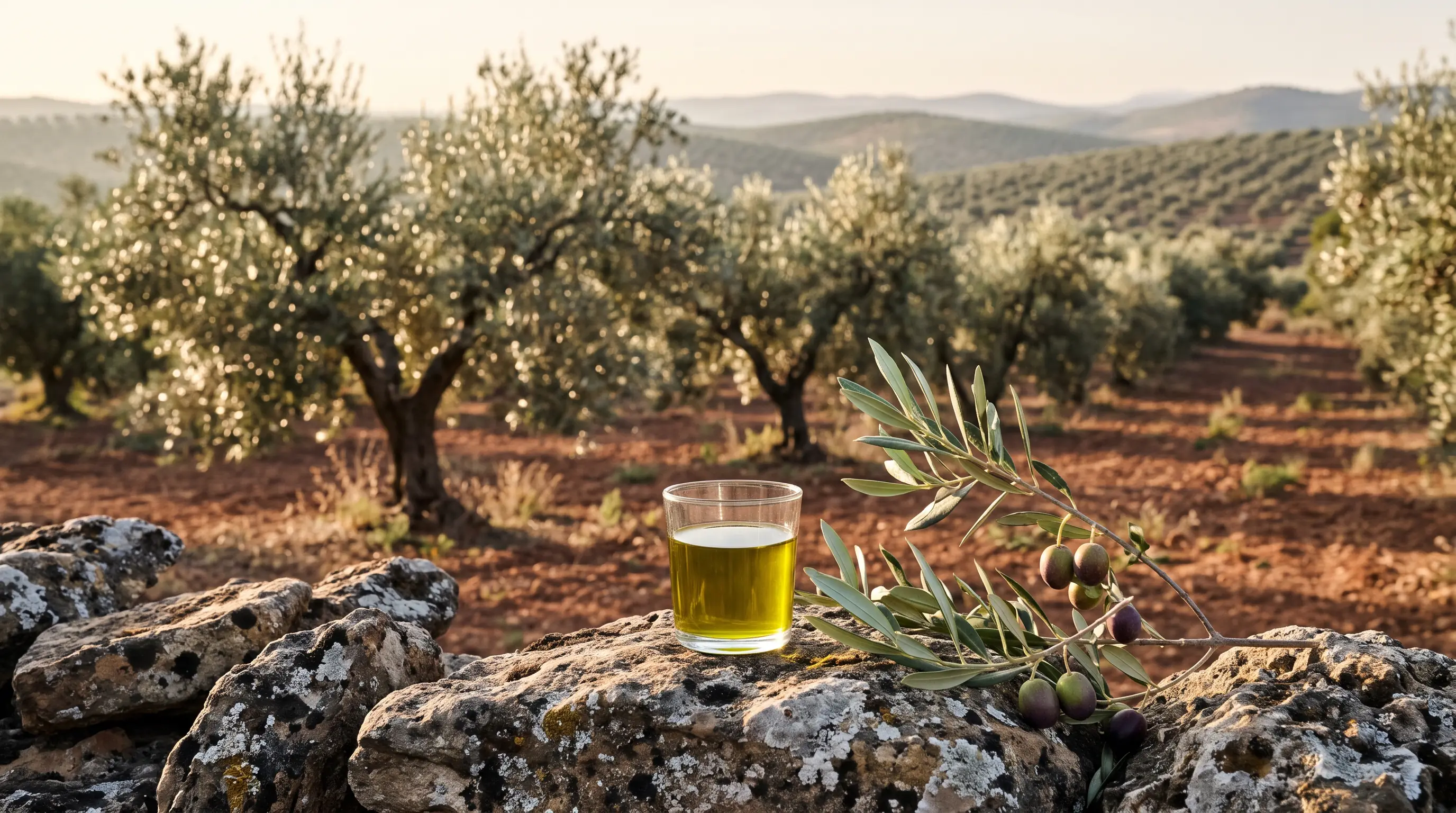
Baena olive oil DOP landscape: rows of olive trees on rolling hills near Baena, Córdoba province, with an unlabelled dark tasting glass of green extra virgin oil on a stone wall in soft morning light

Baena Olive Oil DOP: What the Label Really Checks

Baena olive oil DOP covers seven Córdoba towns, with sealed tanks, a tasting panel and numbered back-labels. What the label checks and what it leaves open.

Portrait of Pedro Del Pozo
Written by

Seven years covering Córdoba's gastronomy, taberna culture, and the Montilla-Moriles DO.

Published
A bottle of Baena DOP oil is a chain of custody more than a flavour claim: the olives must come from a grove registered with the regulating council inside the zone[1], and council inspectors seal the tank at the moment they take a sample for testing[2]. The label certifies where and how the oil was made, so it will not tell you which producer pours the best bottle.
Production zone area
80,000 ha
Seven Córdoba municipalities, per the Junta de Andalucía[4]
EU recognition
1996
Official EU recognition, after Spanish definitive recognition in 1987[8]
Harvest to mill limit
48 hours
Olives must be ground within 48 hours at registered mills[16]

Where Baena oil can come from

The Baena protected zone is seven municipalities of Córdoba province[3]. A grove one valley outside the line cannot supply the label, however good its olives.
  • Baena
  • Cabra
  • Castro del Río
  • Doña Mencía
  • Luque
  • Nueva Carteya
  • Zuheros
The Junta de Andalucía puts the production zone at 80,000 hectares[4], which is the land area of the zone and not the area under olives, and the council counts more than 15 million olive trees across the comarca[5]. The Junta counts about 8,500 growers, 17 mills and 30 bottling and marketing firms in the designation[28]. The groves sit at altitudes of 400 to 600 metres[6]. Plenty of hectares, then, but only the ones inscribed in the council's register count towards the label.
Zuheros, whose castle sits on a crag above the village, is the town on this list with a landmark worth the drive, and the whole municipality falls inside the zone.
The practical point for a buyer is that the border is administrative, not a taste line. Two bottles from neighbouring towns share the rules, the registers and the inspectors, but not necessarily the same grove, mill or harvest day, so the zone tells you where to look rather than what you will find.

How a town's oil became a protected name

The designation dates from an order of 2 March 1981, which recognised Baena provisionally and set up a provisional regulating council[7]. Definitive recognition followed by an order of 26 October 1987, and after almost another decade of effort the European Union recognised the name officially in 1996[8].
The Junta de Andalucía calls Baena the oldest Andalusian designation protecting extra virgin olive oil, a distinction it shares with one in Jaén[9]. Visitors who know the town for its Easter Baena tamborrada may not realise how old its oil name is.
In the last decade of the 19th century the comarca had 86 oil mills, and the council's history traces the use of the Baena name for oils to them[10]. The 1981 order did not invent a brand. It put paper around one that the comarca's mills had given the oils decades earlier.
The long road helps explain why the rules that follow are so procedural: a name that took until 1996 to win European recognition has every reason to keep its paperwork tight. For a reader, the upshot is simple. The name is a legal category with a paper trail, not a regional adjective.

Six varieties, one family profile

Baena DOP oil is extra virgin only, and the specification names six varieties[11]. Each carries a local name that rarely survives translation.
  • Picudo Carrasqueño de Córdoba
  • Lechin
  • Chorrúo (also called Jarduo, one variety under two names)
  • Pajarero
  • Hojiblanco
  • Picual
The council calls those six its main varieties and names 18 minor ones traditionally grown in the zone[29], 24 in all, which is how its description arrives at more than twenty and bills the result as the most multi-varietal extra virgin oil in the world[12], a boast that is the council's to make. Picudo is the flagship: in the council's telling it emerged as the standard-bearer of the lot[13].
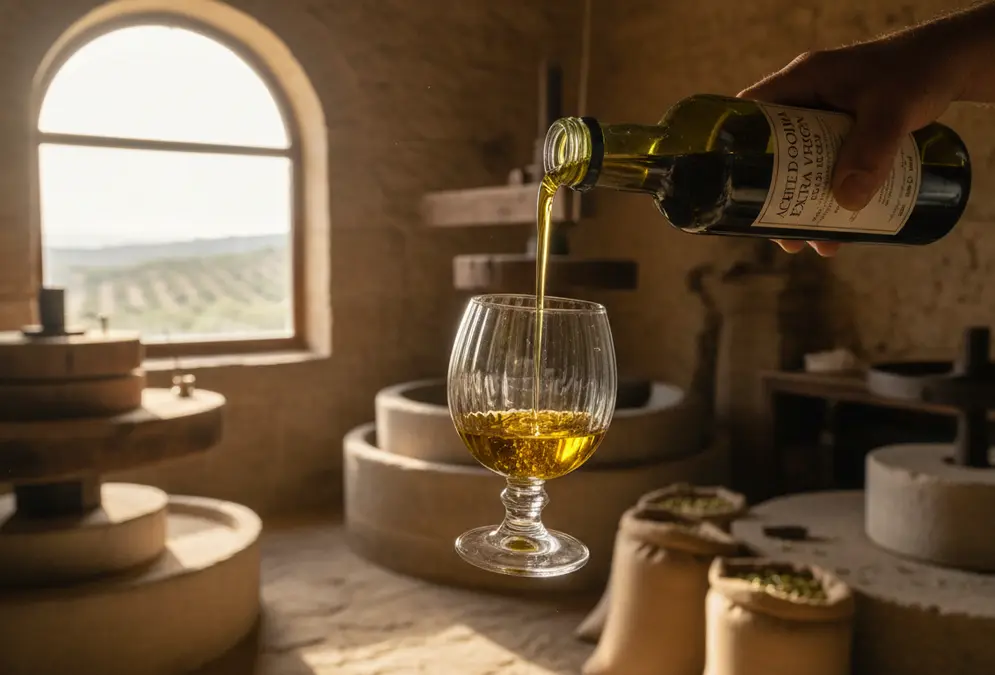
Golden extra virgin olive oil being poured into a tasting glass at a Córdoba province mill

Things to do · Activity

Olive Oil Tasting

Expert-led olive oil tastings at award-winning DOP mills near Córdoba. Taste oils from Baena and Priego de Córdoba — Spain's finest EVOO regions. From €15.

Expect intense green fruitiness with herbal notes, mint, almond and apple[14]. With a permitted list this wide, treat that as the family portrait rather than a promise about any single bottle, and judge a bottle by tasting it.
In practice the permitted list leaves producers room to differ. The label sets the floor on grade and process; the producer sets the style, so read the producer's own tasting note beside the back-label before you assume two DOP bottles will match.

Registered groves, registered mills

Everything starts with paper. The regulating council keeps three registers[15]:
  • Olive groves
  • Mills and storage
  • Bottling and marketing plants
Registration of the grove is only the first gate. Once picked and carried to a registered mill, the olives must be ground within 48 hours[16], a clock that starts at harvest and not when the bottles are filled.
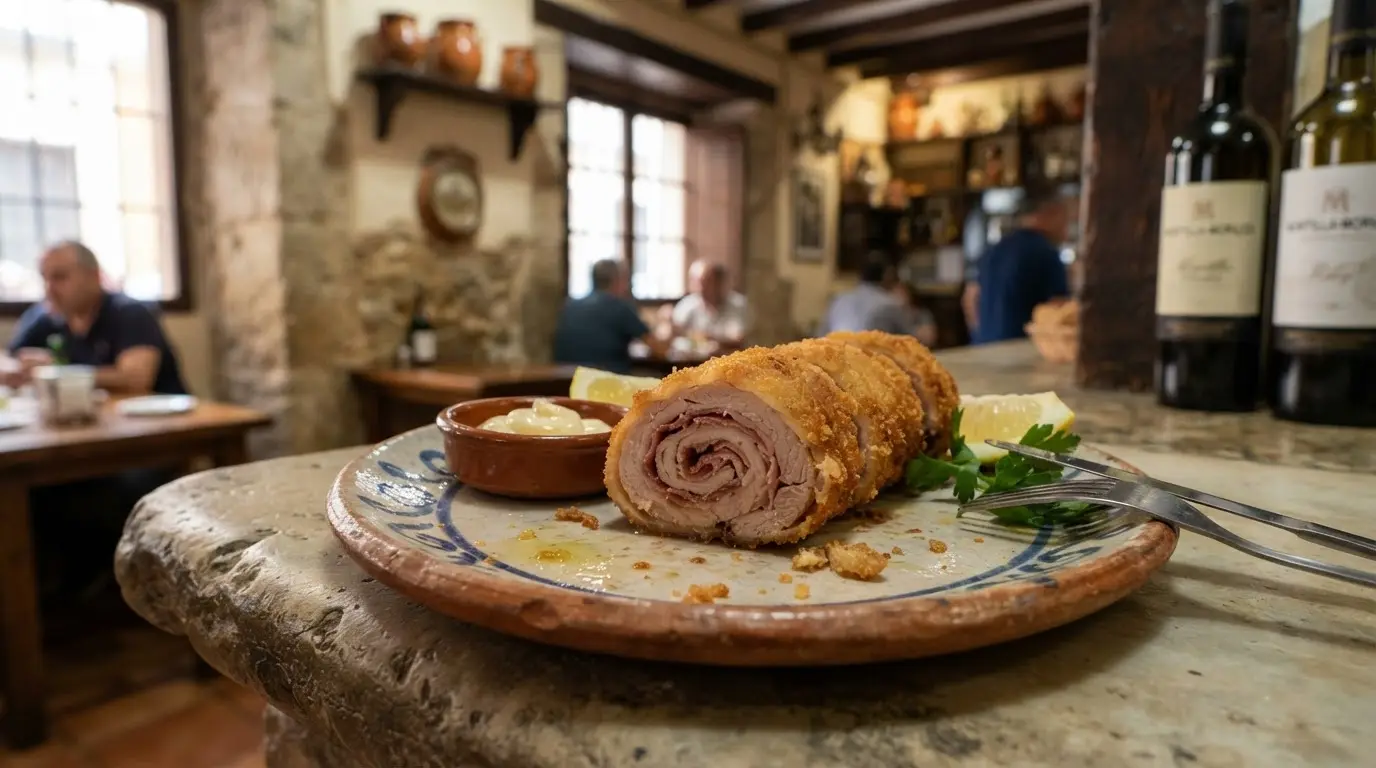
Flamenquín cordobés history: a golden crispy fried pork roll on a rustic ceramic plate at a traditional Córdoba taberna, sliced open to reveal the jamón serrano filling, natural Andalusian light on a stone counter

Deep dive · Article

A 1908 Córdoba Ad Offered Flamenquín. Is It the Dish We Eat Now?

The word flamenquín appears in a Córdoba newspaper in 1908; the only dated recipe story is Andújar 1939. What the record proves, and why both towns claim it.

The EU specification states the proof of origin in one line: authorised varieties, harvested in registered groves, with the oil extracted and bottled in registered industries under the council's control[17]. In practice that makes the PDO a guarantee about the supply chain first and about taste second.
For a small producer that is a lot of administration, and it is worth knowing before you judge a price: the PDO buys traceability, not a better harvest. A mill that registers its groves and bottles under the council's seal still depends on the weather and the picking date like everyone else.

The sealed tank and the tasting panel

The step the council is proudest of happens at the tank. Its inspectors, the veedores, take the sample and seal the tank under test, and the council says Baena is the only designation that follows this certification process by sealing its tanks[18].
Then the oil faces two tests. Baena is extra virgin only[26], so by EU rules its acidity is at most 0.8%[27], and the specification adds a peroxide index of no more than 15, moisture of 0.1% and impurities of no more than 0.1%[19]. Taste is a separate gate, handled by a panel of tasters under a panel head who assess the oil's sensory quality[20].
Behind both sits an audit standard: the council's certification department assesses conformity under ISO/IEC 17065:2012[21]. Storage matters as well, because oil kept in non-hermetic conditions forfeits protected status[22].
Read the sealed-tank line as the council's own description of its system and the rest as rules written into the specification and the regulation. Both are written down where anyone can check them.
None of this tells you whether a bottle will suit your palate, which is why the tasting panel exists as a separate gate. A bottle can sit inside every number in the specification and still be a quiet oil; the panel adds a human judgement that no chemistry limit can supply.

Reading the bottle in your hand

A genuine Baena DOP bottle carries two council fingerprints: a label authorised by the council and a numbered back-label issued by the council[23]. The words Denominación de Origen Baena are the headline, but the number is the evidence.
Every authorised container, whether glass, tin, ceramic or bag-in-box, carries a back-label under the council's control[24]. Only firms inscribed on the council's registers may use the denomination on labels, back-labels, seals or advertising[25].

On the shelf

  • The words Denominación de Origen Baena on a council-authorised label
  • A numbered back-label issued by the council
  • Extra virgin as the grade, since the PDO covers no other
  • A glass, tin, ceramic or bag-in-box container, each with its back-label
To test the claim on your palate, the olive oil tasting outings to DOP mills near Córdoba put Baena oil in a glass, and the Córdoba Olive Oil Festival puts producers side by side in the city. Check the back-label first and taste second: the number tells you where the oil was made, the glass tells you whether you like it.

Recommended tours

Tours are selected for quality, not commission. We earn a small fee if you book — at no extra cost to you.


One more habit worth keeping: choose the container that suits how fast you cook. A bag-in-box and a glass bottle are both legitimate under the rules, so the format is a storage choice, not a quality signal.

Frequently asked questions

What is Baena olive oil DOP, and is it the same as PDO?

Baena DOP is a protected designation of origin for extra virgin olive oil from seven municipalities of Córdoba province. DOP is the Spanish abbreviation of Denominación de Origen Protegida and PDO is its English equivalent, so the two terms name the same label. A regulating council manages it.

Which olive varieties are allowed in Baena DOP oil?

The specification names six varieties: Picudo Carrasqueño de Córdoba, Lechin, Chorrúo (also called Jarduo), Pajarero, Hojiblanco and Picual. The council calls these its main varieties and lists 18 minor ones grown in the zone, 24 in all.

Which towns are inside the Baena denomination?

Baena, Cabra, Castro del Río, Doña Mencía, Luque, Nueva Carteya and Zuheros, all in Córdoba province. The council's own page also names the hamlet of Albendín.

How does the regulating council check Baena oil?

Inspectors called veedores take samples and seal the tanks under test. The oil then goes through physico-chemical analysis and a tasting by a panel, and the council says it is bottled only after passing both.

What does the numbered back-label on a Baena bottle mean?

It is the council's mark that the oil passed through the registered, controlled chain. Back-labels are numbered and issued by the council, and every authorised container carries one.

Is Baena olive oil always extra virgin?

Yes. The protected oils must be extra virgin, so by EU rules their acidity is at most 0.8%, and a Baena DOP bottle cannot be a lower grade.

When did Baena become a protected designation of origin?

Provisional recognition came by order of 2 March 1981, definitive Spanish recognition by order of 26 October 1987, and official European Union recognition in 1996.

Can bulk Baena oil be sold under the PDO name?

Bulk oil may travel in drums or tankers, but the protection holds only between registered firms, with sealed containers and paperwork issued by the council. The council also runs an Integrated Control System that gives buyers and sellers identification guarantees for bulk-sold PDO oil.

Sources

29 references Show
  1. dobaena.com — Procedimientos y nuestras garantias (opens in a new tab)

    “sólo se puede elaborar “aceite con D.O. Baena”, de aceitunas de las distintas variedades y de los olivares que se encuentran en nuestra Zona, y registrados en el Consejo Regulador.”

  2. dobaena.com — Procedimientos y nuestras garantias (opens in a new tab)

    “solicitan la toma de muestras, precintando en este mismo momento los depósitos a analizar”

  3. Junta de Andalucía — Ficha Baena.pdf (opens in a new tab)

    “Comprende los términos municipales de Baena, Cabra, Castro del Río, Doña Mencía, Luque, Nueva Carteya y Zuheros, todos de la provincia de Córdoba.”

  4. Junta de Andalucía — 652915 (opens in a new tab)

    “y aglutina una superficie de 80.000 hectáreas”

  5. dobaena.com — La comarca (opens in a new tab)

    “Una comarca con más de 15 millones de olivos, unidos a su paisaje y a sus gentes.”

  6. foodswinesfromspain.com (opens in a new tab)

    “The olive groves are located at altitudes ranging from 400 to 600 m (1,312 – 1,968 ft).”

  7. dobaena.com — El consejo regulador (opens in a new tab)

    “Orden de 2 de Marzo de 1981, por la que se reconoce, con carácter provisional, la Denominación de Origen Baena, y se constituye su Consejo Regulador Provisional.”

  8. dobaena.com — El consejo regulador (opens in a new tab)

    “el reconocimiento definitivo mediante la Orden de 26 de octubre de 1987, y tras casi otra década de esfuerzos el reconocimiento oficial por la Unión Europea en 1996.”

  9. Junta de Andalucía — 652915 (opens in a new tab)

    “tiene el honor de ser la más antigua de Andalucía que amparan aceites de oliva virgen extra junto a otra de Jaén”

  10. dobaena.com — Nuestra historia (opens in a new tab)

    “En la última década del siglo XIX existían esparcidos por la comarca 86 molinos de aceite”

  11. Junta de Andalucía — Ficha Baena.pdf (opens in a new tab)

    “Aceite de oliva virgen extra obtenido de aceitunas de las variedades Picudo Carrasqueño de Córdoba, Lechin, Chorrúo o Jarduo, Pajarero, Hojiblanco y Picual.”

  12. dobaena.com — Descripcion y caracteristicas (opens in a new tab)

    “hasta un total de más de veinte variedades que lo convierten en el aceite de oliva virgen extra más plurivarietal del mundo.”

  13. dobaena.com — La comarca (opens in a new tab)

    “el Picudo o Carrasqueño de Córdoba surgió como adalid de todas ellas.”

  14. foodswinesfromspain.com (opens in a new tab)

    “Extra virgin olive oil from Baena's Denomination Origin is an intense fruity green olive oil with herbal notes, mint, almond and apple.”

  15. dobaena.com — REGLAMENTO CRDOP BAENA 2018.pdf (opens in a new tab)

    “Por el Consejo Regulador se llevarán los siguientes Registros: a) Registro de Olivares. b) Registro de Almazaras y Almacenes. c) Registro de Plantas Envasadoras y Comercializadoras.”

  16. foodswinesfromspain.com (opens in a new tab)

    “Once collected and transported to registered mills, the olives must be ground within a maximum period of 48 hours.”

  17. Junta de Andalucía — Ficha Baena.pdf (opens in a new tab)

    “Aceitunas de variedades autorizadas, recolectadas en olivares inscritos; se extrae el aceite y envasa en industrias inscritas bajo el control del Consejo.”

  18. dobaena.com — Procedimientos y nuestras garantias (opens in a new tab)

    “la Denominación de Origen Baena es la única Denominación de Origen que sigue este riguroso proceso de certificación precintando sus depósitos.”

  19. boe.es (opens in a new tab)

    “Índice peróxidos máximo 15. Humedad 0,1 %. Impurezas máximo 0,1 %.”

  20. dobaena.com — El consejo regulador (opens in a new tab)

    “Un Panel compuesto por catadores de reconocido prestigio, con su Jefe de Panel, José Manuel Bajo a la cabeza, y que es el encargado de la valoración organoléptica de los aceites”

  21. dobaena.com — REGLAMENTO CRDOP BAENA 2018.pdf (opens in a new tab)

    “Corresponde a la Dirección de Certificación la evaluación de la conformidad, conforme a la norma ISO/IEC 17065:2012”

  22. foodswinesfromspain.com (opens in a new tab)

    “oils stored in non-hermetic conditions do not qualify for protected status.”

  23. Junta de Andalucía — Ficha Baena.pdf (opens in a new tab)

    “Etiquetas autorizadas por el Consejo Regulador y contraetiquetas numeradas y expedidas por el Consejo Regulador.”

  24. dobaena.com — Procedimientos y nuestras garantias (opens in a new tab)

    “son vidrio, hojalata, cerámica y bag in box y todos ellos llevan una contraetiqueta adherida controlada por el Consejo Regulador”

  25. dobaena.com — REGLAMENTO CRDOP BAENA 2018.pdf (opens in a new tab)

    “El derecho al uso de la denominación de origen protegida en documentación, etiquetas, contra-etiquetas, precintos, publicidad o propaganda, es exclusivo de las firmas inscritas en los Registros correspondientes.”

  26. Junta de Andalucía — Pliego Baena.pdf (opens in a new tab)

    “Los aceites protegidos por la Denominación de Origen serán necesariamente vírgenes extra”

  27. agriculture.ec.europa.eu (opens in a new tab)

    “Extra virgin olive oil is the category with the highest quality. From an organoleptic point of view, it has no defects and is fruity. Its acidity level must not exceed 0.8%.”

  28. Junta de Andalucía — 652915 (opens in a new tab)

    “En total, esta DOP reúne a cerca de 8.500 agricultores, 17 almazaras y 30 empresas dedicadas al envasado y/o comercialización”

  29. dobaena.com — Descripcion y caracteristicas (opens in a new tab)

    “consideradas variedades principales, así como de otras variedades de menor importancia y tradicionalmente existentes en la Zona de Producción”