food-lovershistory-buffsbudget
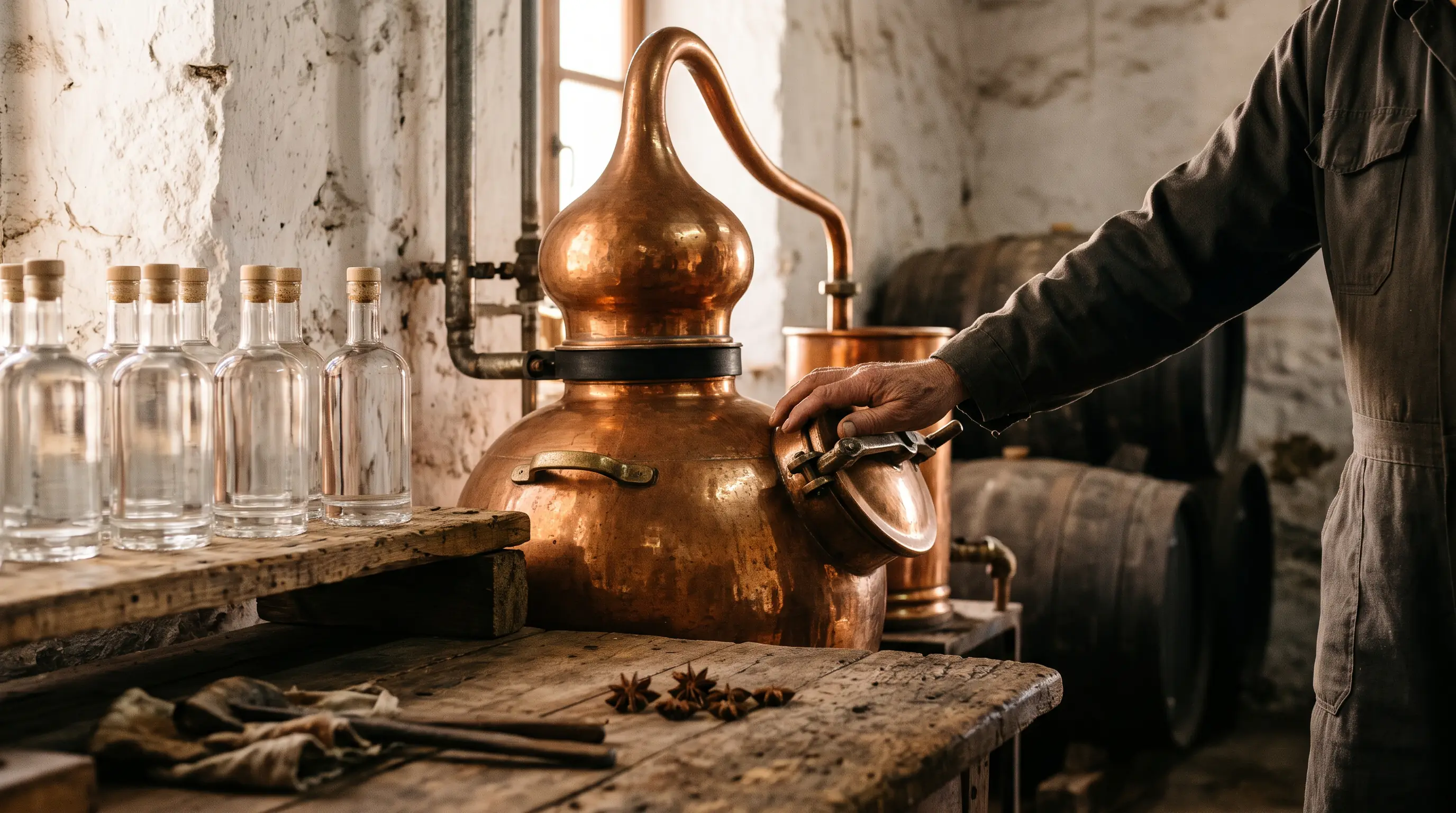
Copper stills and olive-wood fire in a distillery making anis de rute in Rute, Sierra Subbética, Córdoba province, warm low light

Anís de Rute: Why a Wine Town Learned to Distil
Anís de Rute is a Subbética aniseed spirit with trade records from 1630. How it is made, what to see at the Museo del Anís, and when the Christmas season runs.

Portrait of Pedro Del Pozo
Written by

Seven years covering Córdoba's gastronomy, taberna culture, and the Montilla-Moriles DO.

Published
Early modern1492–1808
The vines around Rute, a Subbética town 94 km from Córdoba,[1] could not match the wines of Montilla-Moriles, so the town turned its grapes into spirit and flavoured it with aniseed, according to the director of its Museo del Anís.[2] Archive records put the trade in the 1630s, which is older than any distillery that gives a founding date.[3] It makes an easy and cheap day trip, with Machaquito's distillery tour free, but check hours before you drive out.[4]
Trade records begin
1630
Municipal archive tax payments by Rute's distillers[3]
Museo del Anís entry
€5
Guided visit with tasting, quoted for the 2025 season[5]
Distance from Córdoba
94 km
Distance from the capital to Rute, in the Subbética[1]

Why a wine town ended up distilling

Rute makes anís because, in the museum director's account, its wine could not compete. In the 17th century the town had plenty of vineyards but could not match the quality of the generous Montilla-Moriles wine made elsewhere in the province, so locals turned the raw material into wine spirits that were later flavoured with aniseed.[2]
The paper trail backs the trade, not the explanation. Santa Catalina's parish archive records Rute's aguardienteros paying tithes to the church in 1655,[6] so by the middle of the 17th century distilling was an ordinary line of work in town. Why it took hold here rests on the museum director's account, so hold it loosely.
He offers a second reason for Rute's title as capital of anís: water. The town sits between the sources of the Hoz and Anzur rivers, and inside the municipality he counts about 80 small springs.[7]

How old is anís de Rute, really?

The trade is documented from the 1630s, while the distilleries that give a founding date start in the 19th century. Historical records from Rute's municipal archive and the parish church of Santa Catalina place the start of anís production in the town between 1630 and 1655.[8] Treat those dates as the floor of the documented story, not the birth of a spirit nobody can date exactly.
Brands run on a different clock. Machaquito, a distillery you can walk into, traces its start to 1860, when Rafael Reyes Rodríguez began the business now run by the fifth generation of his family, and gives 1876 as its official foundation.[9] Raza also dates to 1876 and Altamirano to 1909; with Flor del Fresno, those are the four anís distilleries left in town.[10] Count from a distillery's own start and you get a 19th-century story, count from the archives and the trade is a 17th-century one. Both are true, which is exactly why a single 'made since' claim on a label deserves suspicion.
Timeline
  1. 1630

    Municipal archive tax payments

    The earliest date the Museo del Anís cites for Rute's anís trade.

  2. 1655

    Parish tithes recorded

    Santa Catalina's archive shows aguardienteros paying tithes.

  3. 1860

    Machaquito's own start

    Rafael Reyes Rodríguez begins the family business.

  4. 1876

    Machaquito officially founded

    Raza also dates itself to this year.

  5. 1908

    Museum building starts as a family distillery

  6. 1909

    Altamirano distillery dates from here

One more date to unpick. The 1908 on the museum belongs to its building, a small family distillery, not to the liqueur.[11]

From wine spirit to anís seco

What ends up in the glass comes in three styles, extra seco, seco and dulce, and several distillation processes aimed at purity produce the difference between them.[12] At the museum's tasting the pair you will meet is anís seco at 55 degrees and anís dulce at 36.[13] Dulce is the easy pour; seco is the one with the bite.
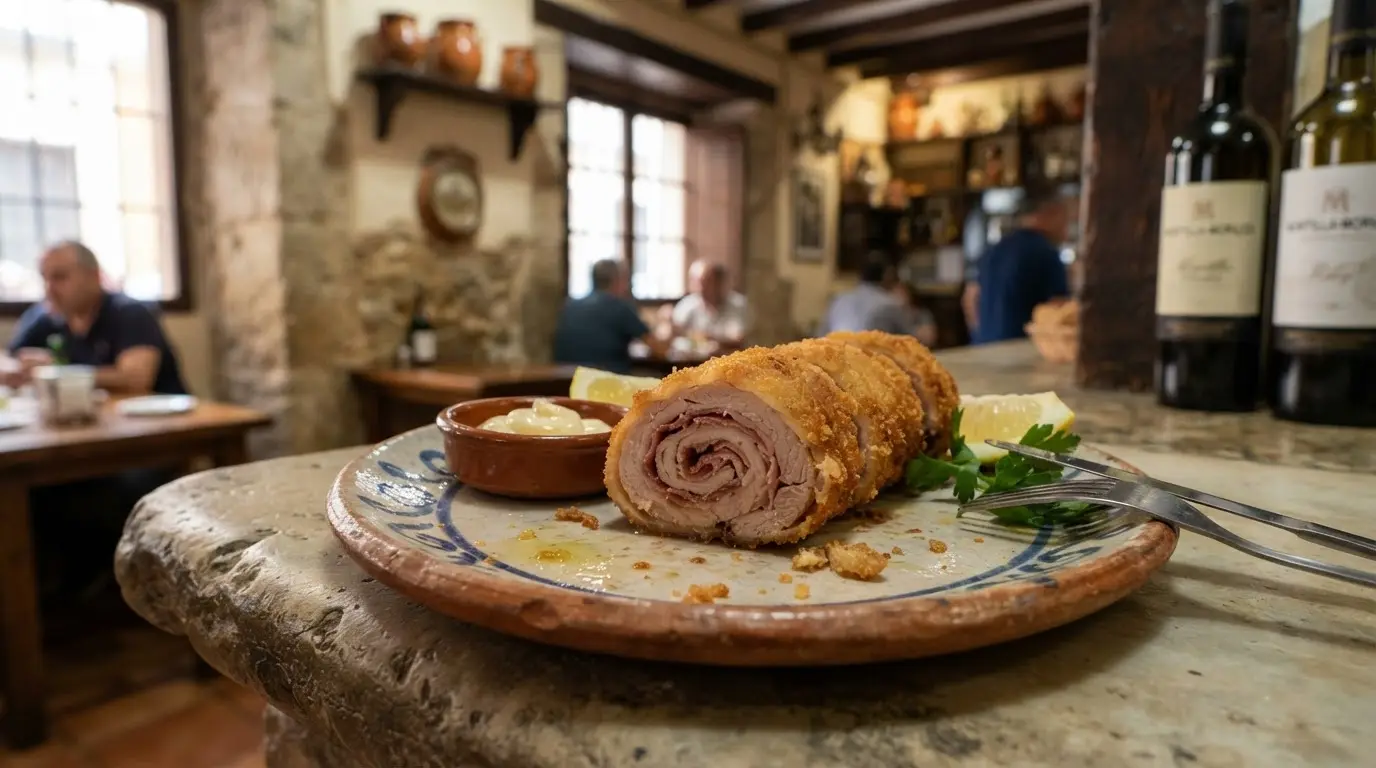
Flamenquín cordobés history: a golden crispy fried pork roll on a rustic ceramic plate at a traditional Córdoba taberna, sliced open to reveal the jamón serrano filling, natural Andalusian light on a stone counter

Deep dive · Article

A 1908 Córdoba Ad Offered Flamenquín. Is It the Dish We Eat Now?

The word flamenquín appears in a Córdoba newspaper in 1908; the only dated recipe story is Andújar 1939. What the record proves, and why both towns claim it.
The museum director's account of how the spirit took that modern shape runs through phylloxera, the late 19th-century vine plague that, as he tells it, entered Spain through Málaga and flattened vineyards across most of Europe.[14] Rute's distillers, in this version, reinvented the product, raising their spirits from 40 to 55 degrees and putting bullfighters on the labels to sell them.[15]
Hold that loosely too. Another account ties the boom to the decline of Rute's wine over the 18th and 19th centuries, and estimates that more than 65 distilleries worked at once in the early 20th century, the golden age of the town's anís.[16] The museum itself counts more than a hundred distilleries over the whole period since 1630.[17] Together they describe dozens of small family stills at the peak and four distilleries today.
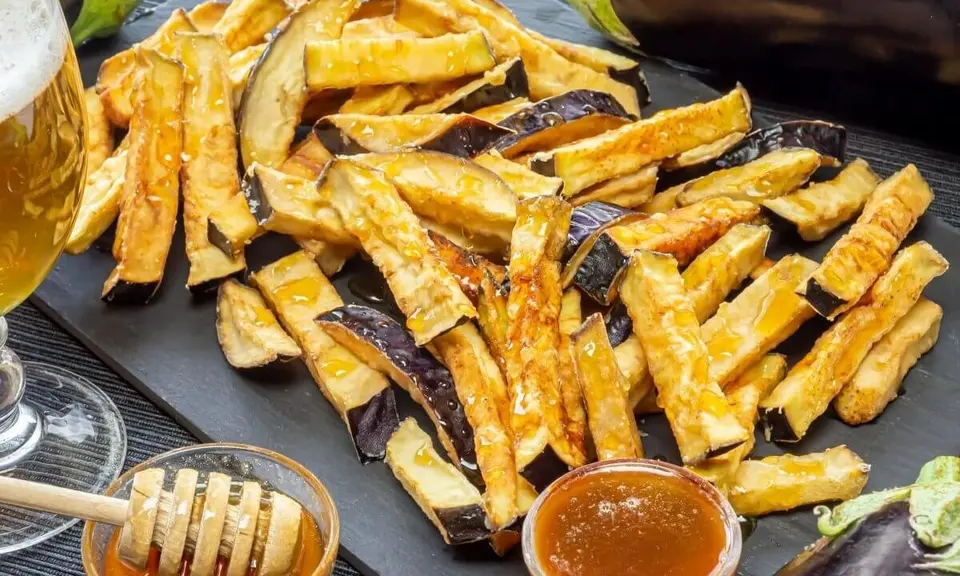
Golden fried aubergine rounds drizzled with amber honey

Taste of Córdoba · Dish

Berenjenas con Miel

Crispy fried aubergine rounds drizzled with amber honey — a 1,000-year-old Moorish tapa still served in every bar in Córdoba. Order them hot, eat fast.

Machaquito shows what the work looks like: four copper stills heated with olive wood, running in 24-hour cycles on a mixture of water and beet alcohol brought from the north of France.[18]

Visiting the Museo del Anís and Machaquito

Plan Rute as a day trip: it is 94 km from Córdoba,[1] about an hour's drive,[19] and the museum runs guided visits only, leaving from reception every 30 minutes.[20] Between the museum and a working distillery you cover everything anís-related in town.
Check before you go: the museum's own page gives 09:00 to 14:00 from 7 January to 11 October, adding 16:00 to 19:00 from 12 October to 6 January, with weekends by prior booking.[21] It is closed on 24, 25 and 31 December and on 1, 5 and 6 January, so Christmas week is exactly when not to turn up on a whim.[22]

Confirm hours before you drive

The museum's own page and 2025 press give different opening hours, and the official page lists no price. Phone ahead, above all at weekends, when visits need prior booking, and around Christmas and New Year, when the museum closes on several days.[22]
  • Museo del Anís: several rooms in the oldest part of a distillery dating from 1908, with working stills and old label dies.[23] The 2025 entry was 5 euros, with the guided visit and tasting included.[5]
  • Machaquito distillery: free admission, tasting included, about an hour, and the listing says it opens 365 days a year.[4]
Rute counts among the pueblos blancos near Córdoba, but it is a distilling town first and a postcard second, so spend the morning at the stills rather than on the viewpoints.

Rute at Christmas: the other reason to go

Rute's museum season runs from the Pilar holiday in mid-October to Christmas, and more than 100,000 people tour its museum spaces each year.[24] The town behaves as if it wants to live in permanent Christmas, with museums devoted to anís, turrón, marzipan, ham and chocolate.[25]
The chocolate nativity is the showpiece. In 2025 Galleros Artesanos was due to open it on 11 October for its 25th anniversary, with 1,600 kg of chocolate shaped into 55 square metres of scenery, and it was to stay up until January.[26] It sits on the Lucena-Rute road at km 19, and entry was 1.5 euros, refundable against purchases; those are 2025 dates and prices, so confirm the current season.[27]
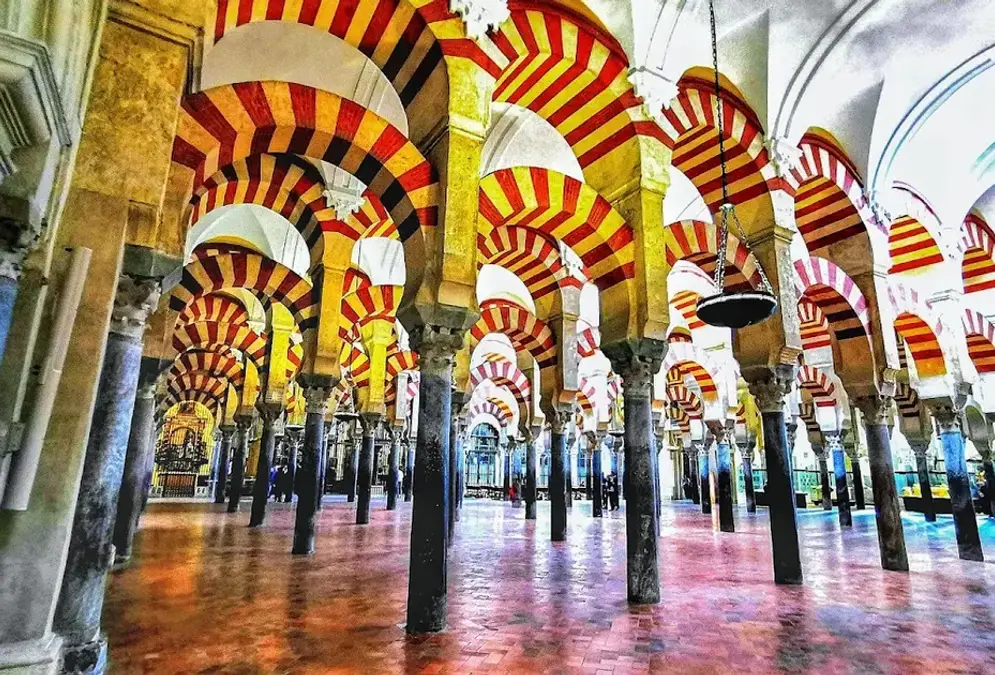
Two sweet museums add to it. La Flor de Rute's Museo del Azúcar shows sugar replicas running from the Mezquita of Córdoba to St Basil's Cathedral in Moscow,[28] and in 2025 Garrido's turrón museum opened La Aldea del Dulce, a Grinch-inspired Christmas village of biscuit, meringue and gummy houses.[29]
Rute is the excursion, not the substitute, for Christmas in Córdoba itself, and the fairest comparison for its marzipan museum is Córdoba's own marzipan.

Recommended tours

Tours are selected for quality, not commission. We earn a small fee if you book — at no extra cost to you.
If you want more of the province's hill towns, Priego de Córdoba and the cliff-top castle village of Zuheros are the obvious next days out, each worth its own trip rather than a rushed combined loop.

Frequently asked questions

What is anís de Rute?

Anís de Rute is an aniseed spirit made in Rute, a town in the Sierra Subbética in Córdoba province. It is distilled in alembics and sold as extra seco, seco or dulce, the distinction coming from different distillation processes.[12] Four distilleries still operate in town.[10]

What is the difference between anís seco and anís dulce?

Seco is the dry style and dulce the sweet one, with extra seco a third, drier version. At the Museo del Anís tasting the usual pair is anís seco at 55 degrees and anís dulce at 36 degrees.[13]

How long has anís de Rute been made?

Historical documents from Rute's municipal archive and the parish church of Santa Catalina place the start of production between 1630 and 1655.[8] Individual brands are younger: Machaquito dates its start to 1860 and its official foundation to 1876.[9] The 1908 sometimes quoted belongs to the museum building, not the liqueur.[11]

Is the Museo del Anís open at Christmas?

The museum's own page lists 09:00 to 14:00 and 16:00 to 19:00 from 12 October to 6 January.[21] It is closed on 24, 25 and 31 December and on 1, 5 and 6 January, so confirm by phone before travelling.[22]

Can you taste anis de Rute for free at the Machaquito distillery?

Yes. The Andalucía listing gives free admission with a tasting, a visit of about an hour, and says the distillery opens 365 days a year.[4]

How far is Rute from Córdoba?

The listed distance from the capital is 94 km,[1] about an hour by car.[19] Treat it as a day trip; the museum's guided visits leave from reception every 30 minutes.[20]

Is Rute the same as Estepa, the mantecado town?

No. Rute is a Córdoba-province town known for anís and its Christmas museums, while the mantecado town people usually mean is Estepa, in the province of Seville.

When does Rute's chocolate nativity open?

In 2025 it was due to open on 11 October and stay up until January, on the Lucena-Rute road at km 19, with entry at 1.5 euros refundable against purchases.[26][27] Dates change each season, so check before you go.

Sources

29 references Show
  1. andalucia.org — 19383102 (opens in a new tab)

    “Distancia a la capital (KM) 94”

  2. eldiadecordoba.es (opens in a new tab)

    “Córdoba recuerda que Rute "tenía una gran cantidad de viñedos" en el siglo XVII pero "no podía competir en calidad con los vinos generosos de Montilla-Moriles"”

  3. museodelanis.com (opens in a new tab)

    “El archivo municipal ratifica que desde 1630 el pago de impuestos por dicha profesión hasta nuestros días.”

  4. en.andalucia.org (opens in a new tab)

    “Access: free admission.”

  5. subbeticahoy.com (opens in a new tab)

    “Entrada: 5 € por persona (incluye visita guiada y degustación).”

  6. museodelanis.com (opens in a new tab)

    “Numerosos legajos del archivo parroquial de Santa Catalina atestiguan el pago de diezmos y primicias de la iglesia como aguardienteros en 1655.”

  7. eldiadecordoba.es (opens in a new tab)

    “dentro del propio municipio hay "unos 80 manantiales pequeños"”

  8. eldiadecordoba.es (opens in a new tab)

    “Los documentos históricos del Archivo Municipal y la iglesia de Santa Catalina de Rute sitúan el origen de la producción de anís en la localidad entre los años 1630 y 1655”

  9. en.andalucia.org (opens in a new tab)

    “In 1860 Rafael Reyes Rodríguez, embarked on an international success story that has now reached the 5th generation of the family. However, it was in 1876 when the prestigious distillery ‘MACHAQUITO’ was officially founded”

  10. Wikipedia (opens in a new tab)

    “Hoy en día sigue habiendo en Rute cuatro destilerías de anís: Machaquito (creada en 1876), Raza (1876), Altamirano (1909) y la Flor del Fresno.”

  11. museodelanis.com — Nuestra historia (opens in a new tab)

    “Lo que hoy conocemos como Museo del Anís nació en 1908 como una pequeña destilería familiar”

  12. Wikipedia (opens in a new tab)

    “Existen varios procesos de destilación, para conseguir una mayor pureza del anís final, resultando en la característica distinción entre el anís extra seco, seco y dulce.”

  13. museodelanis.com — Visitas museo (opens in a new tab)

    “los destilados como el Anís Seco de 55º ó Dulce de 36º”

  14. eldiadecordoba.es (opens in a new tab)

    “A finales del siglo XIX la filoxera, que en España "entra por Málaga", arrasa con los viñedos de casi toda Europa”

  15. eldiadecordoba.es (opens in a new tab)

    “"En aquel momento los aguardientes tenían 40 grados y se suben a 55 grados"”

  16. Wikipedia (opens in a new tab)

    “A principios del siglo XX, época dorada del anís ruteño, se calcula que llegó a haber en el pueblo más de 65 destilerías en funcionamiento al mismo tiempo.”

  17. museodelanis.com — Nuestra historia (opens in a new tab)

    “recuperó el legado de más de cien destilerías que existieron en Rute desde 1630”

  18. en.andalucia.org (opens in a new tab)

    “You will see the fire of the boilers with two tons of olive wood heating 4 gigantic and centenary copper stills which, in 24h cycles, distil the mixture of water, beet alcohol with certified quality, coming from the north of France”

  19. rome2rio.com (opens in a new tab)

    “It takes approximately 1h 3m to drive from Córdoba to Rute.”

  20. museodelanis.com — Visitas museo (opens in a new tab)

    “Visitas individuales: parten cada 30 minutos desde la recepción y son siempre guiadas.”

  21. museodelanis.com — Visitas museo (opens in a new tab)

    “Del 12 de octubre al 06 de enero: de 09:00 a 14: 00 h y de 16:00 a 19: 00 h”

  22. museodelanis.com — Visitas museo (opens in a new tab)

    “Cerrado los días 24, 25, 31 de diciembre, y 1, 5 y 6 de enero.”

  23. andalucia.org — 16200102 (opens in a new tab)

    “Ocupa cuatro salas en la parte más antigua de una destilería que data del año 1908.”

  24. subbeticahoy.com (opens in a new tab)

    “Más de 100.000 personas recorren cada año sus espacios museísticos”

  25. andalucia.org — Una navidad diferente a traves de los sabores y aromas de rute (opens in a new tab)

    “Y es que Rute parece querer vivir en una eterna Navidad con sus museos dedicados al anís, turrón, mazapán, jamón y chocolate”

  26. eldebate.com (opens in a new tab)

    “Chocolate blanco, negro, con leche y de colores con un peso de 1.600 kilos dan forma este año a 55 metros cuadrados de escenografía navideña”

  27. eldebate.com (opens in a new tab)

    “Este año la entrada seguirá teniendo el mismo coste que en ediciones anteriores (1,5 euros) a descontar en la compra de productos de esta empresa familiar.”

  28. subbeticahoy.com (opens in a new tab)

    “Desde la Mezquita de Córdoba hasta la catedral de San Basilio en Moscú, pasando por la Opera House de Sídney y la Basílica de San Pedro”

  29. subbeticahoy.com (opens in a new tab)

    “este año el museo inaugura "La Aldea del Dulce", un pueblo navideño inspirado en el universo del Grinch”