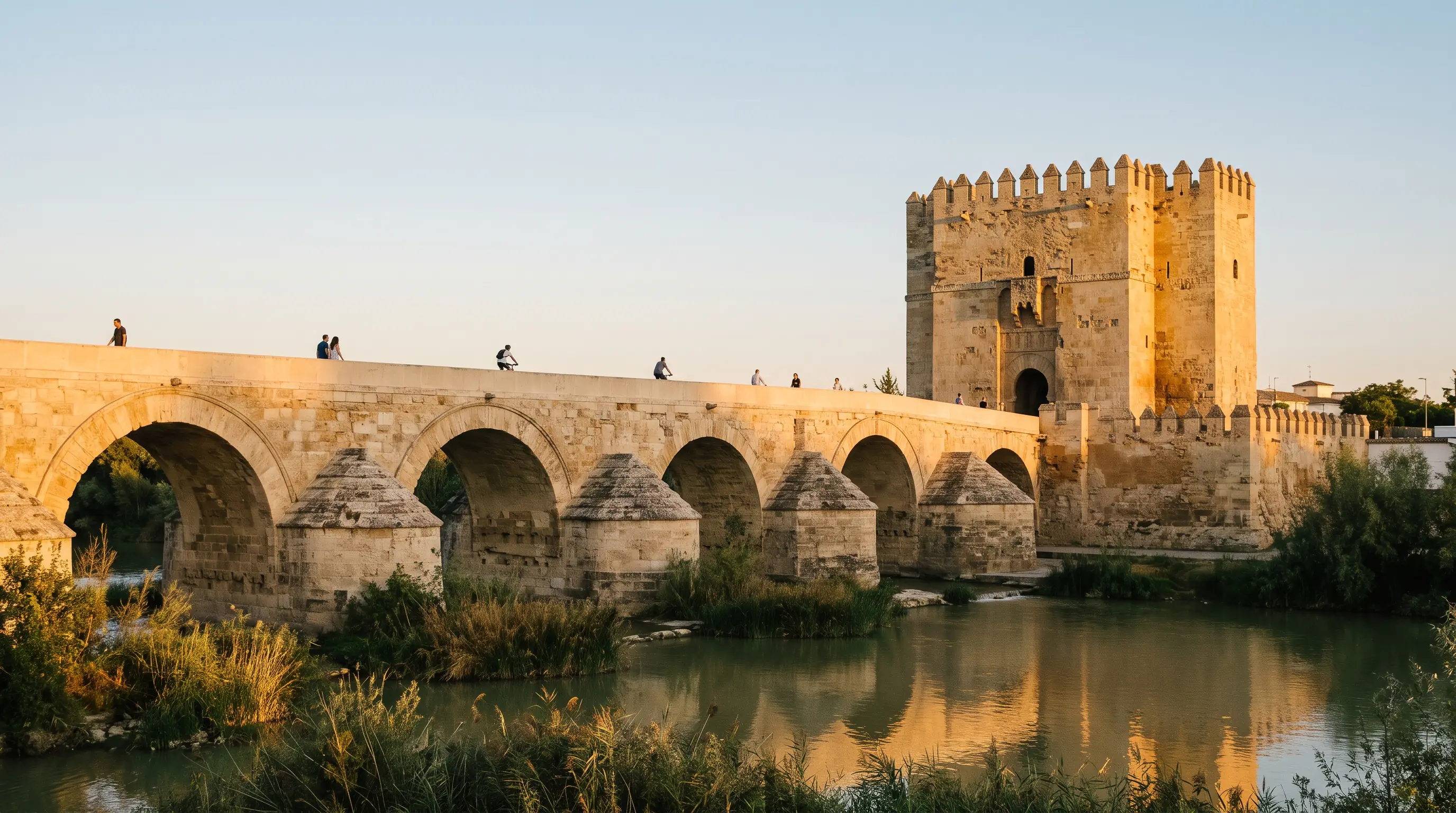
Almohad Córdoba 1148-1236: A City in Decline
Art history background with eight years writing interpretive content on Córdoba's Caliphal heritage.
In this article
Jump to a section
How the Almohads got Córdoba, c. 1148-49
Where the decline story comes from
What the archaeology says instead
Explore nearby · Monument
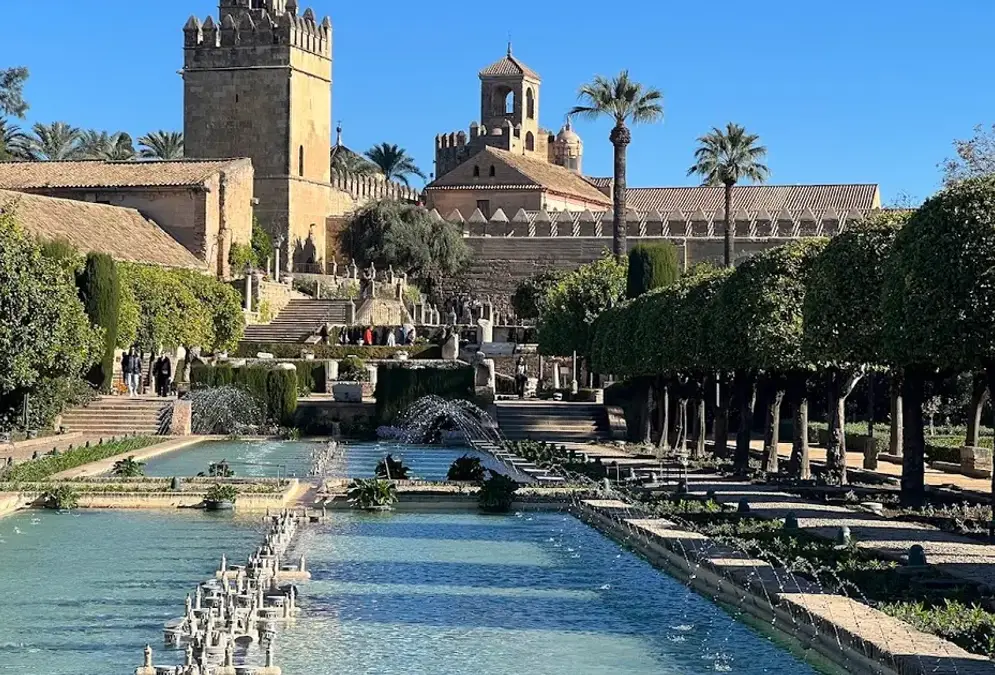
Alcázar de los Reyes Cristianos
Alcázar de los Reyes Cristianos, Córdoba: free entry on Tuesdays. A 14th-century fortress-palace with terraced Moorish-inspired gardens and Roman mosaics.
Averroes, al-Bayyasi and the road to 1236
- May 1146
Alfonso VII at the gates
Castile's king besieges Córdoba, then settles with Ibn Ghaniya as an Almohad army lands at Cádiz.[5]
- c. 1148-49
- 1171
- c. 1182
Averroes chief judge
Appointed court physician and chief judge of Córdoba.[4]
- 1195
Averroes exiled
Charged, probably for political reasons, and sent to Lucena.[14]
- 1225-26
al-Bayyasi in Córdoba
Installed with a Castilian army; killed in a popular uprising.[15]
- 1236
Córdoba falls
The city passes to Christian forces.[16]
What survives of Almohad Córdoba today
- Calahorra Tower: the starting point. It was a prison in the 18th century and a girls' school in the 19th, and was declared a national monument in 1931[20].
- Roman Bridge: next, beside the tower. This is the old crossing the tower was built to guard.
- Alcázar de los Reyes Cristianos: the last stop. The Christian fortress stands on a site where an Almohad arch gave access to a cruciform courtyard joining two large halls and a hammam[21].
Recommended tours
Tours are selected for quality, not commission. We earn a small fee if you book — at no extra cost to you.
Deep dive · Article
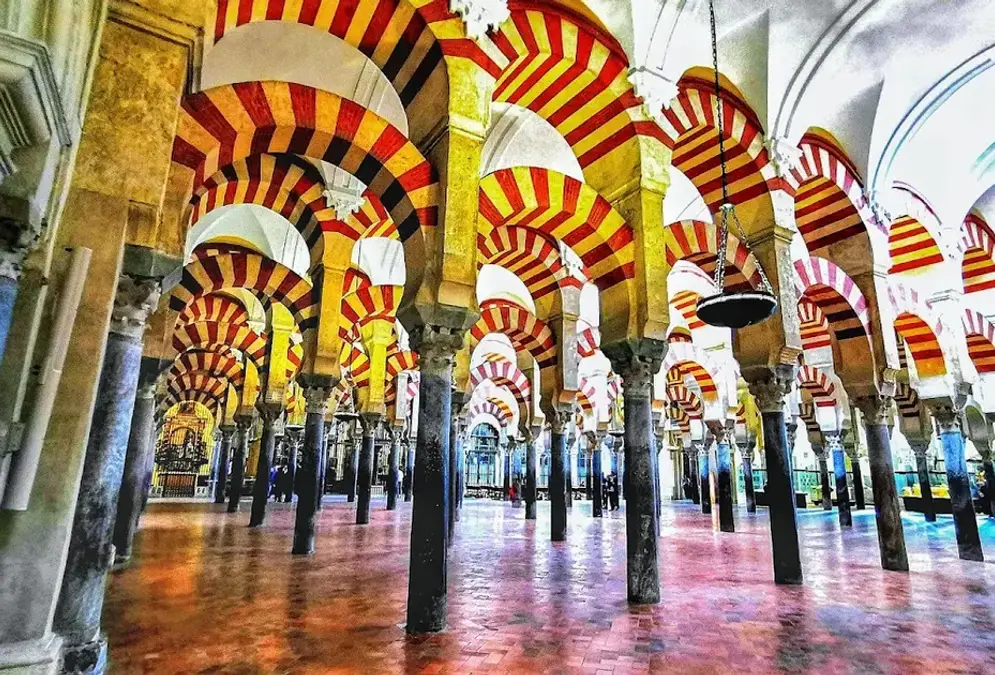
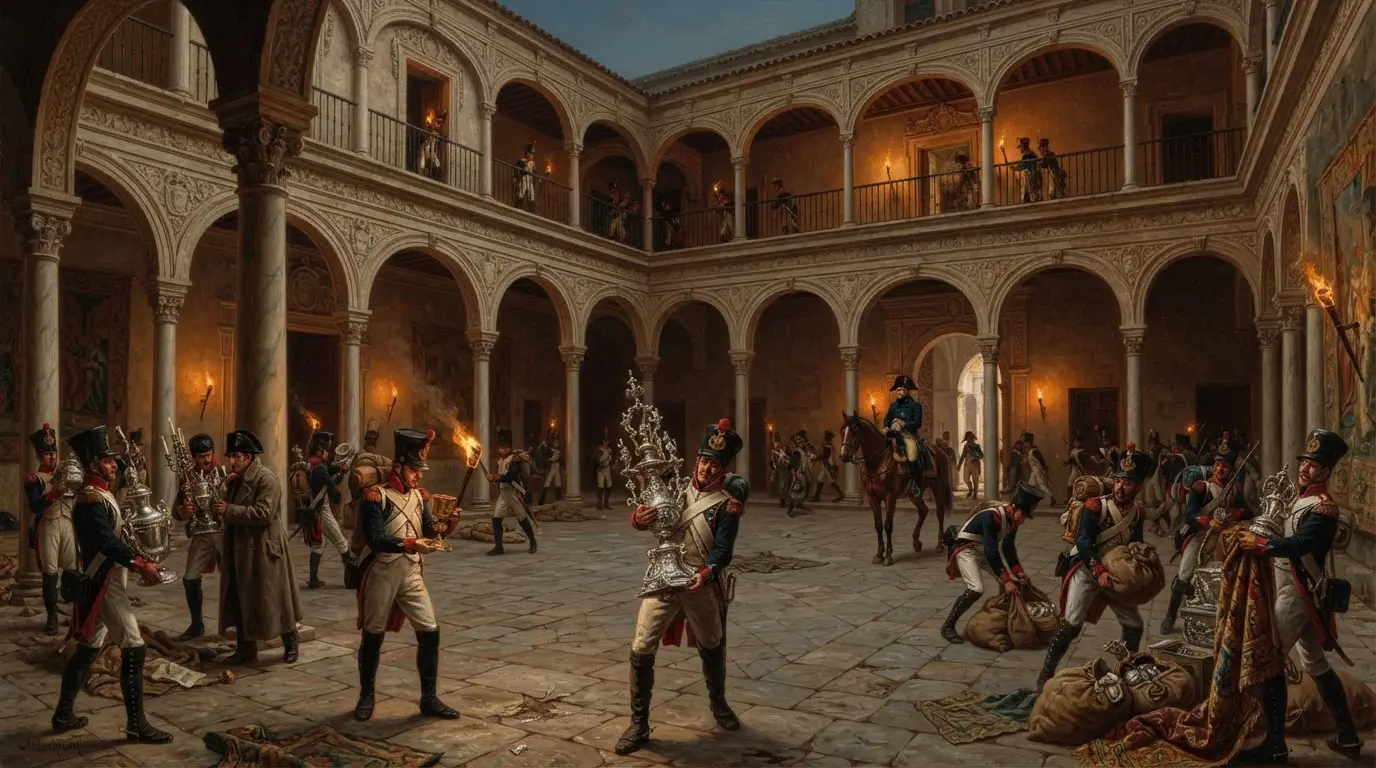
1808: The Sack of Córdoba That Broke a French Army at Bailén
In June 1808, French troops sacked Córdoba's churches and palaces on a flimsy pretext — and dragged the plunder into the disaster at Bailén weeks later.
Frequently asked questions
What is the history of Almohad Córdoba between 1148 and 1236?
When did the Almohads take Córdoba?
Was Córdoba the capital of Almohad al-Andalus?
Did Córdoba really decline under the Almohads?
Why was Averroes exiled to Lucena?
What Almohad buildings survive in Córdoba?
Who was al-Bayyasi and what happened to him in Córdoba?
Sources
25 references Show Hide
- zenodo.org (opens in a new tab)
“Tradicionalmente, Córdoba ha sido considerada por la historiografía como una ciudad decadente tras la caída de la megalópolis omeya.”
- cordopolis.eldiario.es (opens in a new tab)
“otro gran arco fechado en el último tercio del siglo XII en Córdoba, apenas unos 70 años antes de la llegada de los cristianos a la ciudad.”
- Wikipedia — Abu Yaqub Yusuf (opens in a new tab)
“In 1171, he established himself in Seville.”
- muslimheritage.com (opens in a new tab)
“In 1182, he was appointed as court physician and the chief judge of Córdoba.”
- Wikipedia — Siege of Córdoba (1146) (opens in a new tab)
“Eventually, Alfonso came to terms with ibn Ghaniya, most likely because his army was not large enough to protect the city from an Almohad army that had recently landed in Cádiz.”
- nuevatribuna.es (opens in a new tab)
“A cambio de su auxilio, les cedió Córdoba y Carmona.”
- artehistoria.com (opens in a new tab)
“De esta forma, dominaron Sevilla en 1148, Córdoba en 1149, Málaga en 1153, Granada y otras ciudades vecinas hasta 1156”
- artehistoria.com (opens in a new tab)
“después marcharon a Sevilla, ciudad que se erigió como capital del Imperio en al-Andalus.”
- helvia.uco.es (opens in a new tab)
“Todo ello coincidió con su elección como capital andalusí en 557/1162 por ‘Abd al-Mu’min, lo que suponía un hito fundamental para la legitimación de su nuevo califato.”
- nuevatribuna.es (opens in a new tab)
“La primera en julio del año 1171, donde parte de su ejército luchó las tierras toledanas, mientras el califa y el grueso de sus huestes permanecían en Córdoba.”
- zenodo.org (opens in a new tab)
“Qurtuba crecería de nuevo, tanto al interior como al exterior de los recintos amurallados.”
- unaventanadesdemadrid.com (opens in a new tab)
“Una de ellas estaba en las inmediaciones de la Torre de la Calahorra”
- cordopolis.eldiario.es (opens in a new tab)
“demuestra que el Alcázar fue antes una parte de una alcazaba almohade”
- muslimheritage.com (opens in a new tab)
“He was targeted on various charges—likely for political reasons—and was exiled to nearby Lucena.”
- Wikipedia — Almohad Caliphate (opens in a new tab)
“A popular uprising broke out in Córdoba – al-Bayyasi was killed and his head dispatched as a trophy to Marrakesh.”
- nuevatribuna.es (opens in a new tab)
“Córdoba que fue la ciudad símbolo del islam hispano, cayó en el año 1236, Valencia en el año 1238, Sevilla en el año 1248.”
- Wikipedia — Almohad Caliphate (opens in a new tab)
“Likewise, the Calahorra Tower in Córdoba is believed to be an originally Almohad structure designed to defend the river and the city's old bridge.”
- Spain.info — Museum vivo al andalus torre calahorra (opens in a new tab)
“The museum is in the Calahorra Tower, opposite the Great Mosque, at the end of the Roman Bridge.”
- Junta de Andalucía (opens in a new tab)
“Lunes a domingo y festivos de 10:00 a 18:00.”
- atlasislamica.com (opens in a new tab)
“In the 18th century it was used as a prison and in the 19th century it was a girls school. The tower was declared a national monument in 1931.”
- cordopolis.eldiario.es (opens in a new tab)
“el arco daba acceso a “un gran patio de crucero” que unía dos grandes salones y un hamman.”
- Turismo de Córdoba (opens in a new tab)
“Bajo esta estancia se encuentran los baños, de inspiración árabe, divididos en tres salas abovedadas con tragaluces estrellados.”
- cordopolis.eldiario.es (opens in a new tab)
“De cara a la calle, el arco visible será el barroco. Pero de cara al patio, el arco que se podrá contemplar será el almohade”
- cordopolis.eldiario.es (opens in a new tab)
“el acceso de los turistas al monumento volverá a ser desde el sur, junto al Guadalquivir”
- Spain.info — Walls cordoba (opens in a new tab)
“Today only parts of the Arab wall that surrounded and fortified the city remain, along with some of the gates.”