history-buffs
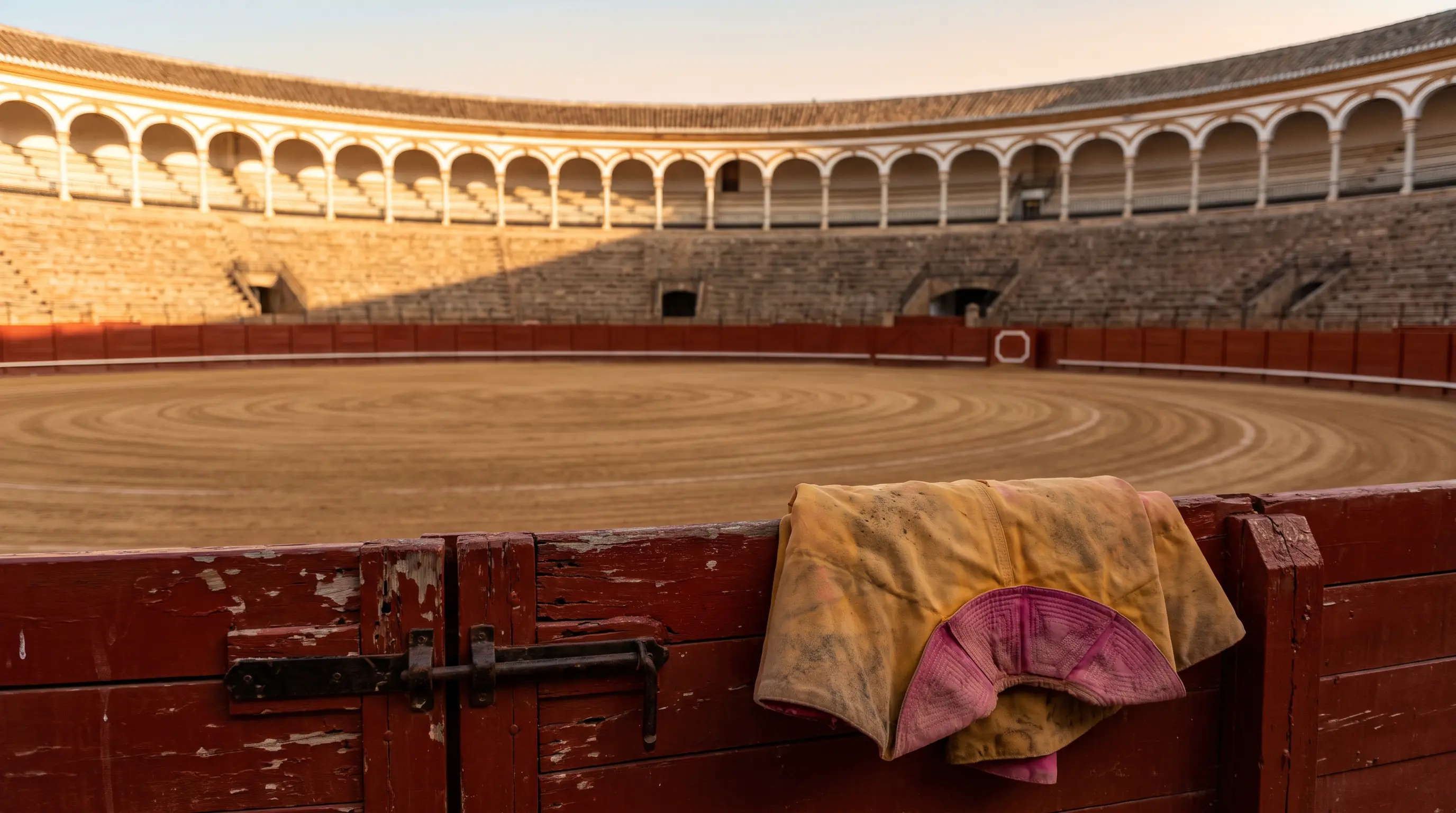
Empty Andalusian bullring at golden hour, a worn yellow and pink capote hanging over the red wooden barrier, evoking the califas del toreo Córdoba tradition

Who Crowned Córdoba's First Three Caliphs of Bullfighting?
Mariano de Cavia crowned Lagartijo the Califa del Toreo; Guerrita and Machaquito followed, yet only El Cordobés was named officially by the council in 2002.

Portrait of Sophie Marchand
Written by

Art history background with eight years writing interpretive content on Córdoba's Caliphal heritage.

Published
Modern Córdoba1808–today
Córdoba counts five Califas del Toreo, but only the fifth, El Cordobés, has an official nomination on record, proclaimed in a symbolic act on 29 October 2002.[1][2] The others grew the way nicknames do, from a nineteenth-century critic's flourish into a popular title that became official only in the twenty-first century.[3] That is why the date, the occasion and even the caliph the critic had in mind change depending on who tells the story.
Official proclamation
29 Oct 2002
Ayuntamiento named El Cordobés fifth Califa at the Alcázar[1]
Top-three ranking test
6 seasons
Museo's rule: a top-three matador ranking, six years running[34]
Lagartijo's corridas
1,632
28 seasons and 4,867 bulls by El Diario de Madrid's count[12]

A critic's flourish for Lagartijo

Córdoba's Museo Taurino credits the critic Mariano de Cavia with creating the title by calling Rafael Molina Sánchez, Lagartijo, el Califa del toreo, and with making it the most prized trophy a Córdoba bullfighter could win.[4] Cavia, an Aragonese chronicler who wrote as Sobaquillo, introduced the phrase, according to Aplausos, after Lagartijo dedicated a bull to him in Murcia.[5]
Lagartijo had the record to carry the crown. Born in Córdoba on 27 November 1841, the son of the banderillero Manuel Molina, known as Niño de Dios,[6] he took his alternativa in Madrid from Cayetano Sanz on 15 October 1865.[7] Tauroarte's biography holds that the true ceremony came earlier, in Úbeda on 29 September that year.[8] Whichever date you prefer, the lagartijista camp was the largest following of its day, and it counted the artists, writers and politicians who followed the ring.[9]
His style gave critics new vocabulary: the words arte and plasticidad entered bullfighting chronicles with him.[10] A noble rivalry with his contemporary Frascuelo ran until Frascuelo retired in 1890,[11] and across 28 seasons Lagartijo took part in 1,632 corridas by El Diario de Madrid's count.[12] A critic looking for a title big enough for that career reached for a caliph.

Dating the coinage: 1875, Murcia, or neither

The date is contested, and no source consulted gives a dated printing: none names the newspaper or issue where Califa first appeared. One reference entry dates the nickname to 1875, and none of the other accounts consulted gives a year.[13] Rafael Comino Delgado, on the Toros Noticias Murcia site, tells it as a brindis in Murcia followed by a chronicle Cavia signed as Sobaquillo the next day, and gives no year;[39] Aplausos likewise ties it to the bull Lagartijo dedicated to Cavia in Murcia,[5] and El Cronista Cultural credits Cavia with the nickname without a date.[42]
Two dated facts sit beside the 1875 claim. Cavia was born on 22 September 1855, so he was only 19 or 20 that year,[40] and he decided to go to Madrid and joined El Liberal only around 1880–81.[41]
What Cavia meant by caliph is just as loose. The historiadeltorero.com biography of Lagartijo reports that he reasoned from Moorish Spain: Lagartijo was in bullfighting what Abderramán I, the first caliph of the West, had been there.[14] The Real Academia's dictionary now records califa as a nickname given to illustrious bullfighters born in Córdoba, which shows how far the word has travelled from one critic's hyperbole.[15]

Guerrita and Machaquito, the heirs

After Lagartijo the title travelled by consensus, not decree. Rafael Guerra, Guerrita, was judged a worthy heir and became the second califa; Rafael González, Machaquito, followed as the third, though Aplausos reports it came only after much discussion.[16][17]
CalifaBornAlternativaCorridas
Lagartijo27 Nov 1841, Córdoba[6]Madrid, 15 Oct 1865[7]1,632[12]
Guerrita6 Mar 1862, Córdoba[18]Madrid, 29 Sep 1887[19]892[20]
Machaquito2 Jan 1880, Córdoba[21]Madrid, 16 Sep 1900[22]754[23]

Guerrita, the second caliph

Guerrita took his alternativa in Madrid on 29 September 1887, with his master Lagartijo as godfather, which is the neatest piece of succession logic in the whole story.[19] He fought 892 corridas and, by the Museo Taurino's count, killed 2,577 bulls before retiring (other tallies differ), a record that made the Lagartijo comparison fair rather than flattering,[20] and on 19 May 1895 he fought three in a single day, in San Fernando, Jerez and Seville.[24] The end came without warning in 1899, his last appearance the Feria del Pilar in Zaragoza on 15 October,[25] and he is reported to have said No me voy, me echan, that he was not leaving but being pushed out.[26]
Retirement did not loosen his hold on the city. He created the Club Guerrita, Córdoba's bullfighting centre, and a corrida honouring Córdoba women,[27] while the rivalry with his own master is called fictitious.[28]

Machaquito, the third, accepted after argument

Rafael González was born on 2 January 1880 in the barrio de la Merced and worked as a child at the slaughterhouse,[21] a long way from the Madrid alternativa he took on 16 September 1900.[22] Two years later he earned the Cruz de Beneficencia for sparing Hinojosa del Duque a day of mourning on 29 August 1902.[29] Over 754 corridas he topped the national ranking in four seasons: 1904, 1906, 1910 and 1911.[23]
Aplausos does not say who argued against him. The Córdoba blog El Callejón reportedly records that some fellow Cordobans still deny him the title because he did not command bullfighting as Lagartijo and Guerrita did, without naming them.[43]
He retired after giving Juan Belmonte the alternativa in Madrid on 16 October 1913.[30] A bronze by Benlliure, La estocada de la tarde, honours his faena to the Miura bull Barbero on 7 May 1907.[31]

Unofficial for a century: who decides a Califa
Aplausos names El Cordobés as the only califa with an official nomination, which leaves the first three without one.[2] The title began as a nickname in the nineteenth century, became an unofficial popular title in the twentieth and was made official only in the twenty-first.[3] One reference text holds that for Guerrita, Machaquito and Manolete it arose after their deaths, through the consensus of Córdoba's associations and fans,[32] although an El Diario de Madrid columnist has the municipal authorities, with the blessing of the city's bullfighting institutions, agreeing to call all five Califa.[33]
The one nomination on record is that of El Cordobés: on 29 October 2002, in a symbolic act at the Alcázar de los Reyes Cristianos, the Ayuntamiento named him fifth Califa.[1] He is the only califa with an official appointment.[2] Manolete took the fourth place between him and Machaquito.
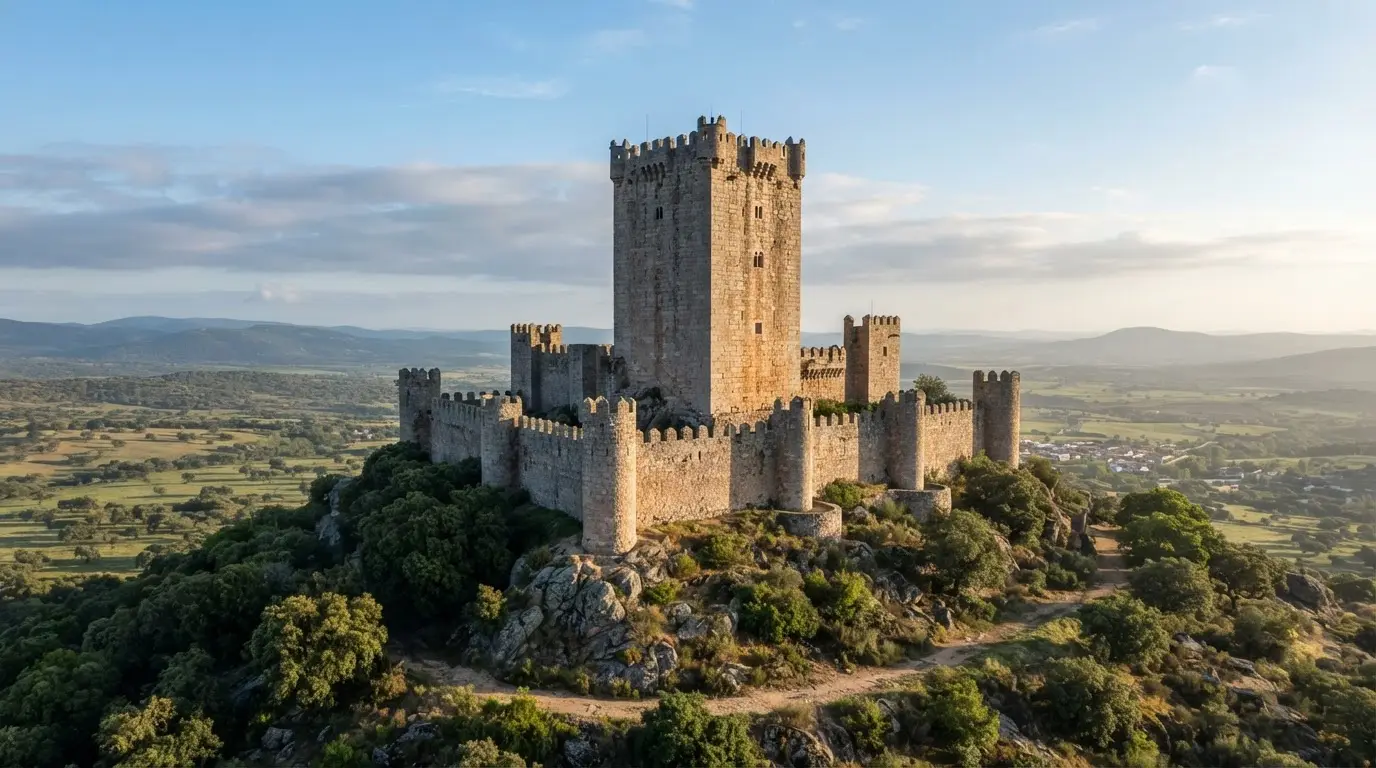
Belalcázar Castle's granite torre del homenaje, the tallest castle keep in Spain by official listing, rising above the fortress walls in soft morning light

Deep dive · Article

47 Metres Tall and Almost Unknown: Spain's Tallest Keep

Belalcázar Castle's 47 m keep is listed by the Junta de Andalucía as Spain's tallest. How it grew, what to see inside and how to book the free guided visit.
The yardstick usually applied has three tests:
  • Born in Córdoba: the dictionary of the Real Academia defines califa as a nickname for illustrious bullfighters native to the city.[15]
  • At least six consecutive seasons in the top three of the matador ranking.[34]
  • A nomination that answers to the acclamation of most of the fans.[35]
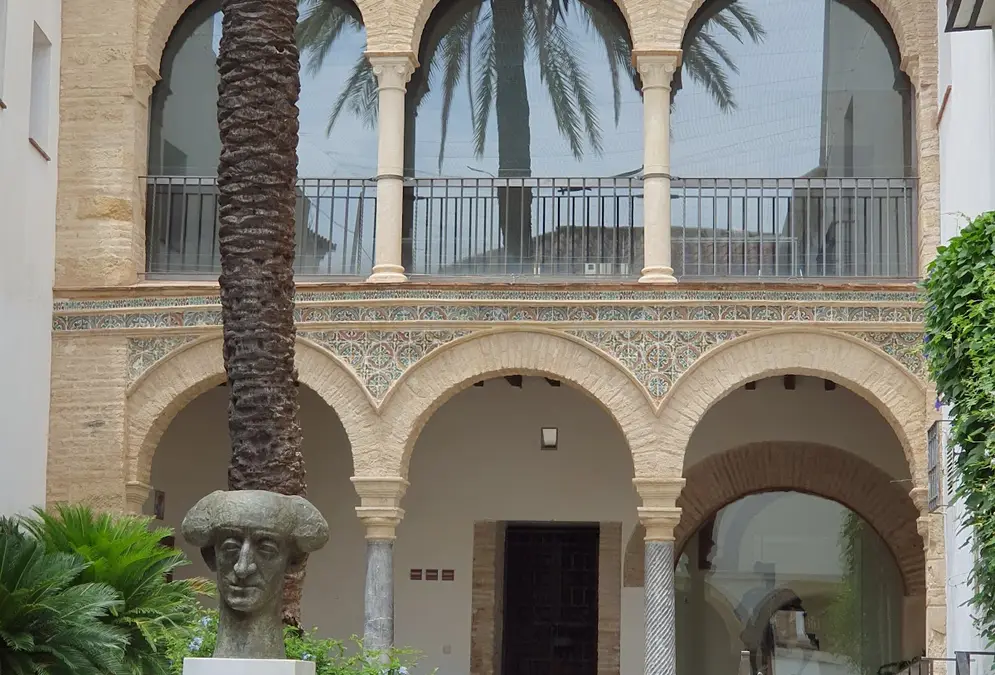
Interior patio of the Museo Taurino de Córdoba inside the 16th-century Casa de las Bulas

Explore nearby · Museum

Museo Taurino de Córdoba

Córdoba's bullfighting museum occupies a 16th-century mansion in the Judería. Trace the legacy of five legendary matadors, including Manolete, for just €5.

The third test is a mood rather than a measure, and that is why Machaquito's case needed an argument. No committee counts acclamation; the city decides by ceasing to object.

Where the caliphs are filed in Córdoba today

The caliphs left no single shrine, so the title is best traced through three places. Each holds a different layer of the story: the ceremony, the ring and the museum.
  • The Alcázar de los Reyes Cristianos: setting of the symbolic 2002 act that named El Cordobés fifth Califa.[1]
  • Plaza de Toros de Los Califas: the city's bullring, inaugurated in 1965 by El Cordobés.[36]
  • Museo Taurino: the museum that sets out the five-caliph list and the tests for joining it.[34]

Recommended tours

Tours are selected for quality, not commission. We earn a small fee if you book — at no extra cost to you.
The first caliph's own exit belongs to the story. Lagartijo said goodbye in five corridas in 1893, from Zaragoza on 7 May to Madrid on 1 June,[37] and died at home in Córdoba on 1 August 1900,[38] about six weeks before Machaquito took his alternativa in Madrid. The title was therefore handed on inside a living bullfighting world, with the first caliph's pupil godfathered by him and the third caliph turning matador as the first was dying.
The framework is what later generations built around a critic's phrase, and arguing about its edges, as with Machaquito, is part of the tradition. A nickname that outlived its coiner was defined after the fact, by the museum, the dictionary and the crowd, and it is still being defined today.

Frequently asked questions

Who are the califas del toreo of Córdoba?

Five matadors hold the title: Lagartijo, Guerrita, Machaquito, Manolete and El Cordobés, in that order.[16][17][2] Only the last has an official municipal nomination on record.

Who was the first Califa del Toreo?

Lagartijo, Rafael Molina Sánchez, born in Córdoba in 1841.[6] The critic Mariano de Cavia is credited with calling him el Califa del toreo.[4]

When did Mariano de Cavia call Lagartijo the Califa?

The date is contested. One reference entry says 1875,[13] while Aplausos and Comino Delgado tie the coinage to a bull Lagartijo dedicated to Cavia in Murcia, without giving a year.[5][39] No source consulted gives a dated printing.

Why are Córdoba's bullfighters called califas?

The word borrows the prestige of Córdoba's caliphs. The historiadeltorero.com biography has Cavia comparing Lagartijo to Abderramán I,[14] and the Real Academia now records califa as a nickname for illustrious bullfighters born in the city.[15]

What does it take to be a Califa del Toreo in Córdoba?

Three tests are usually applied: birth in Córdoba,[15] at least six consecutive seasons in the top three of the matador ranking,[34] and acclamation by most of the fans.[35]

Was Guerrita officially named a Califa?

No official nomination is on record for him. One reference text reportedly describes his title as arising from the consensus of Córdoba's associations and fans,[32] though an El Diario de Madrid columnist says the municipal authorities agreed to the designation for all five.[33]

Who is the only califa named officially?

El Cordobés, named fifth Califa by the Ayuntamiento at the Alcázar de los Reyes Cristianos on 29 October 2002.[1][2]

Sources

43 references Show
  1. Wikipedia — Califa del Toreo (opens in a new tab)

    “El 29 de octubre de 2002, en un acto simbólico en el Alcázar de los Reyes Cristianos, el torero Manuel Benítez "El Cordobés" fue nombrado quinto Califa del Toreo por el Ayuntamiento de Córdoba”

  2. aplausos.es (opens in a new tab)

    “Por tanto el único Califa con nombramiento oficial es el V, es decir, El Cordobés.”

  3. Wikipedia — Califa del Toreo (opens in a new tab)

    “comenzó siendo un apodo en el siglo XIX, pasando a convertirse en un título extraoficial de carácter popular en el siglo XX, e institucionalizándose con carácter oficial en el siglo XXI.”

  4. museotaurinodecordoba.es (opens in a new tab)

    “Mariano de Cavia, al calificar a Rafael Molina Sánchez “Lagartijo”, como el Califa del toreo, estaba creando lo que sería el trofeo más apreciado para los toreros cordobeses”

  5. aplausos.es (opens in a new tab)

    “fue introducido por el cronista taurino aragonés, Mariano de Cavia “Sobaquillo”, tras recibir un brindis del torero en Murcia.”

  6. tauroarte.com — 37779 1 rafael molina lagartijo primer califa (opens in a new tab)

    “Nació en la ciudad de Córdoba el 27 de noviembre de 1841, y era hijo del banderillero Manuel Molina “Niño de Dios””

  7. tauroarte.com — 37779 1 rafael molina lagartijo primer califa (opens in a new tab)

    “La alternativa de matador de toros le fue otorgada en la plaza de Madrid por Cayetano Sanz, el 15 de octubre de 1865.”

  8. tauroarte.com — 37779 1 rafael molina lagartijo primer califa (opens in a new tab)

    “La verdadera alternativa la recibió “Lagartijo” en la plaza de Úbeda el día 29 de septiembre de 1865, estoqueando el primer toro, cedido por el “Gordito””

  9. historiadeltorero.com (opens in a new tab)

    “El bando lagartijista fue el más numeroso; en él figuraron todos los artistas, literatos y políticos aficionados de su tiempo”

  10. Wikipedia — Lagartijo (opens in a new tab)

    “Con Lagartijo se incorporan los términos de arte y plasticidad en las crónicas taurinas”

  11. historiadeltorero.com (opens in a new tab)

    “comenzó aquella competencia noble entre los dos colosos, la cual habría de durar hasta que, en 1890, se retirara Salvador.”

  12. eldiariodemadrid.es (opens in a new tab)

    “toreó durante veintiocho temporadas, mató 4867 toros, participó en 1632 corridas.”

  13. Wikipedia — Califa del Toreo (opens in a new tab)

    “por ello el prestigioso crítico taurino Mariano de Cavia lo apodó como "Califa" o "Gran Califa" en 1875.”

  14. historiadeltorero.com (opens in a new tab)

    “para él inventó Sobaquillo (Mariano de Cavia) el hiperbólico apelativo de Califa, fundándose en que Rafael era en el toreo lo que en la España árabe fue el primer califa de Occidente, Abderramán I”

  15. aplausos.es (opens in a new tab)

    “apodo que se da a los toreros ilustres naturales de Córdoba”

  16. aplausos.es (opens in a new tab)

    “Después se consideró que Rafael Guerra “Guerrita” tenía meritos suficientes para ser considerado digno heredero de Lagartijo, por lo que sería el II Califa”

  17. aplausos.es (opens in a new tab)

    “Más tarde vino Machaquito y, aunque con gran discusión , fue considerado el III Califa”

  18. Wikipedia — Califa del Toreo (opens in a new tab)

    “El segundo califa es Rafael Guerra Bejarano , conocido como Guerrita o el Guerra, nacido en Córdoba el 6 de marzo de 1862.”

  19. Wikipedia — Califa del Toreo (opens in a new tab)

    “tomó la alternativa en la Plaza de Madrid apadrinado por su maestro Lagartijo, el 29 de septiembre de 1887.”

  20. museotaurinodecordoba.es (opens in a new tab)

    “Hasta su retirada actuó en 892 corridas y estoqueó 2.577 toros”

  21. tauroarte.com — 37781 3 rafael gonzalez machaquito tercer califa biografia (opens in a new tab)

    “Nació en Córdoba, en el barrio de la Merced, el día 2 de enero de 1880; desde muy niño trabajó en el matadero”

  22. tauroarte.com — 37781 3 rafael gonzalez machaquito tercer califa biografia (opens in a new tab)

    “hasta el 16 de septiembre de 1900 en que tomaron la alternativa en Madrid con toros del duque de Veragua”

  23. Wikipedia — Califa del Toreo (opens in a new tab)

    “Toreó un total de 754 corridas, encabezando el escalafón nacional en cuatro temporadas (1904, 1906, 1910 y 1911)”

  24. eldiariodemadrid.es (opens in a new tab)

    “El 19-5-1895 toreó tres corridas el mismo día, (San Fernando-Jerez de la Frontera-Sevilla).”

  25. museotaurinodecordoba.es (opens in a new tab)

    “El 15 de Octubre actuó por última vez en la Feria del Pilar de Zaragoza.”

  26. eldiariodemadrid.es (opens in a new tab)

    “cuando se retiró dijo aquella frase: “No me voy, me echan”.”

  27. museotaurinodecordoba.es (opens in a new tab)

    “Tras su retirada, creó el centro taurino por excelencia en Córdoba, El Club Guerrita y la corrida en homenaje a la mujer cordobesa.”

  28. Wikipedia — Califa del Toreo (opens in a new tab)

    “Dejando aparte su ficticia rivalidad con su maestro Lagartijo”

  29. tauroarte.com — 37781 3 rafael gonzalez machaquito tercer califa biografia (opens in a new tab)

    “«Machaquito» posee la cruz de Beneficencia por haber evitado un día de luto al pueblo de Hinojosa del Duque (Córdoba) el día 29 de agosto de 1902”

  30. Wikipedia — Califa del Toreo (opens in a new tab)

    “hasta que se cortó la coleta tras dar la alternativa a Juan Belmonte en la plaza de toros de Madrid, el 16 de octubre de 1913.”

  31. museotaurinodecordoba.es (opens in a new tab)

    “conocida como “La estocada de la tarde”, a la magistral faena al Miura Barbero el 7 de mayo de 1907.”

  32. Wikipedia — Califa del Toreo (opens in a new tab)

    “fue surgiendo -a título póstumo- mediante el consenso generalizado de las asociaciones y aficionados cordobeses.”

  33. eldiariodemadrid.es (opens in a new tab)

    “las Autoridades Municipales, con el beneplácito de todas las Instituciones y ambientes taurinos de Córdoba, acordaron denominar “Califa” a todos aquellos toreros cordobeses”

  34. museotaurinodecordoba.es (opens in a new tab)

    “Ostentar al menos, en seis temporadas consecutivas, uno de los tres primeros puestos en el escalafón de matadores de toros.”

  35. museotaurinodecordoba.es (opens in a new tab)

    “que su nombramiento de Califa responda a una aclamación de la mayoría de la afición.”

  36. museotaurinodecordoba.es (opens in a new tab)

    “Inauguró la Plaza de Toros de “Los Califas” de Córdoba en 1965.”

  37. tauroarte.com — 37779 1 rafael molina lagartijo primer califa (opens in a new tab)

    “Las corridas de despedida fueron cinco: en Zaragoza, el 7 de mayo de 1893, que lidió toros de Carriquiri; en Bilbao, el 11; en Barcelona, el 21; en Valencia el 28, y en Madrid el 1° de Junio”

  38. tauroarte.com — 37779 1 rafael molina lagartijo primer califa (opens in a new tab)

    “El 1° de agosto de 1900 fallece «Lagartijo», en su casa dé Córdoba.”

  39. torosnoticiasmurcia.com (opens in a new tab)

    “Al dia siguiente en la crónica firmada por el propio »Sobaquillo» llamaba »Califa del toreo» al maestro cordobés.”

  40. Wikipedia — Mariano de Cavia (opens in a new tab)

    “Nació el 22 de septiembre[1] de 1855 en Zaragoza”

  41. Wikipedia — Mariano de Cavia (opens in a new tab)

    “Ya en 1881 decidió ir a Madrid e ingresó ese mismo año en El Liberal”

  42. elcronistacultural.com (opens in a new tab)

    “«Lagartijo» al que abrió las puertas de la inmortalidad apodándolo «El Califa».”

  43. elcallejoncordoba.blogspot.com (opens in a new tab)

    “muy a pesar de algunos paisanos suyos que le siguen negando ese título quizá, por no haber mandado en el toreo como sus antecesores “Lagartijo” y “Guerrita””