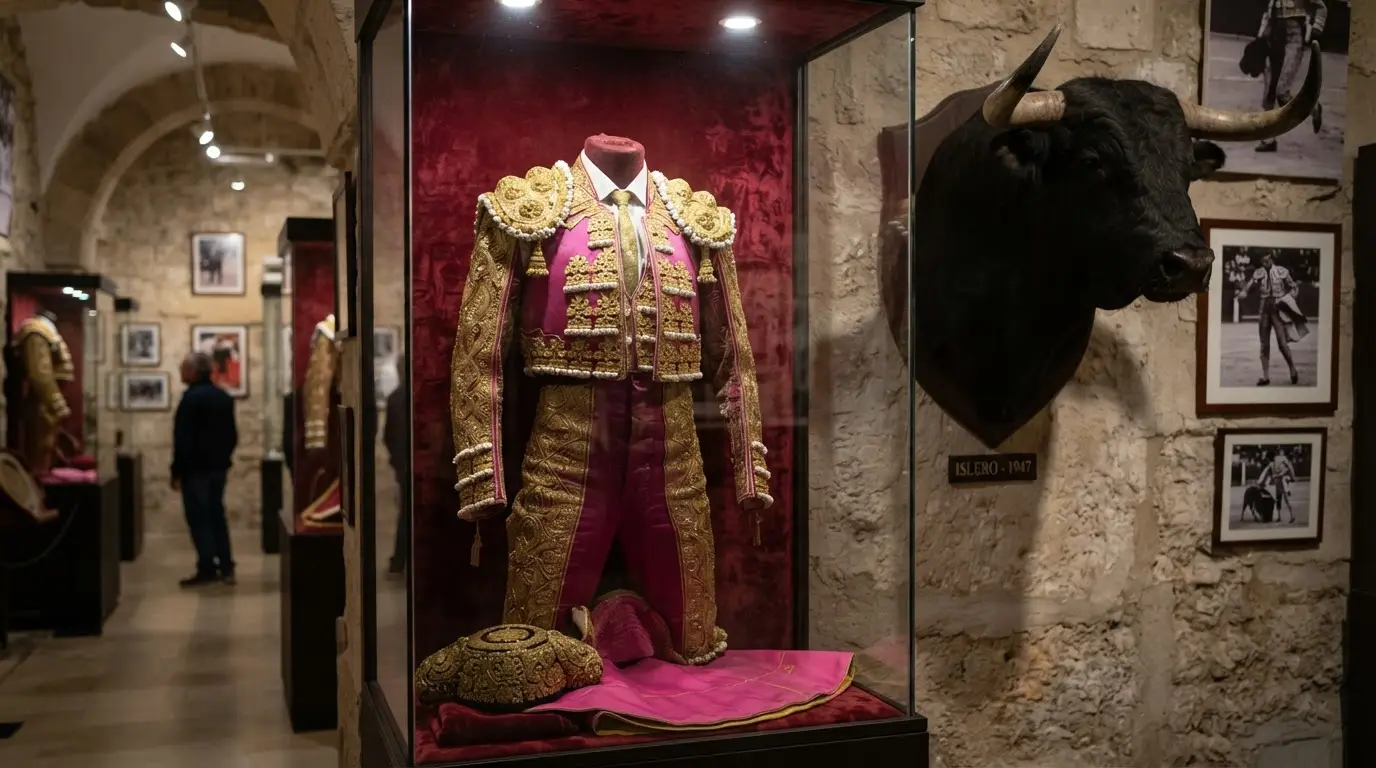
Manolete: Córdoba's Last Sad God of the Ring
Art history background with eight years writing interpretive content on Córdoba's Caliphal heritage.
- Marble tomb at La Salud
- 15 Oct 1951
- Remains lie beneath Amadeo Ruiz Olmos's recumbent marble statue[25]
In this article
Jump to a section
Santa Marina, a dead father and a way up
The technique nobody else had
What was Manolete famous for as a bullfighter?
Rivals, a fourth caliphate and a punishing calendar
Deep dive · Article
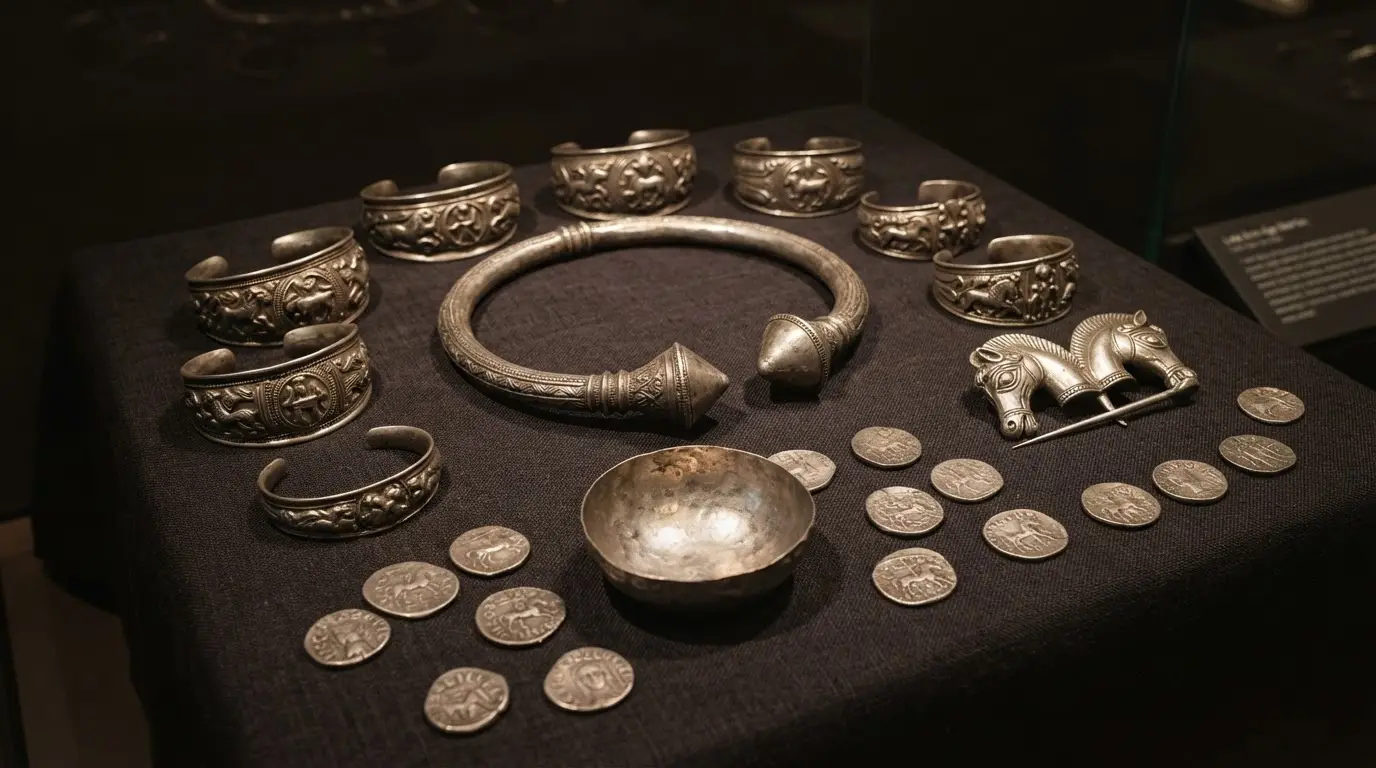
An Andalusian Treasure Has Sat in the British Museum Since 1932
A silver hoard dug up in Córdoba in 1915 left Spain against the law and has been in the British Museum since 1932. Here is how, and what a 2026 study found.
Linares, 28 August: the horn and the long night
Explore nearby · Museum
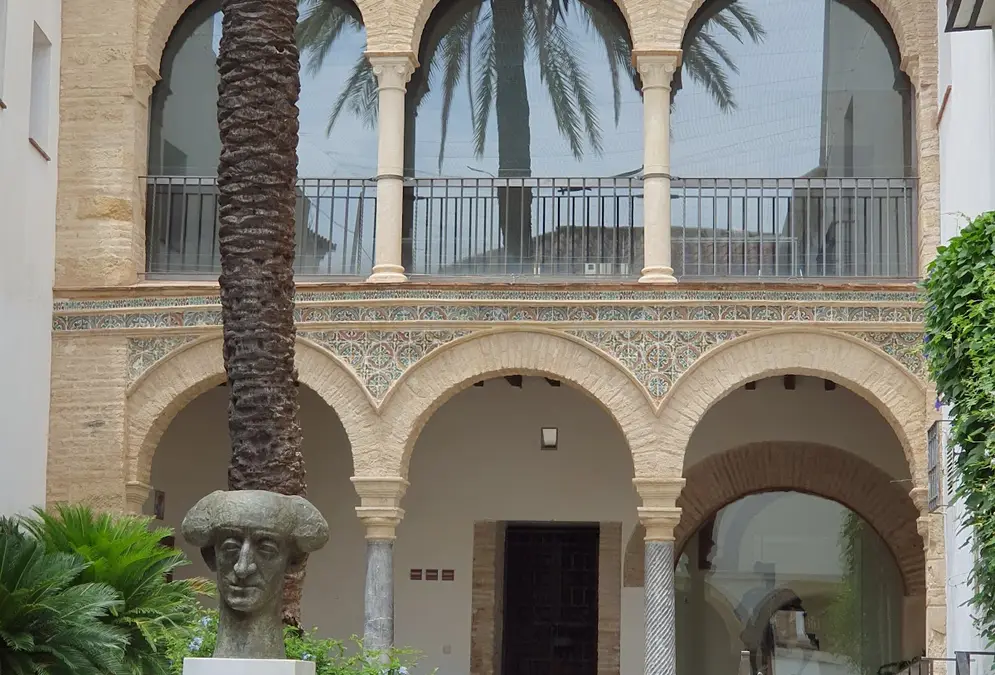
Museo Taurino de Córdoba
Córdoba's bullfighting museum occupies a 16th-century mansion in the Judería. Trace the legacy of five legendary matadors, including Manolete, for just €5.
Recommended tours
Tours are selected for quality, not commission. We earn a small fee if you book — at no extra cost to you.
What happened to Manolete at Linares?
What bull killed Manolete?
When did Manolete die, and how old was he?
What Córdoba keeps of him
- Plaza del Conde de Priego: Manuel Álvarez Laviada's monument, unveiled on 8 May 1956,[19] stands next to the church of Santa Marina, in the neighbourhood where he was born.[20]
- The Museo Taurino on Plaza de Maimónides occupies a former 16th-century aristocratic mansion,[21] and in winter it opens Tuesday to Friday from 8:15 to 20:15.[22] Adult admission is €5 on the council's current schedule.[23]
- Cementerio de Nuestra Señora de la Salud: he was buried on 29 August in the Sánchez de Puerta family pantheon,[24] and since 15 October 1951 his remains have lain beneath a recumbent marble statue by Amadeo Ruiz Olmos.[25]
- The Coso de los Califas, the bullring named for the five great matadors of the province, from Lagartijo and Guerrita to Manolete and El Cordobés.[12]
Where is Manolete buried?
Frequently asked questions
How did Manolete die?
Where can you see Manolete's memory in Córdoba?
What are the Museo Taurino's hours and admission?
Sources
38 references Show Hide
- Turismo de Córdoba — Manolete biography (opens in a new tab)
“he died just after five o’clock in the morning on the 29th”
- Wikipedia — Manolete (opens in a new tab)
“un miura de 495 kg, el quinto de la tarde, que le atravesó el muslo derecho con uno de sus pitones”
- Wikipedia — Manolete (opens in a new tab)
“Manuel Laureano Rodríguez Sánchez (4 July 1917 – 29 August 1947), known as Manolete, was a Spanish bullfighter.”
- en.andalucia.org — Manolete 4th caliph of cordoba (opens in a new tab)
“he was unable to withstand a final transfusion of plasma brought from Madrid.”
- Turismo de Córdoba — Manolete2 (opens in a new tab)
“Manuel Rodríguez Sánchez, "Manolete", was born on July 4, 1917, in the traditional neighbourhood of Santa Marina.”
- Turismo de Córdoba — The manolete route2 (opens in a new tab)
“after his father died, when Manolete was only five, his family moved from the house in Calle Conde de Torres Cabrera to a more modest home in Plaza de la Lagunilla.”
- Turismo de Córdoba — Manolete biography (opens in a new tab)
“He was formally presented as a bullfighter (known as “taking the alternative”) in Seville on 2nd July by Chicuelo, with Gitanillo de Triana as witness.”
- Wikipedia — Manolete (opens in a new tab)
“remaining in one spot and linking four or five consecutive passes into a compact series. He popularized the "Manoletina"”
- ebsco.com (opens in a new tab)
“He was renowned for his technique, in which he stood very close to the bull, a method that continues to be copied by young bullfighters today.”
- Turismo de Córdoba — Manolete biography (opens in a new tab)
“Ricardo García “K-Hito", the veteran bullfighting journalist, gave him the nickname of "Monstruo” (Monster).”
- en.andalucia.org — Manolete 4th caliph of cordoba (opens in a new tab)
“he was soon declared as the 4th undisputed Caliph of bullfighting, following on from Rafael Molina "Lagartijo”, Rafael Guerra Guerrita” and Rafael Gonzalez Madrid "Machaquito”.”
- en.andalucia.org — 16982101 (opens in a new tab)
“The name of the Caliphs is in honour of the five great matadors of the province: Lagartijo, Guerrita, Machaquito, Manolete y el Cordobés.”
- museotaurinodecordoba.es — Califas (opens in a new tab)
“Tuvo una gran rivalidad con el mexicano Carlos Arruza y el español Luis Miguel Dominguín.”
- Turismo de Córdoba — The manolete route2 (opens in a new tab)
“Manolete bought this house from the Cruz Conde family in 1942.”
- Turismo de Córdoba — Manolete biography (opens in a new tab)
“1943. He became the best known bullfighter with 71 appearances, including five in Madrid.”
- Turismo de Córdoba — Manolete biography (opens in a new tab)
“1944. Once again he was the bullfighter with the most appearances, appearing 92 times, five of them in Madrid.”
- spanish-fiestas.com (opens in a new tab)
“then came his second bull, the fifth of the day. The bull was called Islero and it was a truly fierce Miura.”
- rarenewspapers.com (opens in a new tab)
“General Francisco Franco, then dictator of Spain, ordered three days of "national mourning", during which only funeral dirges were heard on the radio.”
- Turismo de Córdoba — Manolete2 (opens in a new tab)
“Created by sculptor Manuel Álvarez Laviada (Trubia 1894 - Madrid, 1958), it was unveiled on May 8, 1956.”
- en.andalucia.org — Manolete 4th caliph of cordoba (opens in a new tab)
“Still in Cordoba, there is grandiose monument next to the Church of Santa Marina in honour of his memory.”
- Turismo de Córdoba — Bullfighting museum (opens in a new tab)
“The Bullfighting Museum of Cordoba is situated in Plaza Maimonides, very close to the Cardinal Salazar Hospital, and occupies a former 16th century aristocratic mansion.”
- museotaurinodecordoba.es (opens in a new tab)
“Martes a Viernes - 8:15h a 20:15h”
- Turismo de Córdoba — 202010160837150000001602830235.2683.pdf (opens in a new tab)
“Museo Taurino Adultos 5€”
- Wikipedia — Manolete (opens in a new tab)
“Fue enterrado el 29 de agosto en el panteón de la familia Sánchez de Puerta, íntimos amigos del torero”
- Turismo de Córdoba — The manolete route2 (opens in a new tab)
“since 15th October 1951, his remains have lain beneath a graceful recumbent statue carved in marble by the sculptor Amadeo Ruiz Olmos.”
- museotaurinodecordoba.es (opens in a new tab)
“Martes a Domingo - 8:15 a 14:15h”
- Britannica (opens in a new tab)
“Sad-faced and sober, Manolete became noted for his extreme economy of movement and his dispassionate demeanour”
- dialnet.unirioja.es (opens in a new tab)
“Manolete fue así el diestro más popular de su tiempo”
- theparisreview.org (opens in a new tab)
“in the first of which, fixed for the 28th, Gitanillo de Triana, Manolete, and Luis Miguel would meet six Miura bulls.”
- dialnet.unirioja.es (opens in a new tab)
“cogido al entrar a matar a su segundo toro”
- zetatijuana.com (opens in a new tab)
“asestando una cornada en el muslo derecho, perforándole el triángulo de Scarpa, interesándole la arteria femoral”
- en.andalucia.org — Manolete 4th caliph of cordoba (opens in a new tab)
“The bull's name was Islero and was black, with white hairs and fierce.”
- alicante.es (opens in a new tab)
“nace en Córdoba el 4 de julio de 1917, y fallece a los 30 años de edad en la ciudad jaenera de Linares, el 29 de agosto de 1947.”
- inspain.org (opens in a new tab)
“El Hospital de San José y San Raimundo de Linares también es conocido como el Hospital de los Marqueses de esta localidad y lugar en el que murió el torero “Manolete” (1947).”
- en.andalucia.org — Manolete 4th caliph of cordoba (opens in a new tab)
“His remains lie in a mausoleum which is open to visits in the Cemetery of Nuestra Señora de la Salud.”
- andalucia.org (opens in a new tab)
“El sepulcro está rematado por una bella estatua del califa, labrada en mármol por el escultor e imaginero Amadeo Ruiz Olmos.”
- zetatijuana.com (opens in a new tab)
“Fue sepultado el 29 de agosto, en el panteón de la Familia Sánchez de Puerta, donde permaneció cuatro años hasta el 15 de octubre de 1951, al concluirse su mausoleo, obra de Amadeo Ruiz Olmos.”
- significantcemeteries.org (opens in a new tab)
“Avda. de los Custodios s/n”