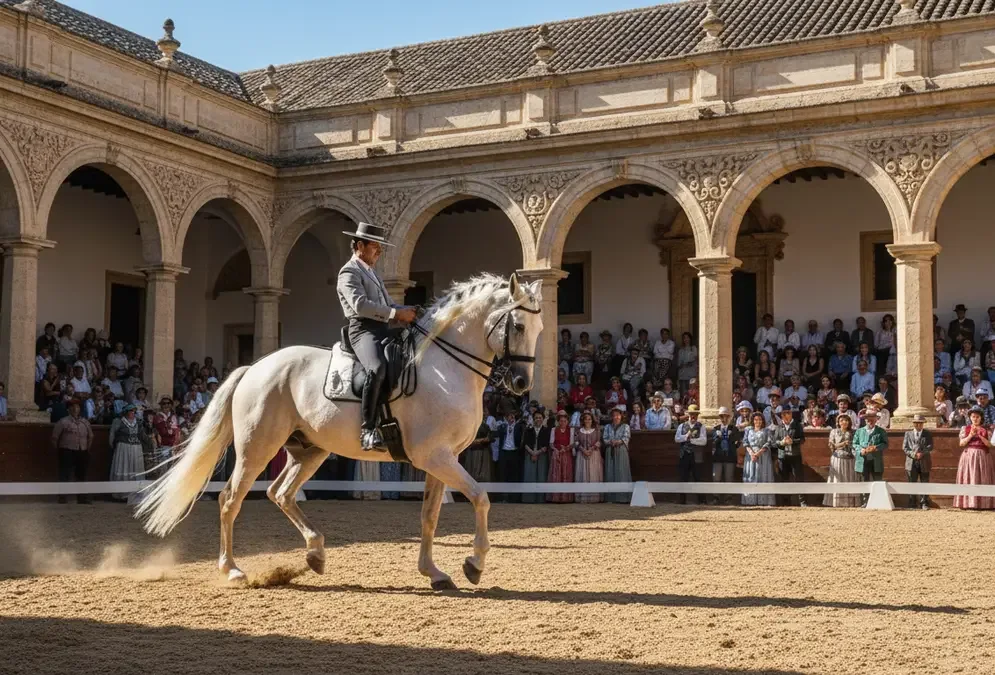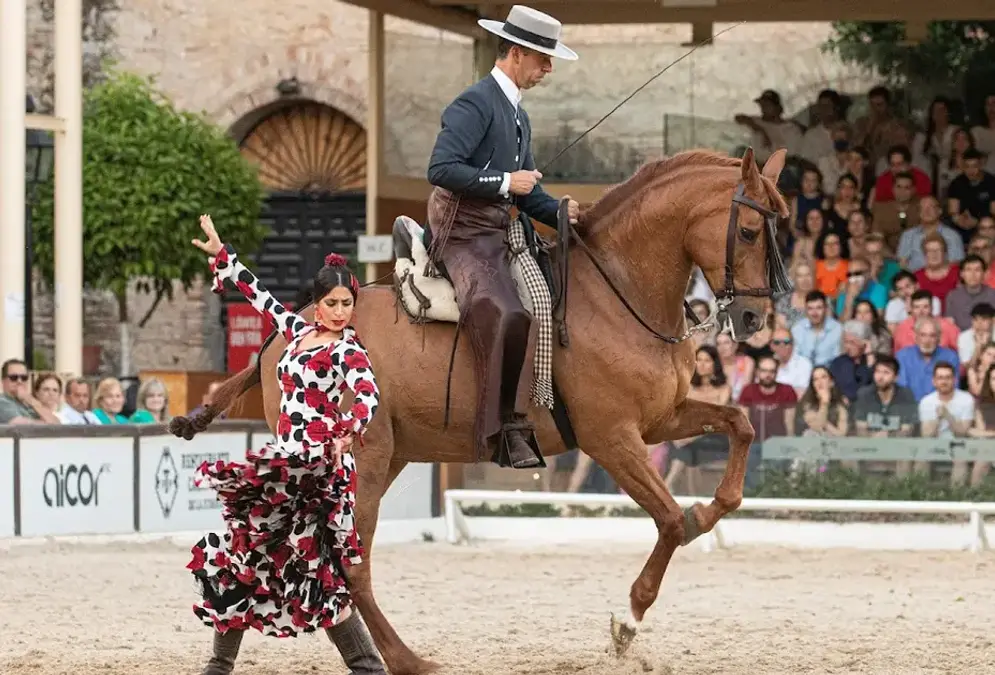

The Caballerizas Reales de Córdoba are where the Pure Spanish Horse was developed, the breed that became the Andalusian. Federico García Lorca called them the 'cathedral of horses'. Designated a National Historic Monument and inscribed in UNESCO heritage, they host the equestrian show 'Pasión y Duende del Caballo Andaluz' — a 70-minute performance combining classical dressage, vaquera riding, and flamenco.
When to Visit
Best season
Year-round (indoor evening show, climate-controlled)
Quietest hours
Arrive 30 minutes before the show to see the stables without crowds
Visit duration
70-minute show plus 30 minutes for stable visit
The Birthplace of the Andalusian Breed
Built in 1568 on the orders of Philip II, the stables were created to develop a horse suited to the Spanish cavalry. The Renaissance stone vaulting and cobbled courtyards reflect the investment the Crown made in this project. The stud farm ran for centuries, producing stallions whose descendants are bred in Spain and exported worldwide today.
At its peak under Philip II and Philip III, the royal stud at Córdoba maintained over 1,000 horses and employed grooms, farriers, veterinarians, and trainers drawn from across Andalusia. The Pure Spanish Horse — compact, arched neck, high-stepping action — was the product of selective breeding here, combining Iberian stock with Berber bloodlines brought across the Strait of Gibraltar. The same breeding principles still govern Andalusian horse production today.
Book central seats if the show is the point
The central grandstand gives the clearest view of the choreography and dressage figures. If you are coming specifically for the performance, do not leave that to chance.
The Equestrian Show
The equestrian show runs on the original stable floor. Hooves on the stone, the close proximity of the horses, and the flamenco soundtrack make for a different atmosphere than an outdoor arena. Riders in traditional dress perform classical dressage figures — the piaffe, passage, and levade — alongside doma vaquera, the working horsemanship style developed for cattle herding on the Andalusian plains.
The combination of disciplines in a 16th-century building is what sets it apart from similar shows. The horses' physical presence in an enclosed space of this scale is harder to convey in description than in person.