
Where the Neanderthal headline comes from
The summary traces to a 2025 paper in Frontiers in Environmental Archaeology. Its authors, Solano-García and Moigne, say outright that their study concerns Neanderthal subsistence[4] at the site.
The story then travelled by news wire. An EFE dispatch from Granada dated 22 April, reproduced on vivirediciones.es, credited a University of Granada study with showing that southern Iberia's Neanderthals relied mainly on horses, deer and aurochs[5], and attached the label to the 320,000 to 180,000 year range[6]. Murcia Today published an English rewrite with the same framing[7].
The researchers analysed more than 3,500 faunal remains[8]. What emerged was systematic hunting of horses, red deer and large bovids, with meat and marrow prized above the rest[9].
That finding is solid. The label is the part to handle with care, because bones show what was eaten and say nothing about who ate it. Cueva de los Murciélagos at Zuheros is the Subbética cave most readers know; Cueva del Ángel is far older and has much less to show for its people.
What the open-air ground holds
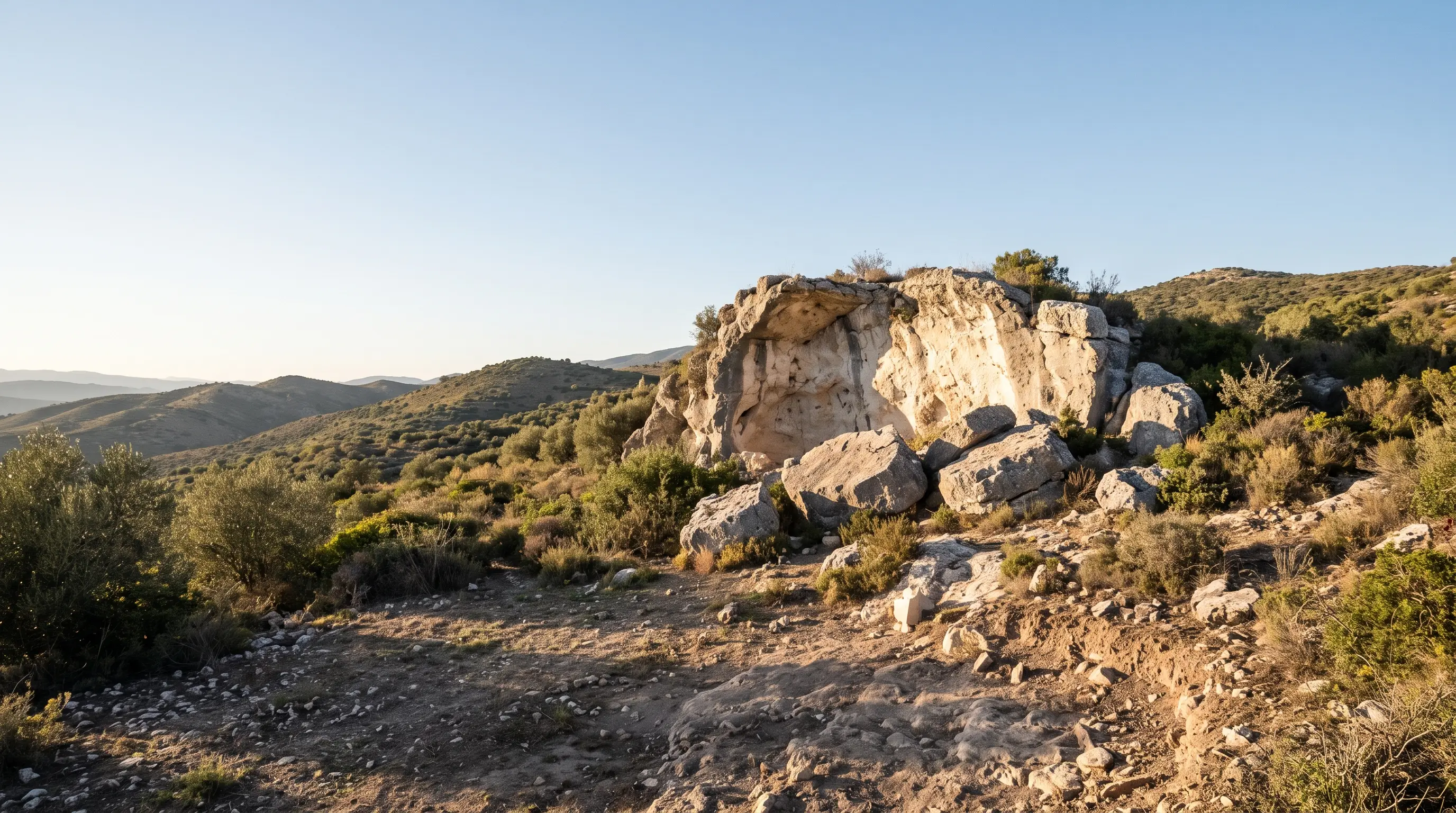
The site sits at 605 m on the southern slope of the Sierra de Aras[10], 5 km south of Lucena[11]. There is no cave to walk into. The walls and roof collapsed at some unknown point, leaving the deposits in the open air[12].
The dig is small and deep: about 100 m² of ground, with at least 5 m of fill[13]. Teams tested it in 1995 and 1996, then returned again and again between 2002 and 2018[14]. A mining shaft, likely from the late 18th century, had already cut a ready-made section through the layers[15].
Explore nearby · Museum
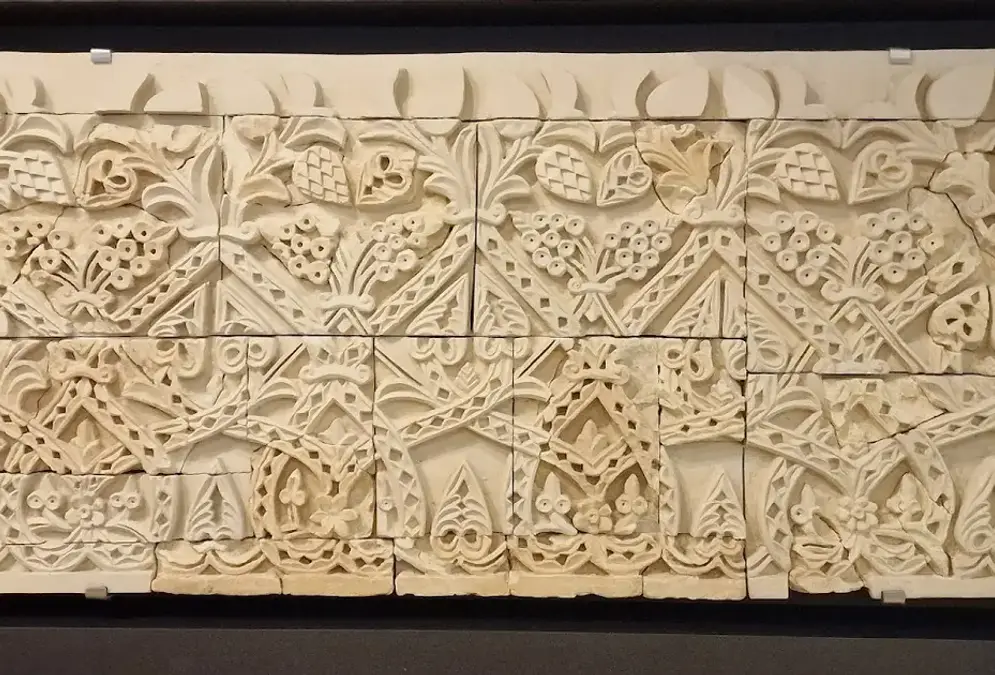
Museo Arqueológico de Córdoba
33,500 pieces in a Renaissance palace built over a Roman theatre: mosaics, Iberian sculpture, Caliphal ceramics. Free for EU citizens. Closed Mondays.
The tools are the clearest evidence. The assemblage includes 46 handaxes[16], the signature tool of the Acheulean, alongside plain flakes. More than 85% of the animal bone shows exposure to fire[17]. The authors read that as support for a hearth reused at the same spot for thousands of years[18], and they present it as a hypothesis.
The dates come as ranges. Electron spin resonance and uranium-series dating of nine horse teeth[19] supports occupation between 320,000 and 180,000 years ago in the 2025 paper[1]; the UCL summary of the earlier dating study gives 350,000 to 183,000[20]. Even the narrower reading covers a long stretch of the Middle Pleistocene, so "a camp" is shorthand for something returned to over a very long time.
Where the label outruns the fossils
The only human remain reported from the site is one tooth[21]. It was dated directly, by amino acid racemization, to 104,300 years ago[2]. That is younger than every date for the main camp: even the late edge of the dated range is tens of thousands of years earlier.
It also came from a loose block from surface cleaning, possibly from eroded upper layers[3]. It cannot be tied to the hunters who left the handaxes.
Its shape is ambiguous. Crown and root morphology fit the Neanderthal pattern[22]. Its size and the missing hypoconulid, a small rear cusp, tend to set it apart from contemporaneous Neanderthals and nearer some Middle Pleistocene populations[23].
Nor is this a last-stand site. Most evidence points to the Iberian Peninsula as the Neanderthals' last refuge[24], and Higham and colleagues' 2014 re-dating found the Mousterian, the Neanderthal tool tradition, ended across Europe by 41,030 to 39,260 calibrated years BP[25]. Cueva del Ángel is far older than that.
So "Neanderthal" is a reasonable working frame, not a result. The handaxes and the fires carry no signature. The one object that might is the wrong age and the wrong context to settle it. A careful reading: hominins used this ground for a very long stretch of the Middle Pleistocene, and who they were is open. For the city's own excavation story, which starts millennia later, see Córdoba's pre-Roman walls.
Before you go: check, then drive
Cueva del Ángel is not a drop-in attraction, and this article cannot give you an hour or a price. Visits have run as municipal guided tours. In 2010 the Lucena museum recorded guided visits every Saturday in the first half of the year, with 3,406 participants[26]. That is a 2010 figure, not a timetable.
Current hours, booking rules and access are not confirmed here. Ask Lucena's museum or its tourist office before you drive out.
The town repays the trip anyway. Lucena's Jewish self-governed city tells the medieval story, a very different layer of time.
Deep dive · Article
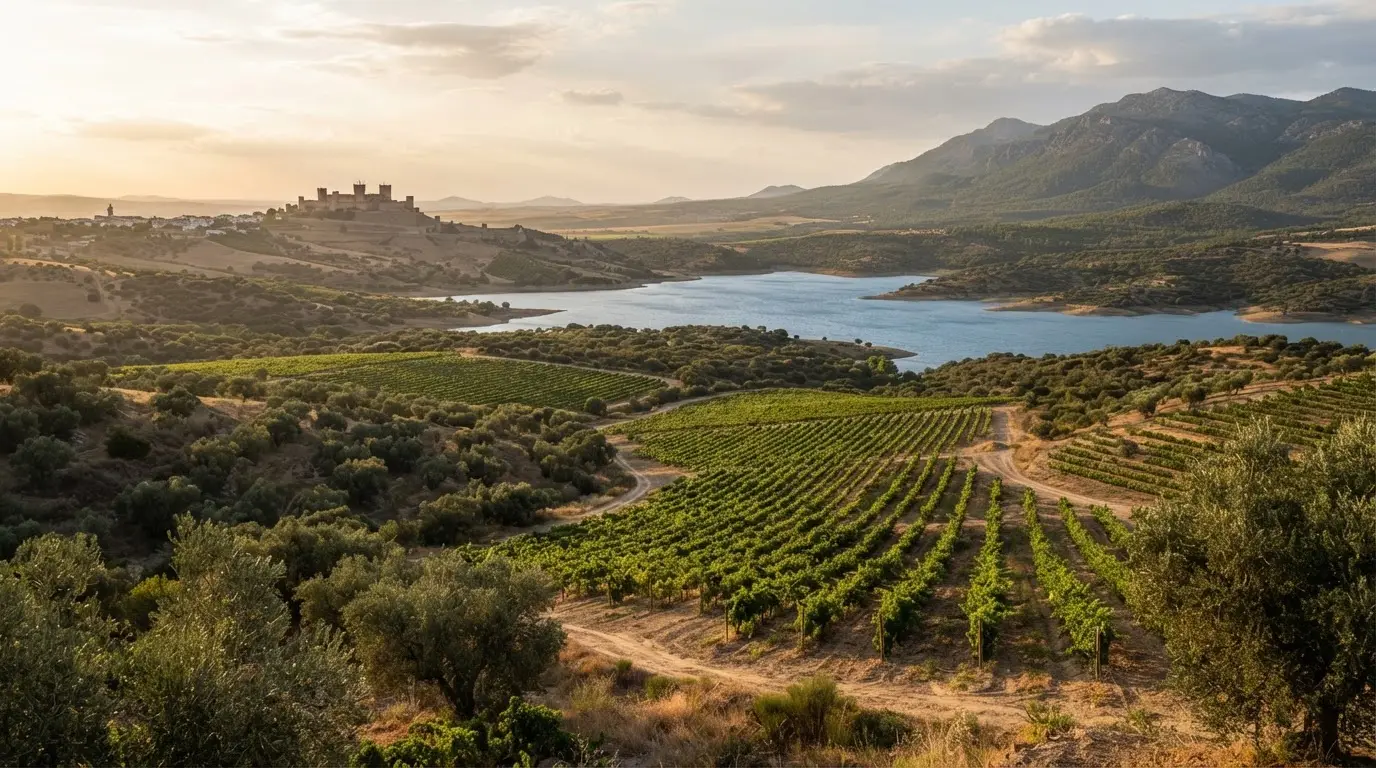
Andalusia Maps a New Route Through Eight Córdoba Landscapes
Andalusia's heritage institute has published a GPX and KML route linking eight Córdoba landscapes, from Medina Azahara to Santa Eufemia. Here is each stop.
Recommended tours
Tours are selected for quality, not commission. We earn a small fee if you book — at no extra cost to you.
Expect open ground and an excavation, not a cavern to walk through, since the roof has gone[12]. The question the stone cannot answer is who sat at that fire. Until another fossil turns up in a datable layer, it stays open.