Articles · Monuments & architecture
Córdoba's monuments: Mezquita, Roman bridge and beyond
From the Mezquita-Catedral's striped arches to the ruins of Medina Azahara, this collection covers Córdoba's monuments one building at a time: what was built when, by whom, and what to actually look for on site.
21 articles
Monuments & architecture: the big picture

Written by
María Fernanda González Ten years covering Córdoba's UNESCO heritage sites, sourcing from Junta de Andalucía documentation.
Córdoba's monuments span two thousand years and three religions, and reading them side by side is the fastest way to understand the city. The Mezquita-Catedral is the obvious starting point: a mosque begun in 785 that became a cathedral in 1236 without ever being demolished, still recognised by UNESCO under the wider title "Historic Centre of Cordoba." Its defining feature, the double-tiered horseshoe arch, was Abd al-Rahman I's solution to a practical problem: the recycled Roman and Visigothic columns he reused were too short, so his builders stacked a second arch on top.
Beyond the mosque, the city holds a full set of monuments from every period it survived. The Roman bridge still carries pedestrians across the Guadalquivir on sixteen arches. The Córdoba Synagogue, built in 1315, is the only surviving medieval synagogue in Andalusia. Eight kilometres outside the city, Medina Azahara, the 10th-century palace-city the Umayyad caliphs built and then lost to civil war, is a UNESCO World Heritage Site in its own right, with barely a tenth of its 112 hectares excavated so far.
Not every ambitious Roman building survived to be seen: a palace at Cercadilla, once one of the largest power buildings in Roman Hispania, was mostly destroyed in 1991–92 by construction of the new AVE train station, which went ahead against technical reports recommending otherwise.
Planning a visit?
For visiting hours, tickets and a route through the city's key monuments: Córdoba architecture guide
More monuments & architecture articles
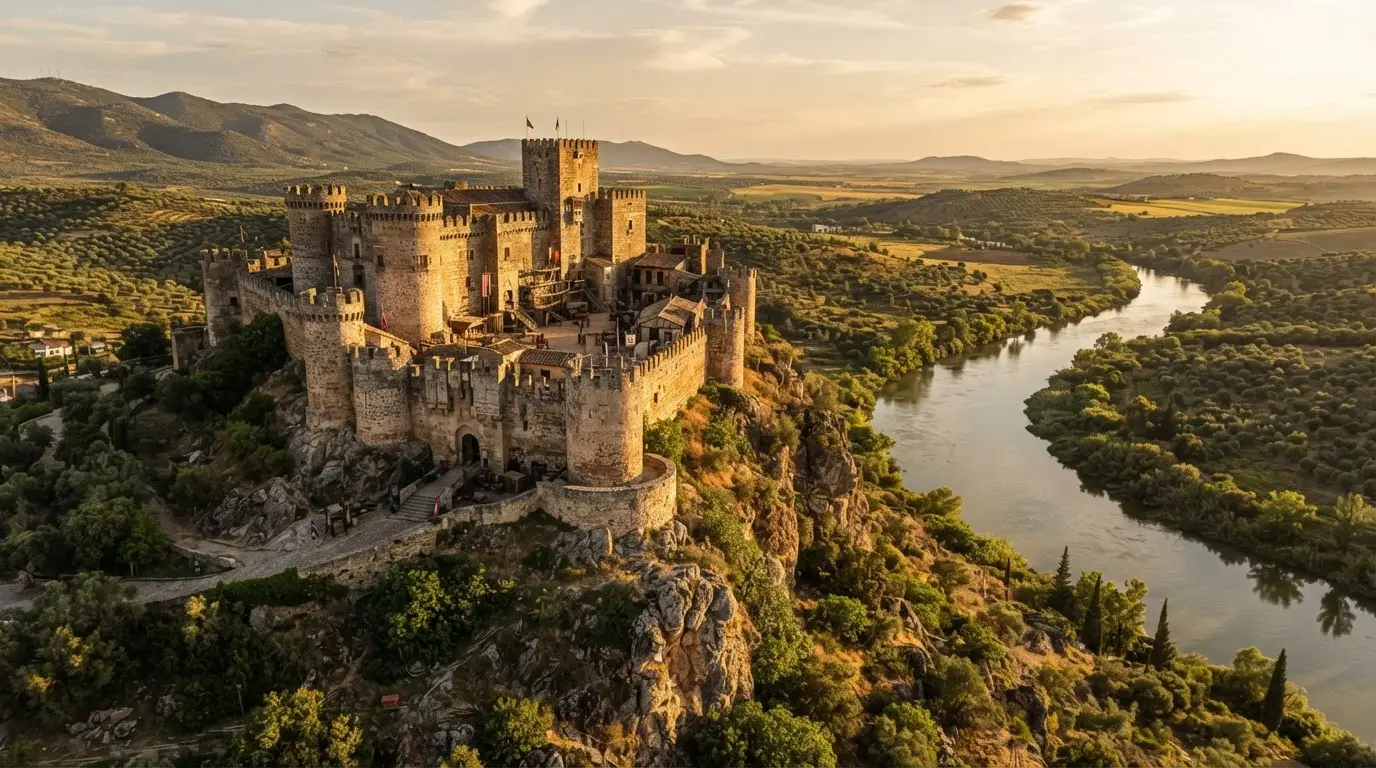
This Andalusian Fortress Has Been a Movie Set for Decades
Sophie Marchand
Long before Game of Thrones, Almodóvar del Río Castle was already a film set — a vintage drinks ad, then, by most accounts, Ava Gardner's last film in 1986.
Read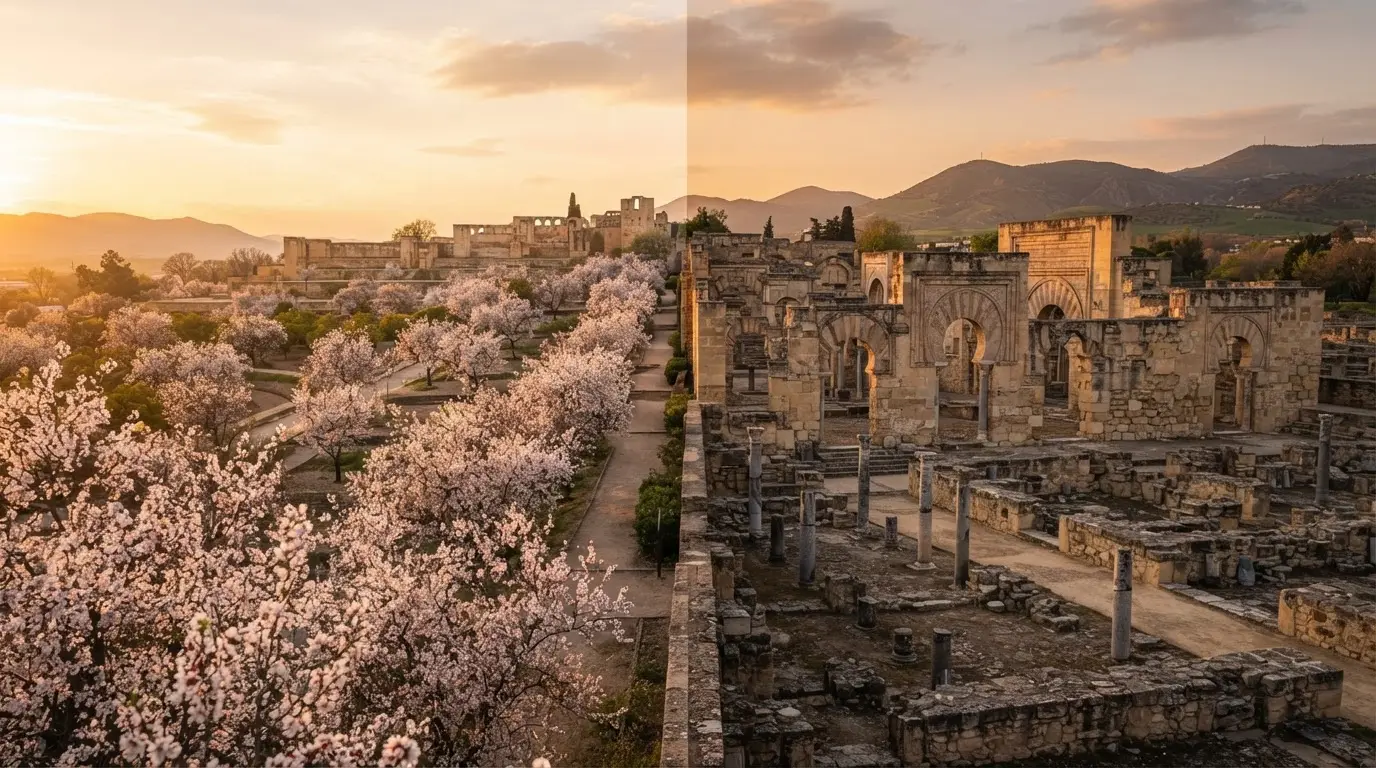
Medina Azahara's Name: Legend vs. What Scholars Say
Sophie Marchand
Legend says a homesick wife inspired Medina Azahara's name; historians read it as Umayyad political branding aimed squarely at rivals in Baghdad and Cairo.
Read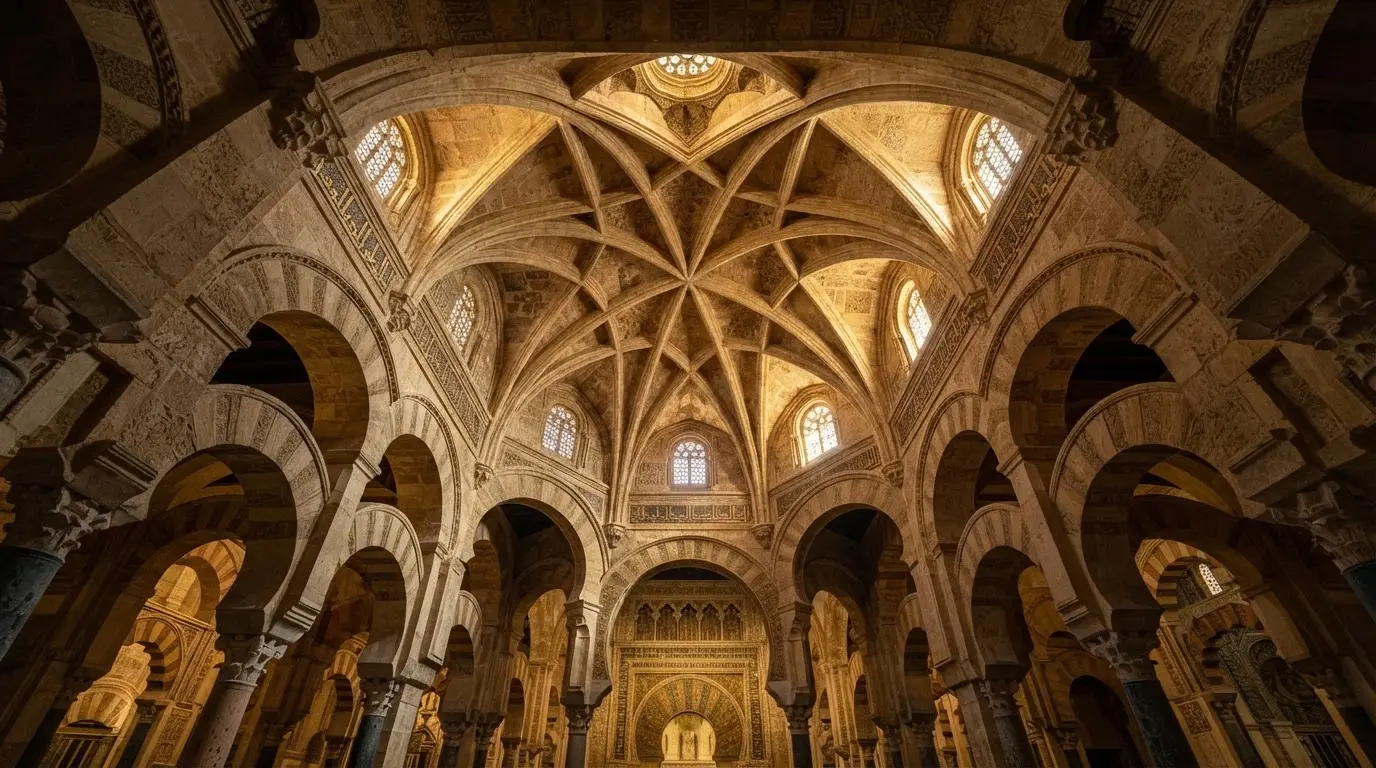
Mihrab Ribbed Dome: Córdoba's Gothic Vault Precursor
Sophie Marchand
Córdoba's mihrab dome used a crossed-arch vault, raised 961–965 CE, predating medieval Europe's rib vaults by a century and read by some as Gothic's precursor.
Read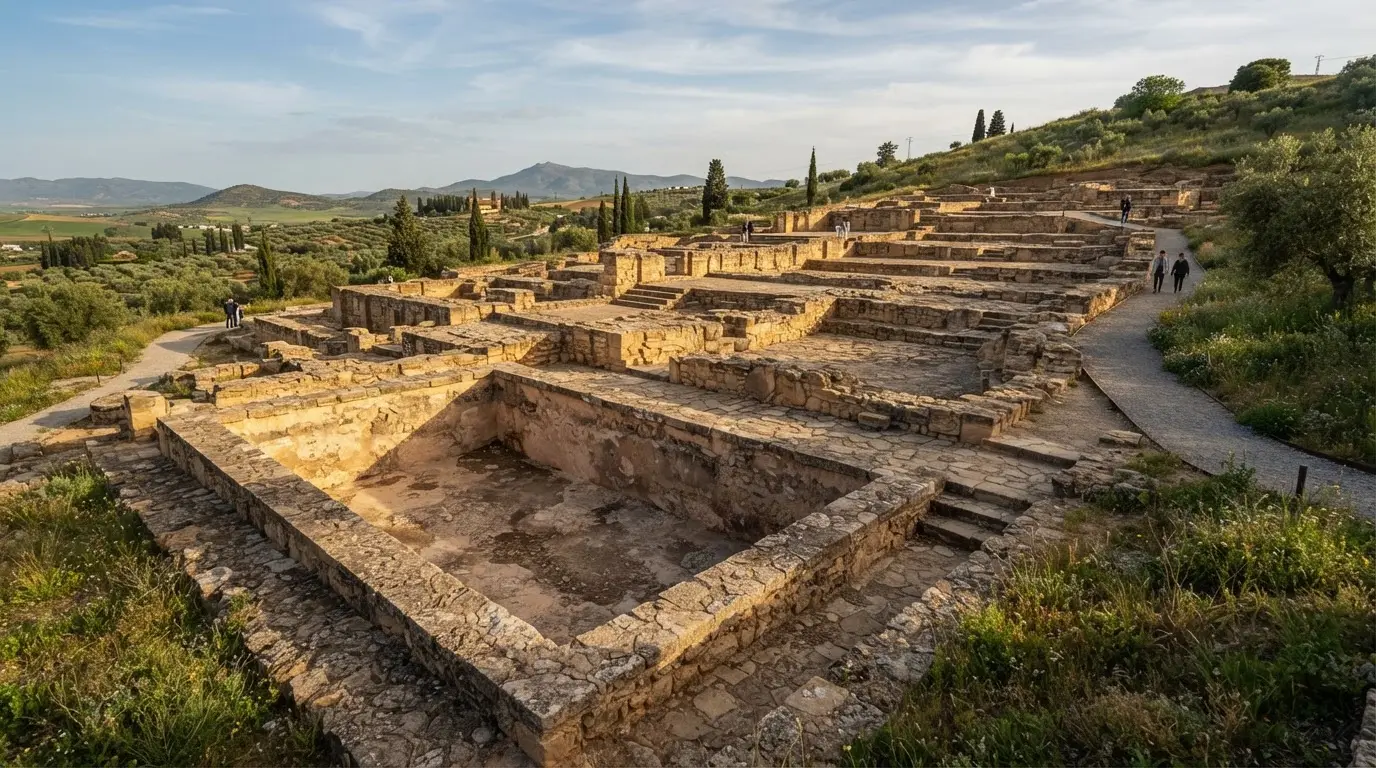
Almunias: Córdoba's Caliphate Gardens Before the Alhambra
Sophie Marchand
Long before the Alhambra's Generalife, Córdoba's Umayyad caliphs built walled garden estates called almunias. Only al-Rummaniyya survives, mostly underground.
Read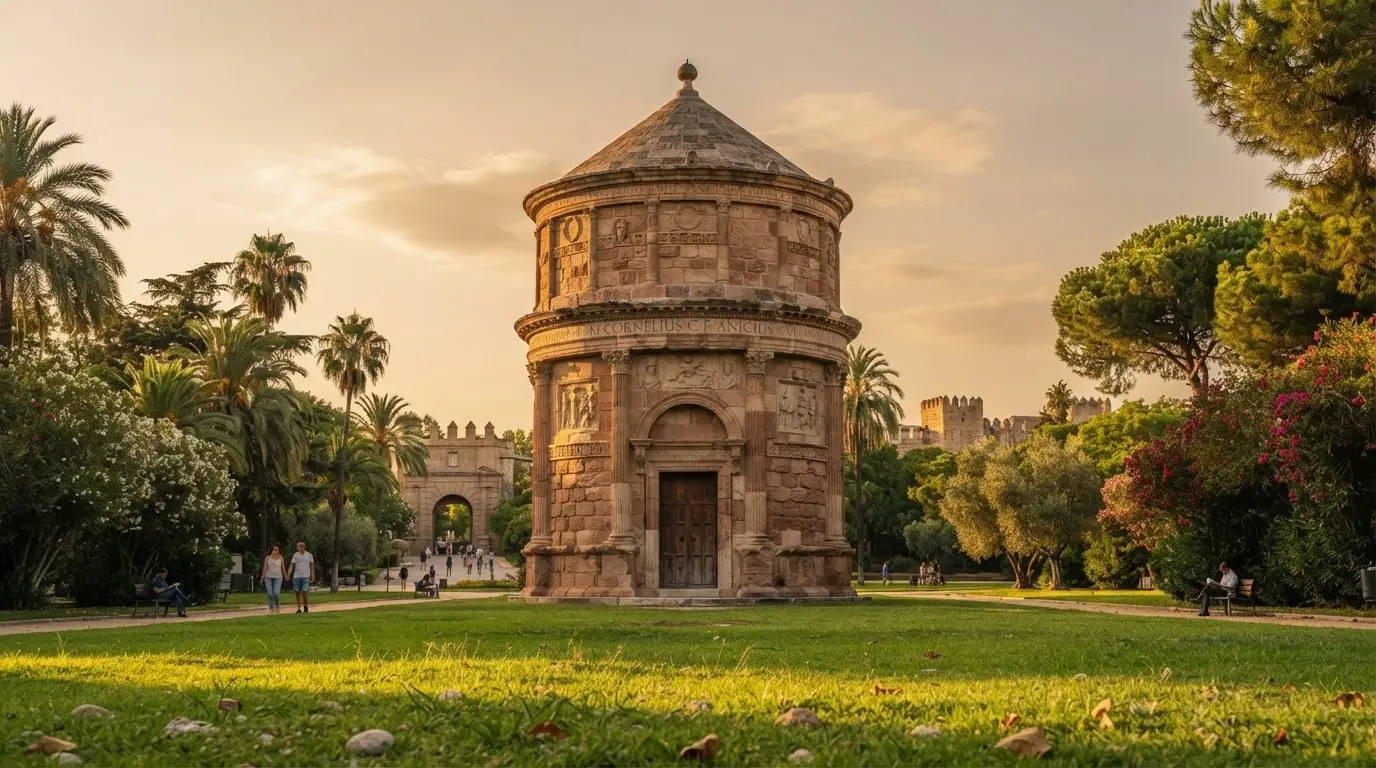
The Roman Mausoleums Hiding in Córdoba's Jardines de la Victoria
María Fernanda González
Two 13-metre Roman mausoleums stand at Córdoba's Puerta Gallegos in the Jardines de la Victoria, hidden until a 1993 dig uncovered the Via Augusta necropolis.
Read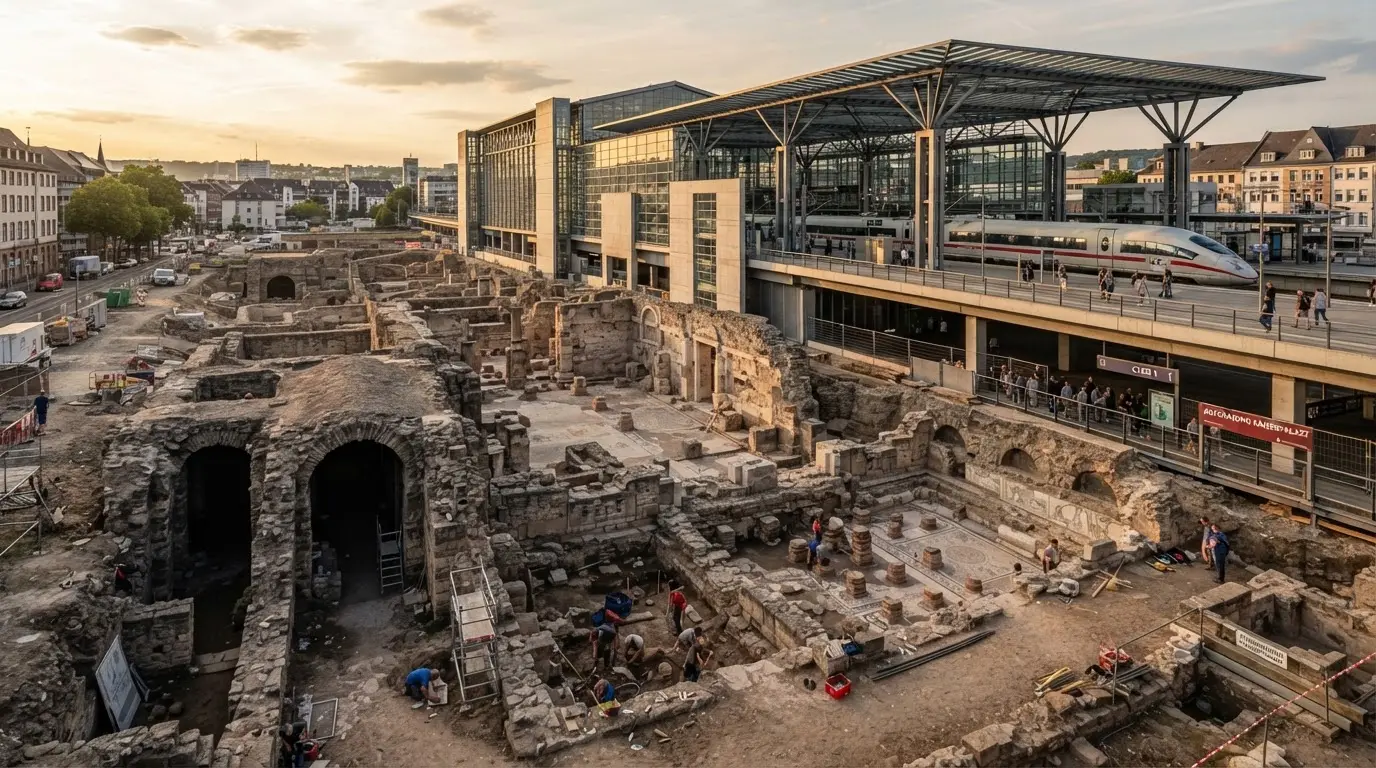
Cercadilla: Córdoba's Roman Palace Bulldozed for a Train Station
Sophie Marchand
Cercadilla was the only Roman palace of its kind ever found in Hispania — until construction of Córdoba's AVE station bulldozed most of it in 1991 and 1992.
Read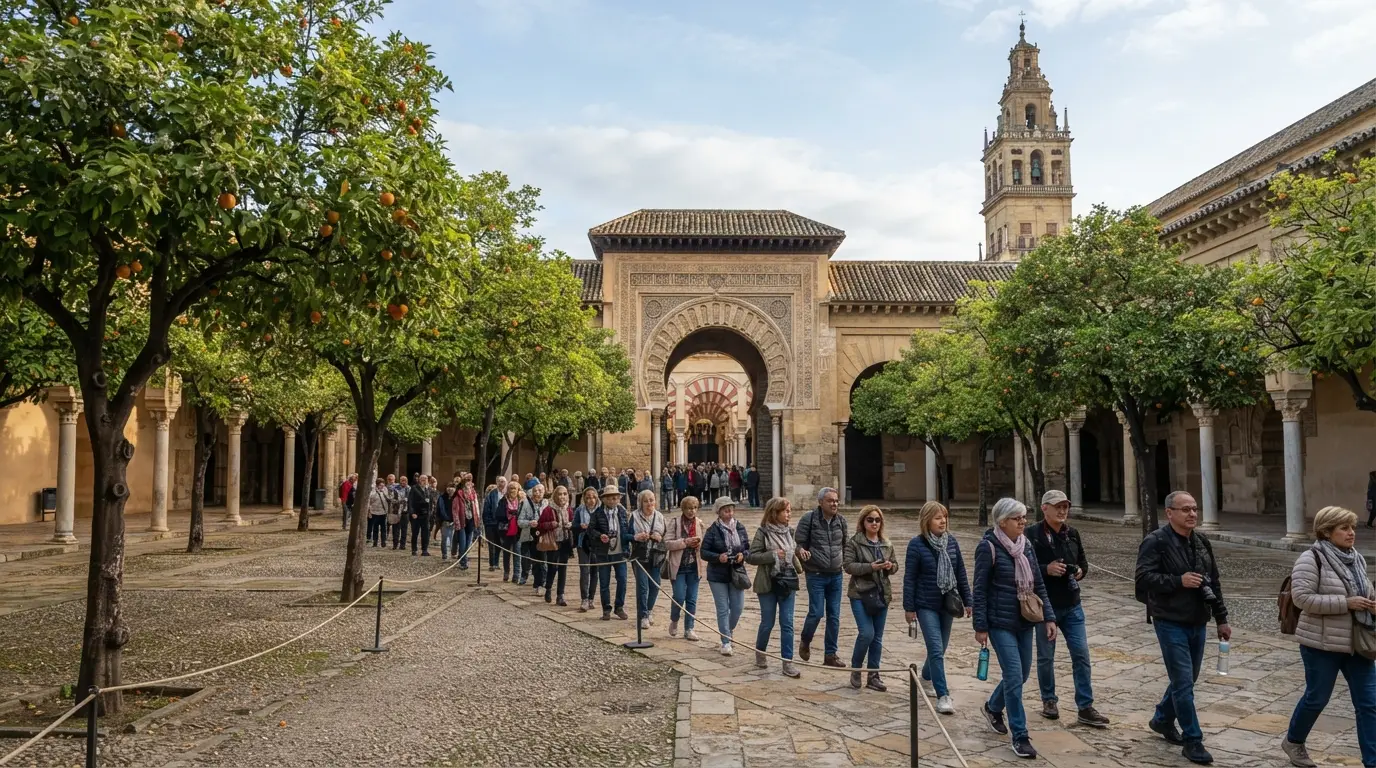
Mezquita Visitors: How Córdoba Handles 2 Million a Year
María Fernanda González Updated
The Mezquita-Catedral drew 2,191,731 visitors in 2025. How its queue flow, €15 ticket and new reception centre manage the crowd, and why its cap rarely bites.
Read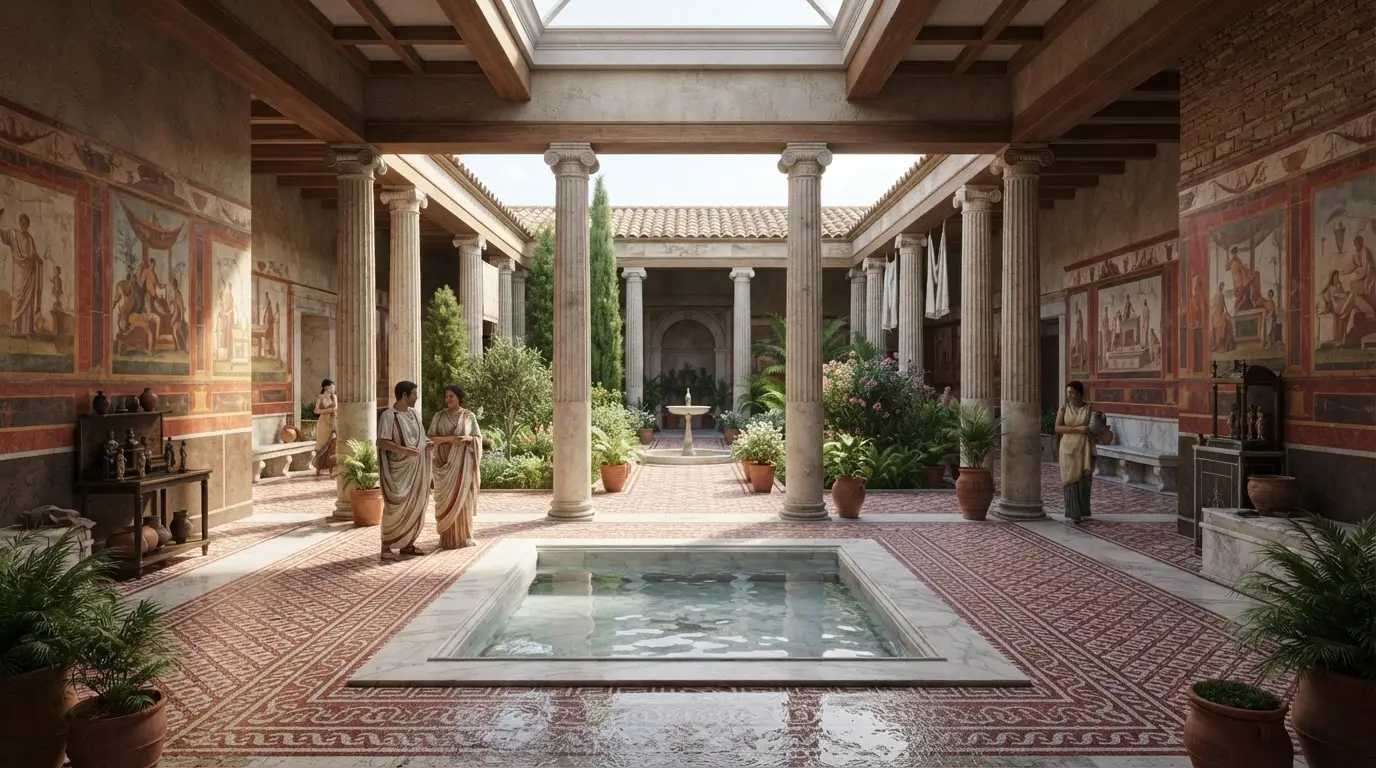
Roman Houses of Cordoba: Elite Life in Colonia Patricia
María Fernanda González Updated
Roman houses in Cordoba, Spain, had atriums, peristyle gardens, and hypocaust floors. Surviving mosaics, frescoes, and the patio tradition they started.
Read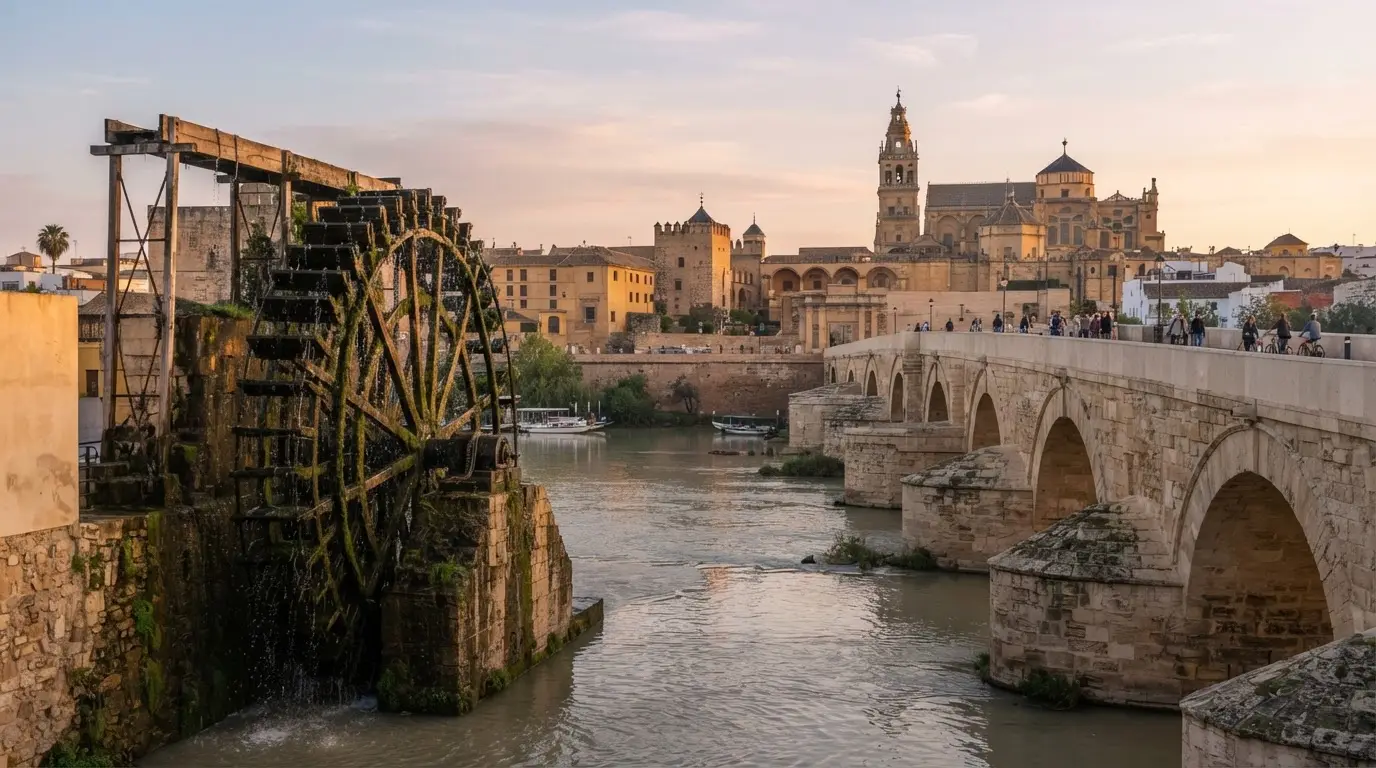
Albolafia waterwheel history: Abd al-Rahman II's Córdoba
Sophie Marchand Updated
The Albolafia waterwheel first appeared on Córdoba's coat of arms in the 1300s, vanished for centuries, and returned in 1983 — not Abd al-Rahman II's work.
Read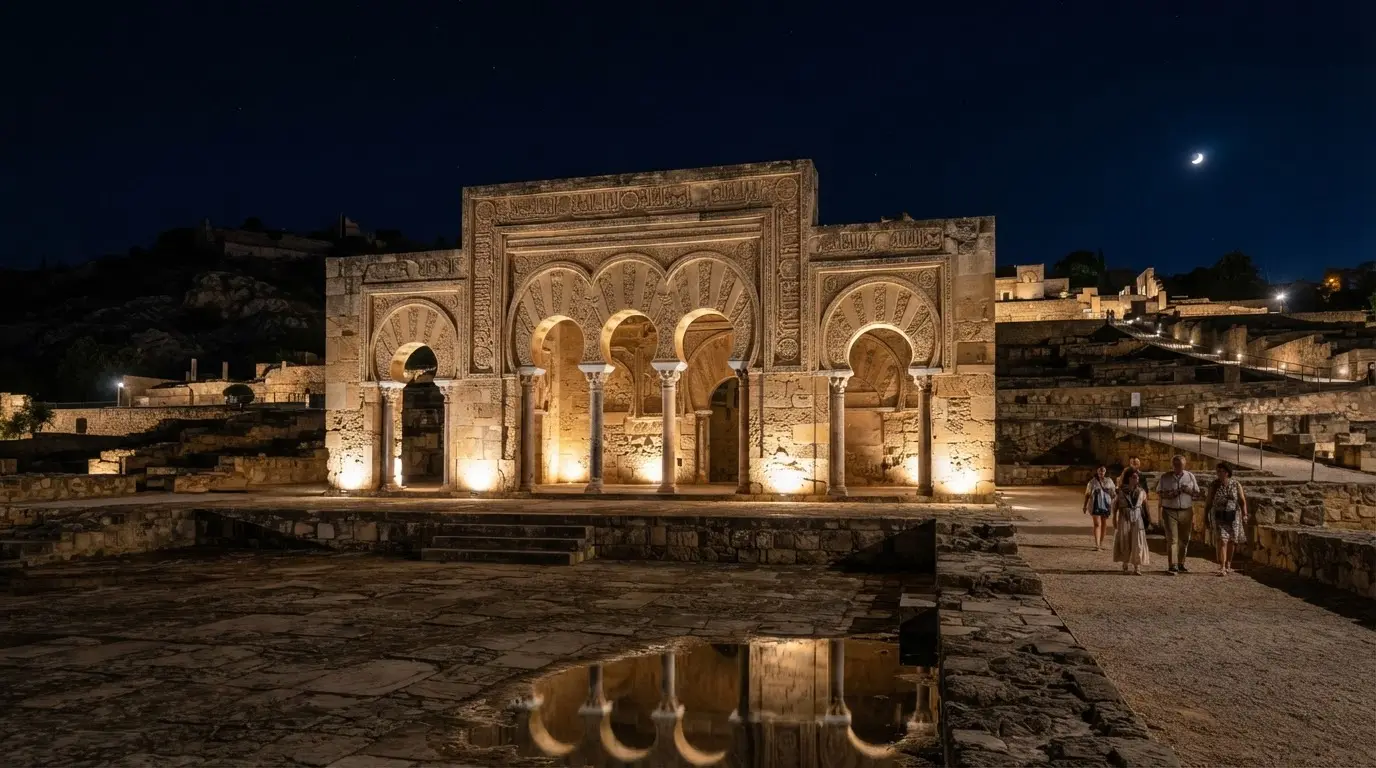
Medina Azahara at Night: Mercury Pools and Reflected Light
María Fernanda González Updated
Medina Azahara night visits run Fri–Sat at 9 p.m. (€15). What chroniclers recorded about the mercury-pool throne room and what the ruins look like after dark.
Read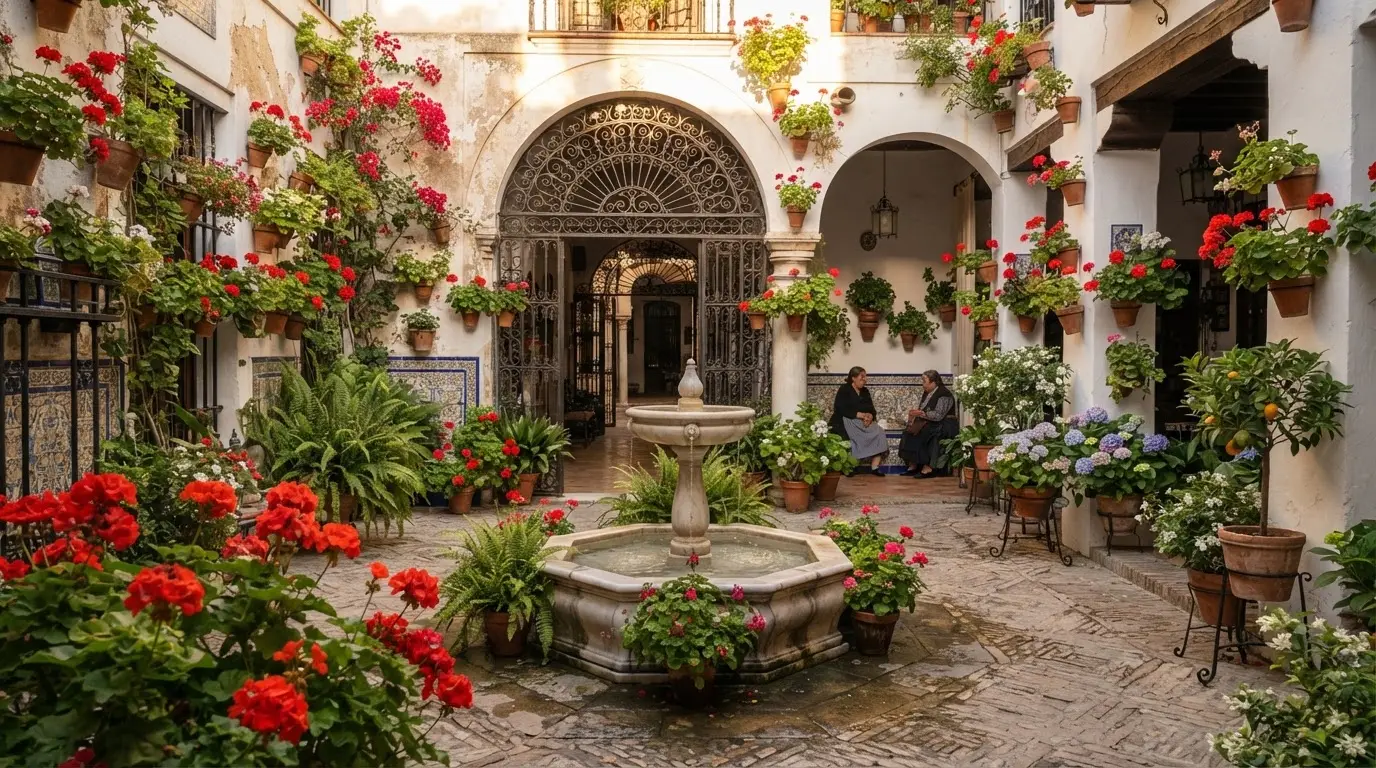
Palacio de Viana's Twelve Patios: A 500-Year Story
María Fernanda González Updated
The Palacio de Viana's twelve patios weren't planned: they accumulated across 500 years and 18 aristocratic owners. How each era shaped a new courtyard.
Read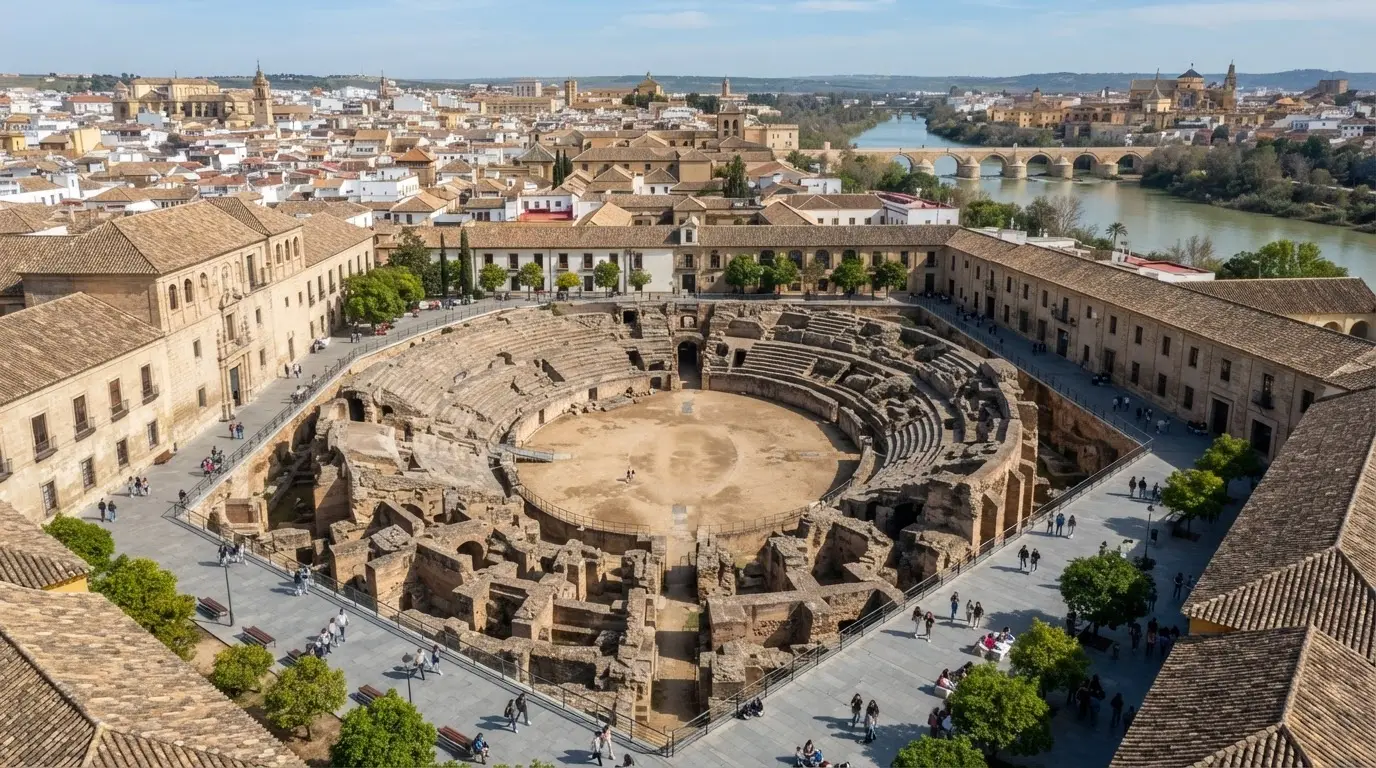
Roman Amphitheatre Córdoba: The Lost Colosseum
María Fernanda González Updated
Córdoba's Roman amphitheatre was discovered in 2002 beneath the university building. At 178m, third-largest in the empire, and still not open to the public.
ReadFrequently asked questions
Why wasn't the Mezquita demolished when Córdoba became Christian?
Unlike mosques in Seville and Toledo, which were torn down after the Reconquista, Christian authorities chose to insert a cathedral into the standing mosque rather than replace it. Historians point to both practical reasons, since the structure was exceptional, and aesthetic ones: it was considered too remarkable to destroy.
What makes the Mezquita's arches structurally unusual?
Abd al-Rahman I's builders reused short Roman and Visigothic columns that could not reach the height he wanted, so they stacked a lower horseshoe arch beneath a second semicircular arch. The alternating red-brick and white-stone voussoirs of that double-tiered system became a model copied across Islamic architecture in North Africa and al-Andalus.
How much of Medina Azahara has actually been excavated?
Only a fraction. As of 2026, roughly ten percent of the palace-city's 112 hectares has been dug up, meaning most of what Abd al-Rahman III built starting in 936 CE, including entire terrace levels, remains unexcavated.
Is the Córdoba Synagogue still used for worship?
No. Built in 1315, it remained in use until Spain's Jewish community was expelled in 1492. It survives today as the only surviving medieval synagogue in Andalusia, preserved as a monument rather than an active place of worship.
What happened to the Roman palace at Cercadilla?
Archaeologists excavating the site in the early 1990s identified one of the largest Roman power buildings ever found in Hispania, over 80,000 square metres. Despite technical reports opposing destruction, construction of Córdoba's AVE train station went ahead in May 1992, destroying roughly 60 percent of the palace.