UNESCO · 936 CE
Is Medina Azahara worth the trip out of Córdoba?
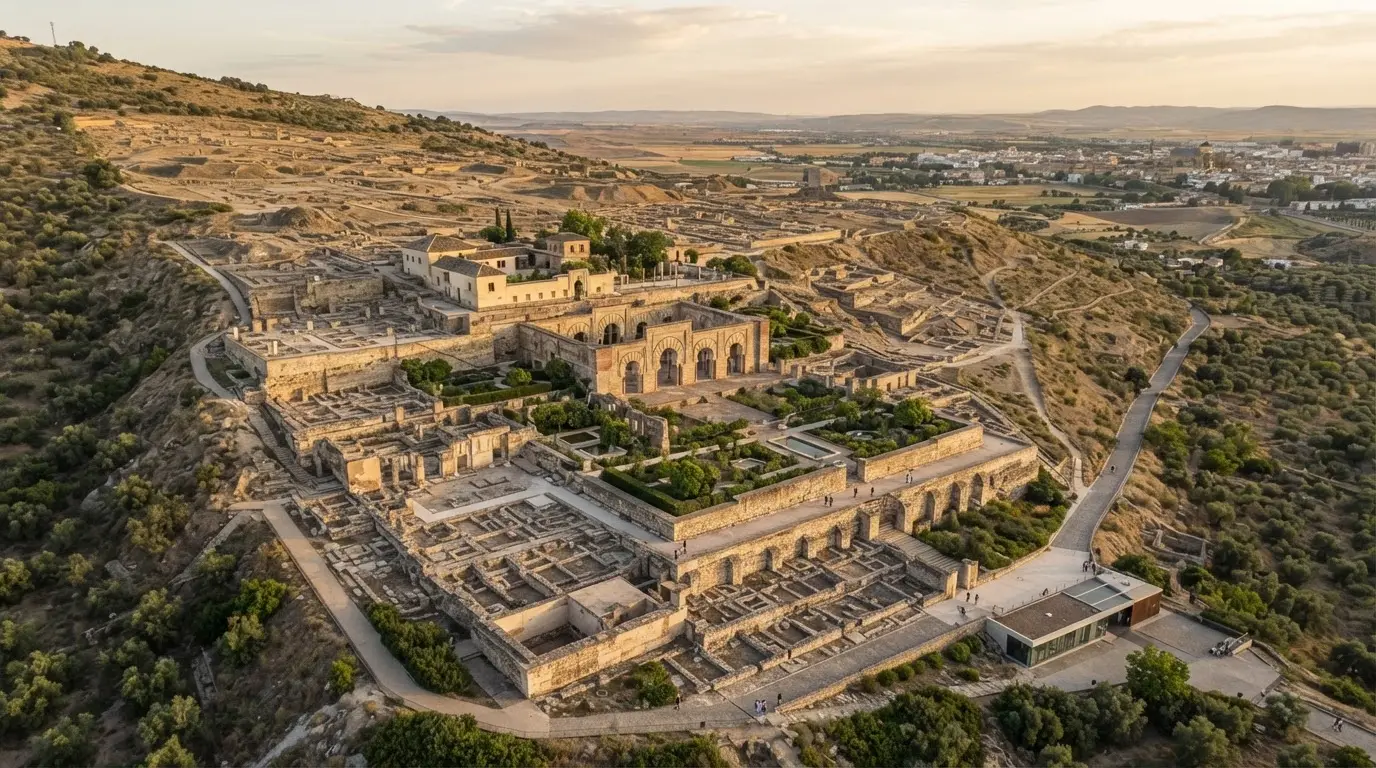
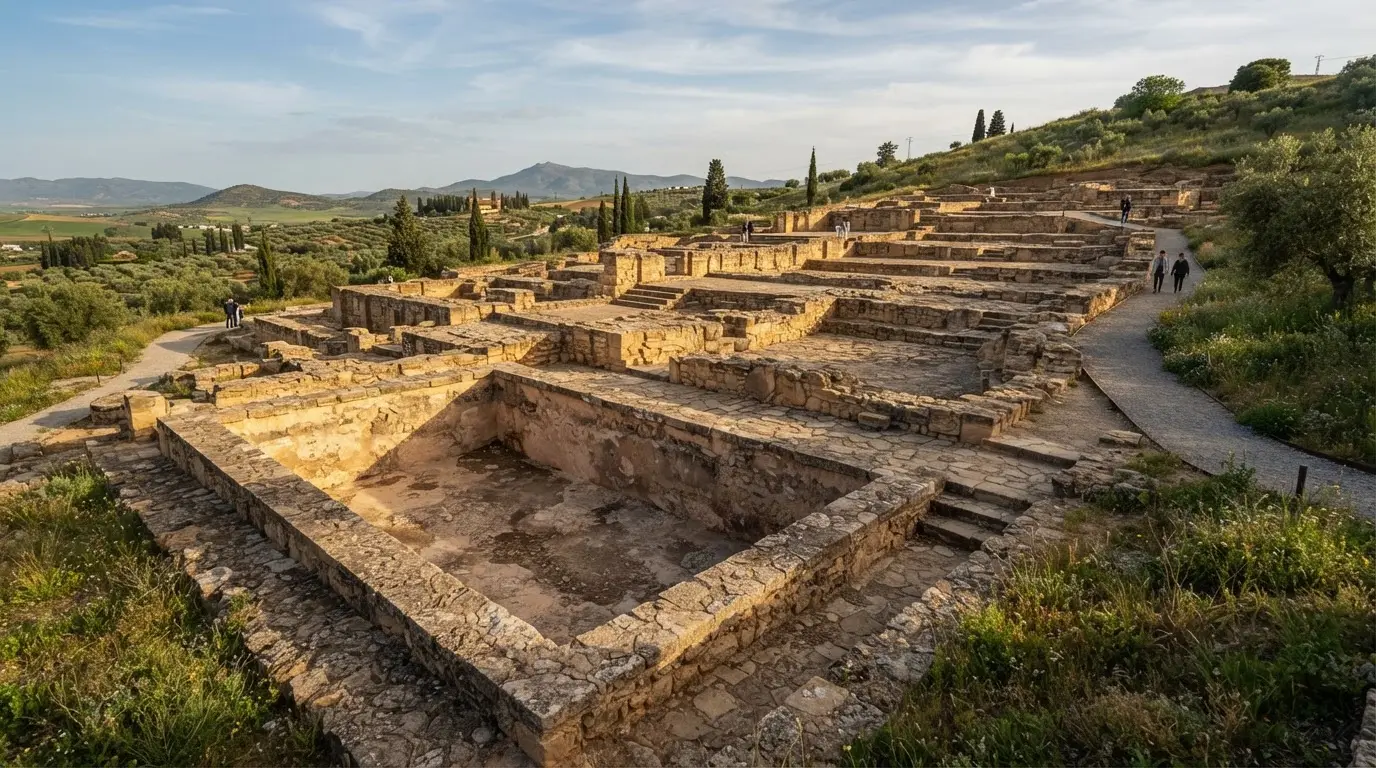
Eight kilometres west of Córdoba, roughly 10% of Abd al-Rahman III's 10th-century palace city has been excavated. What you'll walk through is foundation-level ruins, honest and consequential rather than visually complete, closer to a working dig than a restored monument. This guide gives you the straight verdict on whether it's worth your half-day, and how to read what's actually in front of you once you're there.

Written by
María Fernanda González Ten years covering Córdoba's UNESCO heritage sites, sourcing from Junta de Andalucía documentation.
Updated Published
Abd al-Rahman III began building Medina Azahara 8 km west of Córdoba in 936 CE: a functioning palace city with reception halls, a mosque, gardens, and housing, not just a residence. It stood for barely 75 years before a civil war burned it in 1010, and it stayed underground until 1911. UNESCO inscribed it in 2018. None of that decides whether it belongs on your Córdoba itinerary.
This guide is the verdict: what you'll actually see against what you're picturing, whether the half-day is worth it, and how to read ruins that are mostly foundations. For the full history and for ticket logistics, the companion guides linked throughout cover both in depth.
At a glance
- Visit time
- 2.5–3 hours self-guided, half-day round trip
- Excavated so far
- ~10% of 113 hectares — foundation-level ruins
- Distance from Córdoba
- 8 km west, off the A-431
- Best months
- March–May and October–November
- UNESCO inscription
- July 2018 — Caliphate City of Medina Azahara
- Visit order that works
- Museum first (45 min), then the ruins
In this guide
Jump to a section
Is Medina Azahara worth visiting?
Yes, for the right visitor, and no, for someone else. If you want to see carved marble arcades in front of an evocative ruin and leave it there, Medina Azahara works but doesn't need a special trip. If you're curious about how a 10th-century caliphate projected power through architecture, and you don't mind that most of what you're looking at is foundations rather than standing rooms, it's one of the most rewarding half-days outside the city.
The cost is real: a comfortable half-day, door to door, once you count the 8 km out from Córdoba, the mandatory shuttle, the museum, and the walk through the site itself. That's time you're not spending inside the old town. It's worth paying if you have at least two full days in Córdoba already, so this doesn't come at the expense of the Mezquita-Catedral or the Jewish Quarter.
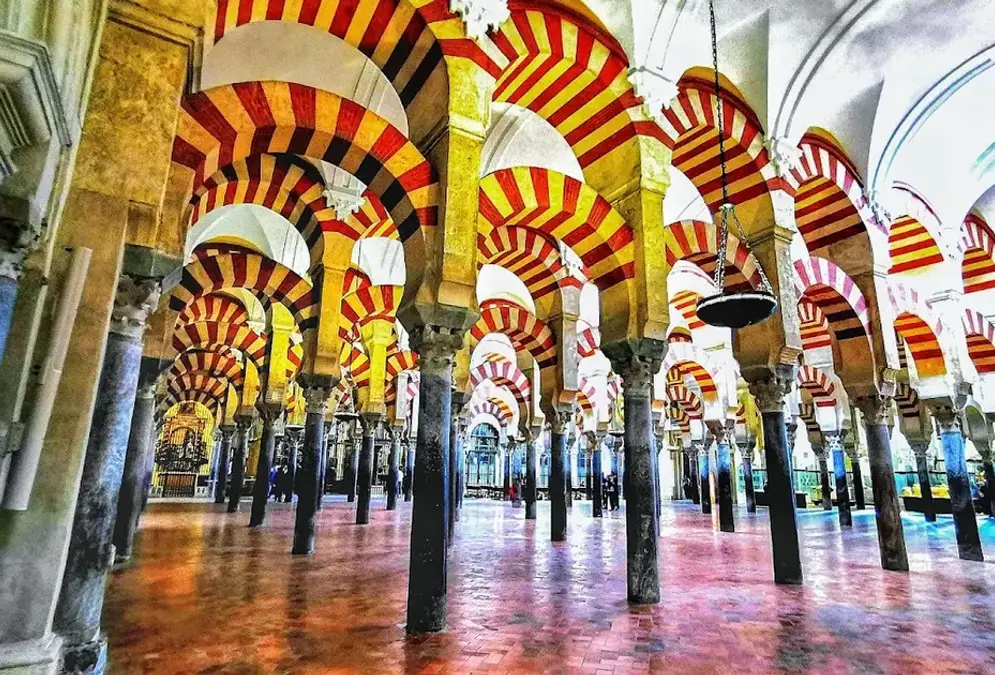
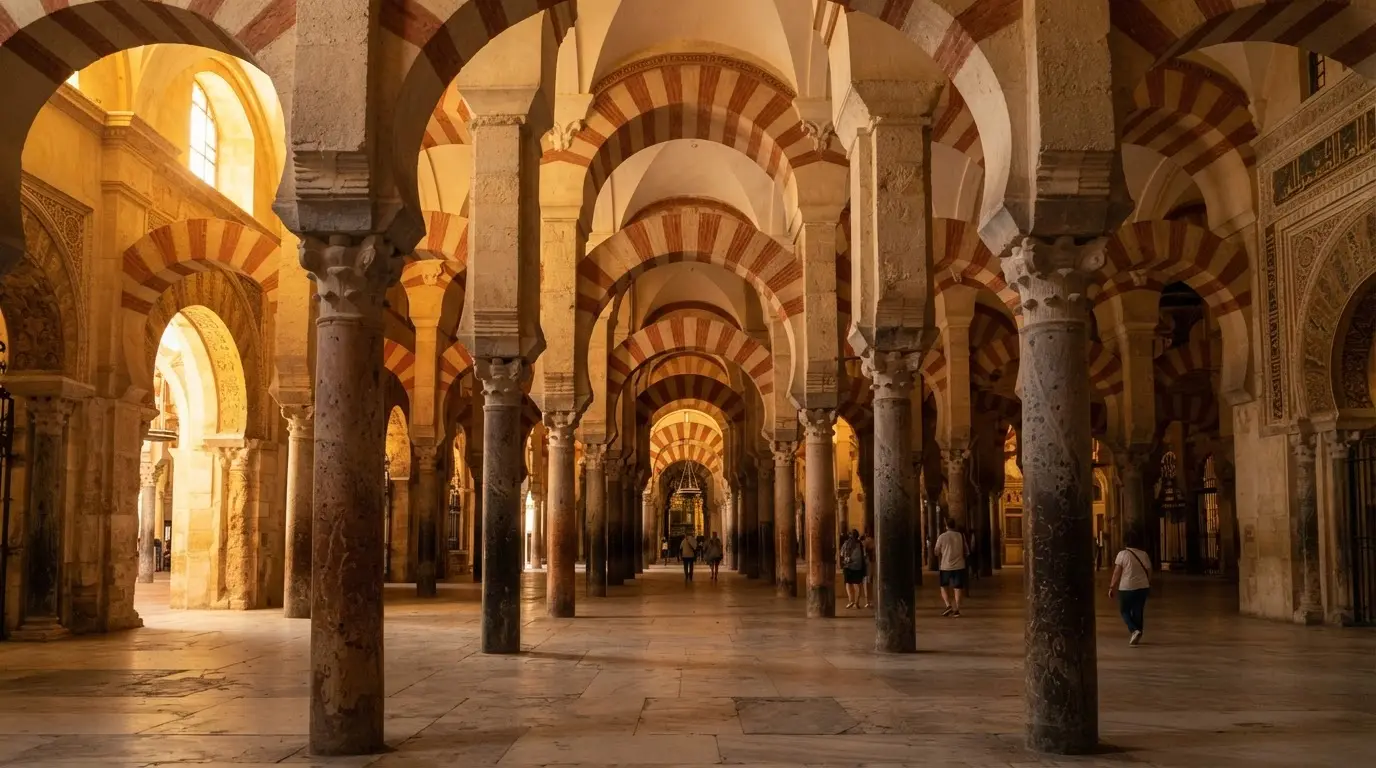
It rewards visitors who've already spent a morning in the Mezquita-Catedral and want the other half of the story: the same caliphate's power expressed outside a religious building, in a purpose-built capital rather than a converted mosque. It disappoints visitors expecting something visually complete. Only about 10% of the site has come out of the ground, and what you can see is mostly outline and foundation, not intact halls.
The honest summary: go for what it means, not for what it looks like from a distance. The next sections cover exactly what that means in practice, and how to look at foundation-level ruins so they tell you something.
The short version: a caliph who declared himself ruler of the Islamic west in 929 built himself a purpose-built capital starting in 936; a civil war burned it in 1010; it sat forgotten until excavation began in 1911. The scholars of the Islamic Golden Age worked under the same caliphal patronage that built these halls. The full arc, from Abd al-Rahman III's political motives to the civil war that ended it, is in the Medina Azahara history guide.
The Salón Rico up close
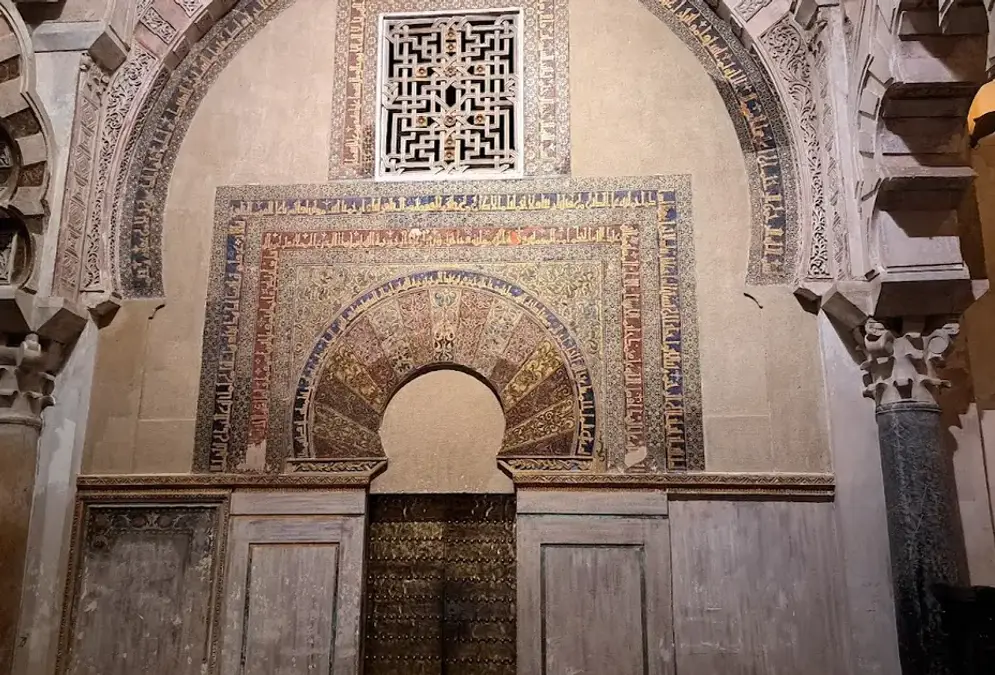
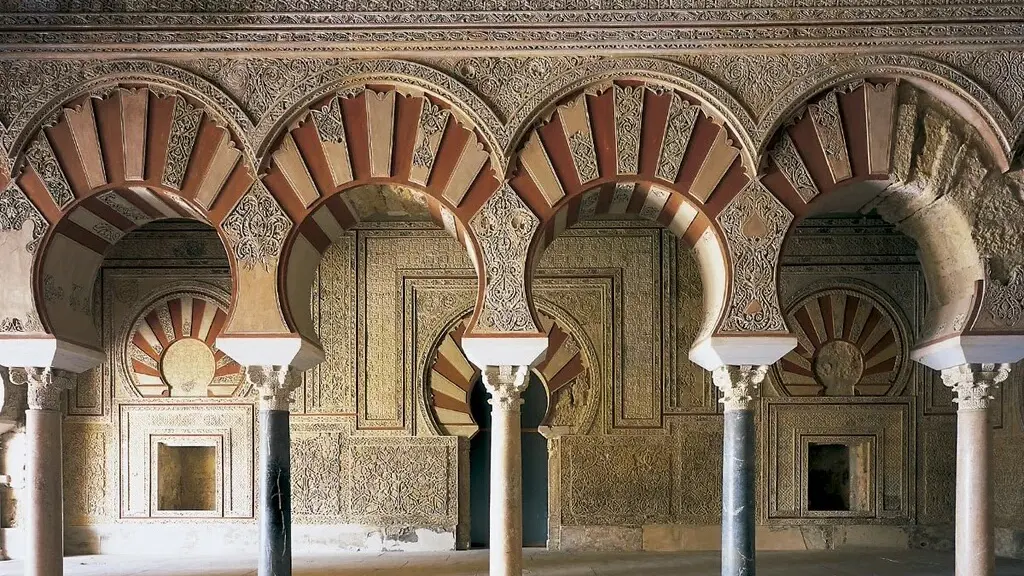
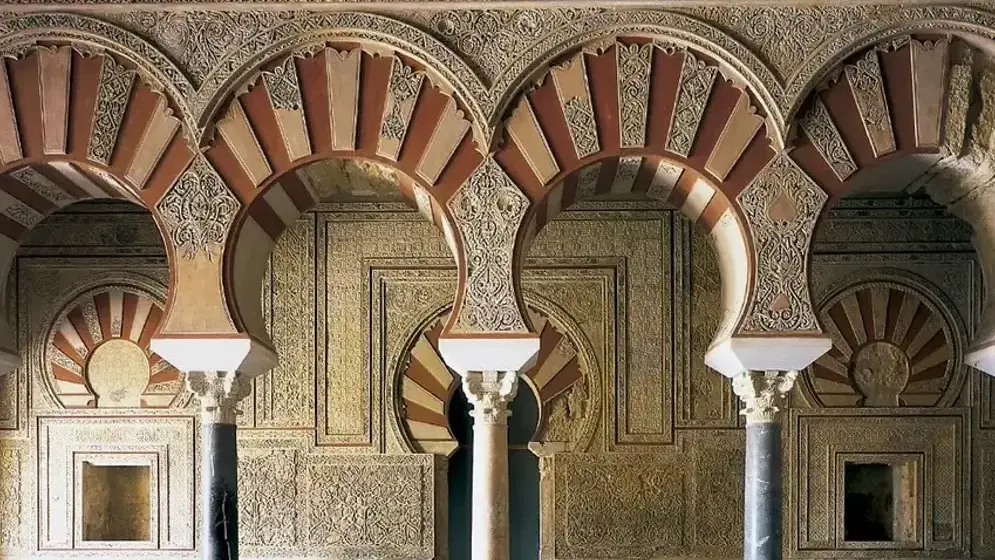
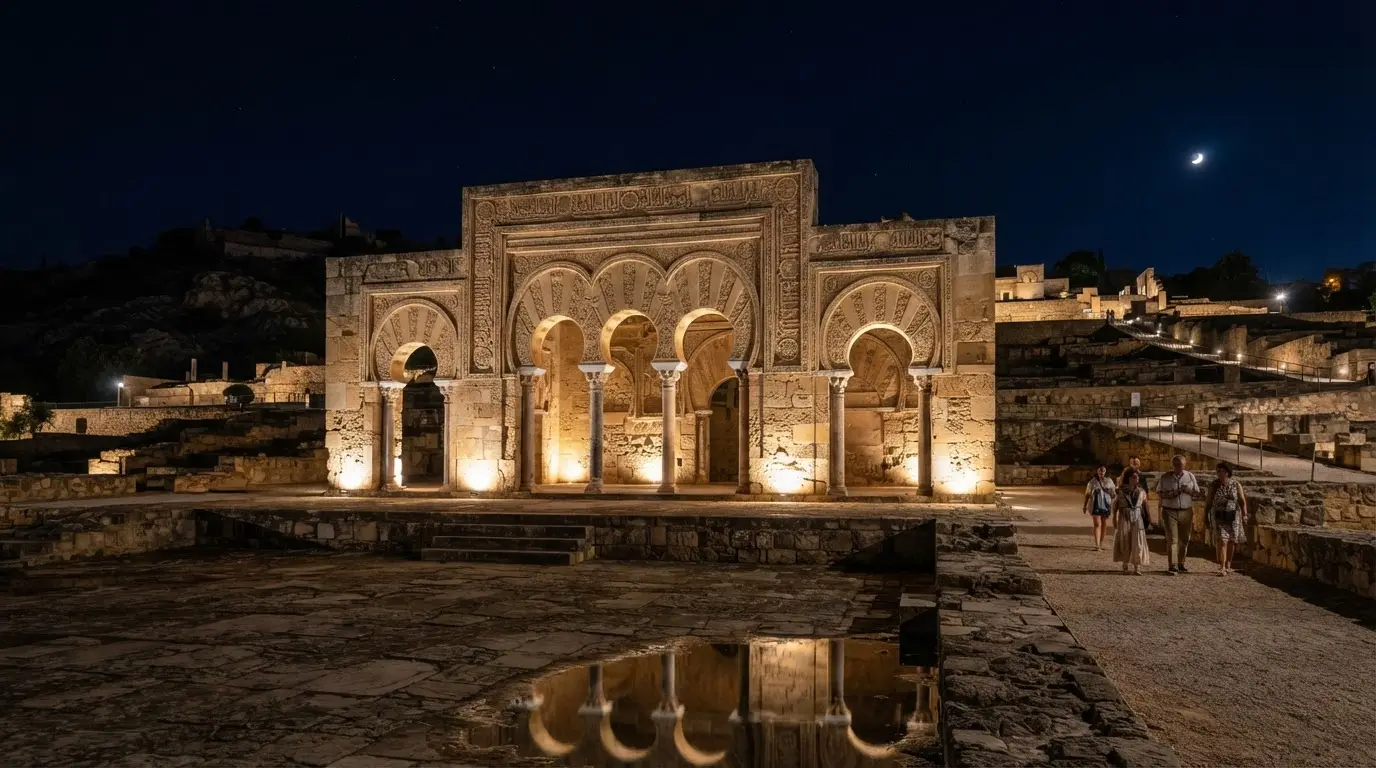
Three horseshoe arches divide the hall lengthwise, carried on marble columns with densely carved capitals. Carved stone panels cover the lower walls: arabesques, vegetal scrolls, and geometric interlace that took teams of craftsmen years to finish. The original polychrome paint is gone, but the carving still holds its depth in strong light.
What you see today is a partial restoration. Archaeologists reassembled panels from fragments found across the site, using the surviving geometry of the patterns to reconstruct the original positions. Some panels are reproductions; the originals are in the on-site museum. The restoration is conservative: nothing is invented where evidence ran out, which means there are gaps, areas of blank wall where the stonework has not been recovered. Those gaps are honest and make the existing carved surfaces more striking, not less.
Room-by-room rundown: the museum, the House of Ja'far, the ceremonial gardens, and the upper terrace viewpoints all have their own write-ups, with hours and booking, in the Medina Azahara tickets and visit guide. What follows here instead is how to actually read what you're looking at once you're standing in front of it.
How to read foundation-level ruins
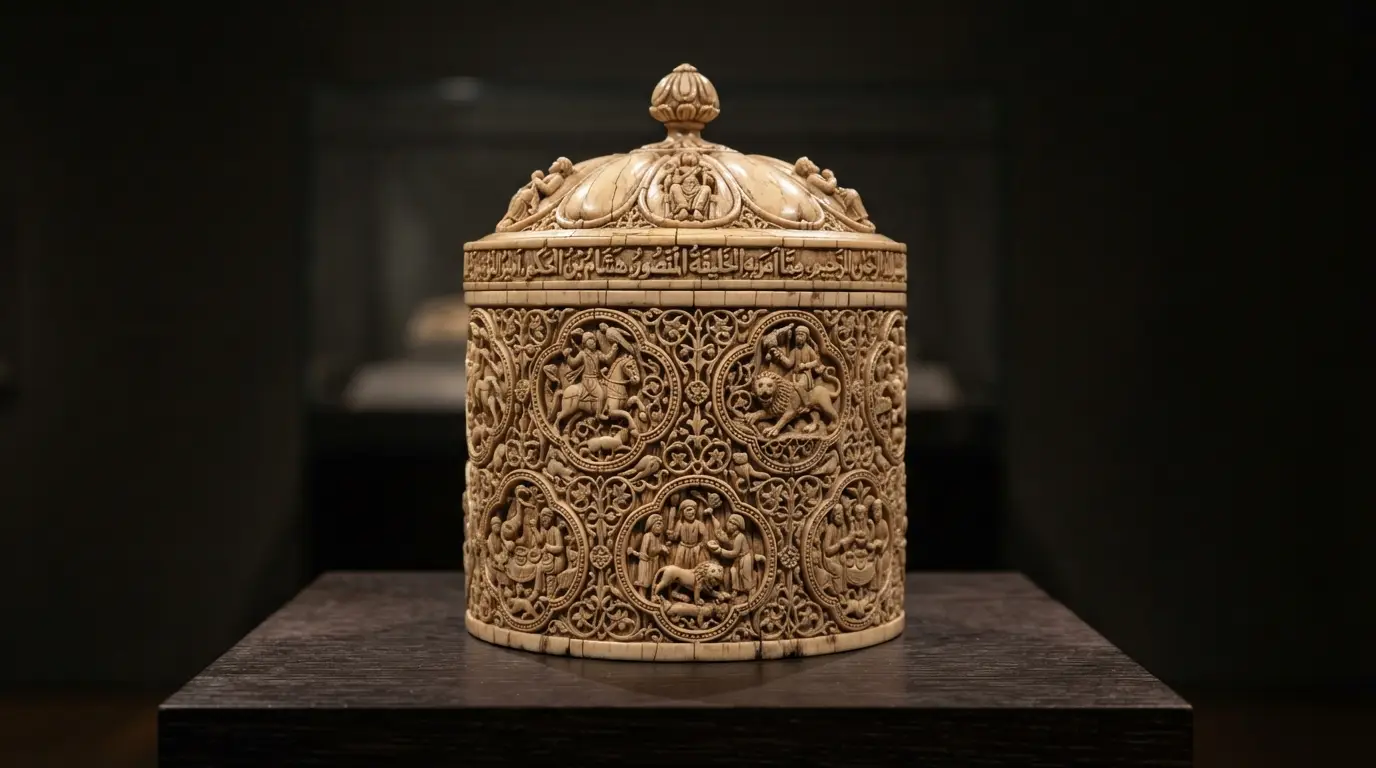
Most of what's left of Medina Azahara is foundations: walls cut off at knee height, room outlines without roofs. Read cold, they look like rubble arranged in a grid. The on-site museum, worth forty-five minutes before you go up on the shuttle, gives you the scale model and the recovered fragments, including carved capitals and ivory pieces from the caliphal workshops, that let your eye complete what's missing. After it, foundations read as rooms; without it, they read as stones.
The Salón Rico shows this most clearly: what looks continuous close up is a careful reassembly of pieces found scattered in the destruction layer, with genuine gaps left where the evidence ran out. That honesty about what's original and what's reconstructed is worth carrying into every other room you walk through.
Where there's no wall left to look at, look at the floor. A change in paving marks a threshold. A gap in a line of column bases marks a doorway. The width and orientation of a room tell you whether it was built for a crowd or for one person. The plan is the evidence now, more than the elevation.
The Salón Rico's dais, for instance, sat below windows in the horseshoe-arched wall behind it. Whoever occupied that seat would have been backlit against the light, in silhouette to anyone standing further into the room. You can read that intention off the geometry alone, without a single wall above shoulder height standing to confirm it.
The 90% still underground
The most striking fact about Medina Azahara is not what you can see but what you cannot. Around 10% of the 113-hectare site has been excavated since archaeological work began in 1911. The remaining 90% is still in the ground, under the olive groves and scrubland of the surrounding agricultural land, which protects it better than any museum could.
The ongoing excavations are the largest continuous archaeological dig in Spain. Every season brings new discoveries: mosaic floors, carved panels, intact room sequences, hydraulic infrastructure. The visitor circuit changes as new areas open. What you walk through now will look different in five years, as new sections are exposed, consolidated, and interpreted. This is a site still in the process of coming back out of the earth, and that gives it a quality that finished, static monuments do not have.
The scale of what remains buried also clarifies the scale of what was built. The excavated sections represent the palace zone: the upper terrace where the caliph lived and governed. The housing for 25,000 residents, the barracks, the markets, the workshops that produced the carved ivory and fine metalwork now in the museum: nearly all of this is below ground. The city Abd al-Rahman III built was five to ten times larger than what you can visit. Walking through the Salón Rico, you are standing in the centre of something that stretches out invisibly in every direction around you.
For visitors accustomed to well-interpreted Roman or Greek sites, this is worth adjusting expectations around. Medina Azahara rewards patience and some historical knowledge more than purely visual spectacle. The site does not yet have the grandeur of the Alhambra or the visual completeness of Pompeii. What it has is consequence: the physical remains of a caliphate that governed a substantial part of 10th-century Europe, with most of that city still unexcavated below your feet.
The numbers in context
- 113 ha Total site area, about 160 football pitches
- ~10% Excavated since 1911; work ongoing every season
- 25,000 Estimated population at the caliphal peak
The light at Medina Azahara
Medina Azahara is an outdoor site on a south-facing hillside with very little natural shade. The carved stonework in the Salón Rico and the House of Ja'far is the main photographic subject, and carved stone needs raking light to read properly. Overhead sun, which is what you get from noon to 3pm between April and September, makes every surface look flat. The same carved panels, with low-angle light entering from the east in the morning or from the west in the late afternoon, come alive.
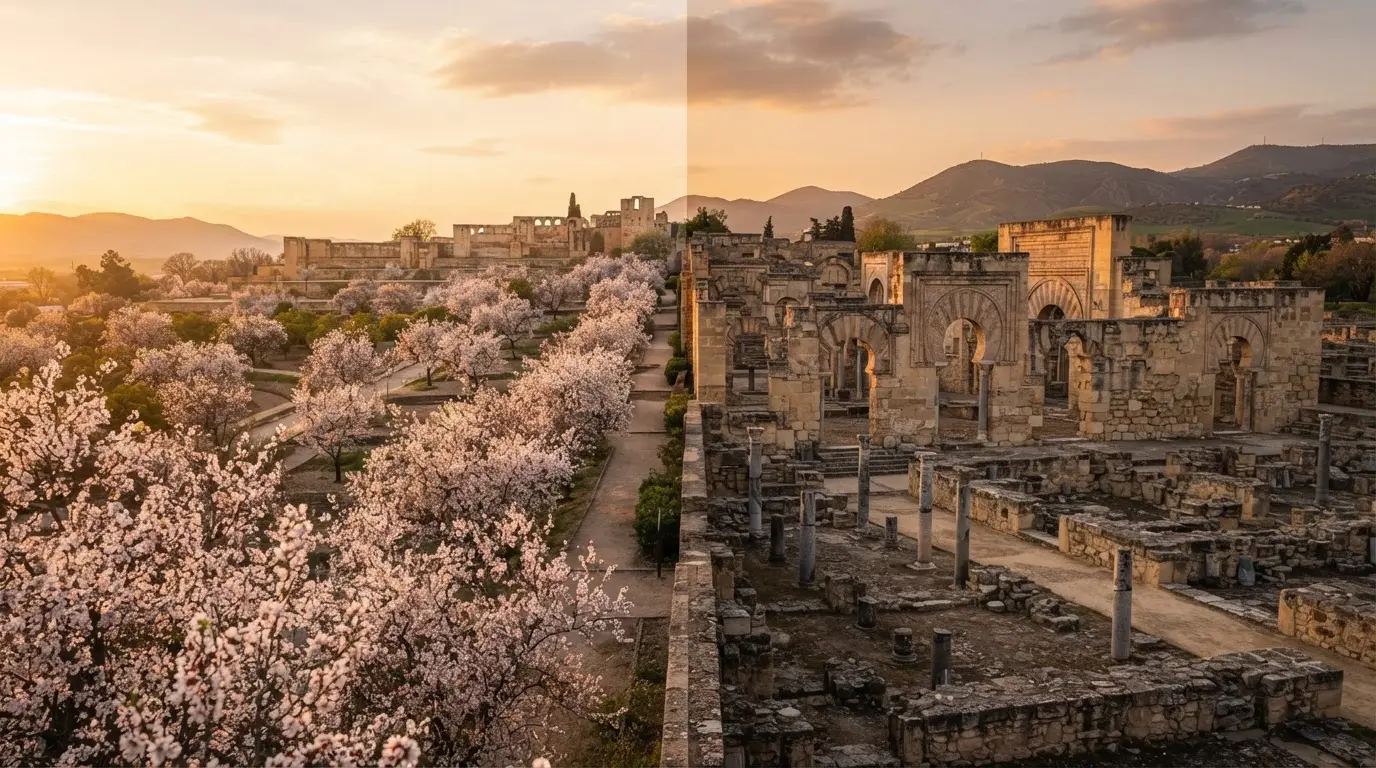
Spring is the most photogenic season. Between March and May, wildflowers cover the terraces below the ruins, yellow, white, and pink scattered across the archaeological grids. The light at 9am in April is soft and directional. If you are coming specifically to photograph the Salón Rico interior, book the earliest shuttle and be in the ruins by 9:30am. The horseshoe arches face east; morning light enters them for an hour or more before the sun moves above the arch line.
Afternoon visits in spring also work. The April–June extended hours are worth using: the site is quieter after 5pm, the light is warm, and the carved stonework on the west-facing wall of the House of Ja'far is at its best in the hour before sunset.
The museum permits photography throughout except with flash. The carved capitals and reassembled panels are well-lit; a 50mm equivalent and available light produce clean results. The scale model in the main gallery is the most useful shot for orientation: it shows the full extent of the city you will not be able to photograph on site.
Morning (9–11am)
- Salón Rico east windows: direct light through horseshoe arches
- Long shadows across terrace foundations define the geometry
- Wildflowers still bright; no midday bleaching
Late afternoon (5–7pm in spring)
- House of Ja'far west wall in warm, raking light
- Upper terrace views with Córdoba visible on the plain
- Fewer visitors; no queues at the Salón Rico entrance
Avoid
- Noon to 3pm, April–September: overhead sun kills carved relief
- July/August entirely unless you arrive at 9am and leave by noon
Night visits (Fri–Sat)
- Ruins illuminated since 2017, warm artificial light on carved stone
- Tripods permitted on the archaeological site
- What the ruins look like after dark: Medina Azahara at night
- Prices and booking are in the tickets and visit guide
Before you go
- Book exactly 7 days ahead Slots open at 9am exactly 7 days before the visit date. In April, May, and September, free EU slots fill within 2–4 hours of opening. Set a reminder and book on the dot. Mid-week mornings (Tuesday, Wednesday) have better availability than weekends.
- Bring water and a hat in any season except winter The ruins are on an exposed hillside with almost no shade. In spring and autumn, 1 litre of water per person is enough; in summer, bring 2 litres and plan to be back at the visitor centre by noon. The museum is air-conditioned.
- Wear shoes with grip The archaeological site has uneven stone paths, exposed marble thresholds, and some sections with gradient. Trainers or walking shoes are fine; flip-flops are not. The museum is flat and accessible throughout.
Full logistics: ticket prices, the EU free entry booking process, all transport options (tourist bus, taxi, car), and seasonal opening hours are covered in the dedicated
Medina Azahara tickets & visit guide.
This section covers the essentials; that page has the tables, step-by-step booking flow, and night visit details.
Guided Tours of Medina Azahara
Tours are selected for quality, not commission. We earn a small fee if you book — at no extra cost to you.
Guided tours include transport from Córdoba, entry, and the mandatory shuttle — no booking race.
Best Seller
Jewish Quarter, Mosque & Alcázar Tour
A comprehensive guided tour covering Córdoba's three UNESCO-listed highlights: the Mezquita, the medieval Jewish Quarter, and the Alcázar de los Reyes Cristianos.
3 hours
From €49
4.6 (5,547 reviews)
Reserve Your Spot
✓ Verified GetYourGuide reviews
Books up weeks ahead in peak season
Medina Azahara 3-Hour Guided Tour
Step back to the 10th century at the ruins of the once-magnificent palace city of Medina Azahara. Includes transport and an expert guide who brings this UNESCO site to life.
3 hours
From €18
Less than a restaurant lunch
4.7 (509 reviews)
Reserve Your Spot
✓ Verified GetYourGuide reviews
The full story: Medina Azahara
A single carved ivory pyxis, made in the palace workshops, eventually surfaced in a museum case a thousand years after it left Medina Azahara; tracking that object's route is its own article. The palace-city itself stood for less than a century, from Abd al-Rahman III's first foundations in 936 to the civil-war fire that ended it in 1010, and a companion piece spends real time on how quickly it fell apart once the fighting started. The night visits, when different corners of the ruins show up in ways daylight never quite manages, get a mention too.
History
Frequently asked questions
What is Medina Azahara and why does it matter?
Medina Azahara (Madinat al-Zahra) was the palace city Abd al-Rahman III began building 8 km west of Córdoba in 936 CE. It was sacked during a civil war around 1010, abandoned, and largely forgotten until excavations began in 1911. UNESCO inscribed it in 2018. For the full story of why it was built and how it fell, see the Medina Azahara history guide.
Is Medina Azahara worth fitting into a single day in Córdoba?
Yes, if you build the day around it rather than squeezing it in. The round trip, museum included, runs 2.5 to 3 hours plus travel time, which is a comfortable half-day rather than a quick add-on. It pairs well with a morning at the Mezquita-Catedral and an afternoon at Medina Azahara, or the reverse. Trying to add it to a day that already includes the Alcázar and the Jewish Quarter on foot is where people run out of time.
Will Medina Azahara disappoint visitors who have already seen the Alhambra?
It depends what you came for. If you want intact halls and gardens, yes, it will feel thin by comparison: roughly 10% of the site is excavated, and most of what stands is foundation-level. If you're drawn to seeing an active excavation, understanding how a caliphate projected power through architecture, and reading a floor plan rather than an intact building, Medina Azahara offers something the Alhambra cannot: the visible edge between what has been recovered and what is still buried.
How long should I spend at Medina Azahara?
Allow 2.5 to 3 hours for a self-guided visit: 45 minutes in the on-site museum (do this first — it provides context that transforms the ruins), 10–15 minutes each way on the shuttle, and 90 minutes walking the archaeological site. A guided tour runs 3 to 4 hours and rewards you proportionally. Factor in travel time from central Córdoba — the whole excursion takes a comfortable half-day.
Is Medina Azahara a good visit with children or in summer heat?
The ruins sit on an exposed hillside with almost no shade, and stone-terrace temperatures reach 45°C in July and August, which is hard on small children and on anyone unused to the heat. The museum is air-conditioned and holds most people's attention for the 45 minutes it takes to walk through. Outside summer, the site works well for older children curious about ruins and excavation; bring water, a hat, and shoes with grip regardless of season.
What is the best time of year to visit Medina Azahara?
Spring — March through May — is the finest time. Temperatures sit between 15 and 25°C, wildflowers cover the hillside terraces, and the light in the morning is soft enough for good photography of the carved stonework. Autumn (October–November) is equally good: fewer crowds and the low-angle afternoon light. Avoid July and August between 11am and 4pm — the ruins are fully exposed with almost no shade, and stone-terrace temperatures reach 45°C.
The mosque in Córdoba was the older argument; Medina Azahara was the new one: a caliph asserting authority through architecture, in stone and carved marble, across a generation of construction. Both were burned or converted; both survived in fragments; both became UNESCO sites a thousand years later. The 8 km between them is worth holding in mind when you are standing in the Salón Rico and looking through the horseshoe arches toward the plain.
Continue exploring
Further reading
Sources and further reading
4 references Show Hide
- Conjunto Arqueológico Madinat al-Zahra — Official Site (opens in a new tab)
Official Junta de Andalucía information on the archaeological site, excavations, visitor access, and the on-site museum
- UNESCO — Caliphate City of Medina Azahara (opens in a new tab)
UNESCO World Heritage inscription (July 2018) with the Outstanding Universal Value statement and site description
- Junta de Andalucía — museosdeandalucia.es (opens in a new tab)
Official booking platform for timed entry slots, including free EU citizen reservations
- Turismo de Córdoba — Medina Azahara (opens in a new tab)
Practical visitor information including the tourist bus schedule from Paseo de la Victoria