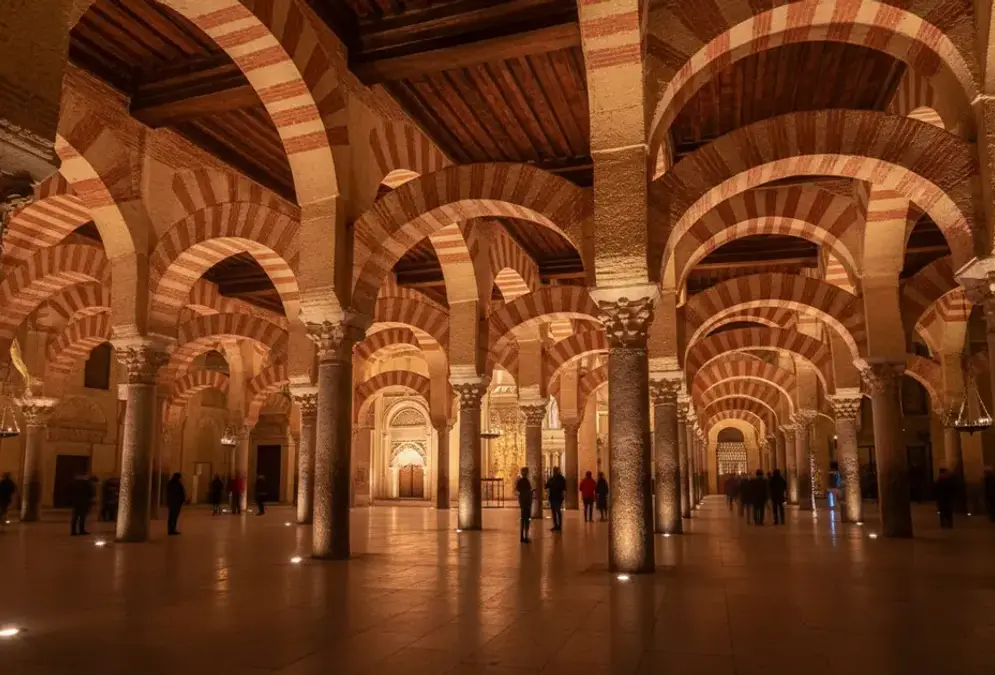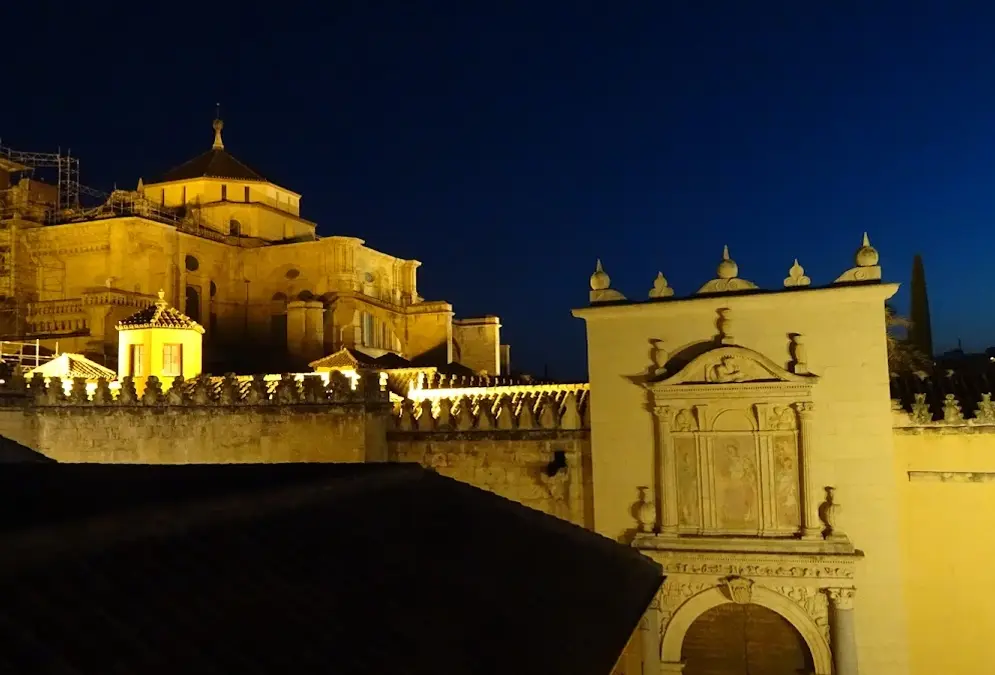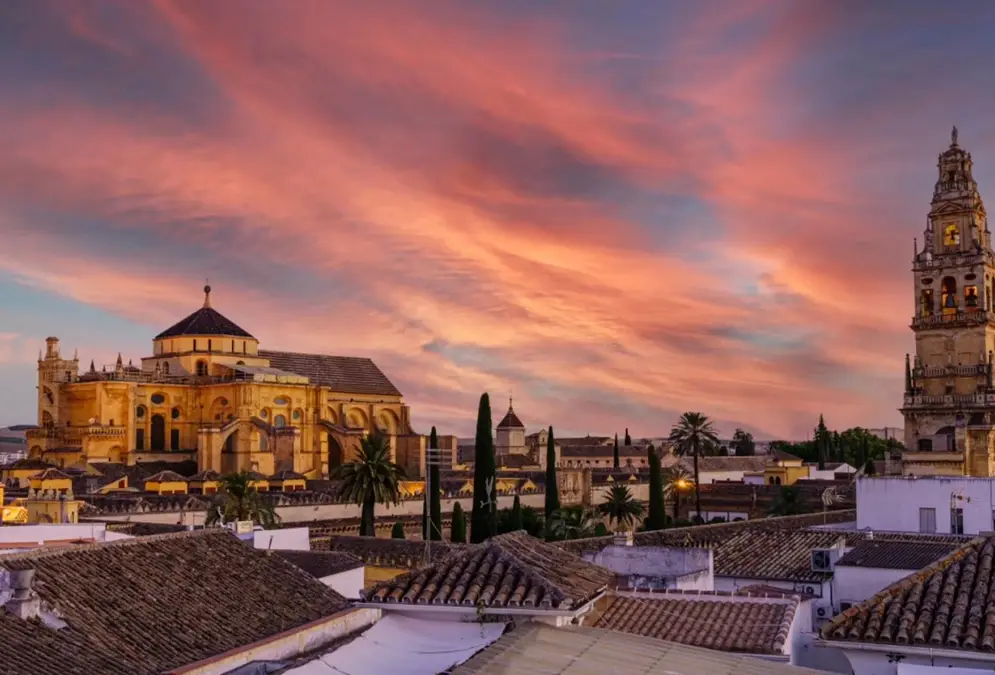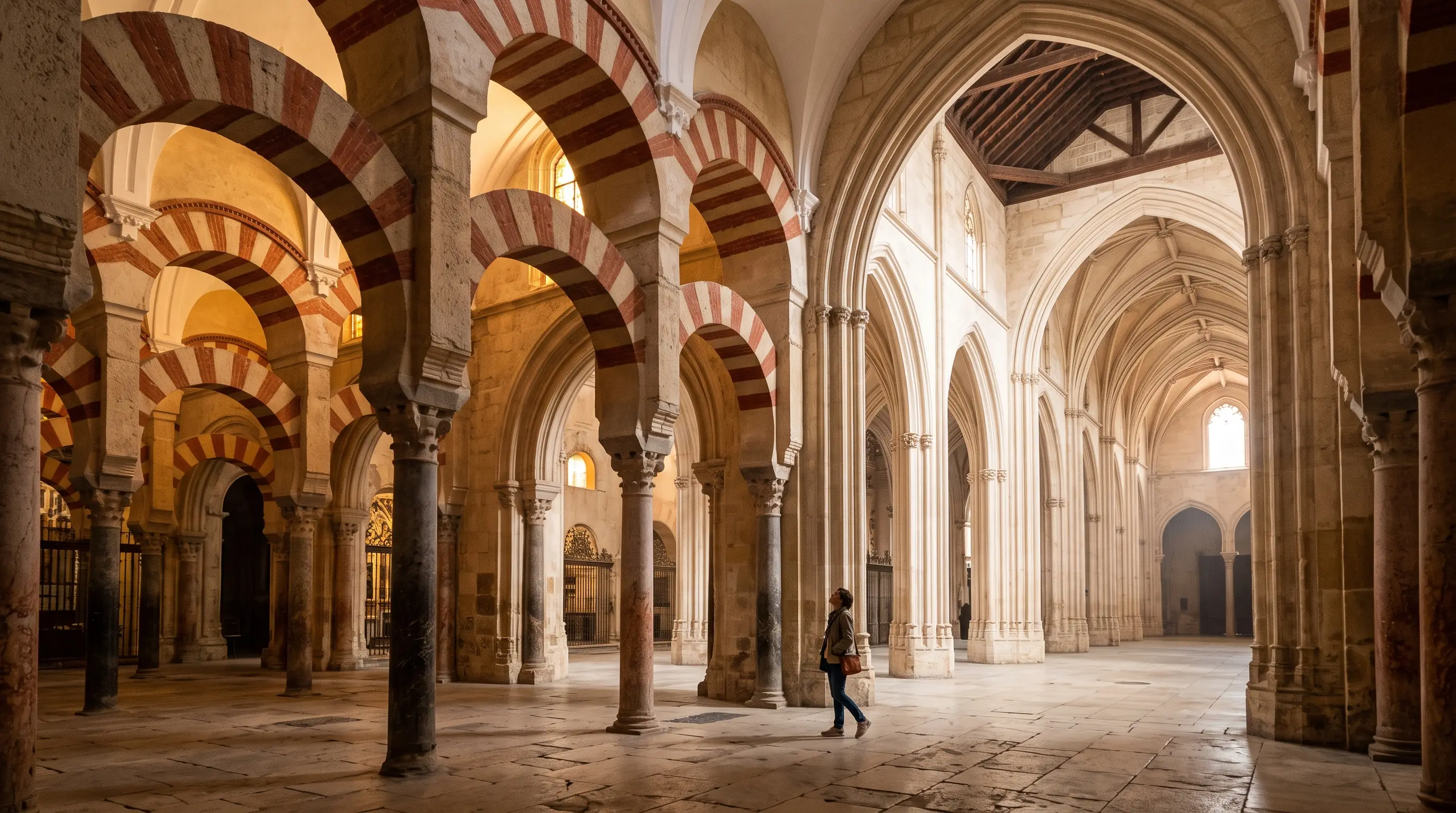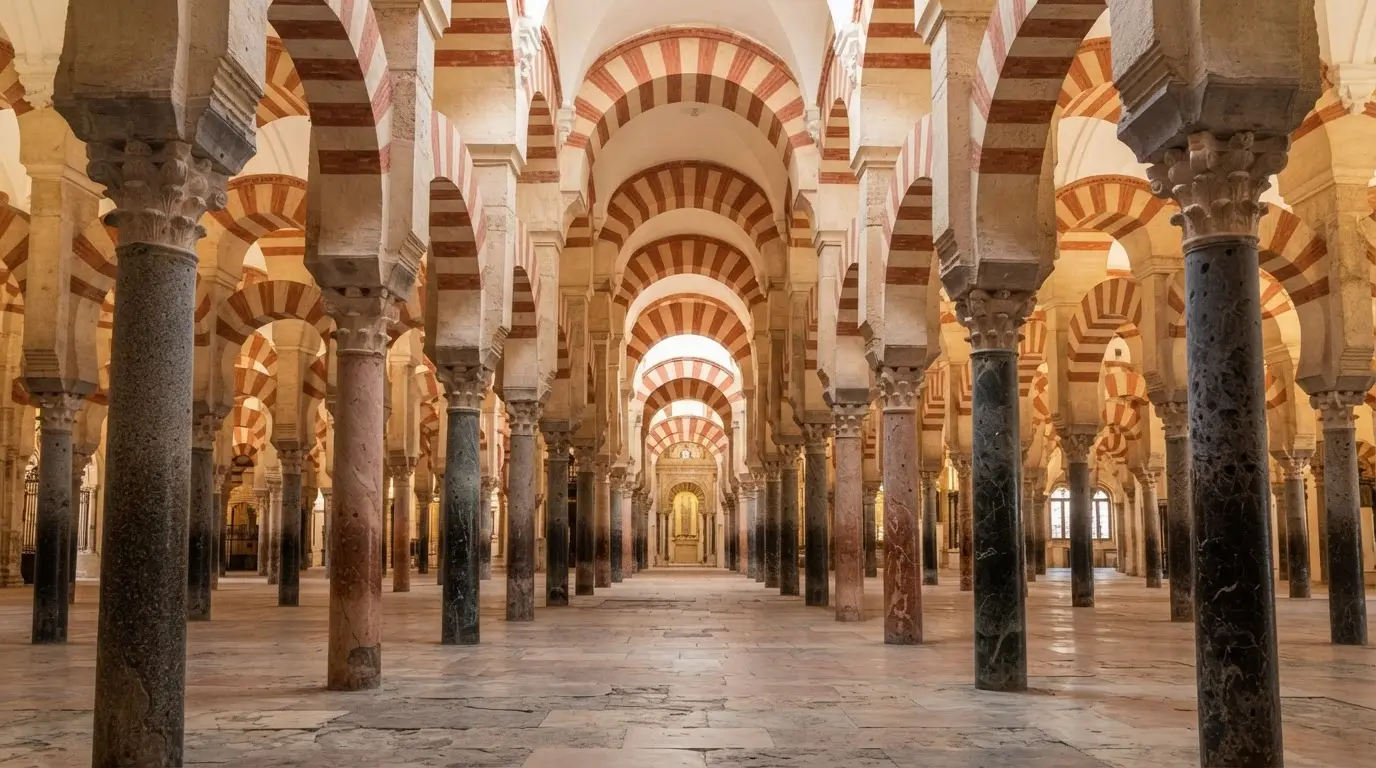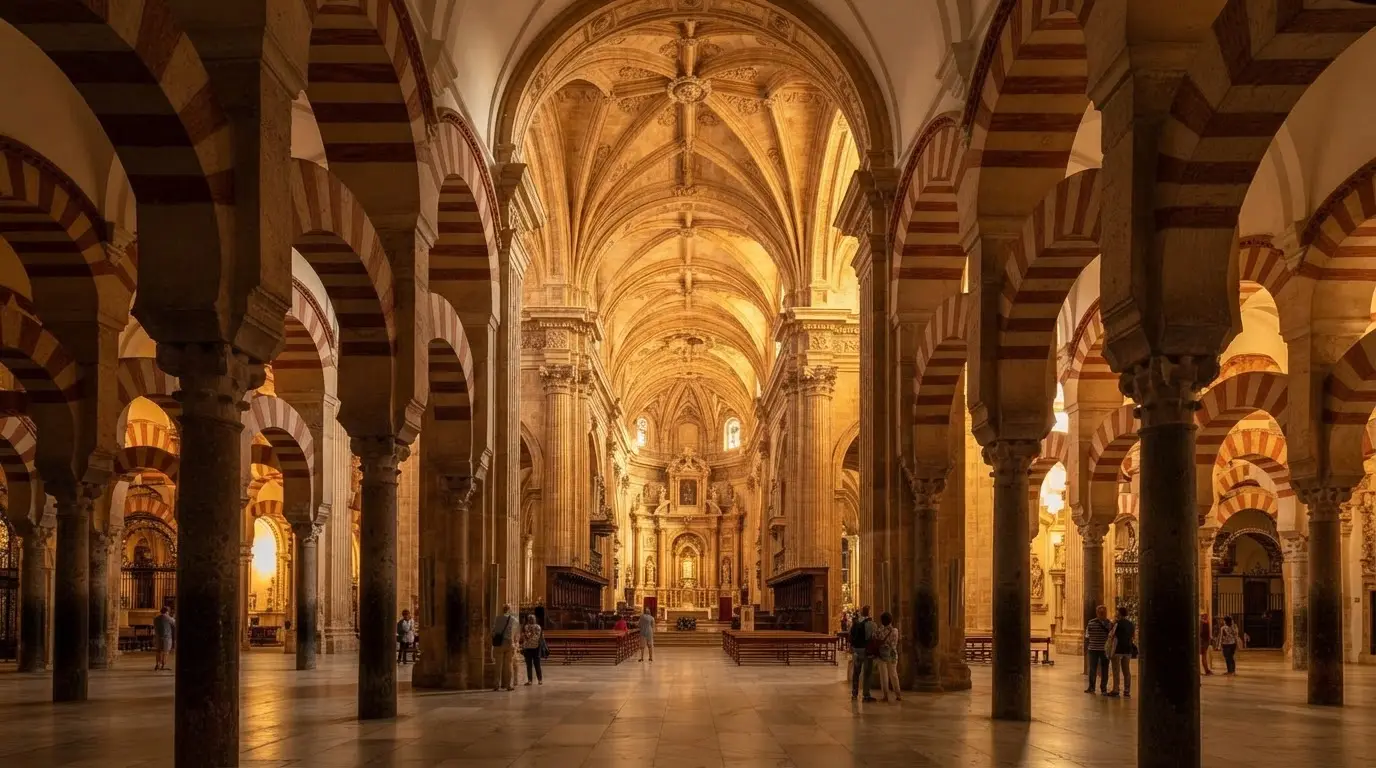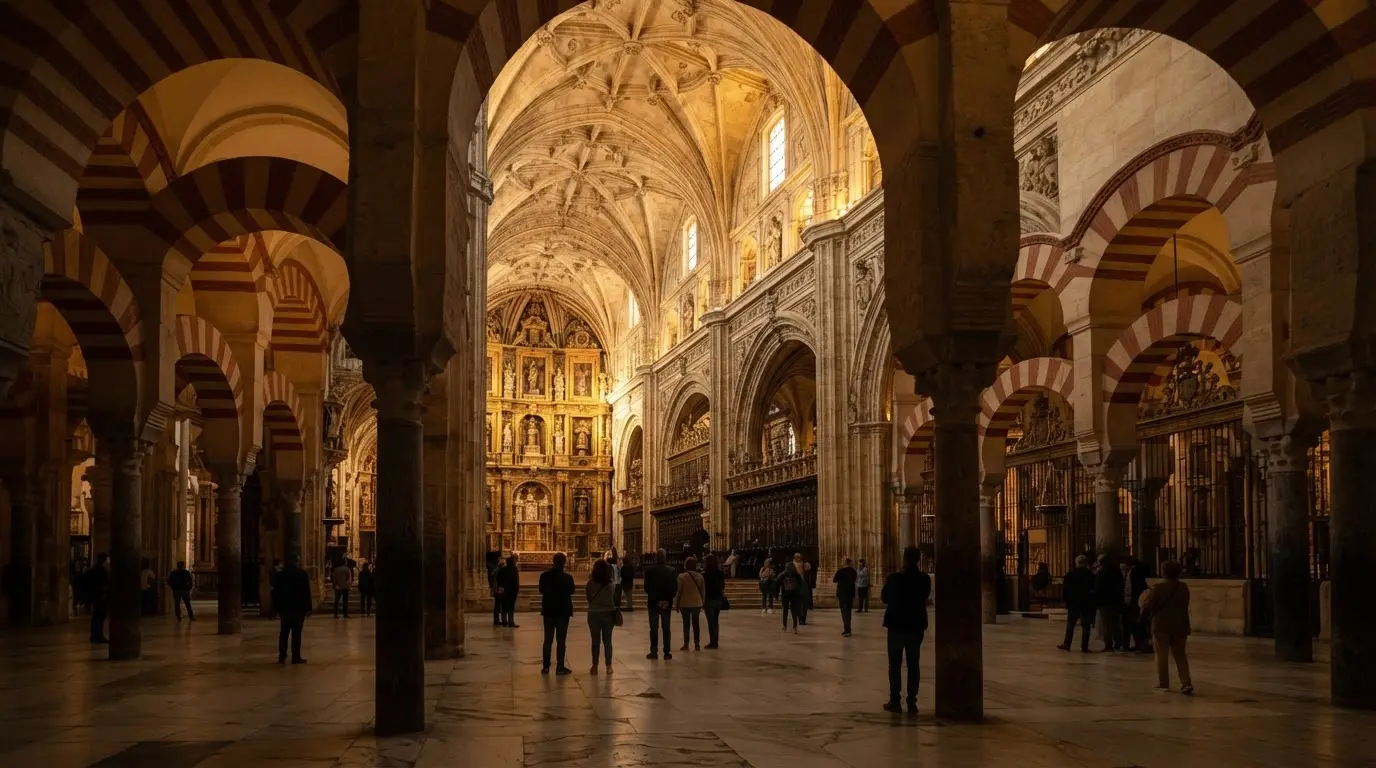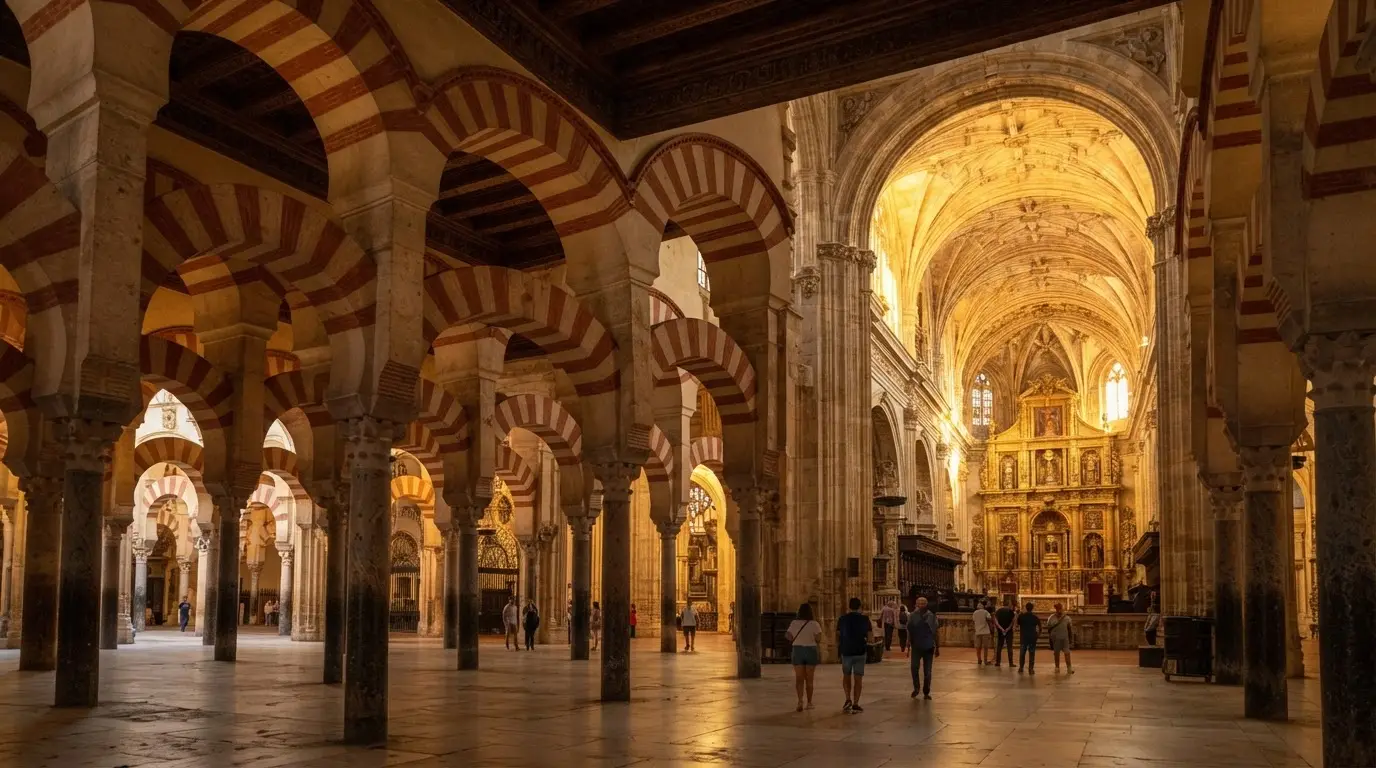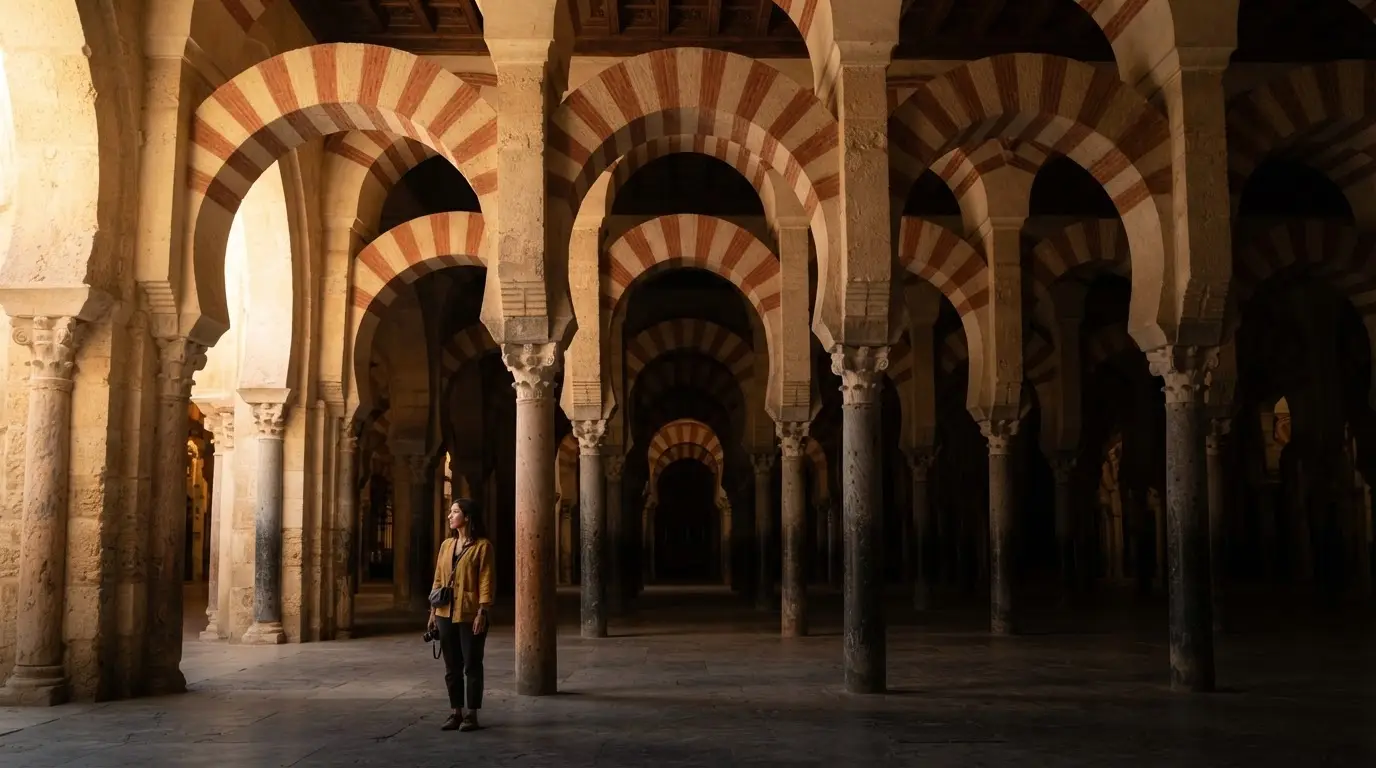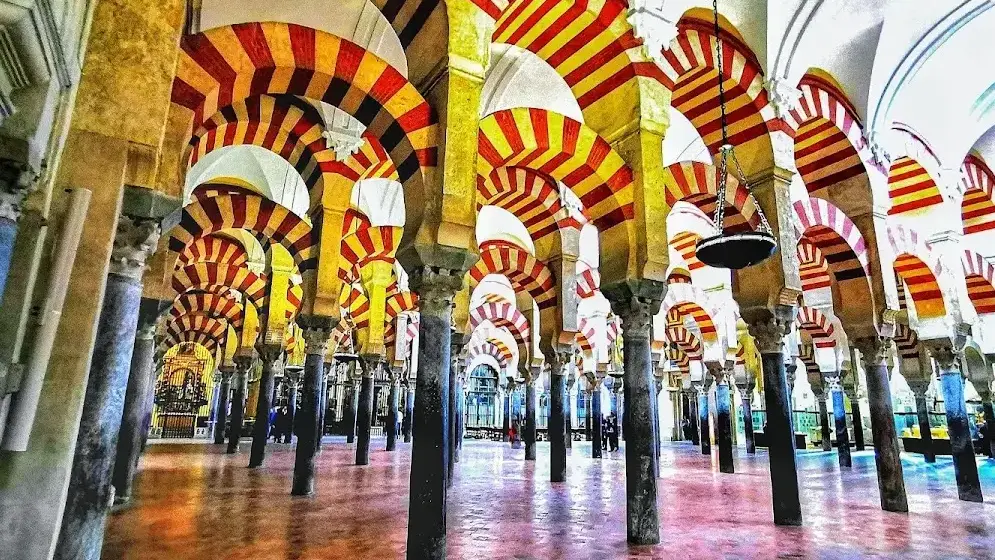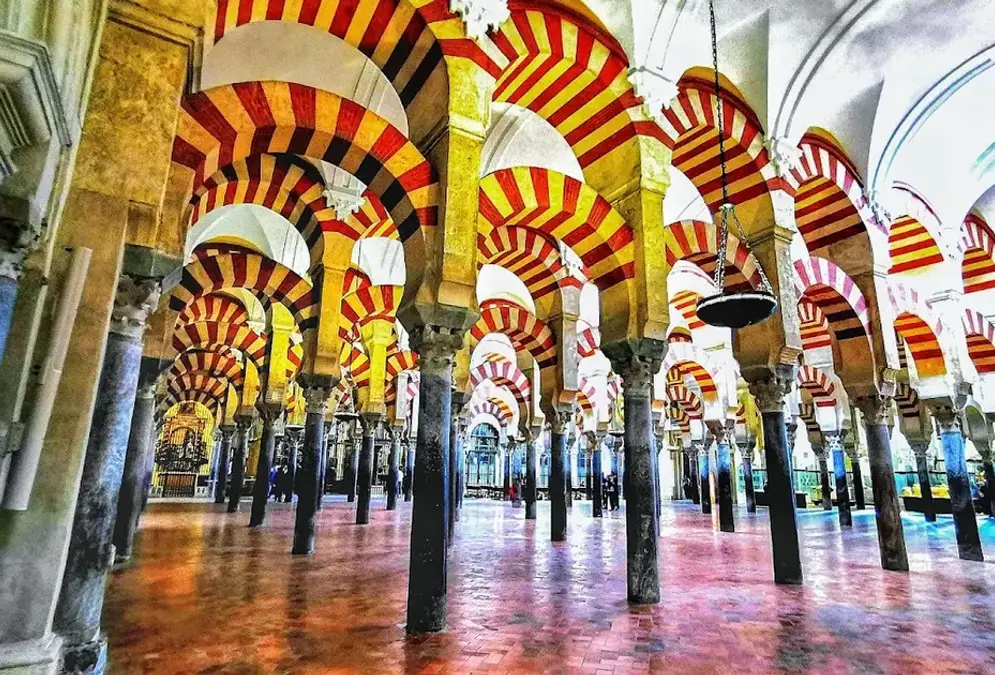

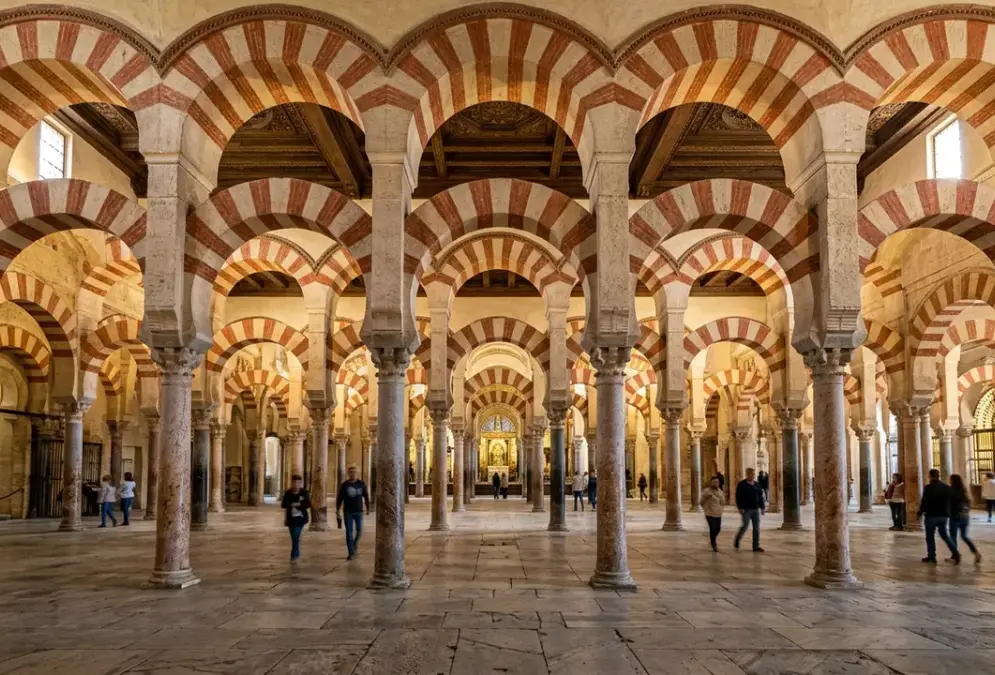
Interior of the Mezquita-Catedral de Córdoba with its iconic red-and-white arches and forest of columns
UNESCO World Heritage

The Mezquita-Catedral: thirteen centuries, one building

A mosque raised by an exiled prince, enlarged by four caliphs, converted into a cathedral, and then split open for a Renaissance nave that Charles V himself said he regretted. The building holds the entire history of the city.

Restoration update (2026)

A fire in August 2025 damaged the roof of the Almanzor Chapel, a small section at the southern end of the prayer hall. Scaffolding is up in that area while restoration continues through mid-2026. The monument is fully open. The prayer hall, mihrab, Renaissance nave, and bell tower are unaffected.

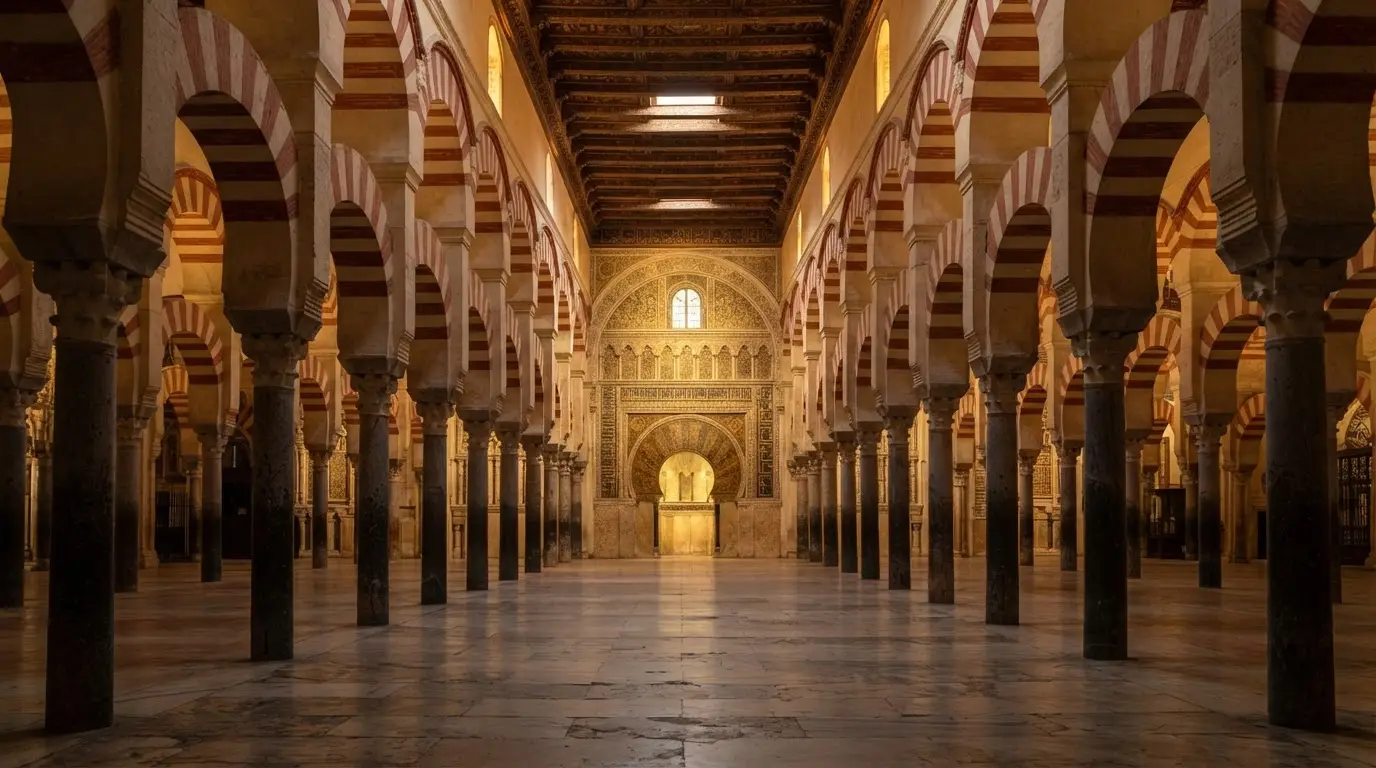
No photograph prepares you for the column forest. Eight hundred and fifty-six shafts of jasper, marble, and granite fill the prayer hall in every direction, topped by the red-and-white arches that have become the image of Córdoba itself. More visitors come here than to any other monument in Andalusia. Once you are inside, that is not surprising.

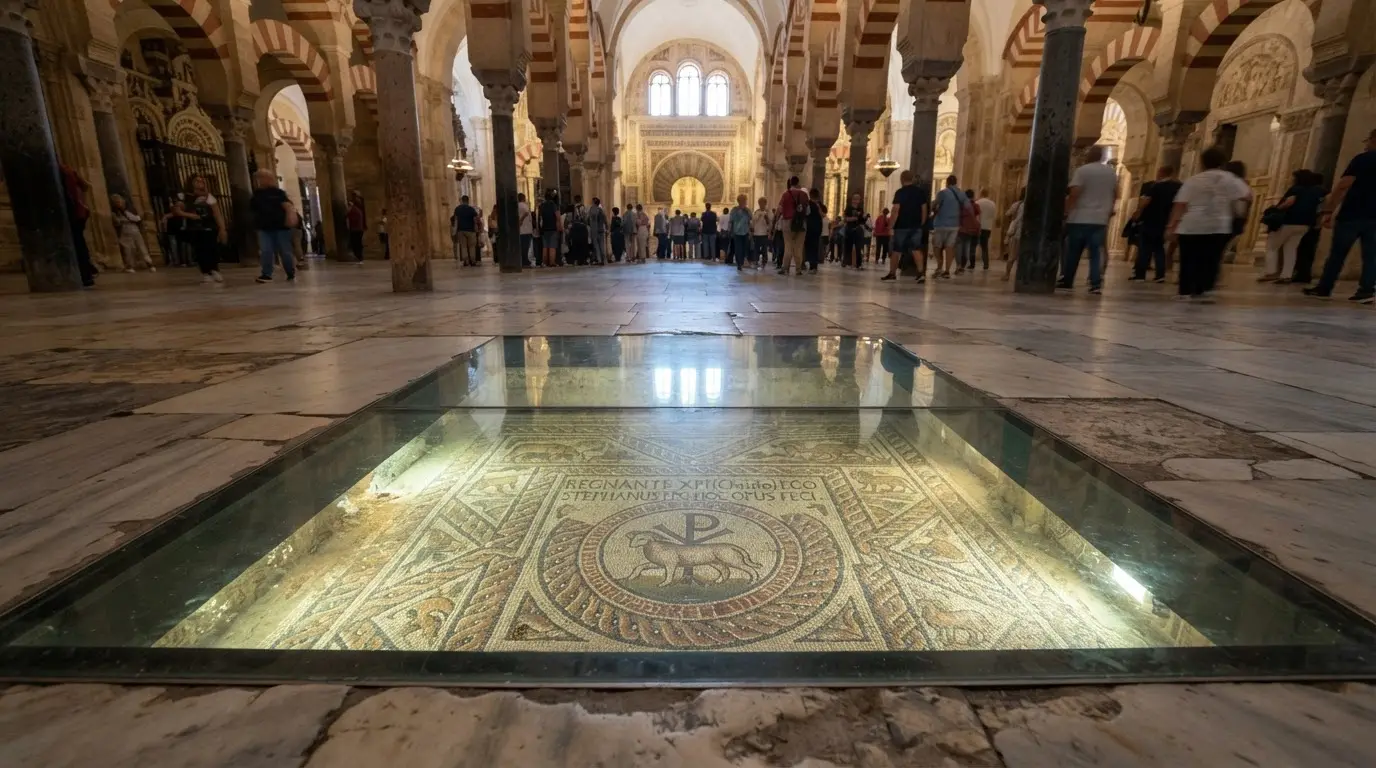
The site began as a Visigothic church. In 785, Abd al-Rahman I, an Umayyad prince who had fled the massacre of his family in Damascus, built a mosque here. Three further expansions over the following two centuries made it the largest mosque in the western Islamic world. The Reconquista brought Ferdinand III in 1236, and the building became a cathedral. In 1523, a full cruciform nave was cut through the centre of the prayer hall. Charles V visited and reportedly said he had "destroyed something unique in the world to build something that could have been built anywhere." Whether or not he said it, the assessment holds.

This guide covers what to see inside, how to get tickets, when to visit, and what to combine with your time in the surrounding Judería. For the full story of why the building is called both mosque and cathedral — and why the name and ownership remain disputed in 2026 — read Is the Mezquita a mosque or a cathedral?

In this guide

Mezquita-Catedral at a glance

Entry price
€15 adults · €12 reduced · Free Mon–Sat 8:30–9:30am (arrive by 8:00)
Opening hours
Mon–Sat 10am–7pm · Sun 8:30–11:30am & 3–7pm
Founded
785 AD by Abd al-Rahman I — expanded by four caliphs over two centuries
UNESCO status
World Heritage Site since 1984 (Historic Centre of Córdoba)
Size
23,400 m² — one of the largest religious buildings ever constructed
Key feature
856 columns of jasper, marble and granite with bi-coloured red-and-white arches
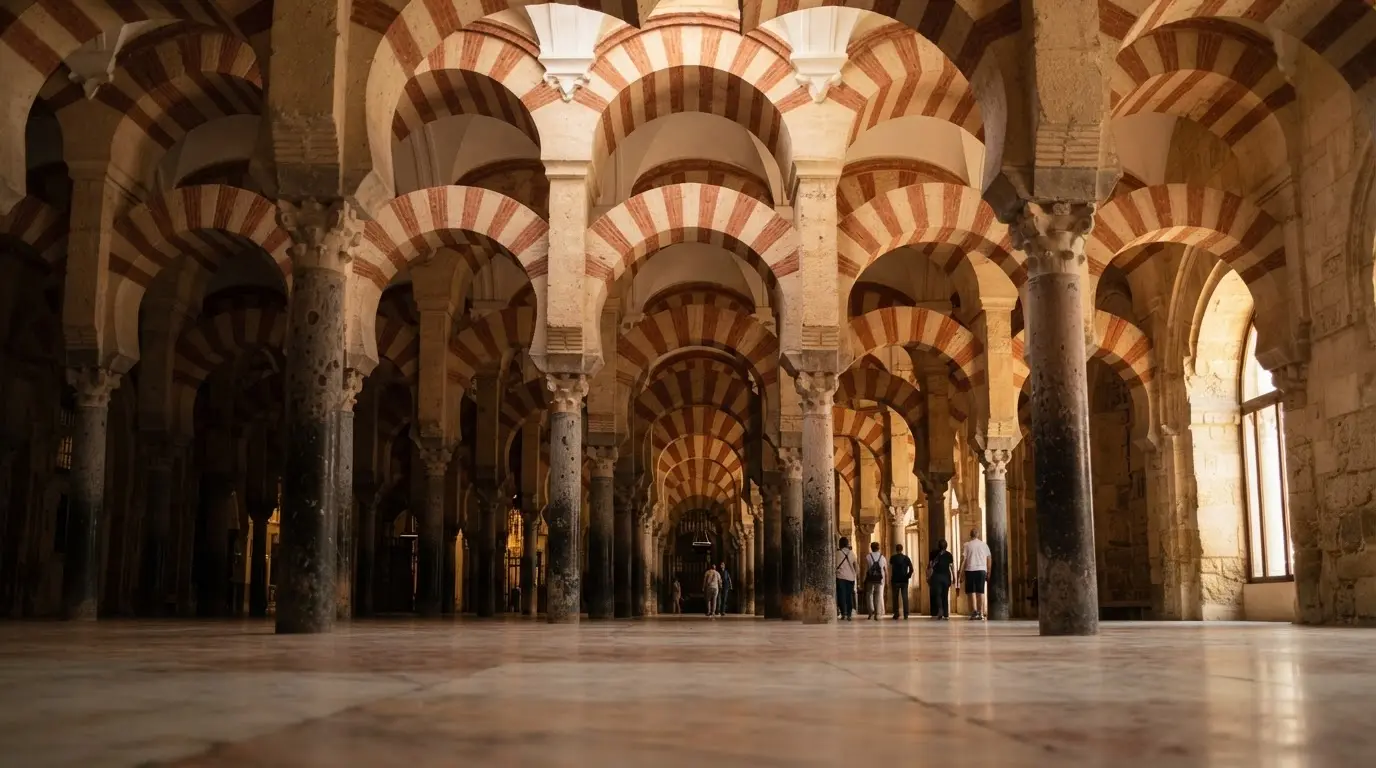
Mezquita-Catedral nave with red and white striped arches

What to see inside

Walking through the Mezquita-Catedral, you move across centuries in a matter of steps. Five distinct architectural phases have been built, inserted, or grafted onto each other over 1,300 years. Below are the zones worth slowing down for, in the order you reach them from the main entrance.

1

The Column Forest

Most of the 856 columns were salvaged from Roman temples and Visigothic churches across the region. No two capitals are identical. The effect is deliberate: the builders wanted the interior to feel endless, a stone grove with no clear boundary.

The structure depends on a double-arch system. Lower horseshoe arches connect the columns; upper semicircular arches carry the roof. This two-tier arrangement solved a practical problem: the salvaged Roman columns were too short to reach ceiling height, so the builders added a second layer of arches on top. The alternating red brick and white stone was a structural decision, not an aesthetic one. It became the most reproduced image in the building.

Look for: the columns closest to the entrance with Roman lettering still visible on their bases. The builders reused them upside down, so the inscriptions run the wrong way up.
2

The Mihrab and Maqsura

Set into the southern wall, the mihrab is the prayer niche oriented toward Mecca, and the artistic high point of the whole building. Caliph Al-Hakam II commissioned it in the 960s and sent to the Byzantine Emperor Nikephoros II in Constantinople for craftsmen and 1,600 kilograms of gold mosaic tesserae. The result is a scallop-shell dome of gold and turquoise that holds its own against anything produced in Byzantium.

The maqsura, the screened enclosure in front of the mihrab, was reserved for the caliph during prayer. Its interlocking polylobed arches, built from layered geometric ornament, are widely considered the finest surviving work of Umayyad decoration.

Look for: the eight-pointed star set into the dome directly above the mihrab. Stand underneath and look straight up. The geometry produces a three-dimensional illusion that has been working on people for a thousand years.

3

The Villaviciosa Chapel

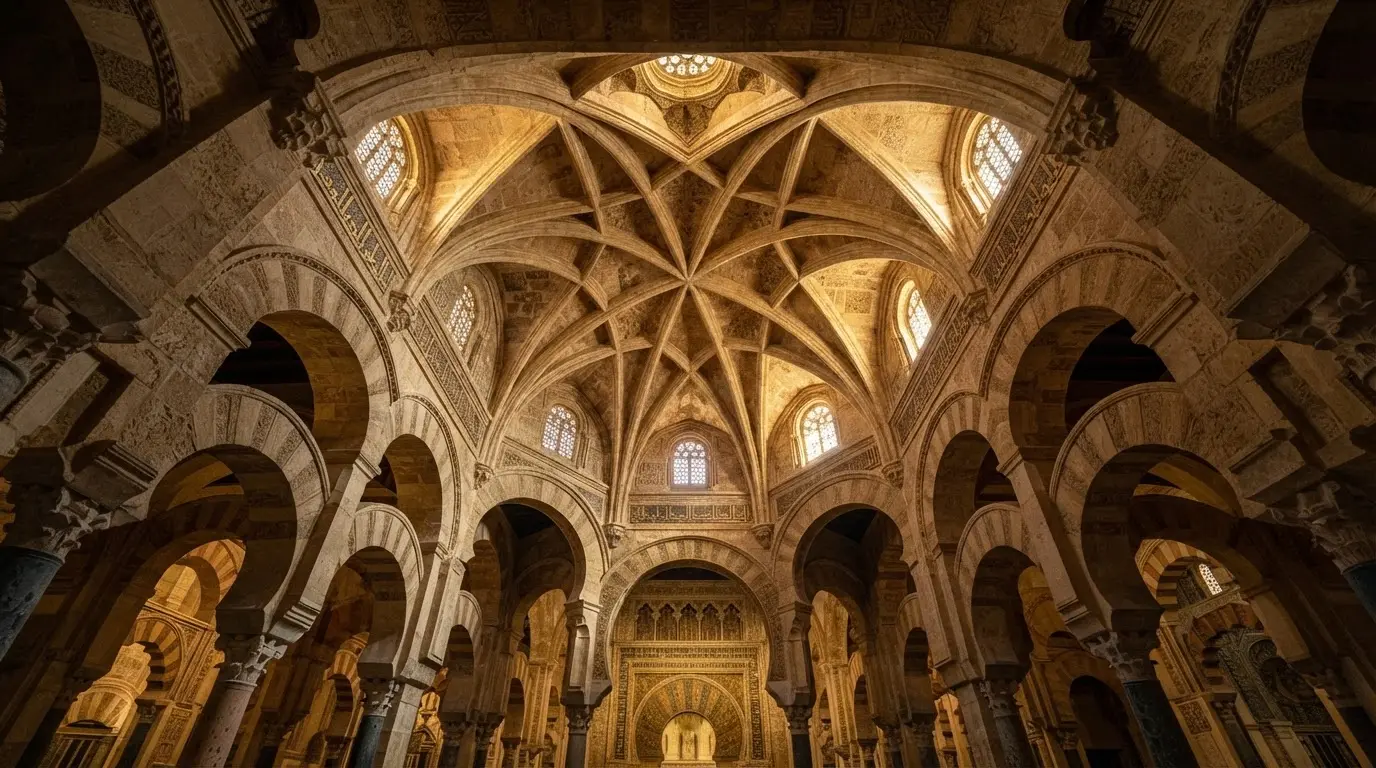
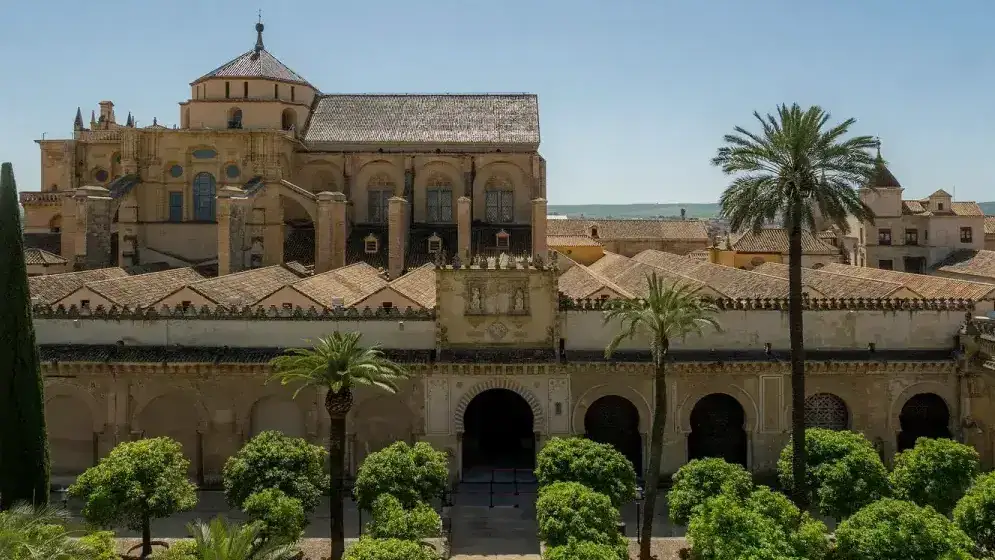
When Ferdinand III took Córdoba in 1236, the first Christian intervention in the mosque was this chapel. Gothic ribbed vaulting was pushed directly into the existing Islamic arcade, leaving the horseshoe arches intact beneath. Pointed Gothic ribs spring from arches that pre-date them by two centuries. The iconography above is Christian; the geometry framing it is Umayyad.

For roughly three centuries after the Reconquista, Christians worshipped in the mosque with minimal structural change. The Villaviciosa was a careful insertion. The wholesale remaking of the interior came much later, with the Renaissance nave of 1523.

Look for: the joint where Gothic vaulting meets the Islamic arches below. The masonry is rough at the seam, almost improvised. You can read the order of construction in the stonework.

4

The Renaissance Cathedral Nave

In 1523, the cathedral chapter secured permission from Charles V to cut a full cruciform nave through the centre of the prayer hall. When Charles visited and saw what had been built, he reportedly said: "You have destroyed something unique in the world to build something that could have been built anywhere." The quote may be apocryphal. The architectural rupture is not.

On its own terms the nave is serious architecture: tall vaults, Italian marble altarpiece, and a Baroque mahogany choir with 109 stalls carved by Pedro Duque Cornejo in the 18th century. The tension between the nave's vertical drive and the mosque's horizontal spread gives the building its particular strangeness. You feel the shift in your body before you reason it out.

Look for: the choir stalls individually. Each back panel carries a different biblical scene carved from walnut. Cornejo completed 109 of them over ten years. He died before finishing the bishop's throne.

5

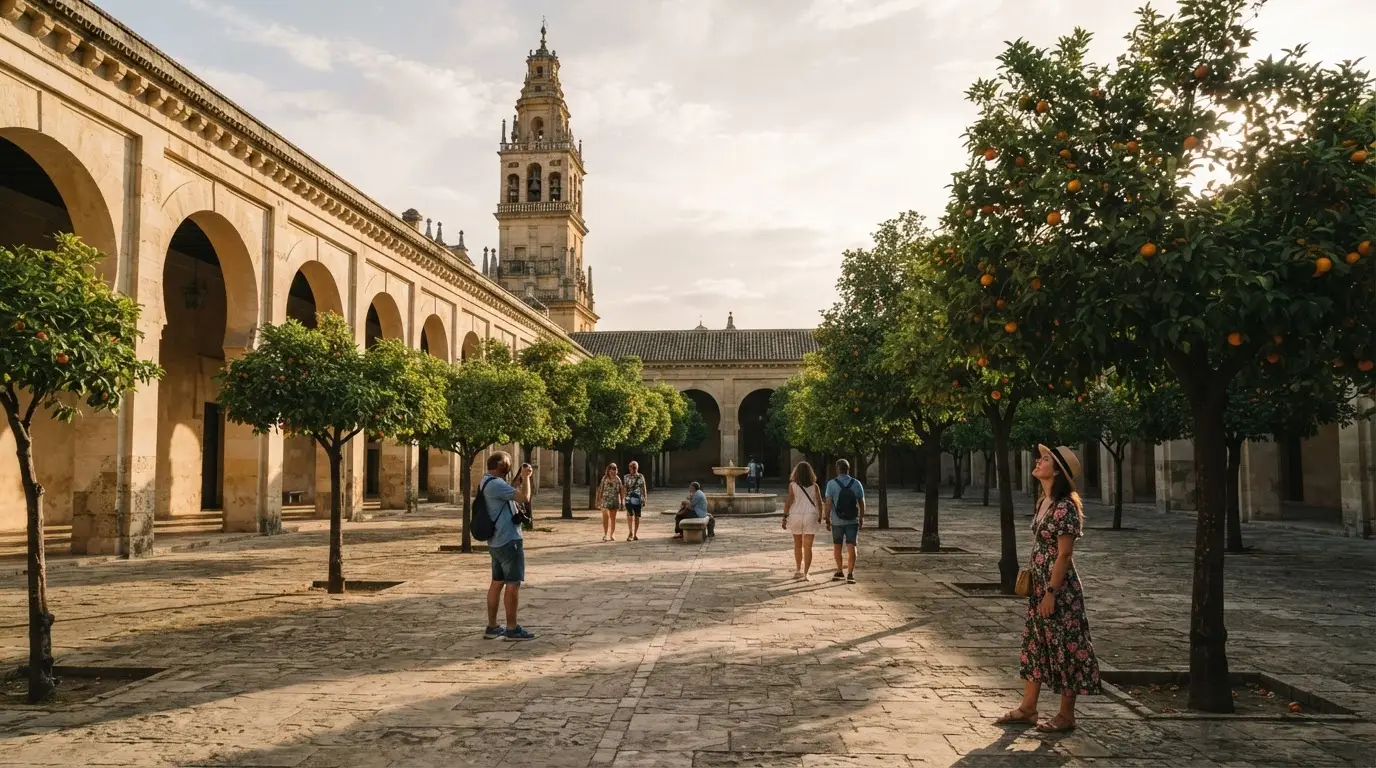
The Patio de los Naranjos

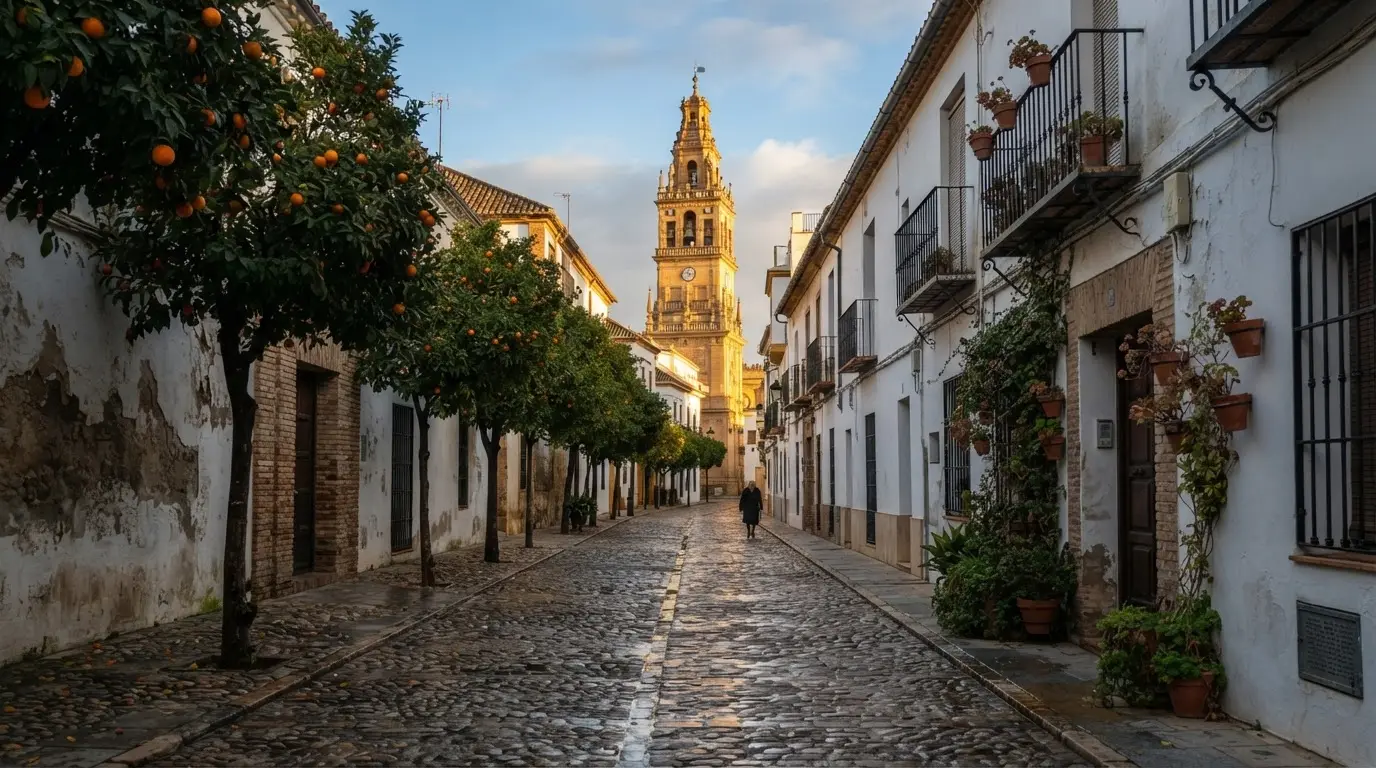
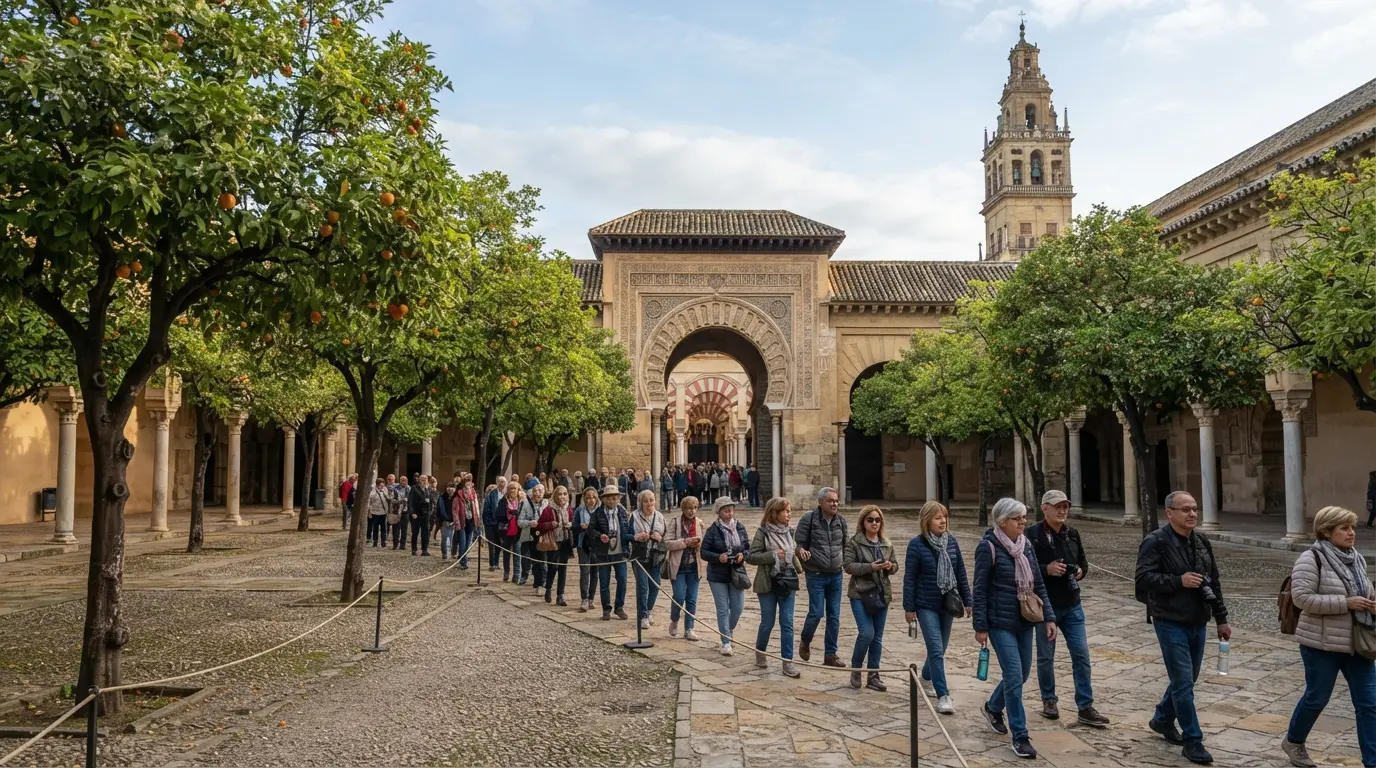
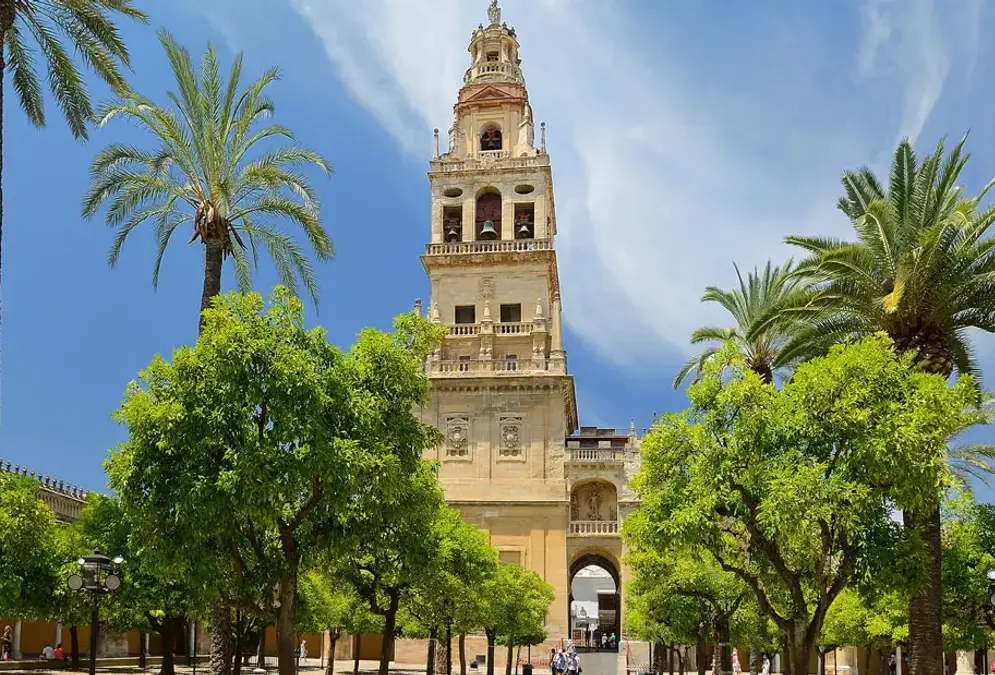
The walled courtyard at the exit was the mosque's ablution space, where worshippers washed before prayer. The central fountain predates the mosque itself, its basin carried over from the Visigothic church that stood here. The orange trees came later, planted in the late 15th century after the original palms were cleared.

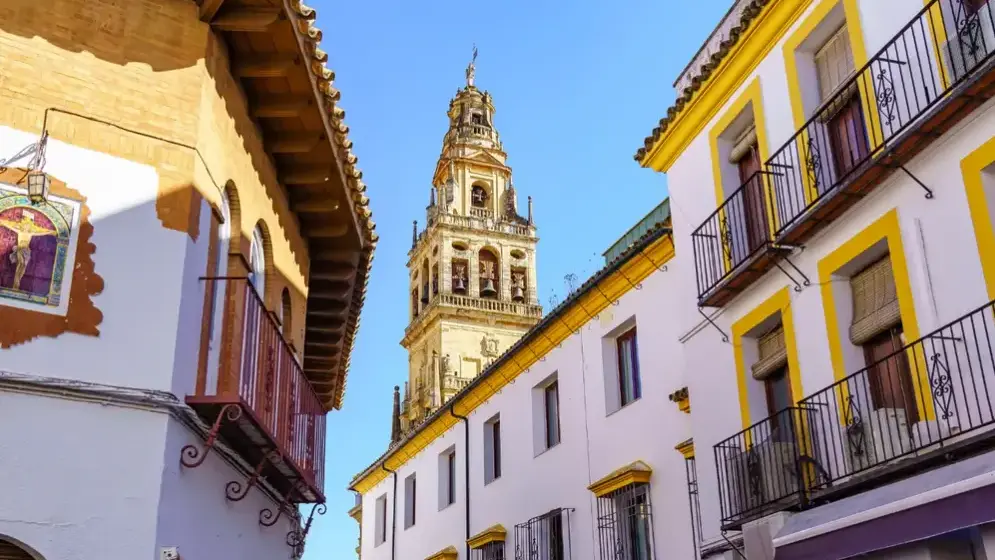
The entrance to the Torre Campanario is on the north side of the courtyard. The tower began as the mosque's minaret; a Renaissance bell chamber was added on top in the 17th century. The climb costs an additional €4 and gives the best elevated view of the Judería and the city beyond it.

Look for: the rectangular beam holes cut into the courtyard walls, just below roof height. Covered galleries once ran along every side. When those galleries were open, the column forest inside and the tree rows outside made a single unbroken space.

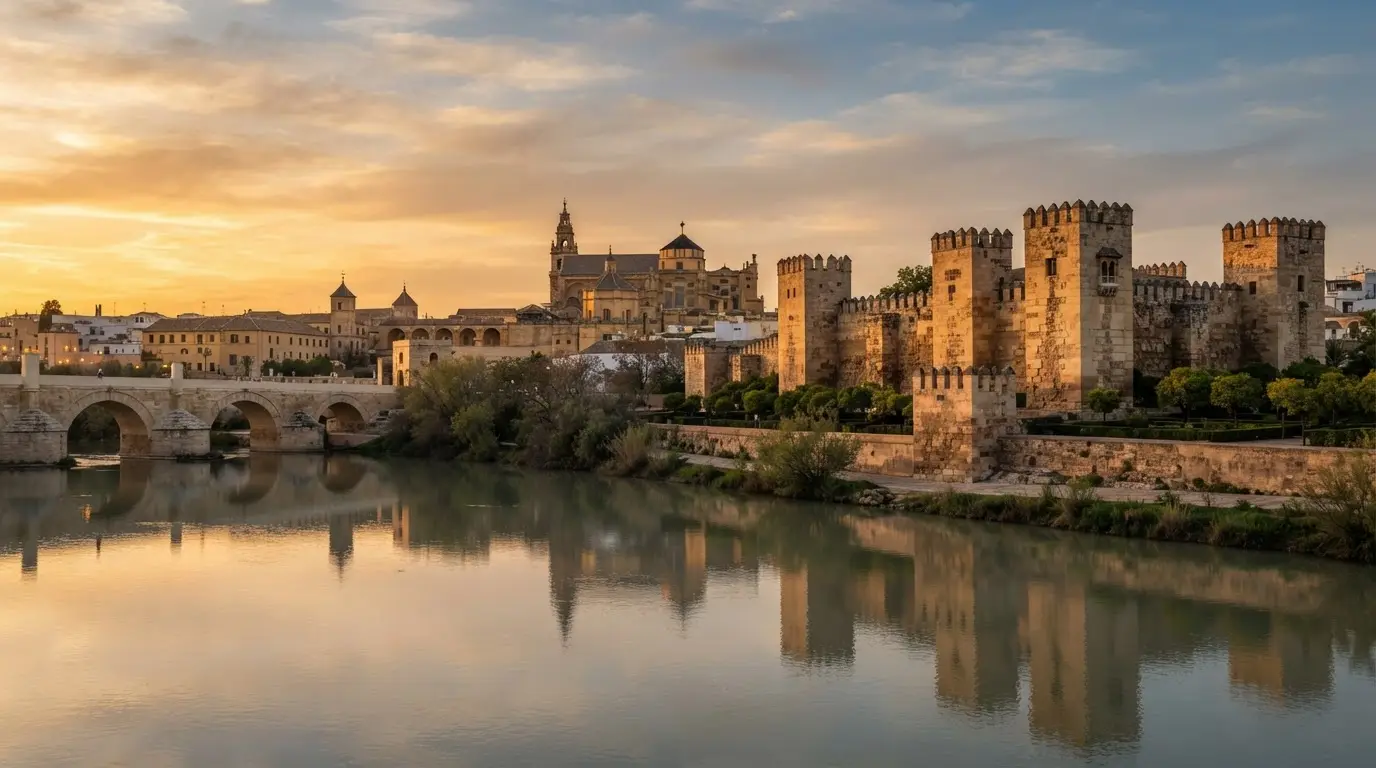
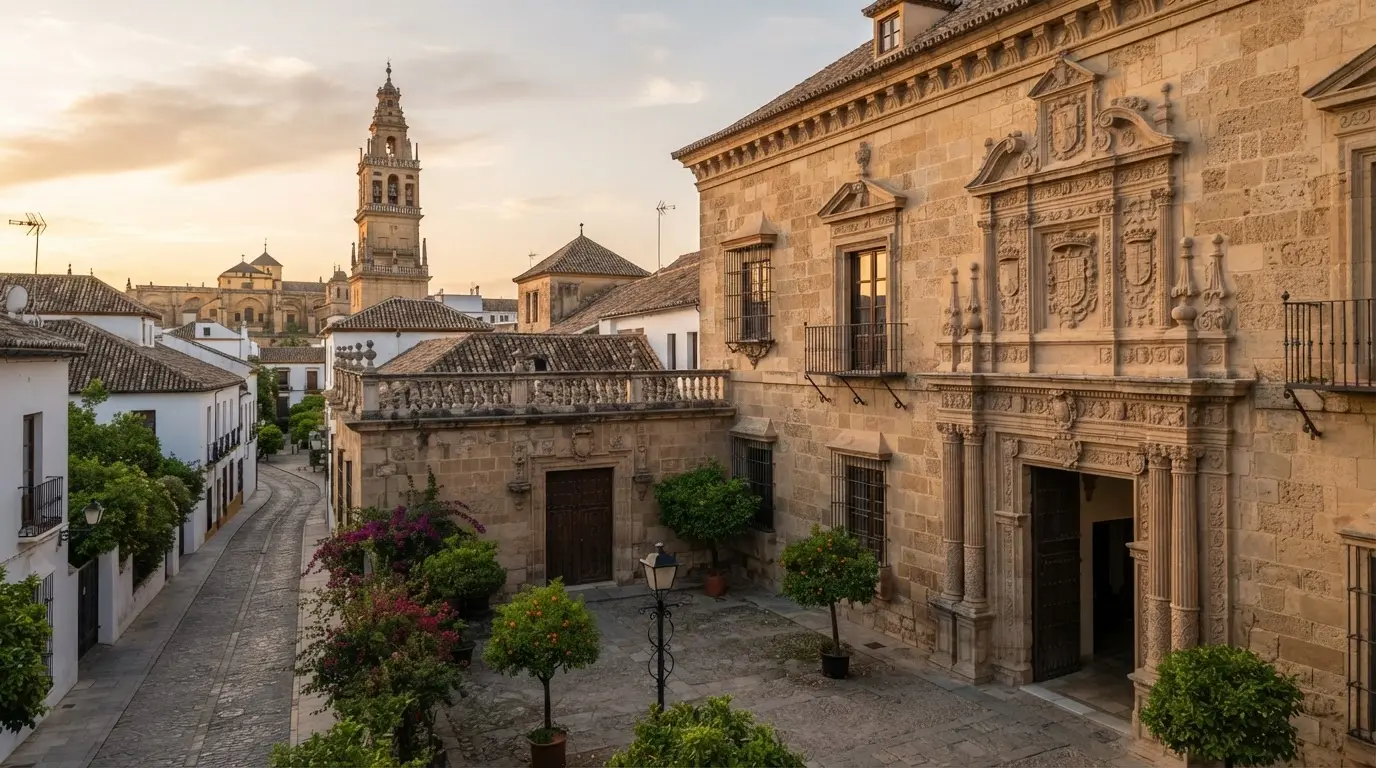
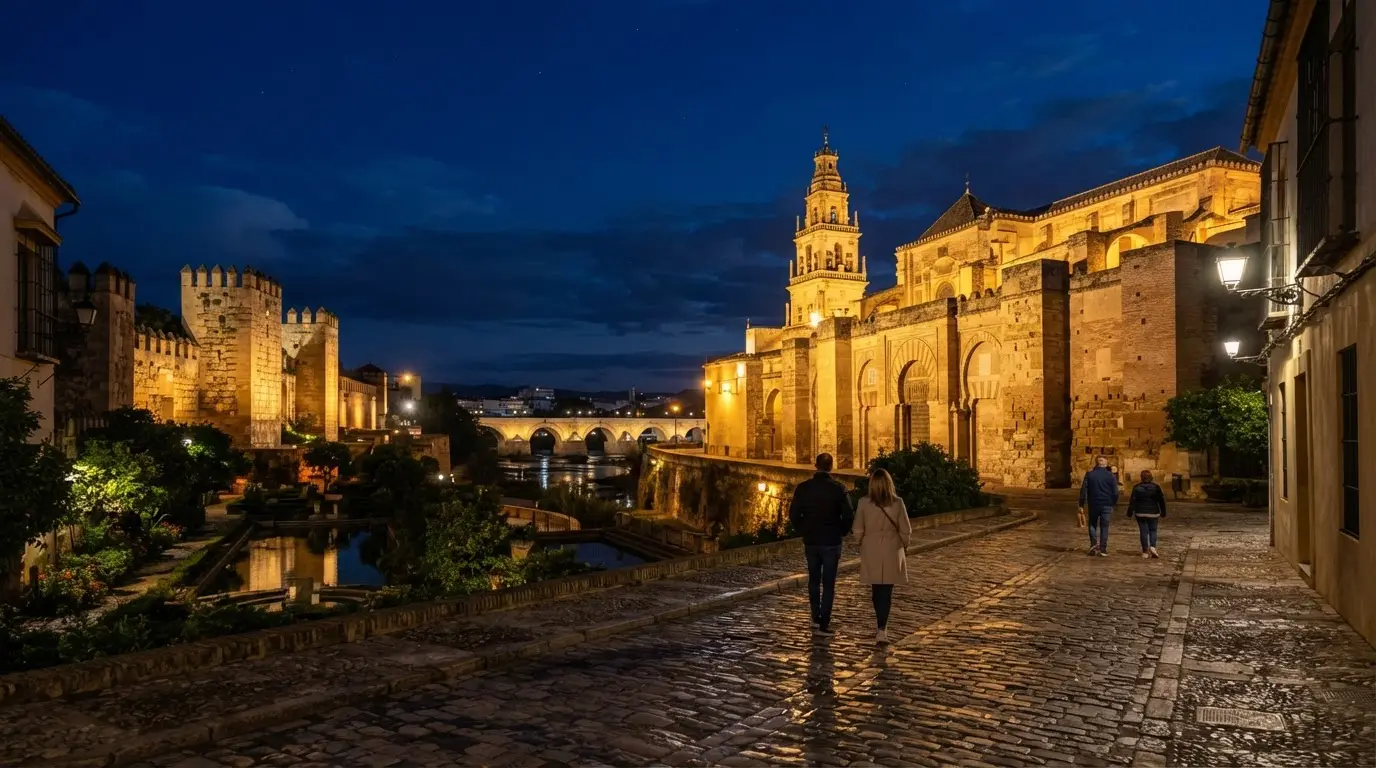
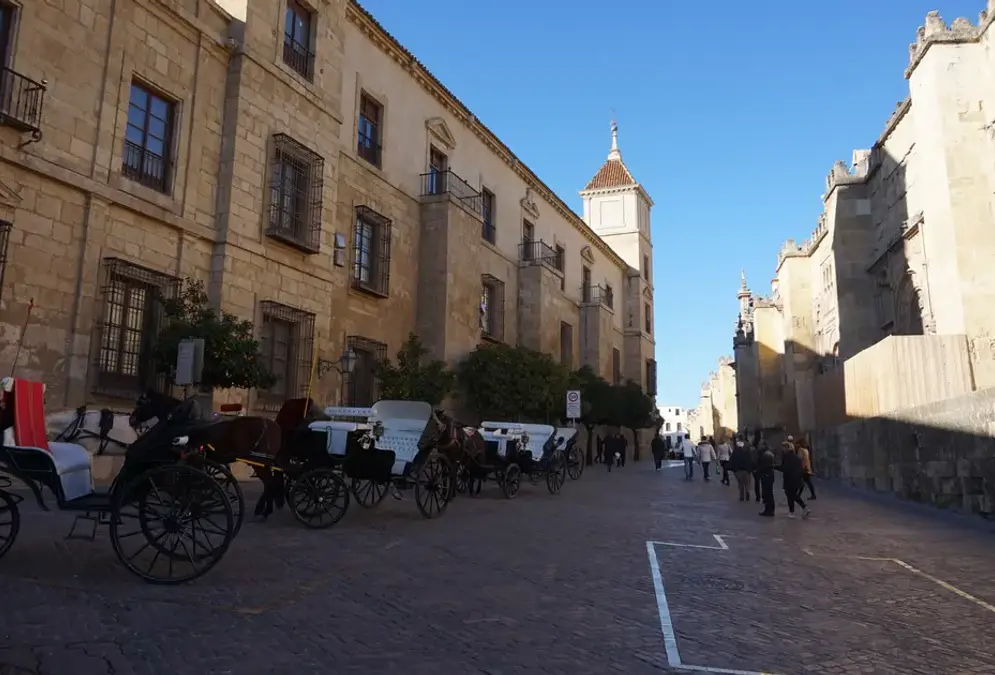
The Mezquita sits within a tight cluster. The bell tower, the bishop's palace directly across the lane, and the Roman Bridge 100 metres south together cover 2,000 years of the city's history in a walk of under 15 minutes.

From April through October a guided tour is the practical choice. Priority entry saves up to two hours at peak times, and the layering of thirteen centuries of architecture is the kind of thing an audio guide describes without ever quite explaining.

Practical visitor information

Before you go

Dress code: enforced at the entrance

Shoulders and knees must be covered. Staff turn away visitors in shorts, sleeveless tops, or mini-skirts, without exception. In summer, carry a scarf or overshirt and put it on before you reach the door. Vendors outside sell cover-ups at inflated prices. Our packing list covers dress code essentials for both the Mezquita and the Alcázar.

Visiting in summer (June–September)

The interior is genuinely cool. Walls a metre thick and no direct sunlight keep the prayer hall comfortable even in mid-July. The streets are another matter: aim to be inside by 10:00am, or use the free 8:30am slot, and carry water for the walk back. Between noon and 4:00pm in July and August, the Patio de los Naranjos sits in full sun with nowhere to sit in shade. Go straight in or come back after 5:00pm.

When to visit — crowd levels by season

March–April (low → busy) Quiet until mid-March. Semana Santa week (late March or early April) packs the Judería lanes and the Mezquita both. Ticket queues run 45 minutes or more; book tickets and tours before you arrive.
May (busy) Patios Festival brings day-trippers from Seville and Madrid most weekends. Mid-morning queues at the ticket window run 20 to 30 minutes. Arrive at opening or take the free 8:30am slot. The temperature is ideal for walking the Judería after your visit.
June–August Peak season
Peak queue times: up to two hours mid-morning in August at the ticket window. The streets hit 40°C but the prayer hall stays cool. A skip-the-line tour gets you through the entrance in under 10 minutes. The free 8:30am slot is your other option, but arrive by 8:00 to be certain of a place.
September–October Best time
School holidays end in early September and queues shrink overnight. Temperature stays warm (25–32°C), the streets are pleasant, and you can walk in off the street at 10:00am and go straight through the entrance.
November–February (quiet) No queues, no need to book in advance, and the Judería is walkable at midday. The light inside the prayer hall is flatter in winter, without the long shadow play you get in spring and autumn, but you will often have whole sections of the column forest to yourself.

Planning ahead? See the Mezquita tickets guide for advance booking options, queue times by season, and skip-the-line strategies.

On the day

Hours and tickets

  • Mon–Sat: 10:00am – 7:00pm
  • Sunday: 8:30 – 11:30am, 3:00 – 7:00pm
  • Free entry: Mon–Sat 8:30 – 9:30am (arrive early, no reservation)
  • General admission: €15
  • Reduced: €12 (students, 65+) · €8 (children 10–14) · Free under 10
  • Bell tower: €4 supplement (guided groups every 30 min)

Hours change by season. See the Córdoba opening hours guide for up-to-date schedules.

Tips for your visit

  • Best time: Opening hour or late afternoon, both give fewer visitors and better light
  • Duration: 1.5 to 2 hours for the interior; add 30 minutes for the tower and 30 for the Diocesan Museum
  • Getting there: Central Judería, walkable from any hotel in the historic centre
  • Accessibility: The main hall is wheelchair accessible; the tower stairs are narrow spiral stone
  • Address: C. Cardenal Herrero, 1, Centro, 14003 Córdoba

Photography rules

  • Permitted: Personal photography throughout the building
  • Prohibited: Flash, tripods, and monopods at all times
  • During services: No photography during Mass or religious ceremonies
  • Night visit: Photography not permitted during El Alma de Córdoba
  • Best light: 10–11am for morning light through the arches; late afternoon for warmer tones
  • Best angle: Centre of the prayer hall for the receding columns shot; stand near the maqsura for the mihrab

The Judería: the Mezquita's neighbourhood

The Mezquita sits at the edge of the Judería, Córdoba's medieval Jewish quarter. Its lanes are narrow, whitewashed, and mostly car-free. Several of the city's best restaurants and most characterful hotels are within a five-minute walk of the Mezquita entrance. Plan time to walk it before or after your visit.

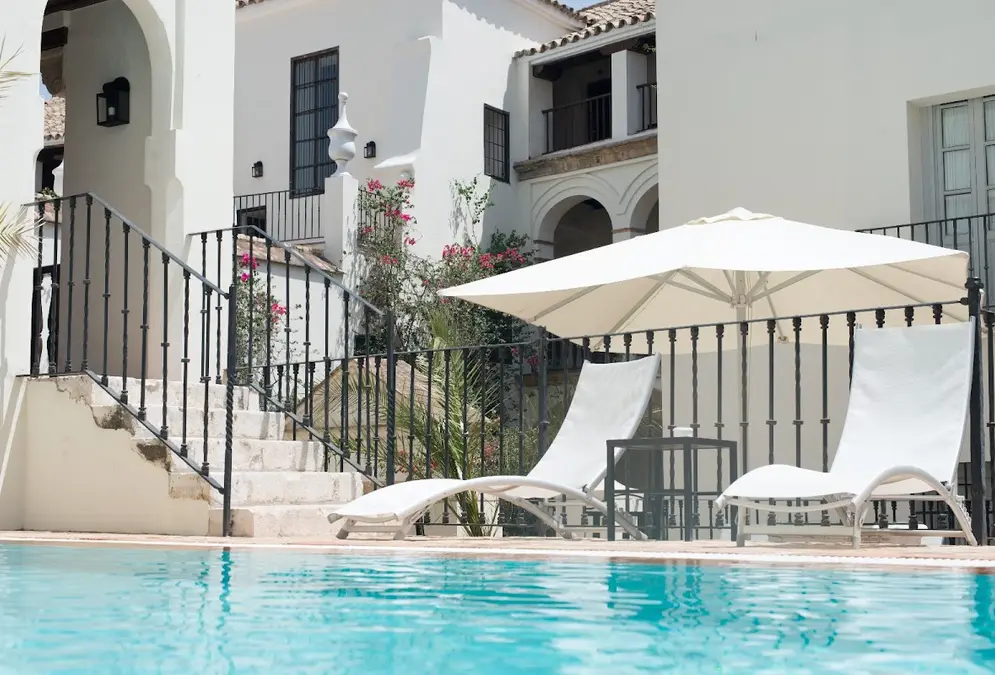
Staying in the Judería means you can reach the Mezquita before the first tour groups arrive. These hotels are within easy walking distance of the entrance.

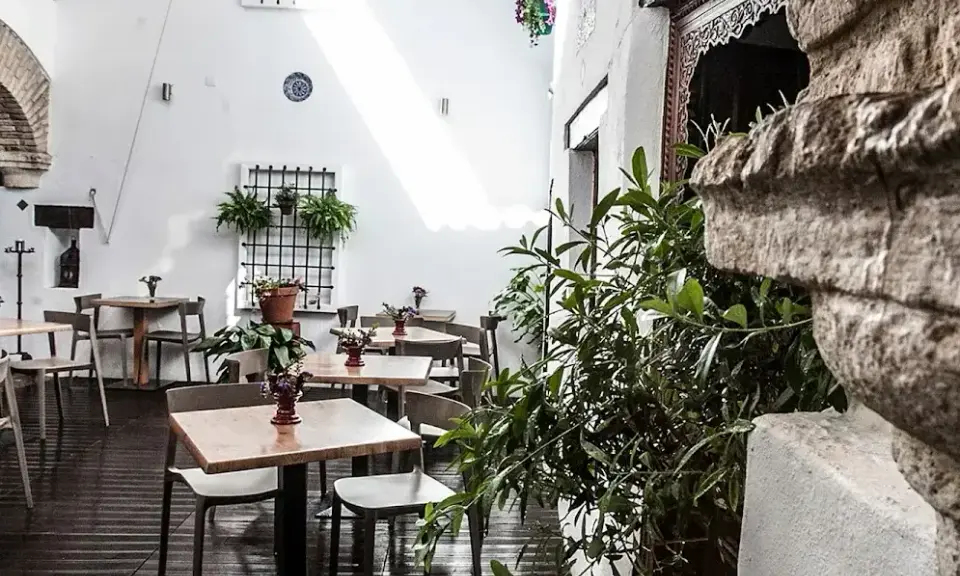
The streets around the Mezquita are lined with restaurants aimed at visitors who have just come out and are hungry. Most are not worth stopping at. These are.

Half-day itinerary: the Mezquita and its surroundings

Everything on this route is within a five-minute walk of the Mezquita. Start at opening to get the morning light in the prayer hall before the group tours settle in.

Day trip from Seville? The 45-minute AVE gets you here before 9:30am, which is enough for the Mezquita, the Judería, and a proper lunch before catching a mid-afternoon train back. From Madrid, the 1h45m journey gives you a full day without rushing.

1

Mezquita-Catedral

Arrive at opening (10:00am, or 8:30 for the free slot). Give yourself 1.5 to 2 hours inside: the column forest, the mihrab and maqsura, and the Renaissance nave. Don't rush the mihrab. 90–120 min

2

Torre Campanario

Climb the bell tower before leaving the complex. Guided groups depart every 30 minutes from the Patio de los Naranjos. The €4 supplement is worth it for the view over the Judería. 30 min

3

Episcopal Palace & Diocesan Museum

Cross the lane directly opposite the Mezquita entrance. Your ticket covers entry to the Diocesan Museum inside the palace. Almost nobody uses this, which means you will usually have it to yourself. 30 min

4

Lunch in the Judería

Walk into the Judería for lunch. Bodegas Mezquita is two minutes away; Casa Mazal on Calle de los Judíos is a five-minute walk through the quarter. 60 min

5

Roman Bridge at sunset

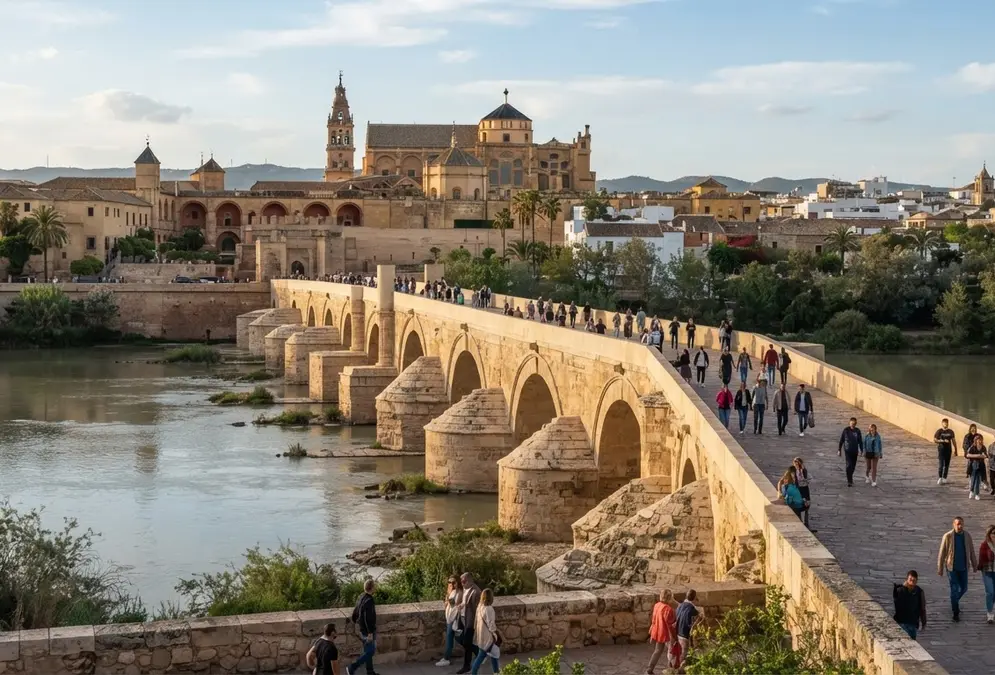
Walk south to the Roman Bridge. From the middle of the bridge in afternoon light, the Mezquita tower fills the frame behind you. The best exterior photograph of the building. 30 min

Continue exploring

Frequently asked questions

How much does entry to the Mezquita-Catedral cost?

General admission is €15. Reduced tickets are €12 for students and visitors aged 65 and over, €8 for children aged 10 to 14, and free for under-10s. The Torre Campanario bell tower costs an extra €4. Free entry runs Monday to Saturday from 8:30 to 9:30am. Arrive by 8:00 to be sure of a place.

What are the best times to visit the Mezquita?

Right at opening, or in late afternoon. Both give you fewer people and better light inside the prayer hall. The free morning slot (8:30 to 9:30am, Mon–Sat) fills quickly, so aim to be at the gate by 8:00. From April to October, mid-morning queues can stretch to two hours. A skip-the-line guided tour is worth the cost if you are visiting in high season.

How long should I spend at the Mezquita-Catedral?

Allow 1.5 to 2 hours for the interior. Add 30 minutes for the Torre Campanario bell tower, which gives you a 360-degree view over the Judería rooftops, and another 30 minutes for the Diocesan Museum in the Episcopal Palace across the street. Entry to the museum is included in your Mezquita ticket, and most visitors walk straight past it.

Is there a dress code for the Mezquita?

Shoulders and knees must be covered. Short shorts, sleeveless tops, and mini-skirts are turned away without exception. In summer, pack a light scarf or overshirt and put it on before you reach the entrance. Vendors outside sell scarves, but charge tourist prices.

Can you visit the Mezquita for free?

Free entry runs Monday to Saturday from 8:30 to 9:30am. The slot cannot be reserved. It is first come, first served, and the full interior is open during this hour. Arrive by 8:00am from April through October to be confident of getting in.

What is the best guided tour of the Mezquita?

In high season, a skip-the-line small-group tour in English is the most practical option. Groups are capped at 10, guides hold official accreditation, and priority access saves up to two hours of queuing. Tours start from €22. The night tour ('El Alma de Córdoba') runs at a fraction of the daytime visitor count and shows the building in a completely different register.

Is photography allowed inside the Mezquita?

Personal photography is allowed throughout the building. Flash and tripods are banned at all times. Photography is not permitted during Mass or religious ceremonies. For the column-forest shot, position yourself in the centre of the prayer hall with the widest lens you have. Staff enforce the no-flash rule consistently. Photography is not allowed at all during the night visit.

What is the Mezquita night visit?

'El Alma de Córdoba' opens the illuminated interior after regular closing hours, with sessions limited to around 100 visitors. Artificial lighting plays off the arches and mosaics in ways daylight never does. Photography is not permitted. Tickets cost €25 and sell out well in advance. Check catedraldecordoba.es for current dates.

Should I book Mezquita tickets in advance?

Book online from April through October. Treat advance booking as essential during Semana Santa, the Patios Festival in May, and summer school holidays. Mid-morning queues at the ticket office run 20 to 40 minutes in peak season. Online tickets cost the same as at the door. The free morning slot cannot be reserved. For guided tours, book 2 to 3 days ahead in high season.

Can you pray at the Mezquita-Catedral?

The building is an active Catholic cathedral. Mass is celebrated daily, and Catholic visitors may participate. Muslim prayer is not officially permitted inside, though the question has generated sustained public debate for years. All visitors are asked to maintain silence in the prayer areas. Hats must be removed at the entrance.

How does the Mezquita compare to the Alhambra?

They are genuinely different enough that choosing between them is a real question. The Alhambra is a complex spread across a hillside: multiple palaces, the Nasrid Rooms with their honeycomb muqarnas ceilings, the Generalife gardens, and a circuit that takes at least 3 to 4 hours. The Nasrid Palace decoration is more intricate than anything in the Mezquita. The setting, with the Sierra Nevada behind it and Granada below, is also something the Mezquita cannot compete with. The Mezquita gives you something different: a single interior that makes its entire argument in one space. The column forest, the mihrab, the Renaissance nave inserted through the middle of it all. The effect is concentrated and immediate in a way the Alhambra, for all its variety, is not. If you can do both, do both. If you have to choose, the Mezquita is the shorter day and leaves you time in the Judería; the Alhambra needs a full day and is better as a standalone trip. See the full comparison for transport, timing, and which to prioritise.

Further reading

Sources and further reading

  1. Cabildo Catedral de Córdoba — Official website (opens in a new tab)

    Official site of the Mezquita-Catedral with current opening hours, ticket prices, and visitor regulations

  2. UNESCO — Mosque-Cathedral of Córdoba (opens in a new tab)

    UNESCO World Heritage listing for the Historic Centre of Córdoba, including the Mezquita

  3. Turismo de Córdoba (opens in a new tab)

    Córdoba's official tourism portal with visitor information and event calendars