Monument comparison
Mezquita vs Alhambra
Two Moorish masterpieces, 90 minutes apart. One sells out months in advance. The other you can walk into any morning for €15.

Written by
María Fernanda González Ten years covering Córdoba's UNESCO heritage sites, sourcing from Junta de Andalucía documentation.
Updated Published
At a glance
- Mezquita
- Córdoba, 2.5h from Madrid by AVE
- Alhambra
- Granada, 4.5h from Madrid by bus/train
- Mezquita price
- €15 (free 8:30–9:30am)
- Alhambra price
- €8.48–€30.48 depending on ticket type
- Book ahead?
- Alhambra: weeks ahead; Mezquita: days ahead
- Visit duration
- Mezquita: 1–2h; Alhambra: 3–4h
In this guide
Jump to a section
Quick verdict
Two of the world's greatest Islamic monuments, 150 km and five centuries apart. The Alhambra is more famous, more photographed, and often fully booked. The Mezquita is the one you can walk into any day for €15, and for many visitors, the more moving of the two. This guide compares them honestly, including what to do when Alhambra tickets are gone.
Side-by-side comparison
| Feature | Mezquita (Córdoba) | Alhambra (Granada) |
|---|---|---|
| Ticket price | €15 | €22.27 |
| Advance booking | Not required, walk up | Essential (2–3 months ahead) |
| Sells out? | Never | Regularly (peak season) |
| Visit duration | 1.5–2 hours | 3–3.5 hours |
| Annual visitors | 2.19 million (2025) | 2.72 million (2024) |
| Built | 785 AD (8th century) | 13th–14th century |
| Style | Umayyad mosque + Catholic cathedral | Nasrid palace-fortress + gardens |
| Accessibility | Flat, wheelchair-friendly | Hilly, multi-level, stairs |
| Crowd experience | Free-flow, spacious | Time-slot herding, 98% capacity |
| Night visits | "El Alma de Córdoba" (€18+) | Night Nasrid Palaces (€8–13) |
The Mezquita
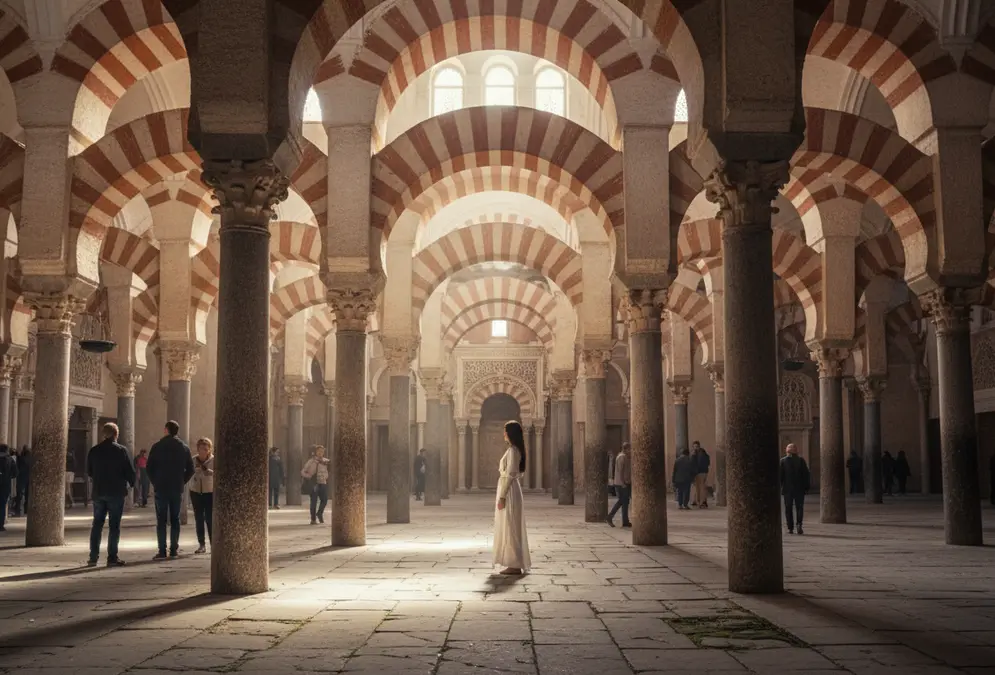
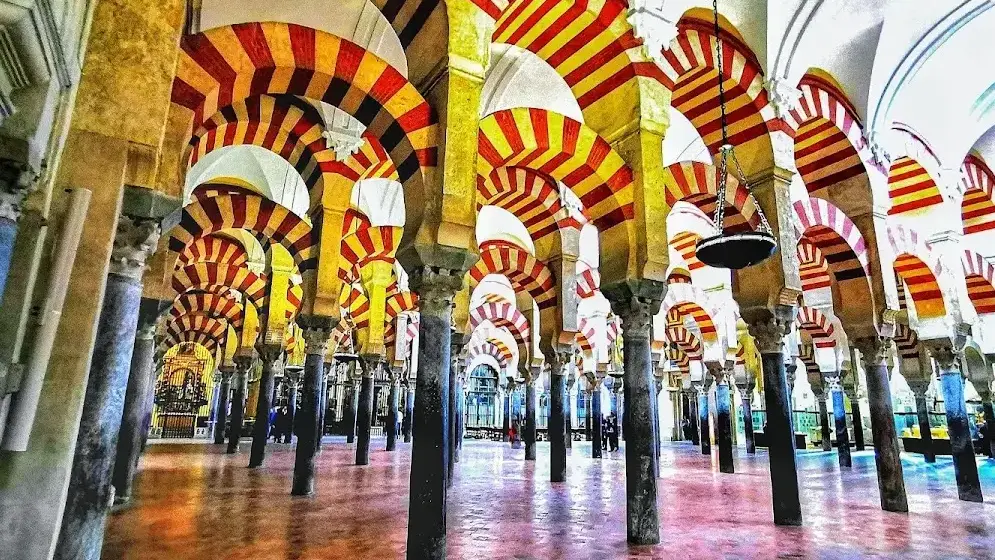
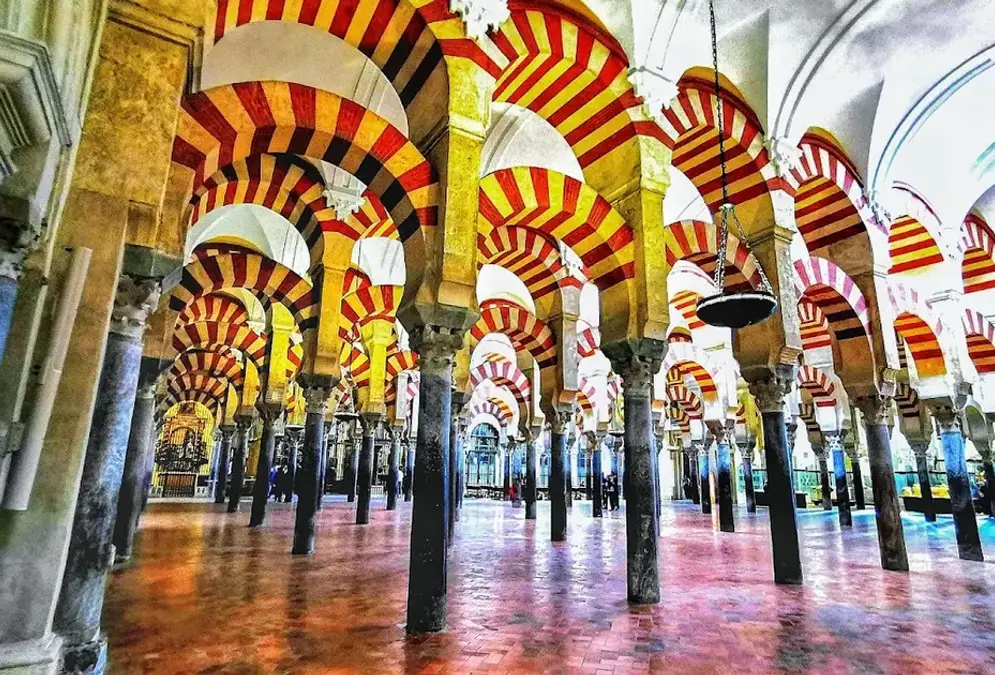
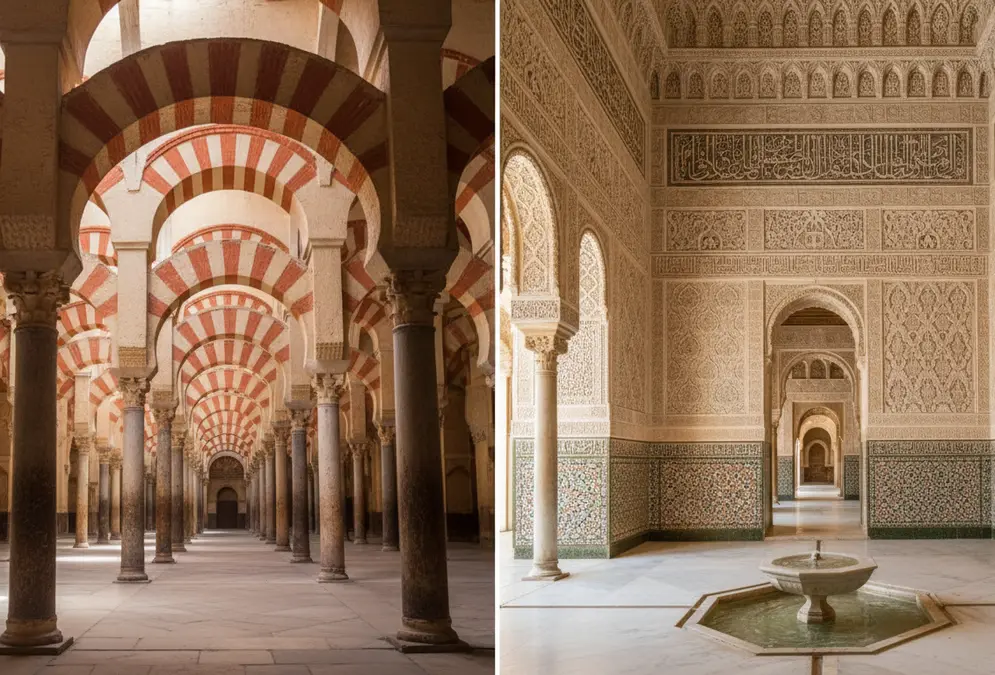
Abd al-Rahman I began building in 785 on the site of a Visigothic church, and his successors expanded the mosque three times over two centuries until it covered 23,000 square metres. Walk into the prayer hall today and you enter a forest of 856 columns of jasper, marble, and granite, each crowned with a double arch in alternating red brick and white stone. Nothing else in the world looks like this: not the formal symmetry of the Alhambra's stucco, not the soaring geometry of Gothic cathedrals, but a hypnotic rhythm of columns receding in every direction, the light falling through low doorways and catching the cool of the stone floor.
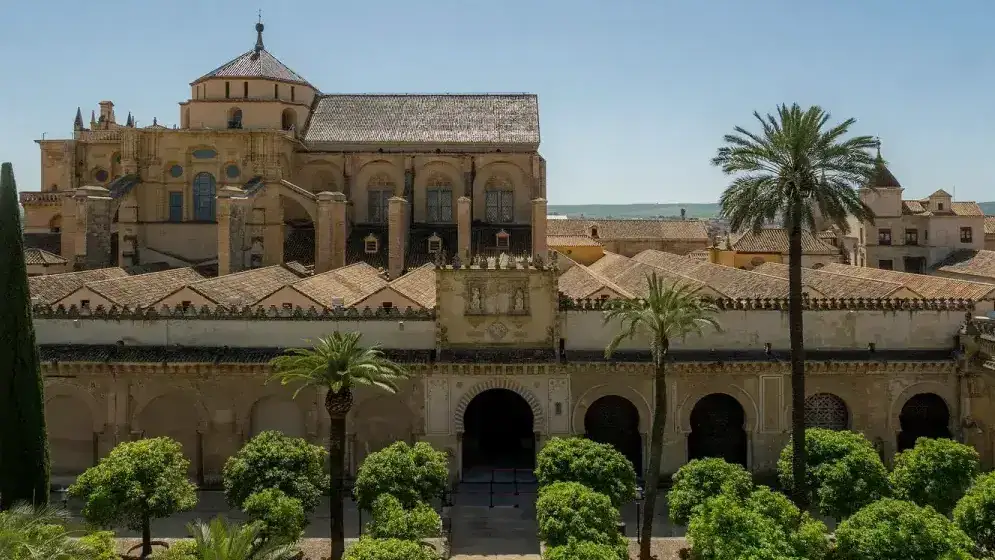
The mihrab (the prayer niche pointing toward Mecca) holds 1,600 kg of Byzantine gold mosaic tiles, a gift from the emperor in Constantinople to the Caliph of Córdoba. It remains one of the most astonishing objects in Iberian art. In the 16th century, Charles V ordered a Renaissance cathedral nave built directly through the centre of the mosque. He later regretted it ("You have destroyed something unique to build something ordinary"). The unintended result is one of the strangest and most compelling buildings in Europe: a cathedral growing out of a mosque, with neither destroying the other.
Practical details
- • General admission: €15 (no booking required)
- • Free entry: Mon–Sat 8:30–9:30am (nearly empty, extraordinary light)
- • Audio guide: €5 (worth it for the mihrab and cathedral nave)
- • Guided tours: €22–28 per person
- • Night visit "El Alma de Córdoba": from €18
- • Flat access throughout; pushchair and wheelchair friendly
Full details on tickets, times and the free morning slot: Mezquita tickets guide.
What sets it apart
- + Architecturally unique: the double-arch system exists nowhere else
- + No time slots, no crowd herding; you move at your own pace
- + A Renaissance cathedral built inside a mosque; nowhere else does this exist
- + Free early morning access is one of Spain's great travel hacks
- + The Judería and Roman Bridge are a 5-minute walk away
Be aware
- - Still an active cathedral; staff enforce the dress code
- - Midday in July and August: the interior stays cool, but outside is brutal
- - The exterior walls along Calle Cardenal Herrero are the best photography spot; arrive early
The Alhambra
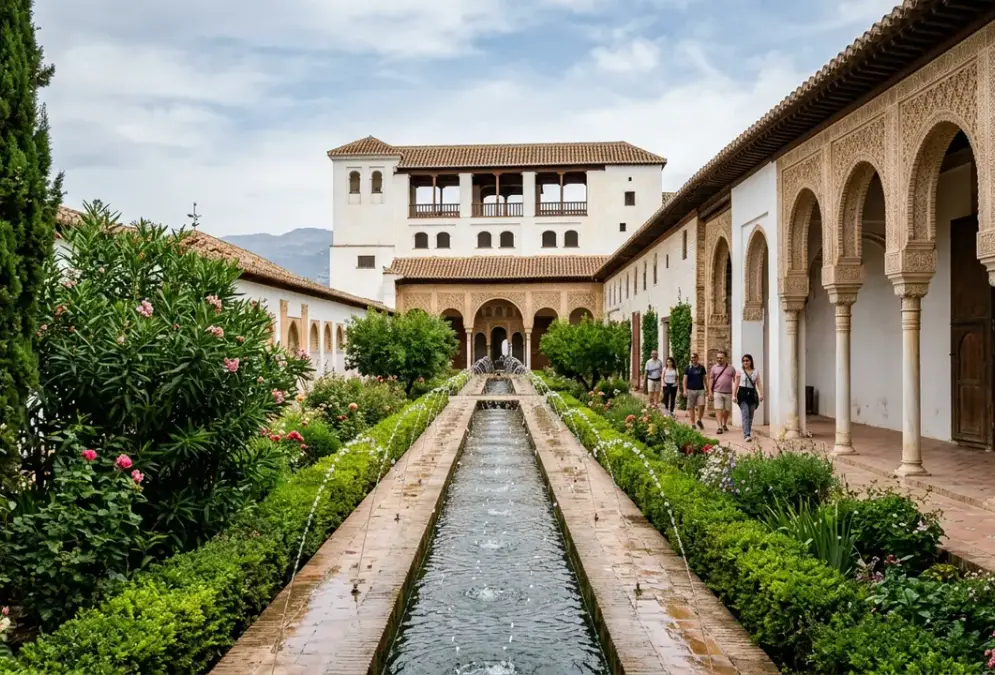
The Alhambra is not one building but three distinct complexes that the Nasrid sultans of Granada built over a century. The Nasrid Palaces (Comares and the Court of the Lions) are the most famous: intricate stucco with Koranic calligraphy covers every surface, zellige tilework lines the base of each wall, and muqarnas ceilings dissolve into geometric stalactites overhead. The Generalife gardens above the palaces are older, quieter, and filled with the sound of running water channelled from the Sierra Nevada. The Alcazaba fortress at the western tip stands largely in ruins but offers the best panoramic views, looking out over the white houses of the Albaicin and the city below.
What makes the Alhambra extraordinary (and what no photograph quite captures) is the sheer scale. This is a royal city on a hilltop, 740 metres above sea level, with the Sierra Nevada visible to the south on clear days. Washington Irving lived here in 1829, sleeping in the empty apartments, and his Tales of the Alhambra put the monument on the international map. Visitors have not stopped coming since.
Practical details
- • General ticket: €22.27 (Nasrid Palaces + Generalife + Alcazaba)
- • Gardens only (Generalife): €12.73
- • Night Nasrid Palaces: €8–13
- • Charles V Palace: free
- • Book at: alhambra-patronato.es (official, no agency fees)
- • Nasrid Palaces: assigned entry time; miss it and you lose access
What sets it apart
- + Scale and variety: palace, fortress, gardens, views
- + The Court of the Lions: 124 marble columns framing a central fountain
- + Panoramic views over Granada and the Sierra Nevada
- + Night visits available (400–500 visitors/night in peak season)
Be aware
- - Hilly, multi-level; difficult for visitors with limited mobility
- - Your Nasrid Palace time slot is rigid; allow travel time from Granada centre
- - Peak season (Apr–Oct): tickets sell out weeks ahead
Tickets and availability
The Alhambra runs at 98% capacity year-round. The Patronato de la Alhambra caps daily admissions to protect the palace fabric, which means that from April through October (especially during Easter week, Spanish school holidays, and the summer months) Nasrid Palace tickets sell out weeks or months in advance. Travellers regularly arrive in Granada only to find every slot gone.
Your backup plan when the Alhambra sells out
- • Gardens-only ticket (€12.73): walk up for the Generalife and outer grounds
- • Charles V Palace (free): home to the Museo de la Alhambra and the Museo de Bellas Artes
- • Night visit: separate allocation, often available when day slots are gone
- • Take the train to Córdoba: 90 minutes, from €17, and the Mezquita never sells out
The Mezquita has no such constraints. It welcomes 2.19 million visitors a year and still feels spacious; the 23,000 m² prayer hall simply absorbs them. You can arrive on the day, buy a ticket at the door, and walk in within minutes. The free morning window (Monday to Saturday, 8:30-9:30 am) is the single best-value hour in Andalusia: the hall is nearly empty, the light is lateral and warm, and the columns seem to multiply endlessly into the half-dark. If you find Alhambra tickets gone, the Mezquita is not a consolation prize. For many visitors, it is the better morning.
How they were built
Mezquita: Umayyad Córdoba
Abd al-Rahman I began the mosque in 785 AD as the physical expression of a new Umayyad dynasty, one that had fled the Abbasid coup in Damascus and rebuilt its court in Córdoba. His architects took the horseshoe arch from Visigothic and Byzantine precedents and developed it into the double-arch system that gives the prayer hall its visual rhythm. Each expansion (under Abd al-Rahman II in 848, Al-Hakam II in 961, and Almanzor in 987) added more columns and more sophistication. By the late 10th century, Córdoba's mosque ranked among the largest in the Islamic world.
The cathedral nave that Hernán Ruiz the Younger inserted in the 16th century is architecturally fine, but the collision between the two styles is the monument's deepest subject. Three religions, two millennia, one building. See our guide to Moorish Córdoba for the wider context.
Alhambra: Nasrid Granada
Muhammad I began the Nasrid Palaces in the 13th century, and the complex reached its peak under Yusuf I (1333-1354) and Muhammad V (1354-1391), who built the Comares Tower and the Court of the Lions respectively. The Nasrids were the last Muslim dynasty in Iberia, holding Granada while the rest of Al-Andalus fell to the Reconquista. The Alhambra declared permanence and refinement. The stucco panels repeat wa-la ghalib illa Allah ("There is no victor but God") endlessly, a phrase that became the Nasrid dynasty's motto.
Ferdinand and Isabella took the Alhambra in January 1492, the same year Columbus sailed. The Catholic Monarchs preserved it largely intact, though Charles V added a Renaissance palace beside the Nasrid Palaces in the 1520s that sits awkwardly on the hilltop.
Which suits your trip?
Visit the Mezquita if…
- • You have not booked months ahead and want flexibility
- • Someone in your group has limited mobility (flat, wheelchair-friendly throughout)
- • You prefer a contemplative, self-paced visit over a timed-entry queue
- • You want to spend less (€15 vs €22.27, plus free mornings)
- • Early Islamic architecture interests you: the Mezquita is raw and formative where the Alhambra is refined and late
- • You are spending 2-3 days in Córdoba; the Judería, Alcázar, and Medina Azahara are all within range
Visit the Alhambra if…
- • You can book 2-3 months ahead and commit to a fixed date
- • You want scale and variety: palaces, gardens, fortress, panoramic views
- • You are happy to dedicate half a day to one site
- • You want Spain's most internationally recognized monument
- • The Generalife gardens and their water channels appeal to you
- • You are spending 2-3 days in Granada; the Albaicin, Sacromonte, and free tapas culture round out the stay
Choosing a base city? See our Córdoba, Granada, and Seville comparison for the full picture.
How to visit both
Córdoba and Granada are 150 km apart: close enough for a day trip, better as a two-city stay. Start in Córdoba (no booking needed for the Mezquita), spend 2-3 days, then train to Granada for your pre-booked Alhambra slot. This way you see the Mezquita at your own pace first, and your trip is protected if your Alhambra booking falls through.
Day 1–3
Córdoba
Mezquita (free morning slot or ticketed visit), Judería, Alcázar, Medina Azahara on day 2. See our Córdoba in 2 days itinerary.
Train: Córdoba → Granada, 1h30–2h, from €17 (Renfe, book in advance). See Córdoba to Granada guide.
Day 4–6
Granada
Alhambra (pre-booked slot, Nasrid Palaces + Generalife), Albaicín quarter, Sacromonte, free tapas in the city centre.
Transport tip: Book the Renfe Córdoba–Granada train at least a week ahead. There are roughly 8 daily services; journey times vary (1h30 to 2h30 depending on route). Prices start around €17 for advance bookings.
Ready to plan your Mezquita visit?
Get tickets, free morning slot times, and night visit options. Everything you need to know before you go.
Frequently asked questions
Is the Mezquita or the Alhambra better?
They offer different experiences. The Mezquita is a contemplative forest of 856 arches, an architectural form found nowhere else in the world. The Alhambra is a palace complex with gardens, fortifications, and views over Granada and the Sierra Nevada. Many visitors find the Mezquita more emotionally affecting and the Alhambra more visually spectacular. If you can, see both. If you must choose, the Mezquita wins on practicality: no advance booking, €15 entry, and the free early morning slot ranks among the finest experiences in Spain.
What can I do if Alhambra tickets are sold out?
Take the train to Córdoba instead: 90 minutes from Granada (from €17, roughly 8 daily Renfe services). The Mezquita never sells out. Walk up any day for €15, or visit free Monday to Saturday 8:30–9:30am. This is not a consolation prize. The Mezquita has a longer history and a more singular architectural achievement than the Alhambra. If you prefer to stay in Granada, the gardens-only Generalife ticket (€12.73) and the Charles V Palace (free) remain available even when Nasrid Palace slots are gone.
Should I visit the Mezquita or the Alhambra first?
Visit the Mezquita first. It requires no advance planning, fits into any schedule, and gives you the architectural context to appreciate the Alhambra more deeply. Book the Alhambra 2–3 months ahead for your Granada leg. Starting in Córdoba also protects your trip: if your Alhambra booking falls through, you have already seen the Mezquita, rather than arriving in Granada with nothing to fall back on.
How much time do I need for the Mezquita and the Alhambra?
Allow 1.5–2 hours for the Mezquita, covering the prayer hall, the cathedral nave, the mihrab, and the Patio de los Naranjos. An audio guide (€5) adds useful depth. The Alhambra needs at least half a day: 90 minutes for the Nasrid Palaces, 45 for the Generalife, and 30 for the Alcazaba fortress. Budget 3–3.5 hours total, more if you want to linger in the gardens.
Can I visit the Mezquita and the Alhambra in one trip?
Yes. Córdoba and Granada are 1.5 hours apart by direct Renfe train (from €17, cheaper when booked ahead). Spend 2–3 days in each city. The best sequence: start in Córdoba (no booking needed for the Mezquita), then train to Granada for your pre-booked Alhambra slot. You can also add Seville for the classic Andalusia triangle. See our Córdoba, Granada and Seville comparison guide.
Further reading
Official sources
3 references Show Hide
- Mezquita-Catedral de Córdoba (opens in a new tab)
Buy tickets, check hours, and book guided tours
- Patronato de la Alhambra y Generalife (opens in a new tab)
Book Alhambra tickets directly (no agency fees)
- UNESCO World Heritage: Historic Centre of Córdoba (opens in a new tab)
Why UNESCO listed the Mezquita and Córdoba's historic centre