Three Cultures Heritage
Islam, Judaism, Rome: three worlds in one city
For five centuries, Córdoba was the intellectual capital of the Western world because it was never just one thing. The columns of a Roman temple stand inside a mosque inside a cathedral. A medieval synagogue survives three streets away. The thinkers who shaped modern philosophy (Seneca, Maimonides, Averroes) all came from here. This is what three cultures looks like when it is not a slogan.

Written by
María Fernanda González Ten years covering Córdoba's UNESCO heritage sites, sourcing from Junta de Andalucía documentation.
Updated Published
In the 10th century, Córdoba had a population of around half a million, making it the largest city in Western Europe, ahead of Constantinople, Paris, and London. That scale was possible because the city was built on centuries of layered civilisation: Roman foundations, Visigothic stonework, Islamic courts, Jewish scholars, and Christian chapels, each generation inheriting and transforming what came before.
The term convivencia (coexistence) describes the medieval period when Muslim, Jewish, and Christian communities lived alongside each other in Andalusia. In Córdoba, that coexistence produced one of the most remarkable concentrations of intellectual life in world history. Three faiths, three architectures, three bodies of learning, all present within a few hundred metres of each other in the historic centre today.
In this guide
Jump to a section
At a glance
- Coexistence era
- 8th–15th century (Islamic, Jewish, Christian)
- Symbol
- Mezquita-Catedral: layered civilisations in one building
- Jewish heritage
- Medieval synagogue (1315), Maimonides birthplace
- Key quarter
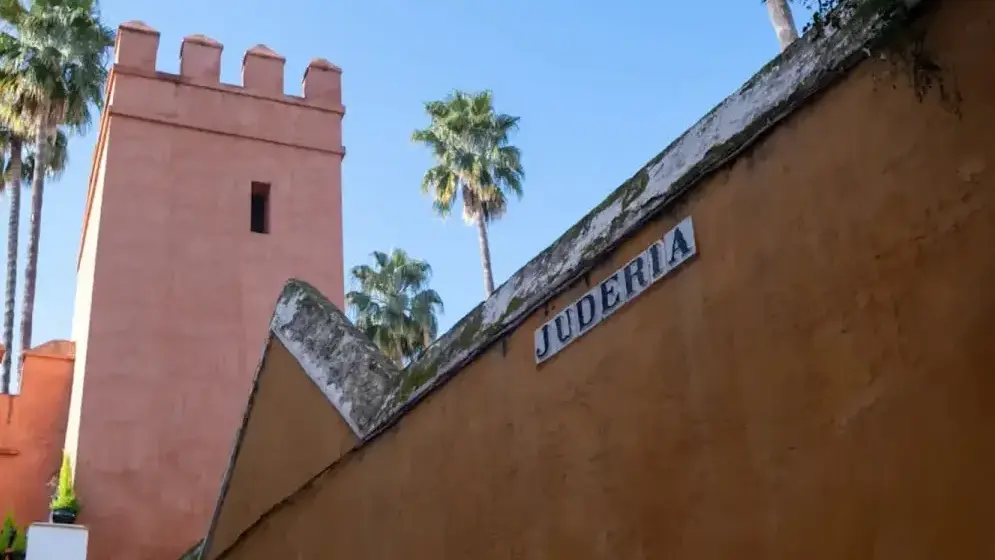
- Judería: best-preserved medieval Jewish district in Spain
- Islamic legacy
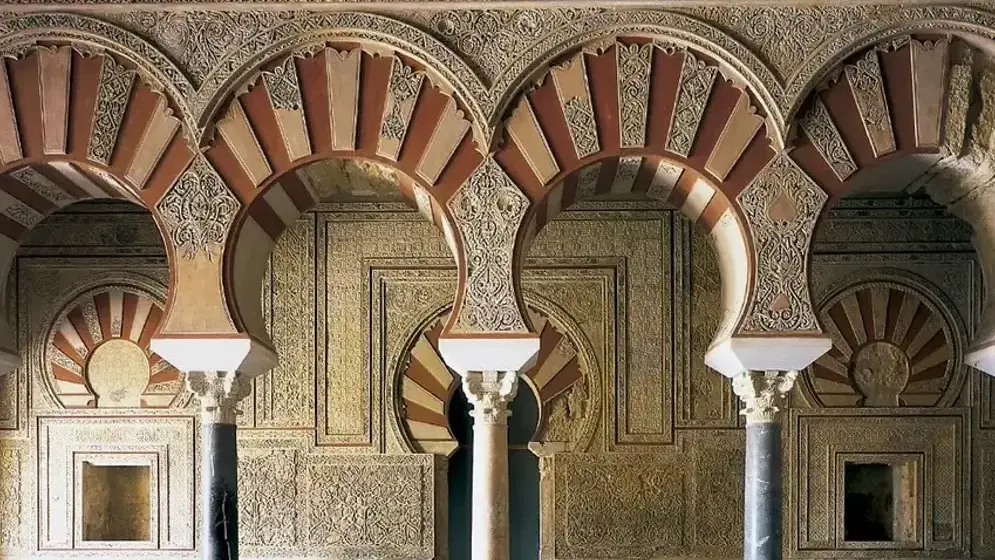
- Medina Azahara: 10th-century Umayyad palace city
- Modern legacy
- UNESCO "City of Three Cultures" designation
Explore the three heritages
Each civilisation left its own sites, thinkers, and legacy. Follow each pillar in depth or combine them in a single day.
Moorish Córdoba
The Umayyad Caliphate that made Córdoba the intellectual capital of the medieval world. The Mezquita, Medina Azahara, and Averroes.
Explore Islamic heritageJewish Córdoba
Seven centuries of Sephardic life in the Judería. The medieval Synagogue, Casa de Sefarad, and Maimonides, born here in 1138.
Explore Jewish heritageRoman Córdoba
Corduba, capital of Baetica and birthplace of Seneca. The Roman Temple, the ancient bridge, and two millennia of continuous habitation.
Explore Roman heritage- Population at peak
- 500,000
- Years inhabited
- 2,000+
- UNESCO designations
- 3
- Mezquita columns
- 856
Western Europe's largest city, 10th century
Continuous settlement since Roman Corduba
Historic Centre, Mezquita, Medina Azahara
Many reused from Roman and Visigothic buildings
Three civilisations, one city
206 BC – 711 AD
Roman & Visigothic Córdoba
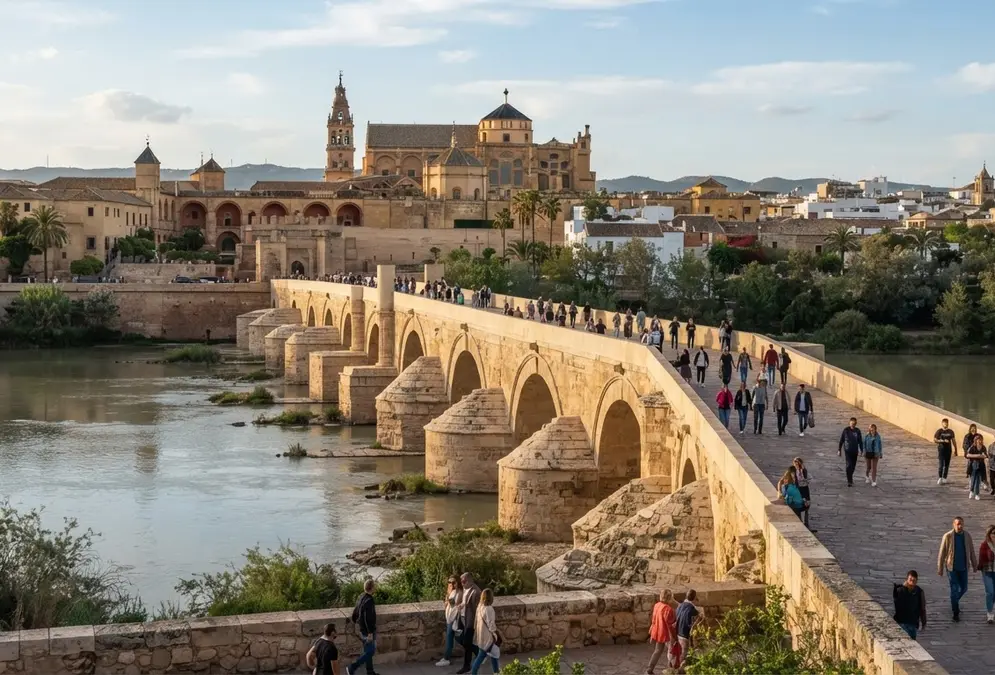
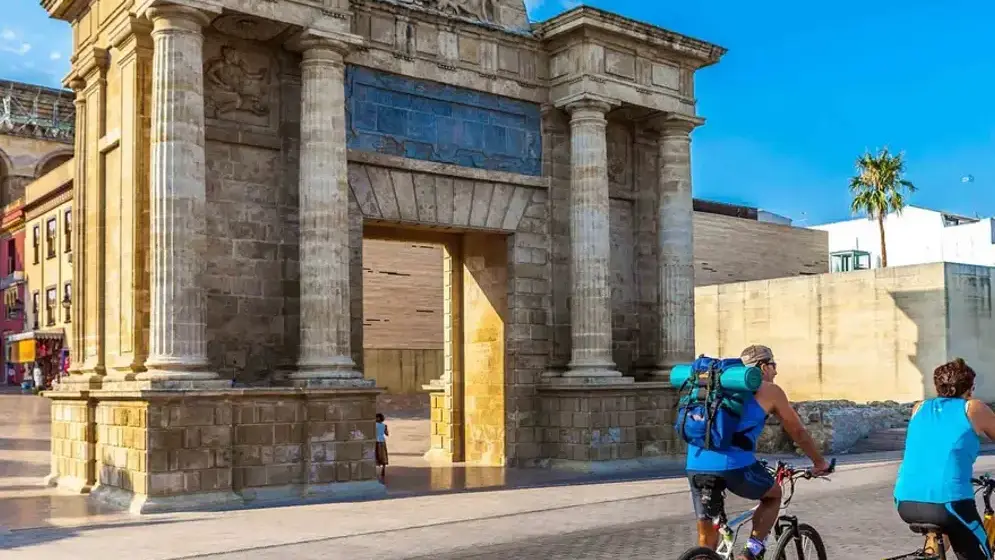
Roman general Marcus Claudius Marcellus founded Corduba in 206 BC. It became the capital of Hispania Ulterior Baetica, one of the wealthiest provinces in the empire. Seneca the Elder and Seneca the Younger were born here. The Roman Bridge across the Guadalquivir and the columns of the Roman Temple survive today. After Rome's collapse, the Visigoths held the city until the Muslim conquest of 711.
711 – 1236
The Caliphate: Golden Age
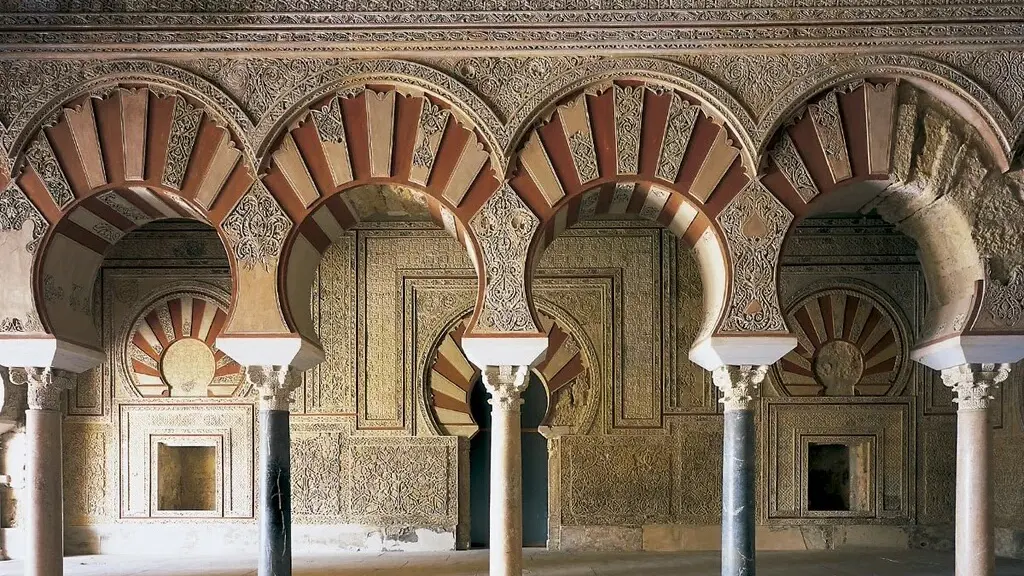
Under Abd al-Rahman I (756–788), Córdoba became capital of the independent Umayyad Emirate. His successor Abd al-Rahman III proclaimed the Caliphate in 929, making Córdoba the largest city in Western Europe. The Mezquita was built and expanded over 200 years. Jewish and Christian scholars worked alongside Muslim ones; Maimonides, Averroes, and Hasdai ibn Shaprut all worked in this period. The caliphate collapsed in 1031; Ferdinand III reconquered the city in 1236.
Roman times – 1492
Jewish Córdoba — seven centuries
Jewish presence in Córdoba dates to Roman times. Under the caliphate it flourished: Hasdai ibn Shaprut served as a senior Umayyad diplomat; Moses ben Hanoch founded the leading Talmudic academy in Europe. Maimonides was born in the Judería in 1138. The Synagogue (one of only three surviving medieval synagogues in Spain) was built in 1315, under Castilian rule. The community ended with the Alhambra Decree of 1492, when the remaining Jews were expelled from all Spanish territories.
1236 – present
Christian Córdoba
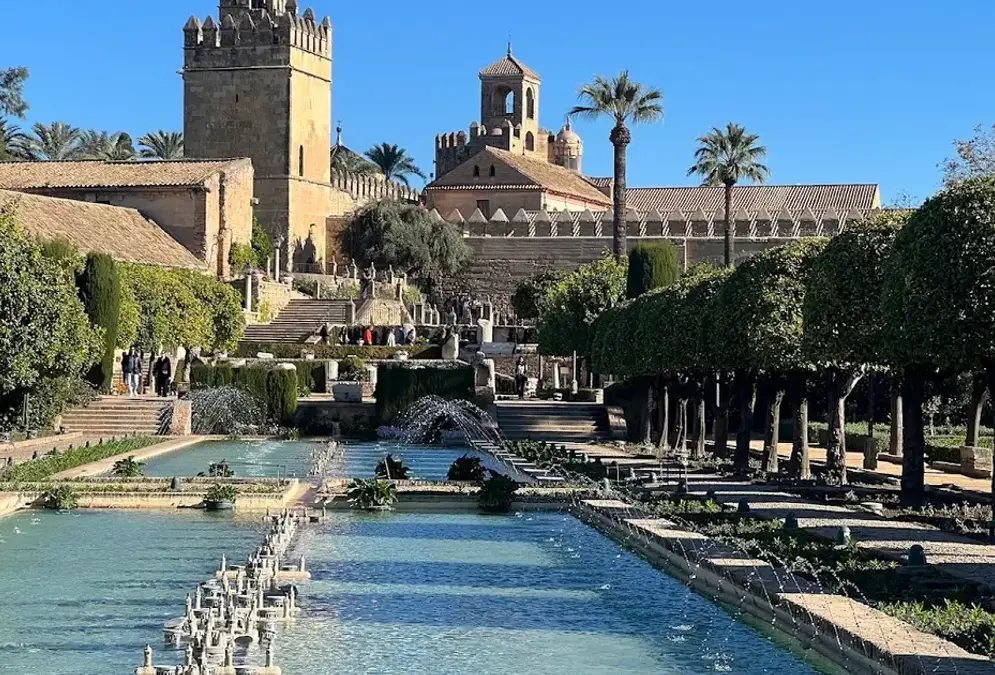
Ferdinand III of Castile entered Córdoba on 29 June 1236. The Mezquita was consecrated as a cathedral; a Gothic nave was inserted into its centre in the 16th century. The Jewish community, initially reinstated under Christian rule, was finally expelled in 1492. What remained was the city we walk today: a medieval urban fabric whose every stone is the palimpsest of three faiths. The Castilian centuries carry their own weight of story, though: the Fernandine churches raised on former mosques, an Inquisition tribunal, and a city reshaped around its cathedral. If you want to follow that Christian layer specifically, our guide to Christian Córdoba covers it in depth.
Three faiths, three philosophers
Roman · c. 4 BC – 65 AD
Seneca the Younger
Born in Corduba, Lucius Annaeus Seneca became the most widely read Stoic philosopher of the Roman imperial age. Tutor to Nero, author of tragedies and moral essays, his Letters to Lucilius remain in print two thousand years later. His philosophical legacy (reason, resilience, the examined life) passed through medieval Arabic and Hebrew translations before re-entering European thought at the Renaissance.
Key work: Epistulae Morales ad Lucilium Full story →
Jewish · 1138 – 1204
Maimonides
Moses ben Maimon was born in the Judería in 1138 and fled with his family when the Almohads arrived ten years later. He settled eventually in Cairo, where he became court physician to Saladin and wrote two works that changed intellectual history: the Mishneh Torah, a complete codification of Jewish law, and the Guide for the Perplexed, a reconciliation of Jewish theology with Aristotelian philosophy that Thomas Aquinas read and engaged with directly.
Key works: Mishneh Torah; Guide for the Perplexed
Islamic · 1126 – 1198
Averroes (Ibn Rushd)
Abu al-Walid Muhammad ibn Rushd was born in Córdoba in 1126 into a family of jurists. He served as court physician to the Almohad caliphs and wrote encyclopaedic commentaries on Aristotle that were translated into Latin and became the standard texts in European universities for three centuries. Dante placed him among the great philosophers in the Inferno. He and Maimonides never met, though they lived in the same city at the same time.
Key works: Commentaries on Aristotle; Tahafut al-Tahafut Full story →
“He and Maimonides never met, though they lived in the same city at the same time.”
UNESCO World Heritage Site
The Mezquita-Catedral: three cultures in one building
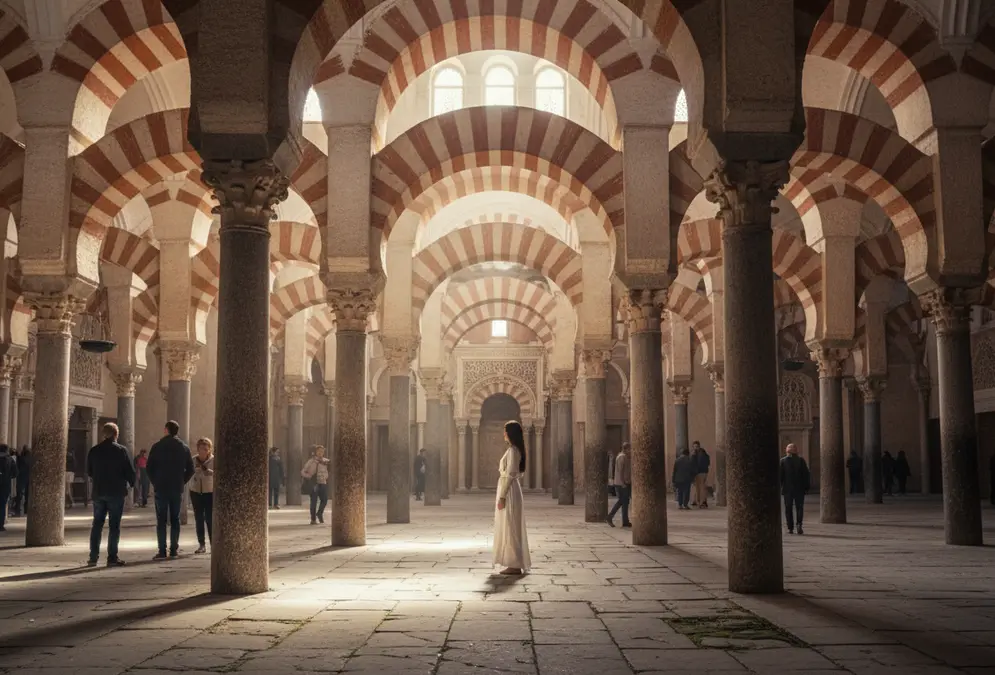
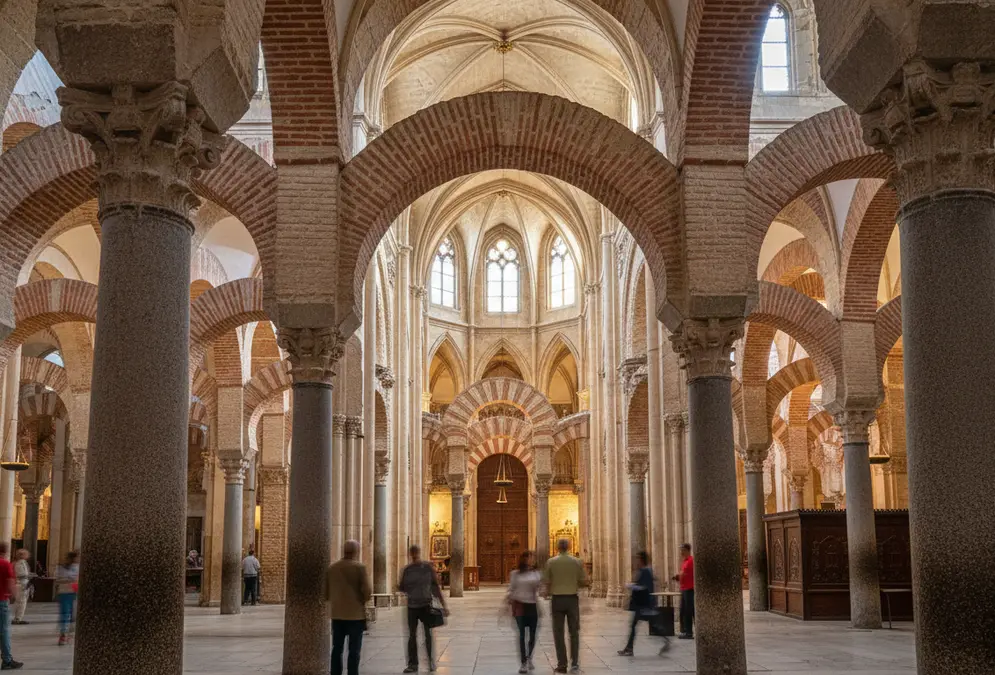
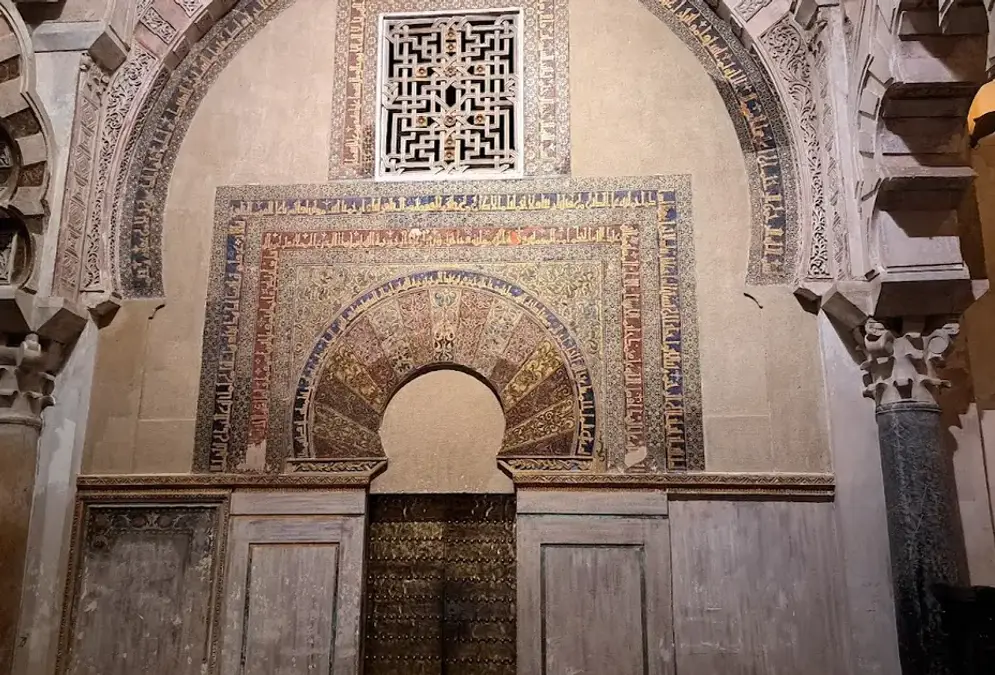
The Mezquita-Catedral is the most complete physical expression of three-culture Córdoba. Its forest of 856 columns came partly from Roman and Visigothic buildings, many reused directly. The double-tiered red and white horseshoe arches are the defining image of Umayyad architecture. In the 16th century, a full Gothic cathedral nave was inserted into the mosque's centre, a decision so alarming to the architect of King Carlos V that, on seeing the completed work, he reportedly said: "You have destroyed something unique to build something ordinary."
The result is neither mosque nor cathedral, but a layered record of five centuries of history that no single civilisation could have produced alone.
Mezquita-Catedral visitor guide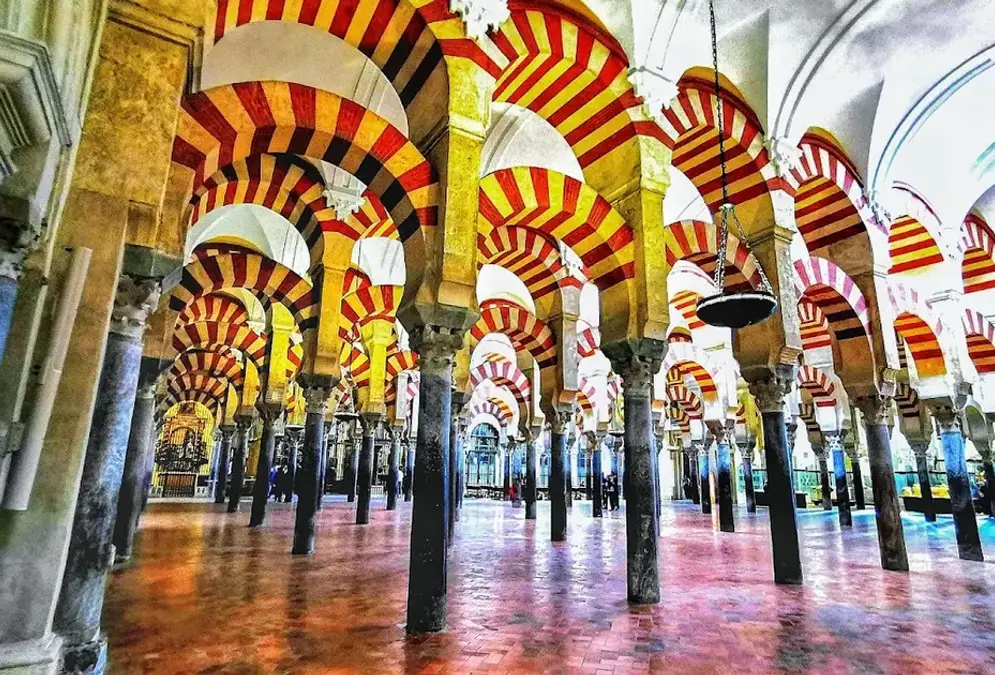
The 856-column forest of the Mezquita: Roman columns, Islamic arches, Christian nave
Planning a Three Cultures visit
One day: essentials only
- AMRoman Temple (free, 30 min) then Roman Bridge (30 min)
- MIDSynagogue (45 min) + Judería walk (60 min) + lunch
- PMMezquita-Catedral (2 hrs; book in advance)
Two days: full depth
- Day 1Islamic heritage: Mezquita-Catedral + Moorish Córdoba walk
- Day 2Jewish and Roman: Synagogue + Casa de Sefarad + Roman Temple + Roman Bridge
- +1Optional: Medina Azahara half-day (8 km west, needs booking)
Continue exploring
Córdoba's UNESCO Heritage
Three World Heritage Sites in one city: the Historic Centre, the Mezquita, and Medina Azahara, each inscribed separately for distinct reasons.
Museums of Córdoba
The Archaeological Museum sits above a Roman theatre. The Calahorra Tower tells three-culture history. A guide to the city's best museums.
Mezquita-Catedral
Complete visitor guide: 856 columns, UNESCO heritage, tickets, tours, and how to experience the mosque-cathedral without the crowds.
History of Córdoba
The complete history hub: every era from Roman Corduba to the Caliphate, the Reconquista, and beyond.
Architecture Guide
How Roman, Umayyad, Mudéjar and contemporary architecture layer across the same city blocks, from the Roman Temple to the C3A.
Best of Córdoba for History Lovers
Twelve history-focused picks ranked in order: guided tours first, monuments second, province day trips last.
Three Cultures Heritage Route
A self-guided walking route connecting Roman, Islamic, and Jewish landmarks across the historic centre in a single loop.
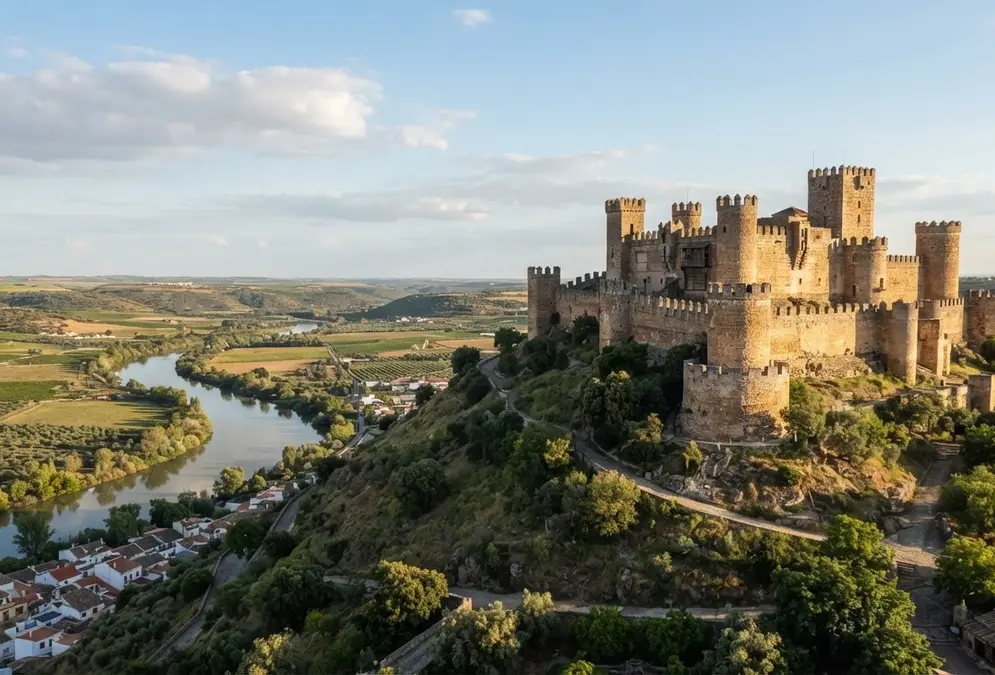
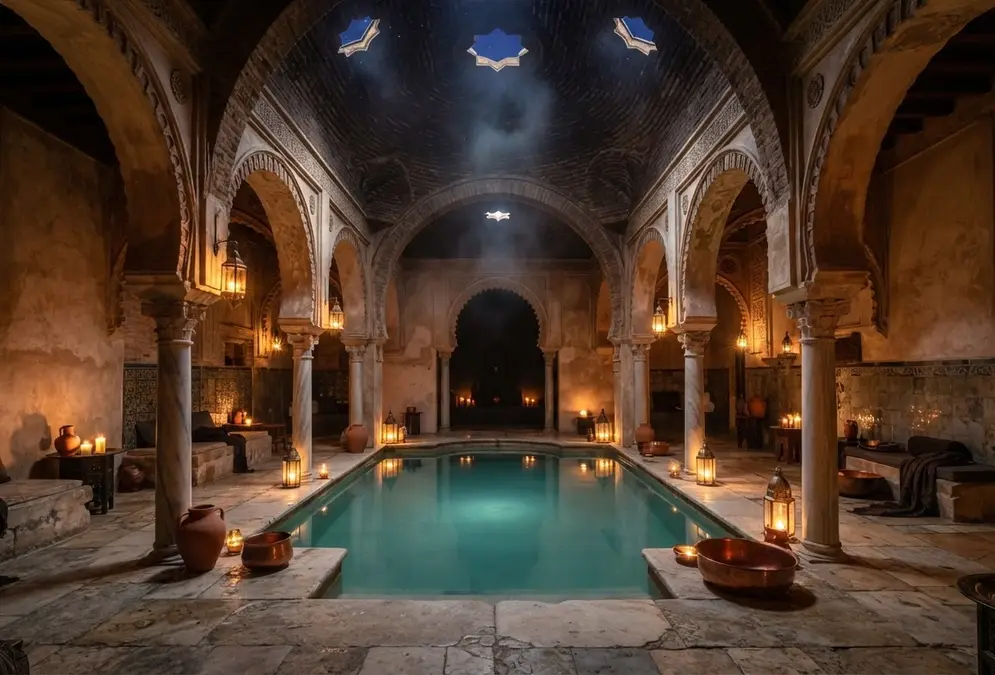
View the routeMonuments of the three civilisations

Historical tours & experiences
Frequently asked questions
What does 'Three Cultures' mean in the context of Córdoba?
The term refers to the three Abrahamic civilisations (Islamic, Jewish, and Christian) that coexisted in Córdoba during the medieval period, particularly under the Umayyad Caliphate (756–1031). Scholars often debate whether this coexistence was as harmonious as the term implies, but it is undeniable that Córdoba under the caliphate produced extraordinary cross-cultural intellectual exchange between Muslim, Jewish, and Christian thinkers. The physical evidence (the Mezquita, the Synagogue, and the Roman and Visigothic foundations beneath both) makes Córdoba the most legible place in Europe to read this history.
Which sites best represent the three cultures in Córdoba?
For Islamic heritage: the Mezquita-Catedral and Medina Azahara. For Jewish heritage: the Synagogue of Córdoba and La Judería. For Roman heritage: the Roman Temple and Roman Bridge. All of these are within 1–2 km of each other in the historic centre.
Can I see all three cultures' heritage in one day?
Yes, with an early start. A focused day could cover the Roman Temple and Roman Bridge in the morning, followed by the Synagogue and Judería before lunch, and the Mezquita-Catedral in the afternoon. Book the Mezquita in advance and arrive for the Roman Temple when it opens. Medina Azahara (8 km west) requires a separate half-day.
Who were the great thinkers of Three Cultures Córdoba?
Three figures define the period. Seneca the Younger (c. 4 BC–65 AD), born in Roman Corduba, became the most influential Stoic philosopher of the imperial age. Maimonides (1138–1204), born in Córdoba, reconciled Jewish theology with Aristotelian philosophy in works that shaped Christian scholasticism as much as Jewish tradition. Averroes (Ibn Rushd, 1126–1198), Córdoba's greatest Islamic philosopher, wrote Aristotle commentaries that were standard reading in European universities for three centuries. That three thinkers of such magnitude emerged from a single Andalusian city is not coincidence: it reflects the intellectual environment that the three cultures together created.
Was convivencia a myth or a reality?
The reality was more complicated than the romantic version suggests. Coexistence under the caliphate was structured inequality: Jews and Christians lived as dhimmis (protected communities with legal restrictions, higher taxes, and limited political rights). Periods of genuine intellectual exchange and cultural cross-pollination did occur, particularly in medicine, philosophy, and poetry. But there were also episodes of persecution, forced conversion, and violence, especially under the Almohad dynasty from 1147. Historians use convivencia to describe a specific kind of medieval pluralism that was unusual by the standards of its time, while acknowledging that it was not equality or modern tolerance.
Is the Three Cultures route an official itinerary?
Córdoba's tourist office promotes a Three Cultures heritage route that links key sites in the historic centre. A free walking map is available at the tourist information office on Plaza de las Tendillas. The route typically takes a full day and covers the Roman Bridge, Roman Temple, Mezquita-Catedral, Synagogue, Casa de Sefarad, and the Judería. For a more in-depth visit, spreading the itinerary across two days is recommended.
Further reading
Sources and further reading
3 references Show Hide
- UNESCO — Historic Centre of Córdoba (opens in a new tab)
UNESCO World Heritage inscription covering the Mezquita, Alcázar, and the historic urban fabric
- Turismo de Córdoba — Three Cultures (opens in a new tab)
Official tourism site with Three Cultures heritage route maps and practical visit information
- Junta de Andalucía — Medina Azahara (opens in a new tab)
Official site for the Medina Azahara archaeological site and museum
Explore the Three Cultures
Tours are selected for quality, not commission. We earn a small fee if you book — at no extra cost to you.
Best Seller
Best Seller
Mosque-Cathedral Skip-the-Line Guided Tour
Skip the queue and explore the Mezquita-Cathedral with a knowledgeable local guide. Discover 13 centuries of layered history in one of Spain's most iconic monuments.
Skip the line 1.5 hours
From €29
4.7 (7,293 reviews)
Reserve Your Spot
✓ Verified GetYourGuide reviews
Books up weeks ahead in peak season
Jewish Quarter, Mosque & Alcázar Tour
A comprehensive guided tour covering Córdoba's three UNESCO-listed highlights: the Mezquita, the medieval Jewish Quarter, and the Alcázar de los Reyes Cristianos.
3 hours
From €49
4.6 (5,547 reviews)
Reserve Your Spot
✓ Verified GetYourGuide reviews
Books up weeks ahead in peak season