Sephardic Heritage
Seven centuries of Sephardic Córdoba
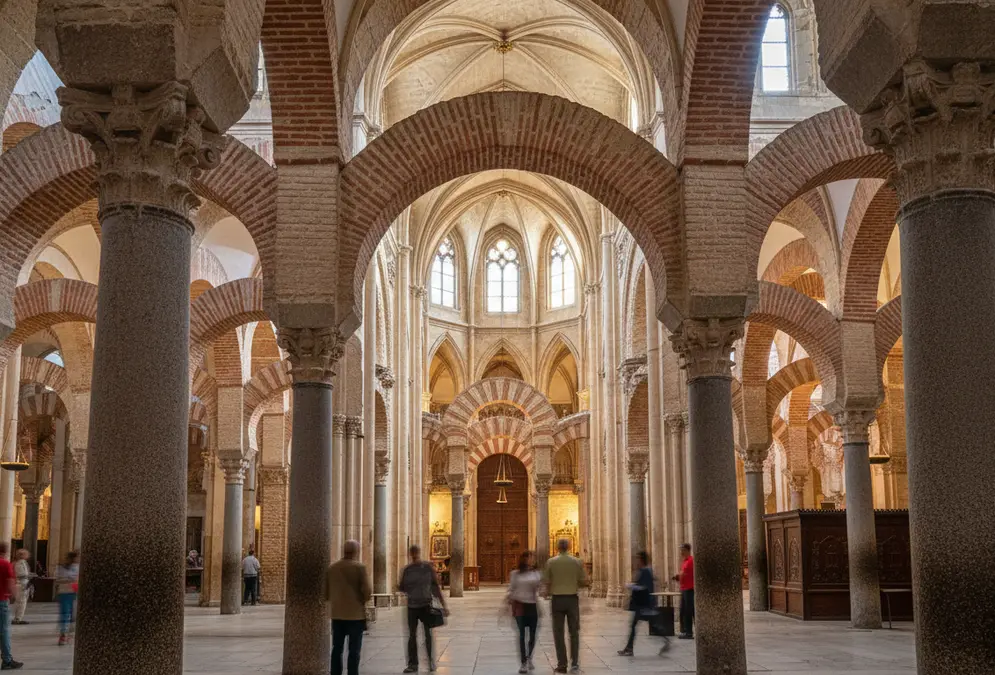
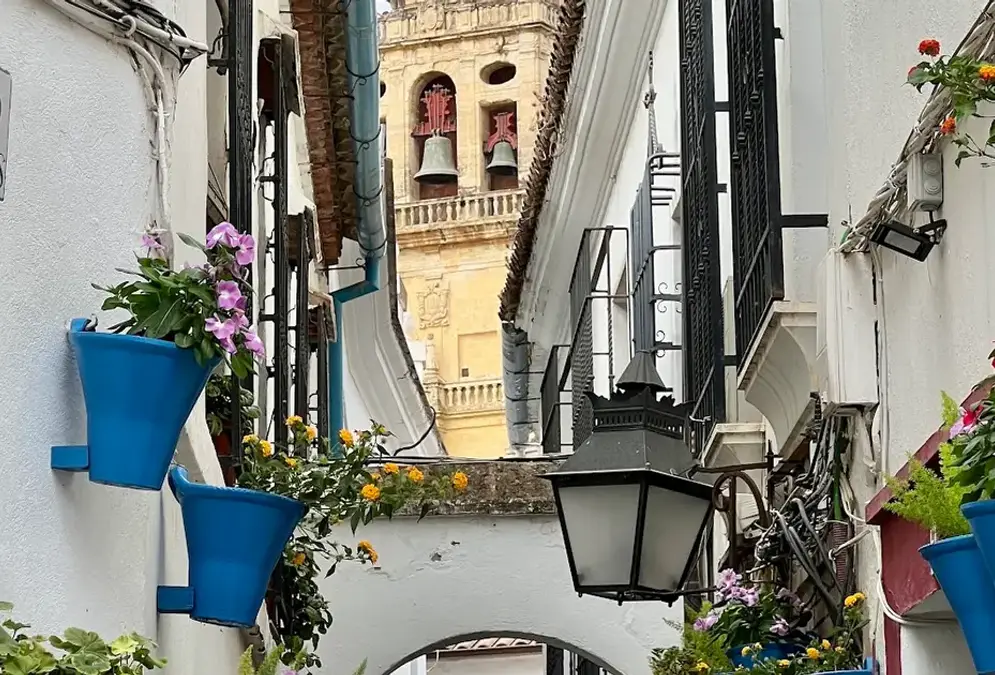
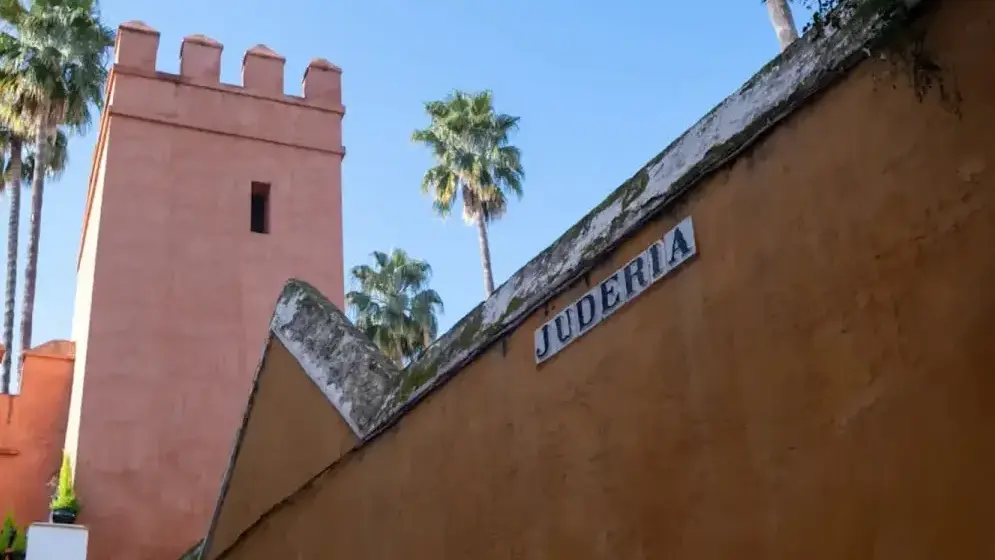
Before the 1492 expulsion, Córdoba was the intellectual capital of Jewish Europe. Maimonides was born here. The synagogue still stands. The streets of the Judería are largely unchanged. Walking them is one of the stranger experiences the city offers: a medieval world that was dismantled but never quite erased.

Written by
María Fernanda González Ten years covering Córdoba's UNESCO heritage sites, sourcing from Junta de Andalucía documentation.
Updated Published
In the 10th century, Córdoba was the most sophisticated city in Western Europe. That reputation rested partly on its Islamic caliphate, but also on a Jewish community that had been here since Roman times and that, under the Umayyad rulers, produced philosophers, physicians, and jurists who reshaped medieval thought.
That world ended in stages: first with the Almohad conquest of 1148, then definitively with the Alhambra Decree of 1492. What remains is compact but remarkable: a medieval synagogue, a neighbourhood of winding streets, a museum dedicated to Sephardic culture, and a bronze statue of the man who, had he stayed, might have spent his life a few hundred metres from where he was born.
In this guide
Jump to a section
Jewish Córdoba: at a glance
- Period
- 5th century BCE to 1492 (expulsion)
- Golden Age
- 10th–11th century (under Caliphate)
- Famous figures
- Maimonides (1135–1204), born in Córdoba
- The Synagogue
- Built 1315, one of only 3 medieval synagogues in Spain
- Entry
- Synagogue free (EU citizens), €3 others
- Judería
- UNESCO World Heritage district
Explore Jewish heritage in Córdoba
The Judería
Wander the medieval Jewish quarter's labyrinthine whitewashed streets
The Synagogue
One of only three surviving medieval synagogues in Spain, built c. 1315
Moorish Córdoba
The Islamic context in which Jewish Córdoba flourished: the Caliphate and convivencia
Roman Córdoba
Jewish presence in Córdoba dates to Roman times, the foundations of the community
UNESCO Heritage
The Judería is part of Córdoba's UNESCO World Heritage Historic Centre
Museums of Córdoba
Beyond Casa de Sefarad: the broader museum landscape of the historic centre
700+
years of Jewish presence in Córdoba
1138
Maimonides born in Córdoba
3
medieval synagogues surviving in all of Spain
1492
year of the Alhambra Decree expulsion
The Golden Age: three cultures under one sky
When Abd al-Rahman III proclaimed the Caliphate of Córdoba in 929, Jews had already been part of Andalusian civic life for centuries. Under the Umayyad rulers, they lived as dhimmis (a protected but subordinate status), yet they moved freely through government, medicine, and scholarship. Hasdai ibn Shaprut served as a senior diplomat in the Umayyad court. Moses ben Hanoch was appointed chief rabbi, turning Córdoba into the centre of Talmudic study in Europe.
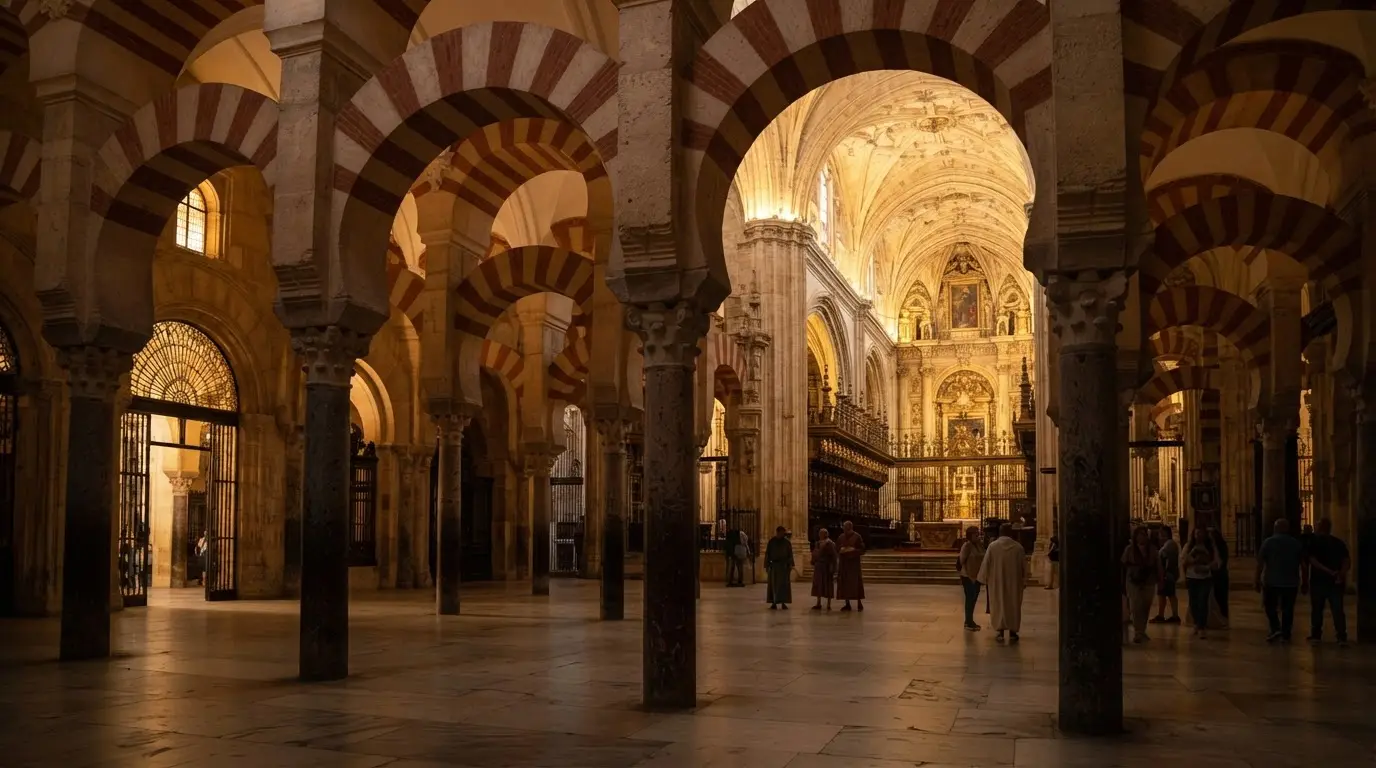
The Arabic word convivencia (coexistence) is used to describe this period. It should not be romanticised into something it was not: there were legal distinctions, periodic tensions, and social hierarchies. But compared with most of Christian Europe at the time, the intellectual exchange between Muslim, Jewish, and Christian scholars in 10th-century Córdoba was genuinely unusual.
How it ended
1146–48 Almohad conquest. Jews forced to convert or leave; Maimonides' family flees when he is 10.
1236 Ferdinand III reconquers Córdoba. Jewish community re-establishes under Christian rule.
1315 The Synagogue of Córdoba is built, the community at its medieval peak under Castilian rule.
1391 Anti-Jewish pogroms sweep across Spain; many Córdoba Jews convert under pressure.
1492 Alhambra Decree. All Jews expelled from Spanish territories. 700+ years of Jewish Córdoba ends.
Born in Córdoba, 1138
Maimonides: the mind Córdoba produced
Moses ben Maimon (known in Hebrew as RaMBaM) was ten years old when the Almohads arrived and gave Córdoba's Jews three choices: convert, leave, or die. His family left. He eventually settled in Cairo, became court physician to Saladin, and wrote two works that changed the course of philosophy.
The Mishneh Torah is a 14-book codification of Jewish law, comprehensive enough that it remains a reference today. The Guide for the Perplexed attempted something more ambitious: a reconciliation of Jewish theology with Aristotelian philosophy at a time when Europe was only beginning to rediscover Aristotle. Thomas Aquinas read it. So did other Christian scholastics. The intellectual traffic between traditions, which had defined Córdoba under the caliphate, continued through Maimonides long after he left.
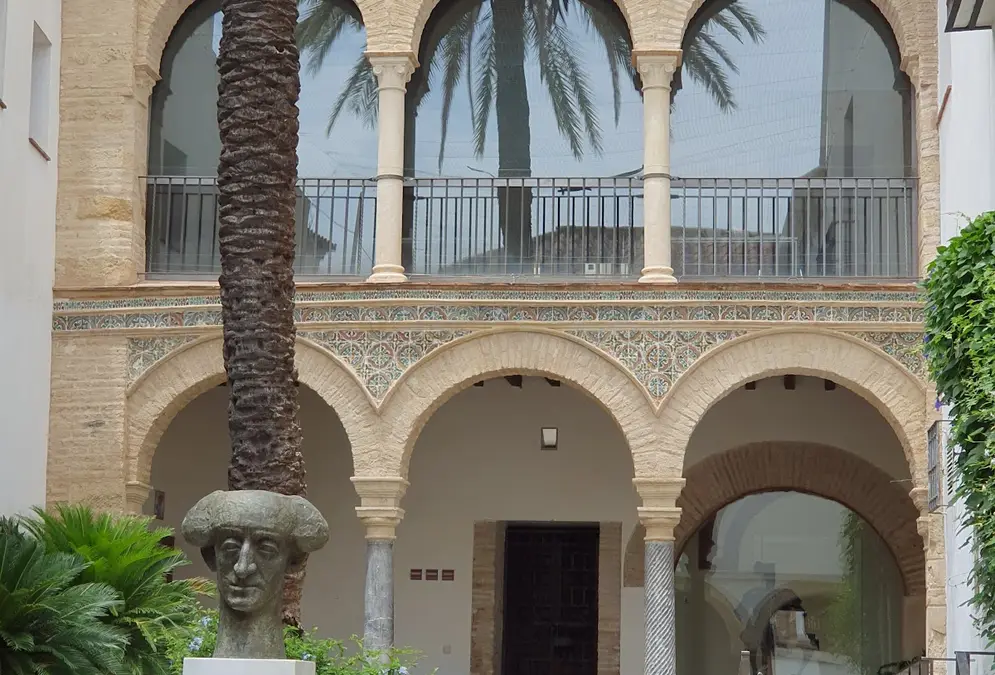
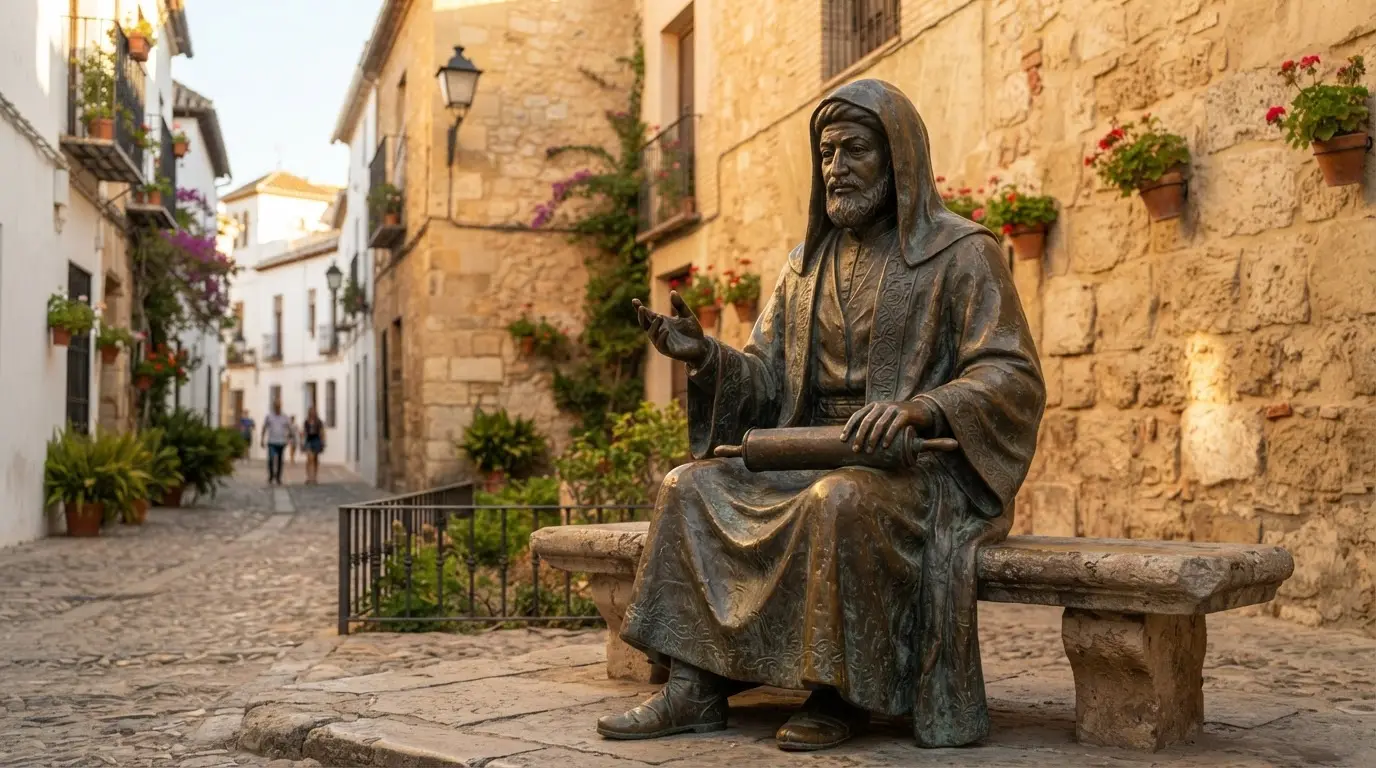
A bronze statue in Plaza de Tiberiades, on Calle de los Judíos, marks his symbolic birthplace. The square is small and often quiet. It is one of the more reflective spots in the Judería.
Key works
- Mishneh Torah 14-book codification of Jewish law. Still used as a halakhic reference.
- Guide for the Perplexed Reconciles Jewish theology with Aristotle. Influenced Aquinas and medieval Christian philosophy.
Exiled: 1148 (age 10)
Settled in: Cairo, Egypt
Died: 1204, Fustat (Cairo)
National Monument of Spain
The Synagogue of Córdoba
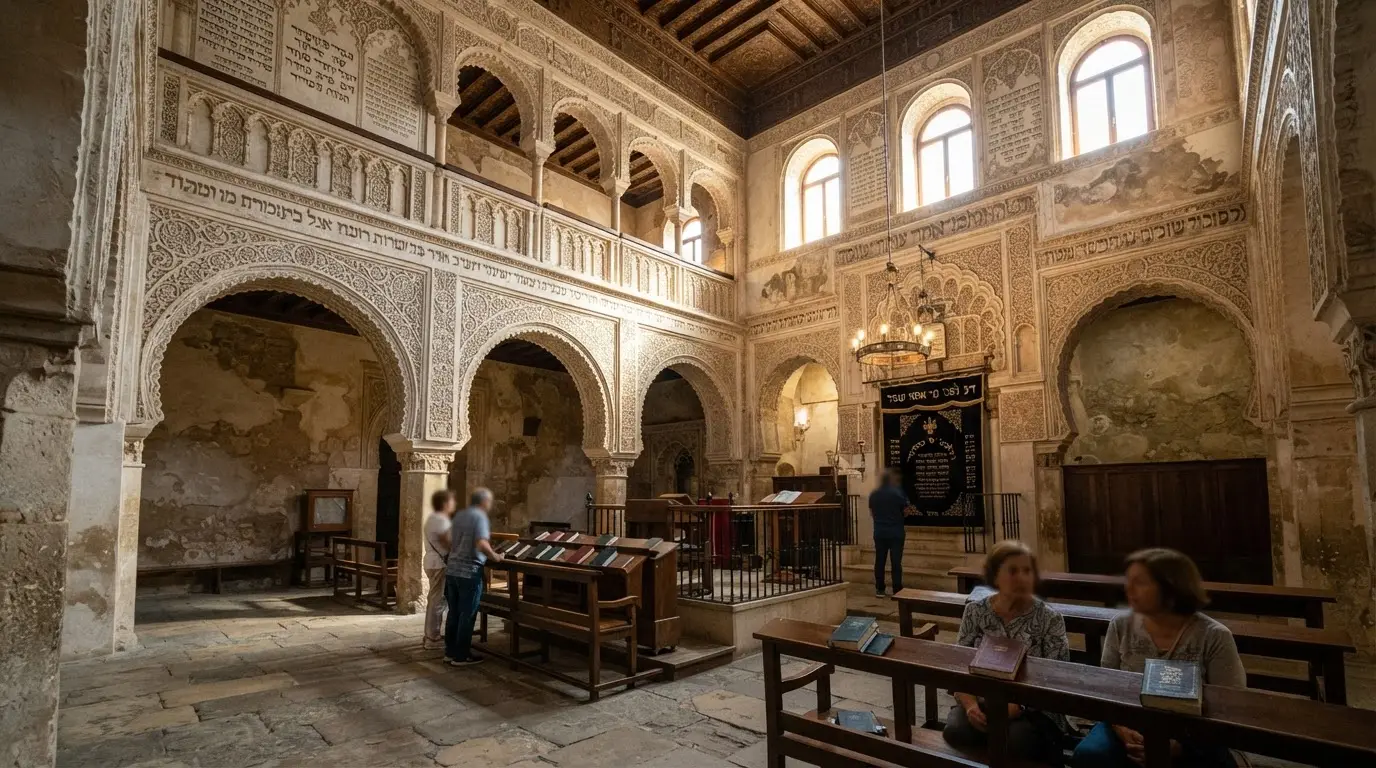
Built around 1315, the Synagogue of Córdoba is one of just three medieval synagogues that survived the 1492 expulsion on Spanish soil; the other two are in Toledo. After the expulsion it was repurposed for secular use, which is probably what saved it from demolition. It was restored and reopened as a museum in 1985.
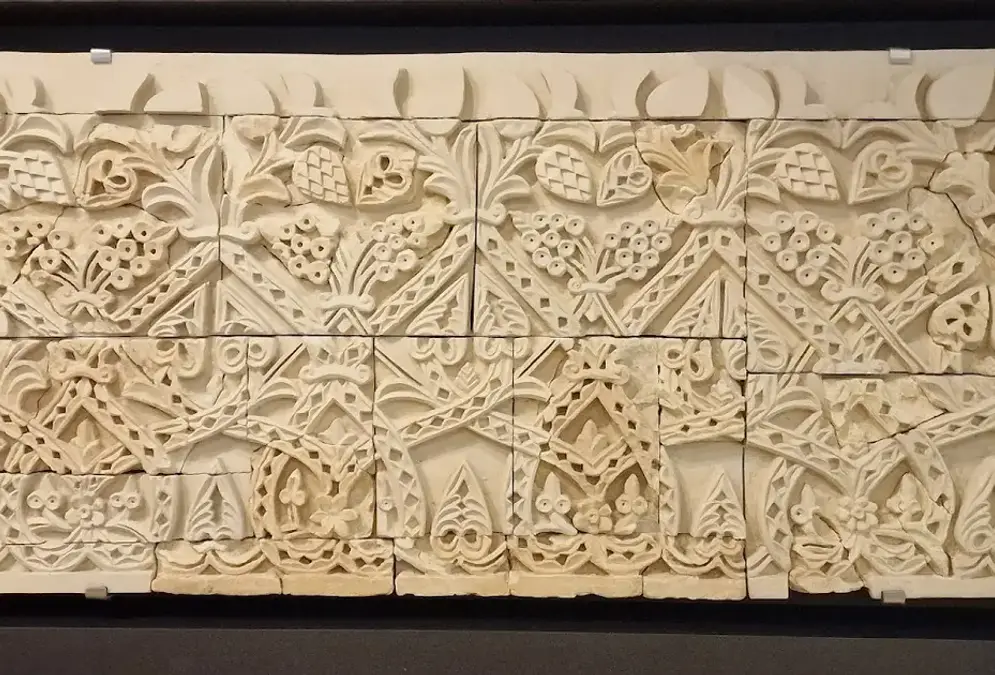
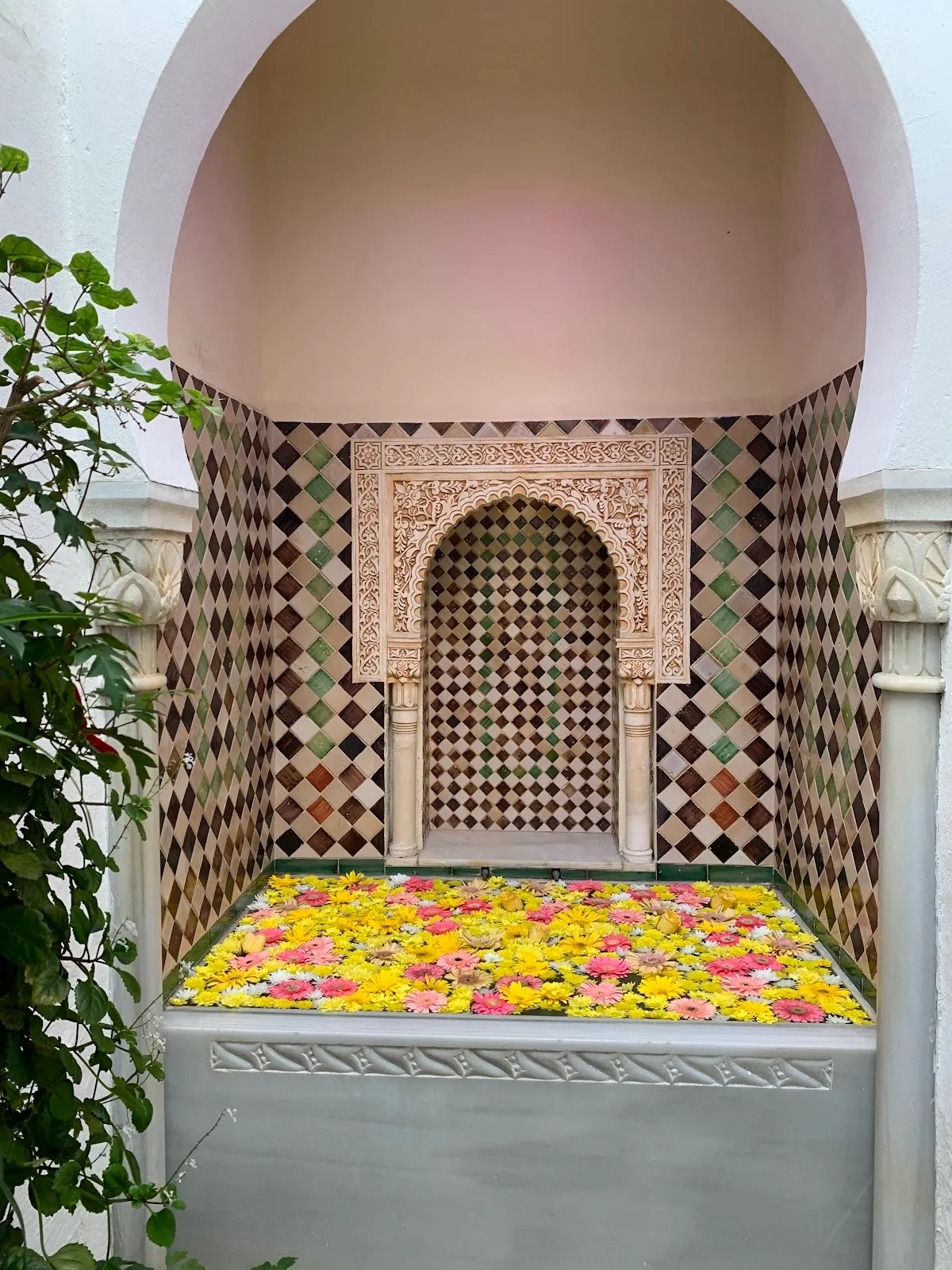
The interior is small (you can take it in within seconds), but the plasterwork demands time. The style is Mudéjar: Islamic geometric patterns cut into stucco, surrounding Hebrew inscriptions from the Psalms. It is a physical record of how fluidly artistic traditions crossed religious boundaries in medieval Andalusia. The women's gallery above is original. The Hebrew text on the walls has been damaged but is partly legible.
Synagogue visitor information →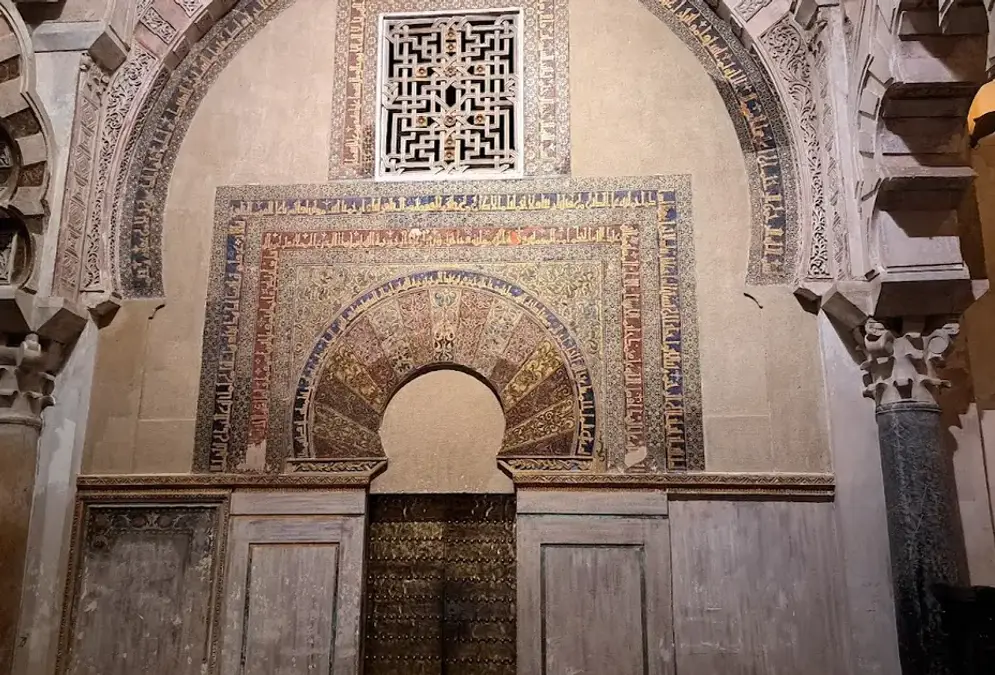
The Synagogue's Mudéjar plasterwork, built around 1315 on Calle de los Judíos
Visiting
- Address: Calle de los Judíos, Judería
- Built: c. 1315
- Status: National Monument of Spain
- Duration: 30–45 minutes
La Judería: the neighbourhood itself
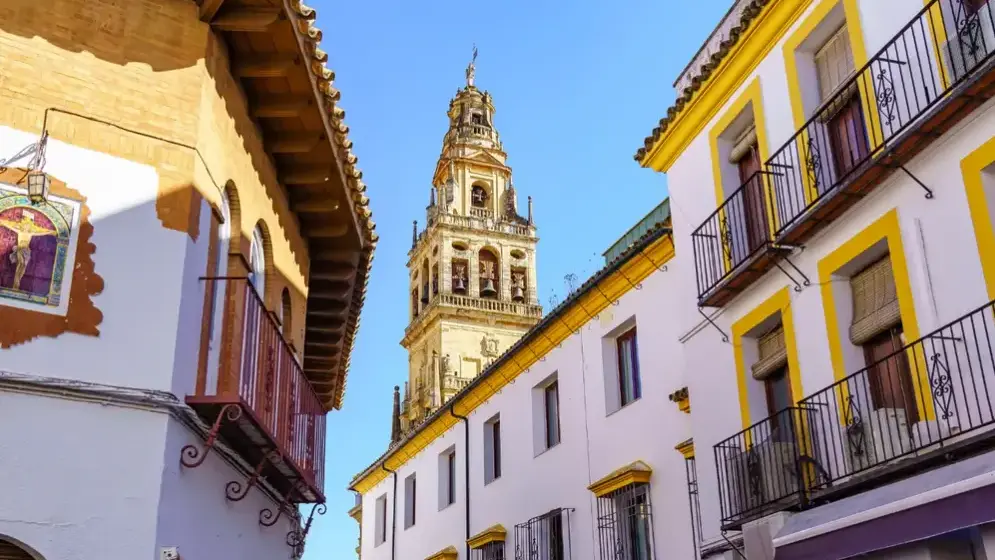
The Judería sits northeast of the Mezquita-Catedral, and the two are impossible to separate in any meaningful itinerary. The quarter is part of Córdoba's Historic Centre, a UNESCO World Heritage Site since 1994, though the designation covers the whole medieval city, not the Jewish quarter specifically.
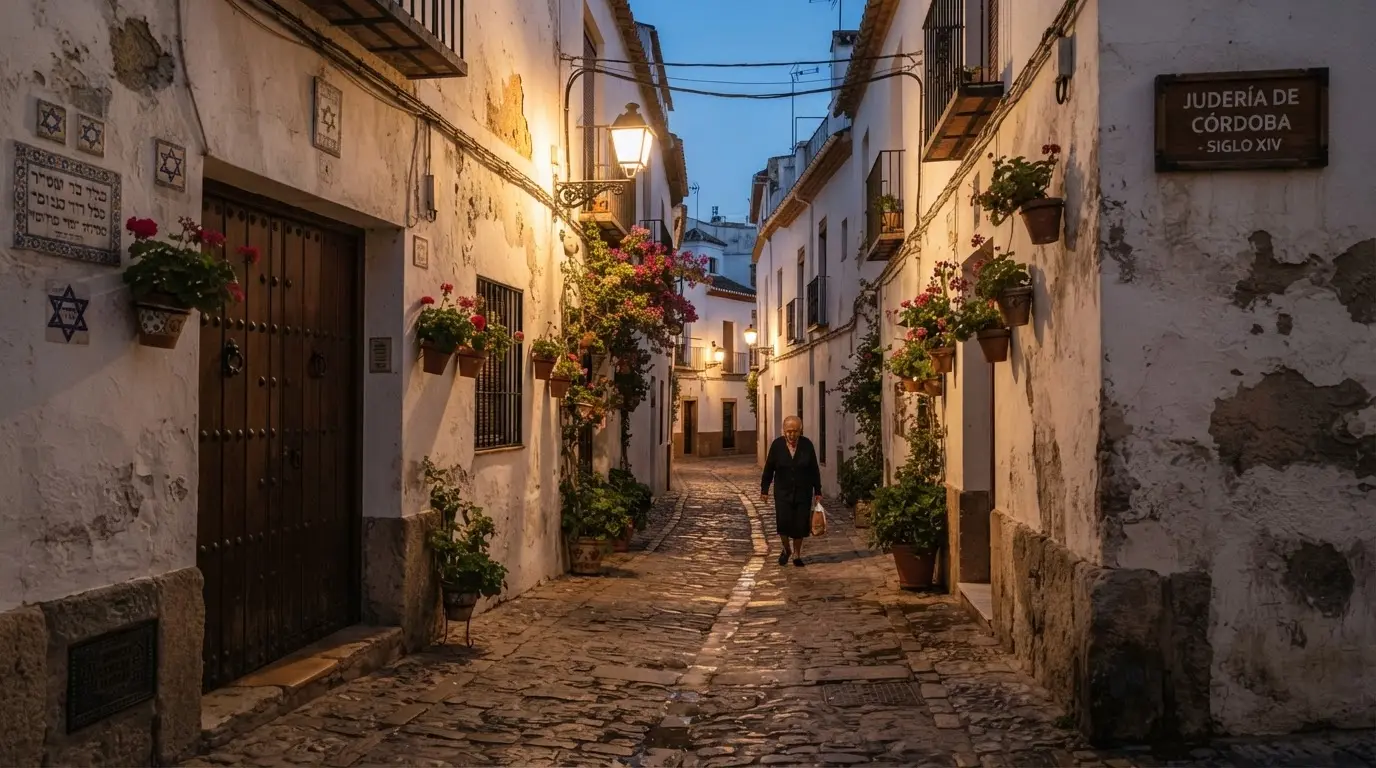
The streets worth walking include Calle de los Judíos (where the Synagogue, Maimonides statue, and Casa de Sefarad all sit), Calle Judería, Calle Deanes, and Calle Manríquez. None of them are straight. Most are barely wide enough for two people side by side. The buildings are whitewashed; the walls are thick; the light changes constantly as you move between sun and shadow.
Budget 60–90 minutes for a proper walk. The Judería is not large, but it rewards slowing down. Hidden courtyards, iron window grilles, and doorways worn smooth by centuries of hands are everywhere once you start looking.
Key streets
- Calle de los Judíos: Synagogue, Maimonides statue, Casa de Sefarad
- Calle Judería: main artery through the quarter
- Calle Deanes: leads toward the Mezquita
- Calle Manríquez: quieter lanes, residential feel
Museum & Cultural Centre
Casa de Sefarad
On the corner of Calle de los Judíos and Calle Averroes (a location that almost makes the point for you), Casa de Sefarad is a museum dedicated to Sephardic Jewish heritage. Five thematic rooms cover the community's history, domestic traditions, the Ladino language (the Judeo-Spanish dialect that Sephardic Jews carried into diaspora), and musical heritage.
It also runs a programme of Sephardic music concerts and theatre performances, which are worth checking if you are in Córdoba for a few days. The building itself is a restored medieval house, and the atmosphere is quieter and more personal than a larger museum would be.
Hours Tue–Sun 11:00–18:00 Closed Monday
Admission 4€ individual 3€ groups
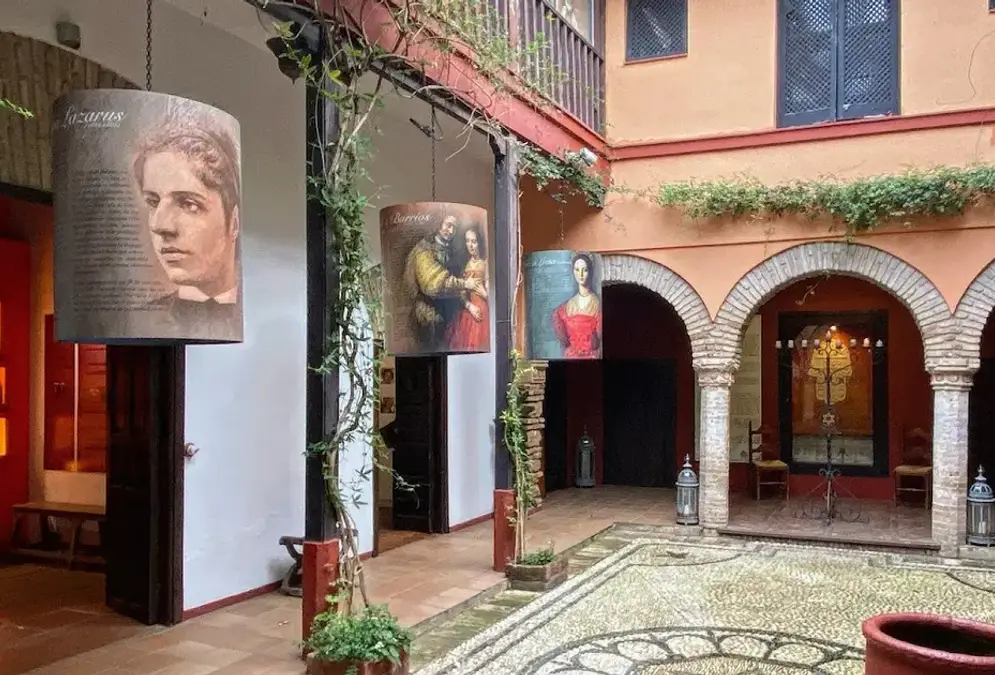
Casa de Sefarad, corner of Calle de los Judíos and Calle Averroes
The expulsion of 1492 and what came after
The Alhambra Decree, signed by Ferdinand and Isabella in March 1492, gave Jews four months to convert or leave Spanish territories. Communities that had been in Andalusia for over a thousand years dispersed across the Mediterranean: to the Ottoman Empire, North Africa, the Netherlands, and beyond. They carried the Ladino language, Sephardic liturgical traditions, and, in many cases, the keys to houses they expected to return to.
The communities that settled in Thessaloniki, Istanbul, Amsterdam, and Fez preserved Judeo-Spanish culture in remarkable detail. Sephardic music recorded in the 20th century still contained melodies and lyrics that traced directly back to medieval Andalusia. The diaspora, in other words, is also part of Córdoba's history; just not the part that stayed behind.
Sephardic heritage today
In 2015, Spain passed a law granting citizenship to descendants of Sephardic Jews, an official acknowledgement, five centuries late, of what the 1492 expulsion had taken. Tens of thousands of applications followed from families in Israel, Turkey, Morocco, and South America, many of whom had kept Spanish-sounding surnames and fragments of Ladino across dozens of generations. The application window closed in 2019, but the citizenships already granted stand as a formal, if belated, undoing of the 1492 decree.
Córdoba has become one of the significant sites on Sephardic heritage tourism routes, alongside Toledo, Girona, and Tudela. The Moorish Córdoba story is better known internationally, but for Jewish heritage specifically, Córdoba's Judería, Synagogue, and Casa de Sefarad form a coherent and moving circuit.
Half-day itinerary: 3–4 hours
All five sites are within a few minutes' walk of each other. The itinerary below runs roughly north-to-south through the Judería, ending at the Mezquita if you want to extend the day.
1
Maimonides Statue, Plaza de Tiberiades
Start at the bronze statue on Calle de los Judíos. Allow 15 minutes. It is a small square, easily missed, but worth pausing at before you move on to the buildings.
2
Synagogue of Córdoba
A two-minute walk from the statue. Allow 45 minutes. The Mudéjar plasterwork is the main draw; look at the Hebrew inscriptions integrated into the geometric patterns.
3
Casa de Sefarad
On the same street, at the corner with Calle Averroes. Allow 60 minutes. The five rooms are compact but dense. If there is a concert scheduled for the evening, book ahead.
4
Judería neighbourhood walk
Allow 60–90 minutes to wander Calle Judería, Calle Deanes, and Calle Manríquez. No particular route needed; getting slightly lost is part of it.
5
Optional: Mezquita-Catedral
If time and energy allow, the Mezquita is immediately adjacent to the Judería. Add 45–60 minutes. The two sites together make the three-culture story of medieval Córdoba tangible in a way that no amount of reading quite manages.
Mezquita-Catedral visitor information →Photography in the Judería
Maimonides statue at golden hour
Late afternoon light hits the bronze from the west. The statue catches it well; the narrow square means you need a relatively wide lens to avoid distortion.
Synagogue Mudéjar details
The interior is dimly lit. A fast prime or image stabilisation will serve you better than a kit zoom. The carved plasterwork rewards close-up shots.
Judería streetscapes
Early morning, before 9:00, is the only time the lanes are genuinely quiet. The whitewashed walls reflect light well even in flat conditions.
Medieval doorways and rejas
The iron window grilles (rejas) and worn stone doorways are everywhere. They photograph well from slightly below, looking up.
Hidden courtyards
Several houses along Calle Judería have open courtyards visible from the street. Always check before photographing private spaces.
Practical note
Photography inside the Synagogue is permitted but please be respectful; it is still used for occasional ceremonies. No flash.
Continue exploring
Moorish Córdoba
The Islamic history behind the Mezquita, Medina Azahara, and the Umayyad Caliphate.
The Judería neighbourhood
Full neighbourhood guide: restaurants, bars, patios and practical orientation.
Córdoba's UNESCO heritage
The Historic Centre, the Mezquita, and Medina Azahara: two separate World Heritage listings.
Mezquita-Catedral de Córdoba
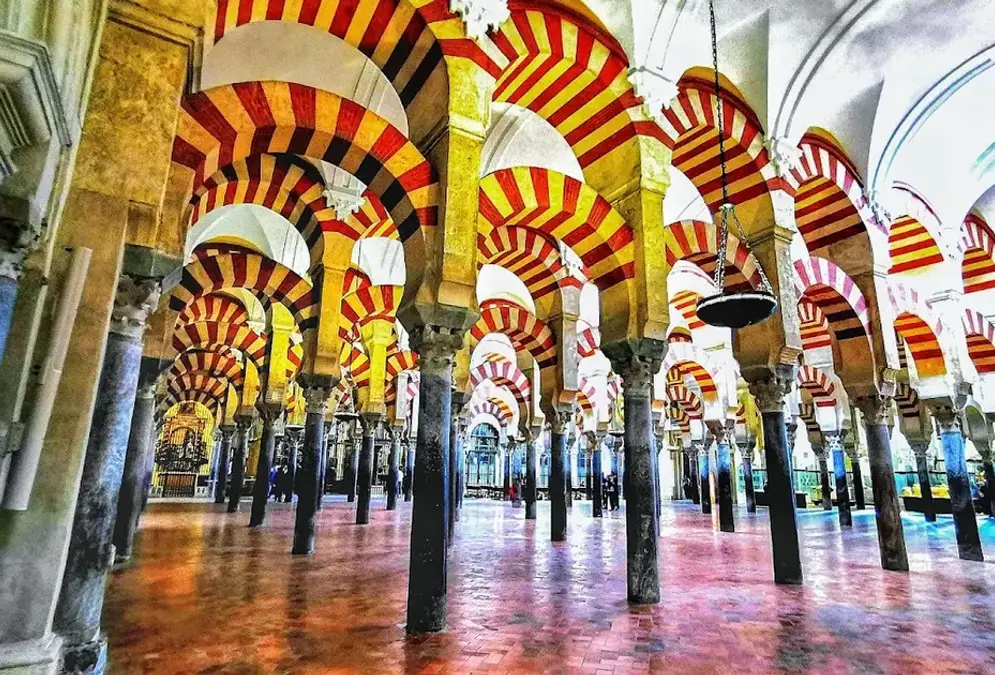
Complete visitor guide: 856 columns, UNESCO World Heritage, tickets, hours.
Three Cultures of Córdoba
How Islamic, Jewish and Roman heritage coexisted, and how to explore all three in one visit.
History of Córdoba
The complete history hub: Roman, Moorish, Jewish and Christian Córdoba across every era.
Architecture Guide
How to read 2,000 years of architectural layers in stone, including the Synagogue's Mudéjar interior and the Judería's medieval streetscape.
Jewish Quarter Heritage Walk
Follow a self-guided walking route through the Juderia's key Sephardic sites, from the Synagogue to Maimonides' statue.
View the route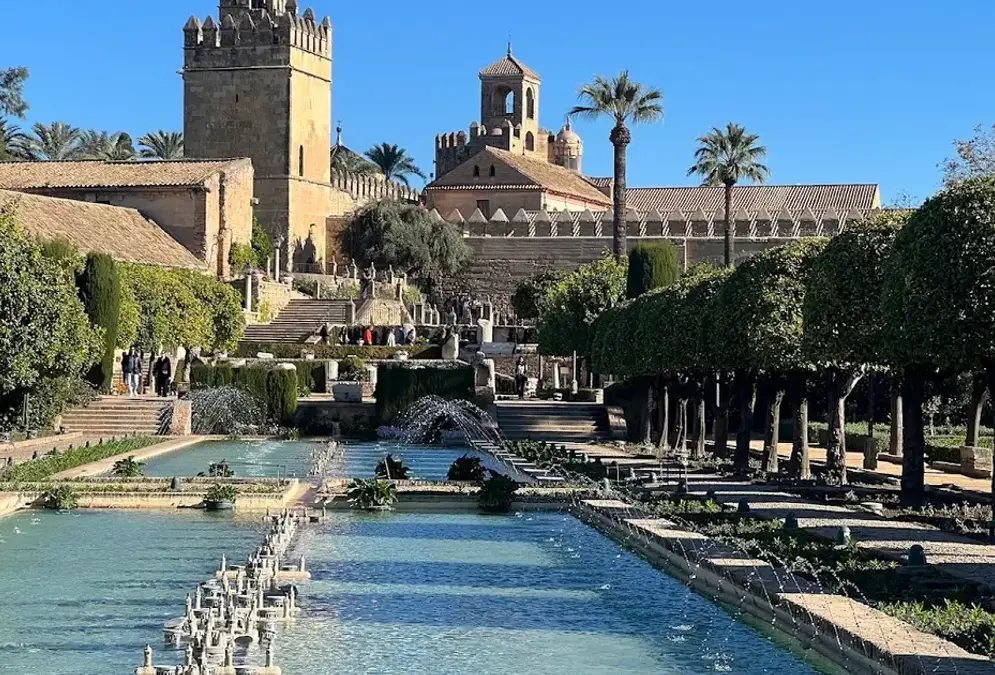
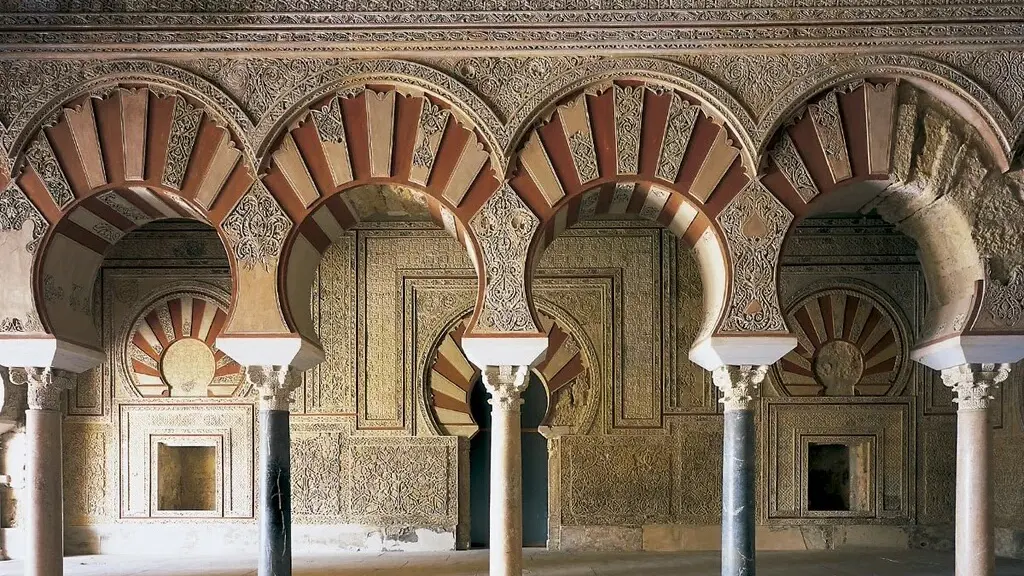

Museums for history lovers
The full story: Jewish Córdoba
Hasdai ibn Shaprut served the Umayyad court as physician and as a trusted negotiator in its dealings with Christian kingdoms, work that put him closer to the seat of power than almost any other Jewish figure in Córdoba's history. The synagogue on Calle de los Judíos has its own construction story, and its survival past 1492 owes more to accident than protection. Maimonides' path away from the city runs all the way to Cairo and, later, into the arguments of Thomas Aquinas. A separate piece takes on the 1391 pogrom directly, and the distance between the convivencia most guides describe and what the documentary record actually shows.
Lucena, Córdoba: The Jewish Town That Governed Itself

Hasdai ibn Shaprut: Córdoba's Jewish Golden Age Architect
The 1391 Pogrom That Emptied Córdoba's Judería
Convivencia: The Story Córdoba Tells About Itself
The Córdoba Synagogue's Five Lives Since 1315
Maimonides: Córdoba's Philosopher Who Changed Judaism
Frequently asked questions
What is the Judería in Córdoba?
The Judería is Córdoba's medieval Jewish quarter, located northeast of the Mezquita-Catedral. Its narrow whitewashed streets were home to a thriving Jewish community from the 10th century until the 1492 expulsion. Today it is part of Córdoba's UNESCO World Heritage Historic Centre.
Is the Synagogue of Córdoba worth visiting?
Yes. Built around 1315, it is one of only three medieval synagogues surviving in Spain (alongside Toledo's two). The interior Mudéjar plasterwork, with Hebrew inscriptions woven into Islamic geometric patterns, is genuinely unlike anything else in the country. Admission is low and visits typically take 30–45 minutes.
Was Maimonides really born in Córdoba?
Yes. Moses ben Maimon (RaMBaM) was born in Córdoba in 1138. His family fled in 1148 when the Almohad rulers gave the city's Jews the choice between conversion and exile. A bronze statue marks his symbolic birthplace in Plaza de Tiberiades, on Calle de los Judíos.
What is the Casa de Sefarad in Córdoba?
Casa de Sefarad is a small museum and cultural centre on the corner of Calle de los Judíos and Calle Averroes in the Judería. Five rooms cover Sephardic history, daily life, the Ladino language, and musical traditions. It also hosts concerts and educational programmes. Open Tuesday to Sunday, 11:00–18:00, admission 4€.
How long does it take to visit Córdoba's Jewish heritage sites?
Allow 3–4 hours for a thorough visit: around 15 minutes at the Maimonides statue, 45 minutes in the Synagogue, 60 minutes at Casa de Sefarad, and 60–90 minutes walking the Judería streets. Add another hour if you visit the Mezquita-Catedral as well.
Further reading
Sources and further reading
3 references Show Hide
- JGuide Europe: Córdoba Jewish heritage (opens in a new tab)
Detailed guide to the Synagogue, Casa de Sefarad, and the Judería from the Jewish travel resource
- Turismo de Córdoba: Jewish Quarter (opens in a new tab)
Official Córdoba tourism information on the Judería and Sephardic heritage sites
- Spain.info: Synagogue of Córdoba (opens in a new tab)
Spain's official tourism portal with visiting information for the Synagogue and Jewish quarter
Guided Jewish Quarter Tours
Tours are selected for quality, not commission. We earn a small fee if you book — at no extra cost to you.
The synagogue is one layer of a longer story. How Christian, Muslim and Jewish Córdoba fit together