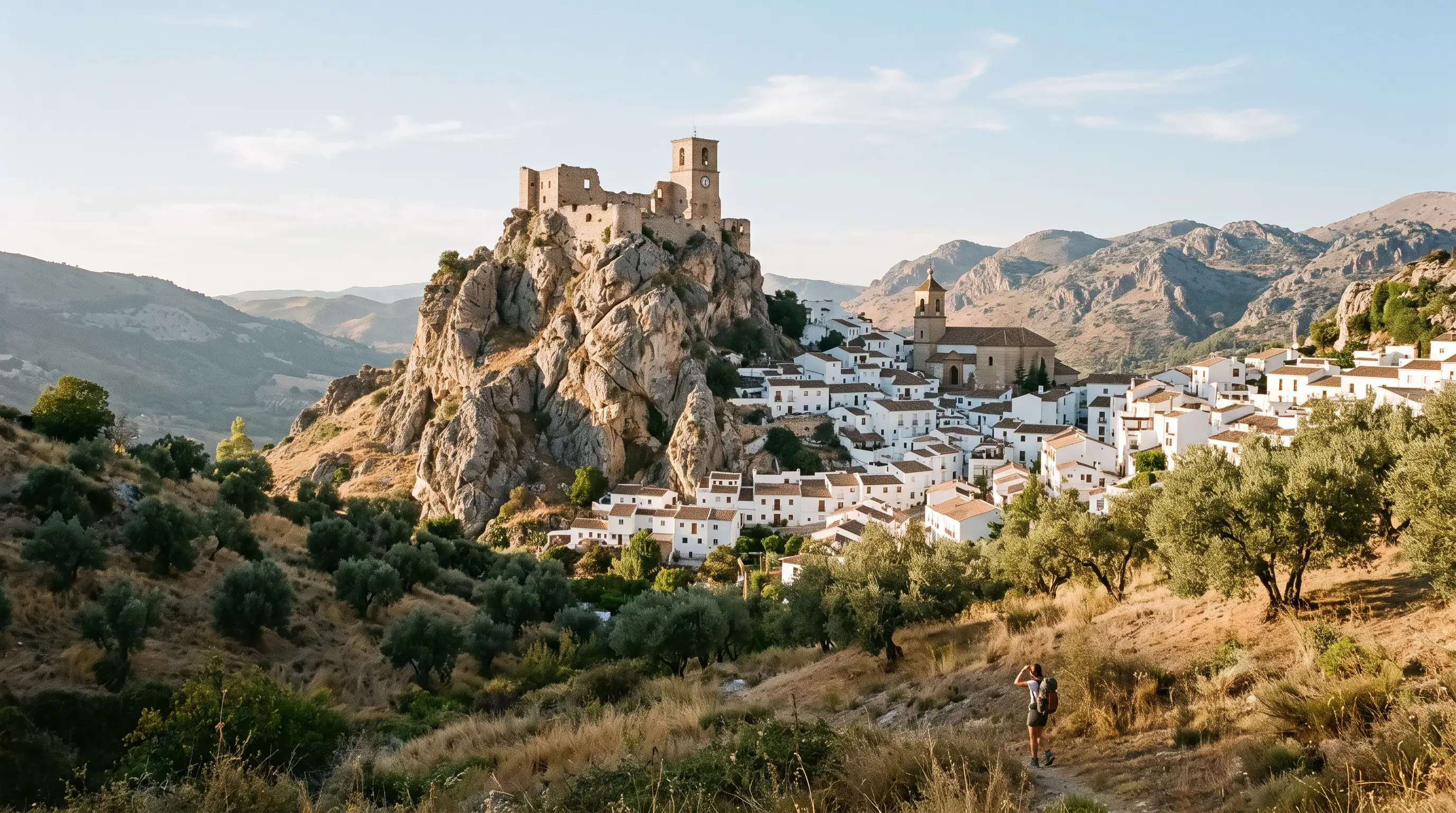

Why the castle sits on the crag, not beside it
The town hall's own description is of a small fortress carved into the rock, in a privileged position on a huge crag[7]. The association behind the Pueblos Más Bonitos de España list adds that it is perched on a steep rock above the town and the Subbética landscape[8].
It also calls some of the fronts almost impregnable[9]. Where the crag drops away, the cliff does the job of a curtain wall, and the builders only had to close the gaps.
Below the castle the village falls away down the slope at about 660 m above sea level[5]. Antonio Zoido, writing for the Legado Andalusí magazine, pictures it as "a white mountain crowned by a castle"[10], balanced on its rock and facing the other rock that holds the Cueva de los Murciélagos.
The name makes the same point. A Junta de Andalucía leaflet derives Zuheros from the Arabic sujayrat, which it translates as "inexpugnable castle"[11]. The town is named for its fortress.
The crag is limestone country. The Junta's guide to the Bailón trail, which ends at Zuheros, says the rock of the Sierra de Cabra massif formed in the sea, mainly in the Jurassic[12]. The Sierras Subbéticas natural park joined the European Geoparks Network in 2006[13]. The Bailón canyon is what slow dissolution of limestone by water leaves behind[14], and its bed is normally dry[15].
The village follows the same logic as the castle. The Junta's viewpoint leaflet describes a tangle of white houses gripping the steep rocks of the hill[16], and spain.info sums up the local architecture as small white houses under ochre roofs[17]. Dead-end side lanes open off the streets and are called callejones[18].
About 600 people live under it[19], so the castle dwarfs the settlement. The mismatch explains the visit: the interest is how the walls relate to the rock, not a catalogue of rooms.
From Muslim fortress to Almohad enclosure
Nobody can give a founding date with confidence. Spanish Wikipedia says the castle is believed to date to the 9th century, under Muslim rule[20]. Believed is the operative word. A fortress rebuilt in later centuries rarely keeps its first stones in view, so read the date as a tradition, not a plaque.
The heritage association's account of the Caliphate of Córdoba is a small place: the castle stood within a walled enclosure of about 30 houses, a mosque and several towers[21]. It is a village packed behind a wall, not a lone keep.
Explore nearby · Monument
Alcázar de los Reyes Cristianos
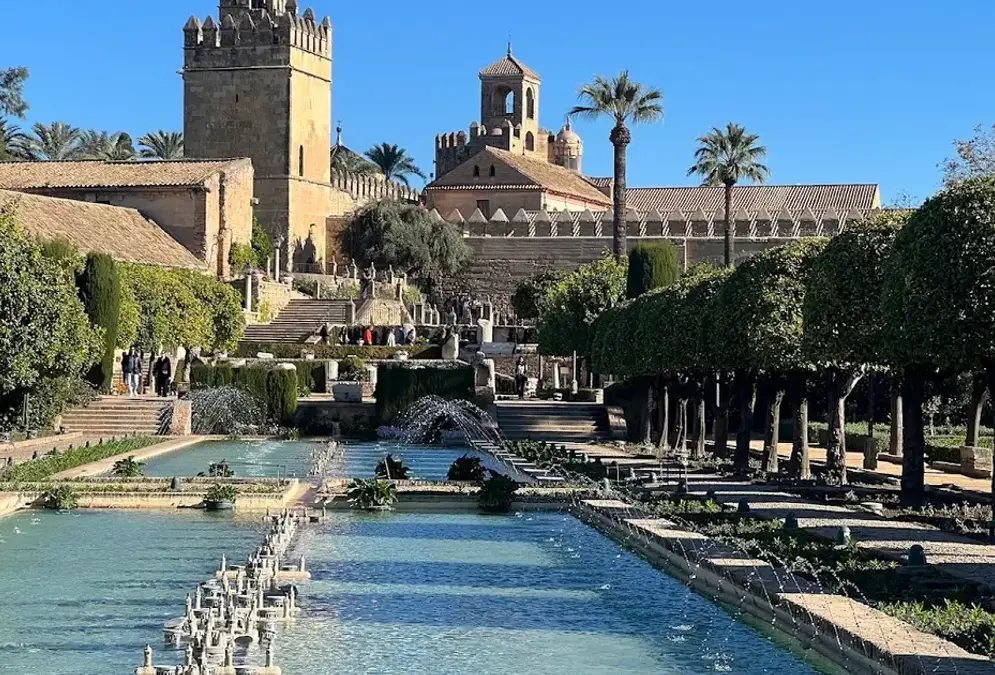
Alcázar de los Reyes Cristianos, Córdoba: free entry on Tuesdays. A 14th-century fortress-palace with terraced Moorish-inspired gardens and Roman mosaics.
What survives from al-Andalus is more tangible: an Islamic cistern, the aljibe, which the Almohads reused when they raised a prismatic tower and the walled enclosure[22]. Accounts differ on who built which circuit of wall, so treat the enclosure as layered rather than a single build. A prismatic tower, or torreón, has flat faces rather than a round plan. On a rocky summit a cistern is what lets a garrison outlast a siege, so keeping it was probably the sensible call.
The Almohad rebuild is the last Muslim layer before the Castilian one. On site, that is the work to look for: tower, enclosure, and the older cistern they built around.
Castile, then a Renaissance palace in the rock
Castile took the fortress after Ferdinand III's conquest in 1240[6]. The mosque inside the walls was then reformed into a temple with a single column in the middle of its nave and consecrated to Santa María[23]. The next big change came later, from the local lords.
In the 16th century the lords of Zuheros built a Renaissance palace on the site, changing both the entrance and the structure of the building[24]. The work is attributed to Hernán Ruiz. Note the verb: the text attributes the design and does not document a commission, so treat the name as a strong lead, not a signature. The heritage association pushes the start back to the end of the 15th century, under the lords Alonso and Juan de Córdoba, and believes the palace was never completed[25].
Do not expect a courtyard of arcades. Zoido, in the same essay, says that of the palace "all that stands is some haughty wall embedded in the rocks"[26]. It is a fair summary of the whole site. Later builders did not clear the crag; they pushed masonry into it, and what remains reads as stone growing out of stone.
Stay for the neighbour. The parish church of the Virgen de los Remedios stands almost next to the palace remains[27], so the lords' house and the parish sit a few steps apart.
The town's defences were retired as well. After the Christian conquest of the Kingdom of Granada, the wall around the town was gradually dismantled[28]. The crag has now hosted a Muslim garrison, Almohad builders, the Castilian crown and the local lords. The reuses the record states outright are the cistern and the mosque that became a church.
What remains today: clock tower, stabilised ruin, heritage status
In 1760 the main tower became the Torre del Reloj[29]. A keep turned into a town clock is a sign the building had stopped being a fortress. Nobody was defending the crag any more; they wanted to know the time.
The heritage association says the clock and its bell, replaced in 1927, stayed in the tower until the 1960s, when they were dismantled and fitted to the church facade[30]. The same account says the towers visible today were rebuilt in 1964[31]. Spanish Wikipedia gives 1960 for the tower's restoration, so the safe reading is that the tower work belongs to the 1960s.
The heritage association describes the present-day castle as a fortress in consolidated ruins, with partial restorations in the 20th century[32]. Consolidation means stabilising what survives, not rebuilding what fell, which is why gaps and rough stone remain.
Deep dive · Article
Andalusia Maps a New Route Through Eight Córdoba Landscapes
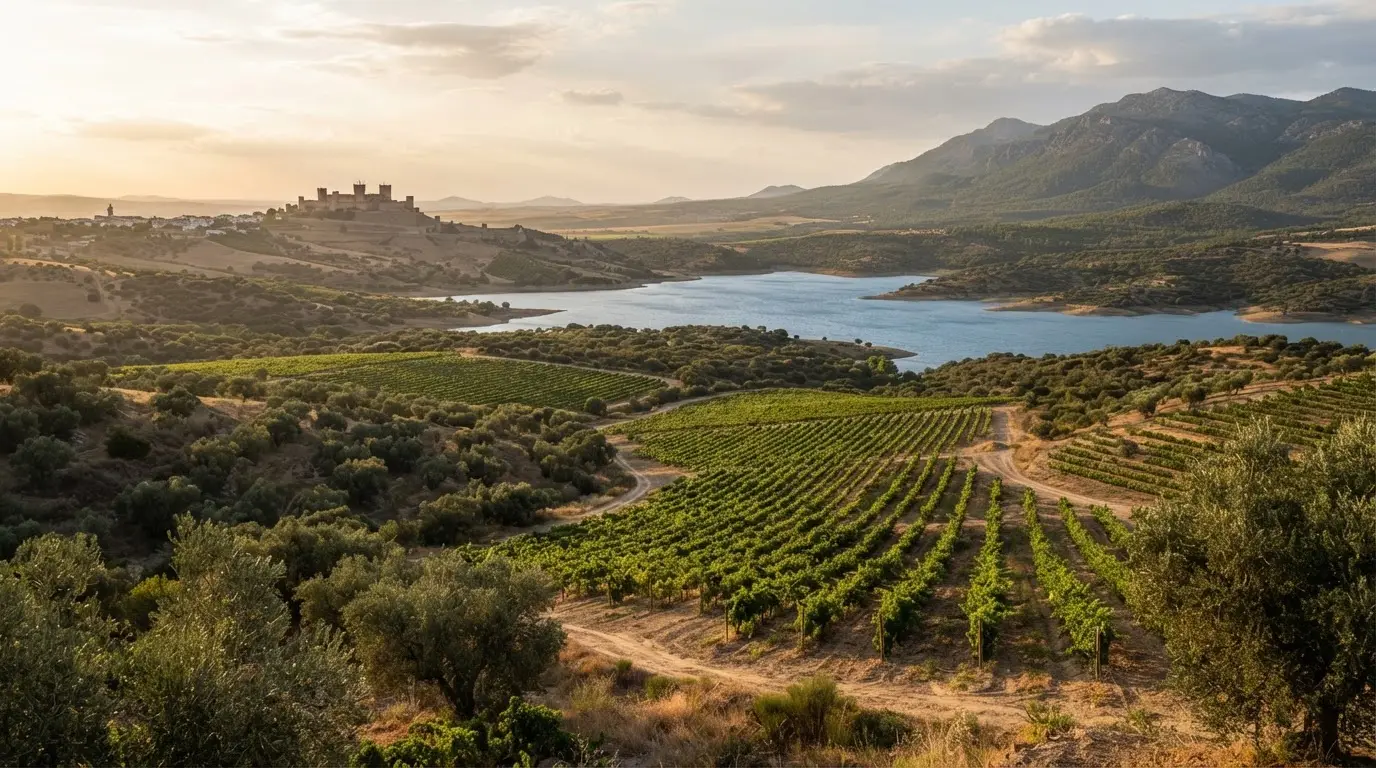
Andalusia's heritage institute has published a GPX and KML route linking eight Córdoba landscapes, from Medina Azahara to Santa Eufemia. Here is each stop.
The village is protected too: Zuheros has been a historic-artistic site, a Bien de Interés Cultural, since 2003[33]. It is one of the pueblos blancos near Córdoba that repays a visit for its streets as much as its headline monument.
Visiting: tickets, hours and how to pair it
The municipal price ordinance published in 2023 set general adult entry (age 13 and over) to the Archaeological Museum and Castle at €2.50[3]. Treat it as a planning figure, not a promise.
The same tariff lists a combined ticket, the Visita Histórica, that bundles three sites:
- the Museo Arqueológico Municipal
- the Castillo-Palacio
- the Museo de Costumbres y Artes Populares[34]
Recommended tours
Tours are selected for quality, not commission. We earn a small fee if you book — at no extra cost to you.
The 2023 tariff puts that combined ticket at €4.00 for adults and €3.00 for children aged 6 to 12[35]. Budget the castle and the museum as one stop, since they share a tariff. The museum opened on 14 August 1992 and leans on prehistoric finds from excavations in the municipality[36].
On the municipality's own timetable, the museum and castle are closed on Mondays[4]. From Tuesday to Friday the summer hours are 10:00 to 14:00 and 17:00 to 19:00, and the winter hours 10:00 to 14:00 and 16:00 to 18:00[37]. At weekends and on holidays, visits run as timed passes: from 1 April to 30 September they start at 11:00, 12:30, 14:00, 17:00 and 18:30[38], and from 1 October to 31 March at 11:00, 12:30, 14:00, 16:00 and 17:30[39]. Each museum pass is limited to 15 people[40].
If you are building a day around it, the day trips from Córdoba guide shows how a village stop fits an itinerary. For walkers, hiking and nature covers the routes around the Subbética, including the canyon trail below the village. For transport and access to the castle, ask the tourist office before you set out.