Day trips
Pueblos Blancos near Córdoba
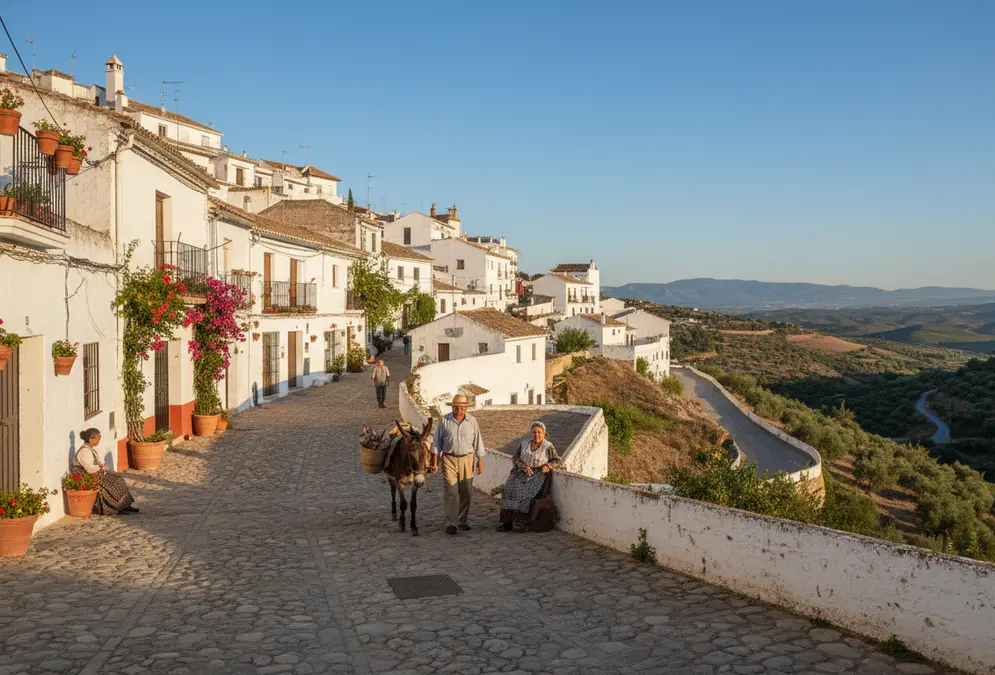
An hour south of Córdoba, the Subbética hills hold some of the most photographed villages in Andalusia. Whitewashed walls, Moorish castles, a UNESCO-designated geopark and local food worth seeking out — six villages, two itineraries and everything you need to plan the trip.

Written by
Elena Ruiz Montoya Six years specialising in heritage towns and cultural route planning across Córdoba province.
Updated Published
The Subbética is the part of Córdoba province most visitors miss. It sits an hour from the city, takes no effort to drive and rewards you with a genuinely different Andalusia: quiet, dramatic and largely tourist-free outside spring weekends.
At a glance
- Region
- Sierras Subbéticas, 60–120 km south of Córdoba
- Getting there
- Car essential — 1–1.5 hrs drive, limited bus connections
- Top villages
- Zuheros, Priego de Córdoba, Iznájar, Luque
- Duration
- 1 day (2–3 villages) or 2 days with overnight stay
- Best season
- Spring (Apr–May) and autumn (Sep–Oct)
- Natural park
- Sierras Subbéticas — UNESCO Global Geopark, 31,568 ha
- Photo tip
- Zuheros at sunrise: castle, white walls, valley below
In this guide
Jump to a section
History and landscape
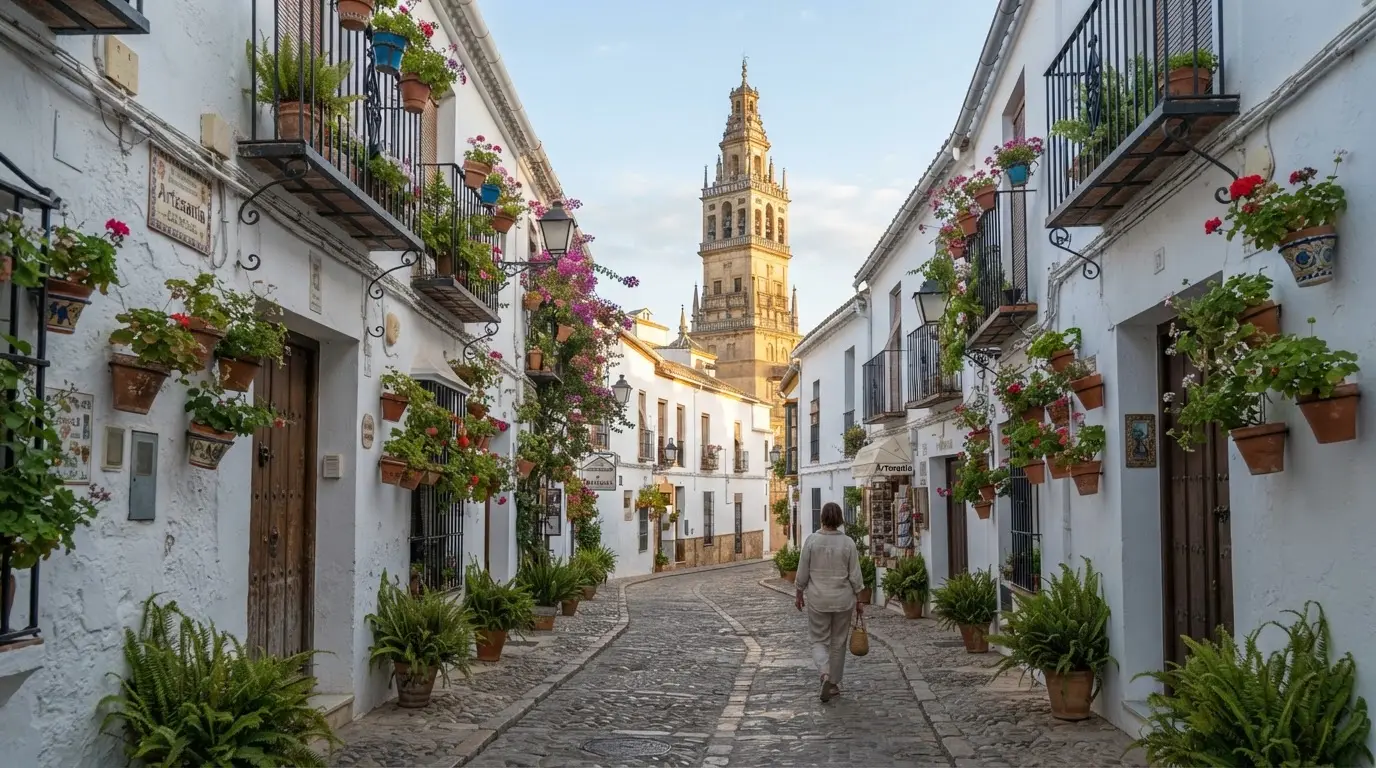
The pueblos blancos — white villages — of Andalusia are not a myth invented for travel brochures. The whitewash is real and functional: cal blanca (lime wash) has been applied to house walls here since the Moorish period, partly because lime is a natural disinfectant and partly because it reflects the fierce Andalusian sun, keeping interiors ten degrees cooler than the outside air. Over eight or nine centuries, what started as practical building logic became cultural identity.
The villages of the Subbética Cordobesa — the limestone hills south of Córdoba city — were established during the period of Moorish rule (8th to 15th centuries). Muslim populations chose hilltop positions for defence, built castles on the highest crags, and laid out the tight, winding street patterns that you navigate today. When Christian forces reconquered the region in the 13th century, they kept the structures and added churches, often directly on top of mosques.
The natural backdrop is the Parque Natural de las Sierras Subbéticas, designated a UNESCO Global Geopark in 2015. The park covers 31,568 hectares of karst limestone terrain — dramatic gorges, cave systems, rock formations and a biodiversity that includes Bonelli's eagles, peregrine falcons and wildcats. The geology is the reason the cave systems here are so impressive: water has been dissolving limestone for millions of years, creating the underground chambers and formations you can walk through at Zuheros.
Did you know? Zuheros is a member of the "Pueblos más bonitos de España" network — a nationally recognised list of villages that meet strict architectural and heritage criteria. It is one of only a handful in Córdoba province to hold the designation.
If the Moorish heritage angle interests you, our Moorish Córdoba guide covers the city's Islamic history in depth and pairs well with a Subbética day trip.
The six villages
Each village has its own character. You won't see all six in a day — and you shouldn't try. Picking two or three and doing them properly is better than rushing through all of them.
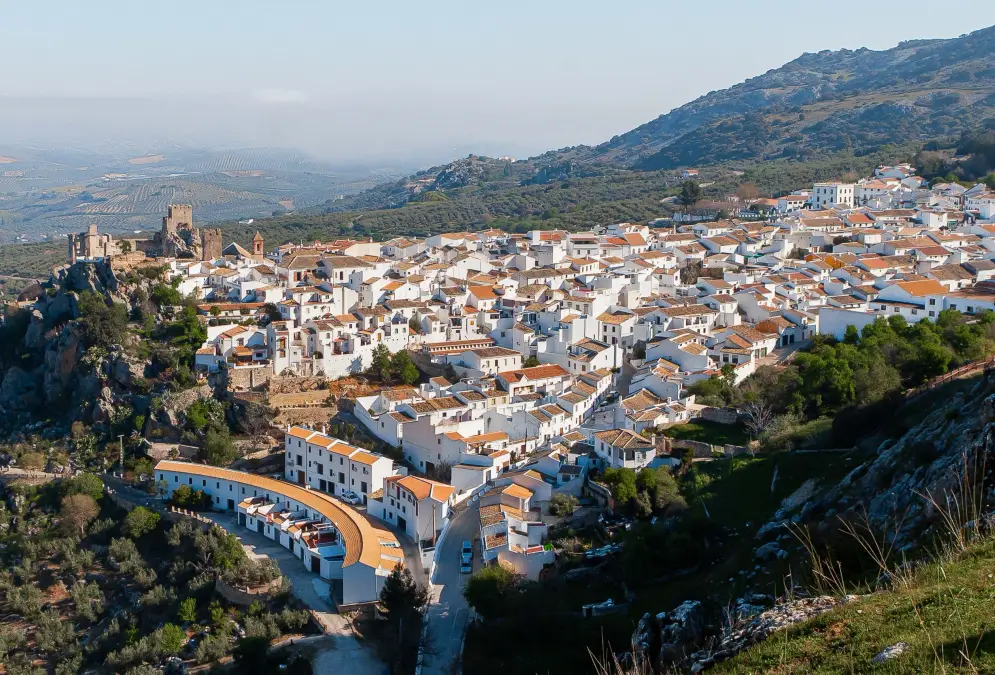
Zuheros
Most beautiful village in Spain 55 km from Córdoba 60 min drive Population: ~1,700
Zuheros is the village that earns its reputation. The castle — Castillo de Zuheros — clings to a rocky limestone crag above a cluster of white houses, and the view from its battlements rewards the short climb handsomely. Below the village, the Cueva de los Murciélagos (Bat Cave) sits at 980 metres, a natural monument of stalactites, ancient cave paintings and archaeological finds that stretch back tens of thousands of years. Add the Vía Verde del Aceite cycling trail and a strong local goat cheese tradition, and Zuheros works well as a full half-day stop.
Highlights
- Castillo de Zuheros — rocky outcrop castle with panoramic valley views
- Cueva de los Murciélagos — cave paintings and impressive speleothem formations
- Vía Verde del Aceite — former olive oil railway turned cycling and walking trail
Local speciality
Local goat cheese from surrounding mountain pastures
Tip: The castle and cave are a short walk apart. Combine both in the same morning, then eat at one of the village bars before moving on.
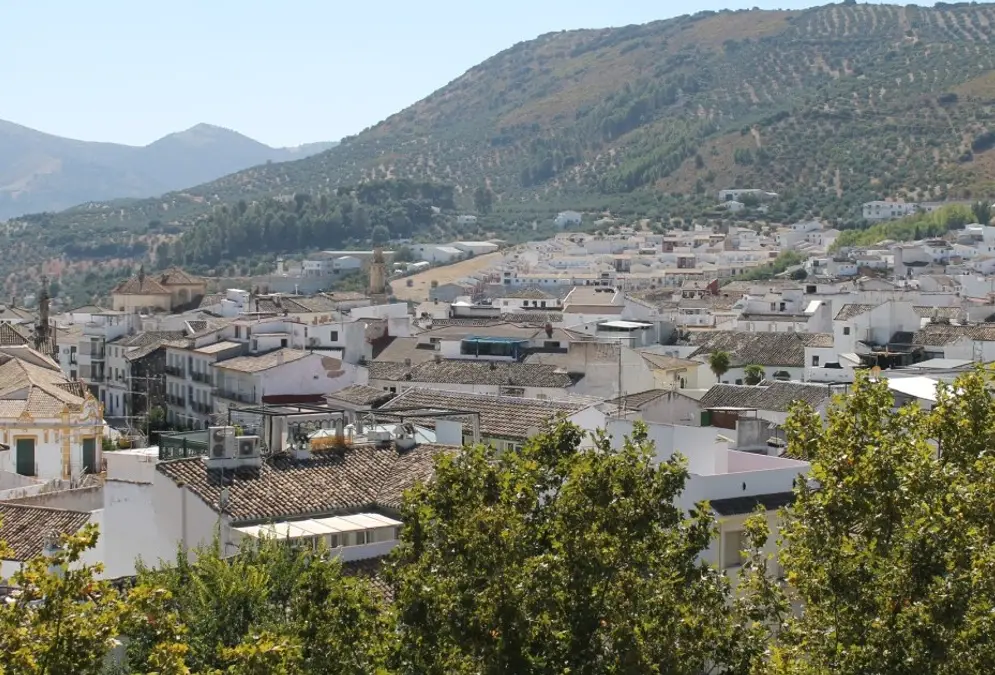
Priego de Córdoba
Baroque capital of Andalusia 65 km from Córdoba 75 min drive Population: ~22,000
Priego de Córdoba is the largest of the Subbética villages and arguably the most architecturally distinguished. The Fuente del Rey is the showpiece: three ornamental pools lined with 139 water spouts, completed in 1803, and genuinely impressive. The town's 18th-century baroque wealth — silk trade money — left behind an exceptional stock of churches and mansions. The Sagrario Chapel inside the Church of the Assumption is among the finest baroque interiors in Andalusia, an explosion of white plasterwork that took decades to complete. Strolling Calle Río through the old Moorish quarter adds a quieter pleasure to the visit.
Highlights
- Fuente del Rey — three ornamental pools with 139 water spouts, completed 1803
- Iglesia de la Asunción — baroque Sagrario Chapel, one of Andalusia's finest interiors
- Barrio de la Villa — Moorish quarter with whitewashed lanes and viewpoints
Local speciality
DOP extra virgin olive oil and local goat cheese
Tip: Park near the Fuente del Rey and walk from there. The baroque churches are concentrated within a 15-minute radius.
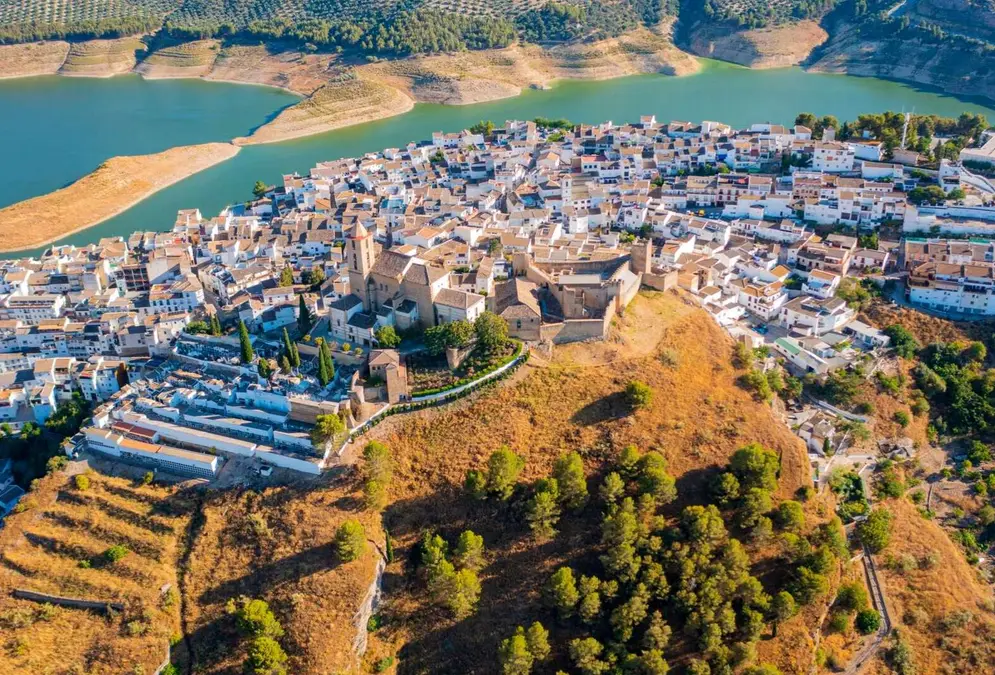
Iznájar
Andalusia's largest reservoir 60 km from Córdoba 75 min drive Population: ~4,300
Iznájar occupies a privileged position above the Embalse de Iznájar, Andalusia's largest reservoir. The medieval castle at the summit of the village gives you the best possible view of the water stretching south towards Granada province — a genuine panorama that photographs well at any time of day. The village itself is compact and slow-paced, which is part of its appeal. There is nothing pressing to do except walk the lanes, find a terrace above the lake and sit with a glass of local wine.
Highlights
- Embalse de Iznájar — Andalusia's largest reservoir, visible from multiple viewpoints
- Medieval castle on the village summit
- Terrace restaurants overlooking the water
Local speciality
Fresh river fish and local wines
Tip: Visit in the afternoon when the sun catches the reservoir from the west. The light on the water is remarkable.
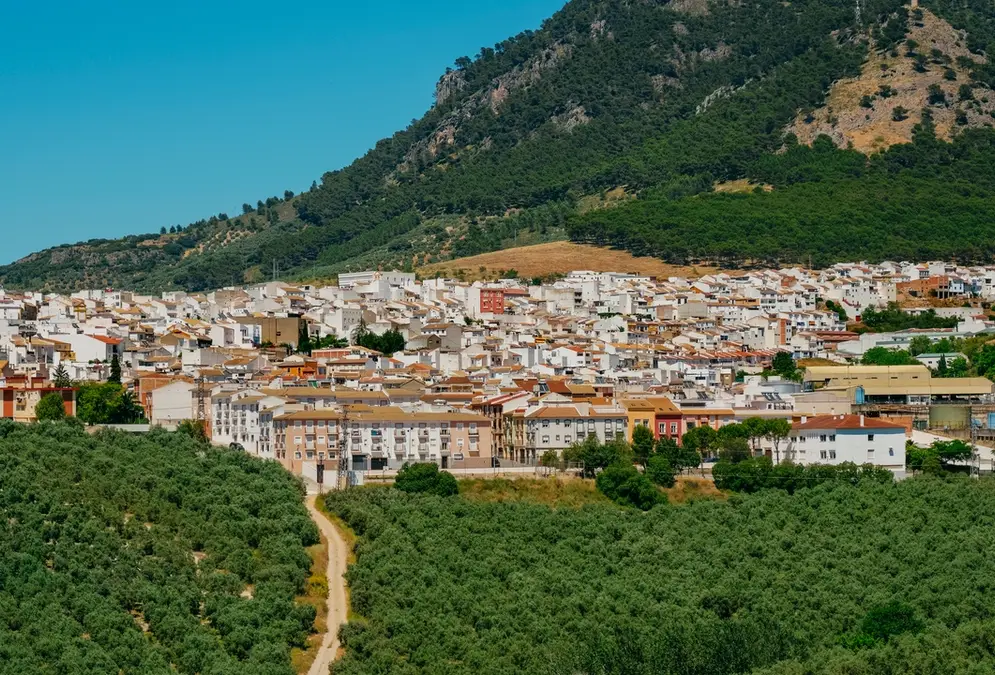
Rute
Capital of Andalusian anís 70 km from Córdoba 85 min drive Population: ~9,800
Rute has an unexpected specialty: it produces more aniseed liqueur than anywhere else in Andalusia. Six distilleries operate here, and the village has dedicated six small museums to the craft. The anís industry developed alongside a tradition of Christmas sweet-making — mantecados and polvorones — that has made Rute nationally famous in December. Out of season, the distillery visits are the main draw, along with the mountain scenery of the surrounding sierra.
Highlights
- Six aniseed distilleries open for guided visits
- Museum of Anís — traces the history of the local liqueur industry
- Traditional Christmas confectionery production year-round
Local speciality
Anís liqueur, mantecados, polvorones
Tip: Bodegas Anís El Clavel offers one of the more accessible distillery tours with tasting included.
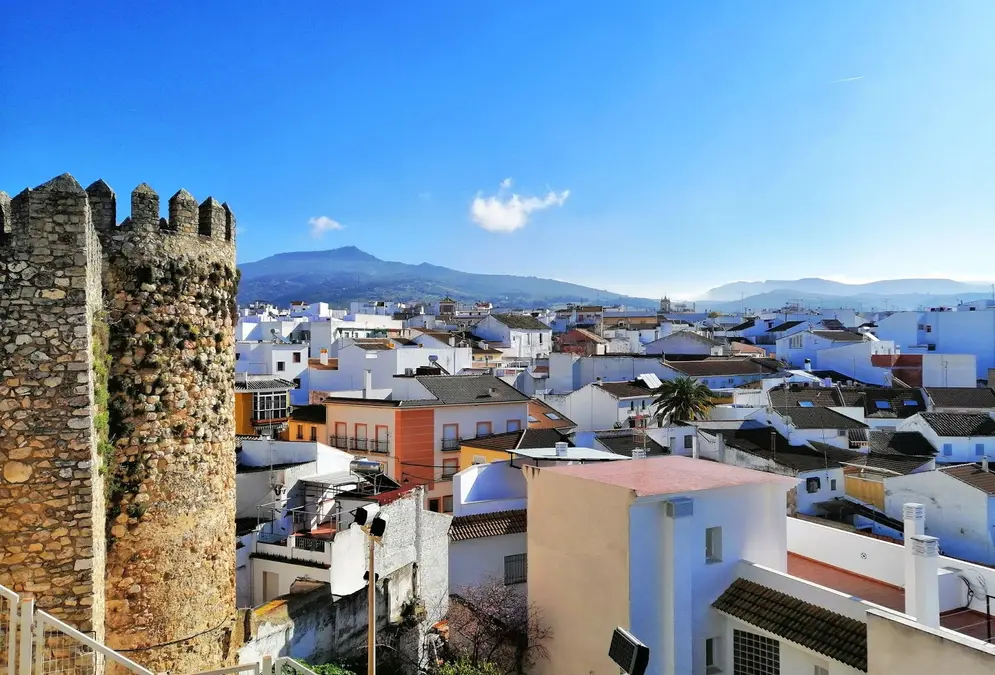
Cabra
Gateway to the natural park 45 km from Córdoba 55 min drive Population: ~19,000
Cabra is the closest of the main Subbética villages to Córdoba and the most practical first stop. The town sits at the foot of El Picacho — a limestone summit with views across five Andalusian provinces on clear days. The Santa Rita Visitor Centre at the base of the mountain serves as the main gateway to the Parque Natural de las Sierras Subbéticas and is a good place to pick up trail maps and park information before continuing deeper into the region.
Highlights
- El Picacho summit — views across five Andalusian provinces
- Santuario de la Virgen de la Sierra — hilltop sanctuary with panoramic position
- Santa Rita Visitor Centre — natural park gateway and trail information
Local speciality
Starting point for Subbética hiking routes
Tip: Stop at the Visitor Centre before setting out — the park staff give genuinely useful advice about conditions on the trails.
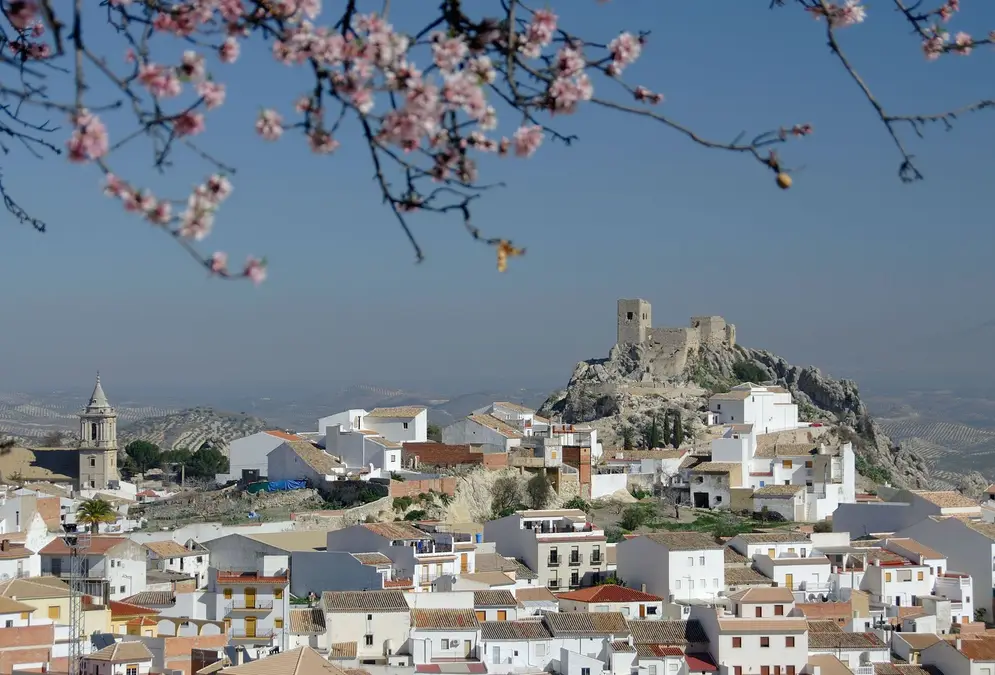
Luque
Medieval hilltop village 50 km from Córdoba 65 min drive Population: ~2,600
Luque is the least visited of the main pueblos blancos in the area, which makes it one of the most authentic. The castle ruins above the village are modest but the walk up through narrow whitewashed lanes is the point. A handful of hiking trails connect Luque to the broader natural park network, and the village makes a natural midday stop between Zuheros and Priego.
Highlights
- Medieval castle ruins above the village centre
- Narrow winding streets with original whitewashed architecture
- Trail access to the Parque Natural de las Sierras Subbéticas
Local speciality
Local olive oil and almonds
Tip: If you hit Luque around midday, the Bar El Castillo serves a simple but good menú del día that will keep you going for the afternoon.
Suggested itineraries
Both routes work as self-drive from Córdoba. A hire car is the only practical option — public transport to these villages is infrequent and not timed for day trips. See the Getting there section for rental car and parking notes.
Day trip
The classic Subbética circuit
1 day Zuheros · Luque · Priego de Córdoba
08:30 Depart Córdoba by car (A-339 south)
09:30 Arrive Zuheros — castle visit and Bat Cave (2–3 hrs)
12:30 Lunch in Zuheros village
14:00 Drive to Luque (30 min) — walk the village lanes (1 hr)
15:30 Drive to Priego de Córdoba (30 min)
16:00 Fuente del Rey and Sagrario Chapel (2 hrs)
18:30 Depart Priego — return to Córdoba (1 hr 30)
Our tip: Book the Bat Cave visit in advance, particularly for weekends and the April–October season. Entry is limited and the morning slots go fast.
Weekend
Southern Subbética with an overnight
2 days Zuheros · Luque · Priego de Córdoba · Iznájar
Day 1 Zuheros–Luque–Priego circuit as above. Overnight in Priego de Córdoba.
Day 2 — 09:30 Morning drive from Priego to Iznájar (30 min)
Day 2 — 10:00 Walk the castle and reservoir viewpoints (1–2 hrs)
Day 2 — 12:00 Lunch in Iznájar
Day 2 — 14:00 Return to Córdoba via Cabra (1 hr 30)
Our tip: Priego has a handful of good small hotels and rural houses. Staying overnight in the village means you get the main streets to yourself in the early morning — a different experience entirely.
Combining with other Córdoba day trips
If you are spending several days in Córdoba and want to combine the Subbética with other excursions, the Montilla-Moriles wine route lies to the west and can be paired with a morning in Priego de Córdoba on a long day.
In the other direction, our guide to the Meandro de Montoro covers a different kind of day trip: the Guadalquivir wraps the hilltop town of Montoro on three sides, a river bend protected since 2011 as a Natural Monument of Andalusia.
Getting there
By car (recommended)
Main route: A-339 or A-48 south from Córdoba
First village: Cabra at 45 km (55 min)
Furthest village: Rute at 70 km (85 min)
Parking: Free car parks at village entrances — streets inside are narrow
Hire a car in Córdoba or from the AVE station. Hertz, Avis and Europcar all operate in the city. Arriving on weekdays avoids the light weekend tourist traffic in spring.
Cycling
The Vía Verde del Aceite is a dedicated cycling and walking trail running on a former olive oil railway, passing near Zuheros and Luque.
Mountain bikes can be hired in Zuheros for exploring the immediate area.
Road cycling between villages is possible but the hills are demanding in summer heat.
Parking note: Village streets were not built for modern cars. Use the dedicated car parks near each village entrance and walk in. Most are free and clearly signed from the main road. Arriving early on spring weekends (before 10am) avoids the few occasions when car parks fill.
Best time to visit
Spring (April–May) Recommended
The ideal time. Temperatures sit between 18 and 26°C, the hillsides are green and wildflowers appear on the limestone slopes. The Patios Festival in Córdoba city (May) combines naturally with a Subbética day trip. Fewer visitors than summer.
Autumn (September–October) Recommended
A close second to spring. The heat drops, the light turns golden and the olive harvest begins across the province. September is also harvest season for local vineyards and a good time to find village festivals.
Winter (November–February)
Mild at lower elevations (10–15°C), occasionally cold and wet. Villages are quiet, which means you get them largely to yourself. The Cueva de los Murciélagos stays at a constant temperature year-round.
Summer (July–August) Avoid if possible
Temperatures regularly exceed 38°C and can push past 42°C. The cave is a welcome refuge but the drives between villages are punishing. If you go in summer, start before 9am and be back indoors by noon.
Córdoba city pairing: A Subbética trip in May lines up naturally with the Patio Festival season in Córdoba city. Do the villages mid-week when they are quieter, and the city patios at the weekend.
What to eat
Each village has its own edible specialty worth seeking out. The Subbética is productive agricultural country — olive oil, goat cheese and cured meats are all made locally and taste notably better here than they do in a city shop.
Zuheros
- Queso de cabra (goat cheese)
- Honey from mountain hives
Priego de Córdoba
- DOP Priego de Córdoba olive oil
- Goat cheese
- Local pastries
Iznájar
- Freshwater fish
- Local wines
Rute
- Anís El Clavel liqueur
- Mantecados de Rute
- Polvorones
Cabra
- Olive oil from the Sierra
- Iberian cured meats
Regional staples across all villages
Salmorejo
The thick Córdoban cold tomato soup. You will find it everywhere and it is almost always better than in the city, where tourist restaurants cut corners.
Jamón ibérico
The sierra provides good free-range grazing for Iberian pigs. Local cured ham from village bars is worth lingering over.
Gazpacho
Thinner and colder than salmorejo, made with raw cucumber, peppers and tomatoes. A summer essential and standard on every bar menu.
Montilla-Moriles wine
Many village bars stock the local fino and amontillado. Order a glass with tapas — the combination makes a simple bar lunch genuinely satisfying.
For a more detailed exploration of Córdoba province's food culture, see our Montilla-Moriles wine route guide, which covers the wine traditions of the region in depth.
Photography spots
White walls and warm Andalusian light are a natural combination. A few spots are worth planning your timing around.
Zuheros Castle — golden hour
The castle sits on a crag facing west. Late afternoon in spring or autumn: the white village below turns amber and the limestone rock face glows. Arrive by 5pm for a one-hour shooting window before dusk.
Priego de Córdoba — Fuente del Rey at dawn
The fountain is quieter before 9am than at any other time. The water catches the early light and there are no coaches yet. Worth setting an early alarm.
Iznájar Reservoir — dusk panorama
The reservoir panorama from the castle position at dusk gives you the water surface lit from the west. Polarising filter recommended to manage the reflections.
Cabra — El Picacho at sunrise
The summit gives a 360° view and catches the first light before the valleys fill with haze. A 30-minute climb from the car park. Bring a head torch if you start before dawn.
General tip: White walls photograph best in soft light — overcast spring mornings or the last hour before sunset. Midday direct sun creates blown-out highlights and flat contrast. If you are serious about photography, our Córdoba photography guide has more on light conditions and locations across the province.
Practical tips
Planning
- • Book the Bat Cave (Zuheros) in advance — entry numbers are limited
- • Hire car in advance for spring weekends — availability gets tight in May
- • Download offline maps before leaving Córdoba — mobile signal is patchy in the sierra
- • Bring cash — smaller village bars sometimes don't take cards
On the road
- • Use village entrance car parks — don't attempt to drive into old quarters
- • Fill up on petrol in Cabra or Priego — rural village stations are rare
- • Mountain roads between villages are well-maintained but winding — allow more time than GPS predicts
- • Sun protection is essential even in spring — the sierra elevation and limestone reflection intensify UV exposure
Useful Spanish for village bars
Un menú del día
The set lunch (two courses, bread, drink) — €9–13 and almost always good value
Un fino, por favor
A glass of dry local fino — the default local order and about €1.50–2.50
¿Tiene queso local?
"Do you have local cheese?" — usually triggers a genuine response and the best they have
La cuenta, por favor
"The bill, please" — bills don't come automatically; you ask for them
Plan your visit from Córdoba
Córdoba city works well as a base for exploring the Subbética. The historic centre, the Mezquita and the neighbourhood guides are all on this site.
Rent a car in Córdoba
We earn a small commission if you book a car through this search — at no extra cost to you.
The white villages are best reached by car. Compare rental prices from Córdoba pick-up points.
Further reading
Official sources
3 references Show Hide
- Parque Natural Sierras Subbéticas (opens in a new tab)
Official natural park site with trail maps, cave visit booking and park information
- Turismo de Córdoba — Parque Natural Subbéticas (opens in a new tab)
Provincial tourism office guide to the Subbética natural park and surrounding villages
- Wikipedia — White Towns of Andalusia (opens in a new tab)
Overview of the pueblos blancos tradition and its historical and geographical context