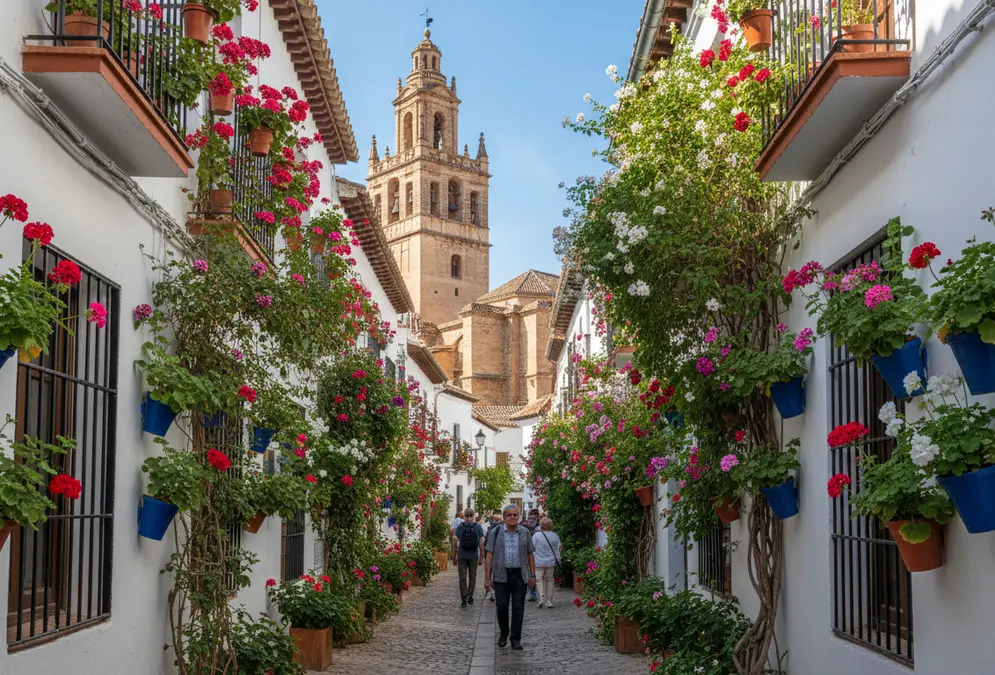
Photographer's Guide
Best photography spots & viewpoints in Córdoba
Moorish arches, white-washed alleys thick with geraniums, the Guadalquivir at sunset: Córdoba is one of the most photogenic cities in Spain. This guide covers 20+ photography spots and panoramic viewpoints, with opening times, shooting angles, golden hour schedules, and the best places to watch the sunset.

Written by
María Fernanda González Ten years covering Córdoba's UNESCO heritage sites, sourcing from Junta de Andalucía documentation.
Updated Published
Few cities in southern Spain pack this much architectural variety into a walkable old town. The photography spots in Córdoba span three distinct civilisations within a few hundred metres of each other: the interlocking red-and-white arches of the Mezquita-Catedral, the geometric reflecting pools of the Alcázar gardens, the whitewashed labyrinth of the Judería with its wrought-iron balconies, and the 1st-century Roman Bridge spanning the Guadalquivir. The entire historic centre is a UNESCO World Heritage Site, and the geometry of Moorish architecture (horseshoe arches, carved plasterwork, star vaulting) gives a camera something to work with that flat-fronted European cities simply do not. This Córdoba photography guide covers 20 specific locations with the angles, opening times, and access details you need.
The conditions matter as much as the locations. Golden hour in Córdoba runs roughly 7–9am and again 7–9pm in summer; at those windows, low sun rakes across stone and whitewash, pulling out texture and colour that the flat midday light destroys. Calleja de las Flores needs a wide-angle lens and an early alarm: by 9am it holds 40 tourists shoulder to shoulder, at 7am you can have it to yourself. May is the best month overall: the Patios Festival opens private courtyards across the Judería and San Basilio, the geraniums are in full bloom, and the Alcázar gardens peak. October is close behind: the crowds thin out, the light turns amber earlier, and the city cools to a temperature where carrying a camera bag is not a hardship.
Each entry in this guide includes the recommended angle, the best time of day, crowd patterns, and notes on equipment, including where tripods are permitted and where they are not. The free walking tour covers the essential circuit (Mezquita-Catedral exterior, Calleja de las Flores, and the Roman Bridge) and works well as a scouting run on your first morning before you return to shoot at the right light.
Photography in Córdoba: at a glance
- Best light
- Golden hour: 7–9am and 7–9pm (summer)
- Best season
- May (patios in bloom) and October (warm light)
- Must-shoot spot
- Calleja de las Flores — arrive before 7am
- Photo permit
- Not required at any outdoor location
- Crowd peak
- 11am–6pm April–October
- Best sunset view
- Torre de la Calahorra terrace, 30 min before sunset
Calleja de las Flores: photographer's secret
Show up at 7am. The alley holds fewer than a dozen people comfortably and by 9am it's standing-room only. At 7am the morning light is low, the flowers glow, and the Mezquita tower frames perfectly from the dead end. This single change will define your Córdoba photos.
In this guide
Jump to a section
Iconic monuments
Córdoba's main monuments reward patience. Each has a best angle and a best hour; show up at the wrong time and the crowds or the flat midday light will ruin the shot.
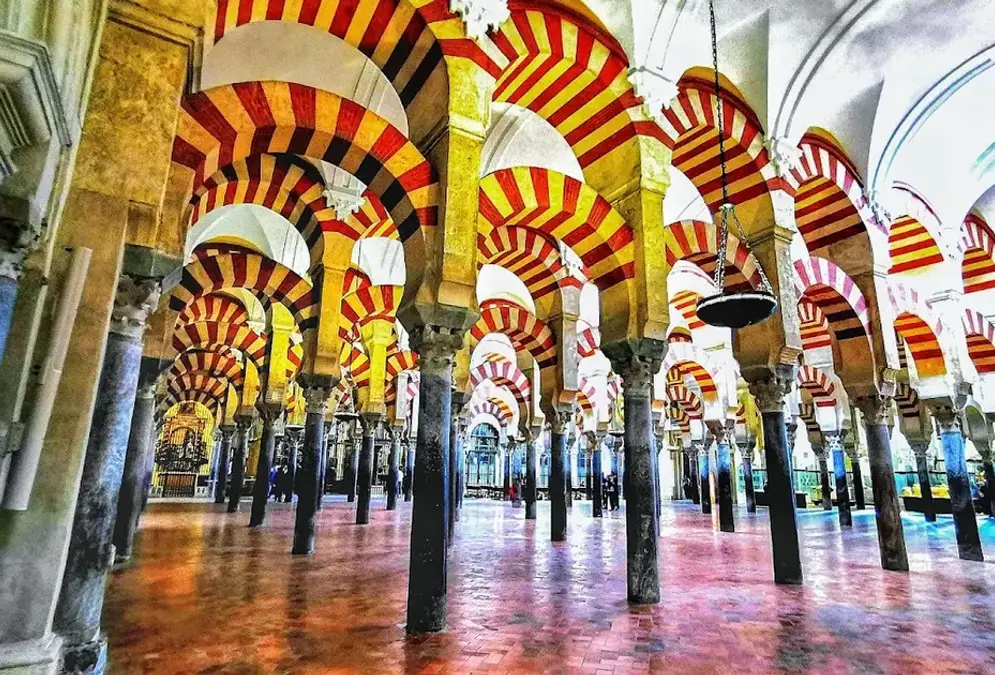
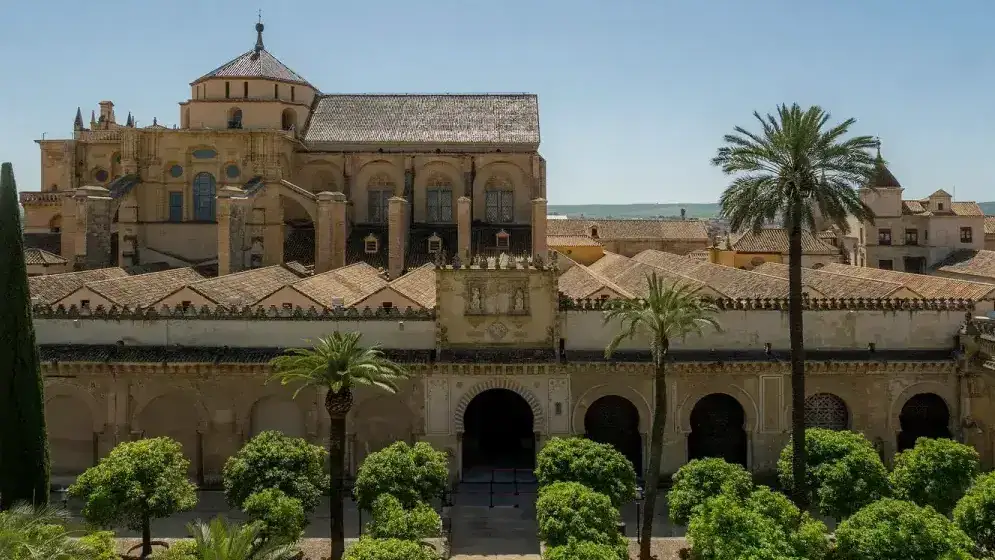
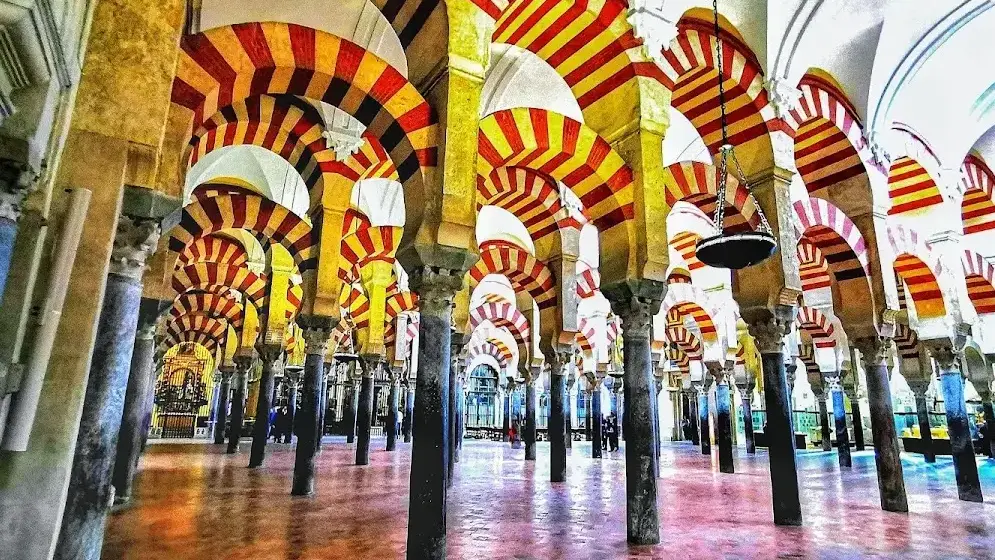
Mezquita-Catedral
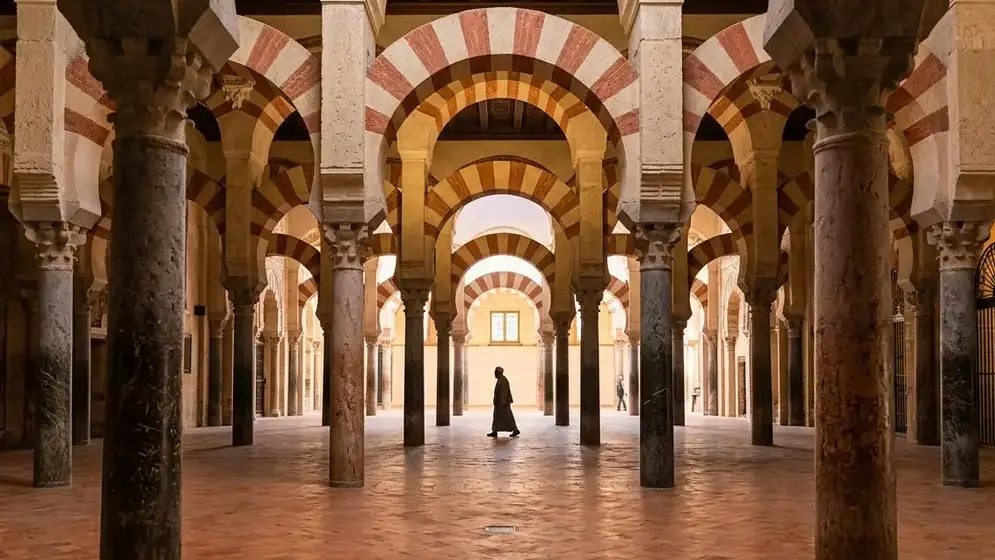
Córdoba's most photographed monumentThe forest of columns and bi-coloured arches is Córdoba's iconic image. Inside, photograph the 856 columns in perspective from several angles. The filtered light creates dramatic shadow patterns.
Recommended angles
- • Forest of columns (main nave, diagonal perspective)
- • Golden Mihrab (best lighting 10am–12pm)
- • Baroque dome (from the cathedral nave)
- • Patio de los Naranjos (arches + orange trees, best around 9am)
Tip: Arrive at opening time (10am in winter, 8:30am in summer) to beat the crowds. Use a wide-angle lens (24mm or less). Flash and tripods are not permitted.
Best time: 10–11am (overhead light filtering through the high windows)
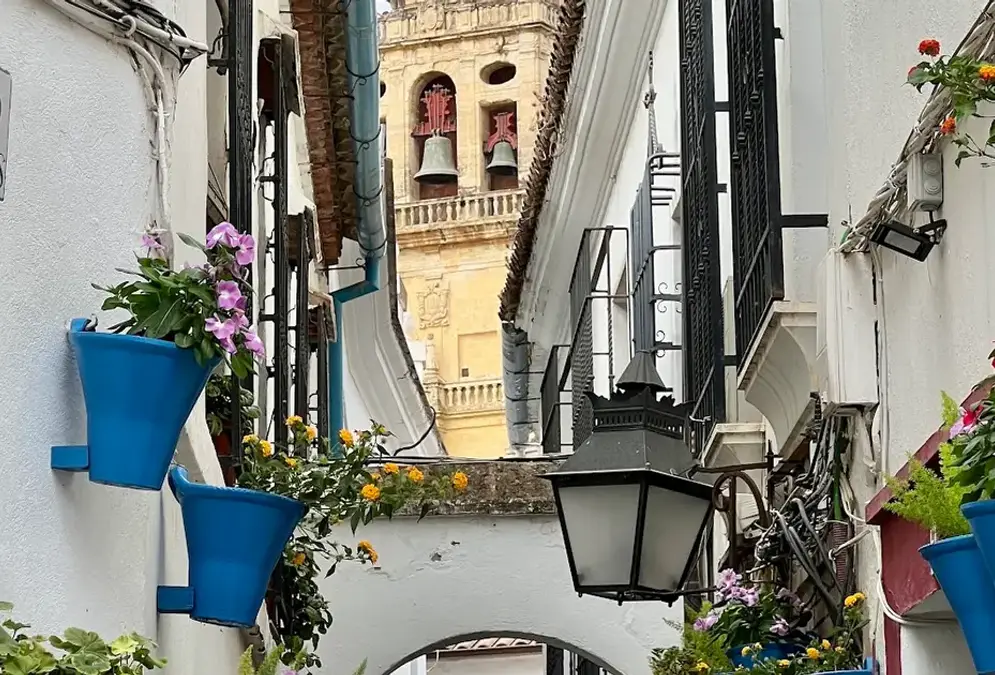
Calleja de las Flores
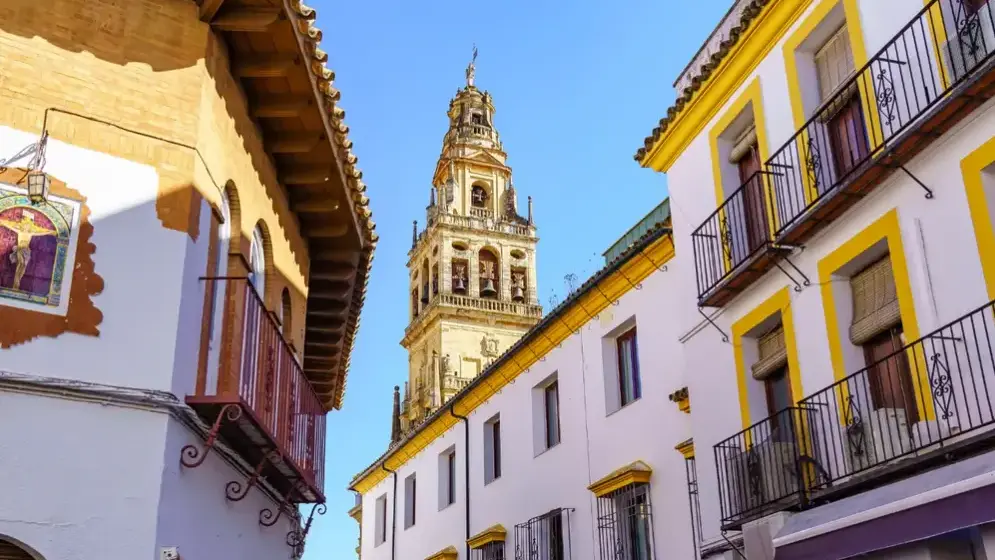
Córdoba's most photographed alleyCórdoba's postcard image: a narrow cobbled alley, white walls adorned with geranium pots, the Mezquita-Catedral bell tower framed at the far end. The classic shot from the dead end of the lane is unmissable.
Perfect composition
- • Position: Stand at the far end of the alley, facing out
- • Framing: Portrait orientation, centering the bell tower at the far end
- • Lens: 35–50mm (to respect the alley's narrowness)
- • Include: Flower pots in the foreground, bell tower as focal point
Crowds: Very busy 11am–6pm. For a crowd-free shot, arrive before 9am or after 8pm (in summer). May brings peak blooms.
Best time: 10–11am (soft indirect light, flowers visible) or 8–9am (no crowds)
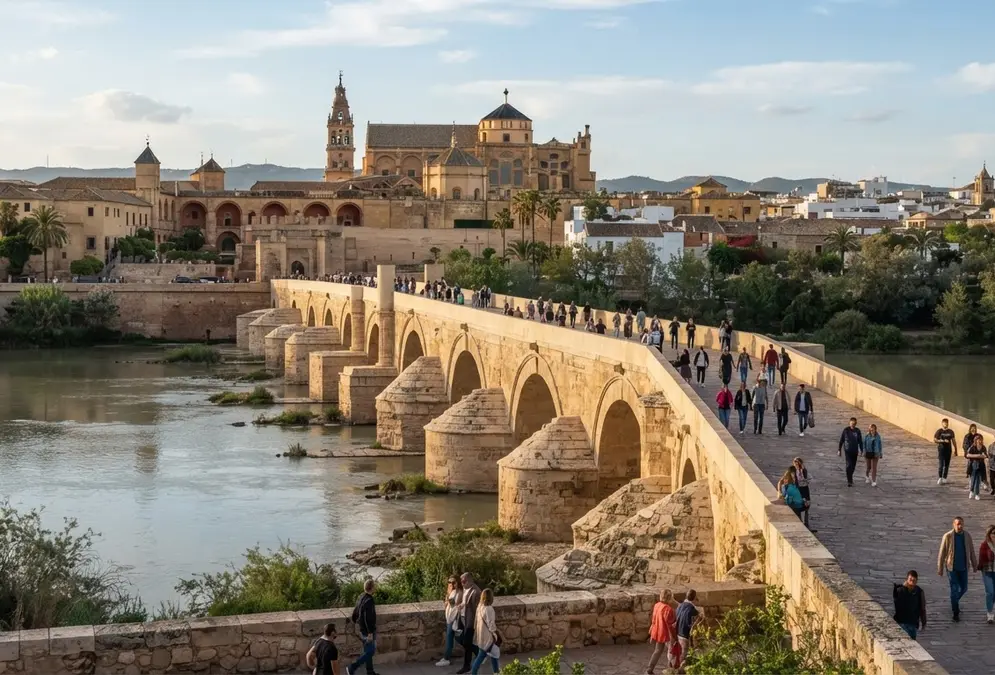
Puente Romano
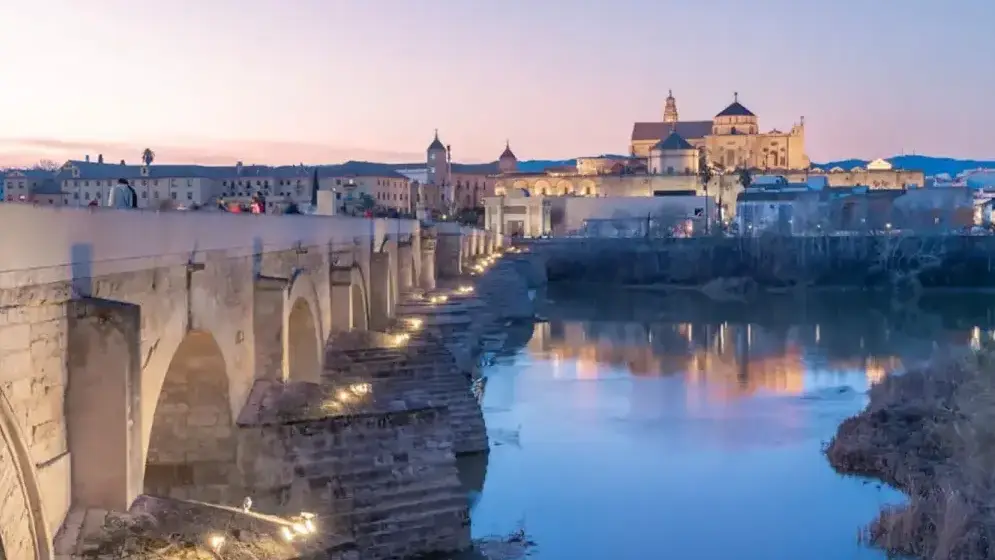
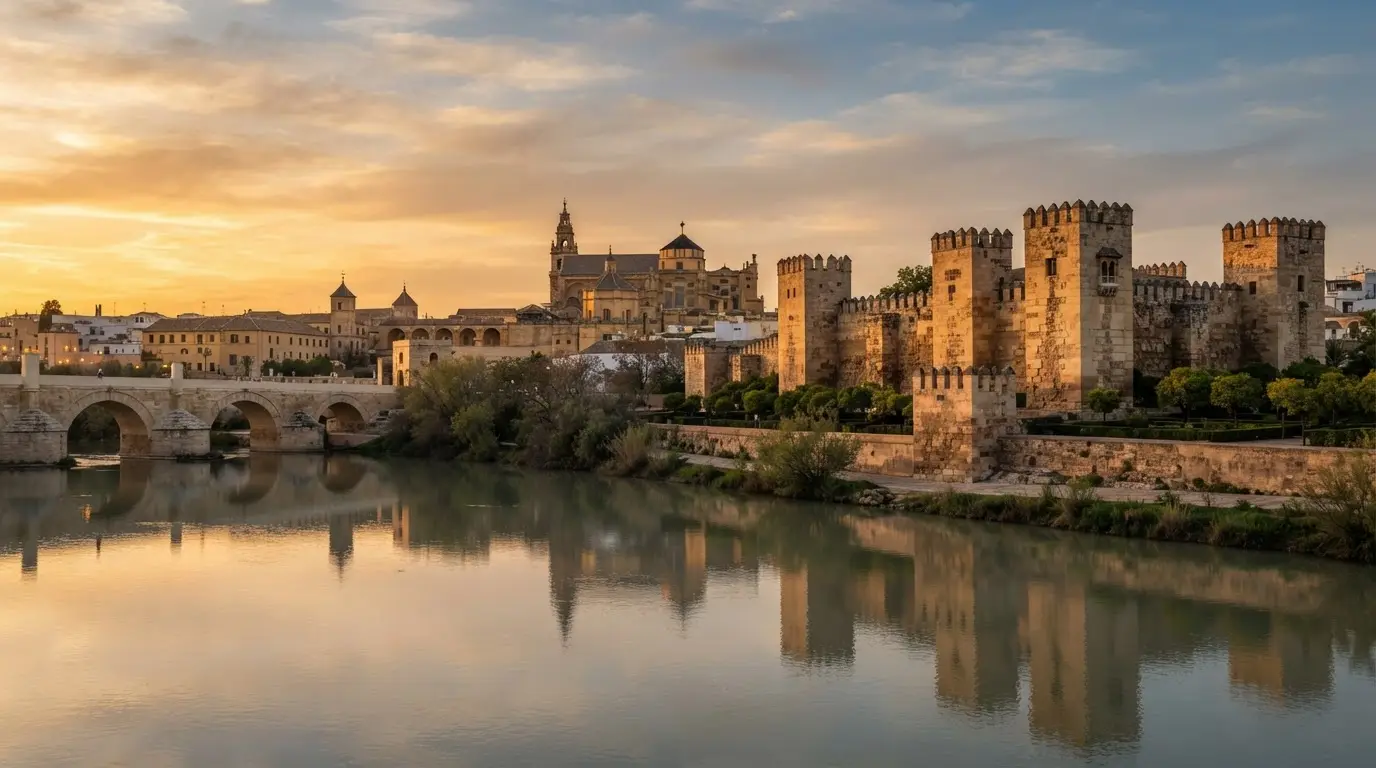
Spectacular sunsetsThe Puente Romano over the Guadalquivir offers varied compositions depending on your angle and the time of day. At sunset, its sixteen arches are silhouetted against an orange sky, with the illuminated Mezquita-Catedral in the background.
Shooting angles
- • From the Alcázar-side riverbank (lateral perspective + reflections)
- • Mid-bridge (symmetrical view of the arches)
- • From Torre de la Calahorra (wide view of bridge + city)
- • Under the arches from the riverbank (low-angle structural shot)
Tip: To capture reflections, shoot from the riverbank when the Guadalquivir is calm (early morning). With a long exposure (tripod needed), the water becomes mirror-smooth.
Best time: Evening golden hour (30 min before sunset) or blue hour (20 min after)
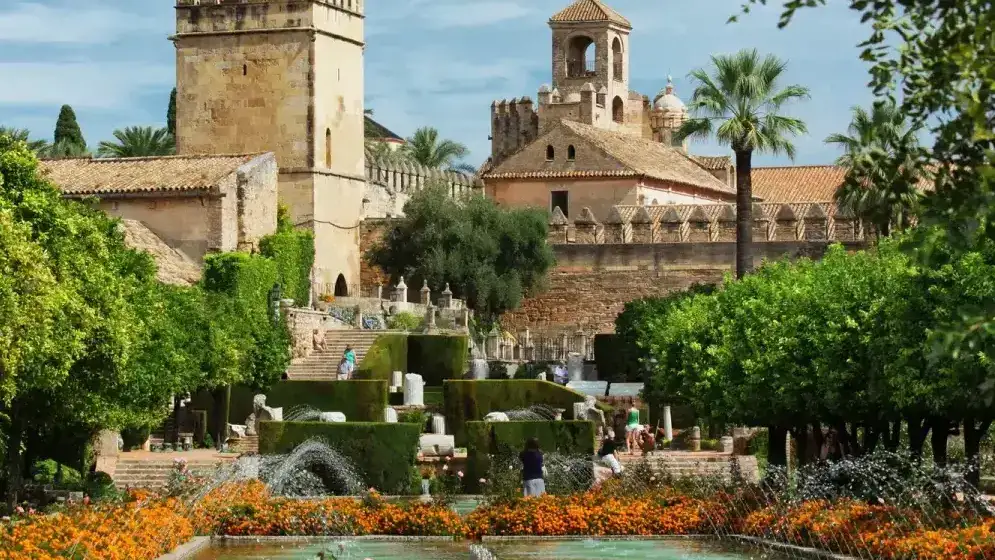
Alcázar Gardens
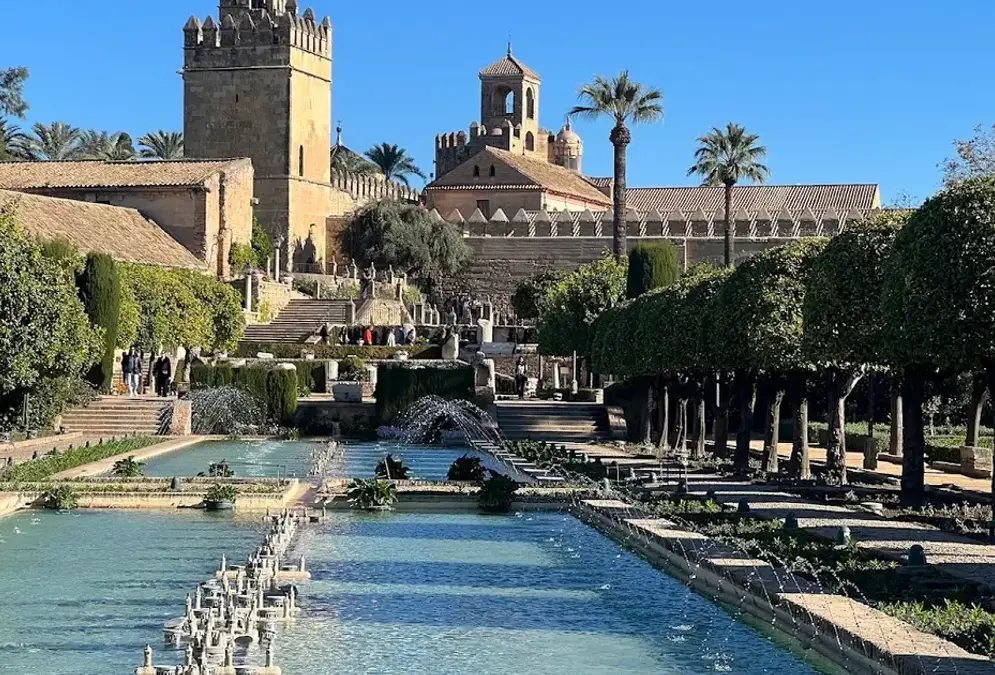
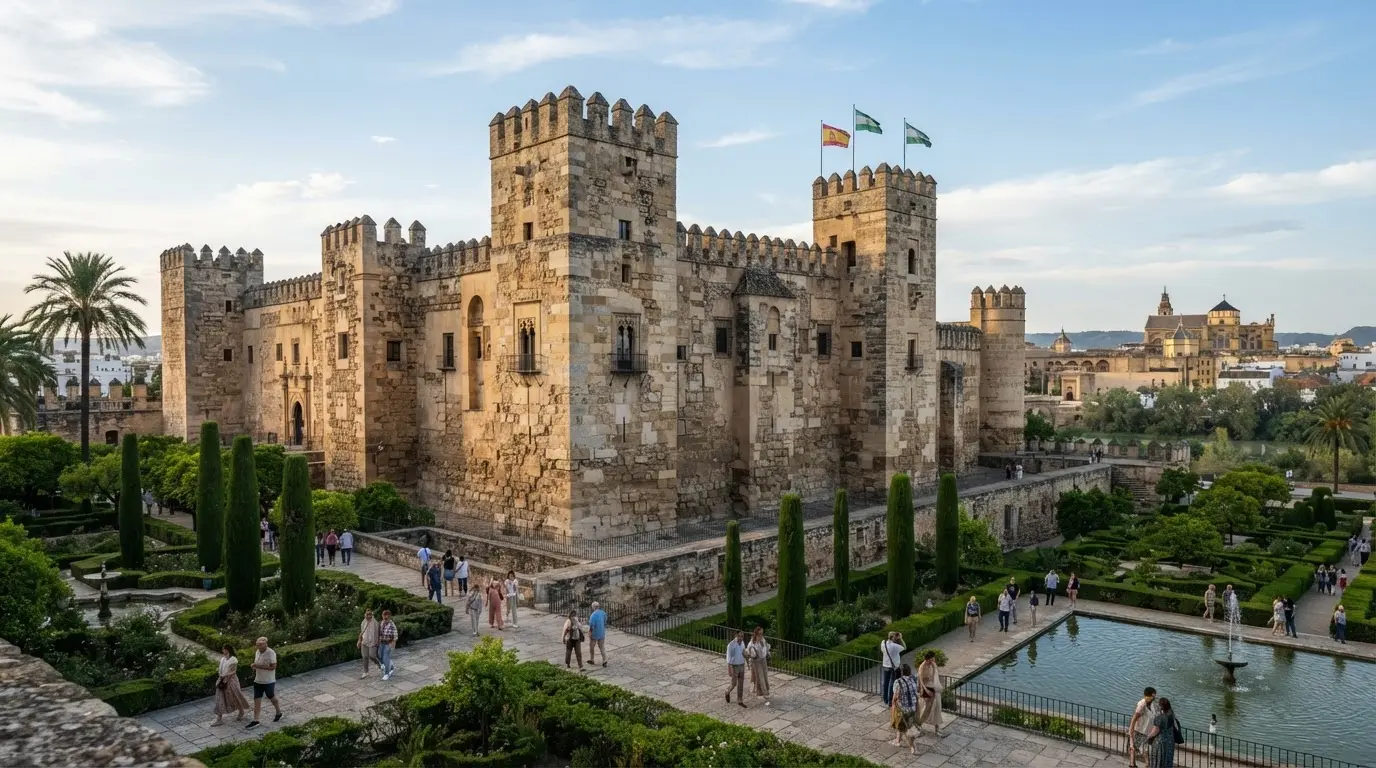
Terraced gardens and reflecting poolsThe terraced gardens of the Alcázar de los Reyes Cristianos offer perfect symmetrical compositions: rectangular pools edged with clipped hedges, fountains, palms and cypresses. The medieval towers add vertical interest to your shots.
Recommended compositions
- • Pools in perspective (central walkway toward the towers)
- • Tower reflections in the water (best on a still day)
- • Details: fountains, azulejos, orange trees in bloom
- • Panoramic view from the battlements (included in entry)
Best time: 9–10am (soft lateral light) or summer evenings (July–August, gardens lit up at night)
The most-photographed monuments are crowded midday. Go at opening or closing time for crowd-free shots. In high season, book tickets online to skip the queues.
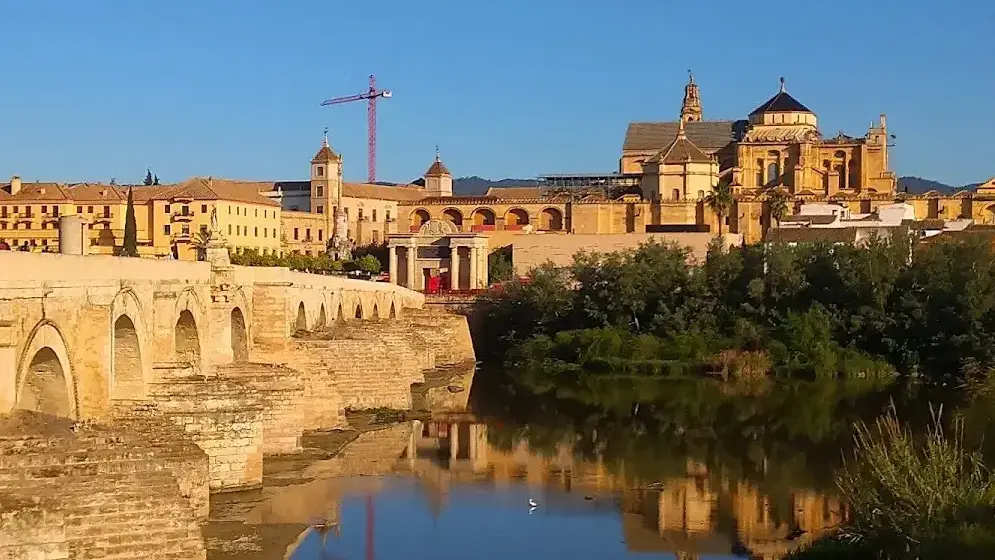
The Puente Romano offers one of Córdoba's most photographed panoramas
Picturesque streets and neighbourhoods
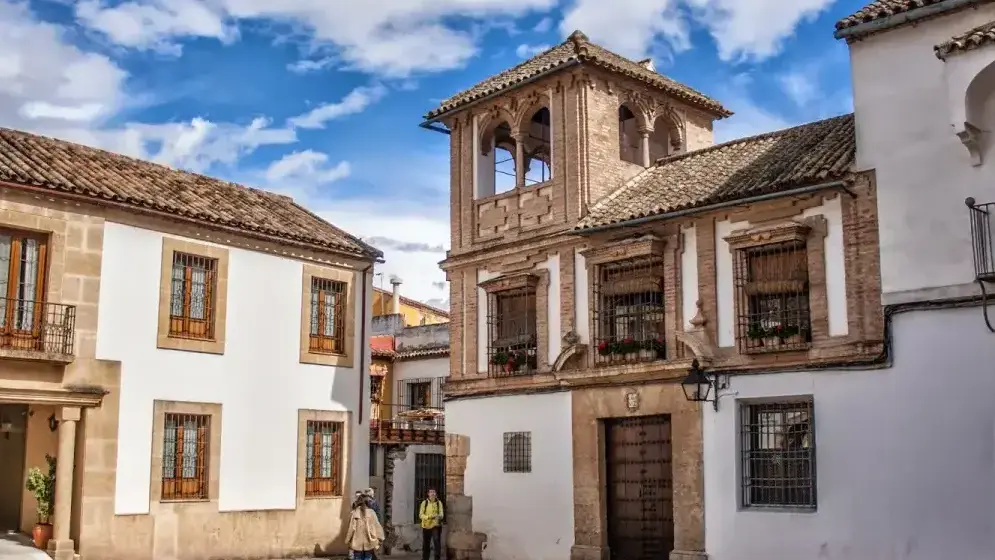
The Judería is full of photogenic lanes where every corner reveals a potential composition. Wander with your camera; the best shots are often found off the beaten track.
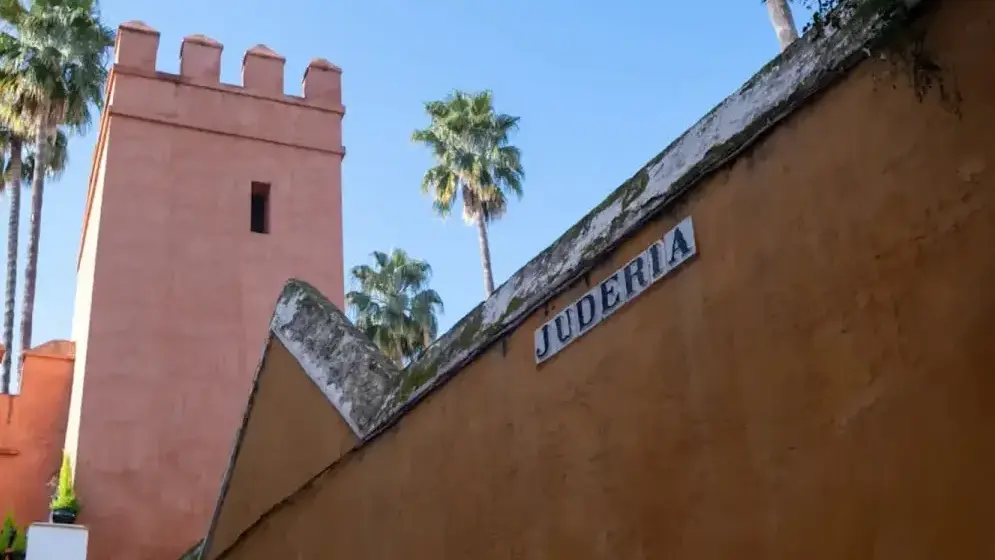
Streets of the Judería
Medieval Jewish quarterWhitewashed walls, narrow cobbled lanes, geraniums spilling from wrought-iron balconies: the maze of the Judería offers endless compositions. Look for the contrast between deep shadow and bright sunlight in the covered passages.
Streets not to miss
- • Calle Judíos (silver artisans, traditional shops)
- • Calle Averroes (perspective toward the Alcázar tower; home of the Capilla de San Bartolomé with its Gothic-Mudéjar plasterwork)
- • Plaza del Cardenal Salazar (intimate little square with fountain)
- • Lane behind the Synagogue (vaulted passages)
Tip: Narrow lanes create strong contrasts. Expose for the highlights (white walls) and lift the shadows in post-processing. In the morning, look for shafts of sunlight cutting through the passages.
Best time: 9–11am (side light creating graphic shadows)
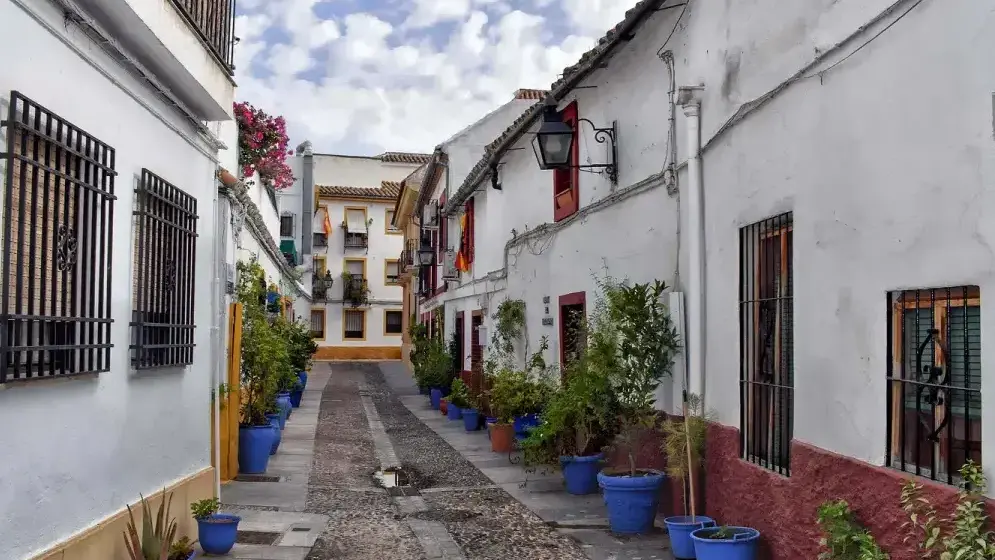
San Basilio neighbourhood
Córdoba's patio neighbourhoodThe neighbourhood with the highest concentration of patios participating in the May festival. Quiet streets lined with low whitewashed houses, colourful doors and decorative azulejos. In May, the patios open their gates to reveal spectacular floral displays.
What to photograph
- • Patio doorways framing the interior floral displays
- • Azulejo tilework on low whitewashed walls
- • Colourful geraniums against painted plaster
- • The quiet backstreets at dawn — empty of tourists
Tip: Outside May the patios are closed. The streets themselves are still photogenic — early morning is the best time to shoot the low whitewashed houses without crowds.
Best time: May during the Patios Festival (first two weeks)
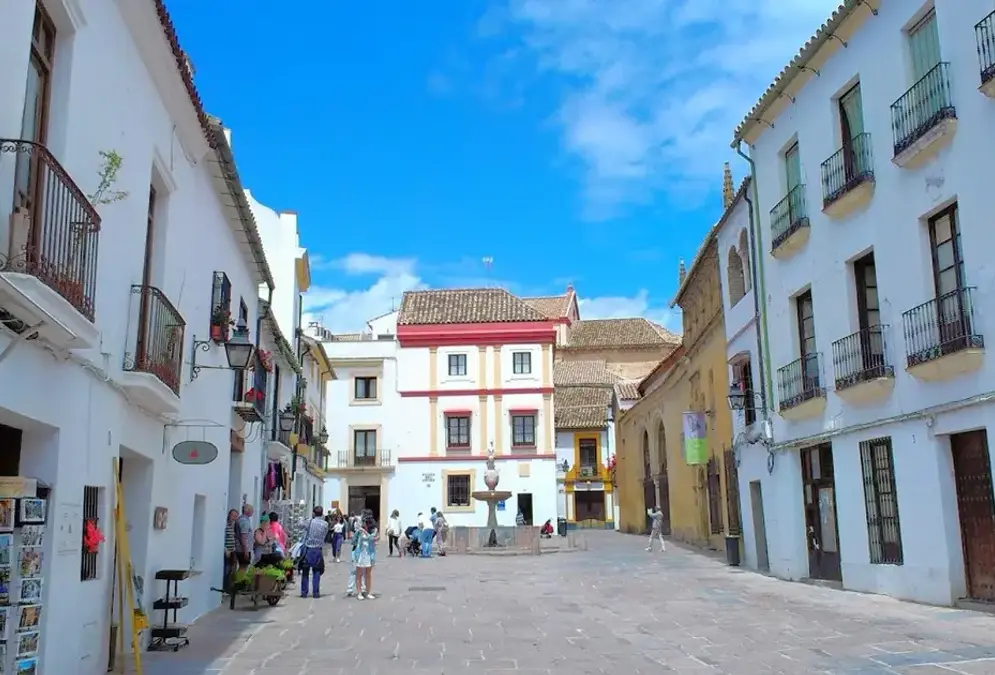
Plaza del Potro
Historic square and cultural clusterA medieval square mentioned by Cervantes in Don Quixote. A Renaissance fountain topped with a colt (potro) stands at the centre, surrounded by colourful historic buildings. The Museo de Bellas Artes and the Centro Flamenco Fosforito face each other across it. The atmosphere is genuinely local and away from the crowds. Frame it symmetrically from the old inn.
Best time: 8–9am (empty square, soft light) or 7–8pm (lively terraces)
The Alcázar gardens offer geometric compositions and tower reflections
Gardens and palaces
Córdoba's garden architecture is some of its most photogenic. Formal terraces, ornate fountains, and the scent of orange blossom: these places work well in full daylight.
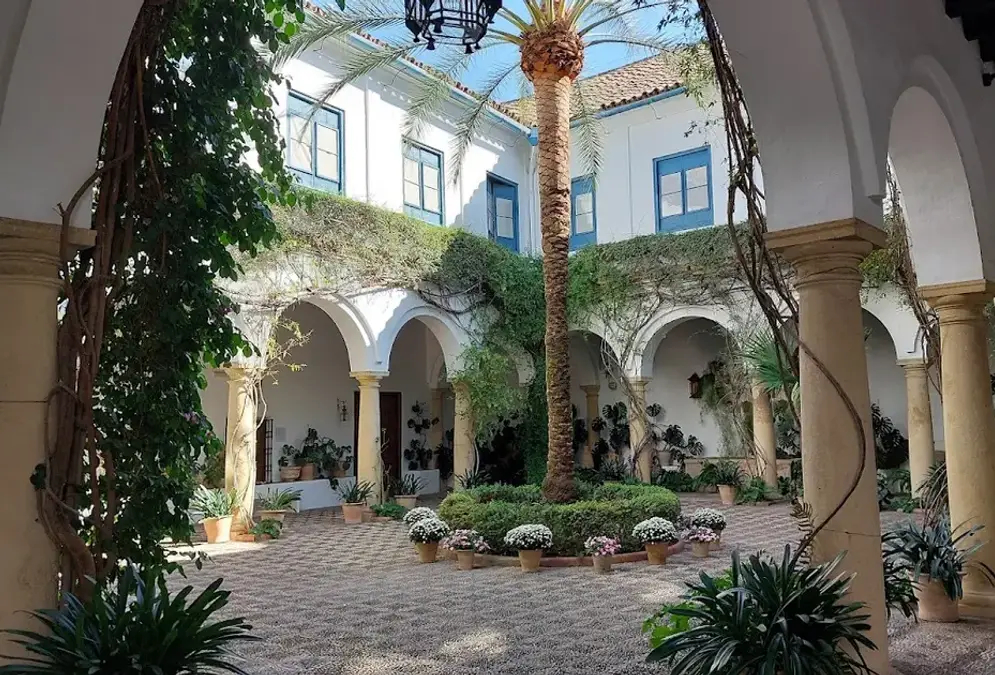
Palacio de Viana (12 patios)
The patio museumTwelve interconnected patios, each with its own plant composition. The Renaissance palace's courtyards run from geometric box hedges to a wild riot of roses and jasmine. Strong natural light from above, good for close-up details of tilework and flowers.
Best time: 10am–noon (overhead light filling the patios evenly)
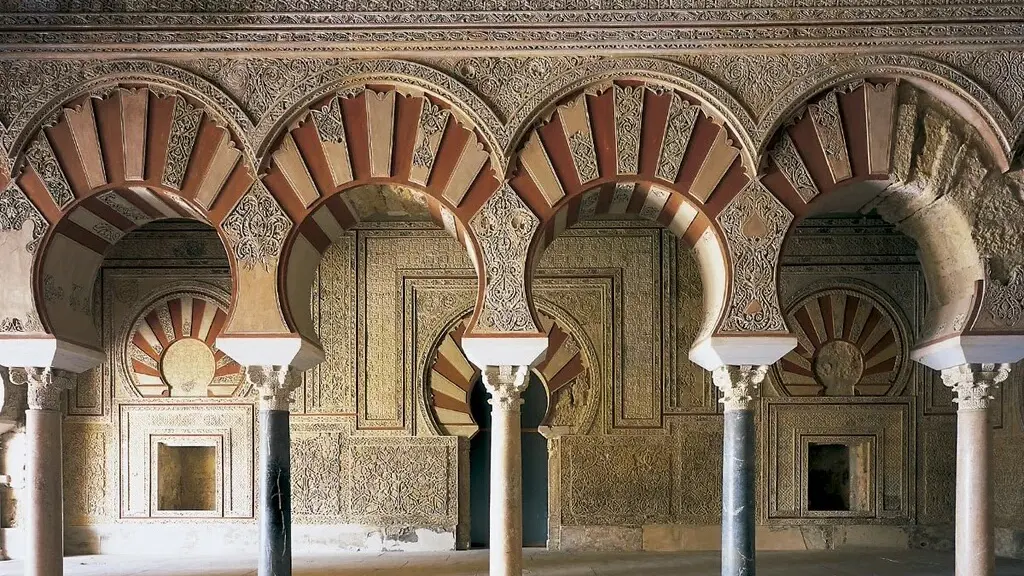
Medina Azahara
10th-century caliphal ruinsThe ruined caliphal city on a hillside outside Córdoba. Carved stone columns, geometric water channels, and panoramic views over the Sierra Morena. Scale is staggering; wide-angle shots work well here.
Best time: Late afternoon (warm directional light on the carved stonework)
Beyond the city
The white villages of the Subbética (Zuheros, Priego de Córdoba, Luque) offer a completely different palette: blinding whitewash against limestone cliffs, empty lanes, and no tourist crowds. See our Pueblos Blancos guide for locations and driving routes.
Panoramic viewpoints
Good elevated shots of Córdoba are harder to find than you might expect; the old city is flat. These are your best options.
Mezquita-Catedral bell tower (La Torre)
Best rooftop view in the cityThe 54m bell tower offers a 360-degree panorama over the historic centre, the Roman Bridge, and the Guadalquivir valley. You can see the tiled rooftops of the Judería from directly above. Book a morning slot before the crowds arrive.
Best time: 9–10am (avoid noon heat and crowds)
Torre de la Calahorra terrace
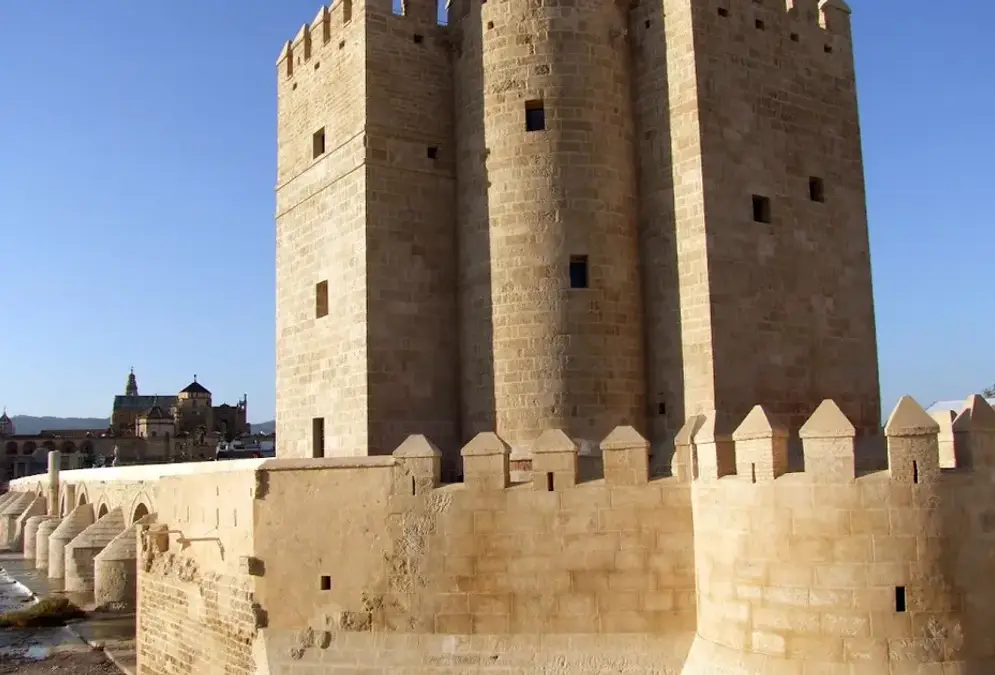
View of the bridge + city skylineThe tower at the south end of the Roman Bridge has a rooftop terrace with unobstructed views of the Puente Romano and the Mezquita-Catedral behind it. The classic wide shot that puts bridge and mosque in the same frame.
Best time: 30–60 minutes before sunset
Alcázar battlements
City panorama from medieval rampartsThe battlements of the Alcázar de los Reyes Cristianos give a wide view over the terraced gardens, the Mezquita roofline, and the Guadalquivir beyond. Unlike the bell tower, this perspective looks down at the geometric garden pools; the pattern of hedges, palms, and fountains reads as a graphic from above. Less vertical than the bell tower, more interesting compositionally.
Best time: Late afternoon (June–August: gardens open until 9pm on Fridays for night visits)
Paseo de la Ribera (south bank)
Free riverbank sunset walkThe riverside promenade on the south bank of the Guadalquivir gives the full postcard panorama: Roman Bridge in the foreground, Mezquita-Catedral rising behind it, without paying for any viewpoint. At golden hour the stone arches catch warm orange light and the water picks up the reflection. Walk east from the Calahorra Tower for the widest angle; walk further for the bird's-eye view from the embankment slope.
Best time: 30 minutes before sunset. No entry fee, no booking required.
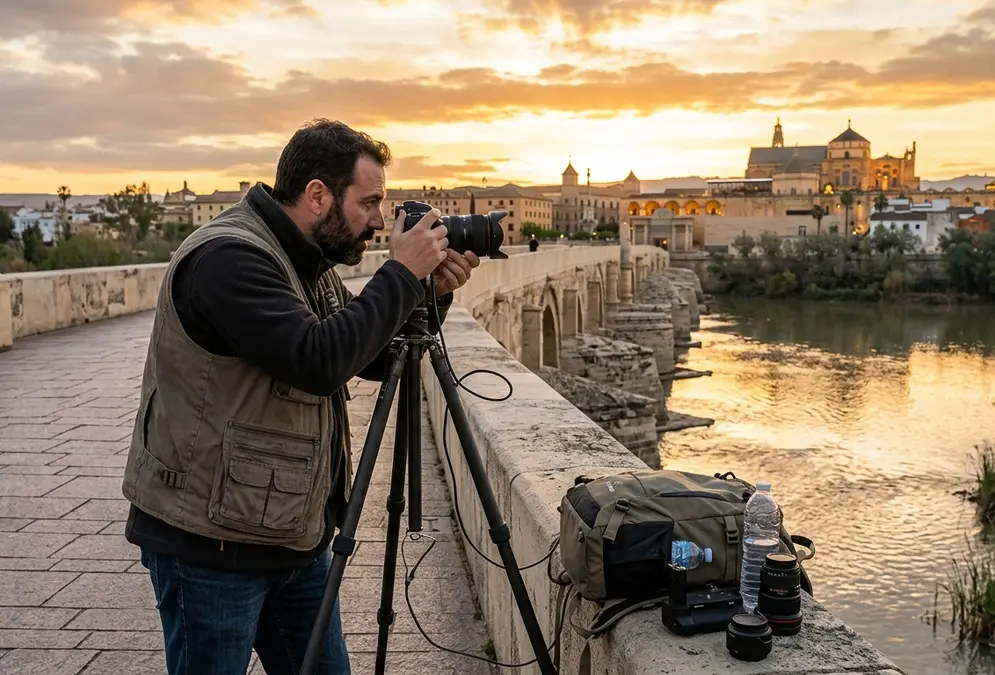
The Roman Bridge at sunrise: tripods allowed, blue hour 20 minutes after sunset.
Hidden patios
The Córdoba patio is not just a May Festival phenomenon. Year-round, some of the city's most photogenic courtyards are visible through open gates or accessible for free. You just have to know where to look.
Patio de los Naranjos (Mezquita)
The orange-tree courtyard adjacent to the Mezquita is accessible before the paid entry hour. Long rows of orange trees in geometric patterns, the Moorish arches framing the view at one end. Free before 8:30am (summer) or 10am (winter).
Best time: Early morning, free access, low angle light between the tree trunks
Patio de San Basilio
Several private patios in the San Basilio neighbourhood are partially visible from the street through wrought-iron gates. In May, 50+ of them open fully for the Patios Festival, but the neighbourhood is worth visiting any time for its quiet streets and the occasional glimpse through an open door.
Best time: May (Patios Festival), first two weeks
Hotel patios
Several historic hotels — notably Las Casas de la Judería — have spectacular internal patios. Guests have free access; non-guests can sometimes request a look at reception, or simply photograph the entrance courtyard which is often visible from the street.
Best time: Mid-morning (10am–noon) when interior light fills the patio evenly
Practical photography guide
The golden hour schedule
Summer (June–August):
Sunrise: 7am–8am | Sunset: 9pm–10pm
Spring/Autumn (Mar–May, Sep–Nov):
Sunrise: 7:30am–8:30am | Sunset: 7:30pm–8:30pm
Winter (Dec–Feb):
Sunrise: 8am–8:30am | Sunset: 6pm–6:30pm
Blue hour tip:
Roman Bridge best at 20 minutes after sunset
Light by season
March–May: soft, warm light. Long golden hours. Patios in bloom.
June–August: harsh overhead light by 10am. Shoot early or late. Heat shimmer is real.
September–November: warm golden light, less harsh. Streets quieter after August.
December–February: cool blue light, very low sun angle. Can be dramatic on stone facades.
Equipment notes
- • Wide-angle (16–24mm): Mezquita interior columns, Alcázar gardens
- • Standard (35–50mm): Calleja de las Flores, street scenes
- • Short tele (85–135mm): Details, carved stonework, distant tower shots
- • No tripods inside the Mezquita. Tripods allowed on the Roman Bridge.
- • No flash permitted inside monuments
Moorish Architecture Photography Walk
A self-guided 2-hour route from the Mezquita through the Judería to the Roman Bridge, hitting every major photography spot at the ideal angles.
See the full walk routePractical tips
Crowds and timing
The Calleja de las Flores and the Mezquita exterior are packed from 11am to 6pm in high season (April–October). Arrive before 9am for empty alleys. The Roman Bridge is quiet early morning and late evening.
February and November are the quietest months. You will have the Judería lanes almost to yourself on a weekday morning in winter.
Photography permissions
Mezquita-Catedral: Photography permitted throughout. No tripods, no flash. Video permitted without special permit.
Alcázar: Photography freely permitted in gardens and interior.
Patios during May Festival: Photography welcomed but respect residents: don't block doorways or photograph people without consent.
Medina Azahara: Photography freely permitted throughout the site.
Drones: Flying over the historic centre requires prior authorisation from Spain's aviation authority (AESA) and is not permitted without a permit. Don't launch one near the Mezquita or the Roman Bridge expecting to get away with it; enforcement in the old town is real.
Scouting the route
The Mezquita, Calleja de las Flores, and Roman Bridge form a natural circuit of about 20 minutes on foot. Do a first pass at midday to note compositions, return at golden hour to shoot. The free walking tour (9am and 11am daily) is a good way to cover ground quickly on your first morning.
Watching the sunset in Córdoba
Camera or not, golden hour in Córdoba is worth planning around. These are the best spots for watching the sunset, ranked from best all-round view to highest vantage point.
1
Torre de la Calahorra terrace: best all-round
Open rooftop terrace at the south end of the Roman Bridge. The view combines the bridge, the Mezquita-Catedral, and the old town skyline in a single frame. Small terrace; arrive early to claim a spot. €4.50 entry.
2
Roman Bridge: free and atmospheric
Stand on the bridge itself or on the south bank (Paseo de la Ribera) for the silhouette view. The sixteen stone arches catch the last light while the Mezquita rises behind. No entry, no booking; just show up 30 minutes before sunset. Free.
3
Alcázar battlements: garden panorama
Looking down at the geometric garden terraces with the evening sun behind the Mezquita. A different angle from the bridge view, better for context, less dramatic as a silhouette shot. In summer (Friday evenings June–August), the gardens stay open late with lighting. €7 entry.
4
Mezquita bell tower: highest point in the city
The 54m tower gives a 360-degree panorama over the entire historic centre. Less about the sunset itself (you're looking down at rooftops rather than at the horizon), more about the scale of the city and the Guadalquivir valley. Included with Mezquita entry (€15).
Sunset times by season
Summer (Jun–Aug): sunset 9pm–10pm, long warm evenings
Spring/Autumn (Mar–May, Sep–Nov): sunset 7:30pm–8:30pm
Winter (Dec–Feb): sunset 6pm–6:30pm, cooler but uncrowded
Golden rule: Arrive 30 min early. The light peaks fast.
FAQ: photographing Córdoba
When is the best time to photograph Calleja de las Flores?
Arrive at 7am or earlier. By 9am the alley is filling with tourists and by 11am it's packed. The morning light hits the white walls at a low angle and catches the geranium colours beautifully. In May, the flowers are at their peak.
Do I need a photography permit in Córdoba?
No permit is required for photography at any outdoor location in Córdoba, including the Calleja de las Flores, Roman Bridge, Alcázar gardens, and all public streets. Inside the Mezquita, photography is permitted without a permit but tripods and flash are not allowed. Medina Azahara also allows photography freely throughout.
What is the best lens for photographing the Mezquita interior?
A wide-angle lens (16–24mm equivalent) works best for capturing the forest of 856 columns in perspective. Bring a fast lens (f/1.8–f/2.8) as the interior can be dark. Tripods are not permitted inside, so a steady hand or IS is helpful.
Can I photograph inside private patios during the Patio Festival?
Yes: during the Patios Festival in May, private courtyards open specifically for visitors. Photography is welcomed but respect residents: don't block doorways, avoid photographing people without consent, and keep to the designated visitor areas. The patios are judged on their beauty, and residents are proud to share them.
What are the best Instagram hashtags for Córdoba photography?
For maximum reach use: #Córdoba #VisitCórdoba #AndaluciaTravel #SpainPhotography for general reach. For specific spots: #Mezquita #CallEjaDeLasFlores #PuenteRomano #JuderiaDeCórdoba #PatiosDeCórdoba. Local community: #IgersCórdoba connects you with local photographers.
Is the Roman Bridge good for photography at night?
Yes, the Roman Bridge is one of Córdoba's best nighttime shots. The Calahorra Tower lights up after dark and reflects on the Guadalquivir. Blue hour (20 minutes after sunset) gives a balance of sky colour and artificial light. A tripod is permitted on the bridge for long exposures.
What is the best spot to watch the sunset in Córdoba?
The Torre de la Calahorra terrace (€4.50) delivers the classic view: the Roman Bridge and Mezquita-Catedral skyline lit by the evening sun. Arrive 30–60 minutes before sunset to claim a spot on the small open terrace. For a free alternative, stand on the Roman Bridge itself or on the south riverbank (Paseo de la Ribera) for the silhouette view with no entry fee. The Alcázar battlements (included with €7 entry) give a third option: panoramic views over the geometric gardens and the city rooftops from the medieval towers.
Are there rooftop terraces with Mezquita views in Córdoba?
Several boutique hotels in the Judería and historic centre have rooftop terraces with partial or direct Mezquita views, typically accessible to guests during bar service hours. The highest publicly accessible viewpoint over the old city remains the Mezquita bell tower (La Torre), included with monument entry at €15: a 360-degree panorama over the Judería rooftops, the Guadalquivir, and the surrounding valley.
Photography-friendly experiences
Photogenic neighbourhoods
Articles for photographers
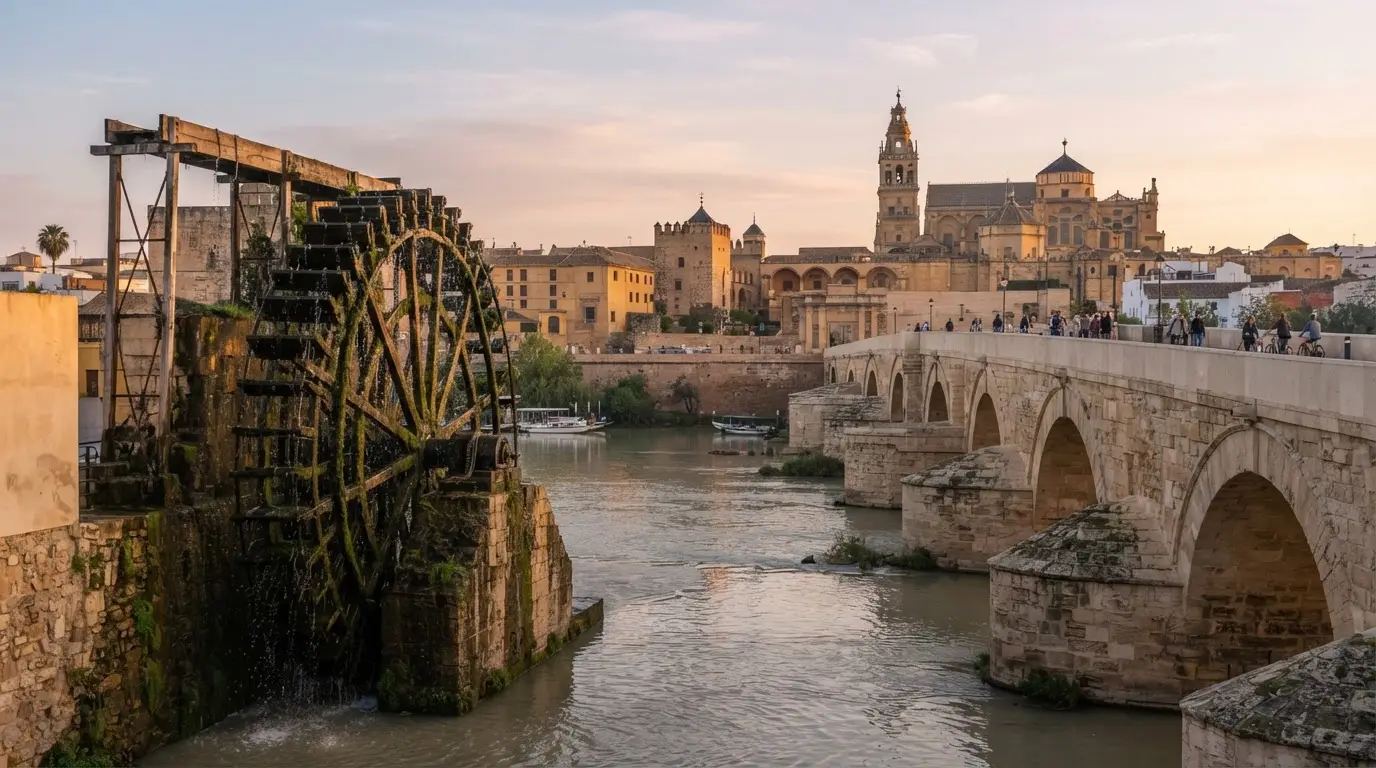
Albolafia waterwheel history: Abd al-Rahman II's Córdoba
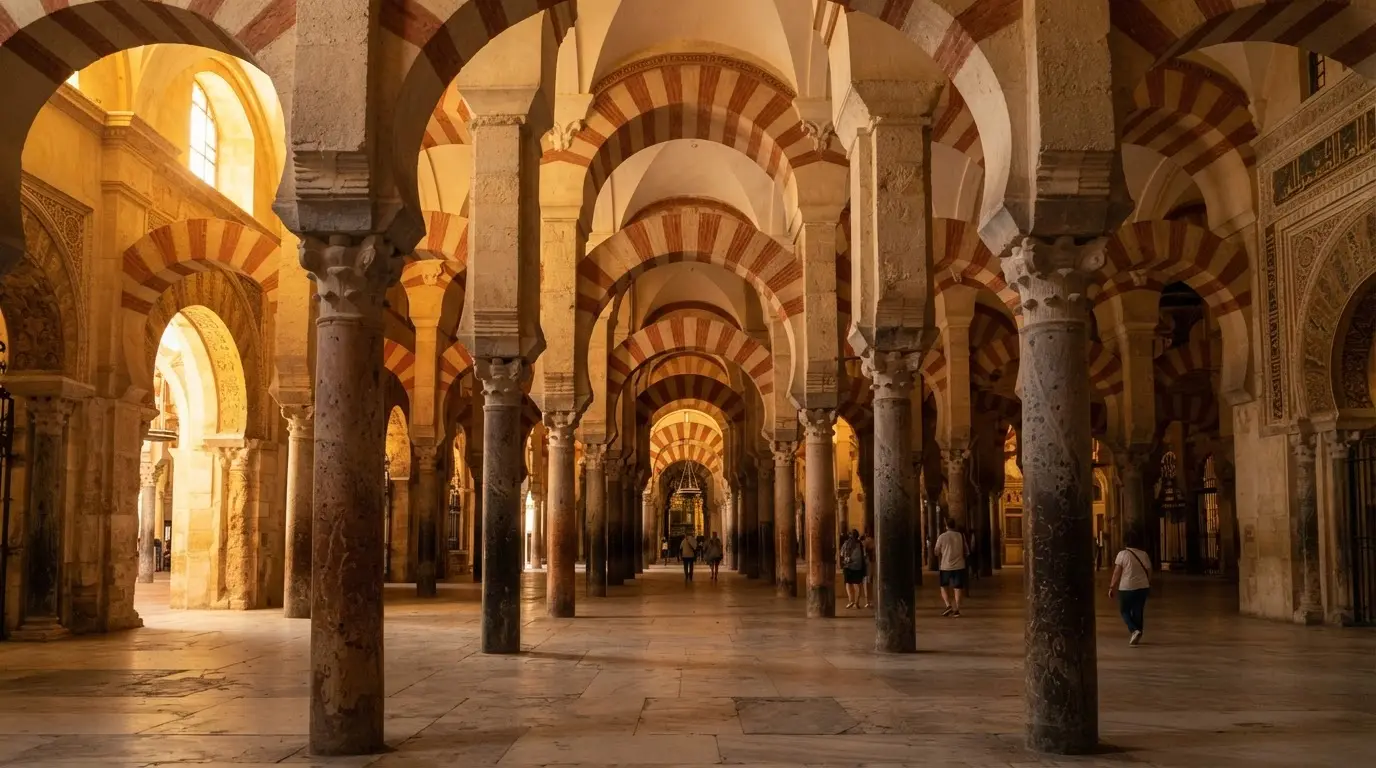
Abd al-Rahman III: The Morning Córdoba Became a Caliphate
Córdoba's Alcázar as Inquisition HQ — 339 Years of Dark History
Alcazar of the Caliphs Cordoba: The Palace Beside the Mezquita

Almanzor — The Man Who Dismantled the Caliphate From Inside
This Andalusian Fortress Has Been a Movie Set for Decades
Further reading
Official sources
3 references Show Hide
- Córdoba Tourism Office (opens in a new tab)
Official information on Córdoba's monuments and opening hours
- Mezquita-Catedral de Córdoba (opens in a new tab)
Official site with opening hours and visit information
- Medina Azahara (opens in a new tab)
Official site of the Medina Azahara archaeological site
Guided Photography Tours
Tours are selected for quality, not commission. We earn a small fee if you book — at no extra cost to you.
Best Seller
Best Seller
Best Seller
Mosque-Cathedral Skip-the-Line Guided Tour
Skip the queue and explore the Mezquita-Cathedral with a knowledgeable local guide. Discover 13 centuries of layered history in one of Spain's most iconic monuments.
Skip the line 1.5 hours
From €29
4.7 (7,293 reviews)
Reserve Your Spot
✓ Verified GetYourGuide reviews
Books up weeks ahead in peak season
Mosque-Cathedral Skip-the-Line Guided Tour
Beat the crowds with skip-the-line access and enjoy an expert-led tour through the breathtaking arches, mihrab, and cathedral choir of Córdoba's most visited monument.
Skip the line 1.5 hours
From €28
4.6 (5,758 reviews)
Reserve Your Spot
✓ Verified GetYourGuide reviews
Books up weeks ahead in peak season
Jewish Quarter, Mosque & Alcázar Tour
A comprehensive guided tour covering Córdoba's three UNESCO-listed highlights: the Mezquita, the medieval Jewish Quarter, and the Alcázar de los Reyes Cristianos.
3 hours
From €49
4.6 (5,547 reviews)
Reserve Your Spot
✓ Verified GetYourGuide reviews
Books up weeks ahead in peak season