
When to Visit
Best season
Year-round (indoor chapel; verify access with the Faculty)
Quietest hours
Weekday mornings 10:00–11:00
Visit duration
15 – 20 minutes
Where two traditions became one
Built between 1390 and 1410, the Capilla de San Bartolomé is one of Córdoba's most precise examples of the Mudéjar style — the architectural language that developed when Christian builders worked alongside craftsmen trained in Islamic traditions. The result was neither Gothic nor Moorish but something particular to the Iberian Peninsula, and this small chapel captures it at an exceptional level of quality.
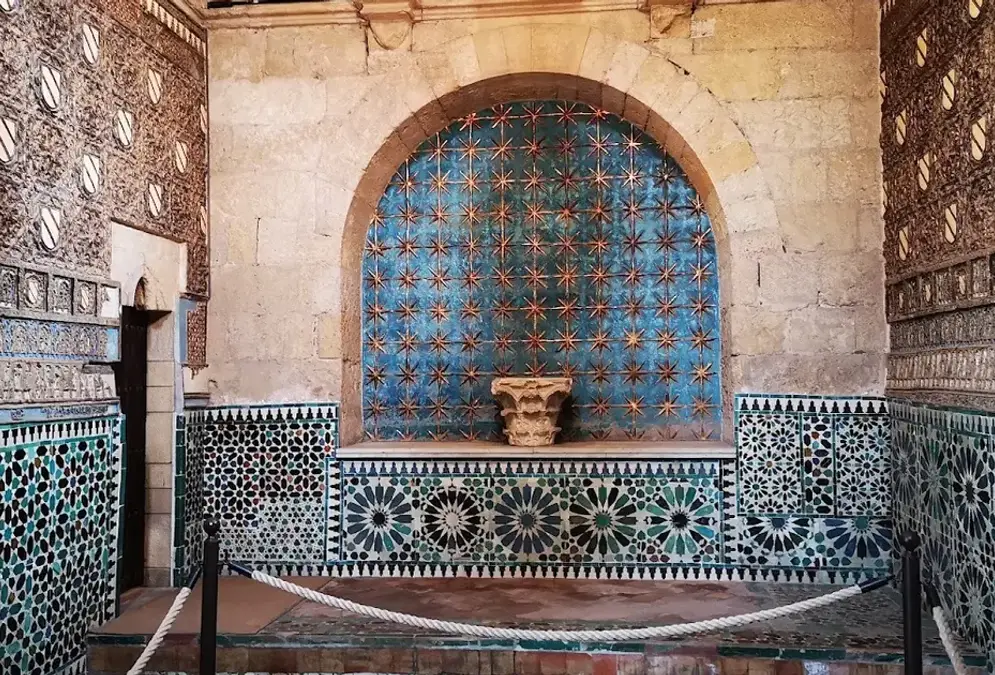
The interior measures roughly 9 by 5 metres and divides into two Gothic ribbed vault bays separated by a central rib decorated with saw-tooth patterns. The vault keystones carry vegetative carvings consistent with Gothic practice, while the walls are covered in yesería plasterwork — carved stucco panels with geometric and vegetal motifs — that reflects Islamic decorative principles. The combination is not a compromise; it is a synthesis, and the scale of the room means you can examine the detail from close range.
Look up at the plasterwork ceiling — the finest Mudéjar detail in Córdoba
The geometric plasterwork blending Christian and Islamic motifs is over 600 years old and rivals the Alhambra in precision. Most visitors glance around quickly and leave. Spend five minutes looking at the ceiling patterns — the interlocking geometries repay close attention.
Why the yesería is worth close attention
The plasterwork panels are unusually well preserved for a building of this age. Look at the layering: the background is deeply incised with geometric interlacing, and on top of this ground the craftsmen cut vegetal arabesques and small floral medallions. The technique is identical to what appears in the Alcázar de los Reyes Cristianos and in the Alhambra — the same artisans' workshops likely supplied skills to all three buildings in this period. The saw-tooth patterns on the vault ribs are a specifically Cordoban detail. The Córdoba architecture guide's Mudéjar vocabulary section breaks down the full range of techniques at work here — a useful reference before or after the visit.
In the lower register of the walls, azulejo tiles survive in a geometric pattern that completes the programme. These are among the oldest tiles still in situ in a religious building in Córdoba.