
In the medieval world, Córdoba was one of the great centres of Jewish intellectual life. Under the Umayyad Caliphate, Jewish scholars, physicians, poets, and philosophers thrived alongside their Muslim and Christian counterparts in a city that considered itself the cultural capital of Europe. the physician-philosopher Maimonides, the most influential Jewish philosopher of the Middle Ages, was born here in 1138. The Casa de Sefarad exists to make that history visible — and to mark what was lost.
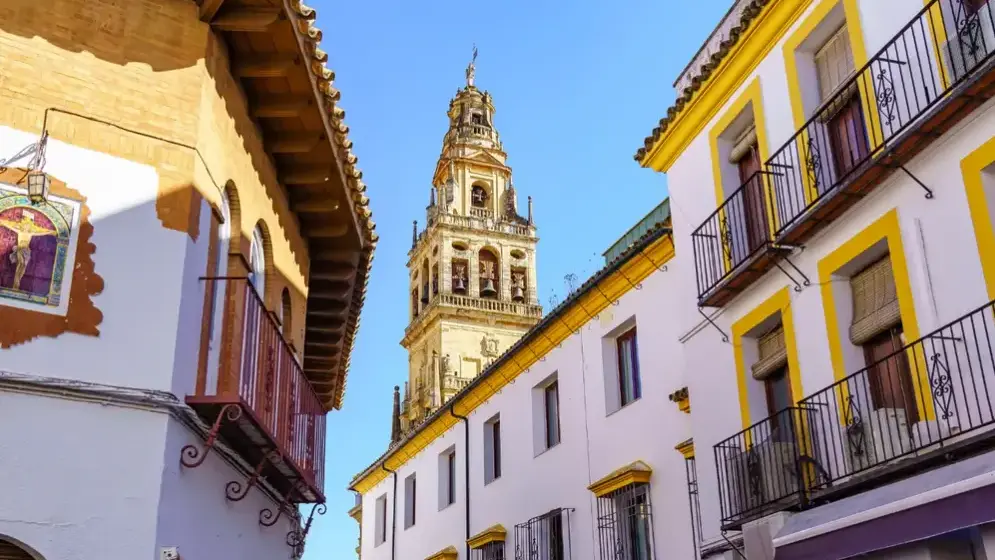
The museum opened in 2004 in a restored 14th-century house on Calle Judíos, in the heart of the Judería. The building was once connected by an underground passage to the nearby Synagogue, one of only two medieval synagogues still standing in Andalusia — alongside the synagogue in Utrera — which dates from 1315. That physical proximity is not accidental: the museum and the synagogue together form the most complete picture of medieval Sephardic life available anywhere in Córdoba.
Five rooms, one story
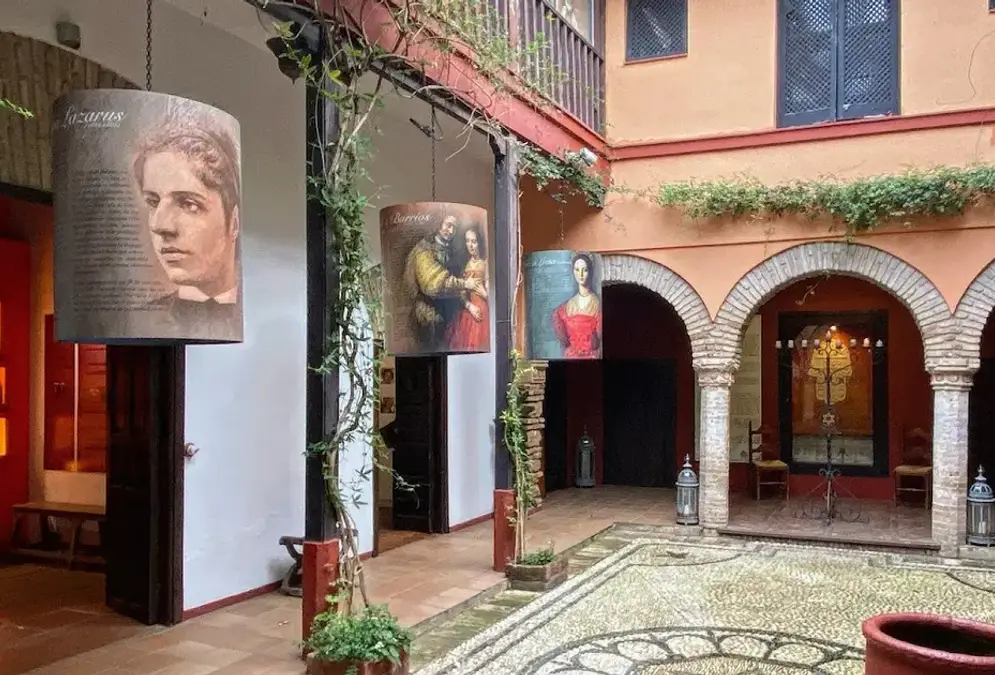
The museum is privately owned, built inside the restored 14th-century house on the corner of Calle de los Judíos and Calle Averroes. The building itself rewards slowing down for: a traditional Andalusian home with courtyards and intricate tilework that reflect the fusion of Islamic, Christian, and Jewish influences layered into this stretch of the Judería.
The permanent exhibition, Memories of Sepharad, is arranged across five thematic rooms: the Hall of Domestic Life, the Hall of Women of Al-Andalus, the Hall of the Jewish Quarter of Córdoba, the Hall of Festive Cycles, and the Hall of Sephardic Music. The sequence moves from the intimate — how a Sephardic household actually ran — outward to the social position of women, the physical geography of the quarter itself, the rhythm of the Jewish calendar (Shabbat, Passover, Rosh Hashanah), and finally to music, the strand of Sephardic culture that carried furthest into exile.
That last room is functional as well as historical: the Casa de Sefarad runs a programme of cultural activities built around Sephardic and Andalusian music, staged in its courtyard and interior spaces. If a concert coincides with your visit, staying for it is worth the extra hour.
1492 and the weight of the name
Sefarad is Hebrew for the Iberian Peninsula, and the museum chose the word for itself on purpose. In 1492, the Alhambra Decree gave Spain's Jewish population until the end of July that year to convert to Christianity or leave the country — a matter of months, not years. The communities that left carried Sephardic culture into exile around the Mediterranean, and their descendants today make up a significant share of the world's Jewish population. The Casa de Sefarad exists to recover that memory in the same streets the community it commemorates actually lived in.
Who visits and why
The museum draws a genuinely diverse audience. Visitors tracing Jewish ancestry account for a significant proportion — Spain's 2015 law offering citizenship to descendants of expelled Sephardic Jews brought renewed interest in this specific history. But the museum works equally well for visitors with no personal connection to the subject who want to understand medieval Córdoba more fully than the Christian and Islamic monuments alone allow.
It is not a large space, and the visit is not passive. The rooms are intimate, the panels require reading, and the subject rewards attention. Budget 60 to 90 minutes rather than 30.
Practical information
The Casa de Sefarad is on Calle Judíos (also signposted as Calle Averroes 2), about two minutes' walk from the Synagogue and five minutes from the Mezquita-Catedral. On the same street, the Capilla de San Bartolomé — a Gothic-Mudéjar chapel built between 1390 and 1410 within what is now the Faculty of Philosophy — offers another perspective on the layered religious history of the Judería. The museum is a stop on the Jewish Quarter Walk and the Three Cultures Route, both of which provide good background before you arrive. Entry costs €4.00 for adults, €3.00 for groups. The museum is closed on Fridays.
Opening hours: Monday to Thursday 10:00–18:00; Saturday, Sunday and public holidays 11:00–19:00. Closed Friday.
Check the museum's website (lacasadesefarad.com) for current concert dates — these are scheduled throughout the year and require separate booking.