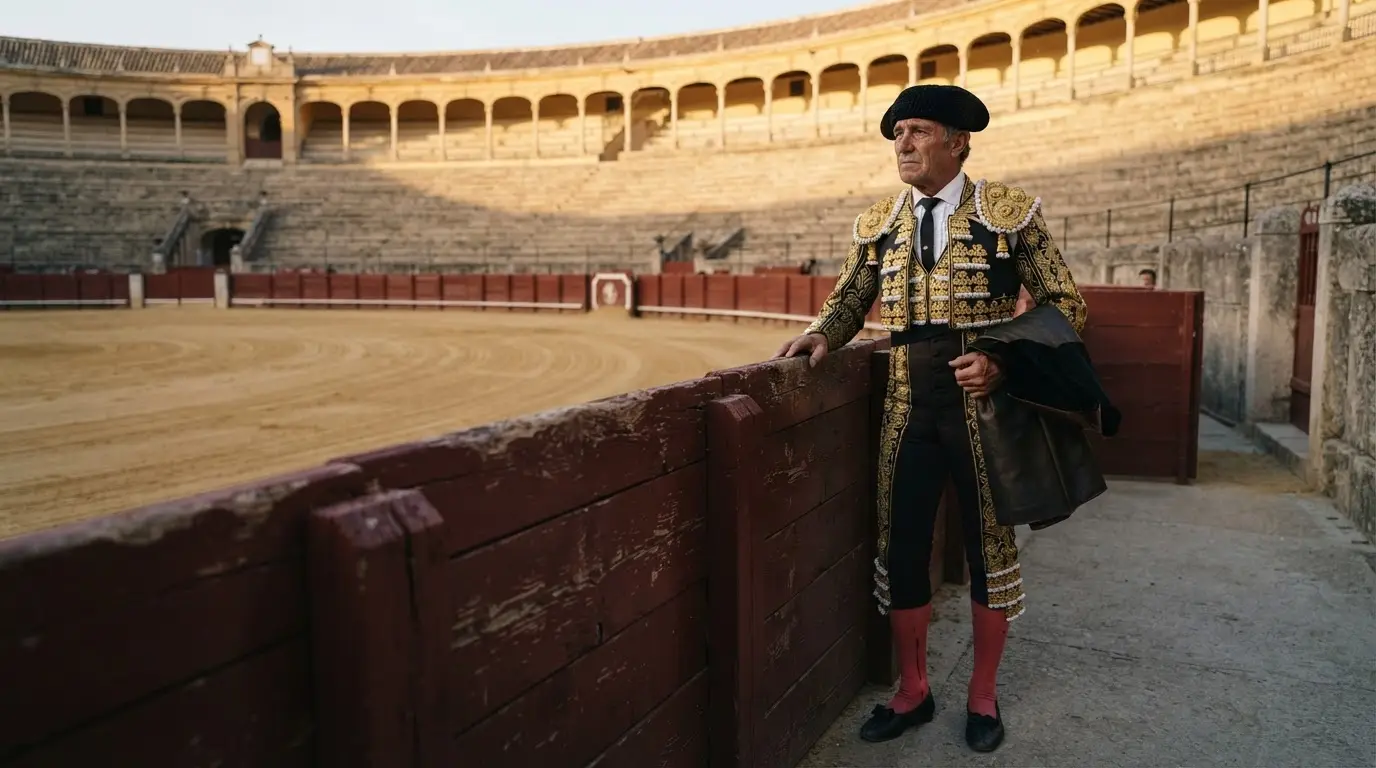

A Cordobés from Palma del Río, not Córdoba city
The geography matters. Manuel Benítez Pérez was born in Palma del Río in 1936, and a Córdoba bullfighting history credits part of his early popularity as a novillero to the media work of his mentor, Rafael Sánchez "El Pipo".[1] Calling him Cordobés is accurate, but his origin is provincial rather than a childhood in the capital's old quarters.
That distinction separates him from Manolete in Córdoba. Manolete's story belongs to Santa Marina and a fatal corrida; El Cordobés belongs to Palma del Río, publicity, longevity, and a public identity built across different phases of a career. Treating both men as interchangeable local legends erases the contrast that makes each useful to understand.
The novillero stage comes before a bullfighter takes the alternativa and becomes a senior matador. For El Cordobés, it was also the point at which mass media entered the story. El Pipo's publicity did more than advertise appearances: it helped turn a provincial fighter into a recognisable personality before institutional Córdoba later fixed his place in its own historical canon.
Why Córdoba calls him its fifth Caliph
In Córdoba, "Caliph" is a local title of bullfighting distinction, not a claim about political rule. The city council institutionally proclaimed El Cordobés the fifth Caliph of bullfighting in 2002.[2] That formal act is stronger evidence of his local status than the loose superlatives attached to famous matadors.
The municipal museum groups the five figures together:[5]
- Lagartijo
- Guerrita
- Machaquito
- Manolete
- El Cordobés
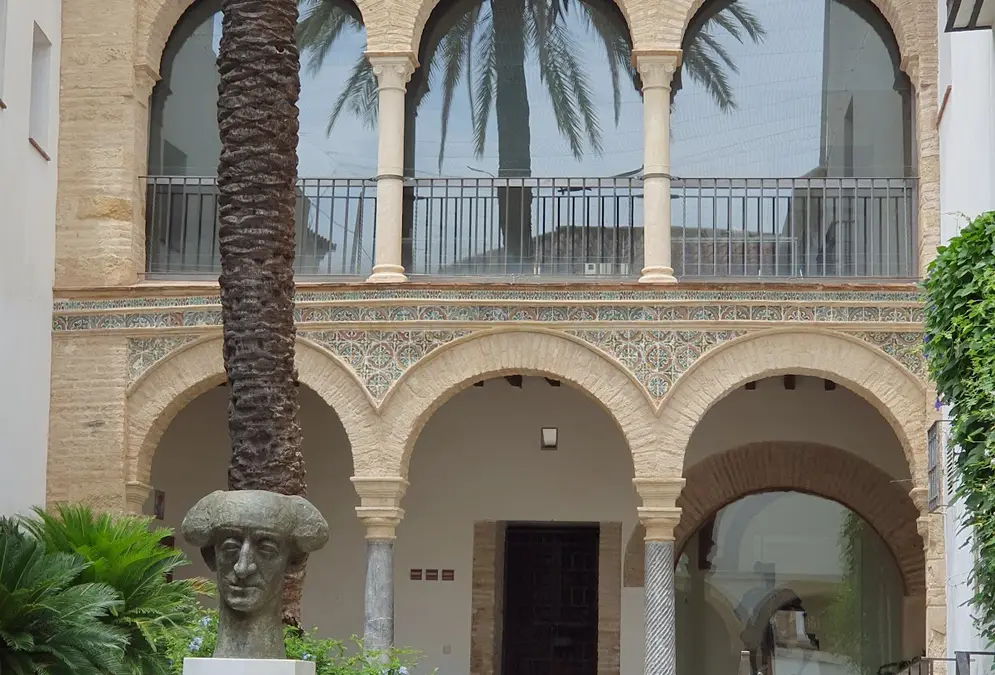
Explore nearby · Museum
Museo Taurino de Córdoba
Córdoba's bullfighting museum occupies a 16th-century mansion in the Judería. Trace the legacy of five legendary matadors, including Manolete, for just €4.
The sequence is an argument about Córdoba's cultural memory. Each name represents a different period, while El Cordobés closes the line as its latest recognised member. The Bullfighting Museum of Córdoba lets visitors see that collective framing rather than reducing the subject to one biography.
This is also why the title matters for readers who have little interest in the mechanics of the muleta or the drama of a corrida. It shows how a city turns popular reputation into civic history: first through spectators and press, later through an official proclamation and a museum narrative.
A long career without the unsupported record claims
The safest measure of El Cordobés's career is deliberately approximate. One specialist Córdoba account says he appeared in almost a thousand bullfights across different periods and later wore a traje de luces again in the 21st century for a Caliph celebration.[3] The wording signals scale without pretending that an exact audited total sits behind it.
The same account says he inaugurated Córdoba's present bullring in 1965.[4] That links the matador to a physical chapter in the city's taurine history, not merely to posters or recollection. The exact date and the other names on that bill are less secure, so they do not belong in a responsible summary.
Precise annual tallies, record-breaking comparisons, earnings rankings, and stories about a later agricultural empire circulate around El Cordobés. They are tempting because they produce a clean rags-to-riches arc. They also require direct evidence. Without it, the more revealing story is the one the sources can support: a novillero amplified by publicity, a career sustained over different periods, and a matador still performing his public identity decades after his first rise.
That restraint changes the emphasis. Instead of presenting fame as a spreadsheet of corridas, it asks what made the fame durable. Media recognition began early; the bullring gave it a Córdoba setting; the later proclamation converted it into civic status. Those are different forms of authority, and they accumulated over time.
What the Museo Taurino can actually show you
The Museo Taurino occupies a former 16th-century aristocratic house in Plaza Maimónides.[6] Its setting is useful: the quiet rooms place bullfighting inside Córdoba's historic centre, close to monuments that usually dominate a visitor's day, without requiring the subject to compete with a live arena spectacle.
The collection ranges across photographs, bullfighters' suits, historic posters, recordings, equipment, sculpture, and painting.[7] That mix helps decode terms such as traje de luces and muleta through objects rather than definitions alone. Look at how costume, publicity, and memory work together. A suit records performance; a poster records billing; a photograph records the image selected for circulation.
Recommended tours
Tours are selected for quality, not commission. We earn a small fee if you book — at no extra cost to you.
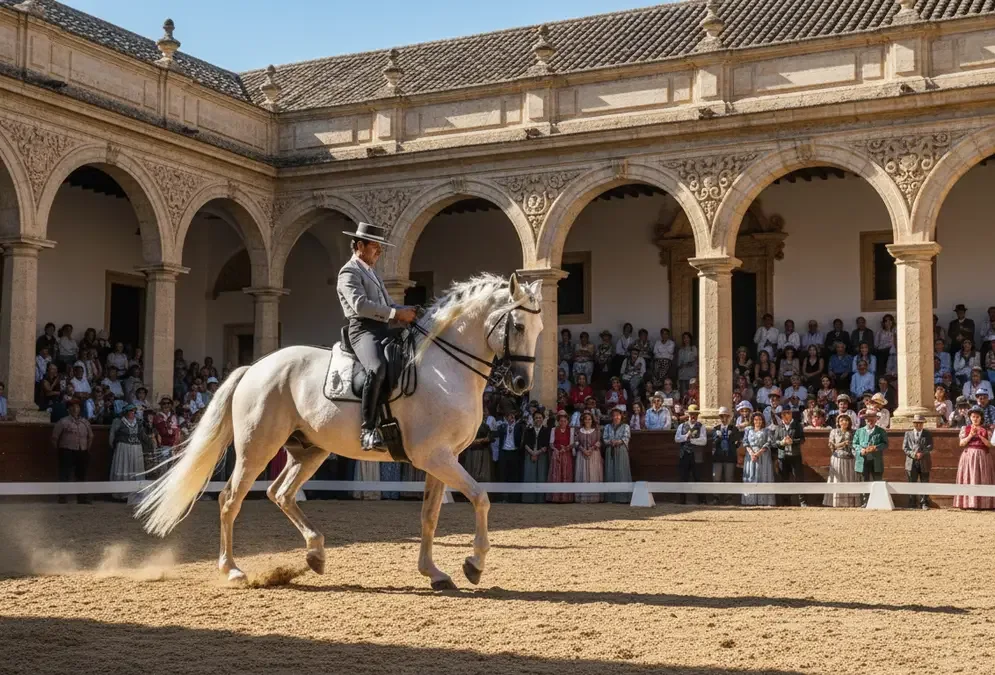
The city describes the displays as a history of Córdoba's relationship with bullfighting from the medieval period to the present.[8] El Cordobés therefore appears within a longer institutional account, alongside the other Caliphs and the wider material culture of the ring. This scale avoids turning his Córdoba legacy into a stand-alone shrine.
Allow time to read labels and compare the five Caliphs instead of searching only for one famous name. The museum's value lies in juxtaposition. El Cordobés's media-era persona makes more sense when placed after the earlier figures, especially the restrained, tragic image attached to Manolete.
How to place El Cordobés in a Córdoba trip
Start with the museum if your interest is historical rather than devotional. Its grouped Caliph display gives enough context to understand why a provincial-born matador could become part of Córdoba city's official self-image. It also keeps the subject grounded in objects and municipal interpretation, which is more useful than chasing unsupported superlatives.
Then decide how much taurine history you want in the rest of the day. A visitor interested in architecture or the province beyond the capital may prefer the Almodóvar Castle tour as the next chapter. The change of subject is productive: Córdoba's identity is larger than the bullring, and Palma del Río itself is a reminder that the province cannot be collapsed into the old city.
Bullfighting remains contested, and a museum visit does not require admiration for the practice. Read the collection critically. Notice which careers the city groups together, which objects it preserves, and how publicity changes the memory of a matador. El Cordobés is compelling here because the evidence supports a shift from popular idol to formally recognised Caliph.
Deep dive · Article
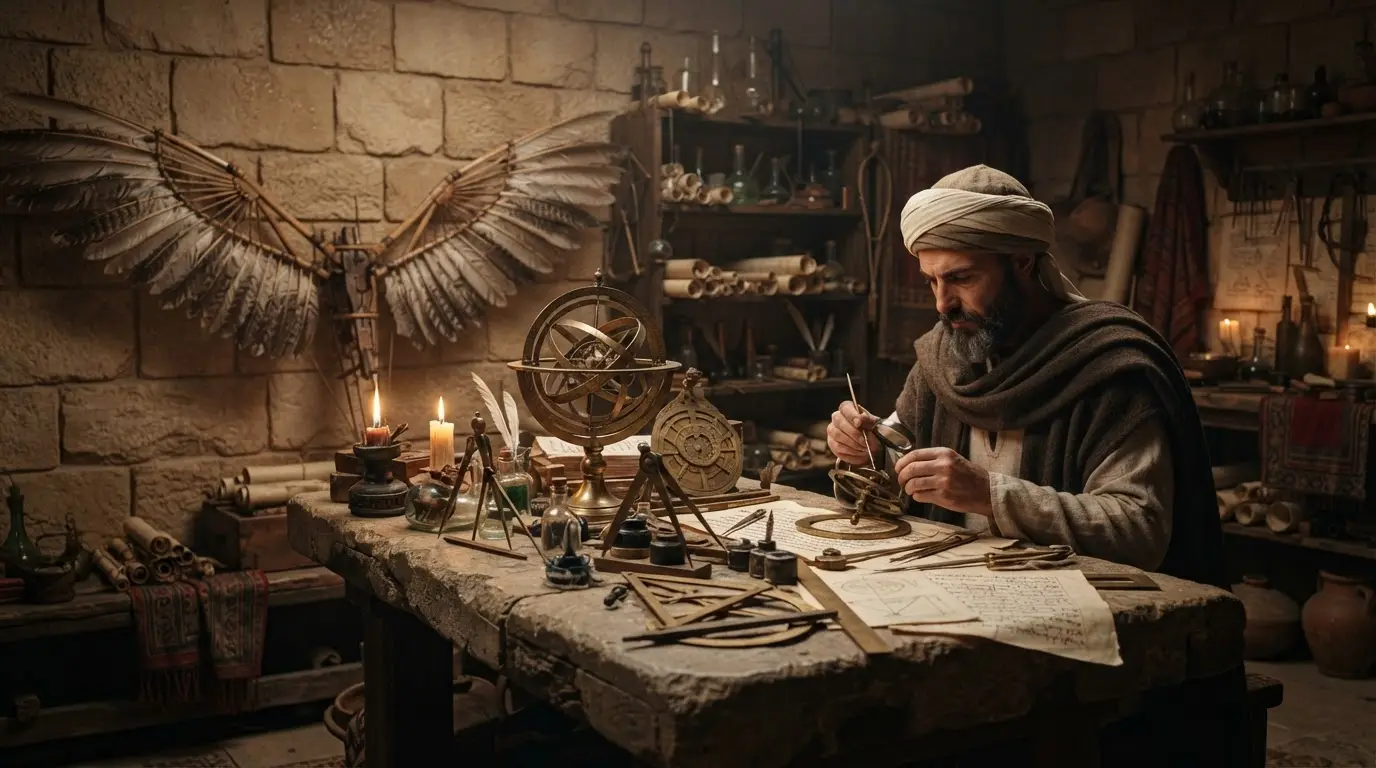
Abbas Ibn Firnas: Córdoba's Polymath Who Dreamed of Flight
Abbas Ibn Firnás built lenses, glass, and astronomical tools in 9th-century Córdoba. His famed flight rests on a single account, written 750 years later.