

Who Was Ibn Zaydún?
Ibn Zaydún is usually introduced through his romance with Wallada bint al-Mustakfi; that story is told in full elsewhere on this site. His own life ran a harder, longer course: prison, exile, and a second career built by starting over in a rival city.
That is the part guidebooks tend to skip over. The romance is vivid, and it survives largely in Wallada's own words; his own arc, the one that shaped the rest of his career and reads as its own story rather than a footnote to hers, ran almost entirely through court politics rather than through any love affair.
He came from an aristocratic Andalusian Arab family descended from the Banu Makhzum, and grew up amid the slow collapse of the Umayyad Caliphate of Córdoba, a state that fractured into competing taifa kingdoms after 1031; he was involved in the political life of his age rather than staying at its margins.[2]
By 1031, the year his relationship with Wallada began, he already held the rank of ambassador and stood on good terms with Córdoba's ruler, Abu al-Hazm ibn Jahwar.[3] Whatever combination of court rivalry, the fallout with Wallada, and genuine political suspicion followed, his standing at the Jahwarid court collapsed within a few years of reaching its peak.
Imprisoned by the Jahwarid Rulers of Córdoba
Córdoba by this point was no longer a caliphate. The city had reorganized itself as an independent taifa, governed not by a caliph but by the Banu Jahwar, a family of judges and administrators who ran it as something closer to a republic than a monarchy.[4] It was this Jahwarid Córdoba, under Abu al-Hazm ibn Jahwar, that Ibn Zaydún served, and it was this same regime that turned on him.
He was eventually thrown into prison on accusations of plotting against the ruler. The rival vizier Ibn Abdus, who had by then won Wallada's favor, is widely suspected of having instigated the charge.[5]
The official charge was specific: plotting to remove Abu al-Hazm in favor of an Umayyad restoration. Ibn Zaydún spent roughly two years in a Córdoba cell for it, continuing to write poetry dedicated to Wallada until he finally escaped to Seville.[6] The accounts that survive record the escape but not the method; the popular claim that he fled disguised as a woman does not appear in any of them.
Two years is a long stretch for a man used to court proximity, and the poetry he produced there set the emotional register that would define the rest of his career.
A Second Rise at the Abbadid Court of Seville
Escape put him back in the world, but not in Córdoba. Ibn Zaydún crossed west to Seville, where he sought refuge first with Abbad II al-Mu'tadid and later with his son and successor, al-Mu'tamid ibn Abbad.[7]
He regained, by every surviving account, the standing he had lost.[8] What changed was the audience: in Córdoba he had written as an insider losing his footing; in Seville he wrote as an outsider whose talent was, for the first time in years, an asset rather than a liability at court.
His qasidas and shorter lyric poems from this period carried forward what the prison years had started, a voice shaped by loss and distance rather than by the confidence of a man secure in his own city. Seville gave him back a career. It did not give him back Córdoba, and the distance between the two cities shows up across poem after poem from this period.
The reversal is worth sitting with. A man stripped of rank and jailed by one taifa court found himself, within what the record suggests was a fairly short interval, restored to prominence by a rival one. It is also, in miniature, how the whole taifa period worked: fractured, competing courts recruiting each other's poets and administrators much as they recruited each other's soldiers.
A Return to Córdoba, Briefly, in 1070
Ibn Zaydún's exile might have stayed permanent if Seville and Córdoba had remained separate states. They did not. In 1070, after defeating the army of Toledo, al-Mu'tamid turned his own expanding kingdom on Córdoba itself, captured the city, and deposed its last Jahwarid ruler.[9] The Taifa of Córdoba, the Jahwarid-run state Ibn Zaydún had once served and then been imprisoned by, ceased to exist as an independent power. For a poet who had spent nearly two decades rebuilding a career in the very city that had just absorbed his own, the conquest carried a double edge: the regime that had jailed him was gone, replaced by the one he now served.
That conquest opened a door that decades of exile had not. Ibn Zaydún was able to return to the city of his youth for a period, coming home behind the army that had conquered Córdoba rather than the one that had jailed him there.[10]
Recommended tours
Tours are selected for quality, not commission. We earn a small fee if you book — at no extra cost to you.
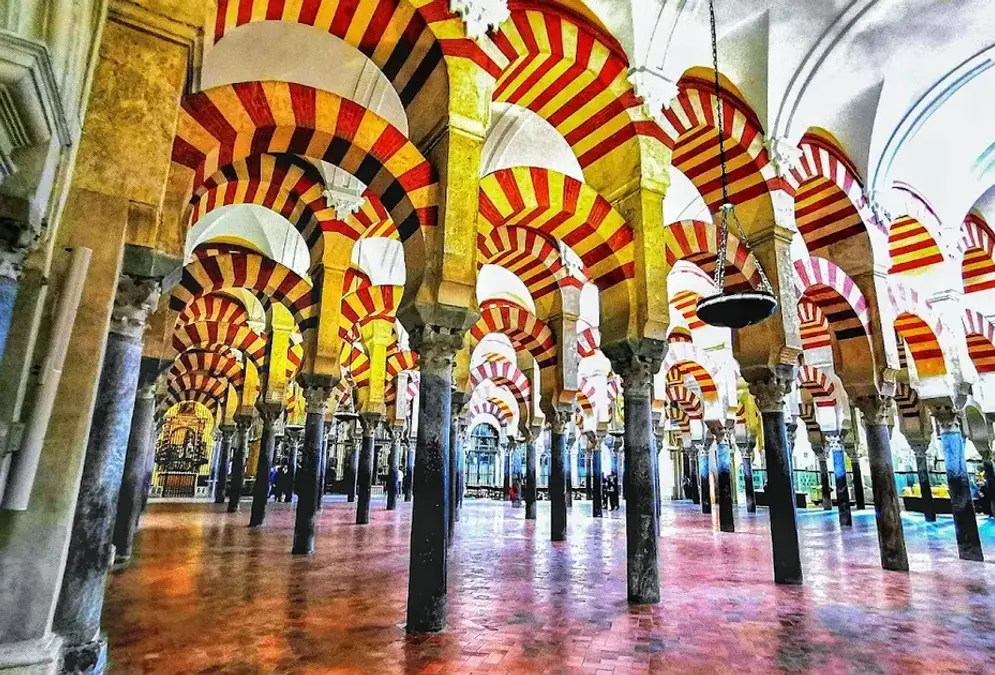

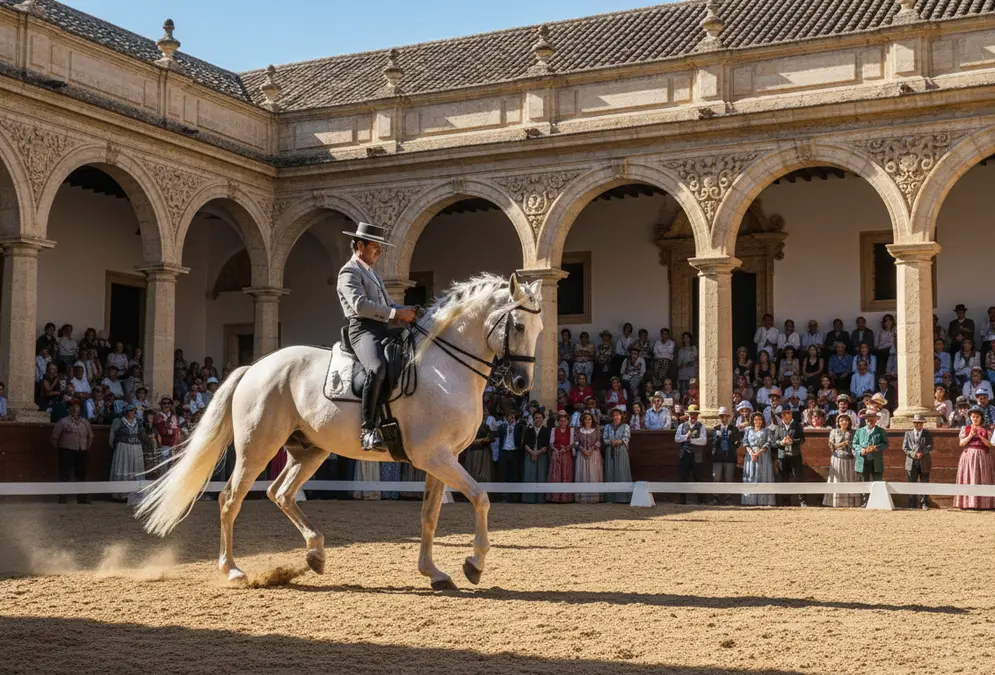
The Judería, Córdoba's old multi-faith quarter, sits a short walk from the Alcázar de los Reyes Cristianos; between the two, this corner of the modern city keeps the closest feel to the street scale Ibn Zaydún would have recognized on that final visit. Little else from his decades in Córdoba survives as a physical trace: no house, no known grave, no inscription marks the specific ground he walked.
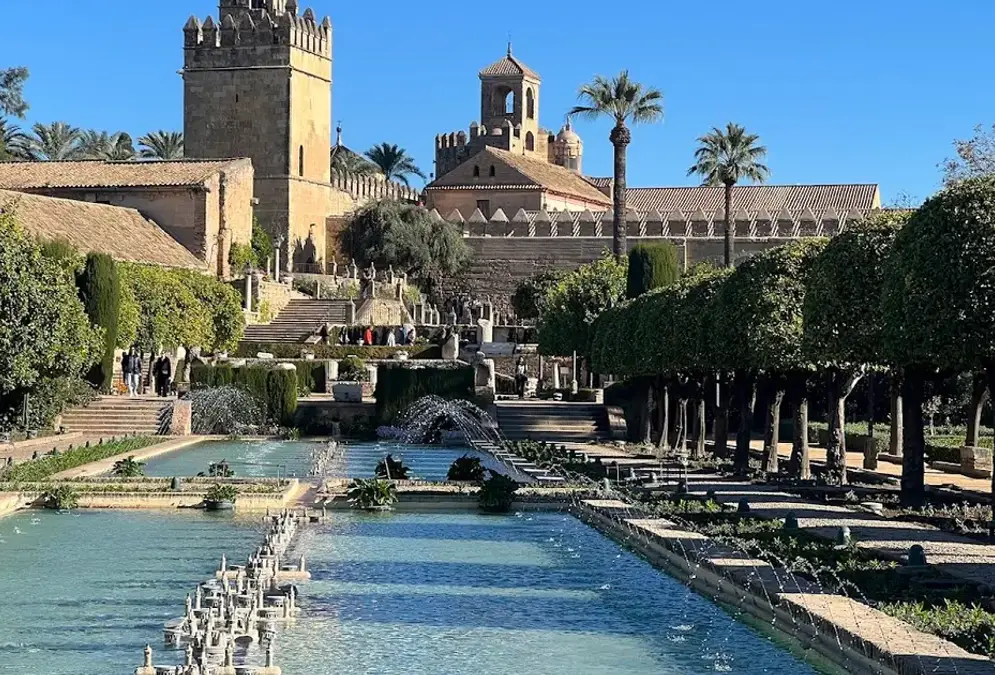
Explore nearby · Monument
Alcázar de los Reyes Cristianos
Alcázar de los Reyes Cristianos, Córdoba: free entry on Tuesdays. A 14th-century fortress-palace with terraced Moorish-inspired gardens and Roman mosaics.
The stay did not become permanent. He returned to Seville, where he had spent most of his adult life by then, and where the final chapter of his career would close.
Death as Ambassador, and the Poetry of Exile
The homecoming did not last. Within the year Ibn Zaydún was serving al-Mu'tamid again, and in 1071 he died while acting as ambassador, reportedly on a diplomatic mission en route to Seville.[11] Accounts differ on whether he died during that journey or after arriving there.
What survives him is the poetry, and it carries the weight of everything the politics put him through. Much of his later work is marked by exile and nostalgia for a lost Córdoba, blending memory of a specific place with memory of a specific time.[12]
Literary historians have been generous about the result. The scholar Salma Khadra Jayyusi credited him with restoring something of the balance, rhetorical command, and grandeur of style found in contemporary poetry in the east, rescuing Andalusi verse from what she described as the self-indulgence of poets of externalized description.[13]
“Ibn Zayduni brought into Andalusi poetry something of balance, the rhetorical command, the passionate power and grandeur of style... he rescued Andalusi poetry from the self-indulgence of the poets of externalized description.[13]”

Deep dive · Article
Ibn Hazm's Ring of the Dove: Córdoba's Love Treatise
Ibn Hazm's Ring of the Dove (1022 CE) is the medieval Arab world's most searching analysis of love and one of the most readable books to survive Al-Andalus.
The courts of Córdoba and Seville spent this period competing as much over poets as over territory, and Ibn Zaydún's career, jailed by one and rebuilt by the other, is one of the clearest cases of a taifa court's literary reputation being built by recruiting talent rather than growing it. Read today, his poetry works less as a footnote to a doomed romance and more as a firsthand account of what it cost to lose a city, and then talk his way back into relevance in someone else's. For a wider view of that world, see the al-Andalus golden age in Córdoba.